
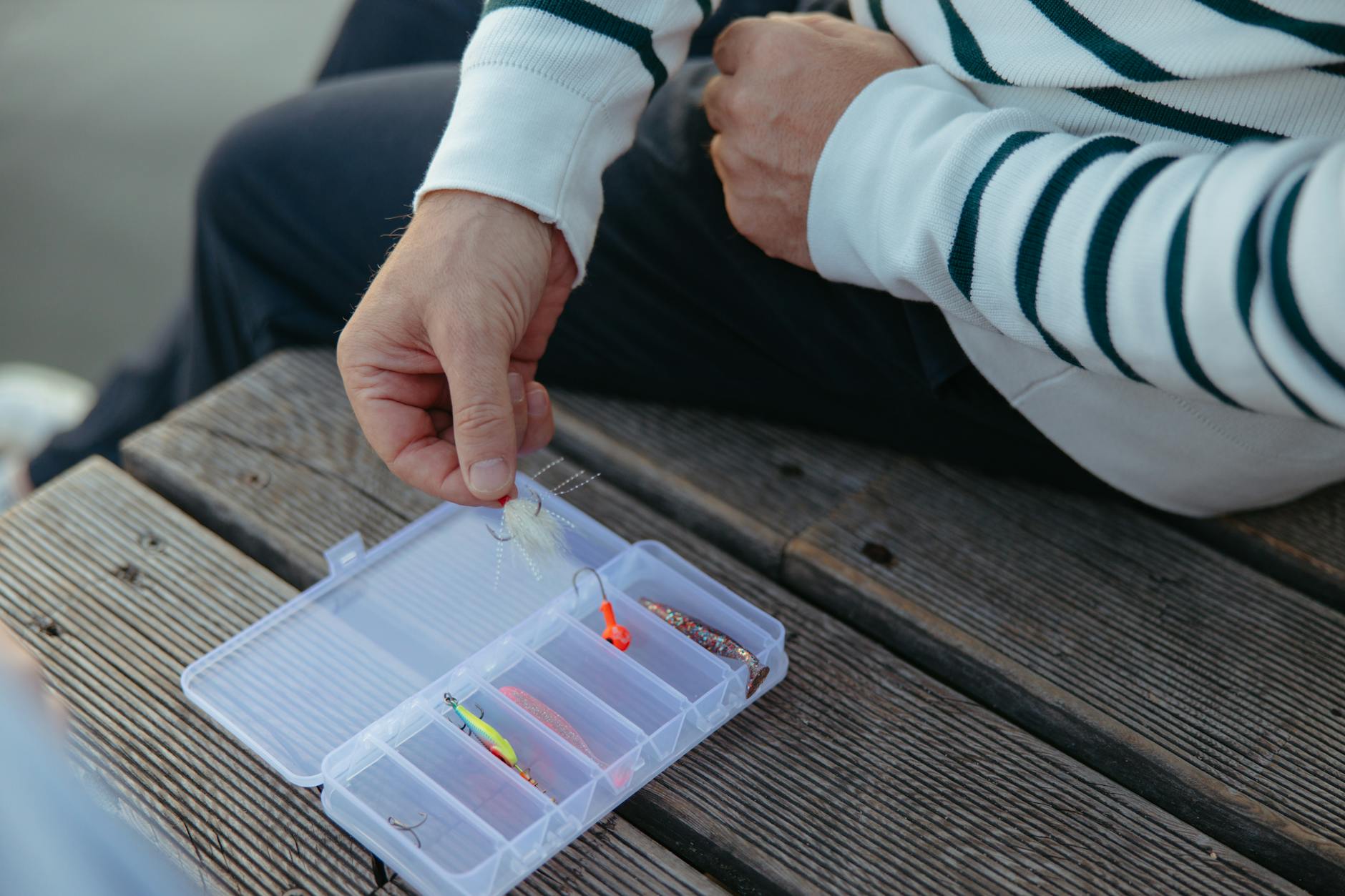
You’re kneeling at the edge of a lake. The tackle box is open in front of you — rows of lures in every shape, size, and color you didn’t know existed five minutes ago. You’ve heard “soft plastics work year-round” from one person and “crankbaits are king in spring” from another. Now you’re second-guessing yourself before you’ve even tied on anything.
Sound familiar? It’s one of the most common moments for new anglers, and it doesn’t have to be overwhelming.
Choosing the right fishing lure for beginners doesn’t require memorizing a catalog. There’s a simple three-variable framework that covers most freshwater situations: what fish you’re after, what the water looks like, and what season or time of day it is. Match those three things, and you’ll be making solid lure choices even on your first trip to the water.
This guide walks through each variable, gives you a quick-reference decision table for the conditions, and finishes with a practical starter lure list that won’t break the bank.
Why Lure Choice Matters More Than You Think
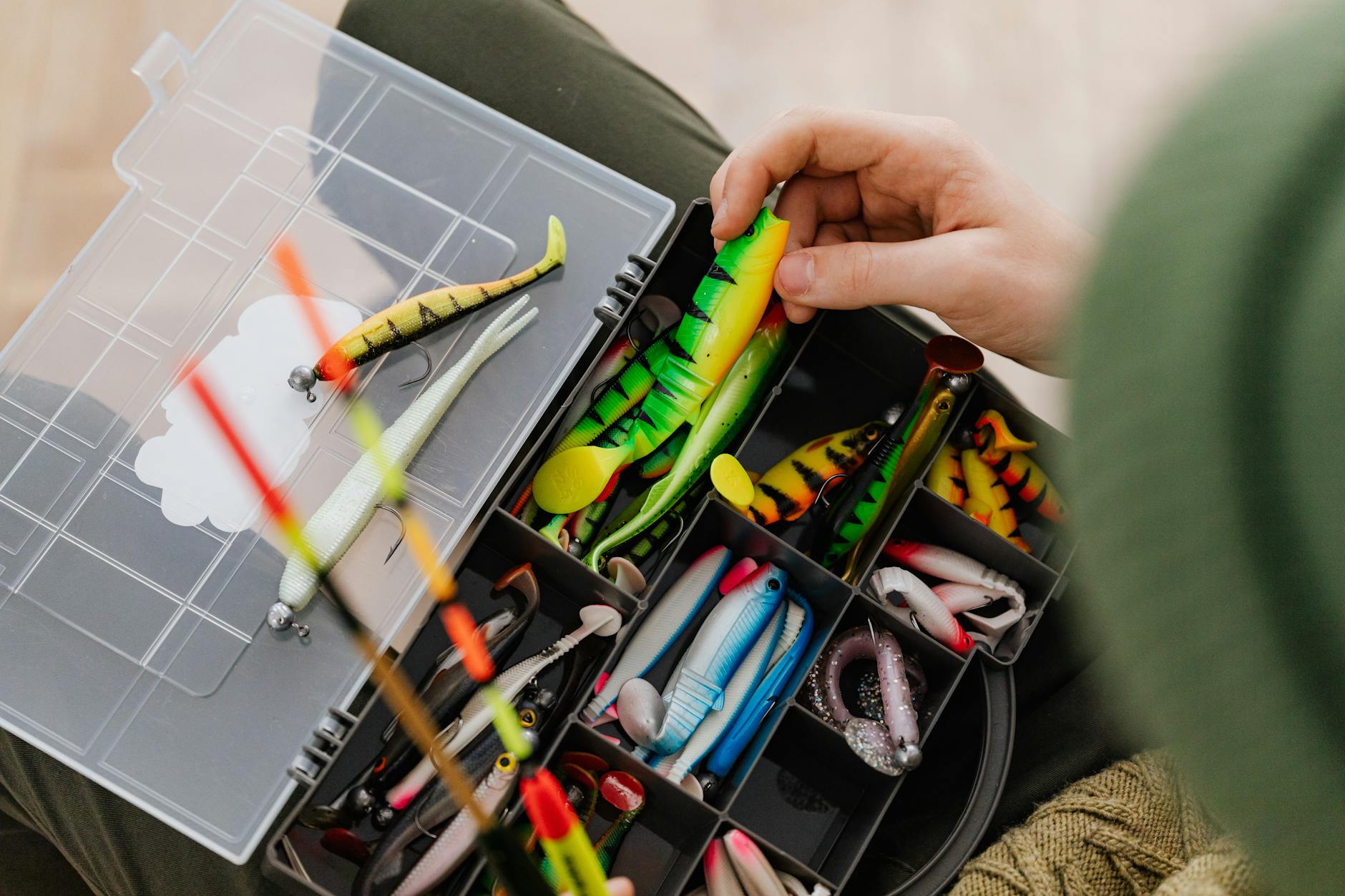
Using the wrong lure isn’t just about missing a fish — it’s about missing the right fish for the conditions you’re actually facing. A green pumpkin soft plastic that works great in clear spring water might be invisible in muddy, post-rain water. A deep-diving crankbait won’t help when fish are holding in shallow cover near shore.
Lure selection isn’t about owning every lure on the market. It’s about matching three things:
- Target species: What fish are you after, and what do they eat?
- Water conditions: How clear is the water, and what kind of cover is present?
- Season and time of day: What’s the water temperature, and how active are the fish?
Let’s break each one down so you can put it to use the next time you’re standing at the water.
Variable 1: Match Your Lure to the Fish You’re Targeting
Different species respond to different lure sizes, colors, and presentations. So where do you start? By figuring out what you’re fishing for — and understanding what that fish considers normal prey.
Lure Selection for Bass (Largemouth and Smallmouth)
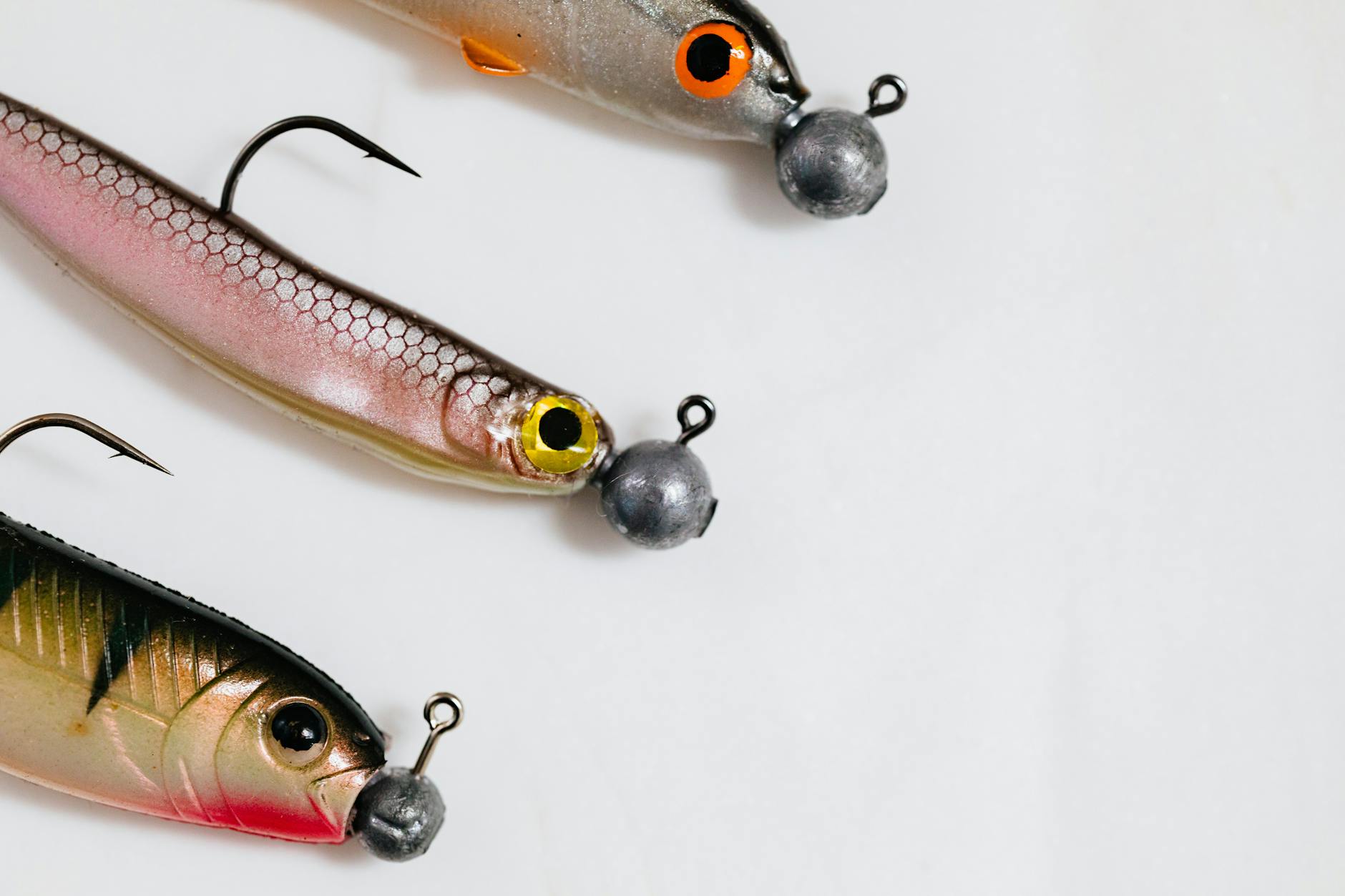
Bass are the most commonly targeted freshwater species for beginners, and they offer the widest range of lure options. But there’s no single lure that works everywhere. Bass are opportunistic, and their preferences shift with conditions.
Soft plastics are the most versatile option for bass, hands down. Texas-rigged worms, creature baits, and swimbaits all work across seasons and water conditions. If you want to learn more about soft plastic types, our guide to soft plastic baits covers the basics.
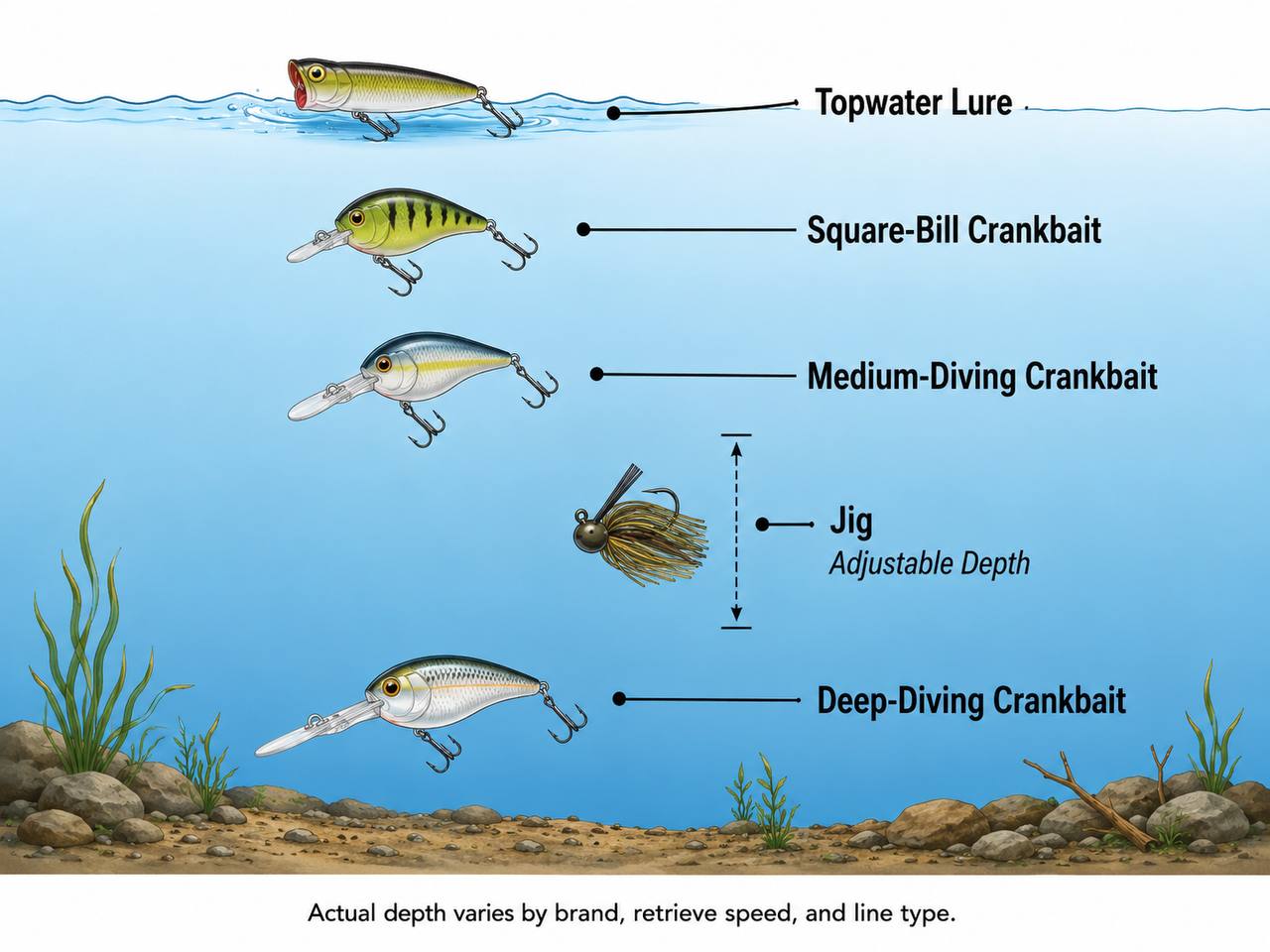
Crankbaits are hard-bodied lures with a diving bill that mimic wounded baitfish. They’re useful for covering open water and locating fish. Square-bill crankbaits typically run shallow (around 1–4 feet), medium-diving models around 5–10 feet, and long-bill deep divers can reach 10–20 feet or more — though actual depth depends on the specific lure, brand, retrieve speed, and line type.
Spinnerbaits combine a rotating metal blade with a soft-plastic trailer. They’re weedless by design (the wire skirt protects the hook) and create strong vibration and flash, which tends to excel in stained or murky water.
Jigs work well around rocky structure, especially in winter when bass hold deeper. A football jig with a creature-bait trailer is a go-to for rolling along the bottom.
Topwater lures float on the surface and simulate injured prey like frogs or baitfish, producing exciting strikes. They work best during low-light conditions: dawn, dusk, and overcast days. Topwater tends to perform best when water temperatures are roughly in the 60–85°F range, though spawning bass will still hit topwater in cooler water because of territorial behavior.
A quick note on species differences: largemouth bass tend to prefer heavier cover and warmer water, while smallmouth gravitate toward rocky structure and cooler, clearer water. This can affect your lure choice — smallmouth often respond better to slightly smaller, more natural presentations.
Lure Selection for Panfish (Bluegill, Crappie, Sunfish)
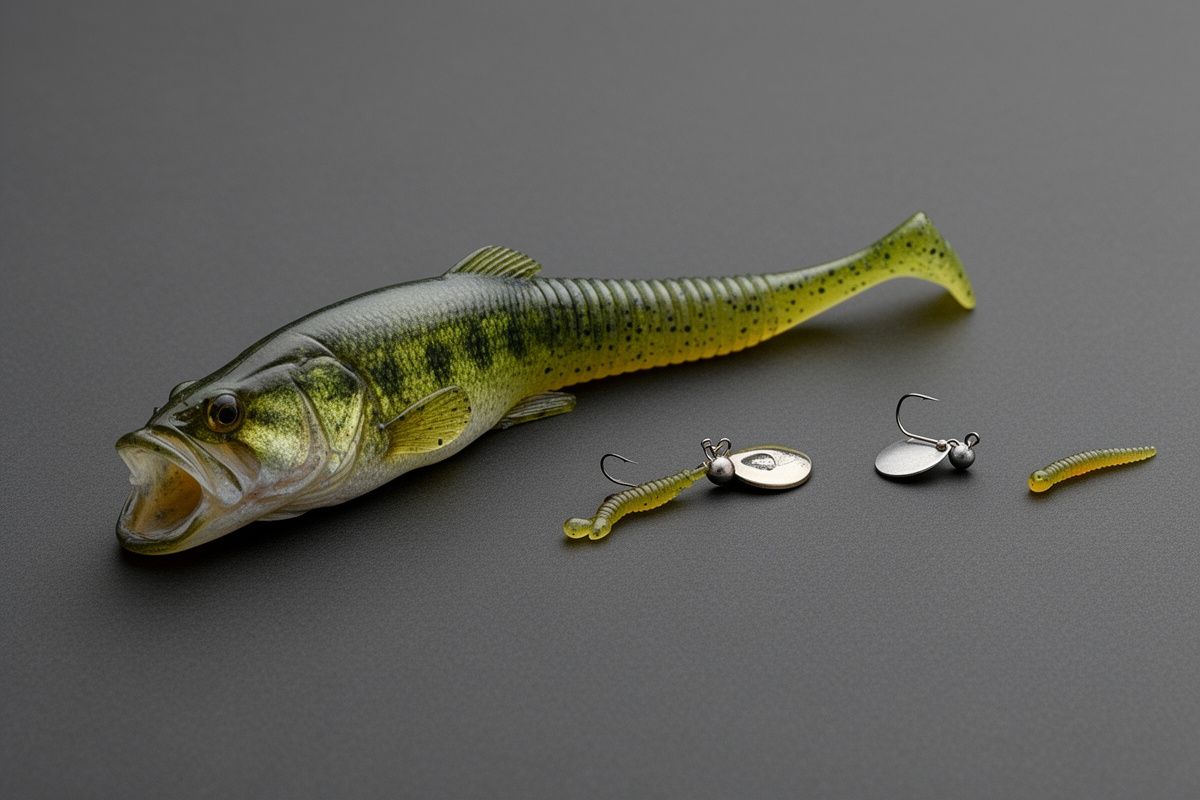
Panfish lure selection is straightforward, but there’s one rule that matters more than any other: size.
Panfish have much smaller mouths than bass and eat tiny organisms. A 6-inch bass worm will look out of place to a bluegill. Instead, think small:
- Small jigs with tiny soft-plastic trailers are the most versatile panfish lure. As a starting point, 1/32 oz jigs work well in shallow water and light conditions, while 1/16 oz jigs handle deeper water, current, and wind better. Adjust based on actual conditions.
- Small soft-plastic grubs (1–2 inches) on tiny jig heads
- Small spinners for perch
Bluegills have the smallest mouths among common panfish, so downsize further for bluegill — 1/64 oz jigs work well for slow presentations in shallow water. Crappie have slightly larger mouths and can handle a bit more.
Lure Selection for Trout
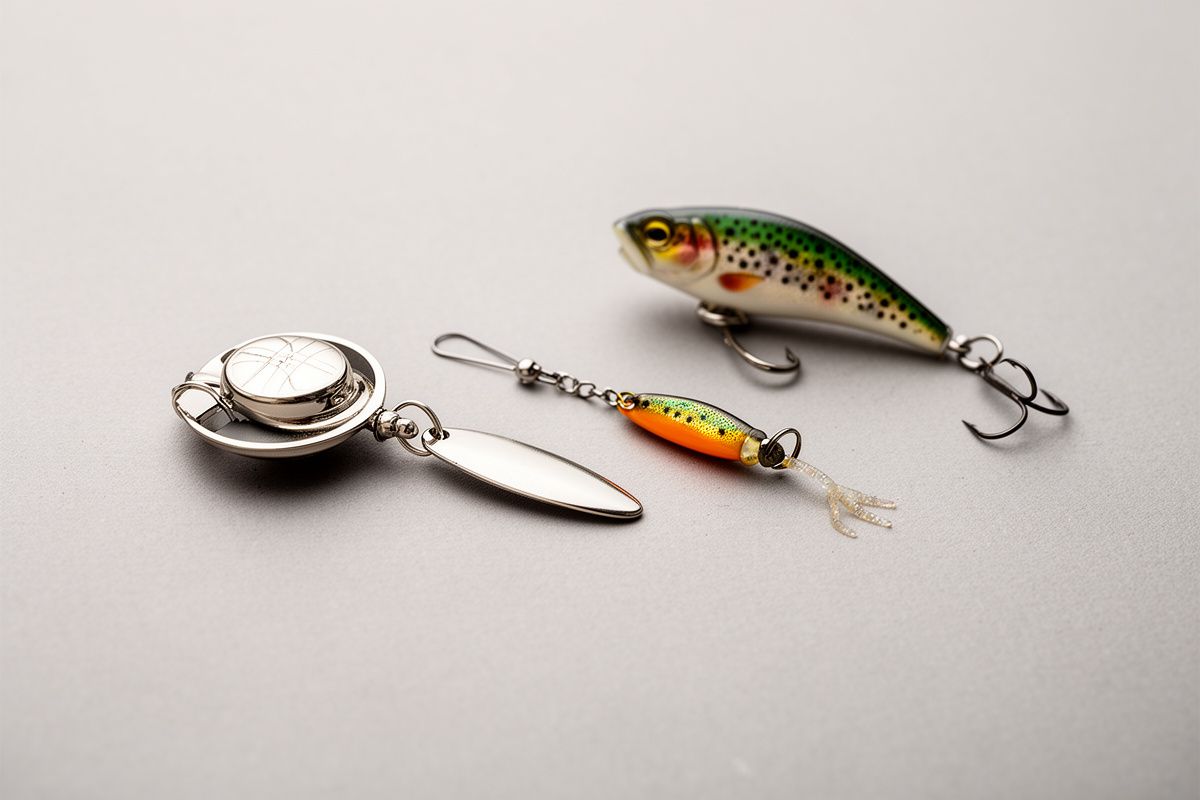
Trout require a lighter, more subtle approach. They’re generally more wary than bass and spook easily from visible line or oversized lures.
Spinners are the most versatile trout lure and work on lakes, rivers, and streams. Inline spinners are designed for casting from shore; smaller bladed spinners work well in murky water or on overcast days.
Spoons in small sizes work for streams; larger casting spoons handle long casts in lakes.
Lightweight jigs with small soft-plastic trailers and small crankbaits also work — but match the size to local forage. Using a bass-sized crankbait for trout is a common beginner mistake. Trout are often wary of anything that looks oversized.
Subtle, steady retrieves tend to outperform aggressive presentations for trout. Always check local regulations — trout size limits, catch limits, and seasonal restrictions vary widely.
Lure Selection for Catfish
Catfish are less commonly targeted with artificial lures by beginners, and for good reason. They’re primarily bottomfeeders and scavengers that rely heavily on smell. Live bait remains the most reliable approach — especially for channel catfish.
That said, blue catfish are more predatory and respond better to artificial lures. Weighted jigs dropped to the bottom and larger soft plastics that mimic dying prey can produce results. Adding scent attractants to soft plastics tends to improve success too. For beginners just starting out, though, live bait is the more reliable choice for catfish.
Variable 2: Match Your Lure to Water Conditions
Now that you know what kind of lure to use for your target fish, the conditions you’re actually standing in tell you what color, size, and profile to pick within that category.
Water Clarity and Lure Color
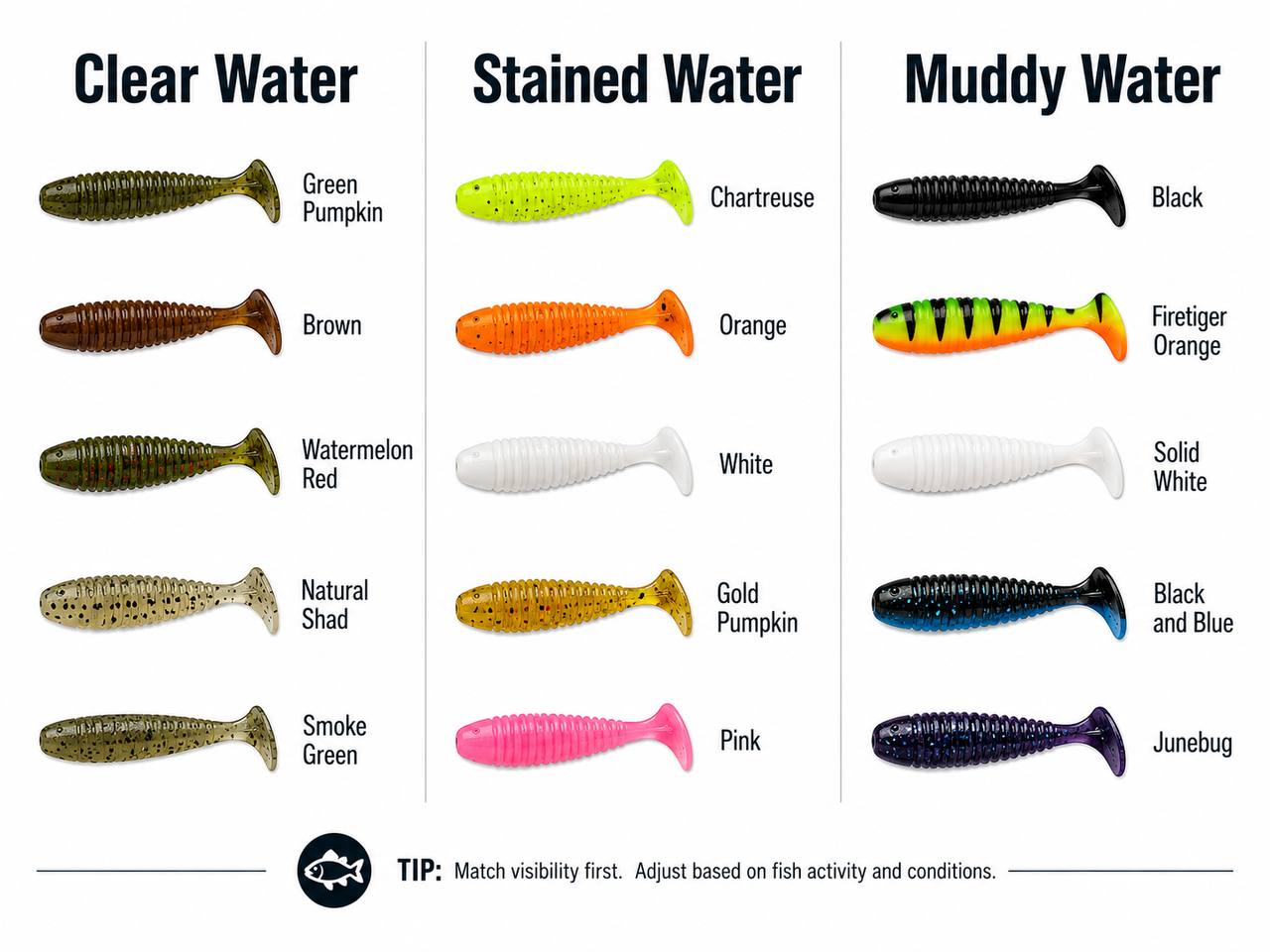
Water clarity — essentially how far you can see into the water — is one of the most important factors in choosing fishing lures for different fish. You can estimate it pretty simply: if you can see the bottom, the water is clear. If you see a tint but can’t make out the bottom, it’s stained. If you can barely see your hand, it’s muddy.
Keep in mind that water clarity isn’t a fixed property of a lake. The same body of water can shift from clear to stained to muddy based on weather, runoff, and recent storms.
Clear water calls for natural, subtle colors. Think green pumpkin, watermelon, motor oil, or natural baitfish patterns. Fish can see well in clear water, so realism matters. Smaller sizes and more subtle presentations (slower retrieves) also work better because fish are more wary.
Stained water — slightly murky or tea-colored — works with moderate brightness. Chartreuse accents, white, or shad patterns with bright lateral lines give your lure enough visibility without looking unnatural.
Muddy or dirty water needs dark, high-contrast colors or solid bright colors. Black, black-and-blue, chartreuse, orange, and firetiger all work because they create a visible silhouette in low visibility. Larger lure sizes help too, because they create more vibration that fish can sense even when they can’t see clearly. Spinnerbaits with larger Colorado blades (which produce more vibration) are especially effective in these conditions.
Here’s the key point: lure color isn’t about tricking the fish. It’s about making sure the fish can find your lure in the available light. A green pumpkin worm in muddy water is like wearing a camo jacket into a dark room — the fish simply can’t see it.
It’s also worth noting that color matters less than many beginners think. Presentation, depth, location, and retrieve speed tend to have more impact on catching fish than color alone. The common angler saying “location, location, location” applies here.
Cover Type and Lure Profile
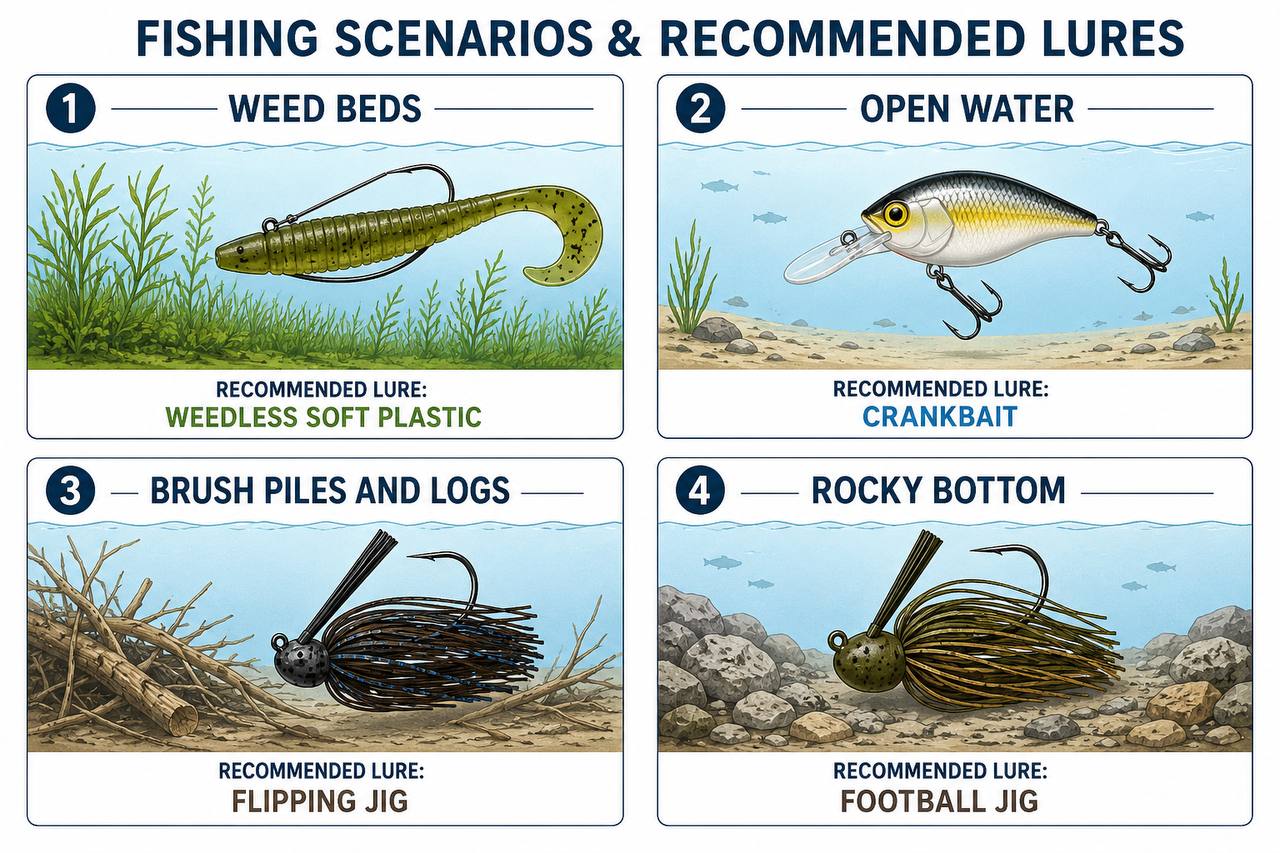
“Structure” or “cover” refers to places where fish hide and ambush prey — weed beds, fallen logs, docks, rocky bottoms, drop-offs. The type of cover should influence which lure you choose, because some lures get hung up while others glide through.
Heavy weed beds: Texas-rigged soft plastics and jigheads are the way to go. Weedless presentation is non-negotiable — a crankbait in thick weeds is a lost lure.
Open water: Crankbaits and swimbaits excel at covering water in open areas. They let you search for fish efficiently.
Brush piles and logs: Flipping jigs and soft plastics work well around woody structure. Topwater can also be effective near cover during low-light conditions.
Rocky bottoms and hard structure: Jigs (especially football jigs designed to roll along rock) and swimbaits handle rough bottom well.
When fishing clear water around heavy cover, line visibility becomes an additional factor — braided line is more visible underwater than fluorocarbon or monofilament. If you haven’t settled on a line type, our comparison of monofilament, fluorocarbon, and braid can help.
Current and Lure Action
Moving water changes how lures behave. Rivers, creek channels, and inflows create current that pushes lures around.
In current, jigs and weighted soft plastics hold their position better — you can drop them to the bottom and let them sit while the current flows around them. Crankbaits drift away faster in moving water since they’re designed to run at a specific depth when retrieved steadily.
In still water like lakes and ponds, all lure types perform as designed, and you have full control over depth and speed.
Variable 3: Match Your Lure to Season and Time of Day
We’ve matched the lure to the fish and the water. Now let’s factor in when you’re fishing.
Fish behavior changes with water temperature throughout the year. Warmer water means faster metabolism and more active feeding. Colder water means slower metabolism and less activity.
These seasonal patterns assume a temperate climate. If you’re fishing in the Southern US, spring patterns may start weeks earlier. In the Northern US, they arrive later. Always pay attention to local water temperature rather than the calendar — our bass water temperature guide explains how temperature drives bass behavior in more detail.
Seasonal Lure Selection
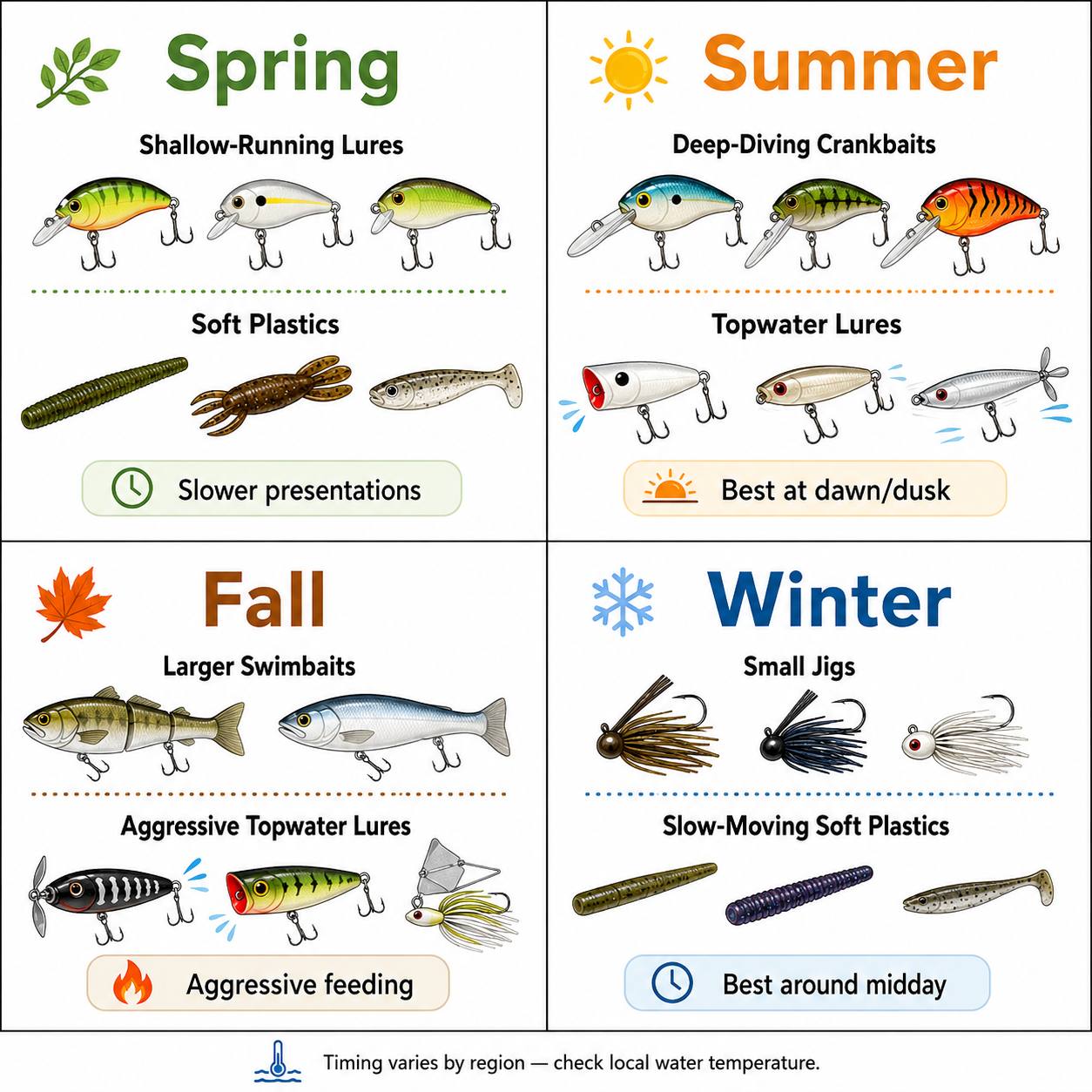
Spring (warming water, spawning): Fish move into shallower water to spawn. Shallow-running lures excel — topwater can be very effective because bass are territorial near their nests. Crankbaits and soft plastics in natural colors with slower presentations early in the season work well. Gradually increase speed and size as water warms.
Summer (warm water, deeper structure): Fish tend to move deeper or into shaded cover. Use deeper presentations during the day: deep-diving crankbaits for offshore fish, jigs for fish on bottom structure. Topwater shifts to dawn, dusk, and night when fish move shallow again.
Fall (cooling water, heavy feeding): Often called the feeding frenzy — bass and other species are building reserves for winter. Larger, faster, more aggressive lures work well: large crankbaits, large swimbaits, topwater. Shallow water becomes productive again as water cools.
Winter (cold water, sluggish fish): Smaller lures and slower presentations. Small jigs fished slowly, tiny soft plastics, slow-moving swimbaits. Midday is often best since the water is warmest.
Time of Day and Lure Depth
Light conditions during a single day also shift your lure strategy:
Dawn and dusk: Fish are more active and often shallower. Topwater lures are most effective during these windows.
Bright midday: Fish hold deeper or in shade and cover. Deeper-diving lures like crankbaits and jigs are better choices.
Overcast days: Fish are more active throughout the day. A wider range of lures tends to be effective, and topwater becomes more viable even during midday.
Night: Subsurface lures with good vibration profiles dominate. Topwater still works for bass in summer.
The Quick-Reference Decision Framework
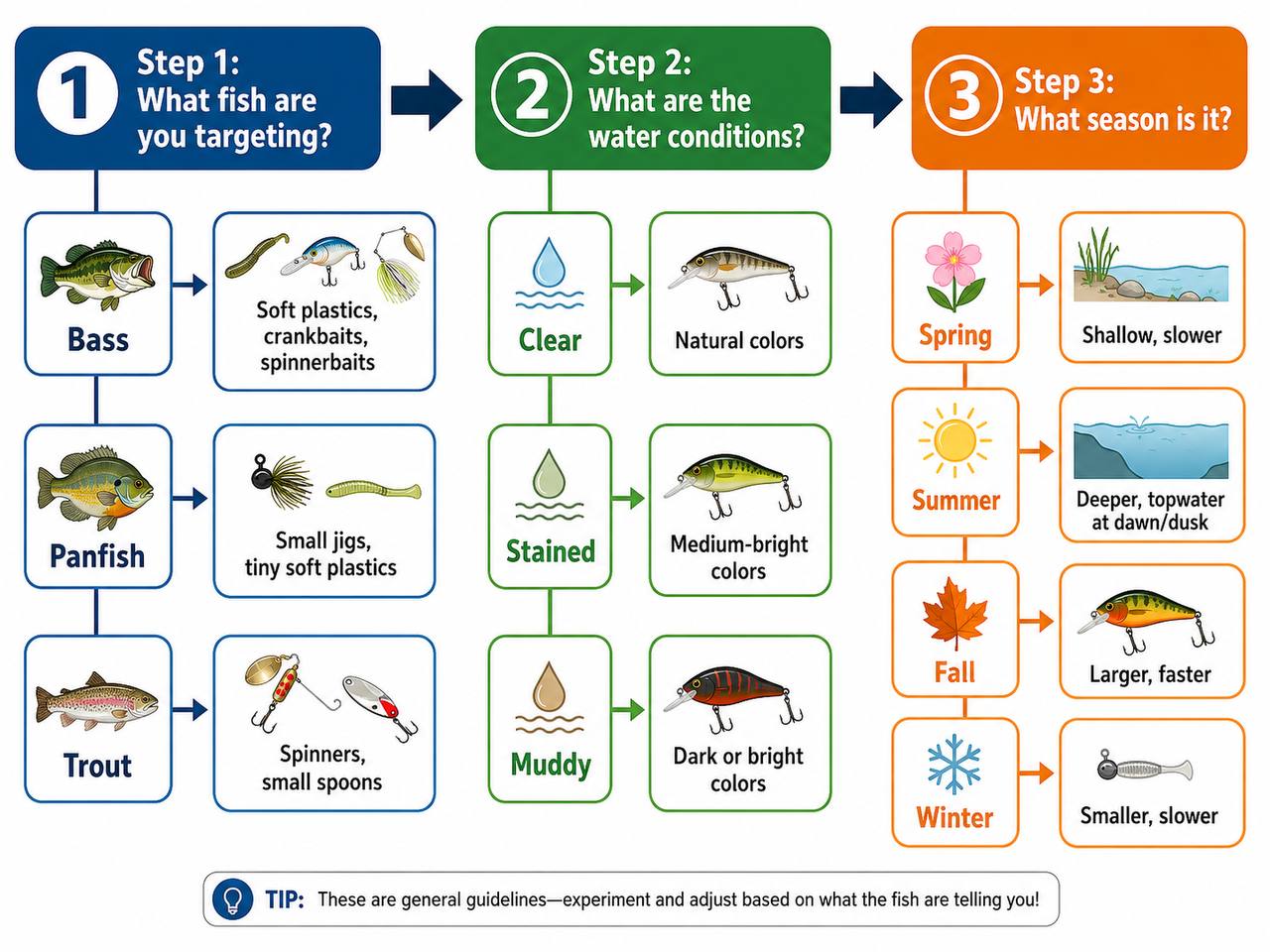
Here’s the three-variable process condensed into something you can use while standing at the water. Think of it as a mental checklist before you tie on your lure.
Step 1 — What fish are you after?
- Bass → soft plastics, crankbaits, spinnerbaits, jigs, topwater
- Panfish → small jigs (1/32–1/16 oz), tiny soft plastics, small spinners
- Trout → spinners, small spoons, lightweight jigs
- Catfish → weighted jigs on the bottom (though live bait is more reliable)
Step 2 — What do the water conditions look like?
- Clear → natural colors (green pumpkin, watermelon, brown), smaller sizes, subtle presentations
- Stained → moderate brightness (chartreuse accents, white), medium sizes
- Muddy → dark or bright colors (black, chartreuse, firetiger), larger sizes, more vibration
Step 3 — What season and time is it?
- Spring → shallow-running lures, smaller to medium sizes, slower early in season
- Summer → deeper lures during day, topwater at dawn/dusk
- Fall → larger, faster, more aggressive lures
- Winter → smaller, slower lures; midday often best
Quick-Reference Examples
Here are a few common combinations to help you see how the framework comes together in practice:
| Conditions | Recommended Lure |
|---|---|
| Clear water + spring + bass | Green pumpkin jig or slow-rolling crankbait |
| Stained water + summer + bass | Chartreuse spinnerbait |
| Muddy water + any season + bass | White or firetiger soft plastic with blade trailer |
| Clear water + fall + panfish | Small natural-colored jig or tiny spinner |
| Any clarity + winter + bass | Small jig with creature-bait trailer, fished slow |
This is a starting point, not a rulebook. Fishing involves variables that no table can fully capture — wind, recent weather, fishing pressure, and local forage all play a role. Use the framework to narrow your options, then adjust based on what you’re seeing on the water.
Lure Size: Matching Bait to Forage
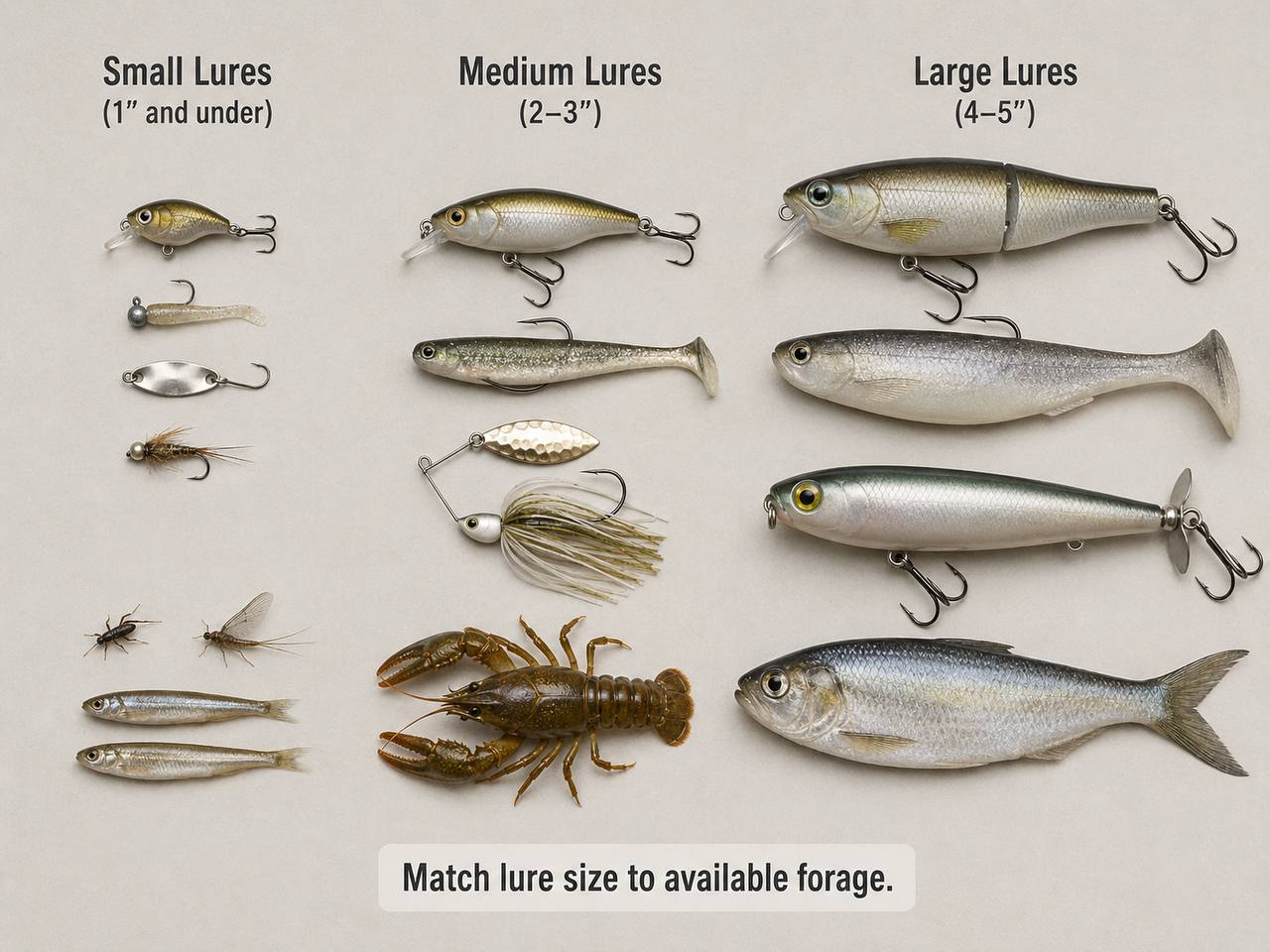
One of the most overlooked principles in lure selection is matching your lure size to what the fish are actually eating. “Forage” is just a fishing term for the natural food — baitfish, crayfish, insects — that fish eat. Matching your lure to local forage increases your chances, and this concept (often called “matching the hatch,” borrowed from fly fishing) applies to all lure types.
In early spring, bass may be feeding on 2–3 inch crayfish as water warms — a smaller jig or craw imitation works better than a large swimbait. By summer, they may be eating 4–6 inch shad, and larger soft plastics become more appropriate.
Panfish eat tiny organisms, so 1-inch or smaller lures are the target size.
A practical guideline for beginners: when in doubt, start smaller than you think. Oversized lures are a common beginner mistake, especially for species like panfish and trout that have smaller mouths.
What to Do When You’re Still Not Catching Fish
You’ve matched your lure to the species, picked a color for the water clarity, and adjusted for the season — and you’re still not getting bites. Frustrating? Yes. Unusual? Not at all. Here’s a practical troubleshooting sequence.
Change lure color before changing lure type. It’s the easiest first step — swap a green pumpkin worm for a white or chartreuse one without changing your entire presentation.
Change retrieve speed before changing depth. Retrieve speed — how fast you reel in the lure — has a big impact on triggering bites. Try slowing down first. If you’re already slow, try a stop-and-go rhythm (reel a few turns, pause, repeat) instead of a steady pace.
Try a smaller size before switching categories. If nothing is getting bitten, the lure may simply be too large for what the fish are comfortable eating.
Reassess water clarity. Conditions can change during the day, especially after rain. If runoff has made the water murkier, your natural-colored lure may have become invisible. Learning how to read water for fishing helps you spot these shifts faster.
Consider that fish might be deeper or in different cover than expected. You could have the right lure but be fishing the wrong zone. Covering water with a search lure like a crankbait helps locate where fish are holding.
Sometimes the lure choice was right but the hookset technique was the issue. A missed strike doesn’t always mean the wrong lure — you might have just missed the set. Our guide on setting the hook and fighting fish covers what to do once the bite happens.
Understand what triggers a bite in the first place. Fish don’t always strike because they’re hungry — sometimes it’s territorial, sometimes instinctive, and sometimes they’re just not in a feeding mood. Our article on what triggers every strike breaks this down.
One habit that helps: give each lure a fair trial before switching. Many anglers suggest 50–100 casts in a promising area before changing. A common beginner mistake is tying on a lure, throwing three casts, and switching — that’s rarely enough to determine whether a lure is working.
Building a Starter Lure Collection on a Budget
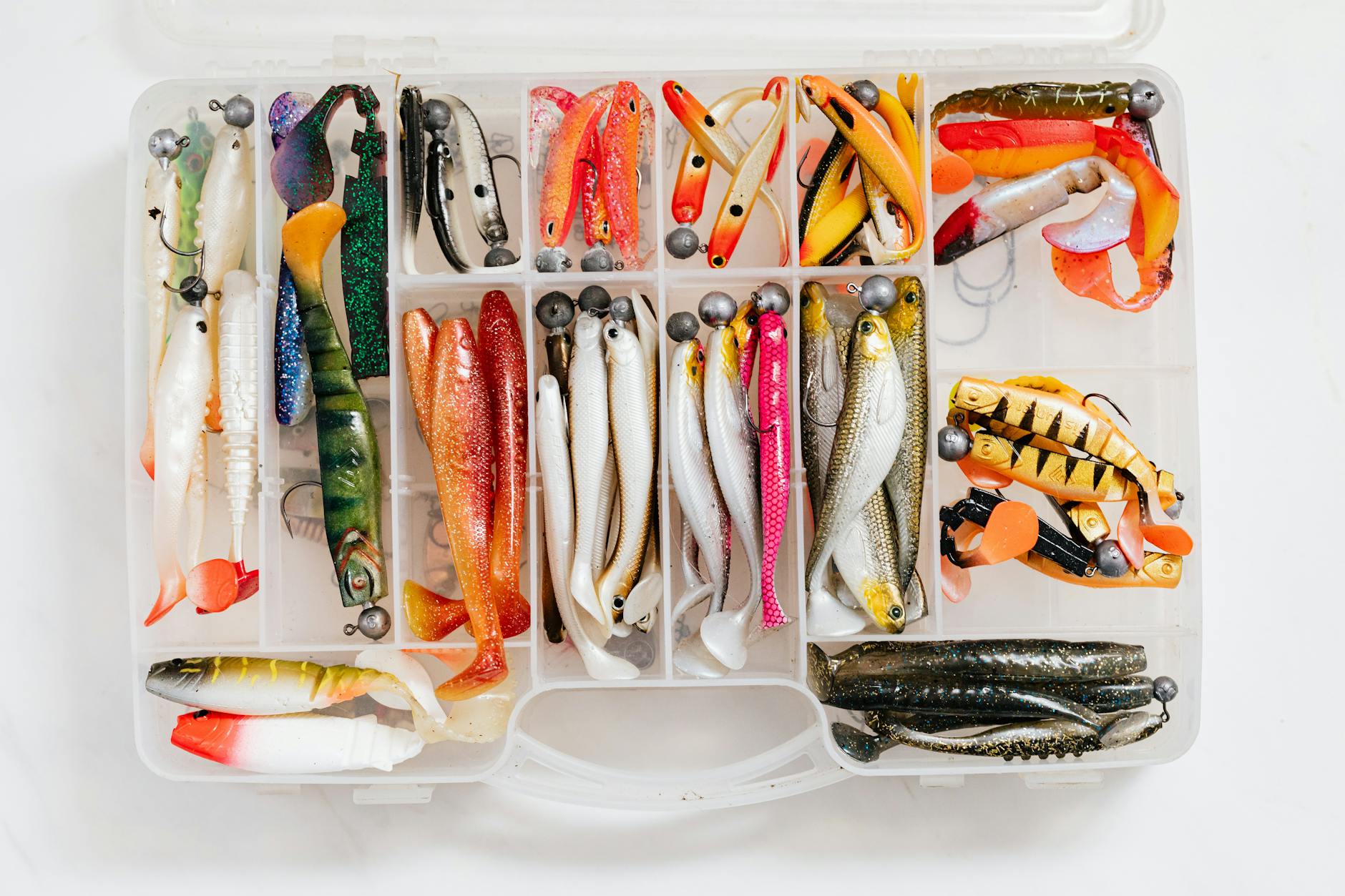
You don’t need a tackle box full of lures to start catching fish. A small, well-chosen selection that covers the three-variable framework is more useful than a large, random one.
Here’s a practical starter list that works across species, seasons, and conditions:
- 1–2 soft plastic worms (4–5 inches): Pick a green pumpkin (clear water) and one bright color like chartreuse or white (stained or muddy water). These work for bass, catfish, and large sunfish.
- 1–2 jigheads with matching soft plastics: A 1/4 oz jighead for bass and a 1/32 oz jighead for panfish. Add small tube baits or creature-bait trailers.
- 1 medium-diving crankbait: Covers the most useful depth range (approximately 5–10 feet) and works for searching open water. A natural baitfish pattern is a good starting color.
- 1 spinnerbait: Pick one with a Colorado blade if you expect stained water or heavy cover. It’s weedless, loud, and effective.
- 1 topwater lure: A popper or hollow-body frog for dawn and dusk fishing.
- 1 small spinner or spoon: For trout and panfish.
That covers the decision framework: you have options for bass and panfish, lures for clear and stained water, and something for each season. The total cost for a starter set like this is usually well under $30.
If you’re still building your overall gear setup, our starter tackle kit checklist and beginner fishing basics guide can help you put together the complete picture — rod, reel, line, and everything else.
Frequently Asked Questions
How do I choose a fishing lure for beginners?
Start with three variables: what fish you’re targeting, what the water looks like, and what season it is. Match your lure category to the fish species, adjust color to the water clarity, and pick size and retrieve speed based on the season. Soft plastics are widely considered the safest first purchase because they work across species, seasons, and conditions.
What lure should I use for bass?
There’s no single “best” lure for bass. Crankbaits work well for covering open water and locating fish. Soft plastics are effective around heavy cover and in most conditions. Spinnerbaits tend to perform well in stained water. Topwater lures work best at dawn, dusk, or on overcast days. Your choice should depend on the conditions you’re facing, not just the species.
Does lure color really matter?
Yes, but not in the way most beginners expect. Color matters most in relation to water clarity. Clear water calls for natural colors; muddy water needs bright or dark, high-visibility colors. The goal is making sure the fish can find your lure in the available light. That said, presentation, depth, location, and retrieve speed tend to matter more than color alone.
What’s the best lure for panfish?
Small jigs — 1/16 oz or lighter — with tiny soft-plastic trailers or marabou are the most versatile panfish lure. Small spinners and spoons also work well. Size matters more than type for panfish — match the small forage they eat, and downsize if targeting bluegill specifically.
Should I use topwater or subsurface lures?
Topwater lures — which float on the surface and simulate injured prey — work best at dawn, dusk, or in low-light conditions when fish are actively feeding near the surface. Subsurface lures (crankbaits, jigs, soft plastics that run below the surface) are more versatile across conditions and times of day. If unsure, subsurface is the safer default.
How deep should my lure run?
It depends on where the fish are holding, which changes with season, water temperature, and cover. Crankbaits have running depths determined by their bill size — square-bills run shallow, long-bills run deep — but actual depth varies by brand, retrieve speed, and line type. Soft plastics and jigs let you control depth by adjusting your retrieve speed. Start shallow and work deeper if you’re not getting bites.
Can I use the same lure for different fish species?
Many lures are versatile. A green pumpkin soft plastic works for bass, catfish, and even large sunfish. A medium-diving crankbait can catch bass and occasionally larger trout. The key is adjusting size and presentation based on your target species — a 5-inch swimbait that works for bass will be too large for bluegill.
Putting It All Together: Your Lure Selection Checklist
The next time you’re at the water, run through this quick mental checklist before tying on your lure:
- What fish am I targeting? Pick a lure category that matches the species and its typical forage.
- What does the water look like? Choose a color and size that matches the clarity. Clear water means natural and subtle; muddy water means bold and visible.
- What season and time is it? Adjust speed, size, and depth. Cold water calls for smaller and slower; warm water allows larger and faster.
This framework removes the guesswork. Experience will build intuition over time — you’ll start recognizing patterns and reading conditions faster. But the three-variable process works from day one.
Fishing always involves a bit of mystery. You can read all the conditions perfectly, tie on the “right” lure, and still wonder why the fish are holding somewhere you hadn’t considered. That uncertainty is part of what keeps us coming back to the water. Show up, stay patient, give each lure a fair shot, and you’ll catch more than you’d expect.
If you want to go deeper on any part of this, check out our guides on soft plastic baits, building a tackle box, and reading water conditions.