
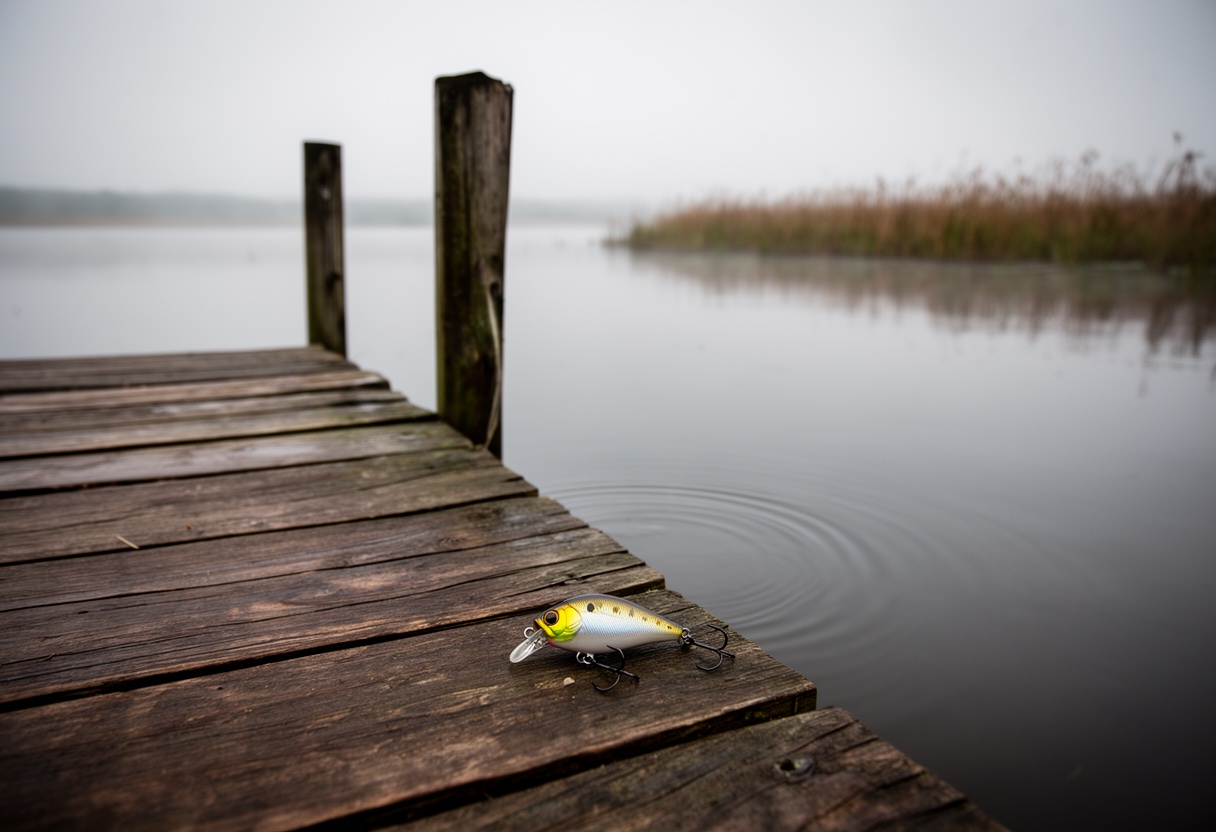
You’ve tried soft plastics. Maybe you’ve worked a jerkbait or two. Now someone mentioned crankbaits as if they’re some kind of Swiss Army knife of lures, and you want to know whether that’s true — or just another lure you’ll buy once and forget about.
Crankbaits are genuinely versatile. They cover water fast, dive to different depths depending on their design, and produce vibration and flash that fish respond to even when they’re not actively feeding. The challenge for beginners is that crankbaits come in a dozen shapes, each rated for different depths, and choosing the wrong one for your situation can feel like fishing blind.
Here’s what to know about crankbait types, how to retrieve them, and which three to start with.
What Is a Crankbait?
A crankbait is a hard plastic lure with a clear plastic diving lip attached to the front. That lip is what makes a crankbait unique — it acts like a hydrofoil, forcing the lure underwater as soon as you start reeling. You don’t need to do anything special; cast it out and reel, and the crankbait dives on its own.
As the lure moves through the water, it creates vibration (felt by a fish’s lateral line), visible wobble, and flash from reflective paint or eyes. This combination of sensory triggers is why crankbaits work across seasons, water clarity, and species.
Crankbaits range from tiny 1-inch models for panfish to 4-inch-plus lures designed for big bass. The body shape, bill length, and internal weight distribution determine how deep it dives, how fast it runs, and what kind of action it produces.
Crankbait Types by Bill Shape and Diving Depth
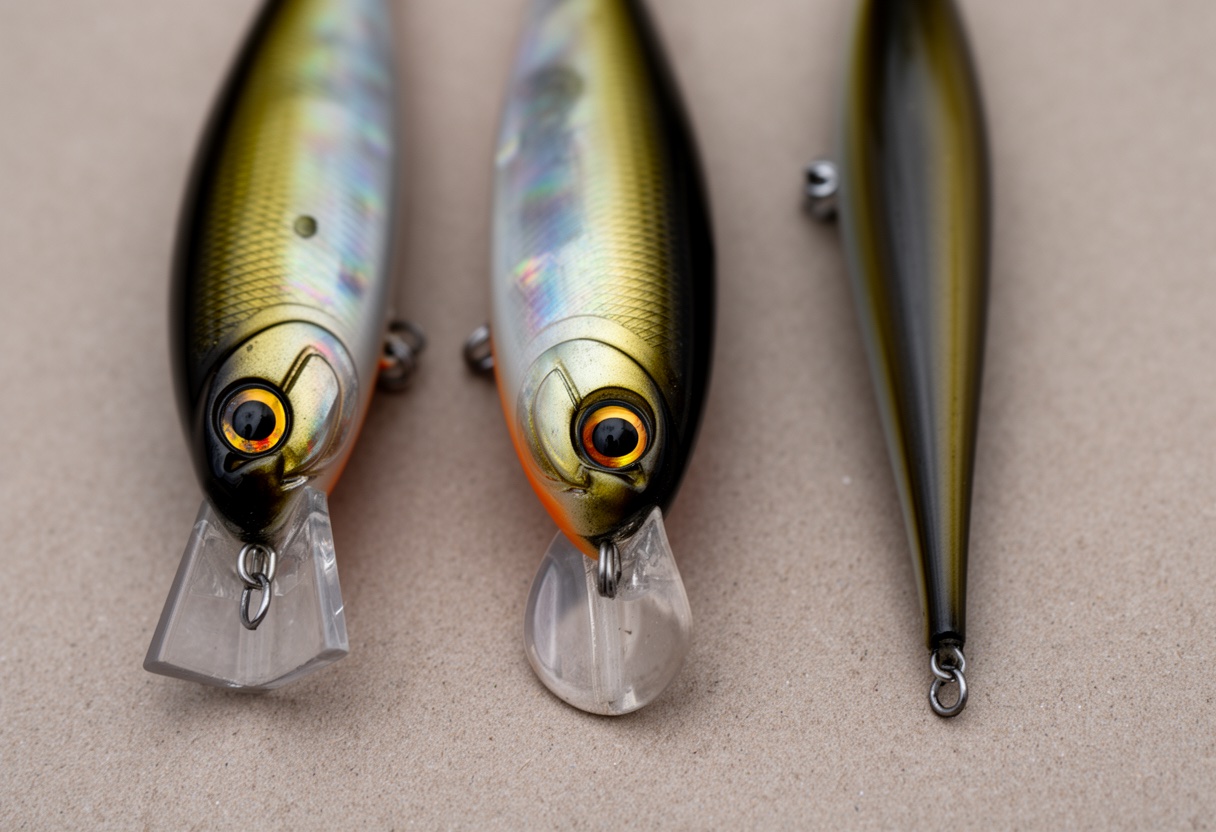
The plastic lip on a crankbait is called a bill. Its shape and size are the single most important factor in choosing a crankbait because they determine how deep the lure runs. Here’s how the four main types break down:
Square bill crankbaits dive shallow — typically 2 to 4 feet at maximum. The wide, flat bill creates a broad side-to-side wobble that’s highly visible to fish. Square bills are the deflection kings: when they hit a log, rock, or dock piling, they bounce off rather than snag. Use them around heavy cover, along weed edges, and near any structure in shallow water.
Round bill crankbaits are the medium divers, running 4 to 10 feet deep. They have a rounded lip that dives faster than a square bill and produces a narrower wobble. Round bills are the most versatile crankbait type and the best first choice if you’re only buying one. They work well along submerged banks, over flats, and around scattered rocks.
Long bill crankbaits are the deep divers, reaching 10 to 20+ feet depending on the model. The long, slender bill acts like a deep-diving hydrofoil, pushing the lure down aggressively on the cast and maintaining depth during a steady retrieve. Use long bills when fish are holding deep on ledges, steep banks, or in open water during summer and winter.
Lipless crankbaits have no bill at all. Instead of diving, they sink straight down and are fished along the bottom with a fast, vibrating retrieve. Most lipless crankbaits are hollow and loaded with small metal BBs that create an audible rattle. They excel on rocky bottoms, in clear water, and during fall when fish follow baitfish along the bottom.
Which type you need depends on where the fish are holding. If you’re fishing a shallow creek, a square bill will outperform a deep diver. If the lake is 20 feet deep and fish are stacked on a ledge, a shallow crankbait won’t reach them at all.
How to Retrieve a Crankbait
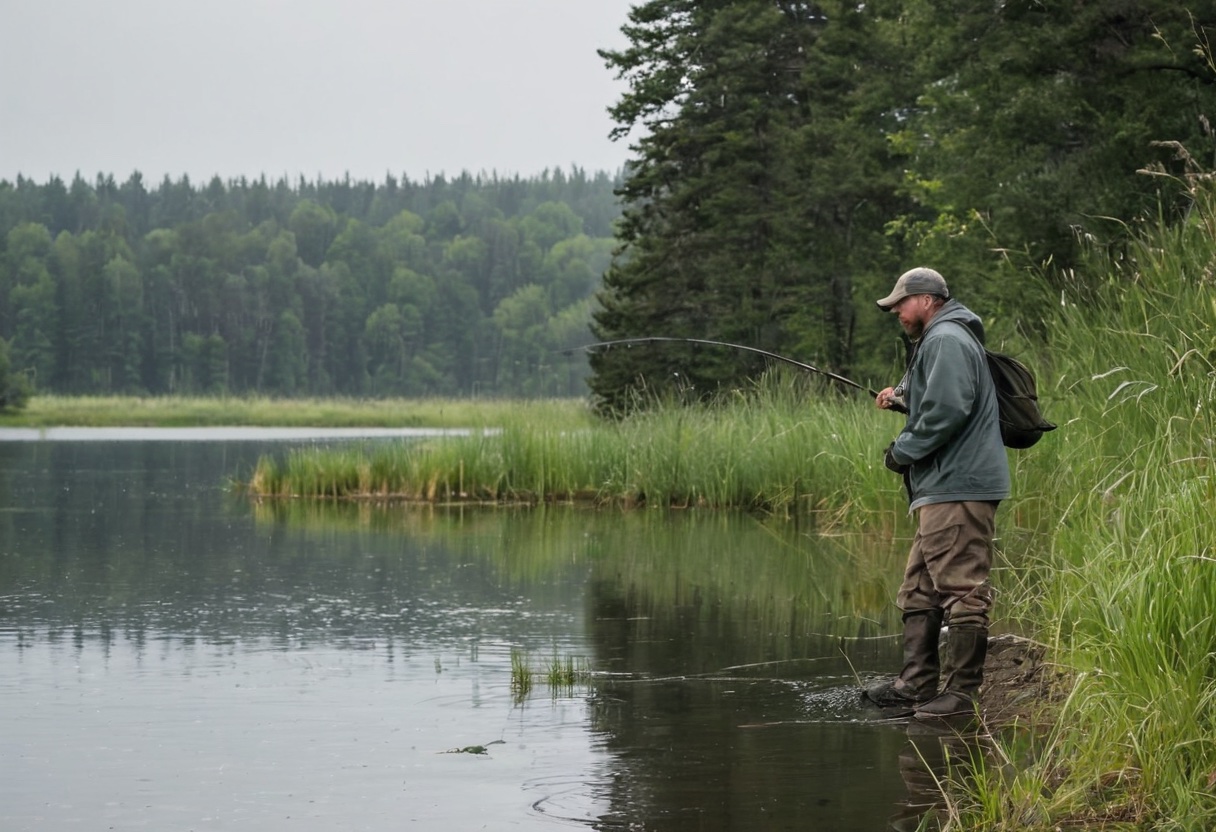
You can fish a crankbait in a lot of ways, but you don’t need to master them all. Start with these techniques:
Straight retrieve. Cast and reel at a steady pace. This is the most reliable technique because it works with every crankbait type in every condition. A steady retrieve is your baseline — if nothing else works, go back to this.
Stop-and-go. Pause your retrieve for 3 to 4 seconds every few turns of the handle. When you stop, the crankbait rises slightly and its action changes — some lures wobble wider, others go almost still. This pause-and-drop simulates an injured baitfish and often triggers strikes from fish that weren’t following the lure.
Mixed retrieve. Vary your speed during the same cast: start fast, slow down near structure, then pick back up in open water. You can also twitch the rod tip to add extra wobble. Fish often respond to a specific speed or pause point, and varying your retrieve helps you find what’s working on any given day.
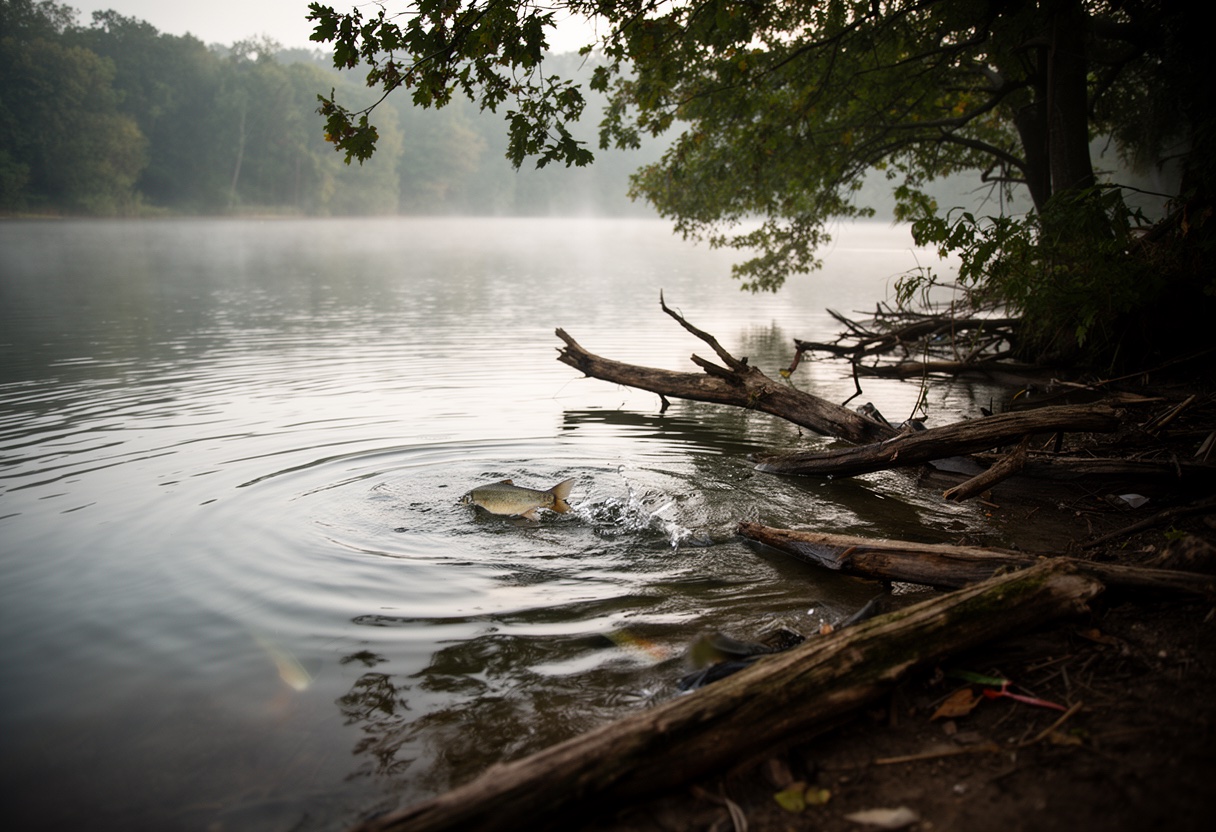
Deflection fishing. When you cast near or into structure — fallen trees, rocks, docks — the crankbait will bounce off the obstacle. Don’t fight it. Let the bill deflect the bait naturally. The interrupted action after a deflection frequently draws a strike. Many beginners reel faster to “get out of trouble,” but the bite typically happens right after the deflection.
Rod tip position controls depth. Holding your rod tip low (pointing toward the water) lets the crankbait dive deeper. Raising the rod tip brings the lure shallower. This is a simple technique that helps you fine-tune depth without changing lures.
When to Fish Crankbaits (Season and Conditions)

Crankbaits work year-round, but the right crankbait for the season matters more than most beginners realize.
Spring is arguably the best crankbait season. As water warms, bass move into shallower water around spawning structure. Square bills and medium round bills excel here — they cover flats and edges at the right depth. Fish your crankbait at a moderate pace during spring; fish are active but not frantic.
Summer pushes fish deeper. Long bill crankbaits become the go-to choice for reaching ledges and thermoclines. Retrieve pace can slow slightly in hot water, but keep the lure moving — summer fish often hit crankbaits on the steady run.
Fall crankbait fishing is about speed. As water cools, baitfish schools become active and predatory fish follow them. Pick up your retrieve pace, work the lure faster, and fish along current edges and channel bottoms. Lipless crankbaits shine during fall on rocky structure.
Winter fishing with crankbaits depends on water clarity. In clear water, lipless crankbaits and shallow divers work well near remaining cover. Keep the retrieve slow and let the lure’s natural action do the work — winter strikes are often subtle.
Water clarity also drives color choice. In stained or murky water, brighter colors like chartreuse or white stand out. In crystal-clear water, natural patterns that mimic local baitfish (shad, minnow) are more effective.
Choosing Your First Crankbaits
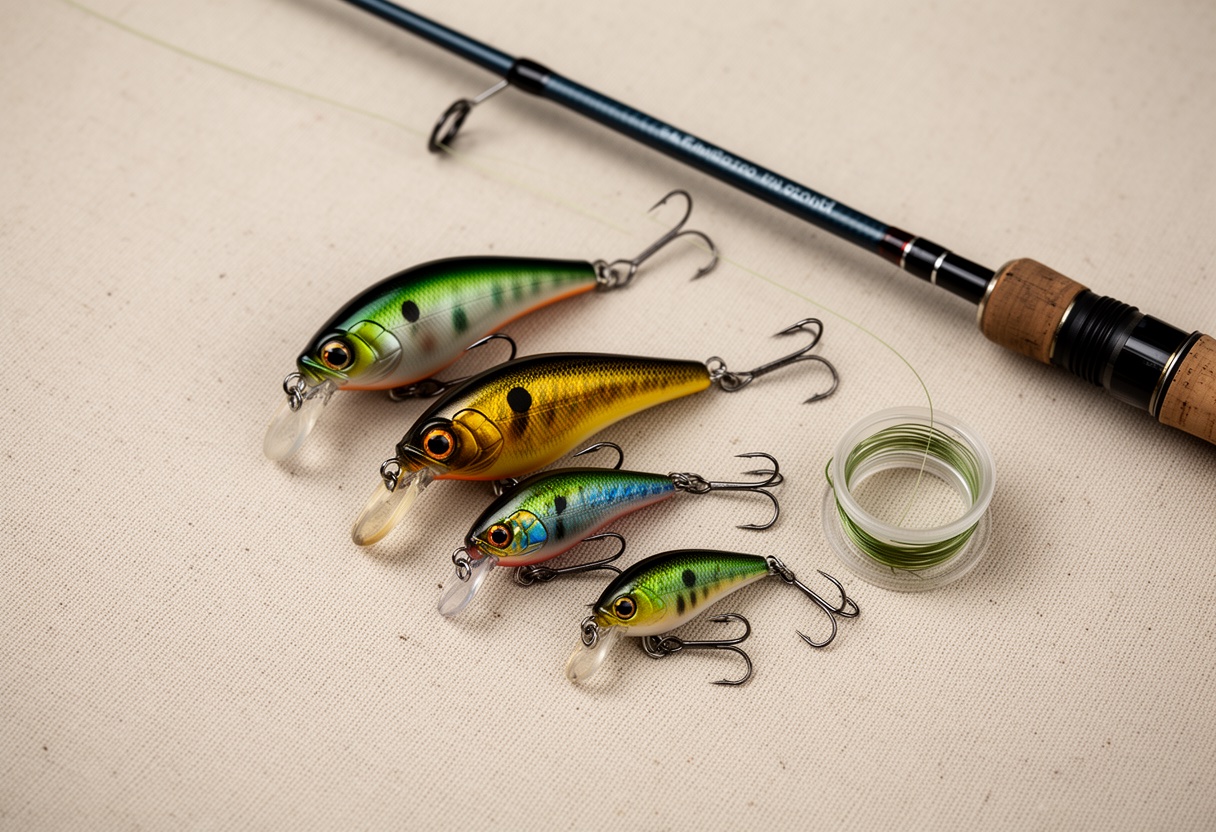
You don’t need a dozen crankbaits. A well-chosen set of three covers the vast majority of freshwater situations:
- One square bill (shallow, 2-4 ft) — for cover-fishing, docks, weeds, and spring flats
- One medium round bill (4-10 ft) — your all-purpose crankbait for banks and scattered structure
- One long bill (10-20 ft) — for deep water, ledges, and summer/fall open water
For colors, start with one chartreuse/white combination (works in stained water) and one natural pattern like shad or silver (works in clear water). You can always add a third color later based on the lakes you fish.
Rod pairing matters. Use a 7-foot medium-power “cranking” rod — it has enough backbone to pull a crankbait out of trouble but enough flexibility to let the lure’s action come through. Heavy rods dampen crankbait vibration; light rods won’t control a deep diver. See our guide to choosing a fishing reel for pairing recommendations.
Line choice for beginners. Ten to 14-pound monofilament is forgiving and easy to see in the water, which helps you read your crankbait’s depth and action. Braided line lets crankbaits dive deeper (less line stretch), but mono is easier for beginners to manage.
If you’ve been fishing soft plastics and want to compare how hard baits differ in action and presentation, our soft plastic baits guide covers the contrast between soft and hard lures.
Common Beginner Mistakes
These are the most frequent reasons crankbaits don’t produce results for new anglers:
Fishing one speed. If you retrieve every crankbait at the same pace, you’re leaving bites on the table. Vary your speed — even a small change can trigger a strike from a fish that was following but not biting.
Wrong depth for the situation. A deep-diving crankbait in 3 feet of water won’t get bites because the lure is running 10 feet below where the fish are. Match the crankbait’s diving depth to the water depth and structure you’re fishing.
Ignoring line type impact. Thicker line restricts how deep a crankbait dives. If you’re running 20-pound braid, your “10-foot diver” may only reach 7 feet. For deeper diving, use thinner line (6-10 lb braid or 10-12 lb fluorocarbon).
Over-manipulating the lure. Crankbaits are designed to produce their own action. Twisting the rod, excessive twitches, and constant speed changes can make the lure look artificial. Trust the bill design — cast, reel, and let the crankbait do what it was built to do.
Using the wrong rod. A heavy-power rod designed for flipping or trolling won’t let a small crankbait wobble naturally. The rod should match the lure size. Medium-power cranking rods are the sweet spot for most crankbaits.
Crankbaits are one of the most effective tools in a beginner’s tackle box once you understand depth matching and retrieve basics. Pair them with the right rod, keep your retrieve adaptable, and they’ll catch fish across every season. If you’re curious about other hard bait techniques, our jerkbait fishing guide covers a complementary approach to fishing lures without a diving lip.