
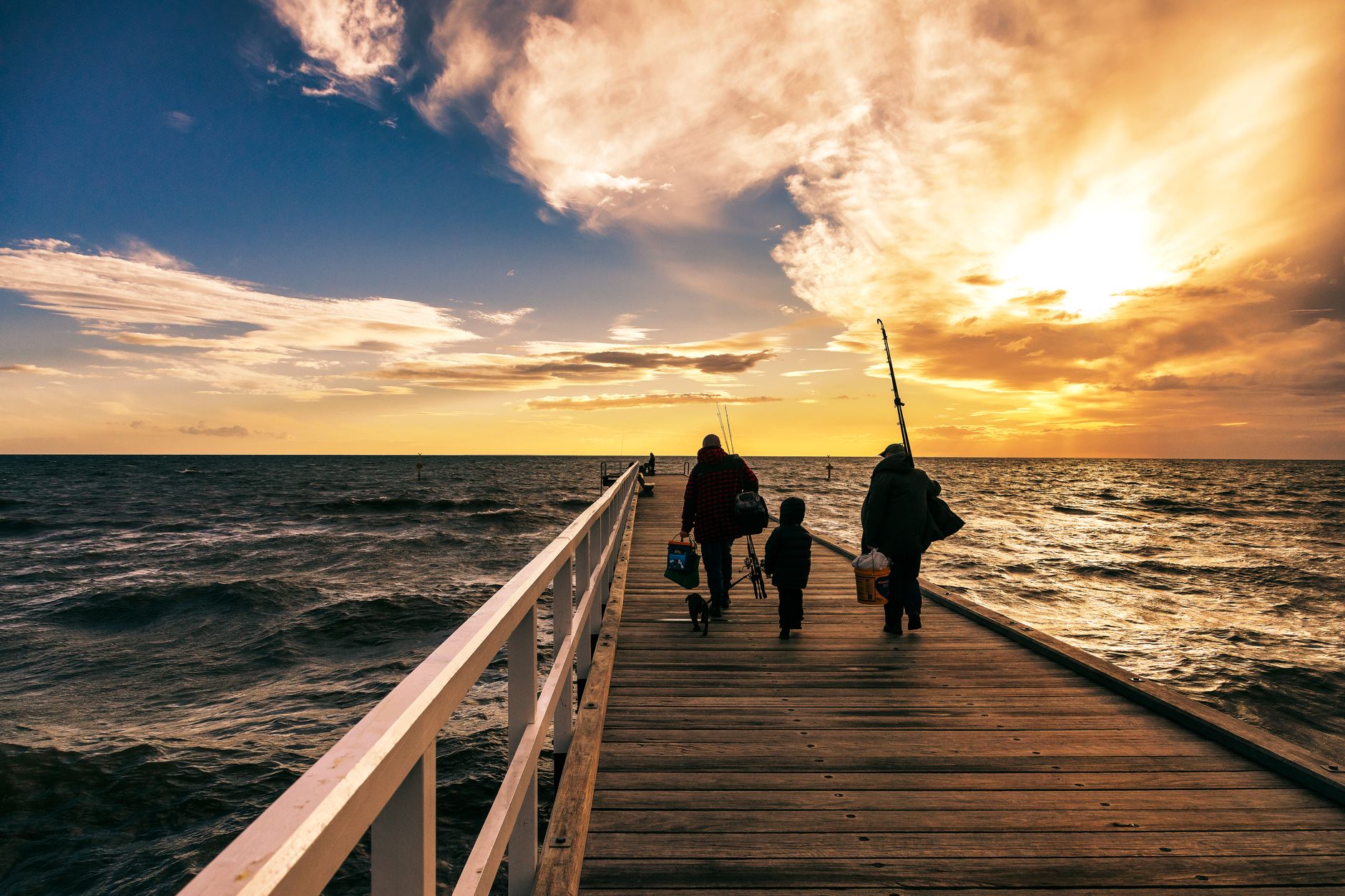
Fishing from a pier or jetty is one of the easiest ways to start saltwater fishing. You don’t need a boat or a captain — just the right gear, some preparation, and a willingness to learn how the ocean works. If you’re brand new to fishing altogether, beginner fishing basics will give you a solid foundation before you head to the shore.
This guide covers what fish to target, what gear to bring, how to bait your hook, how tides affect your success, simple rigging setups you can assemble in five minutes, and the safety steps that keep you safe.
Why Start with Pier and Jetty Fishing
Piers and jetties bring the action to you. These structures create underwater habitats that attract baitfish, which pull in predators. The pilings — vertical posts holding the structure above water — get covered in barnacles, algae, and small marine life. It’s a mini-ecosystem that fish can’t resist. Whether you’re after red drum in the Gulf or sheepshead on the Atlantic coast, pier and jetty fishing puts you right over productive water.
What Is Pier Fishing
A pier is a built structure extending from shore into the water, usually with a flat walkway and railings on all sides. Some are small community spots; others are large concrete platforms stretching hundreds of feet. They offer shade, wind protection, and most importantly a safe, stable platform. You can fish from a pier in nearly any weather and at any tide stage, which is why they’re ideal for beginners.
What Is Jetty Fishing
A jetty is a rock or concrete breakwater built to protect harbors and inlets from wave action. Unlike piers, jetties typically have no railings and feature uneven, slippery surfaces. They extend into deeper water and often produce bigger fish than nearby piers. Jetty fishing is more rewarding but also more demanding and dangerous — something to work toward as you gain confidence.

Key Differences Between Piers and Jetties
The distinction matters for both safety and technique. Piers offer a controlled, forgiving environment with railings, flat walking surfaces, and often amenities like bait shops or restrooms. Jetties get you into deeper water and more aggressive species but demand proper footwear, careful footing, and constant ocean awareness. Start on a pier and graduate to a jetty once you’re comfortable with basic saltwater fishing. If you’re also interested in other shore-based options, bank fishing follows a similar approach for inland and estuary waters.
Target Species You’ll Catch from Piers and Jetties
What you catch depends heavily on your location, the time of year, and water conditions. Late spring and early summer are great months to start — inshore waters are warming up and many species become highly active. The fish below are common targets on piers and jetties along the East Coast and Gulf Coast, though availability always varies by region.
East Coast Species
On the Atlantic coast, piers from the Carolinas to New England typically produce these species in late spring and early summer:
- Red drum (redfish): Abundant around piers during warm months. Look for the distinctive black spot on the tail — that’s what separates red drum from black drum. They feed on crabs, shrimp, and small fish near pilings and shallow structure.
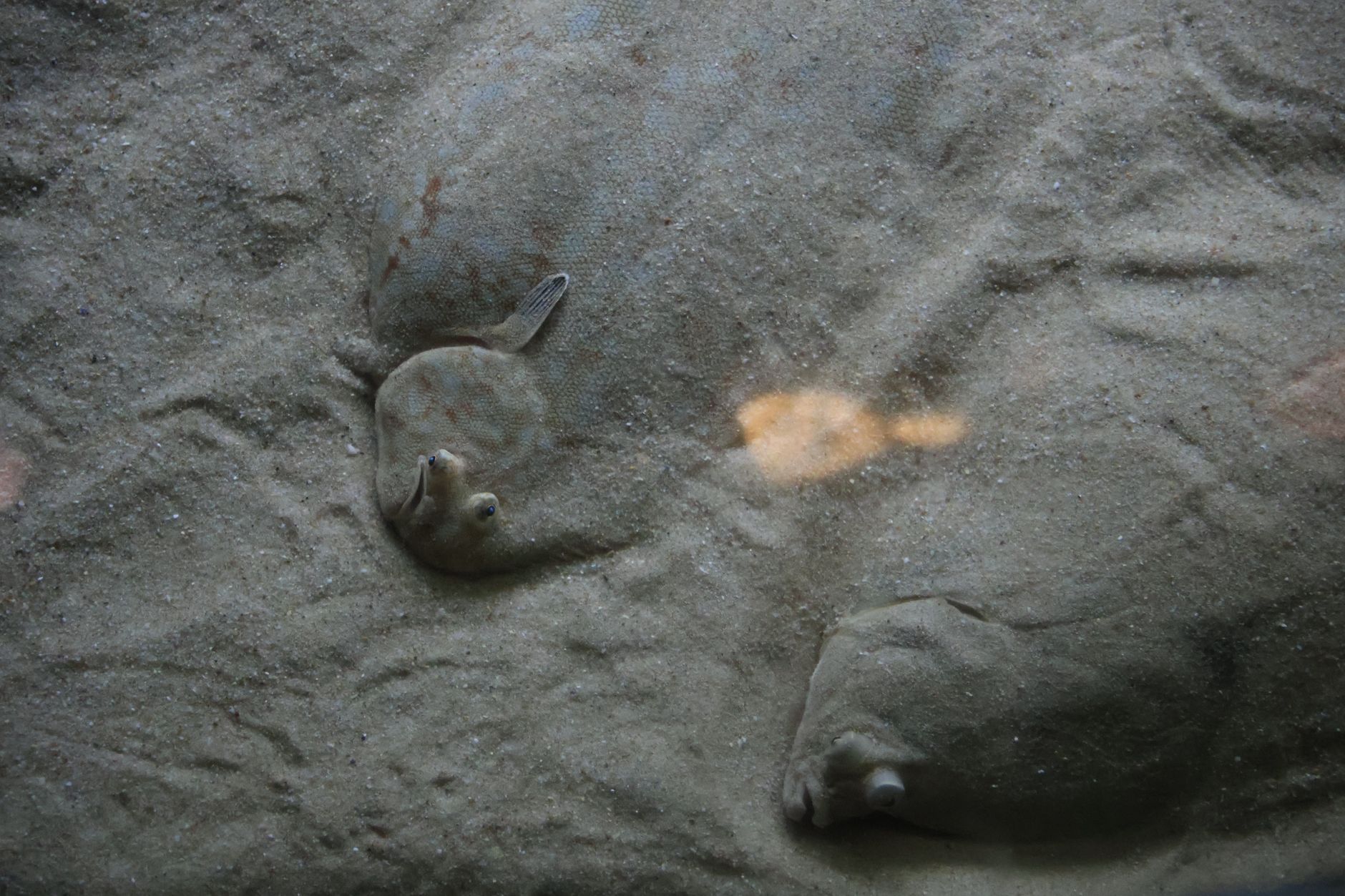
- Summer flounder: A bottom-dwelling flatfish that hangs around the sandy bottom near pier pilings. Excellent table fare and a satisfying catch for beginners.
- Sheepshead: Easily identified by dark vertical bars. These clever fish love pier structure and jetty rocks, feeding primarily on crustaceans. Live shrimp or crab makes excellent bait.
- Black drum: Dark gray to black with a large mouth full of molar-like teeth. Found in bay waters to deeper Gulf channels, most active during summer.
- Bluefish: Aggressive, fast-striking predators showing up around piers and inlets in spring and summer. They hit spoons, jigs, and small live baits, especially at dawn and dusk.
- Spanish mackerel: Smaller and closer to shore than their king mackerel relatives, averaging 2–4 pounds around jetties and nearshore reefs. They strike hard at small lures.
- Pompano: A popular, sought-after Atlantic pier species with a flat, silvery body and deeply forked tail. Active during warm months and delicious on the plate.
- Spot (sea trout): Common on South Carolina and North Carolina piers. They’ll bite on bloodworms, cut bait, shrimp, and squid.
- Whiting (croaker): A reliable pier species found alongside other inshore fish. Consistent and plentiful.
- Striped bass: Possible from piers in some regions (Virginia, North Carolina, Long Island) during certain seasons, but availability and regulations vary widely by year — always check local rules before targeting striped bass.
Gulf Coast Species
Gulf Coast piers offer a different but equally exciting mix during late spring and early summer:
- Red drum: Inshore waters warm quickly in spring, making redfish from piers outstanding during this season.
- Speckled trout (spotted seatrout): A prime Gulf pier species. Look for their dark vertical bars and spotted tail near bottom structure on warm nights.
- Flounder: Common year-round from Gulf piers, especially good during warmer months.
- Black drum and sheepshead: Both regular Gulf pier catches during summer.
- Snapper (red, mangrove): Caught from longer piers extending into deeper water. Red snapper season typically opens around Memorial Day in many Gulf areas, but exact dates vary by year and state — always check current regulations.
- Pompano and whiting: Consistently available from Gulf piers.
- Tarpon and cobia: Possible late-season catches and occasional spring/summer visitors to pier areas.

What These Fish Feed On
Most pier species key on the same basic food sources: shrimp, crabs, small baitfish, and bottom-dwelling invertebrates. Pilings covered in barnacles and algae provide shelter and food for these organisms, which is why fish hold so tightly around pier structure. When you cast near a piling, drop-off, or depth change, you’re fishing exactly where the food chain converges.
Saltwater-Specific Gear: What You Actually Need
If you haven’t picked out your first fishing gear yet, a beginner fishing gear guide walks you through the basics. Here’s what changes when you move from freshwater to saltwater.
Rods for Pier Fishing
The biggest difference between saltwater and freshwater gear is corrosion resistance. Saltwater accelerates rust and corrosion on everything — guides, reels, hooks, even line. Freshwater-rated gear has less corrosion protection and will deteriorate faster in saltwater, so investing in saltwater-rated gear from the start saves money.
For pier fishing, a medium to medium-heavy power rod in the 7–12 foot range is the sweet spot. Longer rods (8–12 feet) give you the leverage to cast past pilings and drop heavier baits through more water column, which matters from tall piers. Saltwater-rated rods feature corrosion-resistant guides — look for ceramic or stainless steel inserts.
Reels for Pier Fishing
Spinning reels are the recommended choice for beginners — they’re intuitive, forgiving, and versatile. For saltwater, the features that matter are sealed bearings and a corrosion-resistant finish. These protect the internals from salt intrusion and extend your reel’s life significantly. A good drag system matters too, since saltwater species tend to be bigger and stronger than their freshwater counterparts.
Hooks: Saltwater vs Freshwater
Saltwater hooks are built heavier and coated to resist corrosion. They’re typically made from stainless steel or steel coated with finishes like black nickel or tin — many “stainless” hooks are actually stainless-coated high-carbon steel rather than true stainless steel. Freshwater hooks, usually made from high-carbon steel with thinner, sharper points, rust fast in saltwater. Using proper saltwater hooks protects your investment and your catch — a corroded hook can fail when a big fish puts the line to the test.

Choosing Your Fishing Line
Saltwater fishing calls for higher pound-test line than most freshwater applications. For beginners fishing from piers:
- Monofilament: 15–20 pound test is a solid starting point for general pier fishing. It has some stretch (which absorbs sudden runs) and forgives beginner mistakes.
- Braided line: 10–30 pound test works well for inshore pier fishing. Braid is stronger per diameter — for example, 60-pound test braid roughly matches 30-pound mono in thickness, though this varies by brand. Thinner diameter means longer casts and faster drop through the water.
A useful rule of thumb: aim for roughly 10 pounds of line strength per ounce of sinker weight. It won’t apply everywhere, but it’s a good starting point.
To learn more about line types and how they compare, check out our guide to monofilament, fluorocarbon, and braid.
Taking Care of Your Gear After Saltwater Use
This is non-negotiable. Rinse all saltwater gear with fresh water after every use. Here’s the routine:
- Hose down or rinse your rod with fresh water.
- Wipe your reel dry with a clean cloth — avoid submerging it, since trapped water inside causes internal corrosion.
- Remove the spool for separate cleaning if possible.
- Cut off the 10–20 feet of line you used that day (salt crystals degrade line strength over time).
- Apply a light protective oil or wax to metal components to prevent rust.
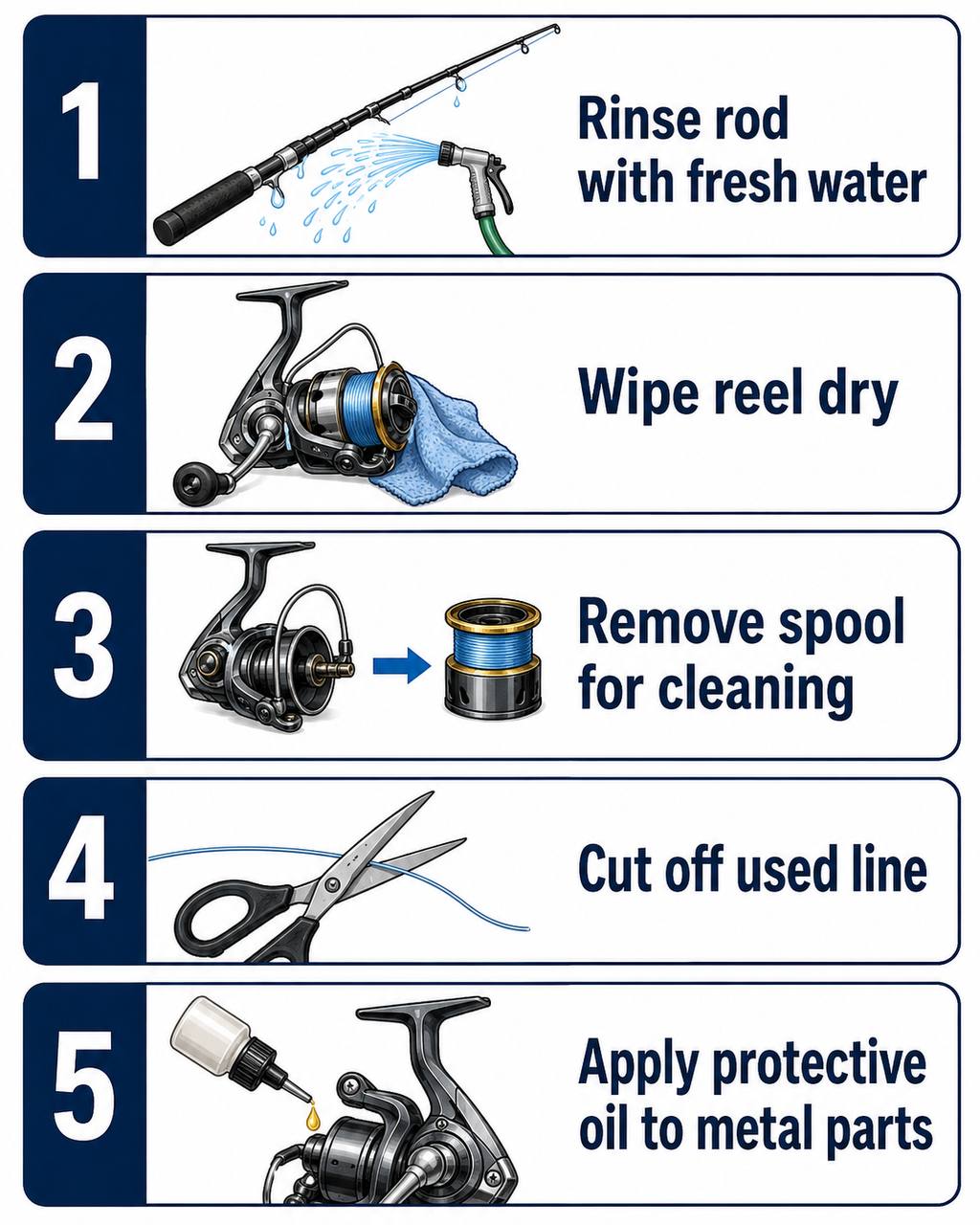
Five minutes of rinsing after every trip will multiply the lifespan of your gear. Skipping this step is the fastest way to turn a $200 reel into a rusted paperweight.
Best Bait for Pier and Jetty Fishing
The right bait can make or break a trip, and pier fishing offers several convenient options. Match your bait to what naturally exists in the water at your location — fish key on local forage, so using what’s available in the area is almost always the right call.

Live Bait
Live shrimp is consistently one of the best baits for saltwater pier fishing. It attracts a wide range of species — from red drum to pompano — and different-size fish target different-size shrimp. The challenge on a pier is that you don’t have a live well like you would on a boat, so plan to use live shrimp quickly or switch to something more convenient.
Live crabs excel for sheepshead and black drum around pier pilings. Fish tend to be quick on the take with crab bait, so stay attentive.
Cut Bait
For pier anglers who want convenience, cut bait is the way to go. It works right out of the package and stays on the hook well during the long drops from pier height:
- Cut shrimp works on bottom rigs for a wide variety of species.
- Cut fish (mullet, menhaden, mackerel) is versatile and effective for bottomfish and predator species alike.
- Squid is a consistent performer in nearly any condition and holds on the hook exceptionally well.
- Bloodworms and sand fleas (beach fleas) are excellent for pompano and smaller species. Scented artificial strips that mimic sand fleas also work well.
Artificial Lures for Piers
Artificial baits offer a different approach, especially for aggressive species:
- Metal jigs and spoons trigger strikes from bluefish and Spanish mackerel.
- Soft plastics work great on Carolina rigs for bottom-dwelling species like flounder and whiting. Soft plastic bait options cover a range of styles and sizes for different conditions.
- Topwater lures are useful at dawn and dusk when predators like bluefish feed near the surface.
Artificial baits are cleaner to work with on a crowded pier and eliminate the need for a bait run — just pack your lure selection and go.
Understanding Tides for Pier Fishing
Tides are one of the most important — and most overlooked — factors in saltwater fishing. If you understand how moving water affects fish behavior, you’ll see a real difference in your results.
How Tides Move Fish
Moving water drives the entire inshore food chain. When the tide flows, it moves baitfish, and predators follow. When water is still — a condition called slack tide — fish tend to slow down. Think of the tide as a conveyor belt: it delivers food to feeding zones and pushes predators into new territories.
Reading water conditions improves your results — understanding how currents, structure, and tide interact gives you a real edge on the water.
Best Times to Fish by Tide
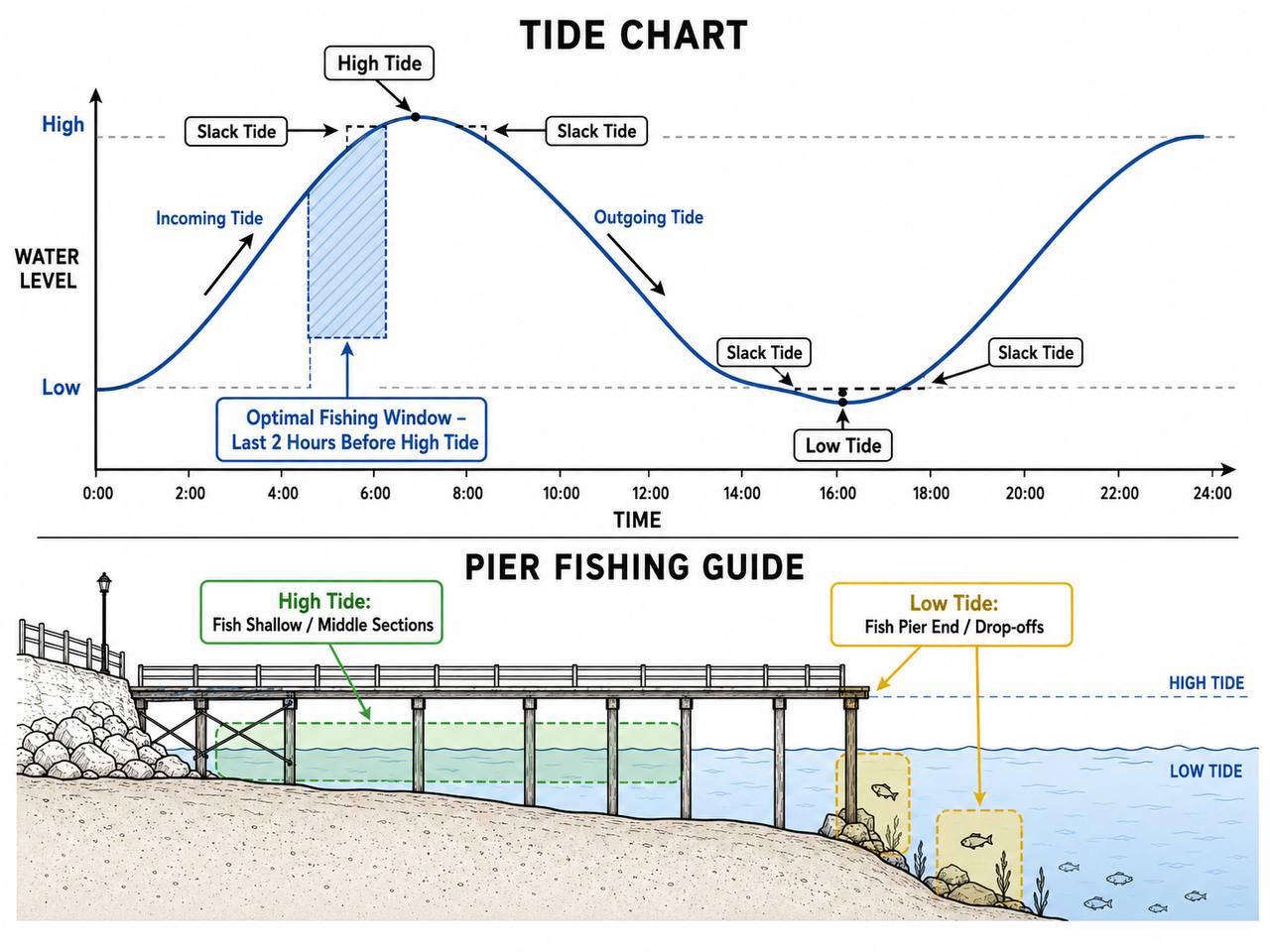
The incoming tide, especially the last two hours before high tide, is generally prime time for pier fishing. Rising water pushes baitfish toward shore and into new areas, and predators follow. Focus on troughs, cuts, and sandbars during this window.
The outgoing (falling) tide concentrates fish into predictable areas — deeper channels, near pilings, and at depth changes where baitfish funnel.
In short: moving tide in either direction beats slack tide. If you can only pick one window, aim for dawn or dusk on a moving tide — that combination produces the most consistent action.
Where to Stand on the Pier by Tide Stage
Your position on the pier matters, and it changes with the tide:
- High tide (incoming): Fish the shallower sections and middle sections where depth changes occur. Baitfish spread across broader areas, so predators are more widely distributed.
- Low tide (outgoing): Fish the end of the pier for deeper water where pelagics like mackerel and bluefish hold. Also target drop-offs near the middle for species like pompano, black drum, and whiting.
Check a local tide chart before heading out — most piers have predictable patterns, and free tide chart apps or websites make this easy.
Basic Rigging Setups for Beginners
You don’t need a complicated rig to catch fish from a pier. These two setups cover the vast majority of saltwater pier fishing situations and can be assembled in minutes.
The Carolina Rig
The Carolina rig is one of the most versatile setups for pier fishing. It drags a weight across the bottom while presenting bait just above the seafloor. Here’s the component order from the rod tip down:
- Main line runs from your reel.
- Egg sinker slides freely on the main line — this is what lets a fish run without feeling resistance.
- Buffer bead sits between the sinker and the swivel to reduce shock when the sinker hits bottom.
- Swivel prevents line twist and separates the main line from the leader.
- Leader (6–12 inches) connects the swivel to the hook. Fluorocarbon is recommended — it’s more abrasion-resistant and less visible to fish in clear saltwater.
- Hook or soft plastic bait completes the rig.
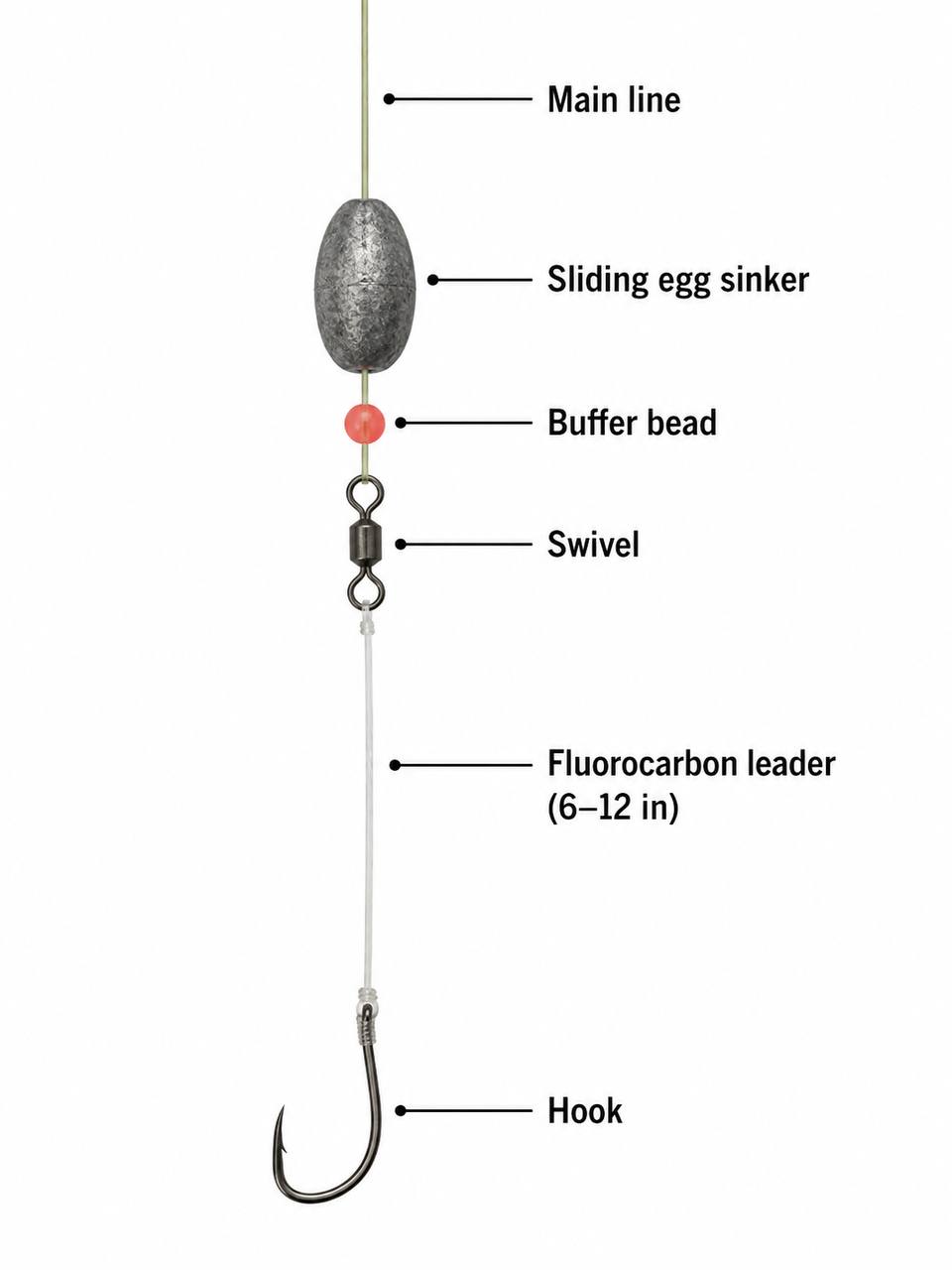
The Carolina rig works well for bottom-dwelling species like flounder, whiting, and redfish. Size your egg sinker for your depth and current conditions — heavier sinkers for deeper water and stronger currents.
The Bottom (Fish-Finder) Rig
The bottom rig is simpler and more direct. It holds your bait at a set depth above the bottom and works well with cut bait or live bait:
- Main line connects to a three-way swivel.
- One arm of the swivel goes to a pyramid or bank sinker — pyramid sinkers anchor better in sand and current.
- The other arm connects to a leader with a hook at the end.
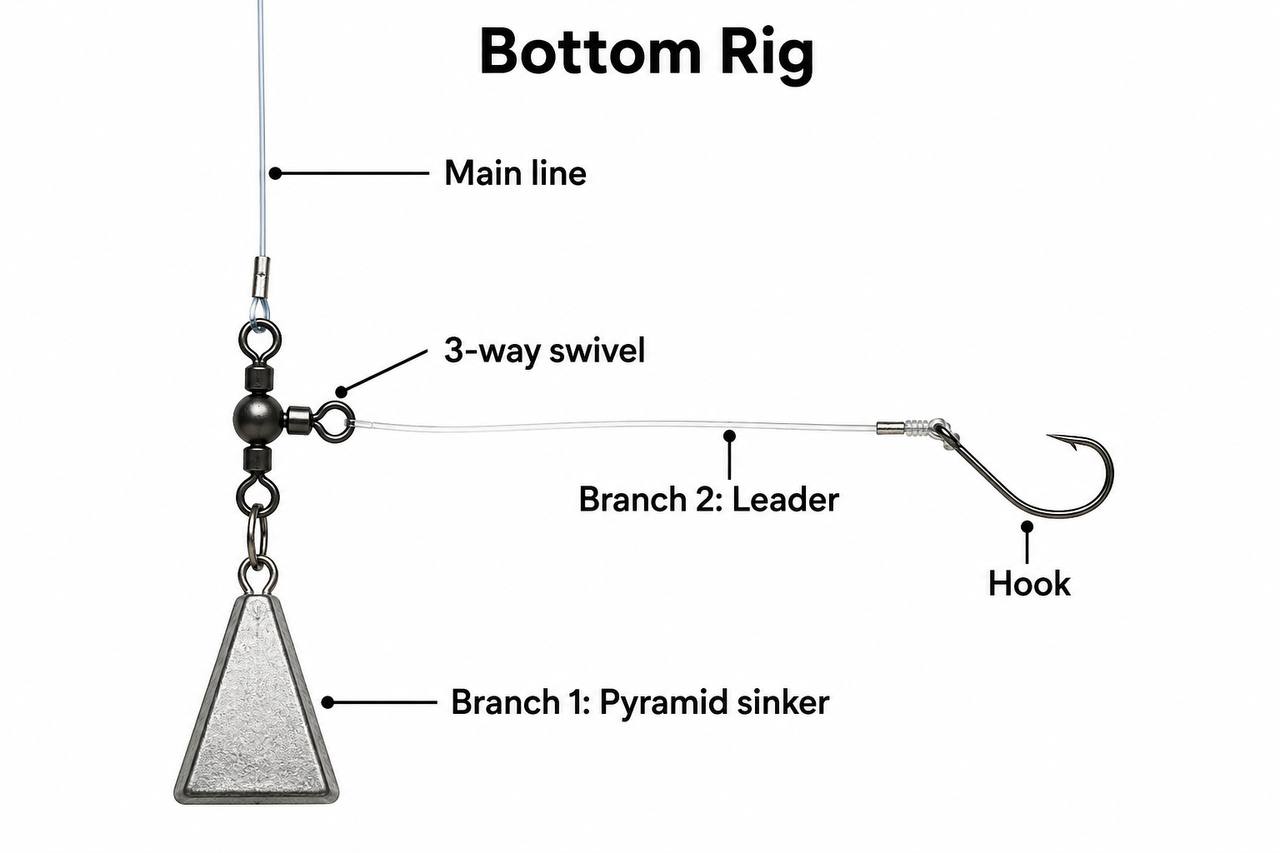
For aggressive surf or tide conditions, a 4-ounce pyramid sinker is a good starting weight, but adjust based on your local conditions. The bait should sit just above the bottom — not buried in the sand, not floating in the middle of the water column.
You can also add a float to create a floating fish finder rig, which suspends live bait at a known depth — useful when fish are holding off the bottom.
Hook Size and Leader Tips
Hook size should match your target species:
- 1/0 to 2/0 hooks work well for larger species like red drum and black drum.
- Size 2–4 hooks are better for smaller species like pompano.
For the leader, 15–20 pound fluorocarbon is a solid starting point for most pier fishing situations. Fluorocarbon sinks (unlike mono, which floats), is nearly invisible in water, and resists abrasion from rocky structure and fish teeth.
For a deeper look at what to include in your saltwater tackle box, including terminal tackle basics, check out our starter kit guide.
Staying Safe on Piers and Jetties
Saltwater environments demand respect. A little preparation goes a long way toward keeping your trip fun instead of ending up in an emergency room.
Footwear and Footing
Wear non-slip shoes with good traction at all times. Piers and jetty rocks get extremely slippery from rain, waves, and algae — green-colored surfaces on rocks are especially dangerous. On jetties, water shoes or booties protect your feet from sharp rock edges and oyster shells.
Weather and Water Awareness
Check conditions before heading out. Wind, storms, and rough water change quickly along the coast, and you’re exposed on a pier or jetty. Be aware of local currents, tide stages, and submerged objects. Wear lightweight, quick-drying clothing that won’t weigh you down if you get wet, and bring sun protection — sunscreen, hat, and sunglasses are essential for extended sessions in warm months.
Pier-Specific Safety Rules
- Railings are there for a reason — stay behind them at all times. Never go over a railing to land a fish or retrieve a snagged line.
- Don’t leave rods unattended leaning against railings. They can fall and injure others or get swept into the water.
- Be aware of other anglers on busy piers. Hook conflicts and tangled lines are common, so give fellow anglers space.
- Fish during daylight hours as a beginner, especially if you haven’t fished from the specific pier before.
Jetty-Specific Safety Rules
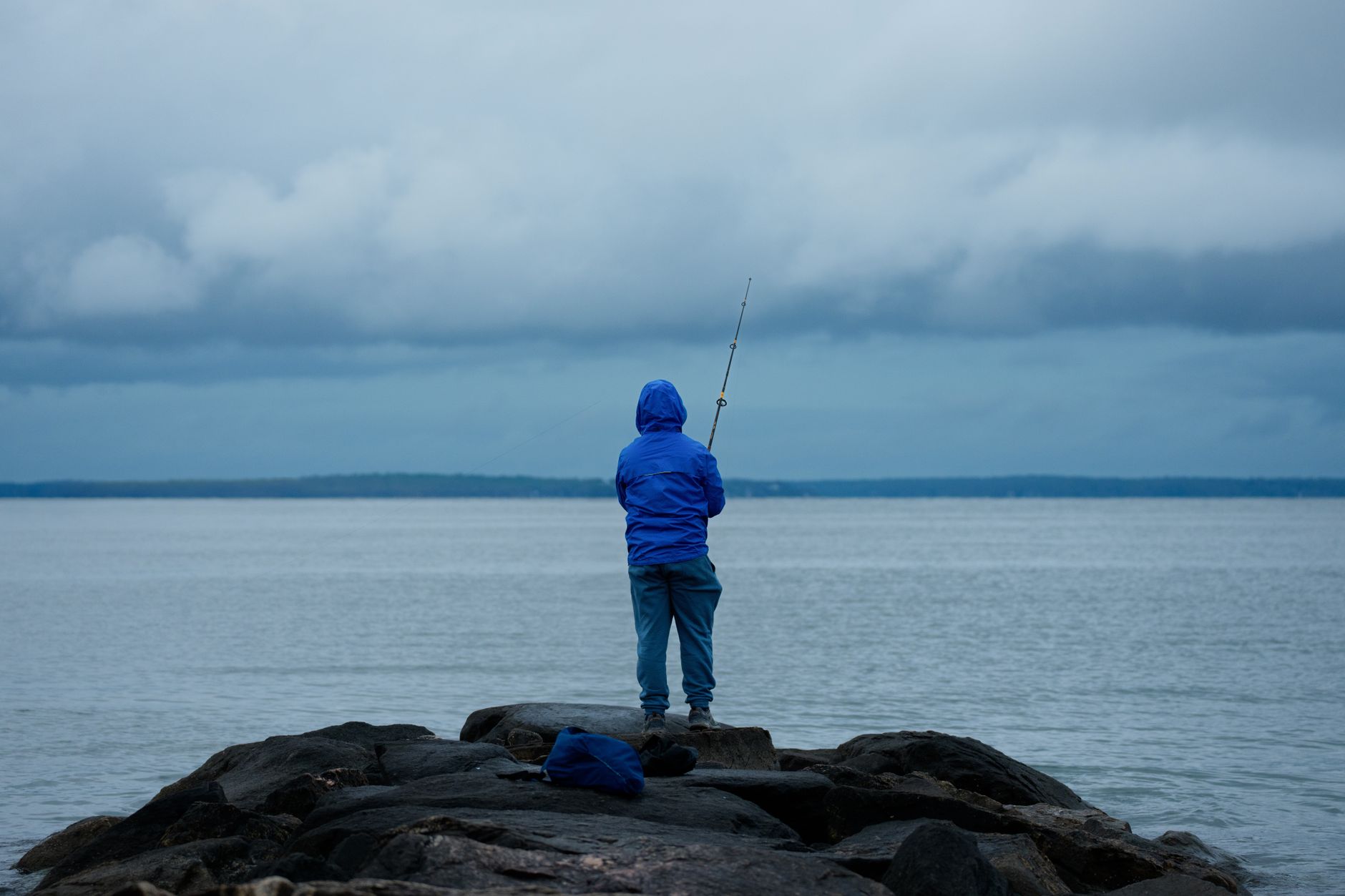
Jetties are more dangerous than piers. No railings, uneven rocks, unpredictable wave action. These rules are critical:
- Never turn your back on the ocean. Rogue waves can sweep you off rocks without warning.
- Wear a properly fitting life jacket or PFD (personal flotation device) on jetties. If you haven’t fished a jetty before, go with an experienced angler.
- Pack light and move deliberately — carry only what you need and watch every step.
- Some jetties are walkable only at low tide. Always check conditions and tide stage before attempting to walk a jetty.
General Safety Reminders
Carry a phone in a waterproof case and tell someone where you’re fishing. Stay hydrated, especially during warm-weather months. If conditions feel unsafe — rough water, strong wind, or unfamiliar jetty terrain — pack up and try another day. There’s no trophy worth a preventable accident. Once a fish hooks, knowing how to set the hook and fight the fish properly matters just as much as getting off the pier safely.
Do You Need a Saltwater Fishing License?
License requirements vary significantly by state, and regulations change annually. Here’s what to know:
- Most states require a saltwater fishing license for anglers 16 and older, though some states use age 15 or have youth license options for younger anglers.
- Many states separate freshwater and saltwater licenses with different fees and durations.
- Some piers include license coverage in their fishing fee — check with the pier management or local bait shop.
- Federal waters (beyond state jurisdiction) have separate NOAA Fisheries regulations.
- Regulations include catch limits, size restrictions, and seasonal closures that vary by species and region.
The safest approach is to check your state’s wildlife agency website before heading out. A few dollars for a license prevents costly fines and helps fund conservation programs that keep fish populations healthy.
Frequently Asked Questions
What is the best bait for pier fishing for beginners?
Live shrimp is the most versatile and widely recommended bait. It attracts a broad range of species and works in nearly any condition. For convenience, cut shrimp or squid are excellent alternatives that work right out of the package and hold on the hook during long pier drops.
Do I need a special license for saltwater pier fishing?
Requirements vary by state. Most require a saltwater fishing license for anglers 16 and older, but check your state’s wildlife agency for current rules, fees, and exemptions. Some piers include license coverage in their entry or fishing fee.
What rod and reel setup should a beginner use for pier fishing?
A medium to medium-heavy power spinning rod in the 7–10 foot range, paired with a saltwater-rated spinning reel with sealed bearings and a corrosion-resistant finish. This combo covers the vast majority of pier fishing situations.
What pound test line should I use for pier fishing?
For monofilament, 15–20 pound test is a solid starting point. For braided line, 10–30 pound test works well for inshore pier fishing. Adjust based on local conditions, target species, and the sinker weight you’re using.
When is the best time of day to fish from a pier?
Dawn and dusk on a moving tide produce the most consistent action. The incoming tide — especially the last two hours before high tide — is generally the most productive window.
What fish can you catch from a pier in the summer?
Summer pier fishing typically produces red drum, speckled trout, flounder, black drum, sheepshead, pompano, whiting, bluefish, and Spanish mackerel — though the exact species depend on your location. Gulf Coast piers also offer snapper opportunities when season opens.
Is jetty fishing dangerous for beginners?
Jetty fishing is more dangerous than pier fishing due to uneven rocks, no railings, and unpredictable wave action. Start on piers and only move to jetties once you have experience, proper footwear, a PFD, and ideally an experienced partner.
How do I know what tides are best for fishing?
Check a local tide chart — free apps and websites make this easy. Moving tide (either incoming or outgoing) is better than slack tide for pier fishing. The incoming tide’s last two hours before high tide is generally considered prime time.