
# Jerkbait Fishing for Beginners: How to Work a Jerkbait for Bass and Panfish
You’ve probably heard that jerkbaits are one of the best lures for catching bass, especially in the fall and winter. But when you actually cast one out and start reeling, nothing happens — the fish just ignore it. The problem isn’t the lure. It’s that jerkbaits don’t work with a steady retrieve like other plugs do. They need a specific twitch-and-pause rhythm that mimics an injured baitfish, and most beginners don’t know how to find that rhythm.
This guide will walk you through what a jerkbait is, how to work one properly, and when it makes sense to reach for it.
What Is a Jerkbait?
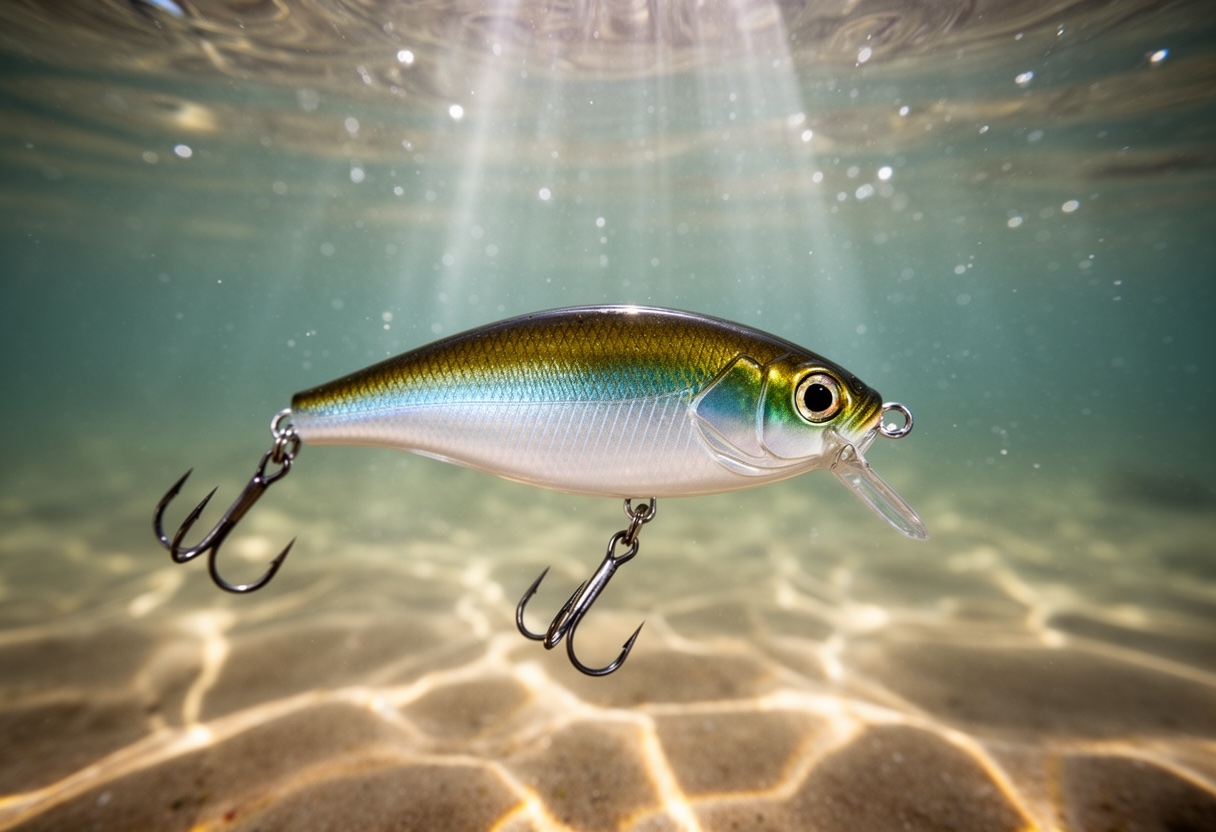
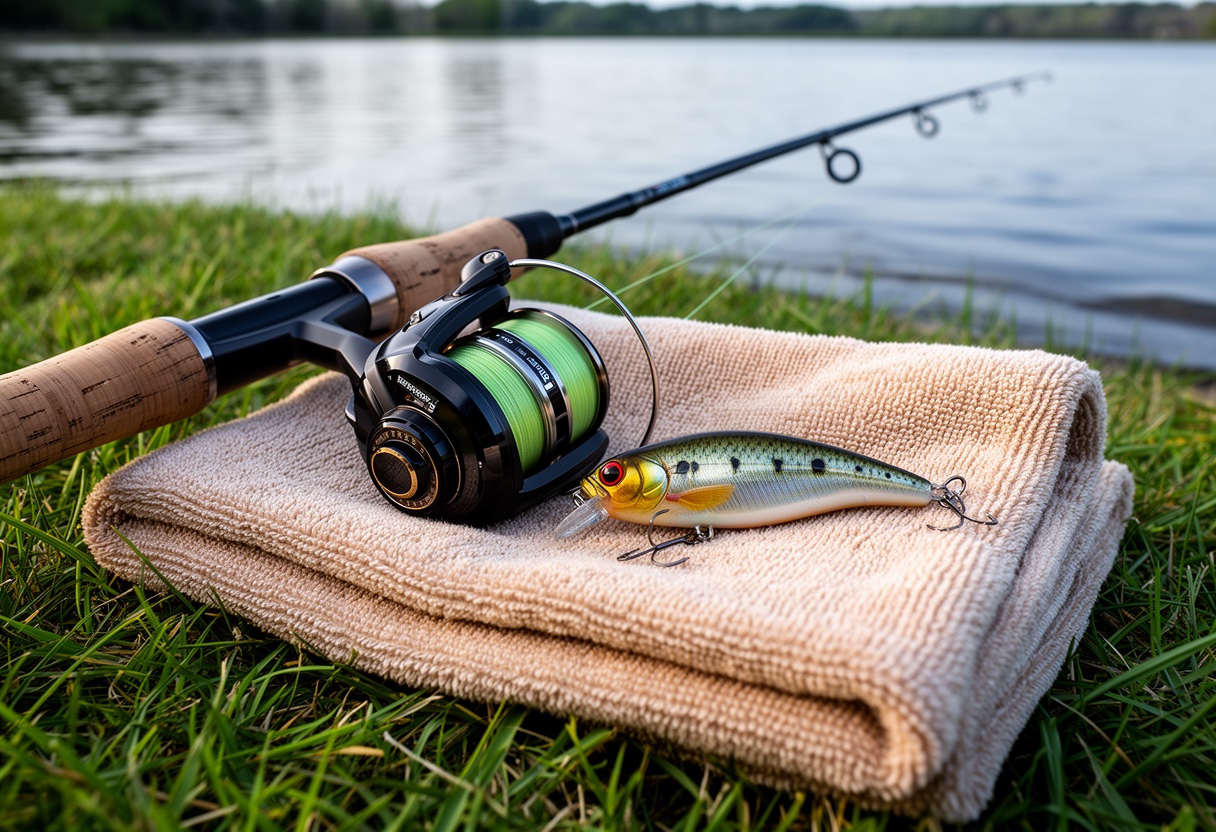
A jerkbait is a hard-plug fishing lure shaped like a small baitfish — typically 2 to 4 inches long with a slim, minnow-like body. What sets a jerkbait apart from a regular crankbait or swimbait is how it moves in the water. Instead of swimming smoothly, a jerkbait darts side to side, stops suddenly, and sometimes just hangs there.
That stop-and-go movement mimics an injured baitfish. It triggers reaction strikes from bass and panfish that might not bother chasing a healthy, fast-moving lure. The key isn’t the lure itself — it’s your retrieve.
Jerkbaits are especially effective when fish are sluggish — cold water, post-front conditions, or anytime bass aren’t actively chasing faster lures. They also work well for panfish like crappie and bluegill, particularly in clear water where a subtle presentation matters.
Three Types of Jerkbaits
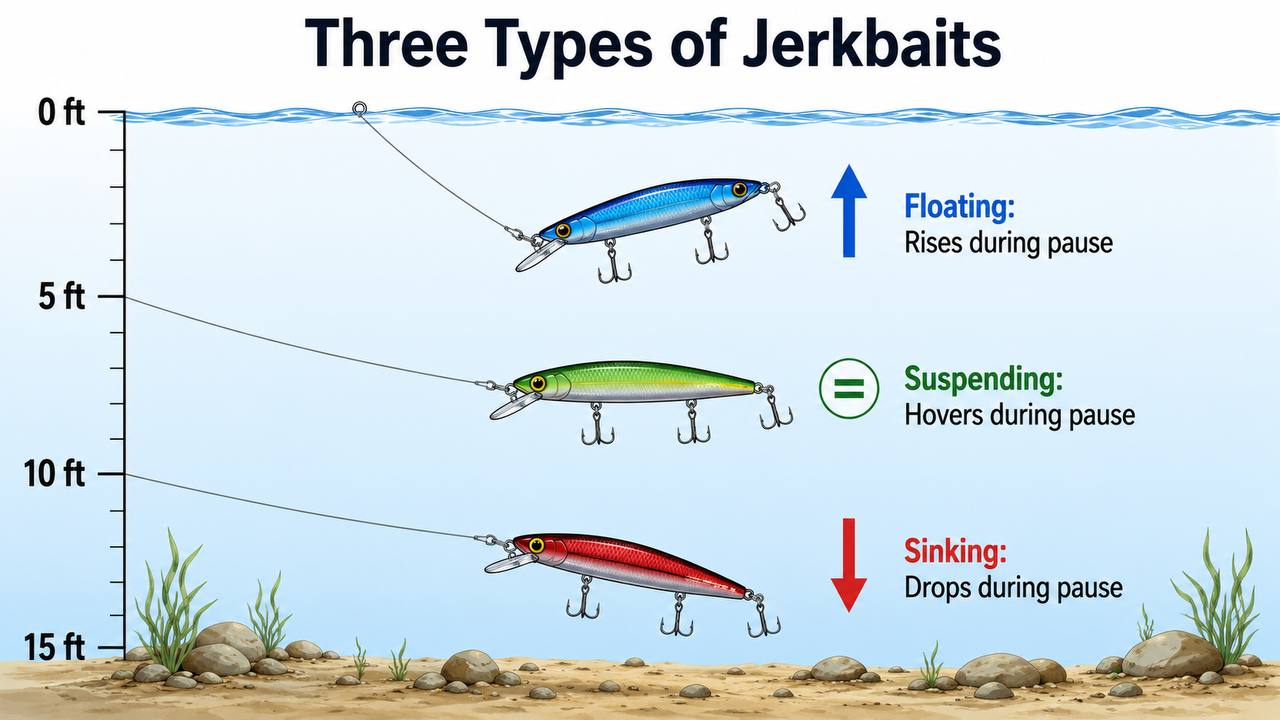
Jerkbaits come in three buoyancy categories, and knowing the difference helps you pick the right one for the depth and conditions you’re fishing:
Floating jerkbaits rise to the surface during the pause in your retrieve. These work well in shallow water — roughly 2 to 4 feet — where you want the lure to stay near the top. That rising action during the pause can also trigger a late strike from a curious fish that waited too long.
Suspending jerkbaits hover at whatever depth you leave them when you pause. This is the most popular and versatile type, and it’s what most beginners should start with. A suspending jerkbait gives you control over depth: cast it out, reel it down to the fish, then pause — and it stays right there, hovering, inviting a strike. Popular examples include the Megabass Vision 110 and the Strike King Wild Shiner.
Sinking (or countdown) jerkbaits slowly drop during the pause. These are more situational but useful for reaching deeper structure — 8 to 15 feet or more. The sinking action can look like a dying baitfish drifting downward, which is especially effective in cold water when bass hold deep. The Rapala Countdown Minnow is a well-known example.
If you’re buying your first jerkbait, go with a 3-inch suspending model in a natural shad or bluegill pattern. It’ll cover the most situations.
How to Work a Jerkbait — The Twitch-and-Pause
The twitch-and-pause retrieve is the foundation of jerkbait fishing. Here’s the basic sequence:
- Cast and let the bait settle. After your jerkbait hits the water, give it a moment to reach its running depth. Don’t start twitching right away — the lure needs time to get to the depth where the fish are holding.
- Reel in the slack line. Close your reel drag knob (if using a baitcaster) or gently gather loose line with your fingers (if using a spinning reel). You want a neutral line — not tight, not loose.
- Twitch the rod tip 2 to 3 times. Short, sharp snaps of your rod tip — about 6 to 8 inches of movement — send the jerkbait darting side to side underwater. Think of it as flicking your wrist, not swinging your whole arm.
- Pause. This is the most important part. Let the bait sit motionless for 2 to 5 seconds. Most strikes happen during the pause, not during the twitch. The fish sees a baitfish that’s stopped moving and decides it’s easy enough to eat.
- Repeat. Reel in slack again, twitch, pause. Keep the cycle going all the way back to the boat or bank.
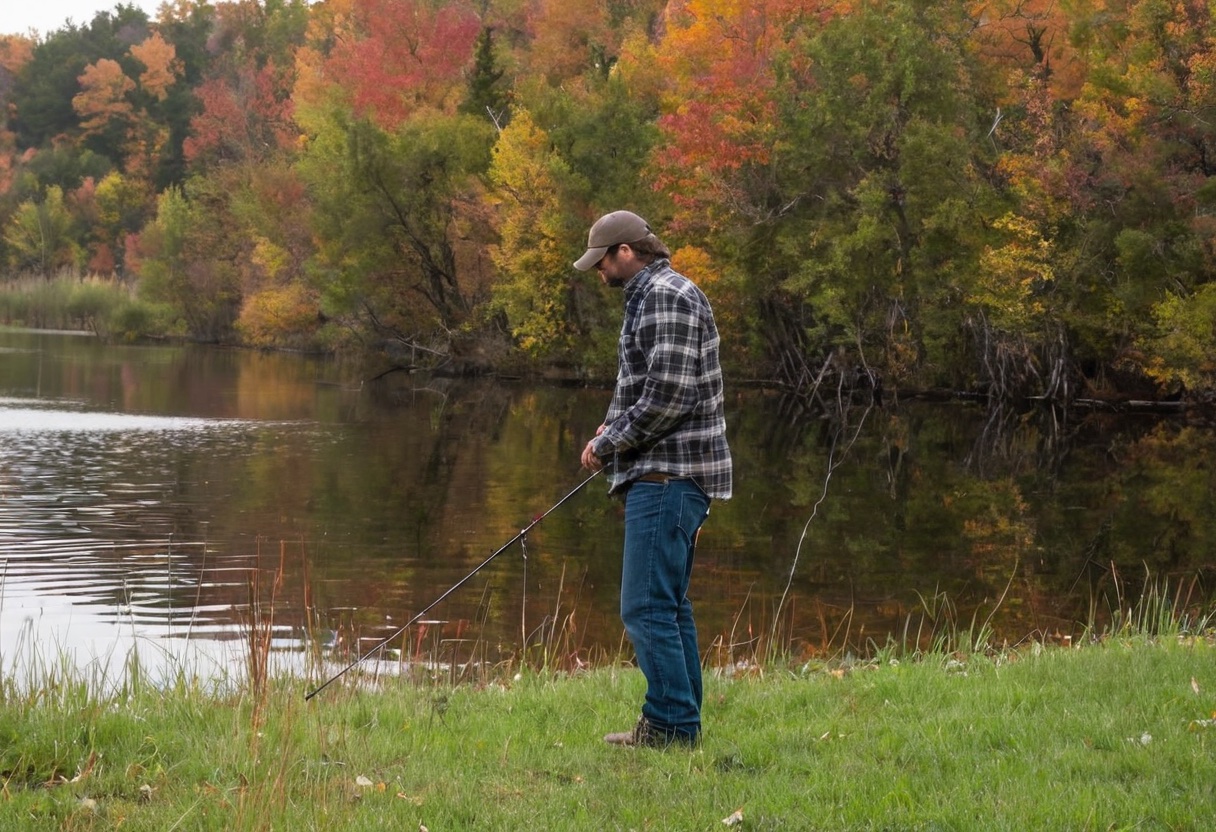
Here’s the detail that separates effective jerkbait fishing from ineffective: every twitch sequence should start and finish with slack in your line. If you keep tension on the line during the pause, the jerkbait drifts forward instead of hovering in place. Slack line means a stationary bait, and a stationary bait means more strikes.
As water temperatures drop, lengthen your pauses. In water below 50°F, you may need to pause for 10 to 15 seconds between twitches. Count if you have to. Cold-water bass are sluggish and typically won’t chase a lure that’s moving too quickly.
When to Fish a Jerkbait
Jerkbaits work best in specific conditions, and knowing when to reach for one saves you from fishing the wrong lure on the wrong day:
Fall is arguably the best jerkbait season. Bass feed heavily before winter, and the erratic action of a jerkbait triggers aggressive strikes. Water temperatures in the 55 to 65°F range allow for faster, more aggressive retrieves.
Winter requires a much slower approach. The same lure works, but your twitch-and-pause rhythm needs to crawl. Think long pauses (10+ seconds), short twitches, and occasionally a slow countdown retrieve where you let the bait sink about a foot every 5 seconds.
Early spring — before spawning — is another strong window. Bass are still holding in deeper water, and a suspending jerkbait worked slowly along a drop-off can produce consistent results.

Water clarity matters too. In clear water, natural colors (shad, bluegill, ghost patterns) and longer pauses work best because fish tend to be more cautious. In stained or murky water, slightly brighter patterns (chartreuse, silver, or firetiger) and a bit more action in your retrieve can help fish locate the lure.
Gear Setup for Jerkbait Fishing
You don’t need a specialized jerkbait setup, but the right combination makes a noticeable difference in how the lure feels and performs:
Rod: A 6’8″ to 7-foot medium or medium-heavy rod with an extra-fast action. Graphite rods are preferred because their sensitivity lets you feel the subtle vibrations of the jerkbait — and more importantly, feel when a fish strikes during the pause. See our [guide to choosing a fishing rod and reel combo](https://castdepth.com/fishing-rod-and-reel-combo-for-beginners-freshwater-guide/) for more on matching rod power to lure weight.
Reel: A spinning reel or baitcasting reel with a gear ratio between 6:1 and 7:1. A slower gear ratio gives you more control during the retrieve, which matters when you’re doing short twitches rather than constant reeling. Our [spinning reel vs. baitcaster comparison](https://castdepth.com/spinning-reel-vs-baitcaster-for-beginners/) breaks down which type fits your style.
Line: 10 to 17-pound test fluorocarbon. Fluorocarbon sinks (unlike monofilament, which floats), which helps keep your jerkbait at the right depth. It’s also nearly invisible underwater, giving you an edge in clear water. Some anglers use braid with a fluorocarbon leader, but straight fluorocarbon is simpler for beginners.
Common Jerkbait Mistakes to Avoid
Even experienced anglers mess up their jerkbait retrieve sometimes. Here are the most common beginner mistakes:
Retrieving too fast. The twitch-and-pause isn’t a race. If you’re twitching rapidly with no meaningful pause, you might as well be fishing a crankbait on a steady retrieve. Slow down. The pause is where the bite happens.
Keeping line tight during the pause. This is the number one jerkbait mistake. Tension during the pause pulls your lure forward, ruining the hover. Reel in slack, twitch, then let the line go neutral during the pause.
Starting the retrieve before the bait reaches depth. Your jerkbait needs a moment after casting to settle at its running depth. If you start twitching the second the plug hits the water, you’re fishing the wrong depth.
Using a straight retrieve. A jerkbait on a steady, nonstop retrieve looks like a healthy baitfish swimming away — and fish typically don’t bother chasing healthy bait. The erratic action is the whole point.
Not adjusting for water temperature. The same twitch-and-pause rhythm that works in 65°F water doesn’t work in 45°F water. When the water cools, slow everything down — shorter twitches, longer pauses, less overall movement.
Jerkbaits are one of those lures that reward patience. Once you dial in the right cadence for the conditions, you’ll be surprised at how many fish respond to a bait that spends most of its time sitting still.