
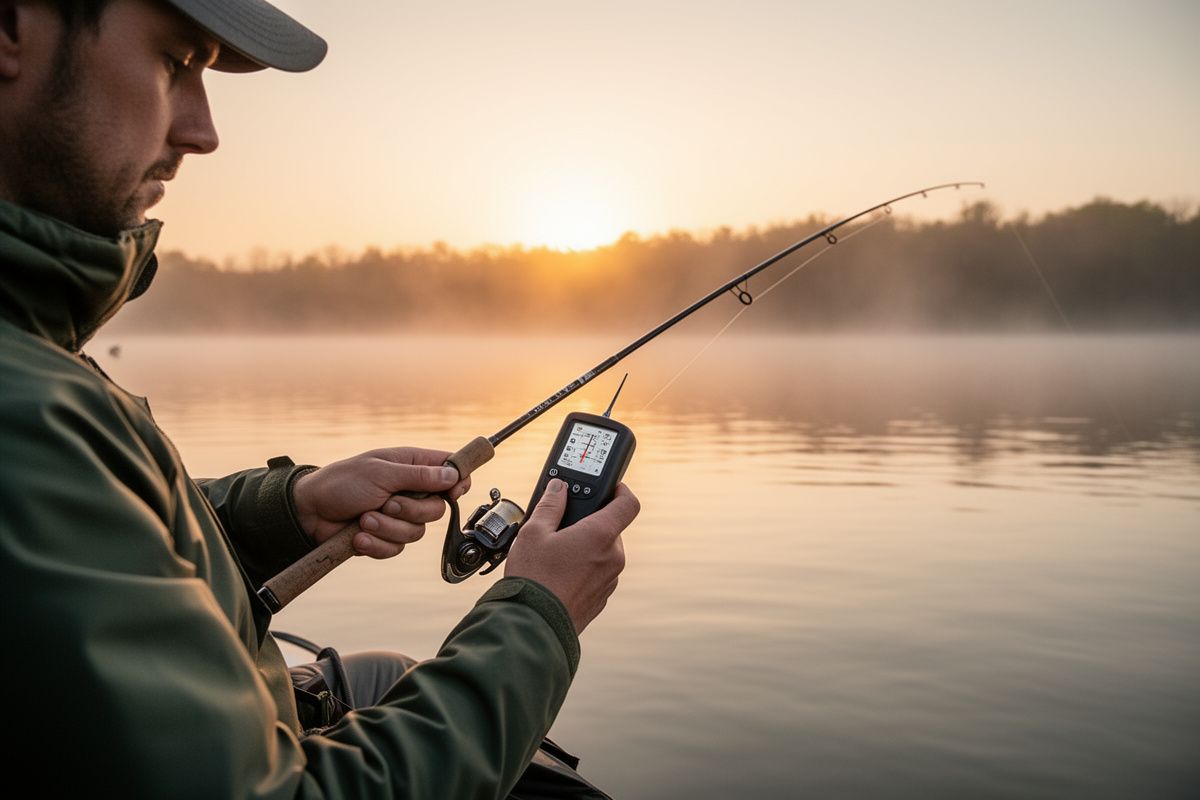
You can have the best rod, the most convincing lure, and a lake that looks like it was built just for bass. But if you’re not paying attention to the water temperature, you’re basically fishing in the dark.
I mean, come on — we all know that. I see it every single season. Anglers walk in with a plan: “I’m fishing for spring action,” or they panic when the heat hits, thinking it’s a bad sign. They blame their gear. They blame the lake. Usually? They just didn’t know when the water was actually warming up.
Temperature is the master switch. It controls how fast bass swim, whether they’re hungry, and exactly where they’re hiding. Once you start reading the temperature instead of just casting randomly — well, your catch rate? It goes up like a ramp.
As a guy who’s been fishing lakes and rivers for over 30 years, I’ve seen more than my fair share of people miss the mark because they thought “it’s spring, so I should catch fish.” Nope. It’s not season — it’s water temperature. And that’s something you can actually measure, track, and respect.
So here’s how to read the water so you don’t just show up with a bag full of lures — you actually catch bass, no matter what time of year it is.
Why Water Temperature Matters for Bass Fishing
Let’s get the science out of the way — quick and clear. Bass are cold-blooded. That means their body temperature matches the water around them. They don’t generate heat like we do. They rely on what’s around them.
That means everything — from how hungry they are to whether they’re chasing a grub or just napping in the deep — depends on how cold or warm the water is.
And here’s the twist: it’s not a straight line. It’s more like a logarithmic curve.
Think about this — going from 45°F to 55°F? Bass are waking up, sure. But they’re still sluggish, like a dog in the basement after a long winter nap. Now jump from 65°F to 75°F? That’s a game-changer. Suddenly, they’re alive. They’re moving, eating, and chasing things like there’s no tomorrow.
Now — a quick note for first-timers: air temperature? Not really that important. I hear this all the time — “It’s a hot 80°F day, so why aren’t they biting?”
Reality check: if the water is still sitting at 48°F, even in early spring, the bass are still in winter mode. Air temperature takes weeks — sometimes months — to actually heat up a large lake. And if there’s a cold snap in July, the air might drop — but the water? It still holds heat. Always check water temp, not your phone’s weather app.
For a beginner-friendly breakdown of all the basics — like how fish breathe, what depth matters, and where to start — check out our guide.
The Bass Fishing Water Temperature Chart
You don’t need a PhD in fish biology to catch bass. You just need a simple reference. Here’s how we break down the year based on actual water temperature — and what you should be doing at each stage.
My tip? Don’t try to fish the same setup all year long. Build a versatile kit — but know which lures and techniques work when the water shifts.
For some help organizing your gear — especially if you’re new to this — read our starter kit checklist.
Below 50°F — Winter Mode
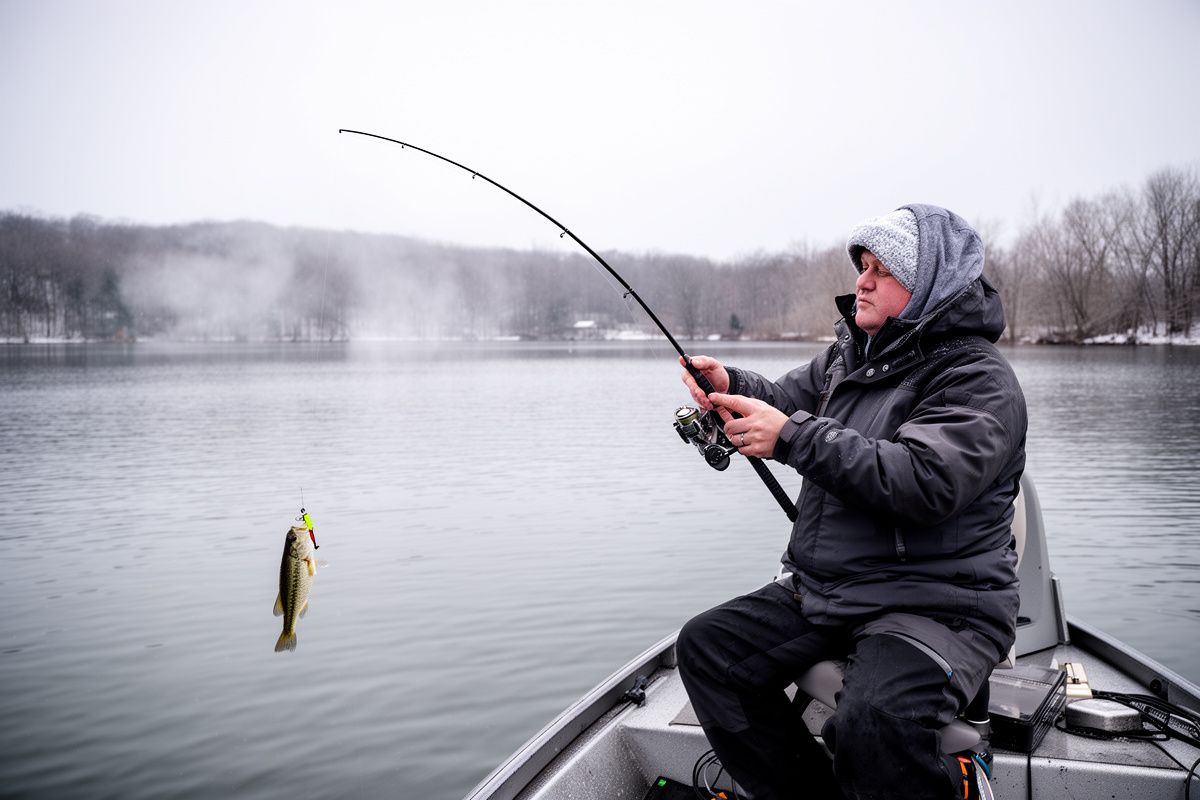
When the water drops under 50 degrees, bass go into survival mode. They’re not chasing anything. Their metabolism’s slowed to a crawl — they don’t have energy to burn.
- Behavior: Lethargic. They hold tight near structure and only eat when something really small, easy-to-catch, or super natural shows up. If it takes too much effort to catch a meal, they just walk away.
- Location: Deep water is king. Look for flat bottoms, deep channels, and thick cover — standing timber, brush piles, or any underwater structure that feels solid.
- Lures: Jigs are your best friend. Slow-moving soft plastics on a Carolina rig or drop-shot rig work great. Blade baits with slow wobbles can trigger reaction strikes — especially if the water’s still and quiet.
- Technique: Slow down. Drag your bait along the bottom, let it sit. Long pauses — like a conversation with a fish — often work better than a constant retrieve. Give them time to react, just like you’d give a friend time to think.
50–55°F — Pre-Spawn Awakening (Spring)
This is the transition. The bass are waking up, moving off their deep wintering spots, and starting to get hungry — but they’re still cautious.
- Behavior: Increased activity. They start moving into shallower water to warm up and search for spawning areas.
- Location: Transition zones are key. Think flats beside deep water, creek channels, and points that stick out into the main lake — places where the current shifts and water feels different.
- Lures: Jerkbaits are deadly here. They create vibration in cooler, slower water. Buzzbaits also work — they make the fish feel like something’s moving. Slow-moving craw baits on a Ned rig or Texas rig also catch attention.
- Technique: You can pick up the retrieve a little, but don’t rush it. If you’re using soft plastics — and I always recommend them for this window — refer to our guide for the best rigging tips.
55–65°F — Peak Feeding Window
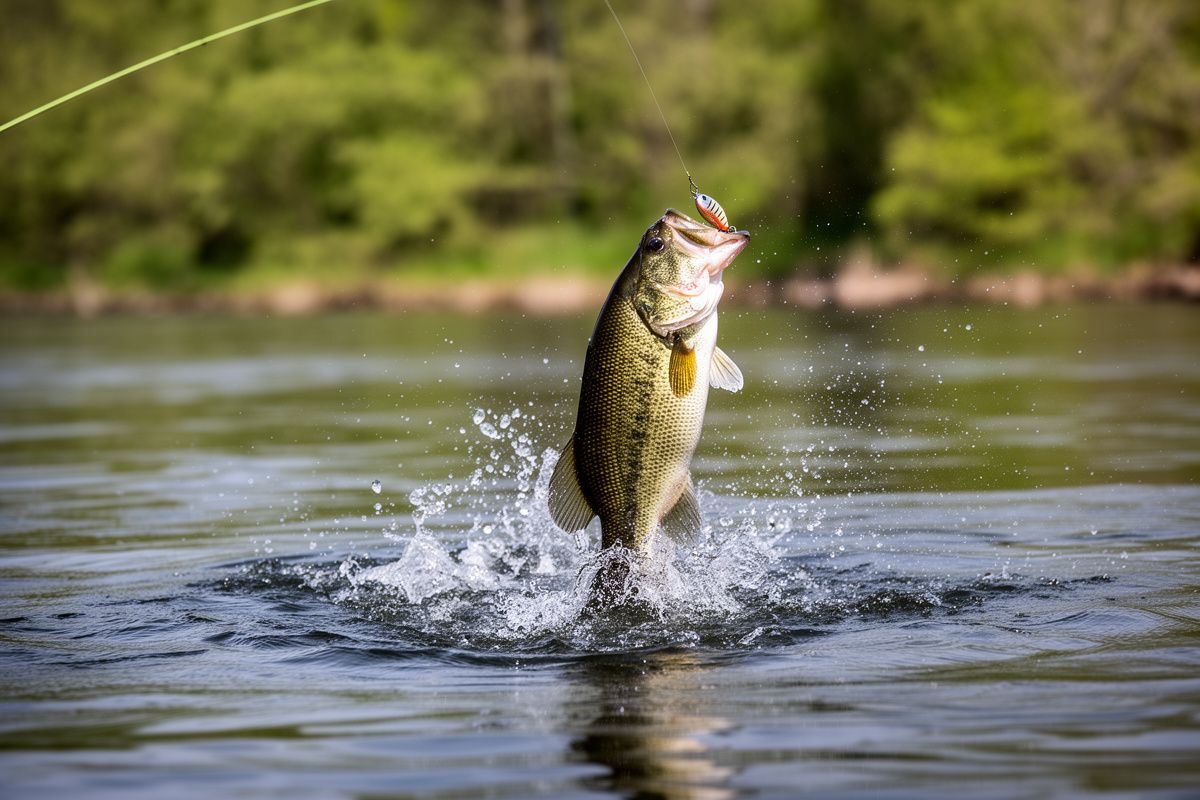
This is probably the best time of year to fish. Bass are aggressive, driven, and willing to move a lot — even if it means diving into new spots.
- Behavior: Aggressive feeding. They’re either pre-spawn or just after — and hunger is high.
- Location: Main lake points, creek mouths, and shallow flats near deep water. They’re moving shallow to spawn or just to feed — look for signs like a change in current or fish activity near cover.
- Lures: Medium-diving crankbaits, chatterbaits (bladed jigs), and swimbaits. These work because they move in a way that triggers instinctive reactions.
- Technique: Mix it up. Use a combo — throw in some loud, fast power fishing for the aggressive ones, and then go subtle with something slow if they don’t react. Keep it dynamic.
65–75°F — Optimal Fishing Zone
This is where most anglers say, “I’m going to catch a lot of fish.” And you know what? That’s true. This is the sweet spot.
- Behavior: High energy. They’ll chase topwater baits and strike reaction lures without hesitation — especially if they’ve been sitting in the deep for a while.
- Location: All kinds of spots. Shallow cover, points, flats, and transition zones — all fair game. They feel comfortable almost anywhere.
- Lures: Lipless crankbaits, spinnerbaits, topwater frogs and poppers — anything that makes a splash or creates noise works.
- Technique: Fast, aggressive retrieves. Power fishing is highly effective. Make it noisy and create flash — that’s what wakes them up.
75–85°F — Summer Patterns
When the water hits 75 degrees, bass start shifting. They’re still active — but they’re not chasing the surface anymore.
- Behavior: Still feeding, but more targeted. They’re looking for comfort — not just action.
- Location: Deeper structure, shaded areas, drop-offs, and heavy cover. They move to deeper water during the hottest part of the day — especially mid-afternoon.
- Lures: Texas-rigged plastics, punch baits for heavy cover, and deep-diving crankbaits. These work because they don’t need to be flashy — just noticeable and precise.
- Technique: Slow down. Present near cover, fish with precision. You’re not covering water — you’re targeting. One spot can give you 10 fish, if you know where to look.
Above 85°F — Hot Water Challenges
A lot of folks think, “Bass stop biting when it’s hot.” Not true. They just move.
- Behavior: NOT inactive. They move to deeper, cooler water to regulate their body temp — just like a human would in the heat.
- Location: Deep structure, cool-water inflows (like springs or creeks), and heavy shade. Look for water that feels cooler to the touch — even if it’s just 10 feet deep.
- Lures: Deep-diving crankbaits, slow-pitch jigs, and drop-shot rigs. These work because they don’t need to jump — just sit there and wait.
- Technique: Vertical presentations, slow retrieves, and fishing early morning or late evening when surface temps drop. That’s your window — not midday.
The Science Behind Bass and Temperature
You’ve probably heard conflicting advice: “Bass bite best at 82 degrees!” or “It’s peak time between 65 and 75.” Both are right — but for different reasons.
Dr. Hal Schramm, a fish scientist I respect deeply, says the physiological optimum for largemouth bass is around 82–84°F. At that temperature, their metabolism runs most efficiently — they grow fastest and are in peak health.
But here’s the catch: feeding optimum? That’s usually 65–75°F.
Why? At 82 degrees, bass are healthy — but they’re often holding in deep water. They don’t chase baits into shallow cover where you can see them. In the 65–75 range? They’re aggressive, and they’ll strike fast, shallow baits — which is exactly what we want.
Bass are tough creatures. They can survive in lakes with ice and in shallows that feel like a sauna — their survival range is 40–98°F. But just because they can survive doesn’t mean they’ll bite.
And there’s an oxygen factor — big one. Warm water holds less dissolved oxygen than cold. So in extreme heat, bass are both metabolically active and oxygen-starved. That’s why they move deeper — to find water that’s cooler AND oxygen-rich.
Understanding the Thermocline
You’ve probably heard “thermocline” — sounds fancy, right? It’s actually simple.
A thermocline is a layer in the water where temperature drops off sharply with depth. It’s not one line — it can be 3 to 10 feet thick, depending on the lake.
Here’s how a typical lake works:
- Spring: The water mixes. Top and bottom temps are close — everything’s equalized.
- Summer: Sun heats the surface. Warm water stays on top (epilimnion), cold water sinks to the bottom (hypolimnion). The thermocline sits in between.
- Fall: Surface cools, lake turns over — mixing again.
- Winter: Surface is cold, bottom stays slightly warmer (around 40°F).
Why does this matter? Bass love the thermocline. It’s where they get a balance — cool enough to feel comfortable, but still oxygen-rich.
Pro anglers like Seth Feider and Jeff Gustafson often fish shallow water — even in summer — because they know the morning epilimnion isn’t as hot as it seems. In the early day, water temps are cooler — bass move shallow to feed and then retreat deep as the sun climbs.
For bank or kayak anglers? That’s a golden window. If you get on the water early — before 10 AM — you can catch bass in shallower spots than you’d expect. Afternoons? Stick to deep structure or shaded zones.
Want more on reading these conditions? Check out our article.
How to Measure Water Temperature as an Angler
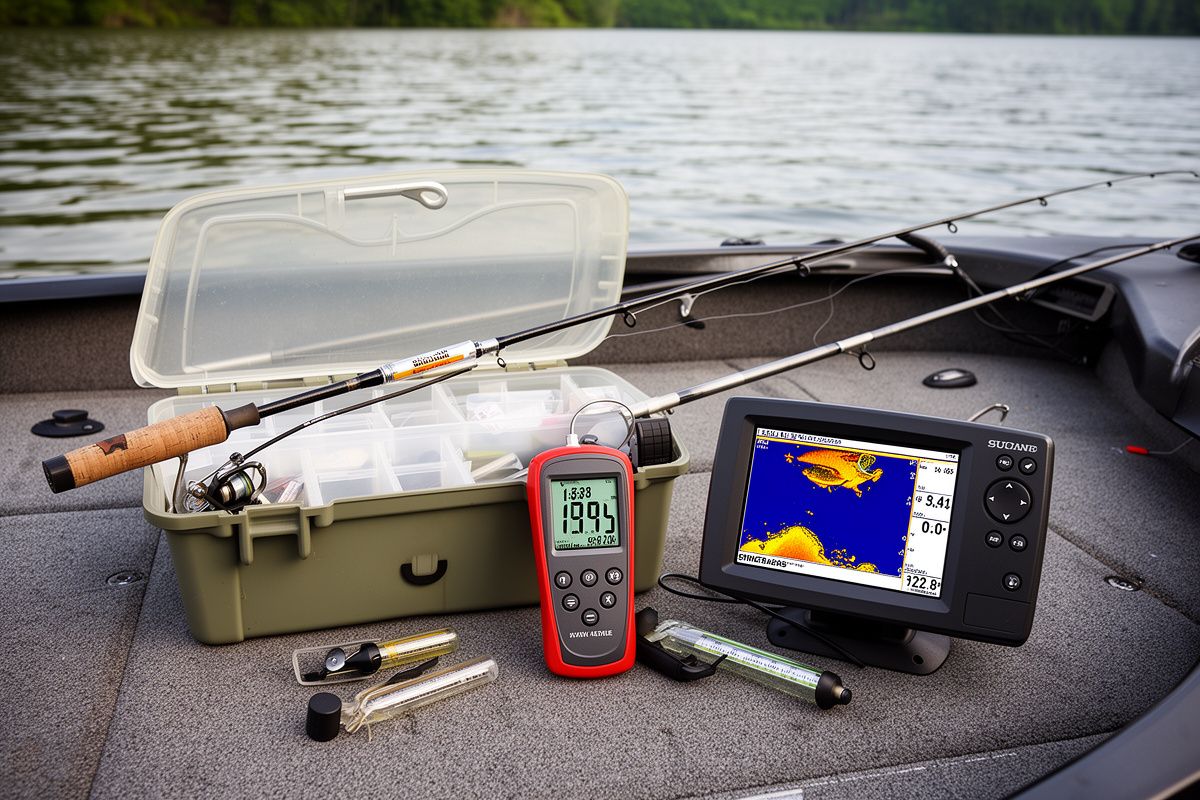
You don’t need a lab. You just need a thermometer — and a few options.
- Fish Finder: Most modern units have a temp display. The sensor reads 1–2 feet below surface — perfect for boat fishing.
- Inline Fishing Thermometer: These clip onto your line. Super popular with bank and kayak anglers — gives you real-time data at the depth you’re fishing.
- Digital Handheld: Submerge for a minute. Accurate, but you’ve gotta stop fishing to check — not ideal.
- Apps: Free apps are helpful for planning — but they’re often less accurate than actual on-water readings.
Pro tip: Morning readings are more reliable than afternoon ones. By midday, the sun heats the top layer — so if you check at 2 PM, it might read 85°F on the surface, but only 70°F at 10 feet. Always check depth.
Spawning and Water Temperature
Spawning is the big event in a bass’s year — and temperature is the trigger.
- Largemouth Bass: Typically spawn between 55–65°F. They’re the first to move shallow.
- Smallmouth Bass: Prefer warmer water — spawn between 58–70°F, with a sweet spot around 62°F.
Cold fronts can stop the whole thing. A drop of just 5–8 degrees? That’s like turning off a light in the middle of a room. The fish stop, and spawning can be delayed for days — even weeks.
And location matters. Northern lakes take longer to warm up, so spring fishing starts later there. Southern lakes heat up fast — meaning the spawn window is shorter and happens earlier.
Cold Fronts and Rapid Temperature Changes
We all hate cold fronts. You’re fishing great — suddenly, wind picks up, sky turns gray — and the fish stop biting.
Bass respond fast to dropping temperatures. As it cools, their metabolism drops — they go from active to sleepy.
- What to do: Move deeper. Slow down your retrieve. Switch to smaller, more natural baits — something that looks like a real insect or bug.
- Recovery time: It can take 24 to 48 hours for bass to adjust after a front passes. Don’t give up immediately — sometimes they just need time.
- Spring fronts? Especially brutal during spawn season. A cold snap can delay the entire season.
When conditions shift, your line choice might need to too. Heavier lines help you punch through cover in cold, sluggish water — while lighter lines work better for finesse fishing when the water’s clearer and warmer. For line advice — check out our guide.
Frequently Asked Questions
What is the best water temperature for catching bass?
For aggressive feeding and accessibility, 65–75°F is generally the best range.
Do bass prefer hot or cold water?
They tolerate both. Physiologically, they thrive around 82°F — but they’re most active and catchable in the 65–75°F range.
How does water temperature affect bass metabolism?
Metabolism increases logarithmically. Small gains in warmth lead to big jumps in activity and hunger.
What water temperature do bass spawn at?
Largemouth bass spawn at 55–65°F. Smallmouth bass spawn at 58–70°F.
Can you catch bass in cold water?
Yes. Below 50°F, they’re lethargic — but they will eat. Just slow your retrieve and target deep structure.
Does air temperature affect bass fishing?
Indirectly. Air temp affects water eventually, but water temperature is what controls bass behavior.
What is a thermocline and why does it matter?
It’s the layer where temperature drops sharply with depth. Bass often hold here because it offers a balance of coolness and oxygen — especially in summer.
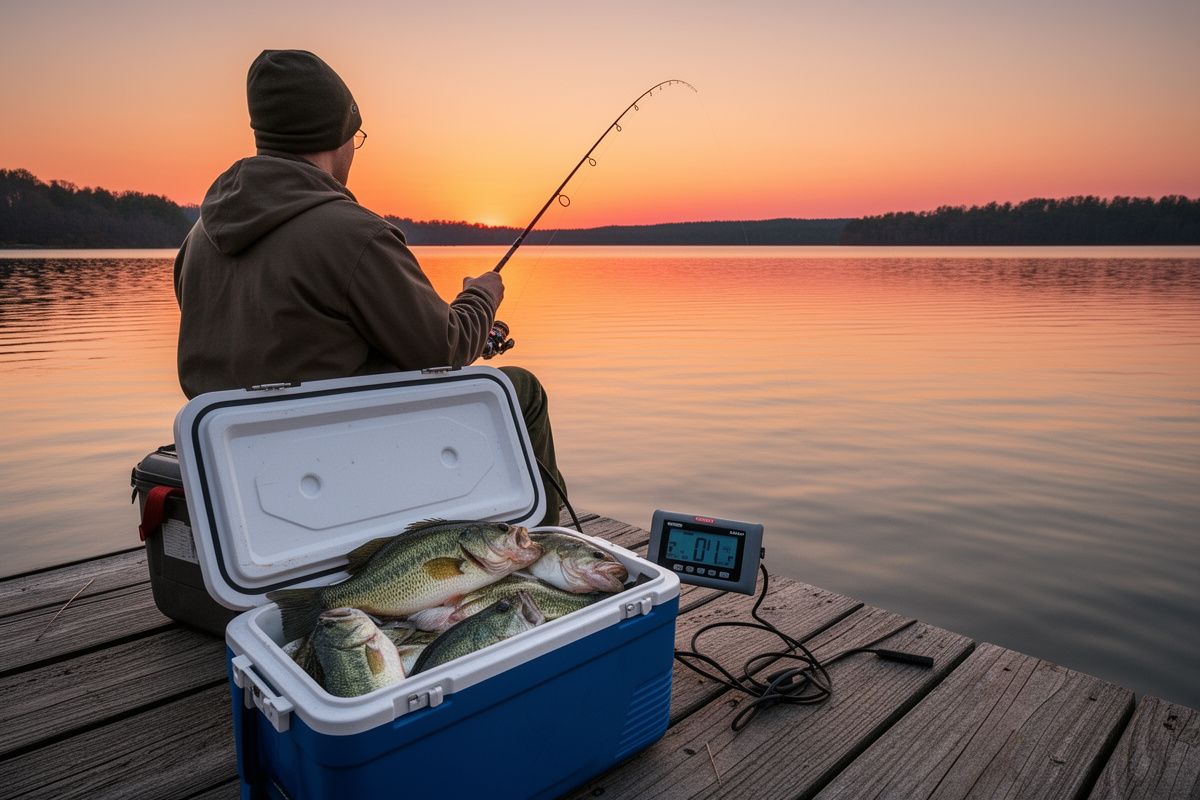
Fishing is about patterns — and temperature is the biggest one. Start tracking it. Keep a log. Note what the water reads when you catch fish and when you don’t. Over time, you’ll develop an instinct — like knowing your coffee’s just right.
So grab that thermometer — and go get some bass.
Because when you start reading the water, not just the sky… that’s when the real fishing begins.
Now go — and don’t come back until you’ve caught something that proves it.