
You Do Not Need a Boat to Catch Fish
Watch enough fishing videos or read enough forums, and you will start to feel like shore fishing is the consolation prize. Boat anglers reach the deep structure, the offshore humps, the spots you cannot even see from where you are standing. The water seems to stretch away from you, and the fish seem to live on the other side of a boundary you cannot cross.
Here is the truth that boat anglers sometimes forget: fish hold near shore more often than you think. They use the bank for food, cover, and shelter. During spawning season, they come within feet of the water’s edge. At dawn and dusk, they move shallow to feed. And when conditions are right – overcast skies, incoming tides, cooling water in spring and fall – productive fishable water is often within easy casting distance of the bank.
Bank fishing is not a compromise. It is a legitimate, effective approach with its own advantages, techniques, and strategies. This guide walks you through everything you need to know to fish from the shore with confidence, from choosing the right gear to reading shoreline features to picking the right technique for the conditions you face.
If you are brand new to fishing altogether, start with our beginner fishing 101 guide first. If you already have a basic setup and have made a few casts, this article is for you.
What Is Bank Fishing?
Bank fishing – also called shore fishing – means fishing from land. Riverbanks, lake shores, pond edges, creek banks, docks, and piers all count. The core constraint is the same as the core advantage: you are fishing from a fixed position on the shoreline rather than being able to move to where the fish are.
That constraint sounds limiting, but it forces you to develop skills that boat anglers sometimes skip. Bank fishing teaches you to read water, understand shoreline structure, and make the most of every cast. You become more deliberate and more observant because you cannot simply drive to a new spot.
Why Bank Fishing Makes Sense

Real advantages beyond just not having a boat:
-
- Lower cost. Avoid boat purchase, fuel, maintenance, and insurance. A solid bank fishing setup starts at $50-$200.
- Lower barrier to entry. No boating license, no driving skills. Get to the water and start fishing in minutes.
- Safety. You stay on solid ground. Most fishing-related accidents happen on boats, not on shore.
- Less disturbance. Fish don’t hear boat motors coming and are more likely to hold near quiet water.
- Easier for families. A calm pond edge is a safer learning environment than a boat on open water.
When Bank Fishing Shines
Bank fishing works best when fish naturally come closer to shore:
-
-
- Spring spawning, when bass and panfish move into shallow water
- Dawn and dusk, when low light encourages feeding near the bank
- Overcast days, when fish stay shallow throughout the day
- Cooler seasons, when water temperatures are in the feeding range for most species
- Stable water levels, when fish have established routines near shore
-
For a deeper look at seasonal patterns, our seasonal fishing tips guide breaks down the best times to fish throughout the year.
Bank Fishing Gear: What Works Best from Shore

The gear you choose for bank fishing differs slightly from what a typical beginner spinning setup looks like. Casting distance and wind resistance matter more when you cannot simply paddle closer to the fish.
Rod Length: Go a Little Longer
A standard beginner rod is typically 6‘6” to 7’. For bank fishing, a rod between 7’ and 8’ gives you meaningful extra casting distance without becoming unwieldy. The additional length acts as a longer lever, letting the lure travel farther on each cast.
A 7‘6” medium-power or medium-heavy-power rod with a moderate to moderate-fast action is the ideal bank fishing rod. Medium-heavy power handles slightly heavier lures and lines, which cast farther and resist wind better.
Line: Heavier Than Usual
Wind is your enemy when fishing from the bank. Thin line (6-8 lb test) whips around in breezes and loses distance. A 10-14 lb test monofilament line casts farther in wind and gives you more margin when fighting fish from a fixed position.
Monofilament is still the best choice. It resists wind better than braided line of the same strength because it is slightly thicker, and it has stretch that prevents line breaks when a hooked fish runs hard from the bank. Braided line is excellent for distance in calm conditions but can tangle more easily in windy bank situations.
Reel: Match It to the Rod
A size 2500 to 3000 spinning reel pairs well with a longer bank fishing rod. These reels hold enough line for long casts and have drag systems capable of handling fish that run toward deeper water. The key is smooth drag adjustment – you will learn to rely on it more when fishing from the bank because you cannot move with the fish.

The Cane Pole: Underrated for Shore Fishing
A cane pole – a simple, flexible fishing rod without a reel – deserves more credit than it gets. It is especially effective for:
-
-
-
- Fishing near docks, banks, and shorelines within 15-30 feet
- Precision placement of bait in tight spaces (under overhanging trees, near weed edges)
- Fishing with children, who find it intuitive and safe
- Panfish and small bass fishing with live bait
-
-
You thread the line directly onto the pole, attach a bobber and hook, and fish by hand. There is no reel to manage, no backlash to worry about. It is old-school, simple, and highly productive in the right situation.
How to Choose Productive Bank Fishing Spots
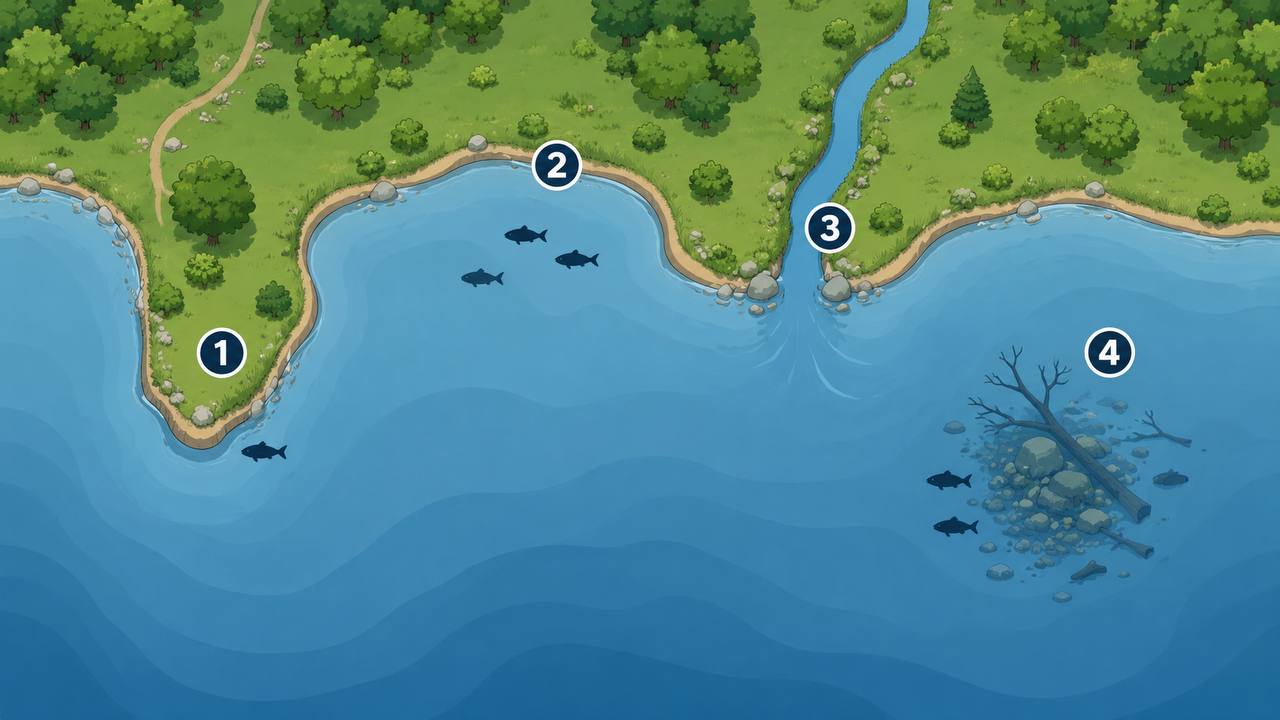
Choosing the right spot matters more in bank fishing than boat fishing. The diagram above shows the four types of features to look for. Here is what each one means and why it works.
Look for Points
A point is where the shoreline extends into deeper water. Points concentrate fish because they provide a transition zone between shallow cover and deep water. Cast along the tip and edges leading up to it.
Target Coves
Coves are recessed areas of the shoreline where water moves slower and food accumulates. They hold shallow cover and baitfish, making them feeding hotspots for panfish and bass. The calm water in a cove also gives beginners more time to work their lure.
Fish Creek Channel Mouths
Where a creek or stream enters a lake, it brings in nutrients, insects, and baitfish — creating a natural feeding lane. Fish patrol this transition zone waiting for food to drift down from upstream. Cast across the channel mouth and along both edges.
Find Structure Within Casting Range
Structure is anything breaking up open water: fallen trees, rock walls, grass edges, submerged brush, docks, and sandbars. Submerged timber and rocks provide cover where fish ambush prey. Walk along the bank and look for visible structure. Cast within a few feet of it, not into open water.
Read the Bank Features
-
-
-
-
- Undercut banks provide excellent cover for bass and catfish
- Rocky shorelines attract bass, sunfish, and catfish
- Grassy or weedy edges hold panfish, bass, and crappie
- Sandy beaches are less productive alone — look for adjacent structure
-
-
-
The Arrive-and-Assess Framework
Quick five-question checklist for new locations:
-
-
-
-
-
- Where are the points? Shoreline extensions reaching into deeper water.
- Where is visible structure? Fallen trees, docks, rock walls, grass lines.
- Where is the safest access? Stable footing, no steep drop-offs.
- What species are likely here? Ponds hold panfish and bass. Rivers may have trout or catfish.
- Where is the water clearest near shore? Clear water means fish can see structure and bait.
-
-
-
-
Spend 5-10 minutes walking the shoreline before your first cast. This saves time and increases your chances of finding fish.
Bank Fishing Techniques That Actually Work
Knowing which technique to use in which situation makes the difference between a frustrating trip and a productive one.
Long-Casting with Heavier Lures
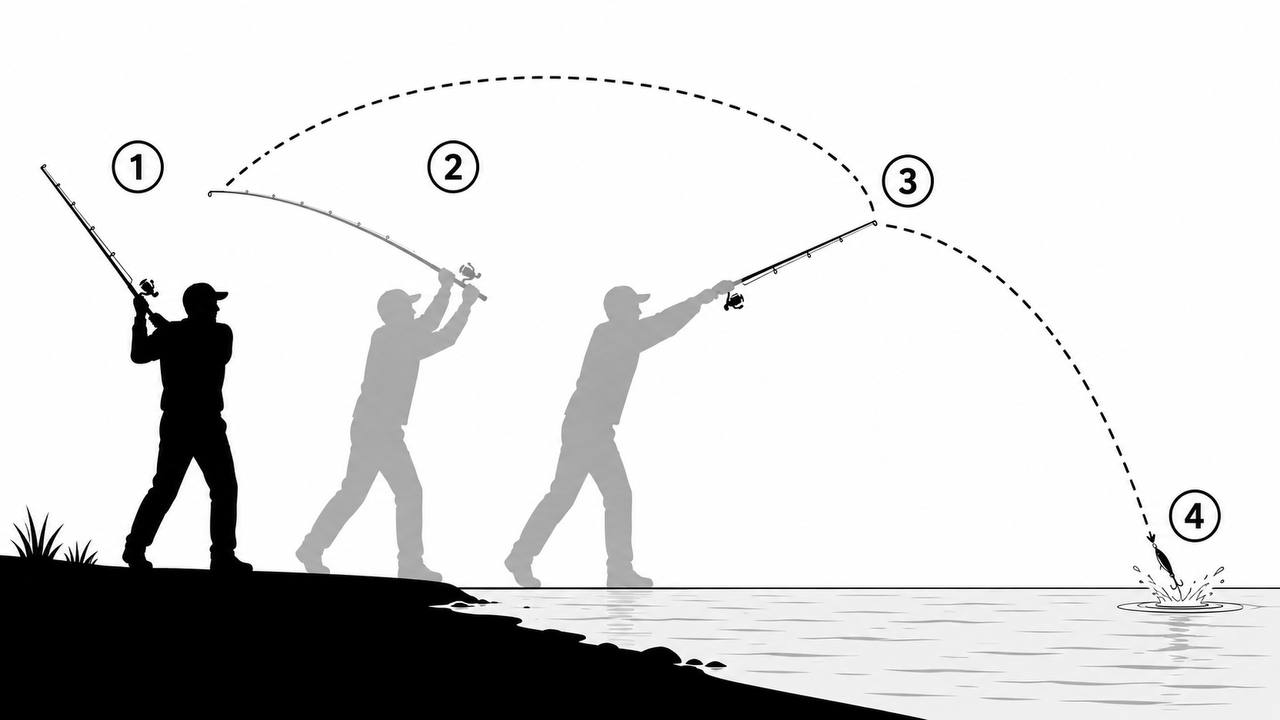
The straightforward approach: cast farther to reach deeper water. The diagram above shows the four stages of a proper cast. The power comes from smooth acceleration through the entire motion, not from brute force at the end. Heavier lures (crankbaits, swimbaits on weighted jig heads, spinnerbaits) travel farther, especially in wind.
Drift Fishing with a Slip Float
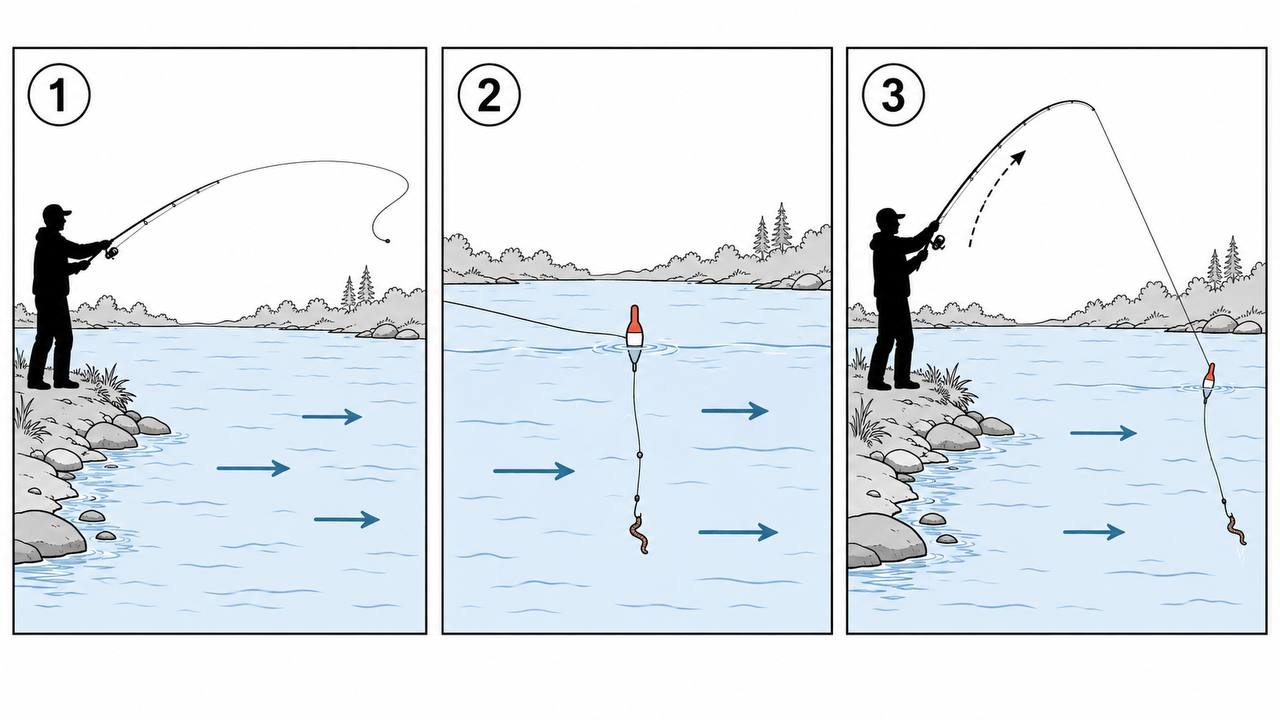
Drift fishing extends your reach without requiring long casts. The diagram above shows the sequence: cast downstream, let the current carry your bait, then set the hook when you feel a bite. Here is the setup:
-
-
-
-
-
-
- Thread a rubber stopper onto your line above the reel to set your maximum depth.
- Slide the slip float below the stopper — it will slide freely until the stopper stops it.
- Add a split shot sinker below the float to keep your bait near the bottom.
- Tie on a hook with live bait (worm, minnow, or nightcrawler piece).
-
-
-
-
-
Cast downstream and let it drift with the current. The slip float lets you fish deeper water than a fixed float while still giving you a visual bite indicator. Works especially well in rivers, tidal areas, and lake edges with wind-driven movement.
Bottom Fishing for Catfish
Set up a heavier rod (7-8 feet, medium-heavy to heavy power) with 14-20 lb test monofilament. Use an egg sinker, swivel, and hook with cut bait or chicken liver. Drop near structure — dam base, deep pools, docks, rock walls. Wait for firm, steady pressure rather than quick taps. Especially productive at night and during warm summer months.
Topwater from Shore
When fish are active on the surface — early morning, evening, or overcast days — topwater lures from the bank produce exciting strikes. Popping corks, walking-the-dog lures, and buzzbaits all work. Watch the surface carefully — a bass striking from 30 feet away is one of the most dramatic moments in bank fishing.
Pole Fishing for Precision
A cane pole or short spinning rod lets you place bait exactly where you want it: under a dock edge, next to a weed bed, near an underwater log. Precision beats power within 15-30 feet of the bank. This is the go-to technique for panfish and small bass near shore.
Dock Fishing: The Bank Angler’s Best Friend
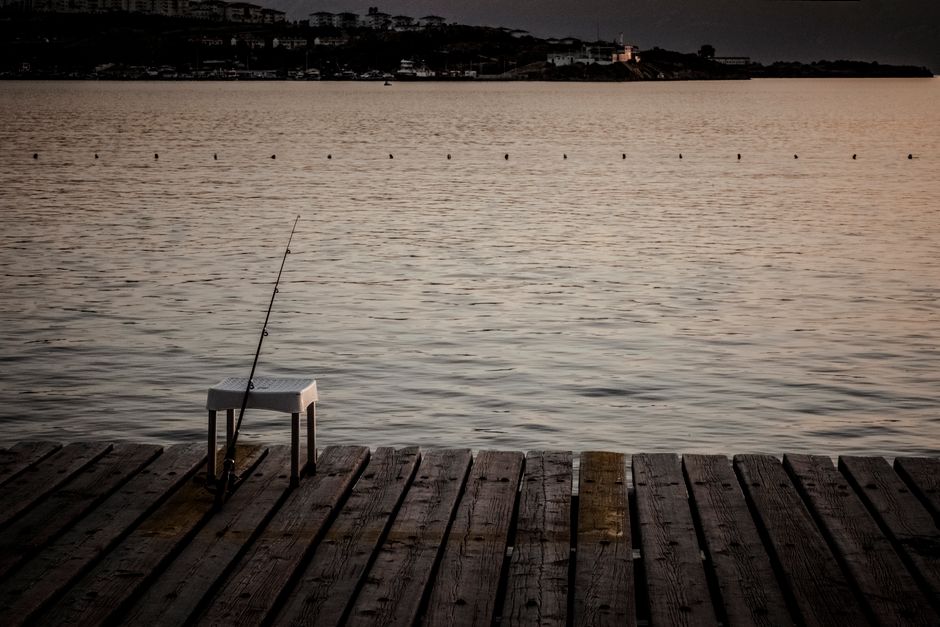
Docks are among the most productive bank fishing features. They provide shade, the pilings create structure that holds baitfish and predators, and you’re already positioned over the water.
Dock fishing techniques:
-
-
-
-
-
-
-
- Vertical jigging: Drop a small jig with soft plastic below you. Let it hit bottom, then lift and drop repeatedly. Deadly for bass and panfish.
- Side-casting: Cast along dock edges where bass and crappie patrol the shade-to-open-water transition.
- Live bait under a bobber: Adjust depth to fish just under the dock edge or near pilings. Catches panfish and small bass consistently.
-
-
-
-
-
-
Dock safety: Stay aware of wet surfaces — dock planks get slippery at the edges. Keep one hand free to steady yourself, and never turn your back to deep water.
Species-Specific Bank Fishing Approaches

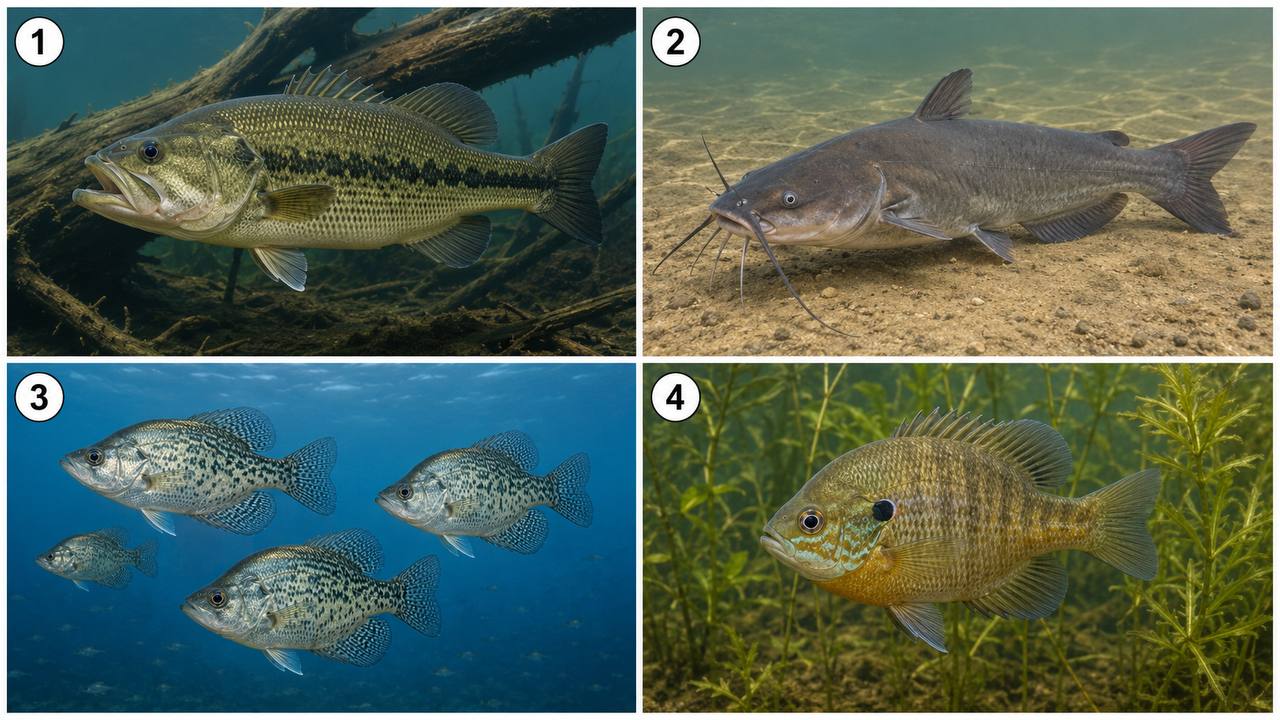
Different fish respond to different bank fishing techniques. The four species below are the most common targets for bank anglers. Here is how to target each one from the shore.
Bass from the Bank
Bass hold near structure all year round. Target weed edges, fallen trees, rock walls, dock edges, and points where shallow water meets deeper water. Use a 7-8 foot medium-heavy rod with 12 lb mono. Fish crankbaits, soft plastic swimbaits, spinnerbaits, and Texas-rigged worms. During spring spawning, bass come extremely close to shore in shallow coves.
Catfish from the Bank
Catfish are bottom dwellers and don’t care that you’re fishing from shore. Set up for bottom fishing: heavy rod, 14-20 lb line, egg sinker, and cut bait or stink bait. Night fishing is especially productive — fish deep pools, the base of dams, and areas near boat ramps.
Crappie and Panfish from the Bank
Crappie school near structure — fish dock edges, weed beds, and fallen trees with small jigs (1/16 to 1/8 oz). Bluegill and sunfish are the easiest species for beginners: a small hook, bobber, and piece of worm catches panfish almost anywhere. Both species are great for fishing with children.
How to Move Along a Shoreline Effectively
One of the biggest mistakes bank anglers make is staying in one spot too long. Fish are not distributed evenly along the shoreline, and the most productive spot may be just a few yards away.
The Walk-and-Fish Approach
Walk along the bank slowly. When you reach a productive-looking spot (a point, a dock, a fallen tree), stop and fish it for 15-20 minutes. Make 10-15 casts, work the area thoroughly, then move on if you are not getting bites.
This approach covers more water and increases your chances of finding active fish. It is especially effective when you arrive at a new lake or when conditions are not ideal.
When to Stay Put
If you are catching fish or getting strikes, stay. A spot that is producing is worth fishing longer. You may also want to stay in one spot during:
-
-
-
-
-
-
-
-
- Spring spawning, when bass are extremely close to shore in specific shallow areas
- Night fishing, when moving around is less safe and fish behavior is more predictable
- Overcast days, when fish hold near shore throughout the day
-
-
-
-
-
-
-
For more on knowing when to stay and when to move, our common beginner fishing mistakes guide addresses this in the context of general fishing strategy.
Managing Limited Casting Distance
Yes, casting distance is a real limitation in bank fishing. Fish sometimes hold 50-100 feet from shore, especially in summer when water is warm and fish move deeper. Here is how to deal with it.
Gear Solutions
-
-
-
-
-
-
-
-
-
- Use a longer rod (7-8 feet) to gain casting distance
- Use heavier line (10-14 lb) to resist wind
- Use heavier lures that travel farther in the air
- Switch to braided line (10-15 lb test) for calm conditions – it is thinner than mono of the same strength and casts farther
-
-
-
-
-
-
-
-
Technique Solutions
-
-
-
-
-
-
-
-
-
-
- Practice smooth acceleration through your cast – the power comes from rhythm, not brute force
- Cast with the wind, not against it
- Target near-shore structure – the drop-off closest to shore is where deep water meets shallow, and fish patrol that boundary
- Use a slip float to present bait at depth without needing to cast far
- Fish during times when fish come closer to shore: dawn, dusk, overcast days, spring spawning
-
-
-
-
-
-
-
-
-
When to Accept the Limitation
Sometimes the fish simply are not within casting range, especially in large lakes during mid-summer afternoons. On those days, focus on the shallow-water species that are accessible: panfish near weed beds, small bass under docks, catfish on the bottom near shore. It is better to catch smaller fish in accessible water than to cast into empty deep water and come home empty-handed.
Bank Fishing Safety
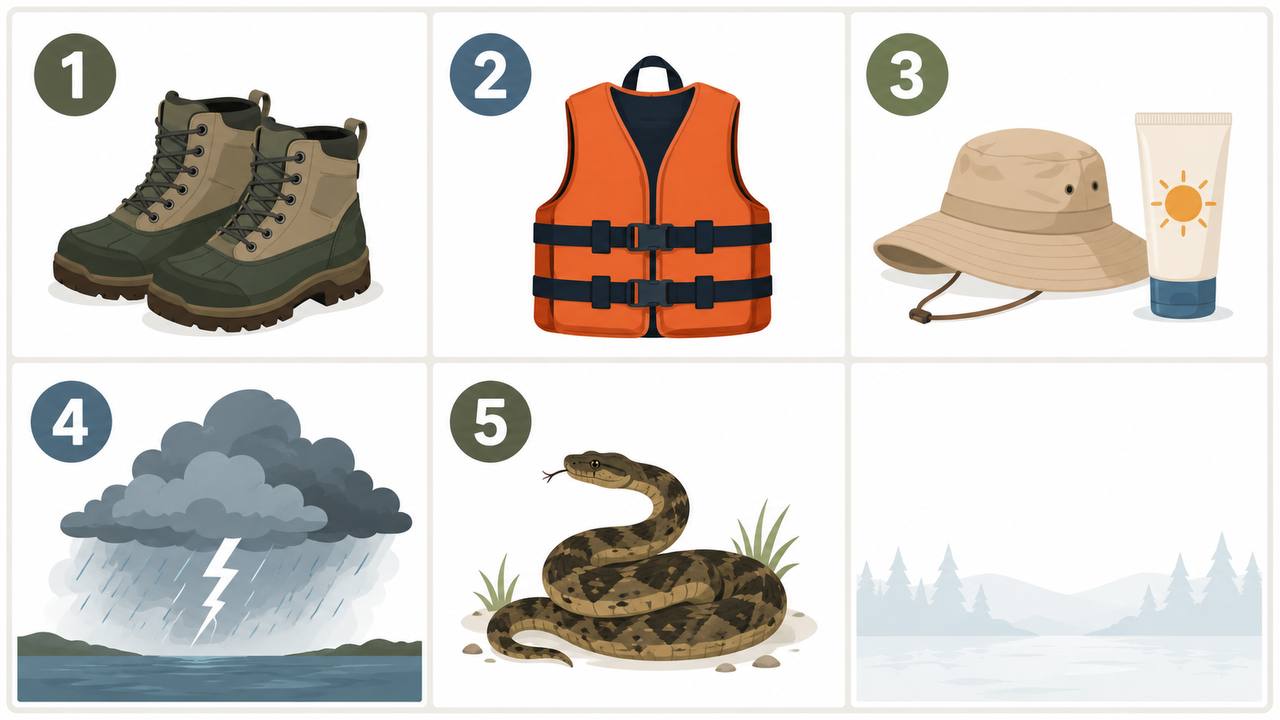
Safety matters just as much on the bank as it does on a boat. The six safety categories above cover what you need to prepare for. Here is the breakdown.
Footwear
Wear closed-toe shoes with good traction. Water shoes or hiking-style shoes work well. Wet rocks, muddy banks, and algae-covered surfaces are extremely slippery and are the number one cause of bank fishing injuries. Use a walking stick or trekking pole on uneven or steep terrain.
Personal Flotation
Know the water depth at your fishing spot, especially with children. In tidal areas, check tide tables and be aware of how water levels change. Never fish alone near deep, fast-moving, or steep-banked rivers.
Sun and Heat Protection
Wear sunscreen (SPF 30 or higher), a hat, and consider long sleeves. Bring more water than you think you need – dehydration is a real risk on hot days, even if you are sitting still.
Weather Awareness
Check weather and flood warnings before heading out – rivers can rise quickly during storms. If you see dark clouds, feel lightning, or hear thunder, get to safety immediately. Do not wait.
Wildlife Awareness
Be aware of your surroundings. Snakes hide in grassy banks and near rocks, especially in warmer months. Ticks are present in grassy areas in many regions. Poison ivy and poison oak grow along riverbanks in some areas. Know what wildlife is in your region before heading out.
Fishing with Children
Keep children within arm’s reach near water. Teach them to walk – not run – on banks and docks. Use barbless hooks when fishing with kids to reduce injury risk if a hook accidentally catches clothing or skin. A cane pole is an excellent choice for introducing children to fishing because it is simple, safe, and productive.
Seasonal Bank Fishing Considerations
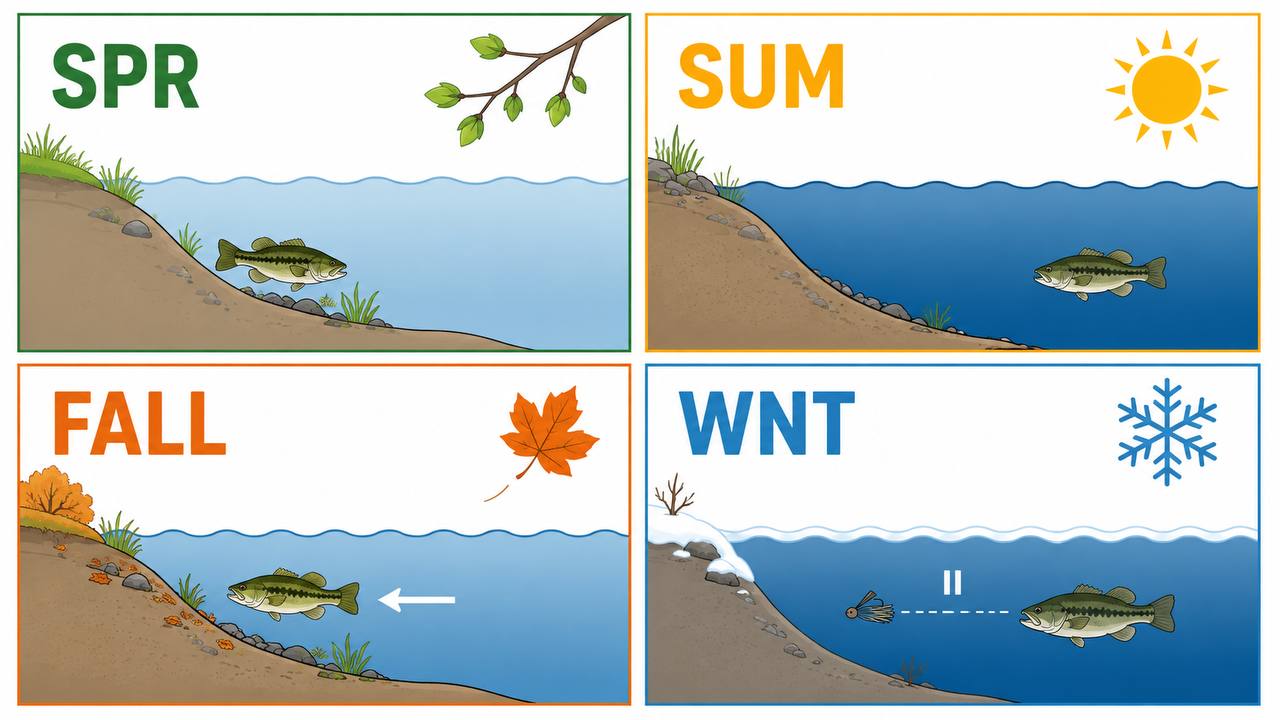
Bank fishing conditions change throughout the year. Water levels, fish behavior, and weather all shift with the seasons. The chart above shows how fish move and what to expect each season.
Spring is the best bank fishing season. Water warms up, fish move shallow to spawn, and bass come within feet of the bank in shallow coves. Panfish are active in weed beds, and catfish bite aggressively.
Summer pushes fish deeper. Focus on early morning and evening fishing, target shade near docks and overhanging trees, and consider night fishing for catfish and bass. The bank is still productive, but peak activity shifts.
Fall brings fish back closer to shore as water cools. Bass follow baitfish schools near the bank. Overcast fall days are especially productive from the bank.
Winter limits options in colder regions, but tailraces below dams and flowing rivers still hold trout and catfish. Focus on slow presentations — small jigs and bottom fishing — during the warmest part of the day.
Bank Fishing Checklist
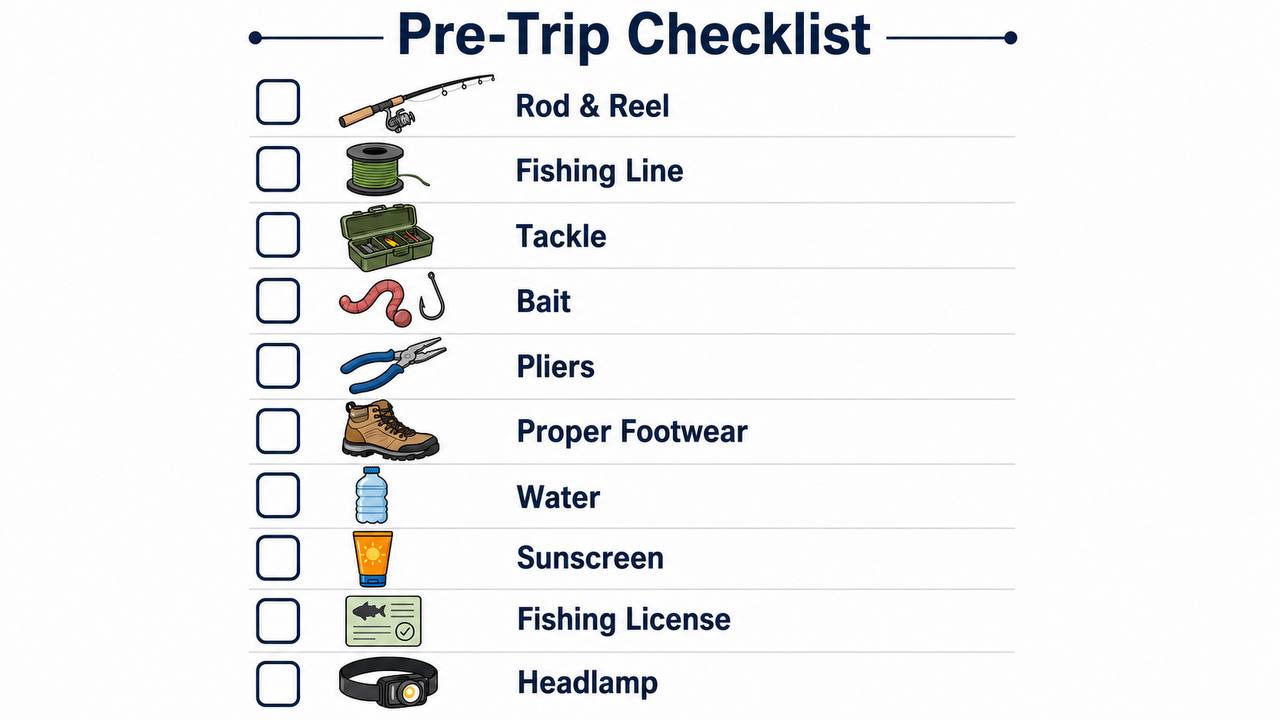
Use this checklist before heading out to make sure you are prepared. The graphic above covers the essentials — here is the full breakdown:
-
-
-
-
-
-
-
-
-
-
-
- [ ] Rod and reel (7-8 ft medium-heavy spinning setup, or cane pole for panfish)
- [ ] Line (10-14 lb monofilament for general bank fishing, heavier for catfish)
- [ ] Tackle (hooks, bobber, sinkers, swivels, soft plastics, or live bait)
- [ ] Bait (live worms, minnows, nightcrawlers, or cut bait for catfish)
- [ ] Fishing pliers with line cutter
- [ ] Closed-toe shoes with good traction
- [ ] Water and snacks
- [ ] Sun protection (hat, sunscreen SPF 30+)
- [ ] Fishing license (check your state’s requirements)
- [ ] Headlamp or flashlight (for evening/night fishing)
-
-
-
-
-
-
-
-
-
-
Frequently Asked Questions
Is bank fishing really as productive as boat fishing?
It depends on conditions, species, and time of year. You’re closer to shoreline structure where fish frequently hold, and you avoid boat noise that scares fish. During spring spawning, dawn feeding, and overcast days, bank fishing can be equally or more productive than boat fishing. The boat advantage is reach — the ability to access deep offshore structure. Both approaches are valid.
What is the best rod length for bank fishing?
A 7’ to 8’ rod gives you the best combination of casting distance and control. Medium or medium-heavy power handles heavier lures and line that cast farther.
Can I catch bass from the bank?
Yes. Bass hold near shoreline structure year-round. In spring, they come extremely close during spawning. Target weed edges, fallen trees, rock walls, and points along the shoreline.
Do I need a fishing license for bank fishing?
In most states, yes. A fishing license is required regardless of whether you fish from a boat or the bank. Check your state’s wildlife agency website for current requirements and free fishing days.
What is the best time of day for bank fishing?
Early morning (before 9 AM) and late evening (after 6 PM) are most productive because fish are actively feeding near shore. Overcast days keep fish close to the bank throughout the day.
You do not need a boat to have a great fishing experience. Bank fishing teaches you to read water, target structure, and make every cast count. It is slower, more deliberate, and often more rewarding because the fish you catch are the result of smart spot selection and technique, not GPS and a fish finder. Start with the basics – a longer rod, heavier line, and a willingness to walk the shoreline – and you will find that the best fishing often happens right where you are standing.