
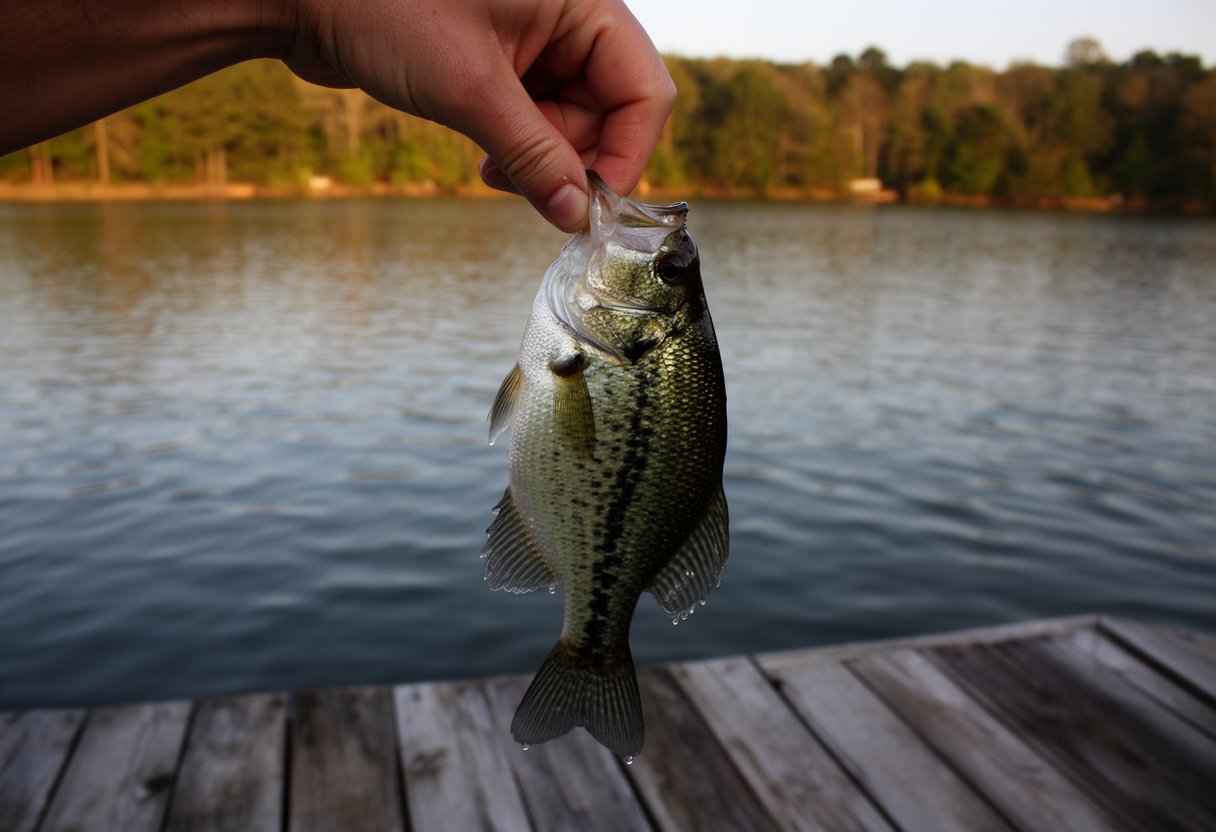
Crappie are the most fun panfish you’ll catch in North America. They bite hard, fight for their size, and when you find a school, you’ll be pulling fish out of the water one after another all day. If you’ve been catching bluegill and sunfish and feel ready to take the next step, crappie are your target.
This guide covers what you need to know: the gear, the baits, where to find them, and how to catch them in every season — from the spring spawn all the way through a deep winter bite.
What Are Crappie? Black vs White Crappie
You’ll hear anglers talk about black crappie and white crappie like they’re two completely different fish. They are two different species. But for a beginner, the distinction rarely matters — you use the same gear, the same baits, and the same techniques for both.
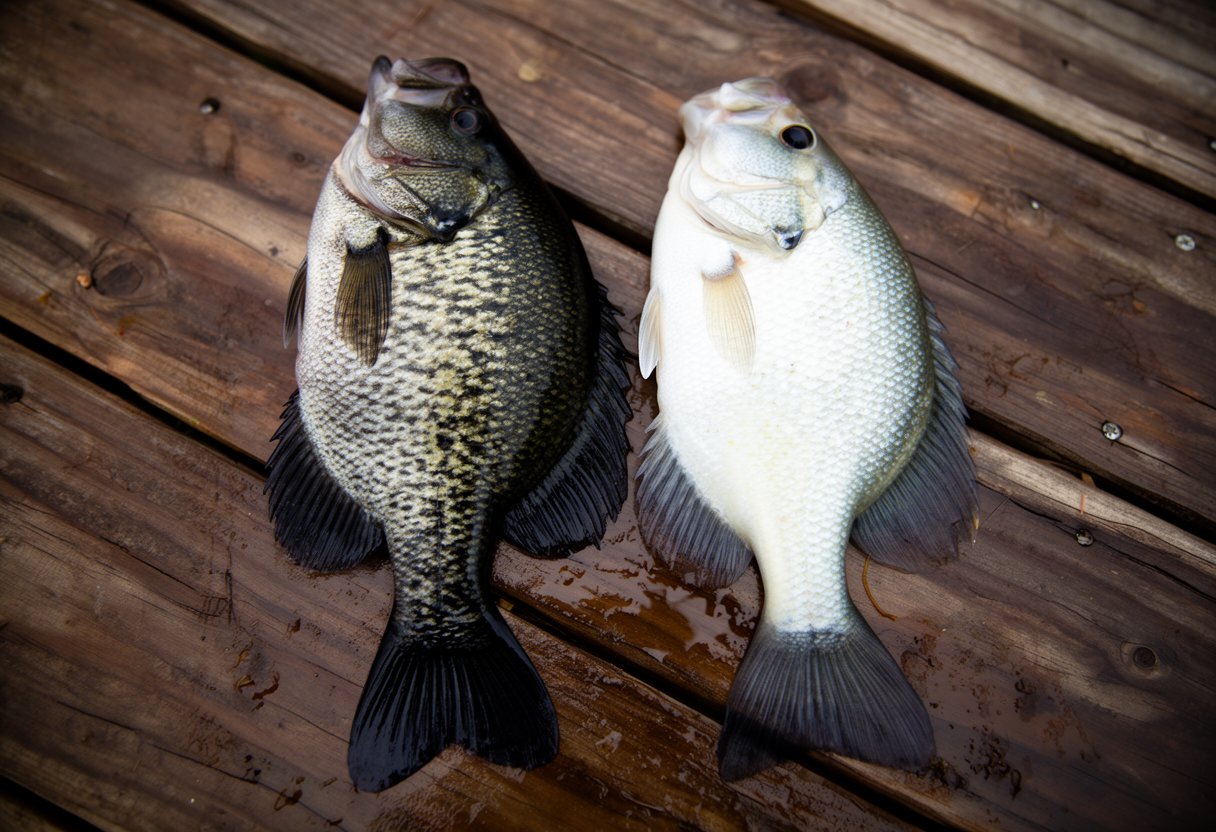
Black crappie prefer clearer, quieter lake water. They have more dark vertical bars along their body — usually seven or eight — and their tail fin has a darker edge. Black crappie also range farther, from Canada down into Florida.
White crappie are slightly lighter in color with fewer vertical bars — usually five or six. You’ll find them more often in warmer streams and slightly murkier water.
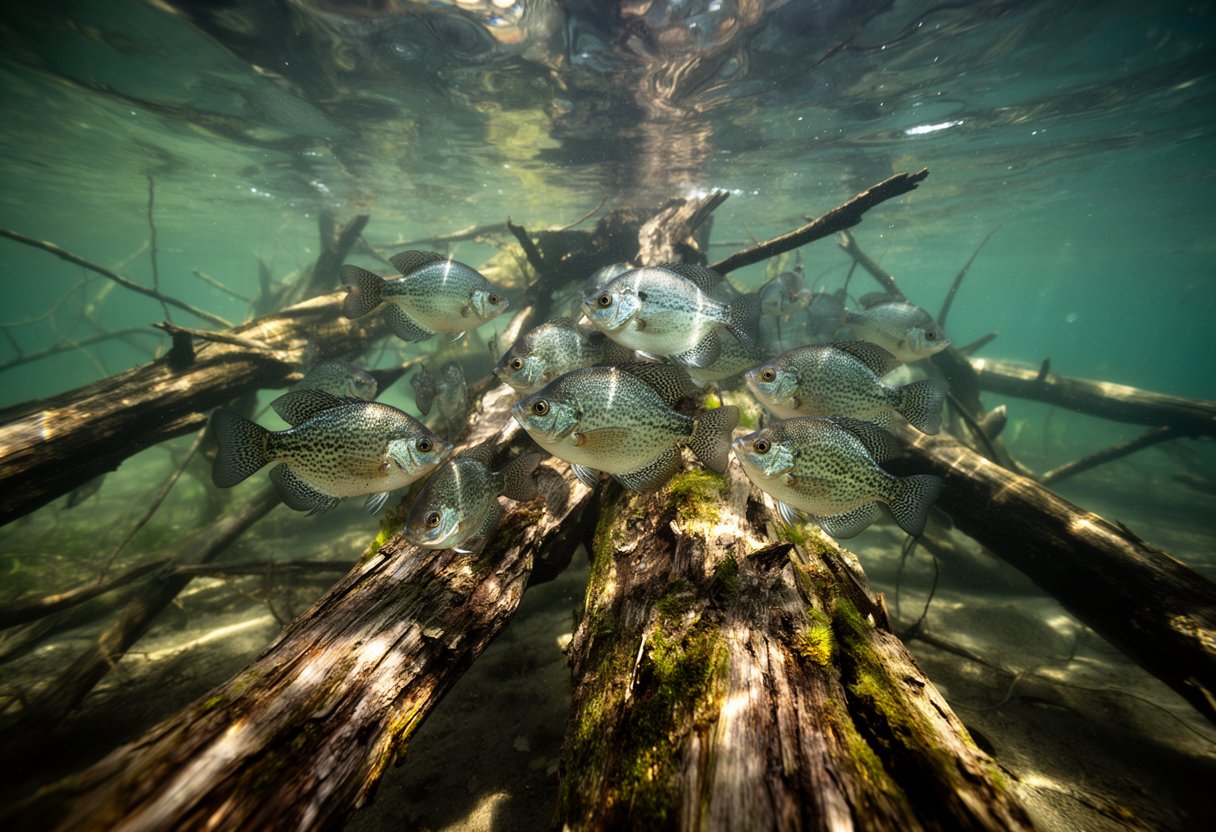
Both species are schooling fish that prefer still or slow-moving water with little to no current. You’ll find them around structure: submerged timber, rock walls, brush piles, and docks. They feed on baitfish like shad and minnows, plus insects and crayfish.
Most crappie you catch will run eight to twelve inches. Tournament anglers chase “slabs” — big fish that can reach fourteen inches or more — but as a beginner, any crappie over ten inches is a solid catch.
When to Fish for Crappie: Seasonal Patterns
Crappie fishing changes with the seasons, but you can catch them year-round if you know where to look. Spring is the most popular and productive time. The other three seasons have their own advantages, too.
Spring: The Spawn Is Peak Season
There’s a reason spring crappie fishing gets so much attention. When water temperatures hit the low sixties, male crappie move into shallow water — typically two to eight feet deep — and start building bowl-shaped nests on gravel, sand, or muck substrate near the shore. Spawning activity peaks as the water approaches seventy degrees.
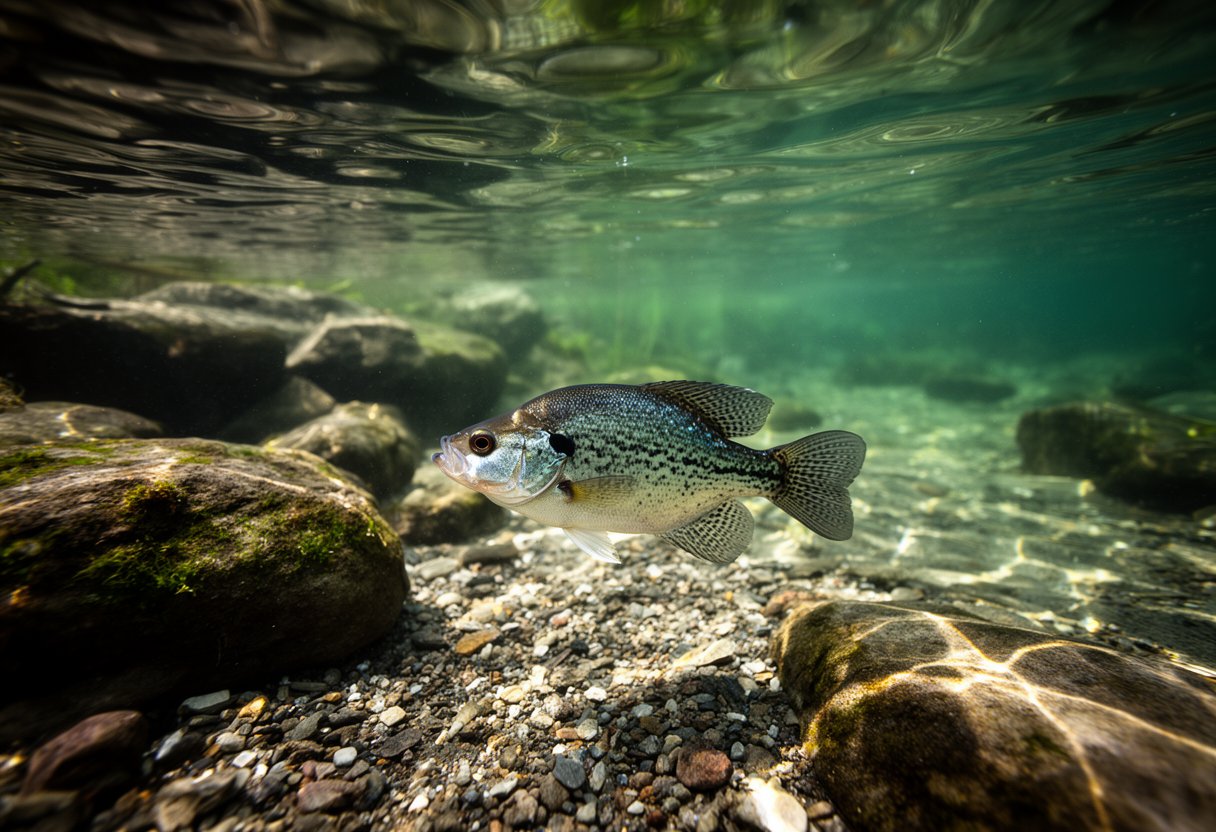
During the spawn, crappie concentrate in predictable shallow areas near cover, and they’re actively feeding. This is the best time for beginners to target crappie. In clear water, you can often see the dark spots of spawning fish just beneath the surface.
A quick note on conservation: during the spawn, consider catch-and-release so nesting fish can contribute to next year’s population. See our Catch and Release for Beginners guide for the basics.
Summer: Go Deeper
As the water warms, crappie move away from the shoreline and into deeper structure — usually ten to twenty feet down. They key in on submerged timber, laydowns that reach into deeper water, bridge pilings, and dock lines.
Summer fishing is best early morning or late evening. During the midday heat, crappie suspend deeper and just don’t bite as actively.
Fall: Feeding Hard Before Winter
Fall is one of the most underrated times for crappie fishing. Schools move off the shallow spawning areas and transition to deeper winter holding spots, but they’re still feeding aggressively. Look for them over hard-to-soft bottom transitions — places where gravel or rock meets mud.
Winter: Deep and Slow
In winter, crappie hold tight to deep structure — fifteen to twenty-five feet or more. They move slower and respond to slower presentations. Vertical jigging with heavier jigs is the go-to technique, and patience pays off.
Quick seasonal reference:
| Season | Typical Depth | Best Technique | Notes |
|---|---|---|---|
| Spring (spawn) | 2–8 ft | Bobber fishing, casting | Most productive season |
| Summer | 10–20 ft | Vertical jigging | Morning and evening bite |
| Fall | 8–15 ft | Vertical jigging, slow trolling | Transition period, active feeding |
| Winter | 15–25+ ft | Vertical jigging (heavy) | Slow presentations, deep structure |
Where to Find Crappie
Finding crappie comes down to one thing: structure. Crappie don’t hang out in open water unless they’re suspended between layers during summer and winter. They want cover. And they want it with baitfish nearby.
Key structures to target:
- Brush piles and submerged timber — the number one crappie hangout. Fallen trees, man-made brush piles, and timber reefs all hold schools.
- Bridge pilings — especially in cooler months when crappie move deeper. The pilings create vertical structure that draws in baitfish.
- Docks and boat ramps — shade lines and depth changes all pull crappie in.
- Rock walls and gravel bars — crappie cruise the edges where hard bottom meets soft bottom.
- Laydowns — trees that fell into the water from the shoreline.
Baitfish are the magnet. Wherever there are shad or minnows, crappie follow. If you can find baitfish, you’ve found crappie.
Without sonar: Focus on known structure. Bridge pilings, dock lines, and visible laydowns are beginner-friendly targets that don’t require electronics. Fish them methodically — drop your bait, work it slowly, and move on after a few tries.
With sonar: Forward-facing sonar and down-imaging are game-changers for finding crappie schools. Baitfish show up as “clouds” on the screen; crappie appear as stronger, more defined dots around the cloud. If you see dots clustering around a bait cloud near structure, drop your bait right there. One important tip: turn off the sonar ping when you’re actually fishing — crappie can feel the constant transmission and it makes them stop biting. Our How to Use a Fish Finder guide walks through the basics.
Crappie Fishing Setup: Rod, Reel, and Line
You don’t need expensive gear to catch crappie. In fact, lighter is better — crappie have sensitive mouths, and heavy tackle will spook them or tear through their lips.
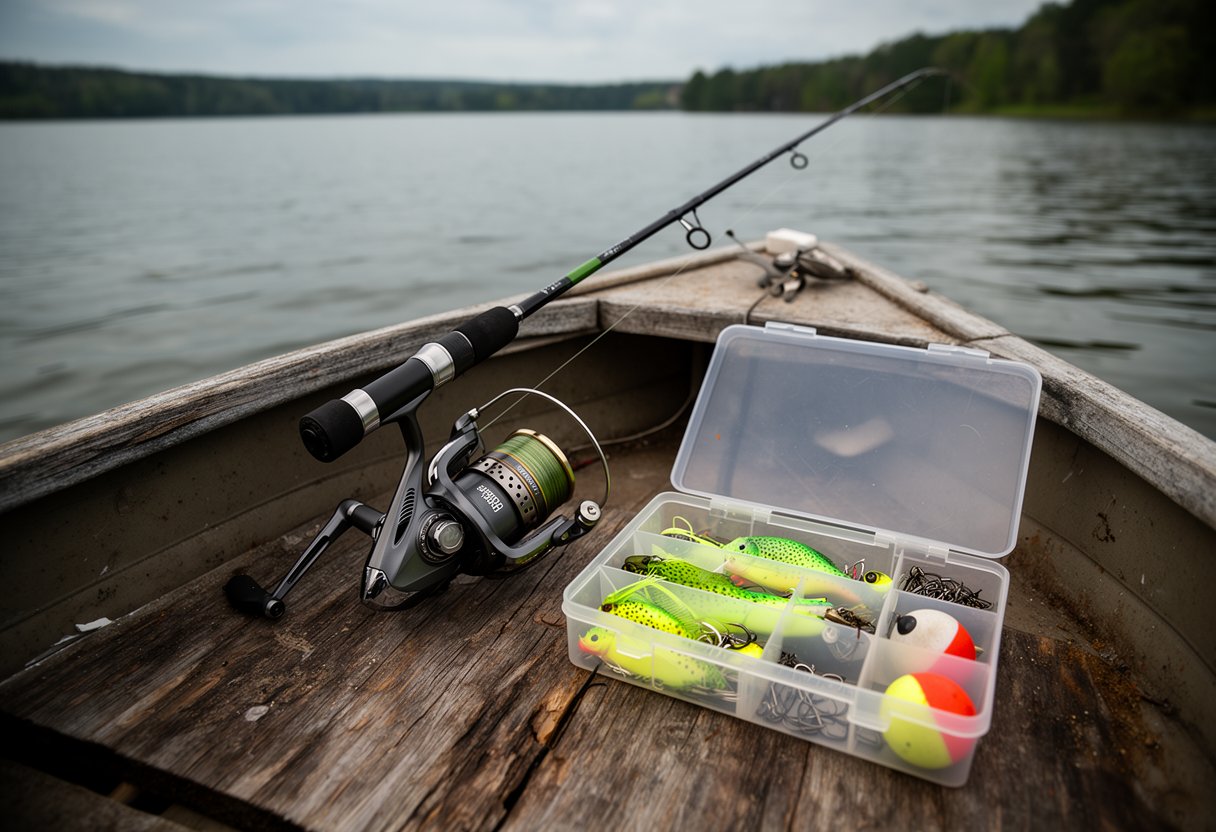
Rod: An ultralight spinning rod between six-foot-six and seven-and-a-half feet. Look for moderate or moderate-fast action — you need enough backbone to set the hook but enough sensitivity to feel those subtle bites.
Reel: Size 1000 to 2500 spinning reel. Anything in this range pairs well with an ultralight rod and handles light line smoothly.
Line: Four to six-pound test monofilament or fluorocarbon. Two-pound line exists, but it breaks too easily for beginners — especially when fishing around cover. Six-pound gives you a good balance of sensitivity and strength.
Hooks: Size 4 or 6 Aberdeen hooks for live bait. They’re lightweight and gapless, which means a minnow stays alive longer and the hook sets on its own when a crappie bites.
Bobber: A fixed or sliding bobber for vertical presentation. Slotted peg floats clip on and off quickly, which is convenient for adjusting depth.
You can browse our Fishing Rod and Reel Combo guide for specific combo recommendations if you’re putting together your first setup.
Best Crappie Baits and Lures
Crappie anglers mostly fall into two camps: live bait and lures. Both work incredibly well, and the best choice usually depends on the season and water conditions.
Live minnows are the number one crappie bait. Hook a three- to four-inch minnow through the lips on a size 4 Aberdeen hook and fish it under a bobber. Minnows are especially effective during the spring spawn and in cold winter water when crappie want something natural.
Jigs are the most popular crappie lure, period. A one-sixteenth to one-eighth ounce jighead with a skirt or soft-plastic body covers almost every situation. Chartreuse is the top-recommended color across the board — it shows up well in stained water and triggers strikes even in clear conditions. White, pink, and natural shad patterns are solid backups.
Jigging spoons add flash and vibration to your presentation. Small spoons (one-sixteenth to one-eighth ounce) tinkle as they fall, and that sound pulls crappie in from a distance. They’re especially effective in the fall.
Soft plastics — tiny grubs, shad imitations, and curly-tail baits on light jigheads — imitate small baitfish and work well when crappie are less aggressive.
Crankbaits are the overlooked crappie lure. A small fire-craw or chartreuse crankbait worked over brush piles or rock walls can catch aggressive crappie that are ignoring everything else.
Bait quick reference:
| Bait/Lure | Best Season | Situation |
|---|---|---|
| Live minnows | Spring, winter | Under bobber, still water |
| Jigs (chartreuse) | All seasons | Vertical jigging, bobber, casting |
| Jigging spoons | Fall, winter | Steady fall, deeper water |
| Soft plastics | Summer, fall | Slow retrieve, less aggressive fish |
| Crankbaits | Spring, summer | Casting over structure |
How to Catch Crappie: Techniques That Work
Now that you have your gear and bait, here’s how to actually put crappie on the bank or in the boat.
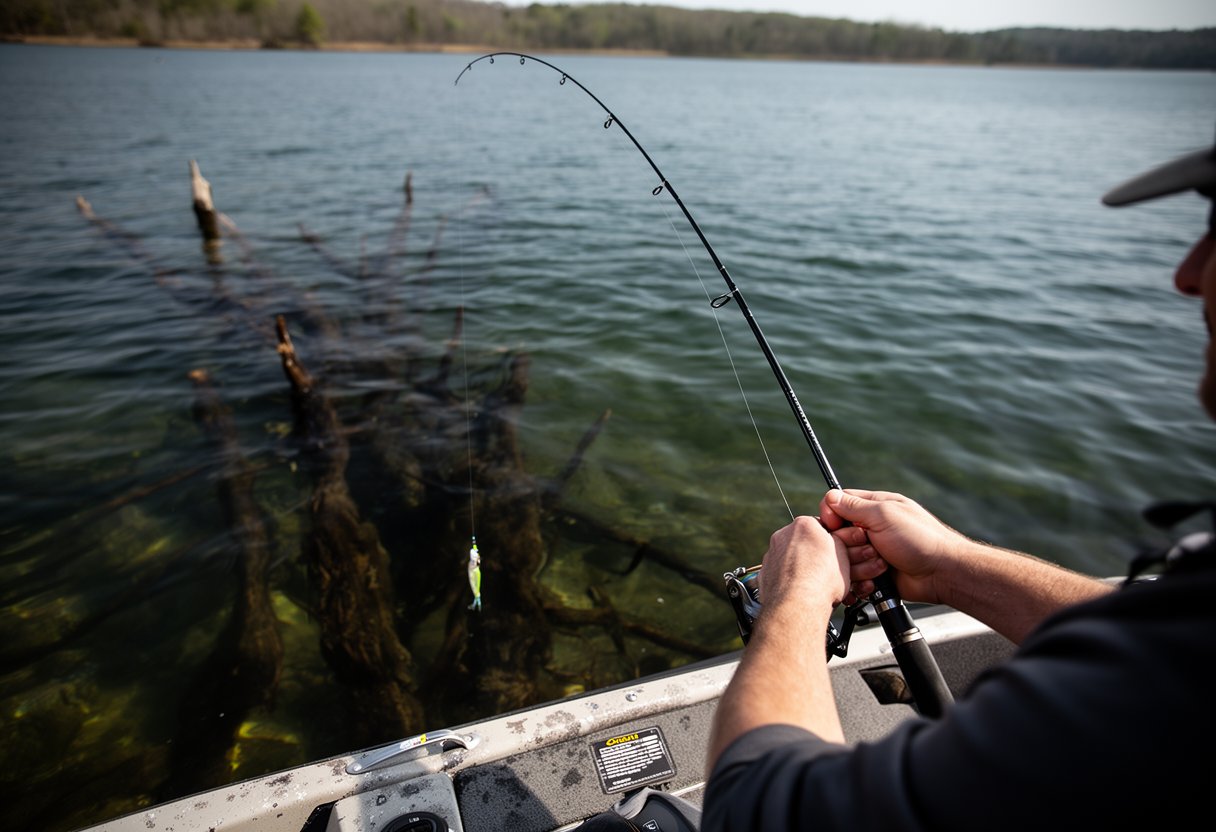
Vertical jigging is the most effective crappie technique for summer, fall, and winter. Drop your jig straight down to the target depth — usually ten to twenty feet — then work it with subtle three- to six-inch lifts. Here’s the critical detail: eighty percent of crappie strikes happen on the fall, not the lift. Maintain light line contact and let the jig fall naturally. When you feel a tap, set the hook.
Bobber fishing is the easiest technique for beginners and works especially well during the spring spawn. Set your bobber at the right depth — start at four to six feet near cover — drop your bait, and hold still. When the bobber goes under or moves sideways, lift gently to set the hook. This technique works perfectly from the bank, a kayak, or a dock.
Slow trolling with small crankbaits or jigs is great for covering water and finding schools you wouldn’t locate from a stationary spot. Keep the boat moving at two to three mph, and adjust your line length to match the depth where crappie are holding.
Casting to cover works during the spring spawn and early summer. Cast a small jig or crankbait near the edge of a brush pile, dock, or laydown, then work it back slowly with short pauses.
The golden rule of crappie fishing: match your retrieve speed to the water temperature. Cold water means slow presentations. Warm water means you can pick up the pace. When in doubt, start slow and gradually speed up if you’re not getting bites.
Crappie Fishing Tips for Beginners
- Start in spring. The spawn concentrates crappie in shallow, accessible water and gives you the highest chance of success.
- Match the hatch. If the baitfish in the lake are small, use small jigs and tiny minnows. Oversized bait won’t interest crappie.
- Hold your position. When you find a productive spot, stay there. Crappie schools take time to work through, and moving too quickly costs you fish.
- Fish the structure, not the sonar. Electronics help you find fish, but the fish are there because of the cover and baitfish. Focus on fishing the structure itself.
- Keep a tackle log. Note what jig color, size, and depth worked on each trip. Crappie preferences change with water temperature and clarity, and a log saves you guesswork next time.
- Check local regulations. Most states have a daily limit of twenty-five crappie with a ten-inch minimum, but rules vary by waterbody — some lakes have special slot limits or lower bag limits.
Ready to Target Crappie?
Crappie are one of the most accessible and rewarding freshwater fish you can target. They’re abundant, they bite readily, and once you learn to read seasonal patterns and find structure, you’ll have a reliable fish to chase all year long.
Grab an ultralight rod, a handful of chartreuse jigs, and hit the water — especially in the spring when the spawn puts them right in your reach. If you’re still building your panfish foundation, our Panfish Fishing for Beginners guide is a great starting point.