
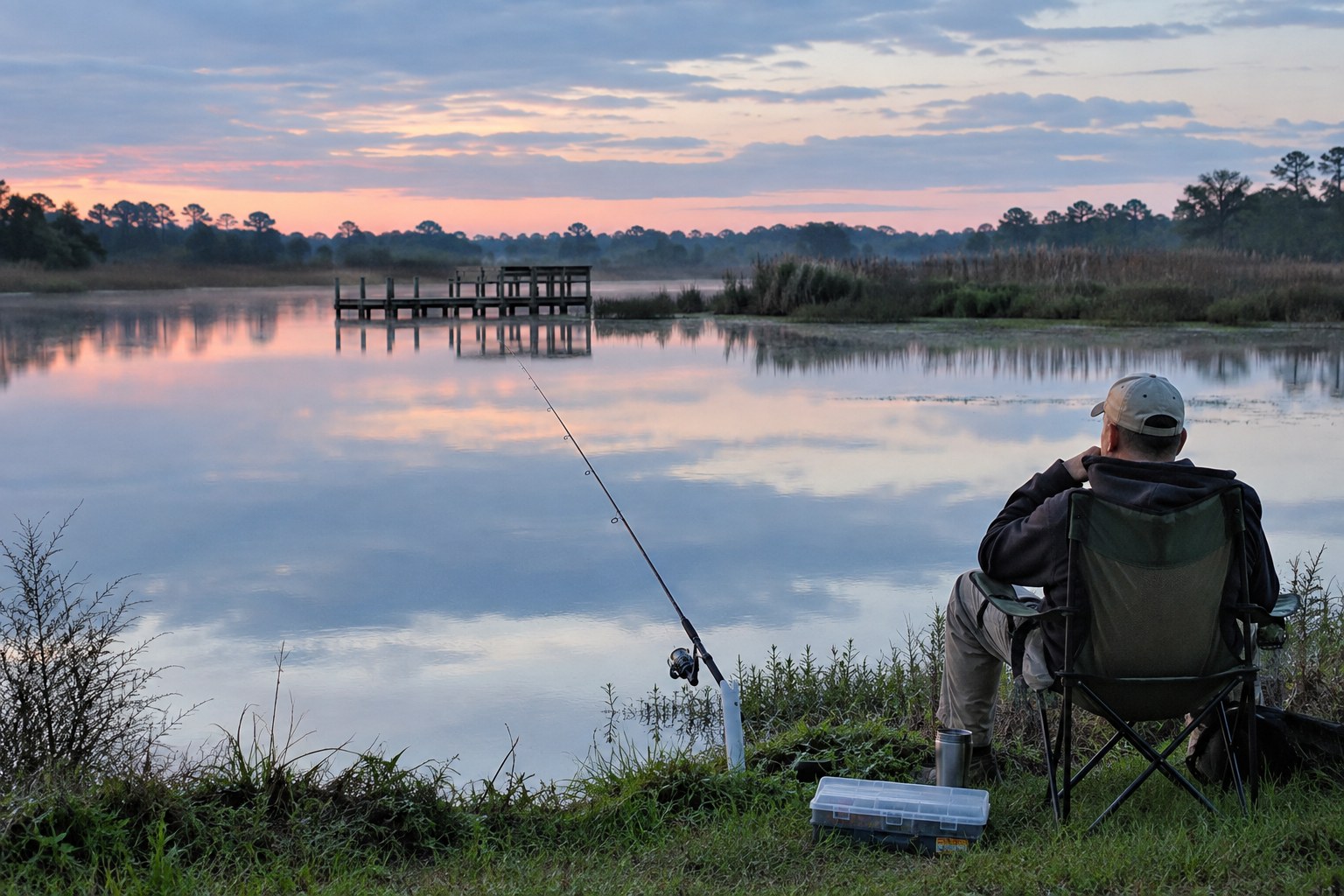
You’ve been out there more than once now. Maybe five, maybe ten times. And the bucket keeps coming home empty, or close to it. When that happens, it’s easy to start guessing — maybe the water’s bad, maybe the fish are stupid, maybe you just don’t have a gift for this.
None of that is true. Most of the time, a beginner’s empty bucket comes down to a handful of small, predictable mistakes that cost fish in exactly the same way every time. The good news: each one has a fix you can use on your next trip, and most of them take under a minute to do right.
Here are the six mistakes that cost beginners the most fish, in the order they matter.
You’re reeling in a machine rhythm
After the cast, you turn the handle. You keep turning. You don’t stop, you don’t slow down, you just keep turning until the lure is back. That constant-speed retrieve is the most recognizable beginner tell, and it’s the first thing fish learn to ignore.
Here’s why: most freshwater predators typically strike on pauses and changes in rhythm, not on steady motion. A lure moving in a straight, unbroken line looks like bait that’s already moving away, and a fish that’s already missed it once isn’t going to chase it. The ones that usually strike are the ones that stop — the jig that hangs for two seconds, the crankbait that twitches and settles, the spinner that pauses at the edge of the weeds.
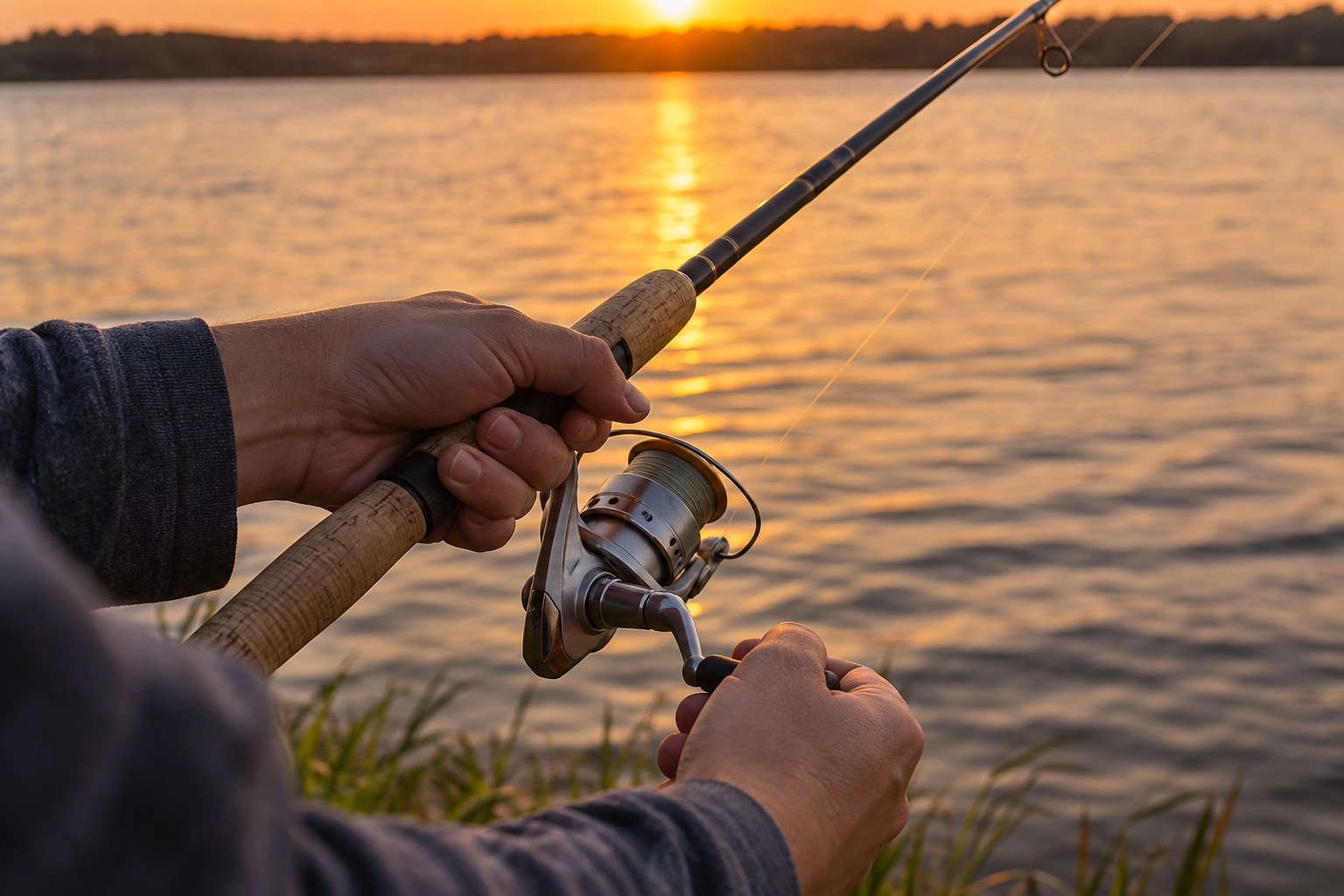
The fix is simple: add stops. Turn, stop for a second or two, turn again. And slow the whole thing down — cold water means slow fish metabolism, so a retrieve that feels “about right” on a warm afternoon is way too fast on a cool morning. If your lure has a natural pause built into its action, let it happen. Think of your lure as a tired, injured baitfish hanging around for a second, not as something running for its life. A smooth, controlled retrieve also matters more than a strong one — if your casts are still a work in progress, our guide to how to cast a fishing rod for beginners covers the basics before you build retrieve speed on top of them.
Your drag is locked down
Here’s a small one with a big cost: most beginners who set a drag setting ever set it once, turned it all the way tight “just in case,” and never touched it again. That’s the drag knob at maximum resistance, and it’s one of the two ways a locked drag costs you fish.
The drag is the friction brake on your reel. When a fish surges, the drag is supposed to slip — that’s the clicking sound you hear, and it’s the system working exactly as designed, not failing. It lets the fish pull line without the whole setup hitting your line’s full breaking strength all at once. With the drag locked down, every surge loads the line right up to the point where it snaps, and a good fish will typically do exactly one of those surges, right when it’s close.
The other failure is the opposite: drag so loose that there’s no real tension, and the hook works loose while the fish runs. The middle is the target. The standard rule is to set the drag at about 25-30% of your line’s rated test weight — so if you’re running 10-pound test, the drag should give you roughly 2 to 3 pounds of resistance before it slips. If you’ve never heard your drag click, it’s almost certainly too tight.
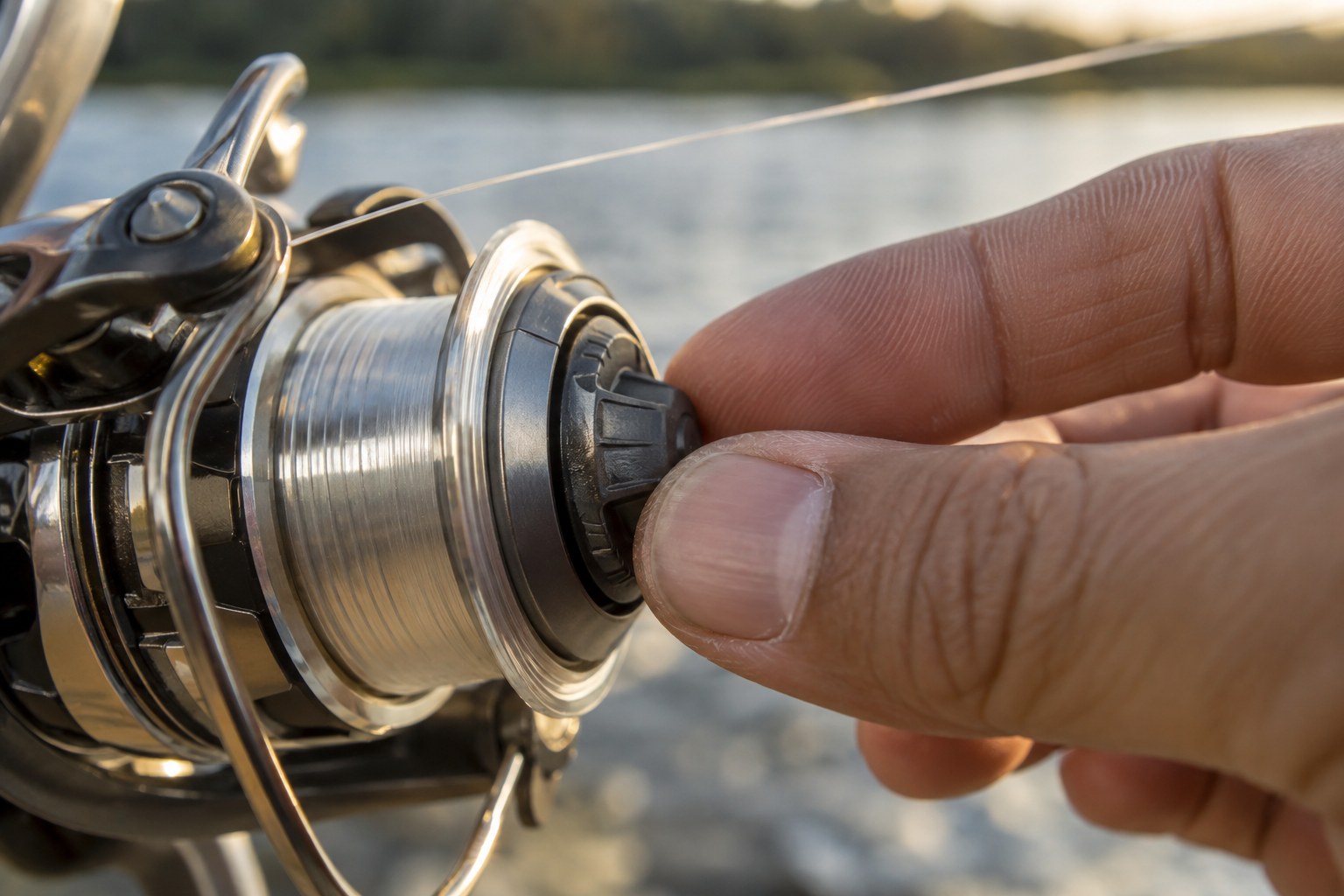
If you want to get exact on this, our guide to fishing drag setting for beginners walks through the test with a hand scale and how to adjust it without one.
Dull hooks and knots you never checked
Two quiet problems that don’t announce themselves until the fish is gone: a hook that’s lost its edge, and a knot that was tied in a hurry or never looked at again.
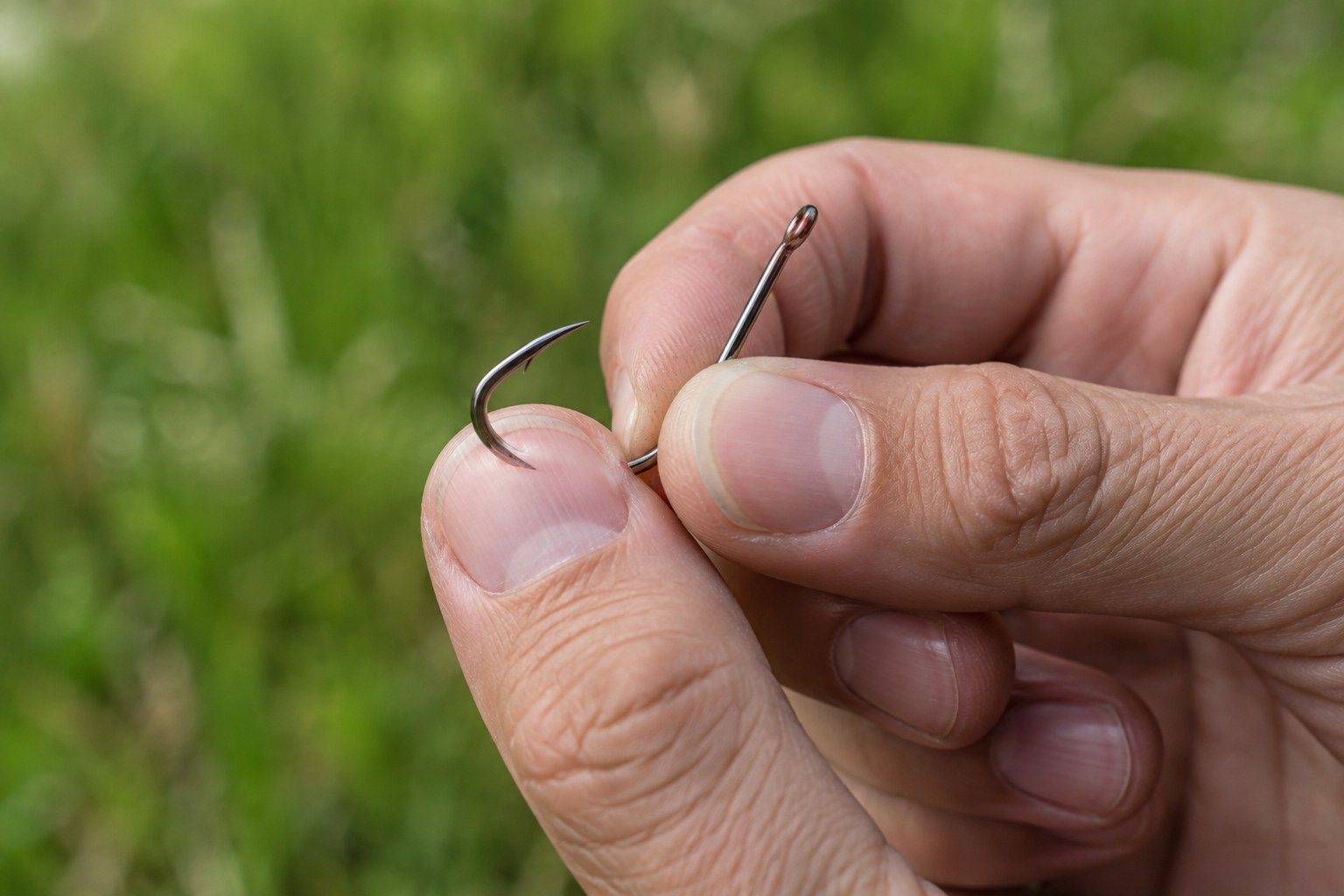
Start with the hook, because it’s the fastest check on this list. Take a bare hook, hold it up to the light, and drag the point across the side of your thumbnail. A sharp hook catches on the nail as you drag. A dull one just slides. It takes five seconds, and a dull hook on a light strike — the kind a small fish or a cautious bass will put up — simply won’t penetrate, and you’ll lose it without ever feeling a real bite.
Then the knot. Here’s a counterintuitive fact: for beginners, the knot — not the line — is the most common point of failure when a fish gets away. A knot tied in a rush, dry, with a yank at the end, can lose a meaningful chunk of its strength just from the friction of the coils rubbing together. Wet the knot with a little water before you cinch it — the coils slide into place instead of grinding, and the connection holds a lot closer to the line’s full strength.
And make a habit of retie-after-catch. The stress of a fight, even a small one, and especially the shock of a snag you pulled free on, can weaken a knot that looked fine. Retie after every fish, and retie after any good snag. Five seconds of retying costs nothing; the fish that was on that compromised knot is gone forever. If you haven’t got your knots locked down yet, start with the three knots every beginner actually needs, and then work through the full fishing knots for beginners guide until they’re automatic.
Slack line is hiding your bites
This one is easy to miss because it doesn’t feel like a mistake — it just feels like fishing. You cast, and there’s a loop of line floating in the water between the rod tip and the bobber, and the rod tip points up at a lazy angle. Nothing feels wrong. The rod’s in your hand. The line’s out there.
Here’s what that slack is actually doing: it’s eating your bite information. A light tap from a small fish, or the first tentative nibble of a bigger one, has to travel up the line and into the rod tip for you to feel it. With a loop of slack floating in the water, that tap just gets absorbed. The loop takes the shock, and your rod tip never moves. You’re sitting there watching a bobber that’s about to get pulled, and you don’t find out until it’s already gone.
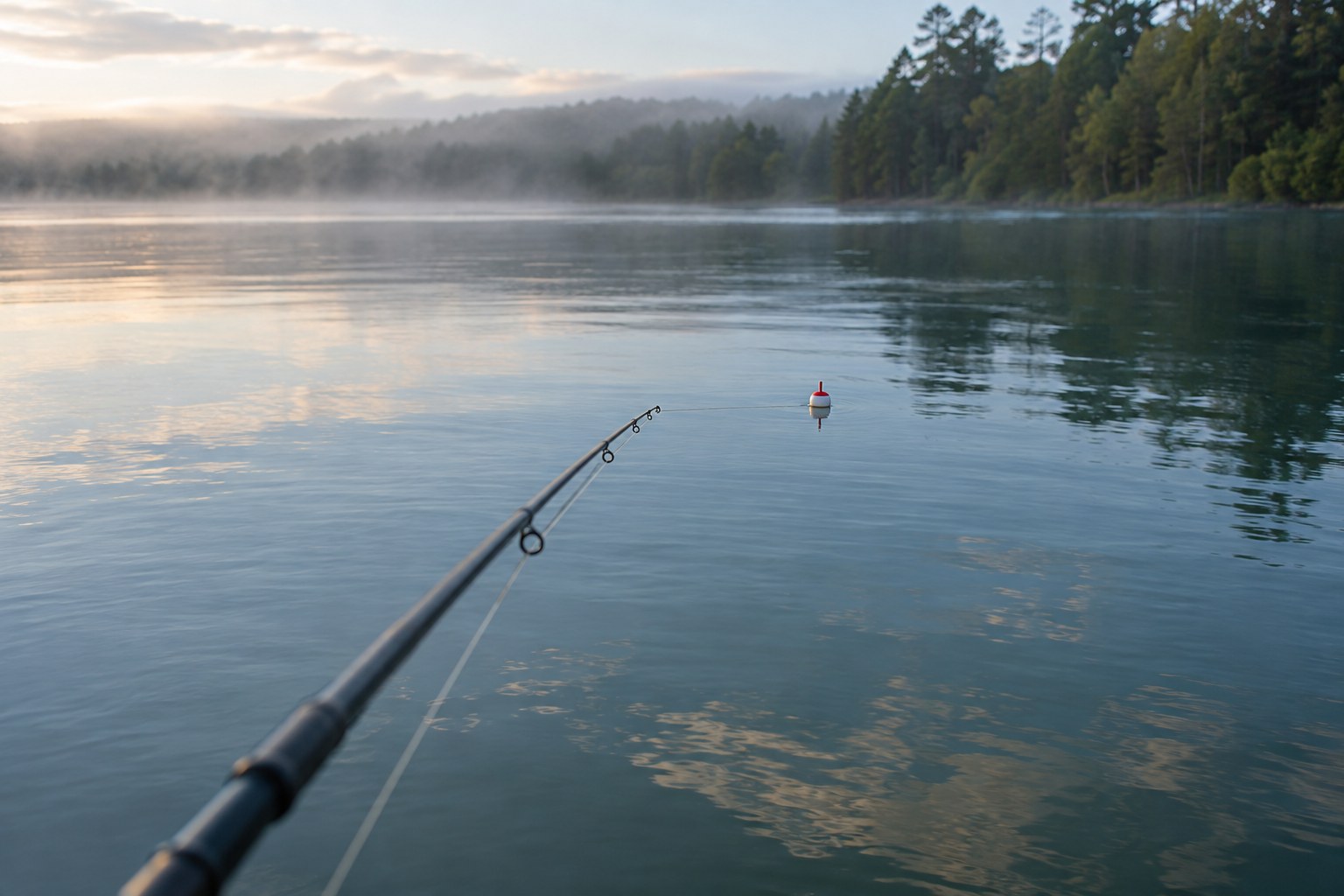
The fix is two steps. After the cast, close the bail and turn the handle a few times to take up the loop, just enough to bring the line taut without yanking the presentation back. Then keep a low, steady rod tip over the water and watch it — most real bites show up as a slight twitch or a slow dip before the bobber ever moves. If your whole setup is new and you’re still getting comfortable with the basics, our guide to setting up a simple fishing rig for beginners covers the whole thing from spool to bobber.
You’re casting at open water
This is the one that surprises a lot of beginners when they hear it, because it feels backwards: the middle of the lake, where the water is deepest and looks most “fish-like,” is usually the worst place to cast.
Most of the fish you’re trying to catch are ambush hunters. They don’t cruise open water looking for dinner; they hold near something — a dock piling, the edge of a weed line, a fallen tree, a point where the shoreline bends — and wait for bait to come to them. That’s why the open middle feels empty when you cast there: the fish aren’t spread across the whole lake, they’re stacked up in a small number of specific spots, and if you’re throwing to the center of the water, you’re throwing past them.

The fix is to change what you’re aiming at. Look for visible edges and aim your casts within a few feet of them: the shadow under a dock, the edge where weeds meet open water, a point jutting out into the lake. If you can’t see anything from the bank, cast to the nearest weed line or the first place the water visibly gets deeper, and work the lure through that transition. Learning to read the water is where most of the real catch-and-release happens — our guide to reading water for fishing breaks down what to look for and where the fish actually hold.
Changing everything at once
The last mistake isn’t a specific thing you do with the rod or the reel — it’s how you react when nothing’s working. A few casts go by with no bites, and now you’re moving to a new spot, switching bait, changing your depth, and reeling harder, all at once. It feels like you’re doing everything right, trying everything.
The problem is that now you have no idea what changed anything. When you do start getting bites 20 minutes later, you can’t tell if it was the new spot, the new bait, or the faster retrieve. You’ve turned your fishing trip into a bunch of uncontrolled experiments, and you’ve learned nothing you can use next time.
The habit that fixes this is small: when the bites stop, do a two-minute reset. Put the rod down, and check the basics — is the knot intact, is the line running clean, is the hook sharp, is the drag where it should be, is the area actually where you want to be? Make one change, just one, and give it at least 15 to 20 casts before you touch anything else. And at the end of the trip, write one line in your phone: what you noticed, what you changed, what happened. After a few trips, that list tells you more about how the fish around you actually behave than any guide can.
The one-mistake drill
You don’t need to fix all six of these at once. That’s too much to do in one trip, and it’s the same “change everything at once” trap in disguise. Pick the one on this list that’s been costing you the most — most beginners land on drag, knot, or open-water casting — and fix just that one before your next outing. Give it a full trip. Then pick the next one.
That’s how the empty bucket turns around, one trip at a time.