
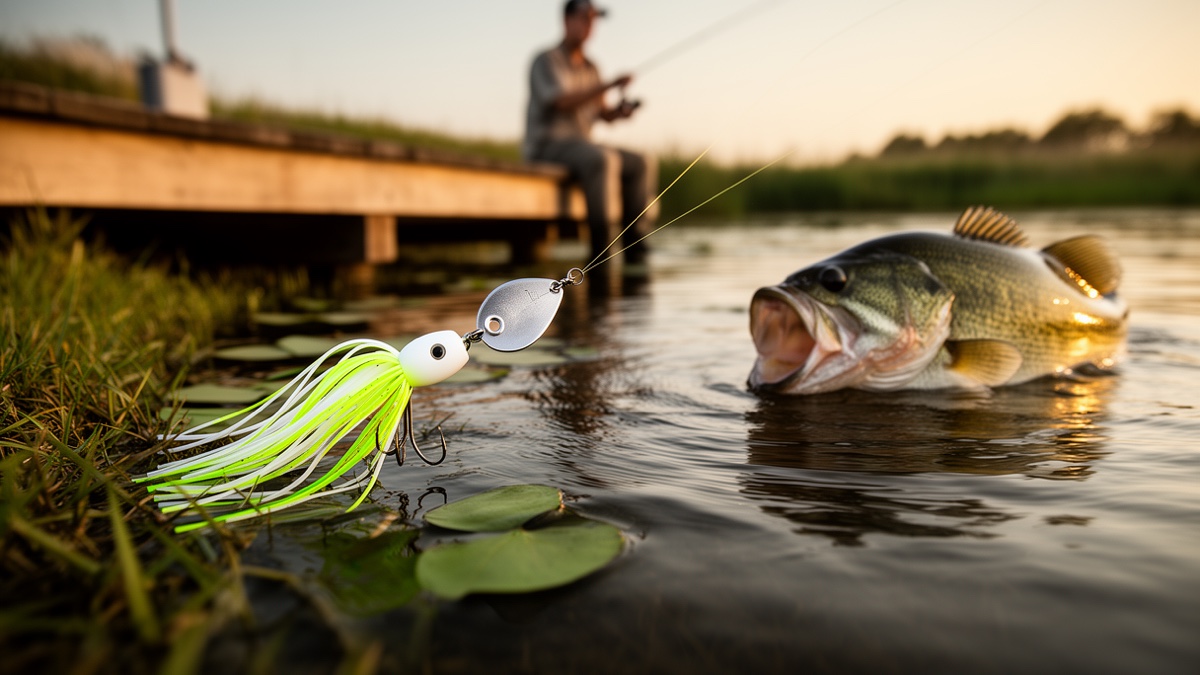
You cast into a patch of hydrilla. The lure hits the weeds and you immediately start reeling, expecting the sharp tug of a hung-up line. But there is no tug. The spinnerbait pushes through the grass like it’s not even there. Three casts later, a bass follows it out of the cover and strikes.
If a crankbait is a precision tool, a spinnerbait is a Swiss Army knife. It runs at multiple depths, deflects off weeds and branches instead of snagging, and works across every season and water clarity. For beginners who already understand hard bait basics, a spinnerbait is the most forgiving upgrade you can make to your tackle box.
What Is a Spinnerbait and How Does It Work?
A spinnerbait is a hard bait built around a wire frame. A metal blade (or blades) spins above a weighted head, and a rubber skirt trails behind. The hook hangs below the skirt, protected by a curved wire hood. That hood is what makes the spinnerbait nearly un-loseable: when it hits weeds, branches, or rocks, the wire deflects the obstacle instead of catching on it.
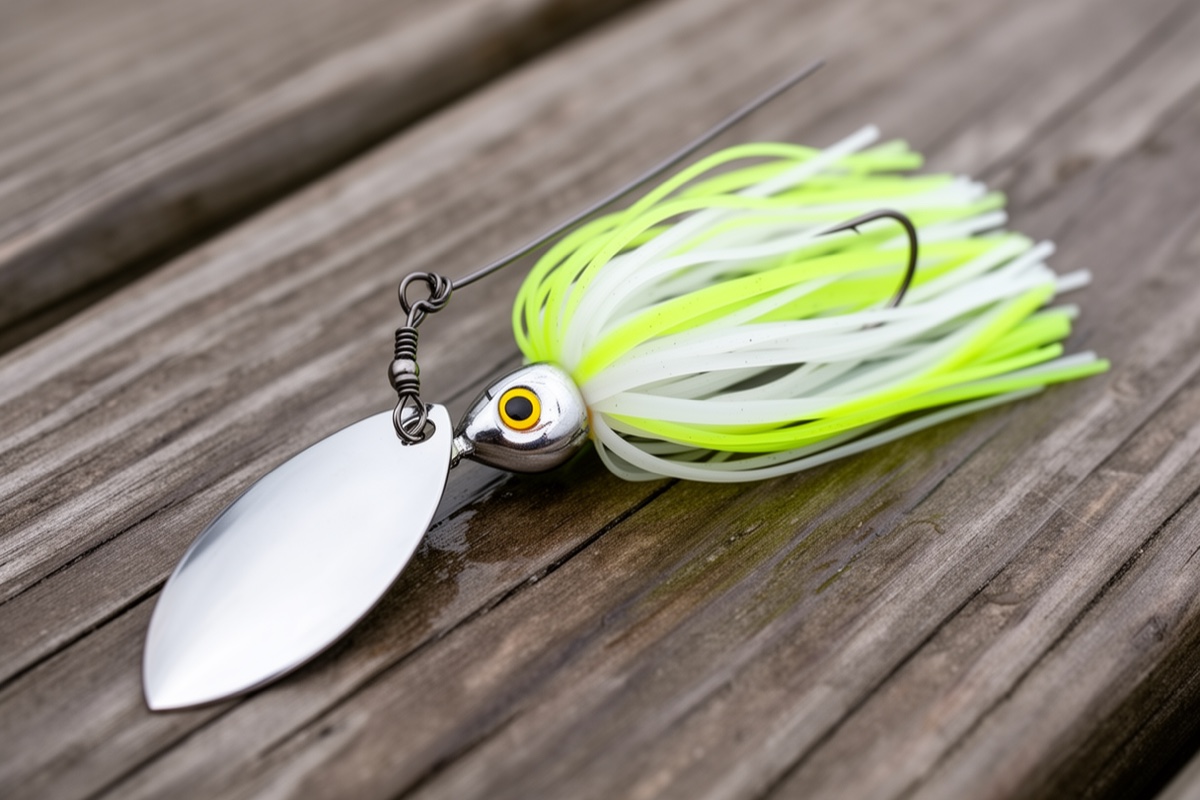
Spinnerbaits attract fish through two senses at once. The blade creates flash — visible light reflection that fish see. It also creates vibration — pressure waves that fish feel through their lateral line. That dual-attraction is why spinnerbaits work even when fish aren’t actively feeding: a bass can feel the lure approaching even in stained water where visibility is low.
Compare that to a crankbait, which relies on visual profile and wobble. A crankbait will hang up in anything thicker than sparse grass. A spinnerbait pushes right through. If you’ve already been using crankbaits and want to understand where a spinnerbait fits, see our crankbait fishing guide.
Choosing Your Blade: Colorado, Indiana, or Willow Leaf?
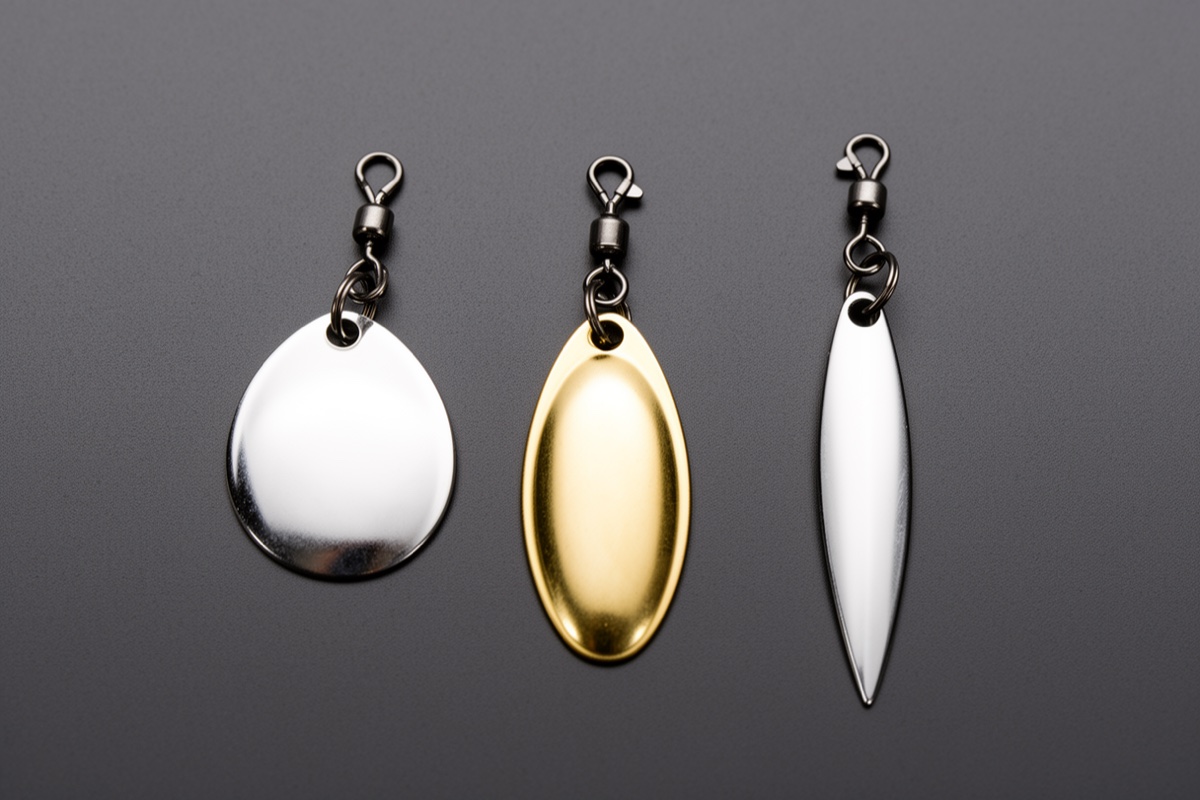
The blade type is the single most important spinnerbait decision. Changing a blade is like adjusting a crankbait’s bill — but instead of changing depth, you’re changing how the lure communicates with fish. Each blade runs at a different angle, creating different levels of flash and vibration.
| Blade | Shape | Vibration | Flash | Best Conditions |
|---|---|---|---|---|
| Colorado | Round, wide teardrop | Highest | Moderate | Stained/murky water, low light, slow retrieves |
| Indiana | Intermediate oval | Medium | Medium | All-around versatility, transition conditions |
| Willow Leaf | Long, narrow, pointed | Lowest | Highest | Clear water, bright sun, fast retrieves, heavy cover |
Colorado blades run at roughly a 45° angle, which gives them the most thrust and the most vibration. Use them when water is stained or muddy, when light is low, or when you want to retrieve slowly. The extra vibration compensates for reduced visibility.
Willow leaf blades run at about a 20° angle — the lowest resistance of the three. They spin fast, create maximum flash, and push through heavy cover without bogging down. Use them in clear water and bright sunlight, or when you need a fast retrieve to cover water quickly.
Indiana blades sit in the middle at roughly a 30° angle. They’re the best starting point if you own only one spinnerbait. An Indiana blade works well enough in most conditions that you won’t regret it as your go-to choice.
Right Size, Right Depth
Spinnerbait weight determines running depth and cover-penetration ability. Heavier spinnerbaits dive deeper, push through thicker weeds, and track better in wind and current. Lighter ones stay shallow and work fine in ponds or early spring flats.
| Weight | Depth Range | Best Use |
|---|---|---|
| 1/8 oz | 2–4 ft | Early spring, ponds, light cover |
| 1/4 oz | 4–6 ft | All-purpose starter weight |
| 3/8 oz | 6–8 ft | Summer, heavier cover, current |
| 1/2 oz+ | 8+ ft | Lakes, heavy weed beds, windy conditions |
As a beginner, own at least a 1/4 oz and a 3/8 oz. Those two weights cover roughly 90% of freshwater situations. Add a 1/2 oz if you fish large lakes or deep water regularly.
Colors That Match the Water
Water clarity dictates which sense fish rely on — sight or lateral line — and matching your spinnerbait color to conditions amplifies the right signal. The rule of thumb:
Dark water or low light (stained, muddy, overcast): darker skirts like black, blue, or green pumpkin paired with gold blades. The blade vibration and dark silhouette carry further when visibility is low.
Clear water and bright light: natural skirts like white, chartreuse, or perch patterns paired with silver blades. The flash and natural color profile match what fish see in clean water.
Chartreuse is the best beginner default when you’re unsure. It shows up in almost every water clarity level, and the bright color makes it easier to read your retrieve — you can actually see the spinnerbait moving, which helps you learn what a bite feels like.
How to Retrieve a Spinnerbait
Four retrieval techniques cover the vast majority of spinnerbait situations. You don’t need more than this to start catching fish.
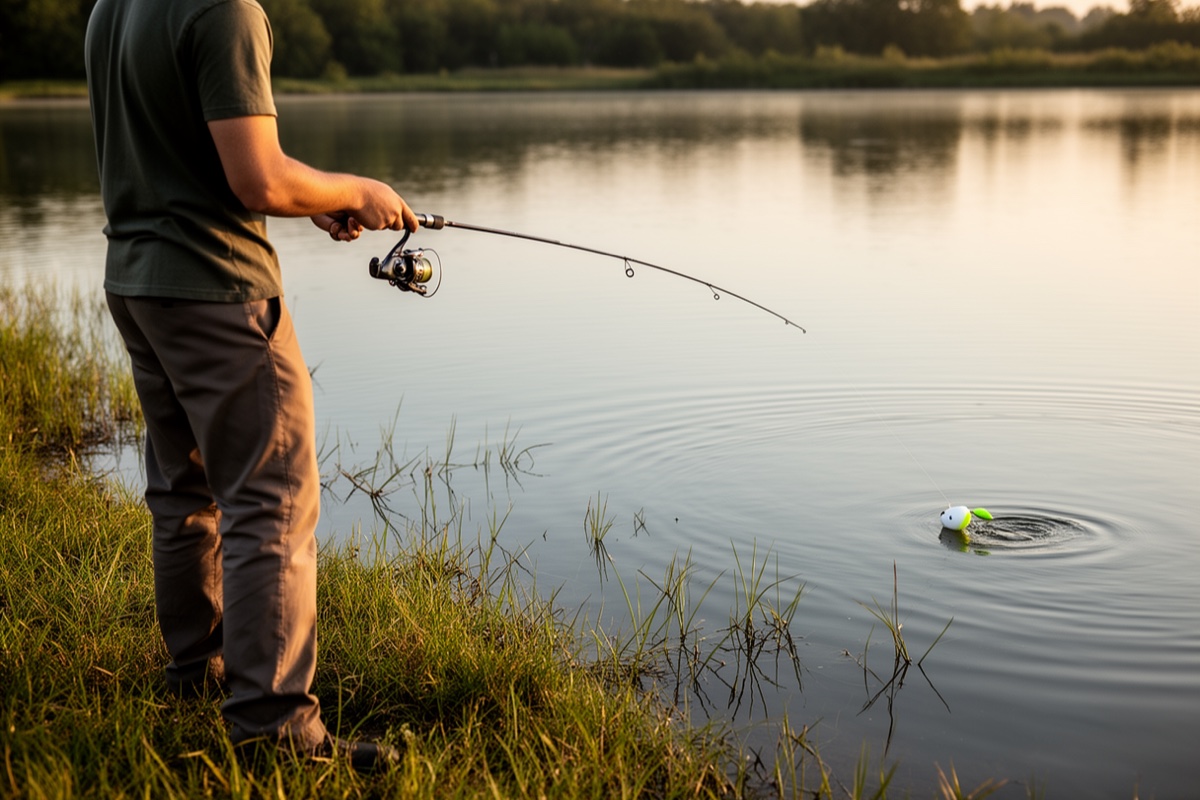
Steady retrieve. Cast and reel at a consistent medium speed — fast enough to keep the blades spinning, slow enough to maintain the right depth. This catches roughly 80% of spinnerbait fish. If you only learn one technique, make it this one.
Stop-and-go. Pause your retrieve for a few cranks, then resume. When you stop, the blades slow or stop spinning and the skirt drifts. This change in action often triggers a strike from a fish that was following but not biting. Use it when you feel the lure being followed but get no bite.
Bottom-bouncing. Twitch the rod tip occasionally to keep the spinnerbait in contact with the bottom. Bass that hold on flats or shallow structure often sit just off the bottom, and keeping your lure near the substrate puts it in the strike zone. You’ll feel the bottom through your line — little bumps and skips tell you you’re in the right place.
Deflection bounce. When you sense something might snag the lure — a log, a weed bed, a rock — yank the rod tip away from the obstacle. The wire hood deflects the spinnerbait clean in most cases. This self-cleaning move is what makes spinnerbaits nearly un-loseable, and it’s what separates them from every other hard bait.
Spinnerbaits Across the Seasons
Spinnerbaits work year-round. Adjust your weight, speed, and color to match the season:
Spring (pre-spawn): slow retrieve, 1/4 oz, chartreuse or crawfish colors. Focus on shallow flats where bass are warming up.
Spring (spawn): quick pass along bedding areas without disturbing nests. A spinnerbait’s compact profile lets you fish near beds without kicking up sediment.
Summer: faster retrieve, heavier weights (3/8–1/2 oz). Target deep structure and thermoclines early and late in the day when fish move shallow.
Fall: medium speed. Follow spawning shad schools and cover large water areas quickly — fish are feeding hard and moving.
Winter: slow retrieve, smaller sizes (1/8–1/4 oz). Target deep channels and points. Keep it simple: one steady, slow pass is often enough.
For a broader look at how to match lures and techniques to the season, see our Seasonal Fishing Guide.
When to Use a Spinnerbait Over a Crankbait
If you already fish crankbaits, a spinnerbait is not a replacement — it’s your go-to for situations where crankbaits fall short.
Heavy cover: hydrilla, lily pads, duckweed, timber. A spinnerbait pushes through where a crankbait would hang up on the first cast.
Stained water: blade vibration reaches fish that can’t see a crankbait’s profile. The spinnerbait’s lateral-line trigger works when visibility drops.
Windy conditions: heavier spinnerbaits track through wind without skipping or diving erratically. Crankbaits can lose depth control when surface chop gets rough.
Use crankbaits when you need precise depth control in open water. Use spinnerbaits when conditions get messy and you want to keep fishing without losing lures.
Trailer Options (Optional But Powerful)
Spinnerbaits have one feature crankbaits don’t: you can add a soft plastic trailer behind the skirt. The trailer changes the lure’s profile and action without adding bulk that defeats the weedless design.
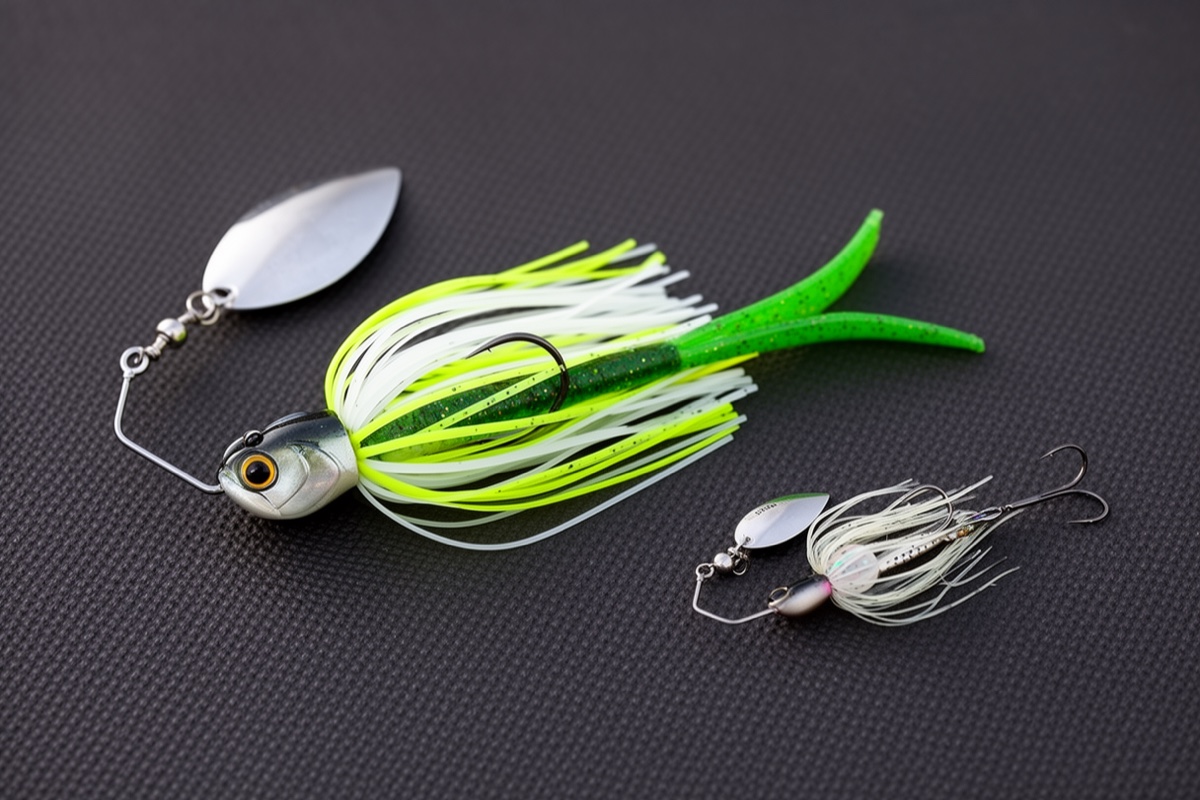
Paddle tail swimbait (such as a Yamamoto Paddle Tail Zako): adds a strong swimming action and natural baitfish profile. Best for active summer fish in open water.
Swim Senko: subtler action enhancement. Versatile across seasons and less likely to catch on cover.
Crawfish trailer: effective pre-spawn and post-spawn on rocky bottoms where crawfish are primary forage.
No trailer: many pros fish spinnerbaits bare. A bare spinnerbait keeps the most compact, weedless profile. As a beginner, fish bare first. Add trailers once you’re catching consistently and want to fine-tune your presentation.
Top Beginner-Friendly Spinnerbait Models
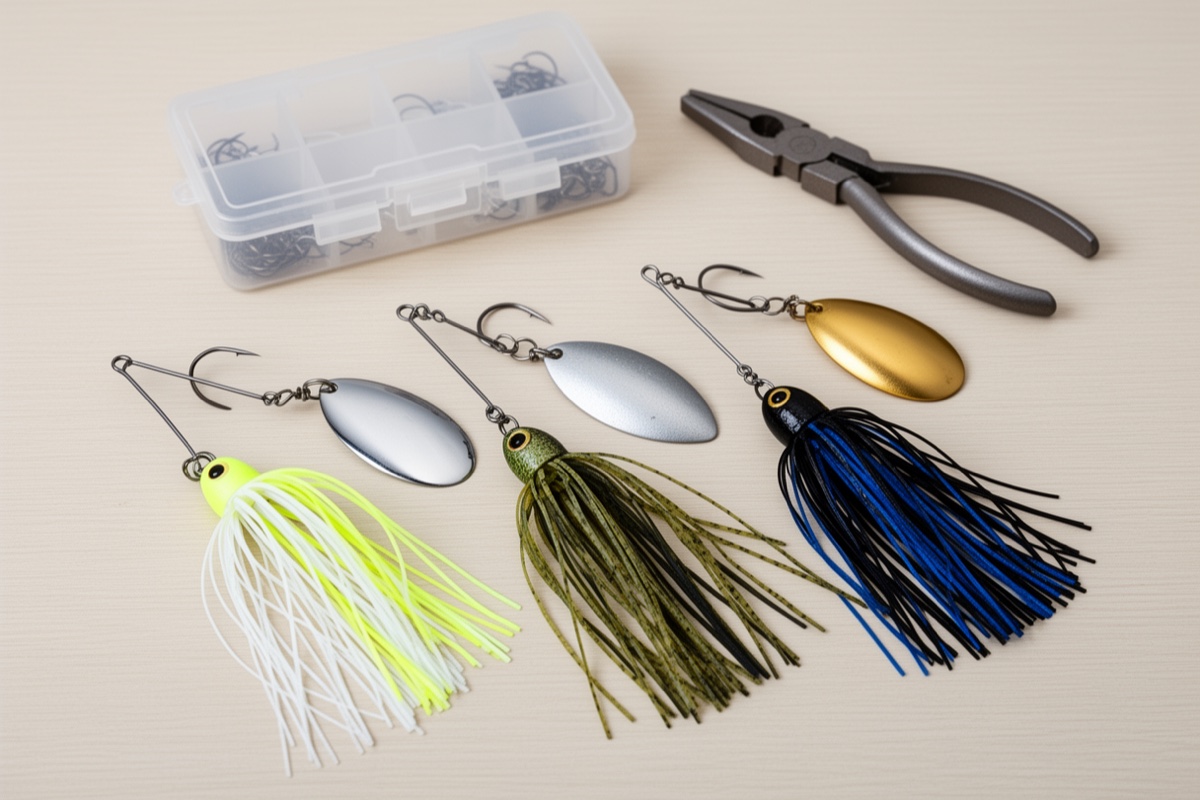
You don’t need a rack of spinnerbaits to start. Three well-chosen models cover every situation:
Strike King Compact Silhouette — the industry standard. Compact profile, used by world-class tournament anglers, available in every blade/skirt combo. Start here.
ZMan Swimbaiting Spinnerbait — hidden-weight design with excellent balance at all retrieve speeds. Great all-rounder.
Zoom LRT — built-in rattle for extra vibration, proven competition model that works especially well in stained water.
On a budget? Any store-brand spinnerbait with an Indiana blade and chartreuse skirt works as a starter. The blade type and color matter more than the brand name.
Common Beginner Mistakes
Fishing only one speed. If you retrieve every spinnerbait at the same pace, you’re missing bites. Vary between a slow roll and a faster burn — fish often respond to a specific speed you haven’t tried yet.
Wrong blade for the water. A willow leaf blade in muddy water gives you little vibration when you need it most. Match blade type to water clarity: Colorado for murky, willow for clear, Indiana when you’re unsure.
Overloading with trailers too early. Adding a bulky trailer increases snag potential and can defeat the spinnerbait’s weedless advantage. Fish bare until you understand the retrieve, then experiment.
Reeling faster to avoid snags. The spinnerbait’s wire hood cleans itself in most cases. A sharp rod-tip deflection is often all you need — you don’t have to bail on the cast.
Start Simple, Cover Everything
One spinnerbait covers conditions that would require multiple crankbaits, jerkbaits, or swimbaits. Start with a 1/4 oz Indiana blade in chartreuse and a steady retrieve — that alone will catch more fish than you expect. From there, adjust your blade for water clarity, your weight for depth, and your speed for the season.
For a broader view of how to pick lures for specific target species and conditions, see our guide to choosing the right lure. And if you’re curious about the soft plastic alternatives that complement spinnerbait fishing, our soft plastic baits guide covers the basics. If you’re building out your hard bait skills, the jerkbait guide is the next technique to learn.