
Walleye are one of the most rewarding freshwater fish you’ll target. They fight hard for their size, hold on the line in a way that makes every cast feel alive, and they’re one of the best table fish in the lakes they inhabit. If you’ve caught bass or trout and want to level up, walleye are the next challenge.
Walleye are also known for being elusive. New anglers often leave the water empty-handed because walleye behave differently from other common species — they hunt in low light, they school tightly, and their bite is so light most beginners miss it entirely. That’s not because walleye are unfishable. It’s because they reward a slightly different approach.
This guide covers the gear, rigs, seasonal patterns, and water-reading skills you need to start catching walleye. And we’ll spend extra time on one thing above all: reading their signature light bite, which is the single skill that turns “I see bites on the finder” into a full livewell.
What Makes Walleye Different
Understanding walleye behavior makes every other part of this guide click into place. Walleye are not bass. They’re not trout. They have a specific set of traits that shape when, where, and how you catch them.
Low-Light Vision
Walleye have a biological advantage most fish don’t: a tapetum lucidum, a reflective layer behind the retina that amplifies low-light vision. The trade-off is that bright, direct sunlight can actually bother their eyes. That’s why the best walleye fishing typically happens at dawn, dusk, on overcast days, or in water with some color to it.
That doesn’t mean you need murky water to catch walleye. It means you need reduced light. A cloudy day on a clear lake can outfish a sunny day on a stained one. Early morning and late evening are the windows when walleye move more actively and bite more aggressively.
School Behavior
Walleye school tightly, especially in colder months. Find one, and there are typically more in the immediate area — sometimes dozens stacked together. This schooling instinct is why targeting structure pays off so much for walleye. They don’t wander randomly; they hold near underwater features that concentrate baitfish and provide ambush points.
In summer, schools may spread out over a wider area. In spring and fall, they pack into tighter groups during transitions. Learning to spot a single fish on sonar and then staying committed to that area is a fundamental walleye skill.
The “Tap” Bite
Here’s the thing about walleye that trips up almost every beginner: they barely feel like they’re biting. A walleye typically sucks in bait with a subtle pause or gentle tick — not a hard pull. Anglers set the hook too early, too late, or not at all because they’re waiting for a bass-style strike that never comes.
We’ll come back to this in detail later. But the short version: when you feel the first faint contact, wait one or two seconds, then set the hook gently. That timing is the difference between a full livewell and a full day of “I thought I had bites.”
Walleye Gear Setup for Beginners
You don’t need a dedicated walleye rod and reel to start catching them. But you do need the right balance of sensitivity and strength. Heavy bass gear will mask walleye bites so thoroughly you’ll think you’re fishing dead water. Ultralight panfish gear will break too easily when a three-pound walleye turns. Medium-light is the sweet spot.
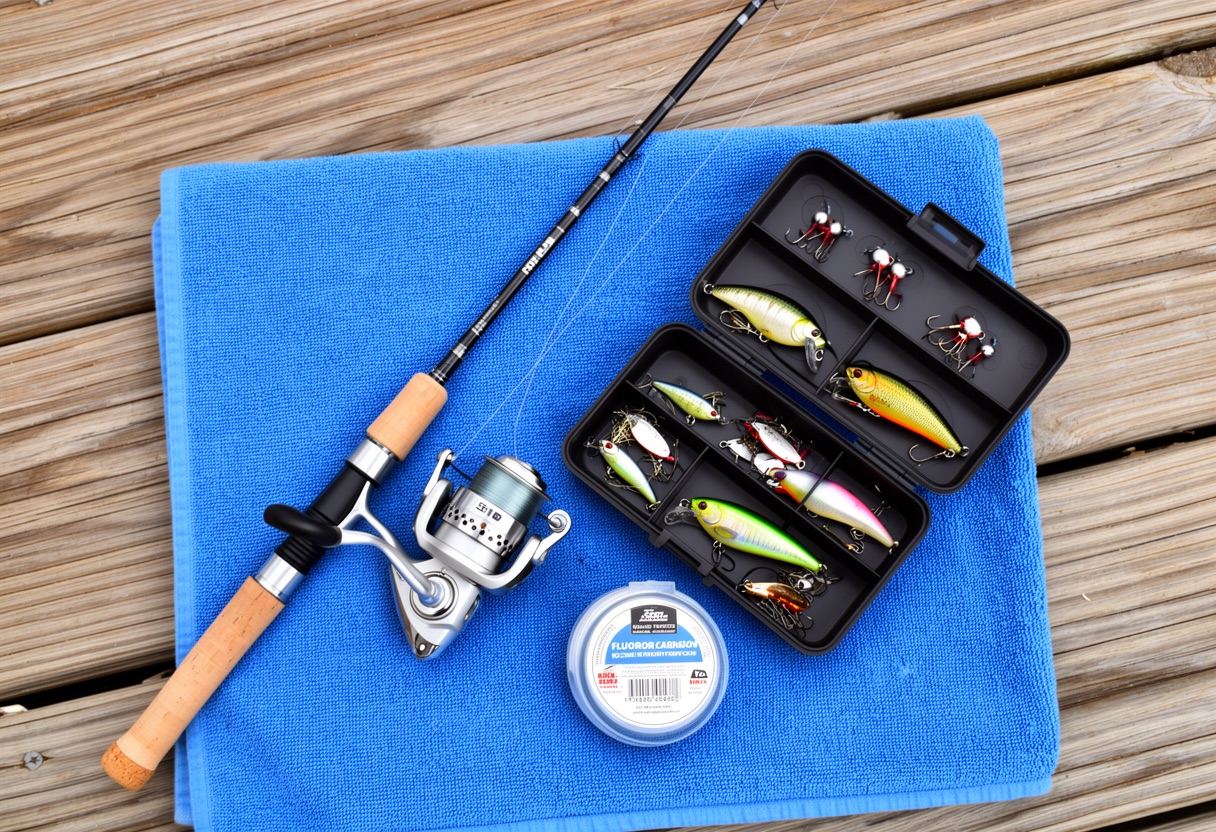
Rod: Medium-light power, fast or moderate-fast action, six-foot-six to seven feet long. The moderate tip flex lets you feel that light bite, while the backbone handles the initial run from a quality fish. Too-heavy a rod turns walleye ticks into nothing. Too-soft a rod won’t set the hook reliably.
Reel: A size 2000 or 3000 spinning reel. Smooth drag matters more than brand. Walleye don’t typically make long, hard runs like bass, but a clean drag prevents line twist and keeps the fight controlled.
Line: Six to ten-pound fluorocarbon is the recommendation. Walleye are line-shy — their low-light vision lets them see line more clearly than you’d expect, and heavier line gets them spooky. Fluorocarbon is less visible underwater than monofilament and sinks, which helps your bait get to the right depth faster. Our monofilament vs fluorocarbon vs braid guide breaks down the full comparison if you want the details.
Tackle box essentials: Jigheads in the 1/8 to 3/8 ounce range, blade baits, small crankbaits, split shot, and slip sinkers. You can fill a whole box with specialty lures, but these basics cover the vast majority of walleye situations.
If you’re building your first setup from scratch, our fishing rod and reel combo guide has specific recommendations for freshwater spinning combinations.
Three Walleye Rigs That Actually Work
A “rig” is the combination of line, weight, hook, and bait tied together. You don’t need a dozen walleye rigs. Three will cover almost every situation you’ll encounter as a beginner, and each has a specific strength.
Slip-Sinker (Lindy) Rig
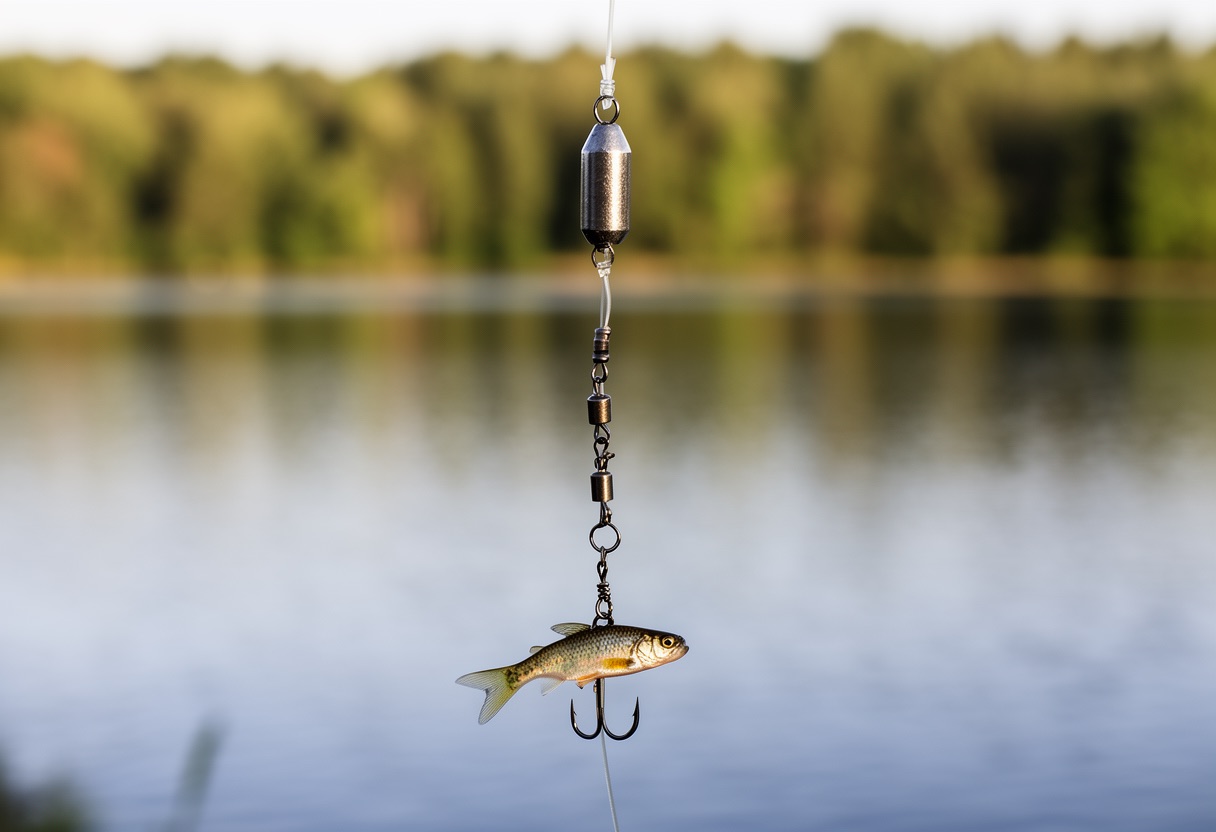
This is the most versatile walleye rig and the one we recommend starting with. Here’s how it works: a slip sinker slides freely on the mainline above a swivel. A leader section runs from the swivel down to the hook. When a walleye picks up the bait, the sinker sits on the bottom and doesn’t resist — the fish feels almost no resistance and holds on longer. That gives you time to set the hook.
Tie it by threading a slip sinker onto your mainline, followed by a bead (to protect the knot), then tying on a swivel. Add a three-to-four-foot leader below the swivel, then tie your hook. Bait the hook with a plain minnow.
The slip-sinker rig excels at covering water while presenting live bait naturally. Cast it near structure, let it sink, and keep a light hold on the rod. It works equally well from the bank, a kayak, or a boat.
Jig and Minnow
Vertical presentations are how walleye anglers fish holding water — spots where you know fish are sitting and want to work them methodically. A jighead with a plain minnow is the standard approach.
Drop the jig to the bottom, then hover it for three to five seconds. Twitch the rod tip once or twice to make the minnow flutter, then let it fall back down. Repeat. The fall is where most walleye strikes happen, just like with crappie vertical jigging.
This rig is best over points, reefs, and drop-offs — places where walleye hold and intercept passing baitfish. It demands more patience than the slip-sinker rig, but it’s unmatched for catching walleye that are sitting tight on structure.
Blade Bait on a Jighead
Not every walleye trip involves live bait. Some waters have bait restrictions, and some anglers prefer artificials. A blade bait on a jighead is the go-to artificial for walleye. The in-line spinner blade creates flash and vibration that walleye key in on, even in low-activity situations.
Fish it by bouncing the bottom with short pauses — not a fast retrieve. Walleye are bottom-oriented feeders, and the blade bait needs to stay in their strike zone. A steady bottom-bounce retrieve, with an occasional flick to make the blade flutter, typically produces more walleye than any fancy technique.
Color selection matters. Black, brown, and purple blade baits are consistently top performers across water conditions, with black being the most versatile. In very stained water, a flash of chartreuse or firetiger can trigger strikes, but start with darker colors.
Finding Walleye by Season
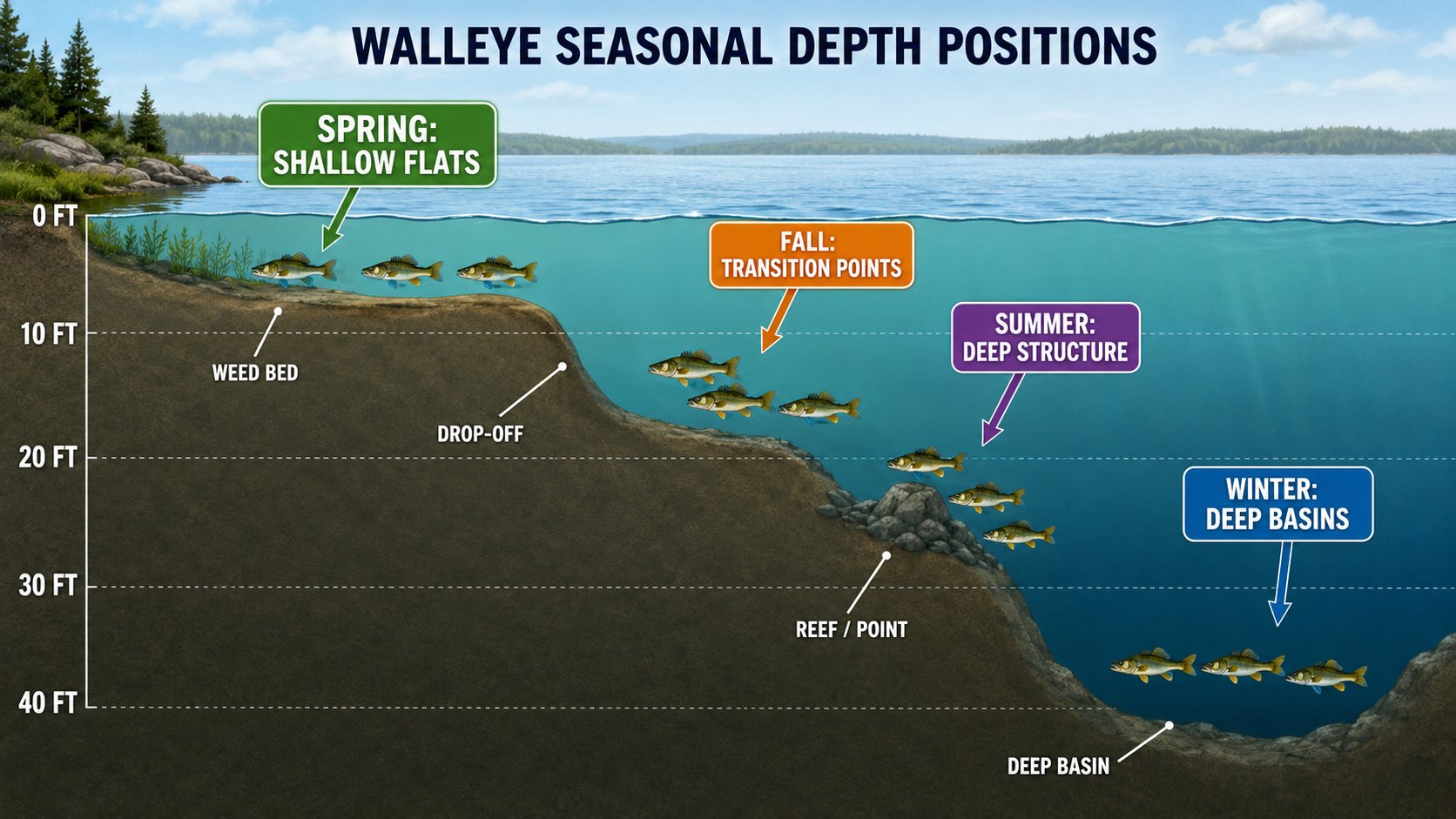
Walleye depth changes with water temperature more than any other common freshwater species. In spring they may be in four feet. In mid-summer they can sit in thirty-five feet. If you’re fishing the wrong depth for the season, you won’t find them no matter how good your rig is.
Spring: Shallow Flats and Bay Entrances
As water temperatures climb into the upper forties and low fifties, walleye move onto shallow flats and into bay entrances for pre-spawn staging. Spawn typically occurs in the low to mid-fifties. During this window, walleye are active and feeding aggressively as they prepare to reproduce.
Slow presentations work best in spring. Water is still cold enough that walleye metabolism is dialed down slightly. A jig and minnow drifted slowly across a flat, or a slip-sinker rig let out near a point, will produce fish during this period.
Summer: Deep Structure and Night Fishing
When water hits the seventies and above, walleye move deeper — typically fifteen to forty feet depending on the lake. They key in on points, inside weed edges, and drop-offs. During the day they sit deep and relatively inactive.
Night fishing becomes extremely productive in summer. Walleye move shallower after dark, sometimes into just five to ten feet of water along points and weed edges. Early morning and late evening still work on shallow structure, but midday summer walleye fishing is a depth game.
Fall: Pre-Spawn Schools Move Shallow
Fall walleye fishing is one of the most rewarding seasons. As water cools, pre-spawn schools move shallow again, following crawfish and small baitfish. Walleye feed aggressively before winter, and their bite is often harder than in spring.
Target the same spots that worked in spring — shallow flats, bay entrances, points. But walleye are typically a foot or two deeper in fall than they were during the spring spawn. Fall is also when blade baits and crankbaits shine, because walleye are actively chasing food.
Winter: Deep Basins and Ice Fishing
In winter, walleye hold in deep basins — twenty-five to forty feet depending on the water body. They school tightly and move slowly. Vertical jigging with heavier jigs becomes the primary technique.
Walleye are arguably the number one ice fishing target in the northern half of their range. The principles are the same: find deep structure, present bait slowly, and be patient. Our ice fishing for beginners guide covers ice-specific techniques in detail.
Seasonal reference:
| Season | Typical Depth | Best Technique | Notes |
|---|---|---|---|
| Spring | 4–12 ft | Slip-sinker rig, jig and minnow | Slow presentations, shallow flats |
| Summer | 15–40 ft | Vertical jigging, night fishing | Deep structure, dawn/dusk shallow |
| Fall | 8–25 ft | Blade baits, crankbaits, live bait | Aggressive pre-winter feeding |
| Winter | 25–40 ft | Vertical jigging (heavy) | Deep basins, tight schools |
For broader seasonal context across all freshwater species, our seasonal fishing guide has a full breakdown.
Reading Water for Walleye
“Reading water” means understanding where fish are likely to be based on the lake’s underwater geography. Walleye are structure-oriented fish — they hold near features that provide cover, food, and efficient travel routes. Open water is rarely where you’ll find them.
Key features to target:
- Points — where shallow bottom meets deeper water. Points concentrate baitfish and create natural corridors walleye use to move between depth zones. They’re the number one walleye structure type.
- Reefs and humps — underwater elevations that produce food. Reefs attract baitfish, and walleye stack up along the edges waiting to ambush them.
- Drop-offs — steep transitions from shallow to deep. Walleye use drop-offs as highways, holding at a specific depth and intercepting passing forage.
- Weed edges — the boundary between submerged vegetation and open water. Weeds hold baitfish and crawfish, and walleye patrol the outside edge.
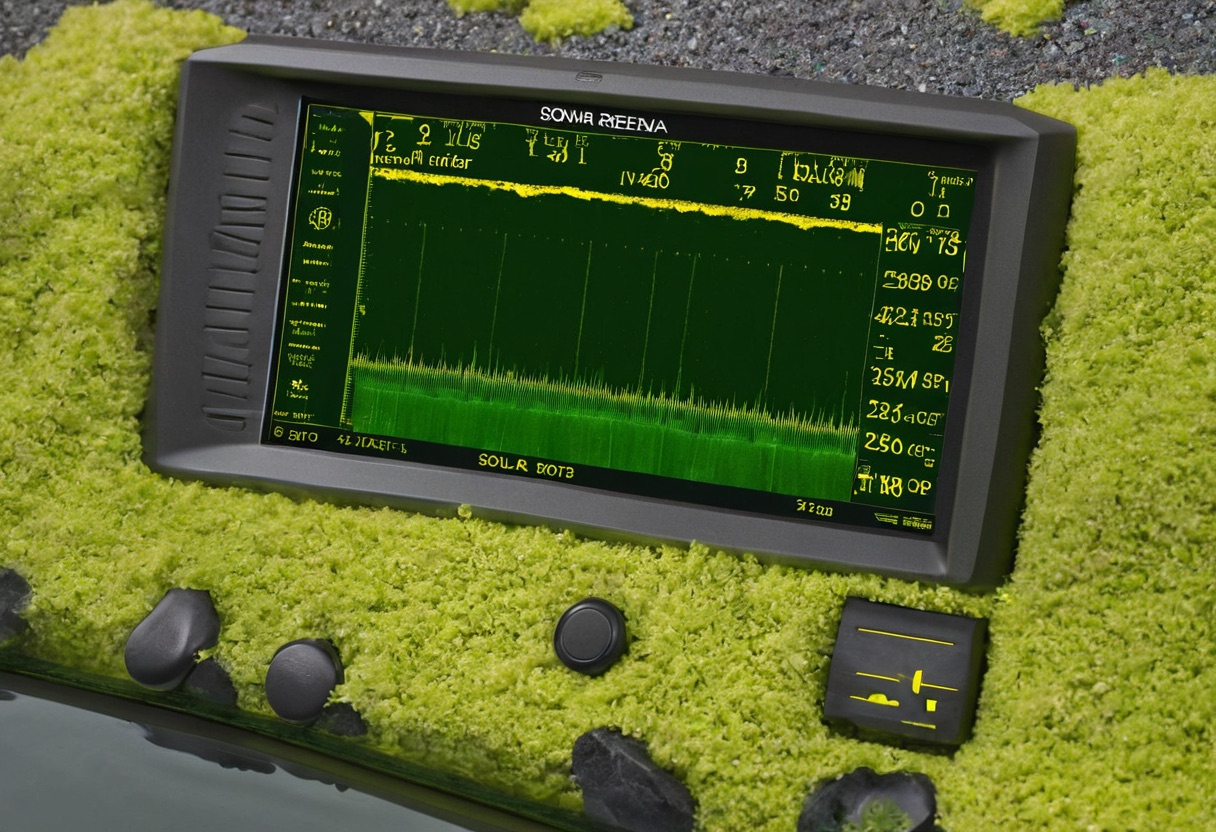
Our fish finder guide covers how to read sonar in detail, but here’s the walleye-specific takeaway: look for schools appearing as tight clusters of targets at a consistent depth, stacked against structure. A single arch or dot might be a bass or a pike. A tight group of returns at the same depth is almost always walleye.
Walleye Bait and Lure Selection
Keep it simple. The walleye angler with two well-chosen baits will outfish the one with a full tackle box.
Live bait: The plain minnow is the universal walleye starter bait. Hook it through the lips on a size 4 hook and it works in spring, summer, fall, and winter. Nightcrawlers work well split-tailed, especially in fall. Leeches are effective in cooler water when walleye want something that moves slowly. Small shiners (three to four inches) can produce bigger walleye in summer, but plain minnows handle the most situations.
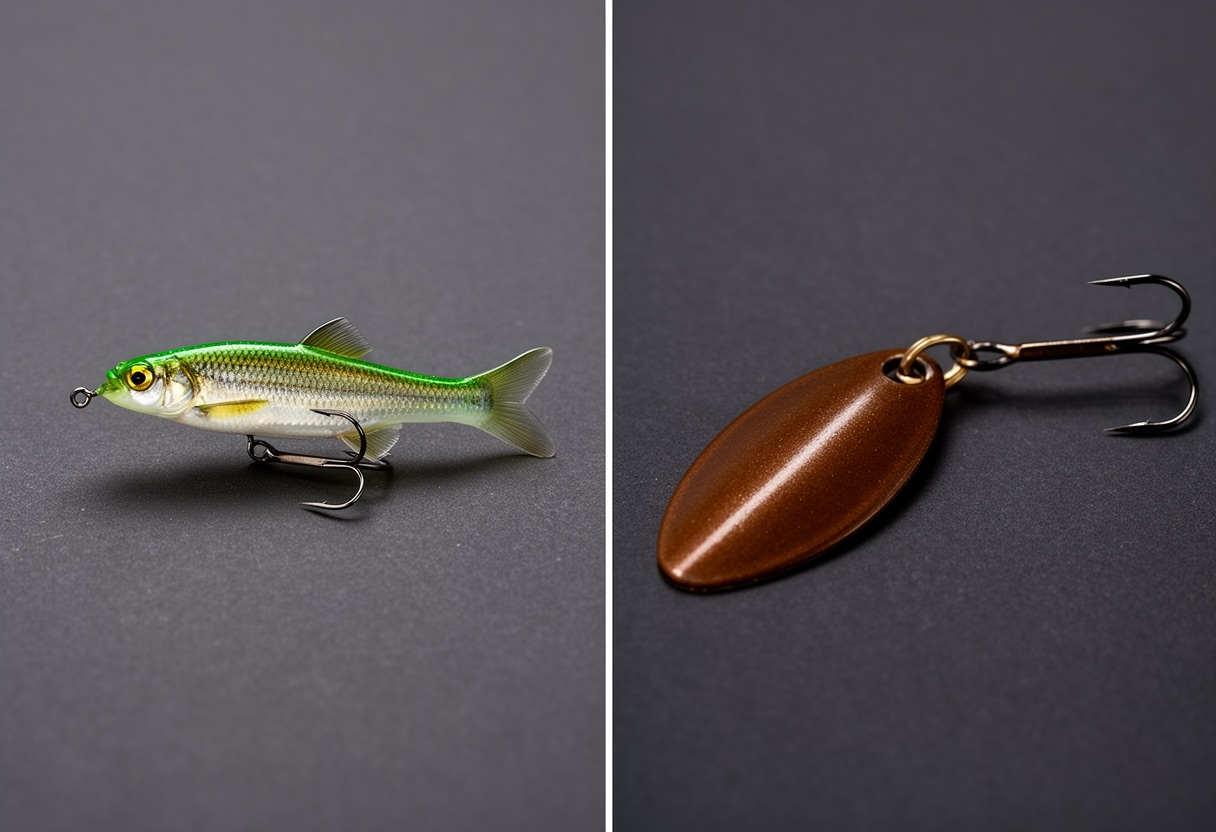
Artificials: Jigging spoons, blade baits, and small crankbaits are the big three. Crankbaits that dive to eight to twelve feet cover shallow and transitional water; ones that reach twelve to eighteen feet handle summer depth. A blade bait on a jighead is the most versatile artificial.
Color selection: Match or contrast depending on water clarity. Natural colors — green pumpkin, brown, pearl — work in clear water. Brighter colors — chartreuse, firetiger — show up better in stained conditions. When you can’t decide, black or dark brown blade baits and green pumpkin jigheads are solid defaults across water types.
The best approach: carry one live bait option (plain minnow) and one artificial option (blade bait). If they’re not biting on both, the issue is typically depth or location, not bait selection.
Setting the Hook on a Walleye
We mentioned the light bite earlier, but this deserves its own section because it’s the most common failure point for beginners. Here’s exactly what to do.
Keep a firm but light hold on the rod with the tip angled slightly up — not pointed straight at the water, not laid flat against your lap. You want enough line tension to feel contact, but not enough tightness that the walleye senses resistance and spits the bait.
When you feel the first tick or pause, wait one to two seconds. The walleye is typically suctioning the bait in. If you set the hook the instant you feel contact, the bait is often still outside the fish’s mouth. Wait just long enough for the bait to commit, then lift the rod handle once — not a violent sweep, just a firm upward motion.
Setting the hook too early or too late are equally costly. Too early and the bait isn’t in the mouth. Too late and the walleye has already turned away. That one-to-two-second window after the first tick is the sweet spot. Practice makes this feel natural, but it’s a learned skill, not an instinct.
Quick Tips Summary
- Fish low light. Dawn, dusk, overcast, and stained water are walleye’s preferred conditions.
- Target structure. Points, drop-offs, reefs, and weed edges concentrate walleye schools.
- Start with the slip-sinker rig. It’s the most forgiving rig for beginners and works across seasons.
- Match depth to season. Shallow in spring and fall, deep in summer and winter.
- Wait on the bite. One to two seconds after the first tick before setting the hook.
- Keep bait simple. Plain minnow and a blade bait cover the vast majority of walleye situations.
Ready to Start Catching Walleye?
Walleye fishing rewards patience more than any freshwater species. The learning curve feels steep at first — the light bite, the depth changes, the structure reading — but once those pieces click together, walleye become one of the most consistently fun fish you’ll target.
Start with a medium-light spinning setup, a slip-sinker rig, and a bag of plain minnows. Hit a lake at dawn on an overcast day, find a point or a drop-off, and give it the time it deserves. If you’re still building your freshwater foundation, our lake fishing guide is a great companion read.