
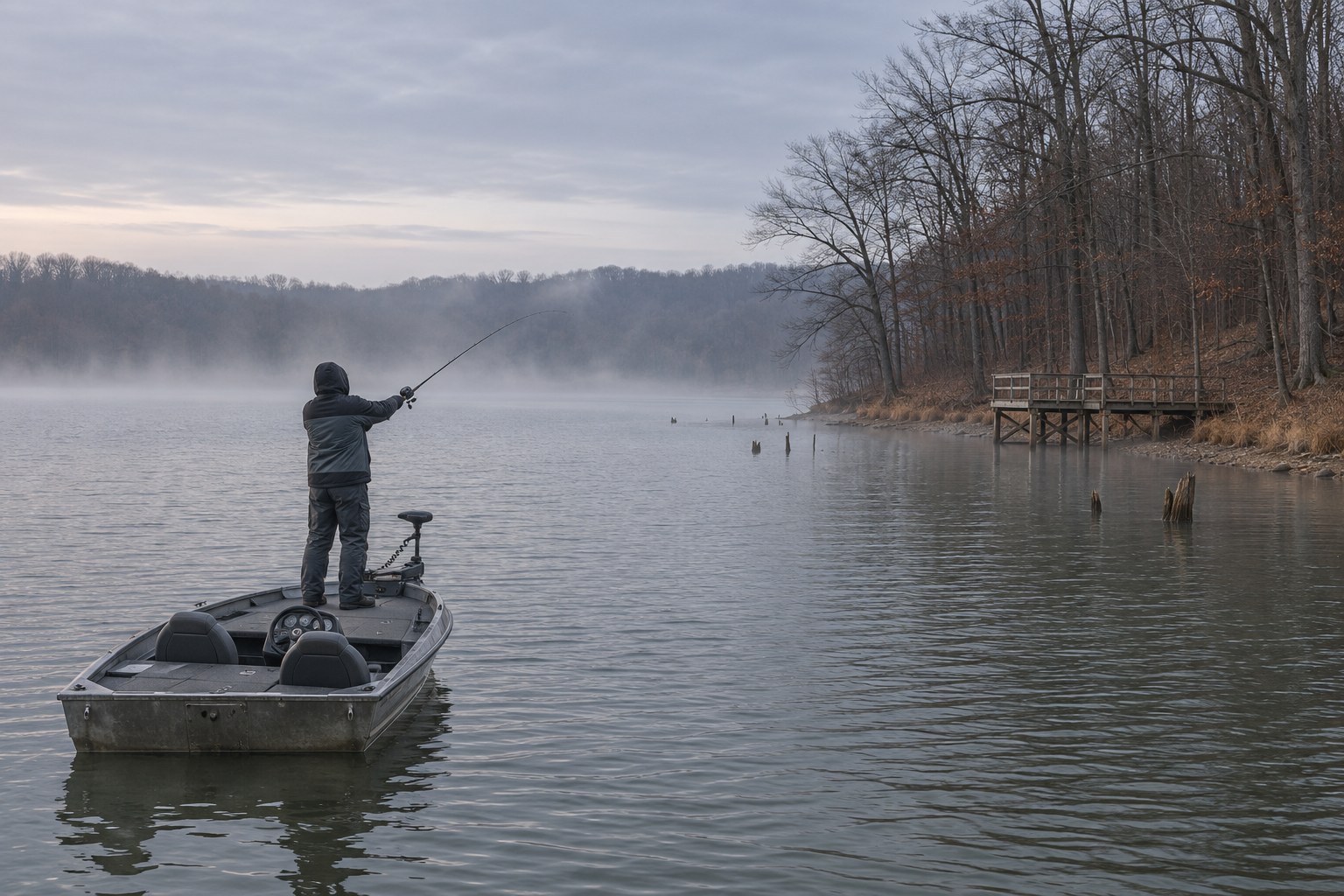
You make the cast, twitch the bait twice, and crank it back for the next target. Two hours later your arm is tired, your lure has covered a mile of water, and you have not had a bite. Somewhere behind you a guy is fishing the same stretch with the same style of bait, and he has caught three bass without moving twenty yards.
The difference is almost never the lure. In water below about 55°F, bass slow down. A suspending jerkbait is the rare bait you fish slowly on purpose, and the single decision that matters most is how long you let it sit still between twitches. That waiting time is what separates a bait that looks like a fleeing minnow from a bait that looks like a wounded one — and in cold water, a bass usually wants the wounded version.
What “Cadence” Actually Means on a Jerkbait
Cadence is the rhythm you give a jerkbait. It has three parts: how many twitches you make before you stop, how hard you make them, and how long the bait hangs in place before you twitch again.
Most anglers only think about the twitching. They snap the rod, reel up slack, snap again, and keep the bait in constant motion because motion feels productive. In cold water, that instinct works against you. The pause is where the lure earns its keep, and the pause is the first thing people cut short when they get impatient.
A suspending jerkbait is built to hang at a chosen depth instead of floating up or sinking. That stillness is the whole point. Paused in front of a sluggish bass, it looks like a baitfish that is cold, hurt, or both — three things that make an easy meal.
Why Cold Water Changes the Pause (Not the Jerk)
Bass are cold-blooded, so as water cools their metabolism slows. They typically need less food and are less willing to chase it. Feeding becomes more visual and much less about speed. A bass that would race down a fast crankbait in July will often ignore the same bait in January — not because it isn’t hungry, but because the effort-to-reward math has changed.
Cold water also changes the baitfish. Shad and minnows get sluggish too. They do not streak across the lake; they hover, drift, and stall. A jerkbait that darts a few inches and then hangs is a very close imitation of that behavior.
That is why the advice on cold-water jerkbait fishing is consistent across pros and writers: the colder the water, the longer the pause — and the gentler the twitch. Soft, short pulls and long hangs. If you only remember one line from this article, that is the one.
The Pause Ladder: Matching Wait Time to Water Temperature
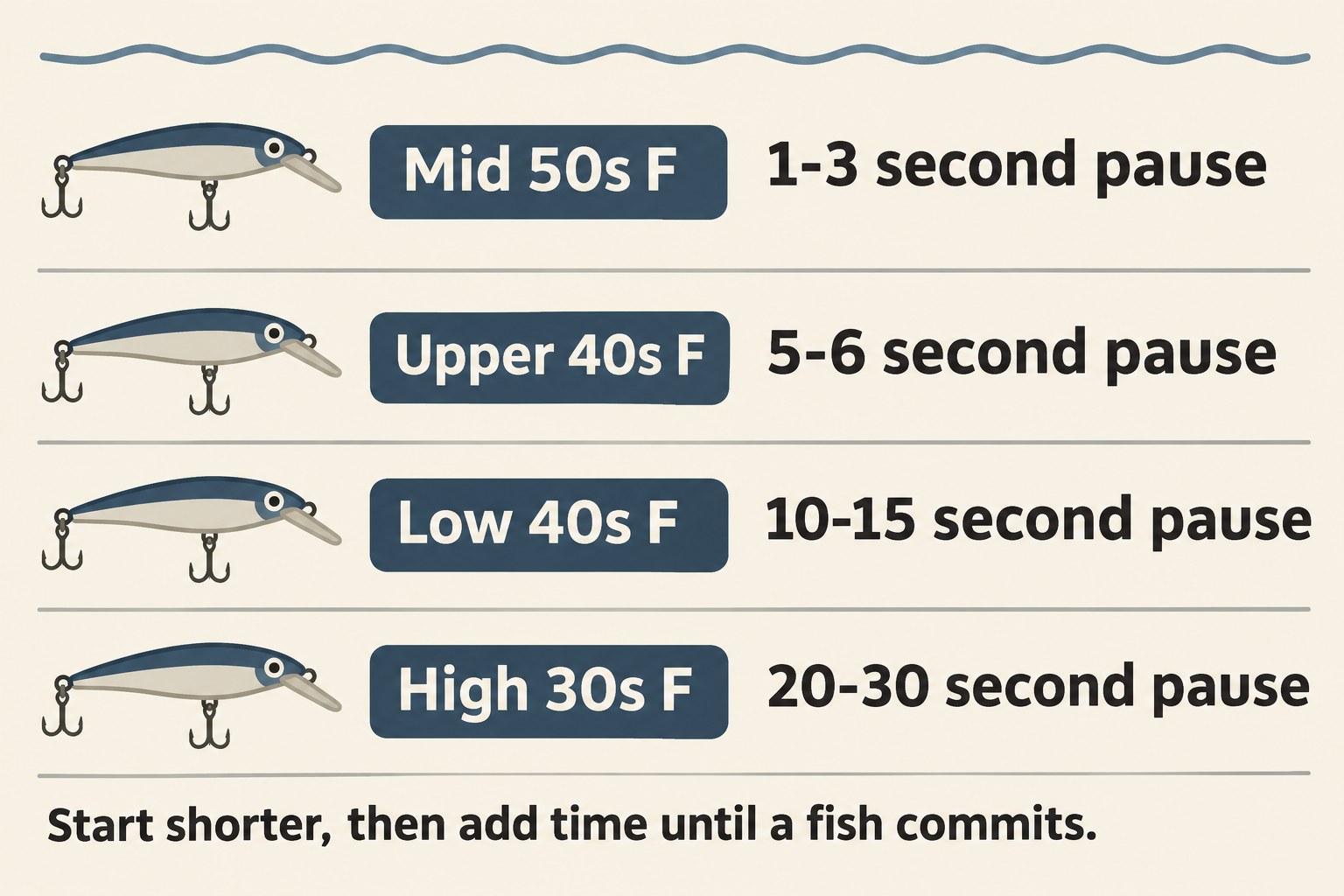
Treat pause length as a ladder you climb, not a number you memorize. Start short, add time until something commits. The bands below are starting points taken from a range of cold-water guides — every lake tends to run slightly ahead of or behind them.
Mid-50s water: 1 to 3 second pauses
At the warm end of the cold-water range, fish are still willing to move. A twitch-twitch-pause cadence with a one to three second hang and a bit more snap in the rod tip works well. You are still covering water, just not racing through it.
Upper 40s: jerk, jerk, jerk, then 5 to 6 seconds
Three short twitches and a five to six second pause is a solid default in the upper 40s. This is the band where many anglers start catching if they were fishing too fast — the bait finally hangs long enough for a following bass to close the distance.
Low 40s: 10 to 15 seconds, softer twitches
Now the twitch shrinks. Instead of a snap, think of a three to eight inch downward pull of the rod tip, followed by a full stop. Ten seconds feels absurd. Ten seconds is not absurd; it is roughly the amount of time a chilled shad might hang in place before drifting.
High 30s and brutal cold: 20 to 30 seconds
Some days, and some fisheries, reward waiting that feels like a mistake. Twenty seconds. Even thirty. You will make far fewer casts, and that is the trade: fewer presentations in exchange for bites from fish that otherwise would not commit. Start at five seconds, move to ten, and keep extending only when you have confidence in the spot.
Keep a mental count. Once a bass eats, that count is your answer for the day — often for the rest of the day. Write it off as luck and go back to fishing fast, and you will lose the pattern you just found.
It also helps to know what the water is actually doing, not what the air temperature suggests. A water temperature guide for bass fishing is a better reference than the forecast on your phone.
How to Twitch It So the Pause Works
The pause only works if the twitch before it sets the bait up correctly. Three details matter more than the rest.
Use the rod tip, not the reel. Every dart comes from a downward or sideways movement of the rod tip that immediately recoils back toward the lure. That recoil returns slack to the line, and slack is what lets the bait swing freely instead of being dragged in a straight line. Reel-up-and-snap is a different, much worse presentation.
Pull, do not snap, when the water is cold. A hard snap can pull a lure away from a slow, lethargic fish before it decides to eat. In water in the low 40s, a three to eight inch pull is enough. As water warms toward the mid-50s, you can add snap back in.
Stop cleanly. After two or three short twitches, let the bait sit with a slight bow of slack line above the surface. Do not creep it forward, do not lift the rod tip to “feel” for the lure, and do not reel. If you move the bait during the pause, you have replaced a long pause with a slow retrieve, which is not the same thing.
Reading the Strike on the Pause
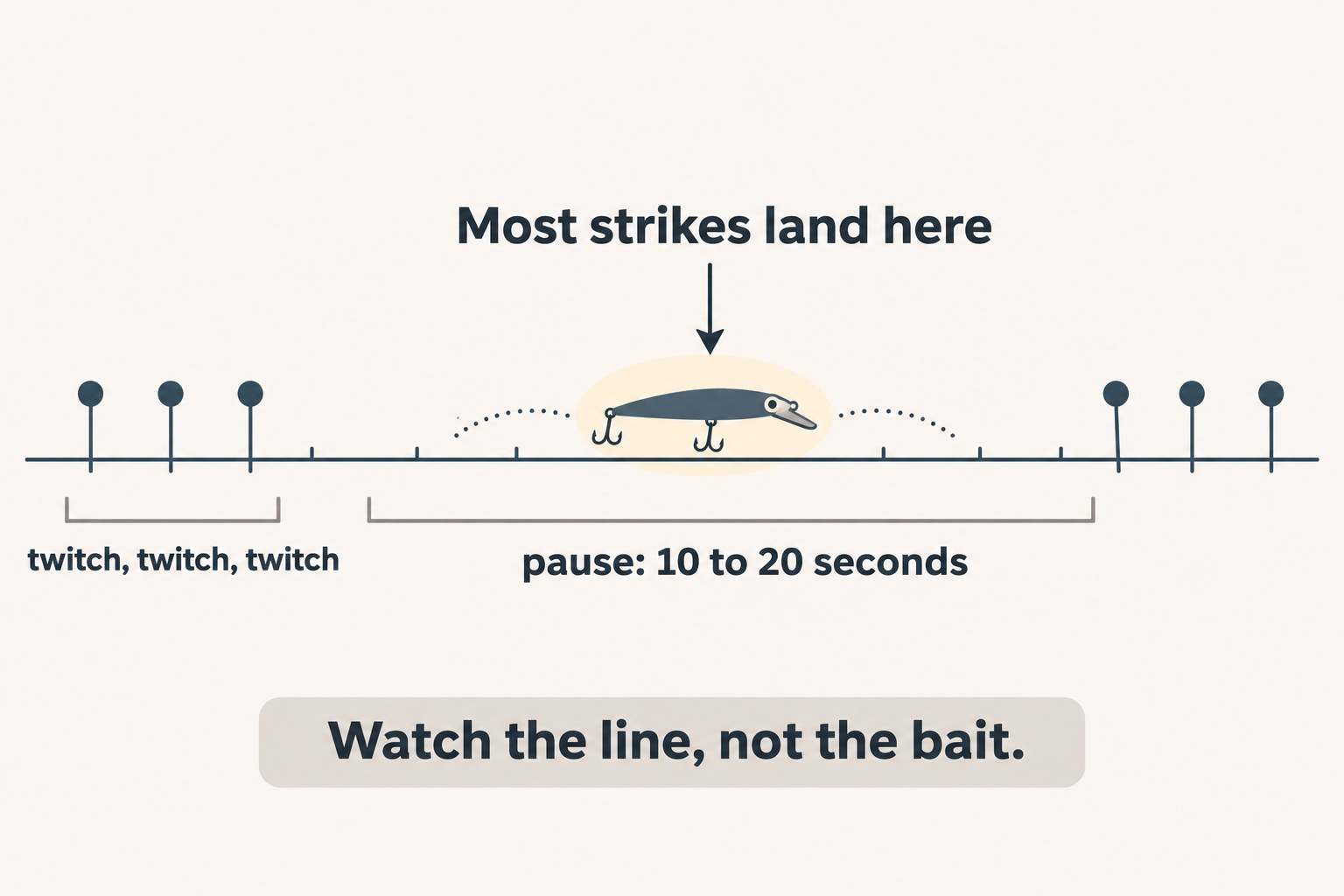
Almost every cold-water jerkbait bite happens while the bait is sitting still. That makes strike detection a different skill than it is with a moving bait.
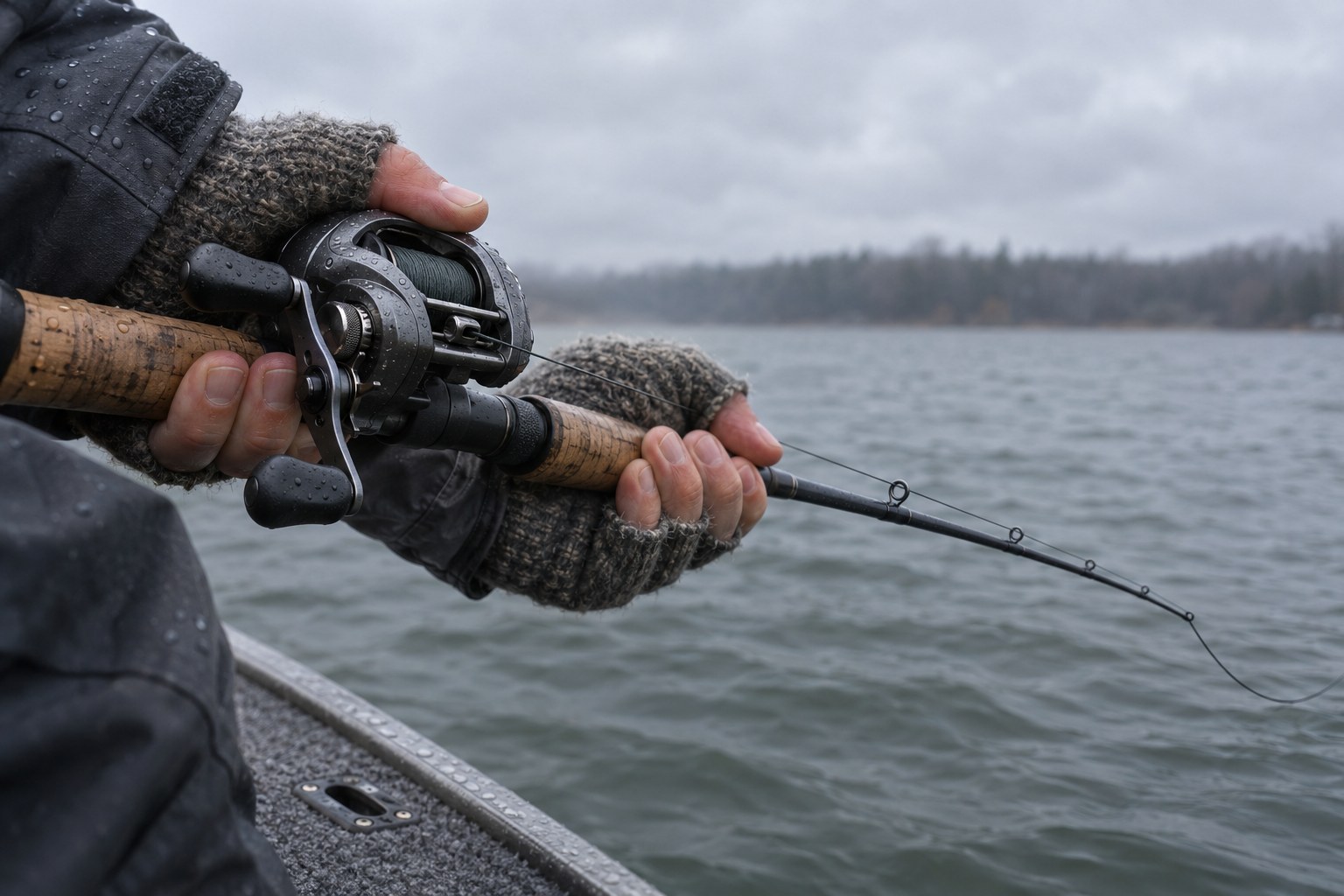
Watch the line where it enters the water. On the pause, a bass that eats usually shows up as one of three things: the line jumps or ticks sideways, the line goes slack in a way that does not match the drift, or nothing happens at all until you lift the rod and it just feels heavy.
The last one is the one people miss. When you finish a long pause and tighten up to twitch, you should feel the lure’s resistance almost immediately. If the rod loads and the bait does not dart, that weight is a fish. Do not wait to feel a head shake.
On the hookset, skip the cross-body swing. Reel down until the line is tight, then sweep the rod sideways and keep reeling. Bass hooked on a slack line with a treble bait come off easily when the hookset is a violent overhead snap.
Rigging and Depth Control for a Long Pause
You cannot fish a fifteen second pause with a bait that keeps floating up. Two or three seconds into the hang it rises out of the strike zone, and the patience buys you nothing.
Test the bait beside the boat. Drop it in three or four feet of water, pull it down, and watch. If it rises, add a small suspend strip or dot centered on the belly behind the middle hook hanger. Add until it holds. Going up one treble hook size is another way to add the small amount of weight needed, and it usually improves hookups as a bonus.
The rest of the setup is built for long casts and long hangs:
- A 7-foot medium-light baitcasting or spinning rod with a soft enough tip to work the bait without ripping it
- 10 pound braided main line for cast distance and sensitivity
- An 8 to 10 pound fluorocarbon leader, joined by a back-to-back uni knot, so the last few feet sink and the bait sits nose-down rather than bowing up
That fluoro leader matters more than it sounds. Dense leader material sinks and acts like a keel on a long pause, holding the bait at depth even when you are not pulling it.
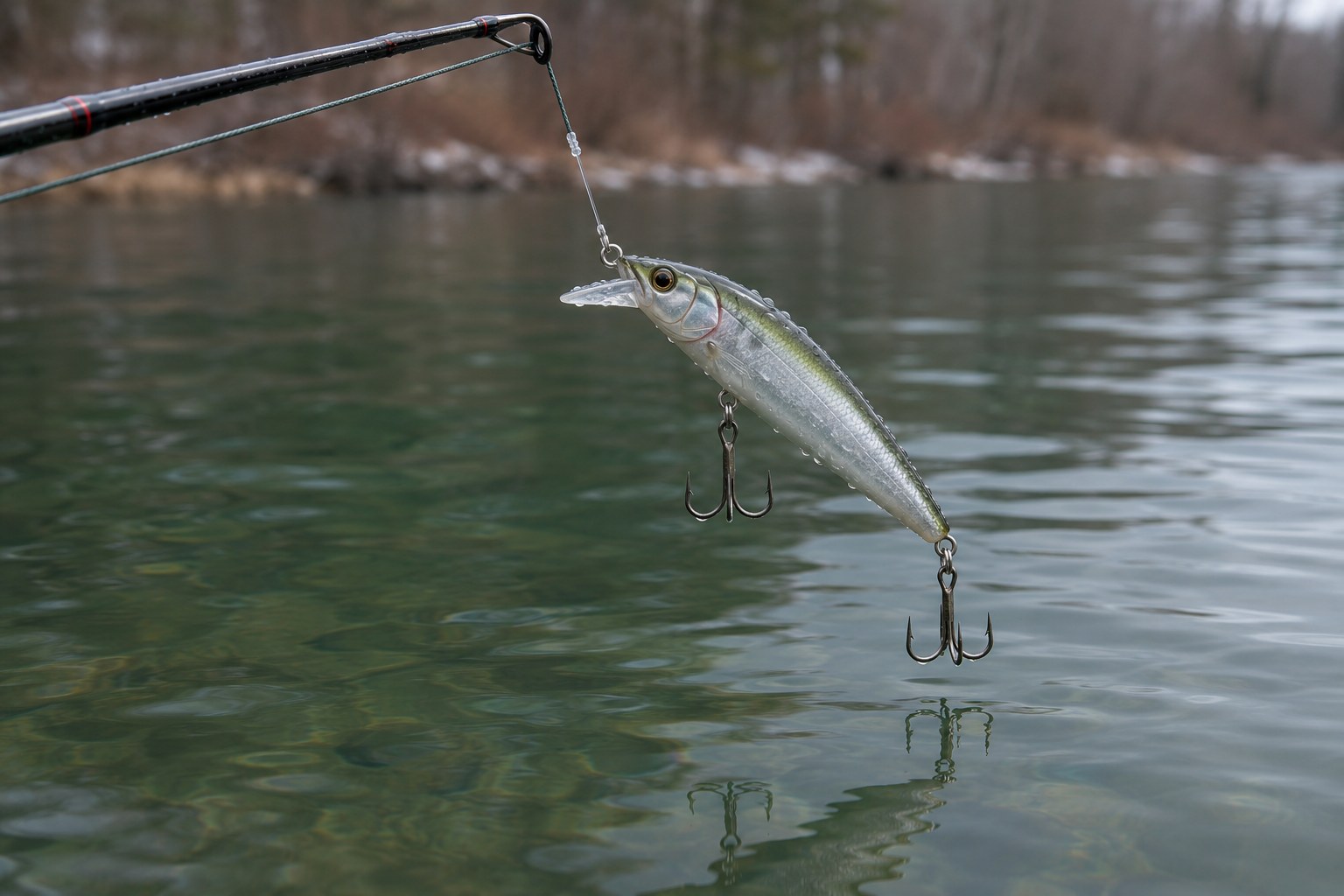
Depth also decides which jerkbait you tie on. Standard short-bill baits run roughly 4 to 5 feet. Deep divers reach 8 to 12 feet on a long cast with lighter line. For fish holding deeper than that, either count the bait down longer before your first twitch, or use a bait designed to sink slowly so long pauses walk it deeper on their own.
One more rigging note: water clarity. A jerkbait is a visual bait fished in open water, and bass need a reasonable line of sight to track it. As a working rule, clarity of about two feet or better is where this technique shines. In muddy water, the same rod and the same cadence will not earn the same reaction.
If you are newer to the bait entirely, the fundamentals in this jerkbait guide for beginners will get you to the point where cadence becomes the interesting question.
Where to Fish a Long Pause
Long pauses are expensive. Each cast takes a minute or more, so you need to spend them in water that holds fish.
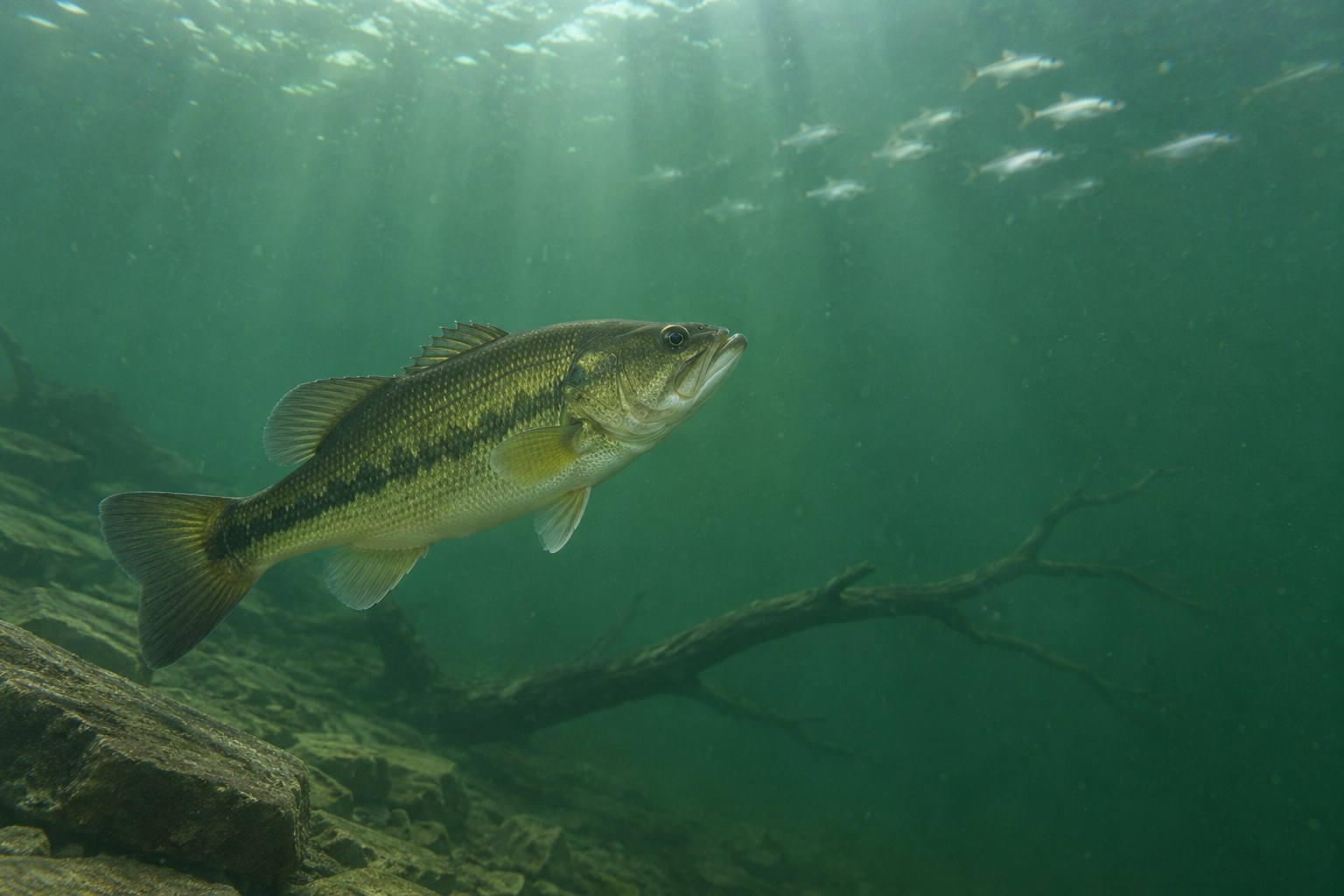
In late fall and winter, bass tend to hold in two places: related to bottom structure near a drop, or suspended in open water under schools of baitfish. The second group is the jerkbait’s natural target. Look for bait over deep water along main-lake points, bluff ends, and the mouths of major creek arms. Suspended fish often sit within 10 to 15 feet of the surface even when the bottom is fifty feet down.
As water begins to warm, the fish shift shallower and further into creeks. Windy points that funnel shad onto a bank become the better bet, and that is also when the cadence gets faster.
Watch the follows. They tell you what to change before the fish ever commits:
- A bass that follows close behind the bait and turns away is usually a timing problem — slow the cadence, extend the pause.
- A bass hanging six or seven feet back is interested but not convinced. That is the cue for a much longer pause, in the twenty to thirty second range.
- No followers at all over good water is a location problem, not a cadence problem. Move.
Common Cadence Mistakes and How to Fix Them
Pausing too briefly. The most common cold-water mistake by a wide margin. If you are not getting bit, add five seconds before you change lures.
Snapping too hard. A violent twitch in 42°F water can pull the bait away from a fish that was about to eat. Soften the pull and let the bait do the work.
Moving the bait during the pause. Reeling up slack, lifting the rod tip to check the lure, or creeping it forward all convert a pause into a slow retrieve.
Fishing stained water. This is a clarity technique. In off-color water, expect to work other presentations instead, or at least commit to shallower, tighter water.
Quitting after ten casts. Long-pause fishing is genuinely slow. Give a spot a real series of presentations at two different cadences before you judge it.
Not repeating a productive count. If a fish eats on a twelve count, fish that twelve count until something tells you to change.
Depth control and cadence are the same skill set from different angles: both are about keeping the bait where a fish can see it long enough to decide. If you have read the crankbait depth control breakdown, this is the deliberate, stationary version of that idea.
The first hour of fishing a twenty second pause feels wrong. You will be convinced you are wasting the day. That discomfort is the sound of you finally fishing slow enough for cold water — and the bites usually come right at the end of the pause, when you had already given up on the cast.