
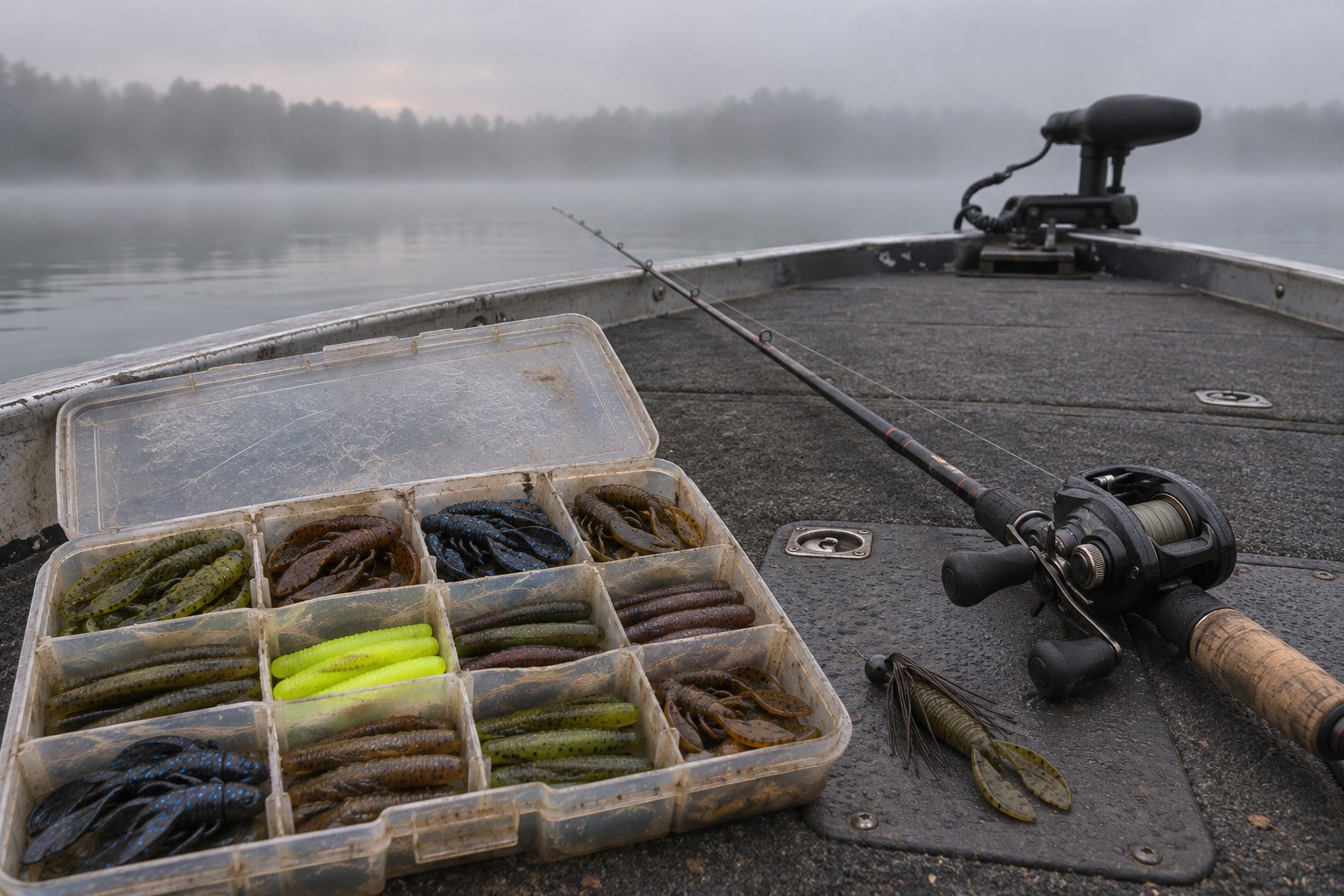
You own twenty colors of the same bait and no rule for picking one. So you do what most of us do: tie on whatever caught something last time, or whatever looks good in the morning light, and hope.
That works often enough to keep you doing it. It also keeps you guessing.
Color isn’t a taste. It’s a light problem. A bait only shows a color underwater if there’s enough of that wavelength left, at the depth the bait is running, to bounce off it and reach a fish’s eye. Take away the light and the color is gone, no matter how good it looks in your hand.
So the useful question isn’t “what color for muddy water.” It’s “how much light is reaching my lure right now, and what should that color be doing?”
You can answer that in under a minute, on the water, with no gear.
What Actually Happens to Color Underwater
Water eats light, and it eats it unevenly.
The long wavelengths go first. Red fades, then orange, then yellow, then green. Blue and violet travel farthest because water absorbs them slowest. This isn’t a fishing theory — it’s measured oceanography, and it holds in a farm pond as well as the Atlantic.
Intensity drops fast too. In open water, roughly 45 percent of the sunlight hitting the surface is gone by one meter down. By ten meters you’re at about 16 percent. Even in gin-clear water, the top ten meters swallow more than half the visible light.
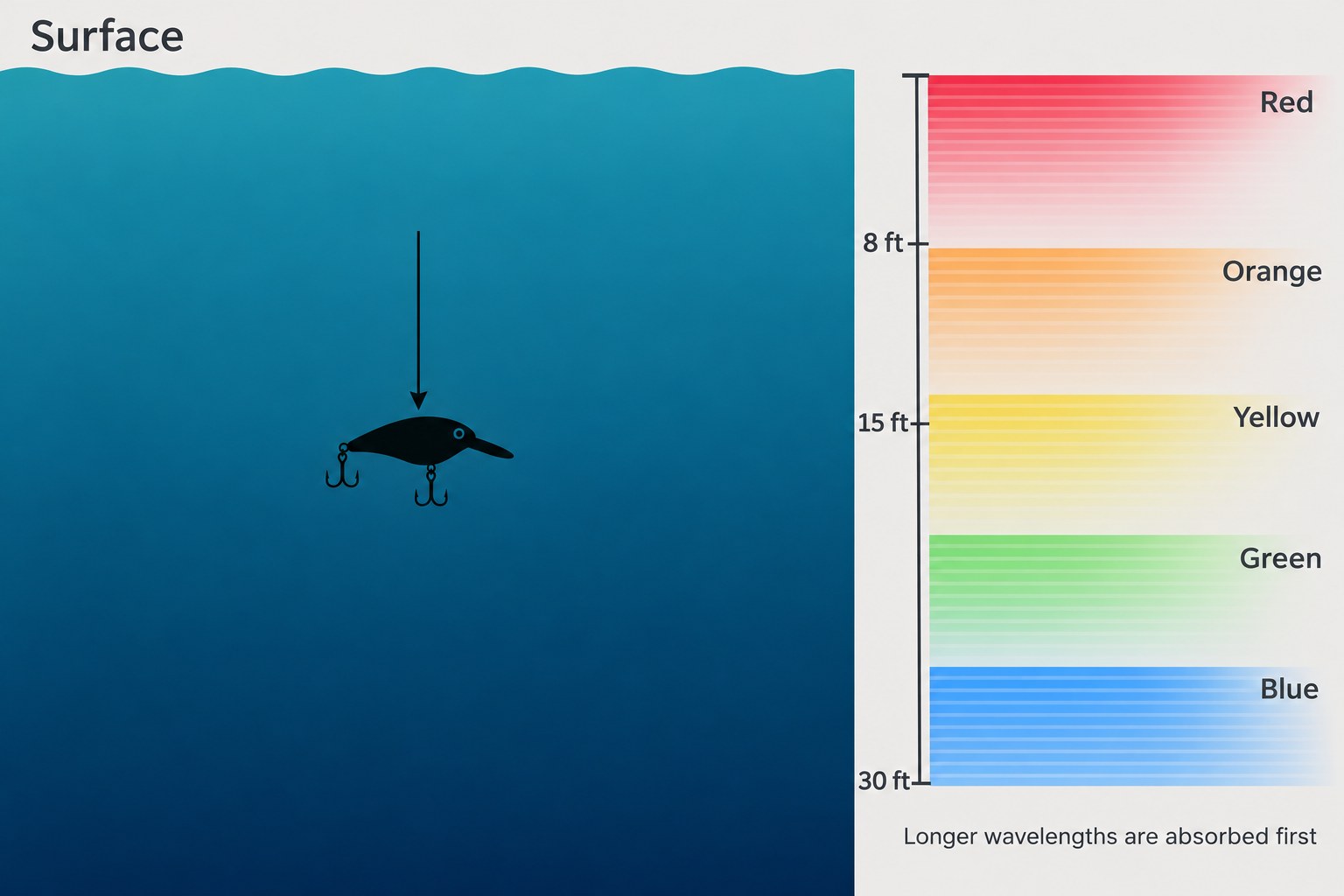
Put numbers on the wavelengths and it gets concrete. In clear open water, red is essentially used up in the top 25 to 30 feet, and functionally gone much sooner once the water is stained. Orange hangs on to about 40 meters in open ocean, yellow fades before 100 meters, and blue keeps going.
Now translate that to water you actually fish. You’re throwing a red-orange crawfish jig in 18 feet of stained reservoir water. At that depth there’s very little red light left for the bait to reflect. To the fish, that lure reads closer to dark brown or near-black than to the bright orange you see on the deck.
That’s not a reason to stop throwing it. Crawfish-pattern jigs catch fish in deep stained water every day. It’s a reason to know what you’re presenting: a dark, compact silhouette with a crawfish profile, not a glowing orange object. Once you know that, the choice becomes deliberate instead of accidental.
Water tint matters as much as depth. Suspended silt reflects the longer wavelengths back at you, which is why muddy water looks brown. Algae and chlorophyll absorb red and blue and leave green dominant, which is why fertile ponds have that green cast even when they’re reasonably clear. Two lakes of the same depth can filter light completely differently.
Step One: Measure Your Clarity, Don’t Guess It
Anglers describe clarity with vague words — dingy, stained, murky, off-color — and those words mean different things to different people. Skip the vocabulary and measure.
The field test takes ten seconds. Tie on a white bait, or drop anything white over the side, and watch it sink. Note the depth where it disappears.
- Visible past six feet: clear water
- Visible two to six feet: lightly stained
- Visible one to two feet: stained
- Gone before a foot: muddy
That one number does most of the work. A lake where you can see a white bait five feet down behaves nothing like a lake where it vanishes at eight inches, and the baits that work in each are genuinely different.
Check the sky while you’re at it. Bright sun, flat grey overcast, or the low light of dawn and dusk? That’s the other half of the light equation, and it changes the answer even when clarity stays the same. Cloud cover cuts direct sunlight without changing how much silt is in the water, which is why a stained lake can fish one way at noon and another way at 6 p.m.
Step Two: Decide Which Job Your Color Is Doing
Every lure color in your box is doing one of three jobs. Naming the job is what turns a hunch into a decision.
Contrast. The color separates the bait from its background so a fish can detect it at all. That’s the job in stained water, low light, and heavy cover where a subtle bait disappears into visual noise.
Silhouette. The bait reads as a clear shape when there’s almost no light left to show color. Solid dark baits — black, black and blue, dark brown, junebug — do this best because they hold a hard edge against slightly lighter water.
Match. The bait imitates what the fish is actually eating. That’s the job in clear water under bright light, where a fish gets a good enough look to reject something that looks wrong.
The rule that falls out of this: the less light reaching your lure, the more the job is contrast or silhouette. The more light, the more it’s match.
It also explains an argument you’ve probably noticed. Half the fishing world says bright colors for muddy water; the other half says black for muddy water. Both are right, because they solve different halves of the same problem. Fluorescent colors create contrast while there’s still daylight in the water. Dark baits create a silhouette once the light is close to gone. Which one you want depends on whether you’re fishing the top three feet of a muddy creek or the bottom of a flooded ditch at dusk.
What to Throw, Band by Band
With clarity measured and the job named, the choices get narrow and specific.
Muddy water — under one foot of visibility. Two valid answers, and you should carry both. A solid dark bait in black, black and blue, or junebug gives you a silhouette where color is meaningless. A fluorescent bait — chartreuse, firetiger, straight orange — gives you a target while some light still gets down. Start bright in sun and shallow water, dark when it’s grey, deep, or late. Rattles and vibration matter more here than color does, because sound carries through mud.
Stained water — one to two feet. This is where chartreuse, orange, gold, and firetiger earn their place. Two-tone patterns with a strong light-and-dark break work well, and so does a natural base with a bright accent — green pumpkin with a chartreuse tail, for example. You’re not abandoning natural, you’re adding a signal.
Lightly stained — two to six feet. The widest window in fishing, and where most reservoirs sit. A natural pattern with a bright accent is close to ideal: Tennessee shad, chartreuse shad, perch, gold shiner, green pumpkin with a dipped tail. The bait still has to look like food, but it needs enough punch to be found.
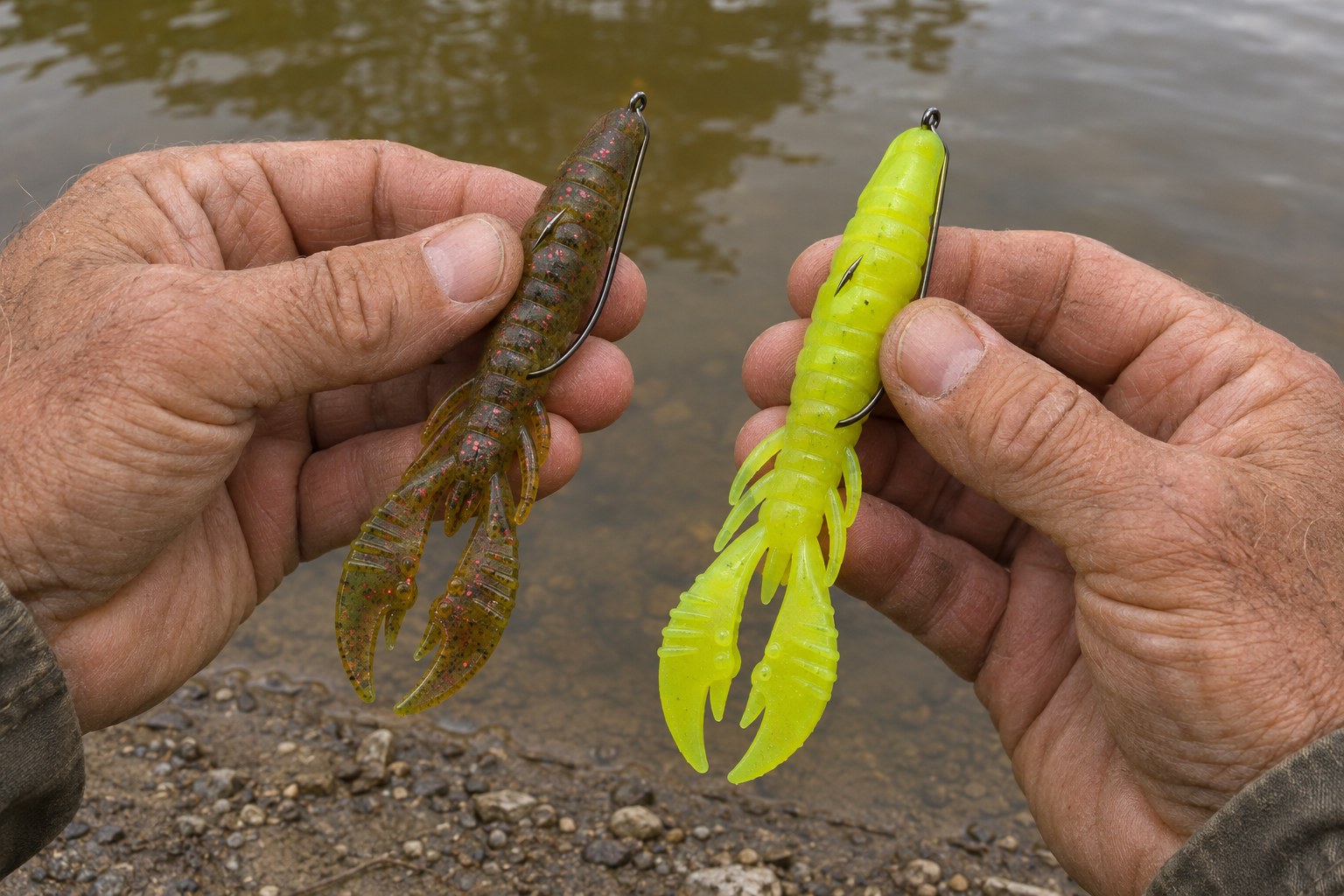
Clear water — six feet and beyond. Now the fish can inspect, and unnatural starts costing you. Go natural and translucent: green pumpkin, watermelon with red flake, smoke, ghost shad, natural shad, silver with a black back. Subtle transitions and see-through finishes beat solid bold colors here because they match how light behaves around real prey.
Ultra-clear, heavily pressured water. Downsize. Smaller profile, more translucent finish, longer casts, and let the bait look as close to local forage as you can manage. When fish have seen everything, natural isn’t a compromise — it’s the tactic.
For a short list that works in almost any water, carry black, white, silver or gold, and chartreuse. Those four read in clear and muddy both, which is why they’ve survived every trend in bait design.
Depth Changes the Answer More Than Clarity Does
This is the part most color advice skips, and it’s why a rule that works in a farm pond fails on a deep reservoir.
Color choice matters most in the top five feet. Up there the wavelengths are all still present. A green pumpkin bait looks green, a red bait looks red, and the fish sees roughly what you see. This is where hue decisions pay off and where match-the-forage earns its reputation.
Between five and fifteen feet, hue starts washing out. The fish still sees color, but it’s muted and shifting toward whatever the water transmits best. Contrast, brightness, and flash take over. Chrome becomes genuinely useful here, and it’s worth understanding why: chrome isn’t a color at all. It reflects whatever light is available, which is why a chrome bait can work in clear and stained water on the same day.
Past fifteen feet, assume the warm colors are gone. A red bait at twenty feet in stained water is a dark shape. Choose chartreuse, white, blue, black, or something with flash and a defined pattern. This is also why deep-diving crankbaits in perch or craw patterns work largely off silhouette and scale pattern rather than precise shade — at that depth the fish reads a shape and a general impression, not a paint job.
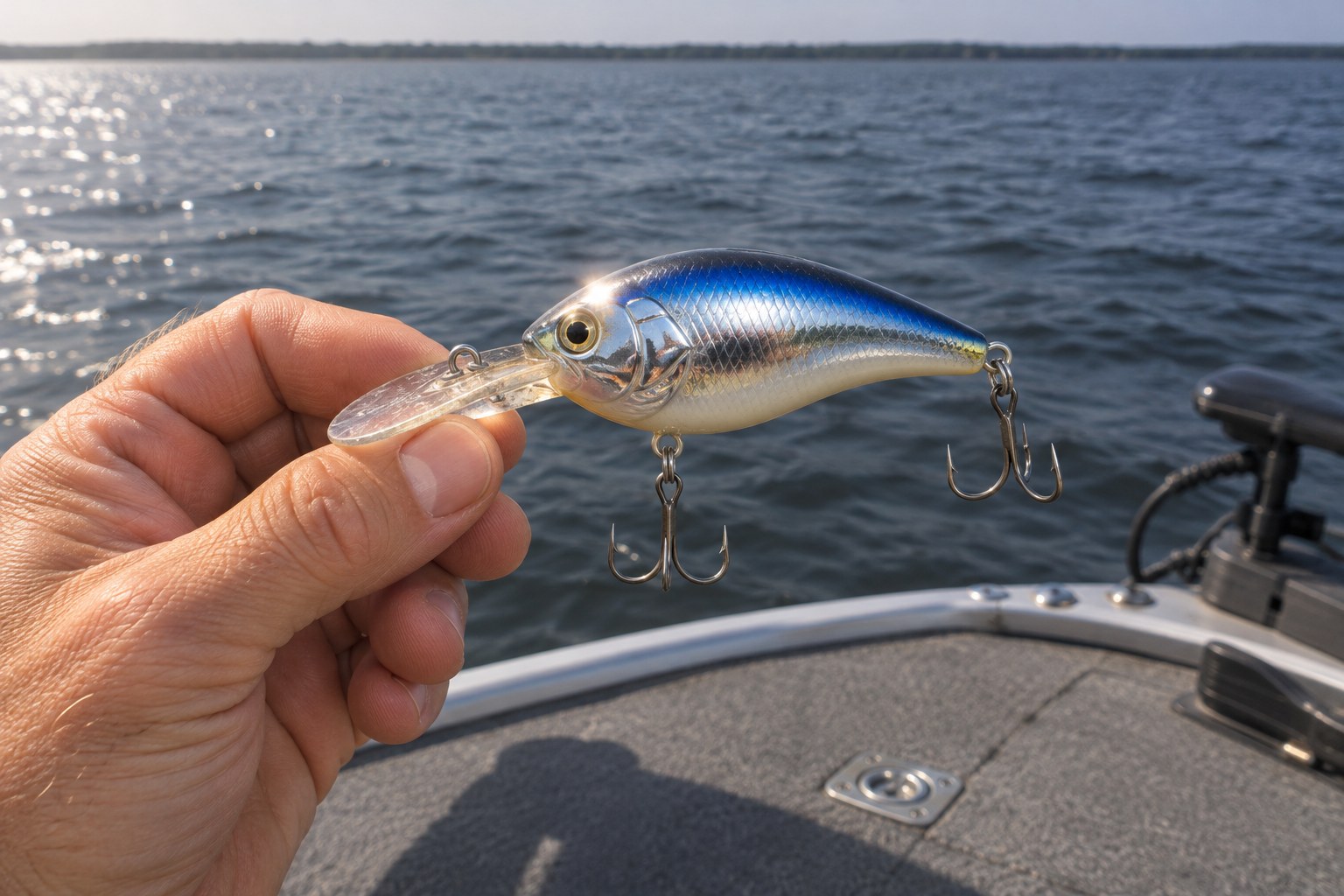
If you’re working a bait at a specific depth on purpose, that’s what keeping a crankbait in the strike zone is really about — and the depth you choose should inform the color you tie on, not the other way around.
Match the Forage You Actually Have, Not the Pantry
Everything above is about light. This is about the other half of natural: what the fish is eating.
A handful of forage bases cover most freshwater fishing, and each has a pattern that reads correctly.
Shad. Silver and white sides with a grey-to-blue back. The default in reservoirs with open-water baitfish schools, best in summer and fall when shad group up. That’s why silver, white, and chrome show up in every tackle box in the country.
Bluegill and sunfish. Green, olive, and dull yellow with vertical bars and darker markings. Best around weeds, docks, and shallow cover, especially early summer when panfish spawn and bass sit under them.
Crawfish. Brown, green pumpkin, with red or orange accents. The right call on rocky banks and hard bottom in spring and fall. Note the earlier lesson: in deep stained water that orange accent is largely gone by the time it reaches the fish, so the profile is doing the work.
Perch. Yellow-green with dark vertical bars and orange-tinted fins. A northern-lake staple that walleye, pike, and bass all eat.
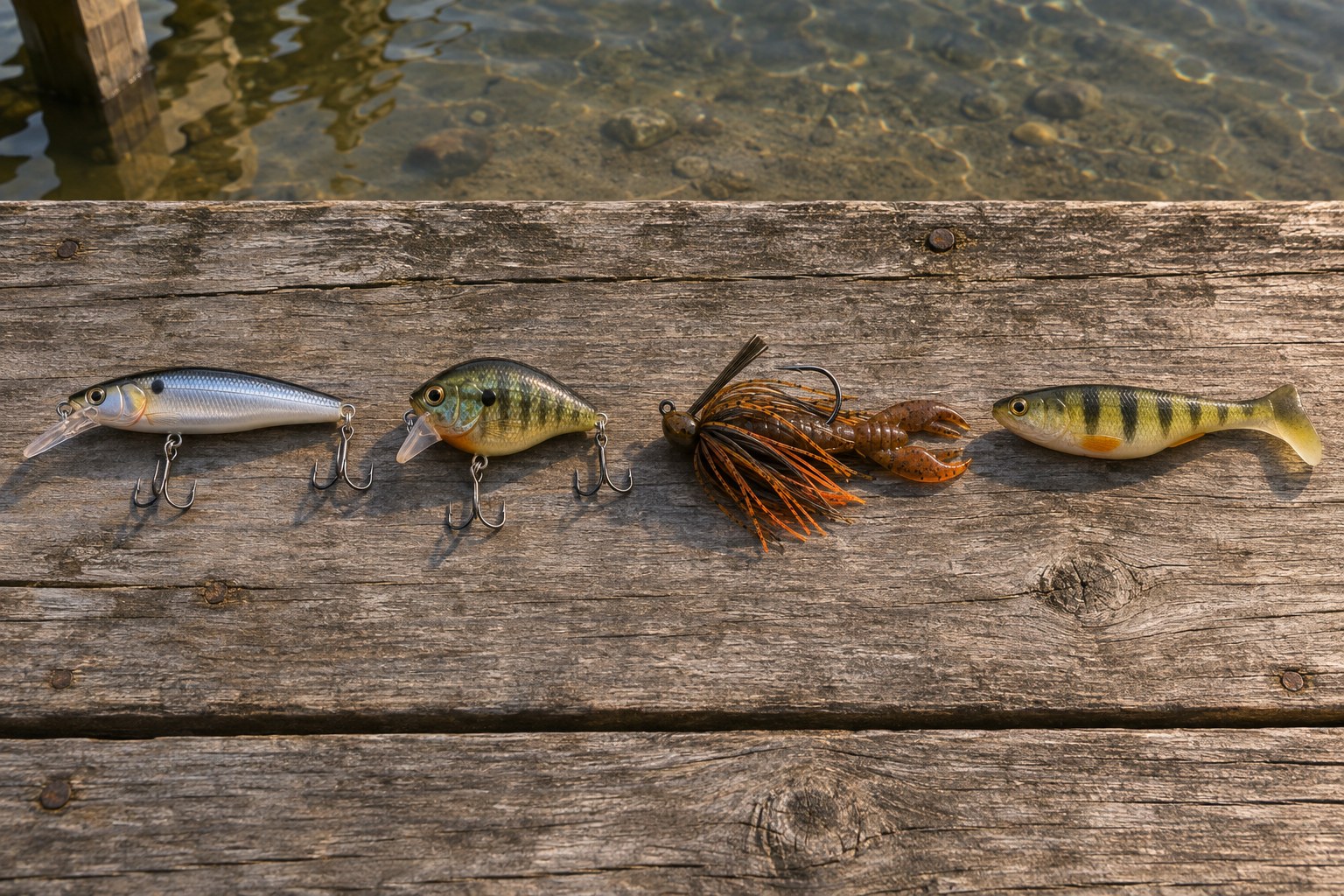
One pattern worth calling out separately: chartreuse and firetiger are not forage imitations. No bass has ever eaten a chartreuse shad, because there’s no such thing. Those colors are visibility tools, and they work because they’re conspicuous — not because they look like food. That distinction matters when you’re deciding whether a fish needs to be attracted or convinced.
Topwater has its own rule that mostly overrides all of this: a white belly. Baitfish bellies are white, and white shows against the sky better than any other color when a fish is looking up. Perch patterns with an orange-yellow belly are the exception that works in perch water.
When Color Doesn’t Matter (And What to Fix First)
Most days, color is the fourth most important thing you can change.
The order that produces fish is: find fish, get the bait to the right depth, use the right speed and action, then worry about color. Invert that and you’ll spend an afternoon retying knots without ever finding out whether your bait was in front of a fish.
The tell that you’re fixing the wrong variable is changing colors every ten casts. That’s not experimentation, that’s absence of information. If nothing has touched your bait all morning, color probably isn’t the reason — the bait probably hasn’t been in the strike zone, or the fish aren’t where you’re casting.
Fishing pressure does change the calculus, and it’s worth taking seriously. On heavily fished public water, fish see the same five popular patterns constantly. A subtler, less common, more natural presentation often beats a “better” color, because the fish aren’t responding to color at all — they’re responding to something that doesn’t look like the last twenty baits that swam past. That’s the same instinct behind light line and small baits for pressured fish, and it pairs with the broader problem of finding bass on heavily fished public water.
The 60-Second Color Call
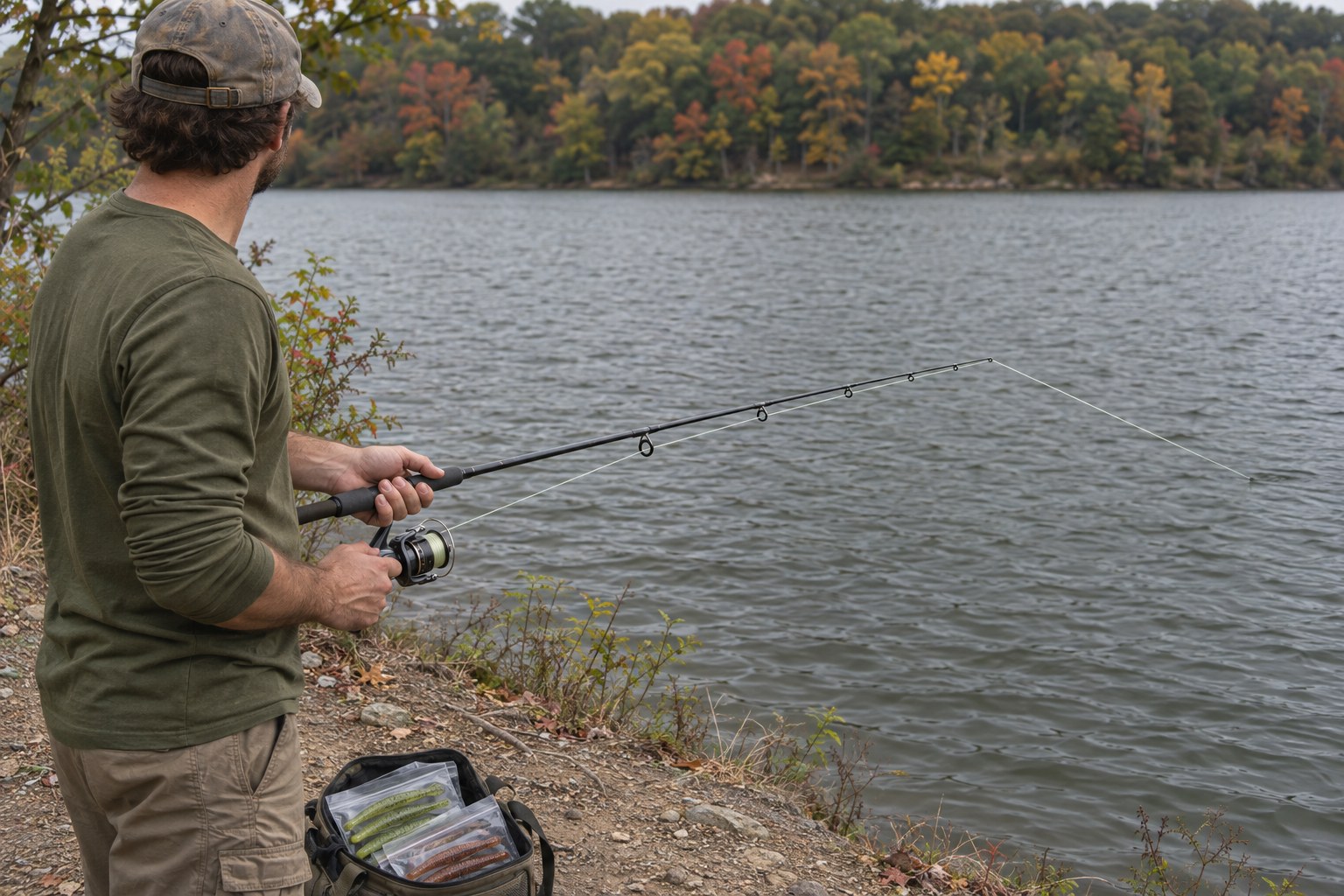
Next time you’re on the bank deciding what to tie on, run this in order.
- Drop something white and count how deep you can see it. That’s your clarity band.
- Look up. Bright sun, overcast, or low light? That adjusts the band a step either way.
- Decide how deep your lure will run. Under five feet, color matters. Past fifteen, assume red and orange are gone.
- Name the job your color has to do: contrast, silhouette, or match.
- Pick the pattern that does that job in that clarity band.
- Change one variable at a time, and change color last.
The anglers who seem to have a sixth sense for color aren’t seeing something you can’t. They’ve just stopped guessing about light.