
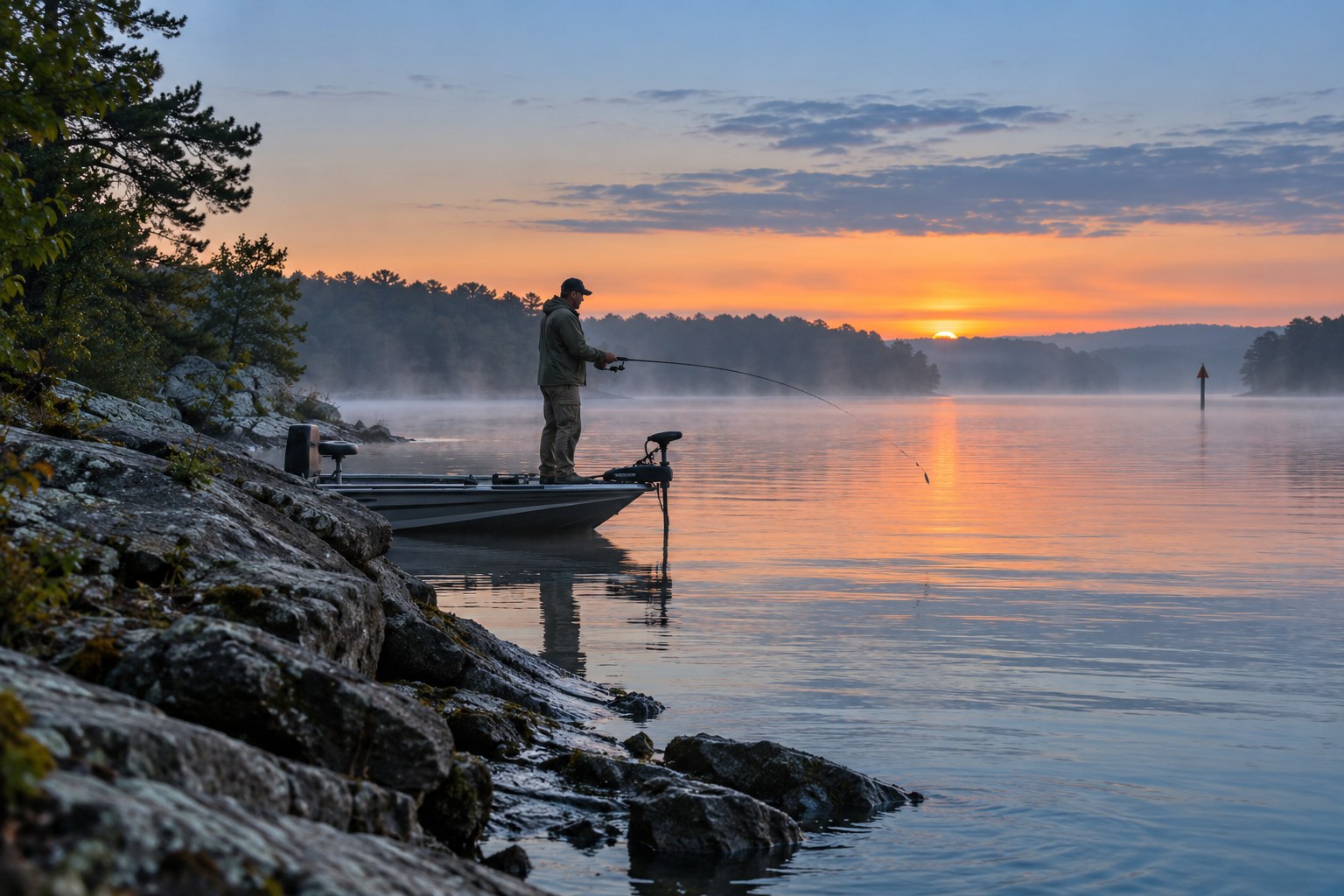
You tied on a crankbait the box says dives to 12 feet. You’re fishing a point that drops to 12 feet. So why is the bait smacking the surface on every cast — or fouling on the bottom and killing its action?
Here’s what nobody tells you when you buy your first deep diver: the number on the package is a suggestion, not a promise. That 12-foot rating assumes a specific line size, a specific cast length, a specific retrieve speed, and a specific rod angle. Change any one of them and your “12-foot” bait is suddenly a 9-foot bait or a 16-foot bait.
Bass don’t roam the whole water column looking for your lure. On most days they sit in a narrow band — often no more than a couple of feet thick — where the temperature, oxygen, and ambush cover line up. If your crankbait runs 5 feet above that band, it might as well not be in the water at all.
The good news: running depth is one of the few things in fishing you can control almost exactly. This guide breaks that control into five levers you can adjust on the fly, how to read where the strike zone actually is, and how to confirm your bait is in it without staring at a fish finder all day.
The Number on the Box Is Just a Starting Point
Crankbait depth ratings come from test conditions, and those conditions are rarely the ones you’re fishing in. The manufacturer hangs the bait on a rod with a set line, makes a long cast, and reels at a steady medium speed in calm, open water. Whatever depth it reaches under those exact conditions gets printed on the box.
Change the setup and the number moves. Under normal conditions, most crankbaits run within about two feet of their rating — close enough to trust as a ballpark. But “normal” is doing a lot of work in that sentence. Long-cast the same bait across the lake and you can drag it at least 50 percent deeper than the box says.
That’s not a rounding error. It’s the difference between fishing above a school and fishing through it.
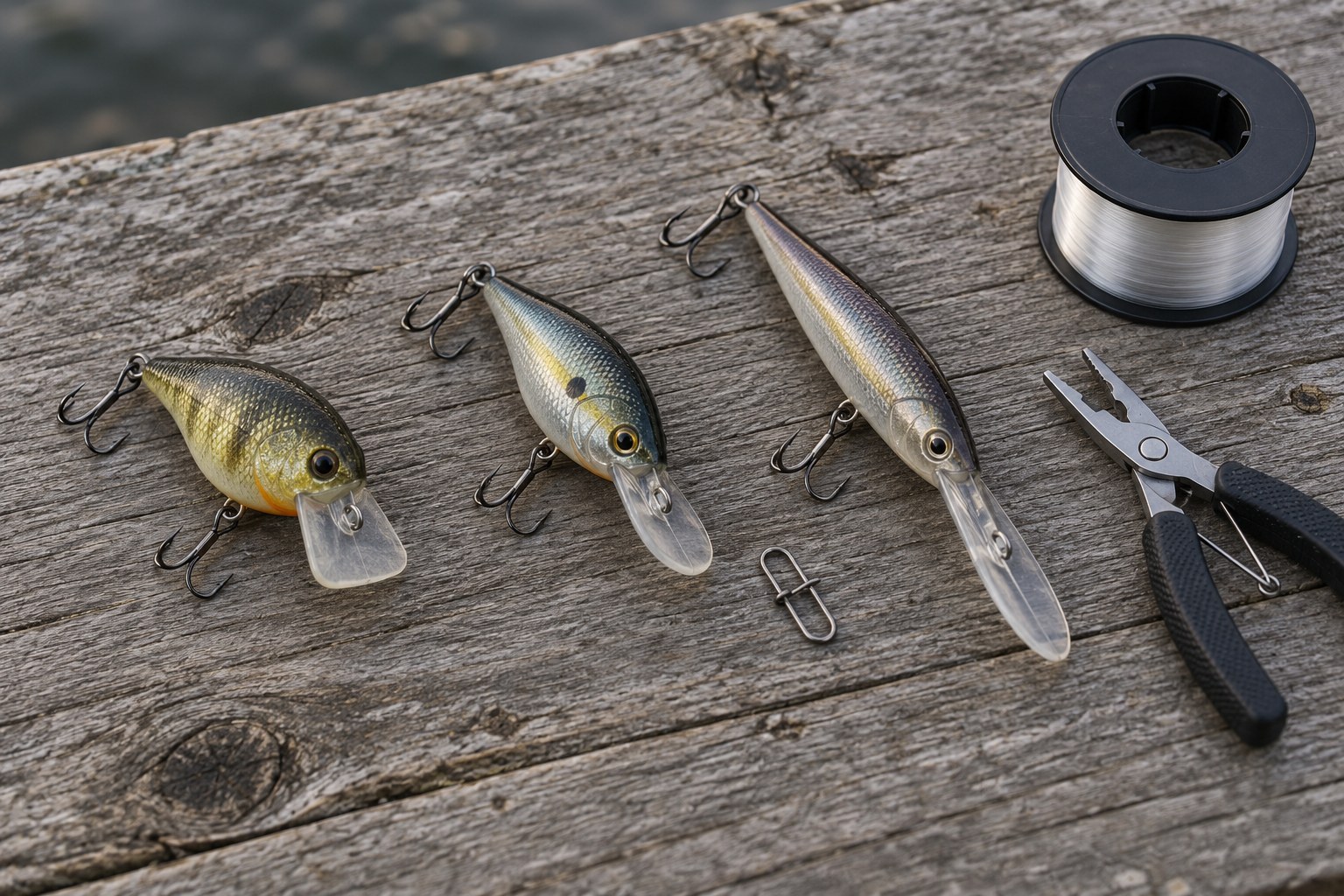
So the first mindset shift is this: stop thinking of a crankbait as having a depth. Think of it as having a depth range that you dial in with your setup and your retrieve. The bait sets the ceiling. You decide whether it fishes at the ceiling or halfway down.
The Five Levers of Depth Control
Every depth change you can make on the water comes down to five variables. Learn them and you’ll never guess again.
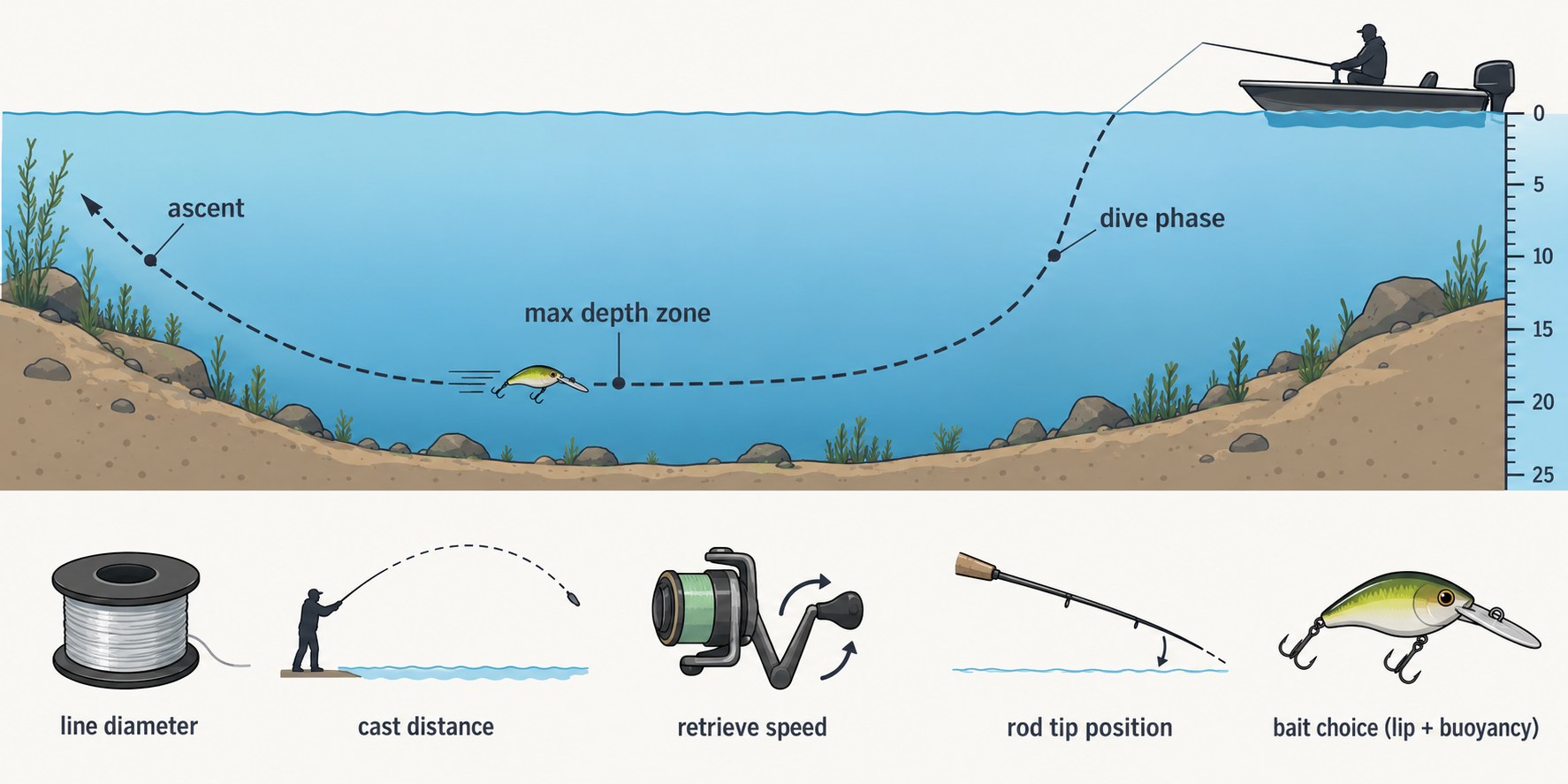
1. Line diameter and type. This is the biggest and most overlooked lever. Thinner line slices through the water with less drag, so the bait dives deeper. Thick line acts like a parachute pulling the bait upward. Switching from a heavy 17-pound monofilament to a 10-pound fluorocarbon can add three or four feet of depth to the same lure. Fluorocarbon helps twice, because it’s denser than water and sinks, dragging the bait down with it. A useful rule of thumb for deep cranking: every line “size” you drop is worth roughly 1.5 feet of extra depth.
2. Cast distance. A crankbait doesn’t dive straight down — it planes down as it swims away from you. The first third of the retrieve is the dive phase, the middle third is where the bait holds its maximum depth, and the final third is the ascent back toward the boat. If your cast is short, the bait spends most of its time in the dive and ascent phases and never reaches its real working depth. A long cast is the cheapest way to fish deeper without changing a thing about your tackle.
3. Retrieve speed. Counter-intuitively, reeling faster doesn’t always mean running deeper. Every crankbait has a speed where its bill grabs the water most efficiently. Too slow and the bill can’t dig; too fast and the bait can blow out, roll onto its side, and actually ride higher. Find the speed where the bait feels the most “alive” in your hands — a steady, rhythmic thump you can feel through the rod. That’s usually near its deepest, most stable running speed.
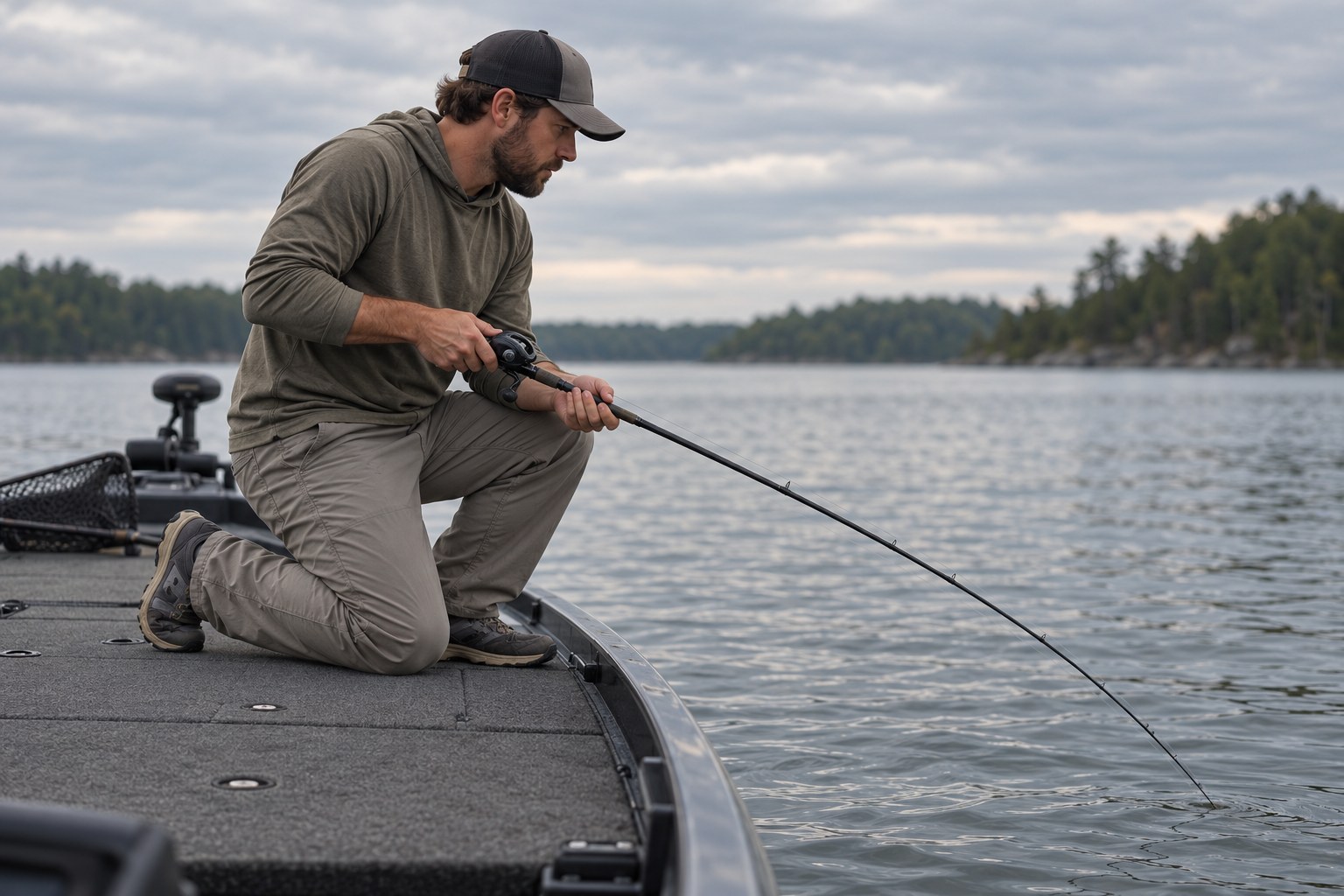
4. Rod-tip position. Where you point the rod changes the angle of the line and therefore the depth of the bait. Tip down, near the water, gives the straightest line and the deepest run. Raise the tip and the bait lifts — an instant way to steer over a submerged log or across the top of a weed bed without changing anything else. Tournament anglers will even kneel on the deck to get the tip an inch above the surface, which squeezes out another foot or two.
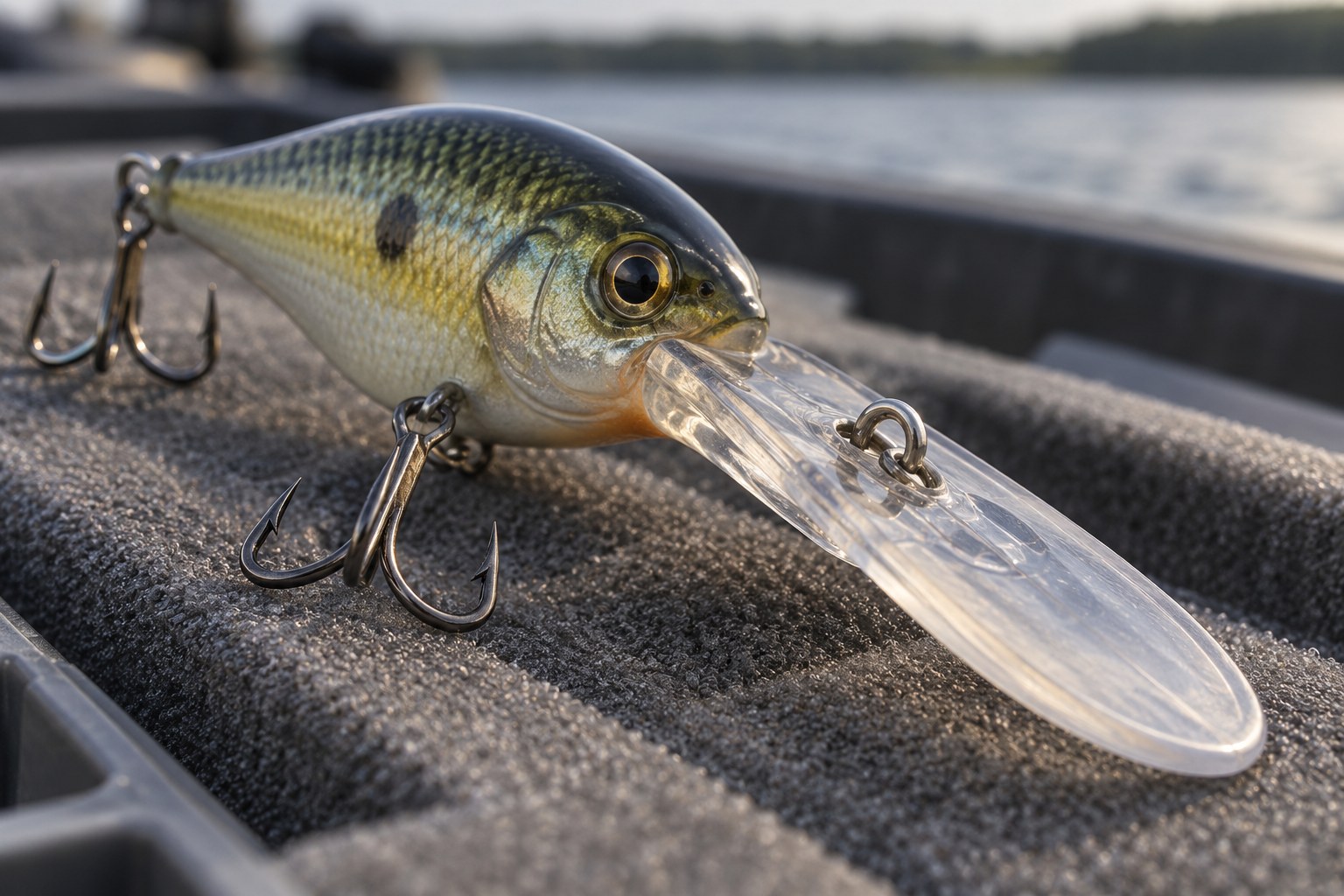
5. Bait choice. Finally, the lure itself sets the range. A short, steep bill produces a shallow runner; a long bill generates more downward force and dives deep. A bait rated slightly deeper than the water you’re fishing — say a 14-foot bait over a 10-foot flat — lets you tick the bottom without constantly snagging.
Reading the Strike Zone: Depth Plus Cover
Depth control only pays off if you know which depth to target. That’s where structure comes in.
Fish don’t suspend in random open water. They position on something — the edge of a weed bed, the lip of a drop-off, a rocky point, a sunken log, the base of a stump. Those are ambush points, and cranking a lure through them triggers bites. But depth matters as much as structure. The productive window on top of a ledge might be a three-foot band along the breakline. Fish a foot above it and you’re casting at empty water.
Two habits narrow it down fast. First, find the depth where the baitfish are. Where the food sits, the predators sit. If you’re marking baitfish suspended 15 feet down over 30 feet of water, a bait that reaches that 15-foot mark is the whole game. Second — and this matters most on clear lakes with fishing pressure — assume the bass are holding tight to the bottom edge of whatever structure they’re using. The strike zone is often a narrow lane hugging the cover, not a big open pocket of water.
Choosing the Right Crankbait for the Depth Band
Once you know roughly how deep you need to be, pick the bait class that lives in that band. Crankbaits fall into three practical groups.
Shallow divers (roughly 1–6 feet). These have short, often square bills. Square bills deflect off wood, rock, and docks and survive shallow cover that would snag a deeper bait. Use them over submerged vegetation, flats, and shallow rock — anywhere the fish are looking up.
Medium divers (roughly 6–12 feet). The workhorse class. A medium diver handles the tops of drop-offs, secondary points, and the outside edge of deeper weed lines. If you could only own one crankbait, this is the depth band that covers the most common bass territory.
Deep divers (roughly 12 feet and beyond). Long bills and heavy bodies. These are your main-lake point, channel-swing, and deep-structure baits. Be realistic about the ceiling: fishing deeper than about 20 feet is hard work, and the returns start to taper. Most anglers do their deep-cranking hunting between 12 and 20 feet.
Body size and shape matter too. Within a family of baits, the larger sizes usually dive deeper and move more water. Wide, rounded bodies give a broad, slow wobble; narrow, flat-sided baits produce a tighter, faster action. Match the action to the mood of the fish — and switch baits the moment your depth feedback tells you the bait and the fish don’t agree.
Confirming Depth on the Water: Contact and Deflection
You don’t need electronics to know whether your bait is in the zone. You need your hands.
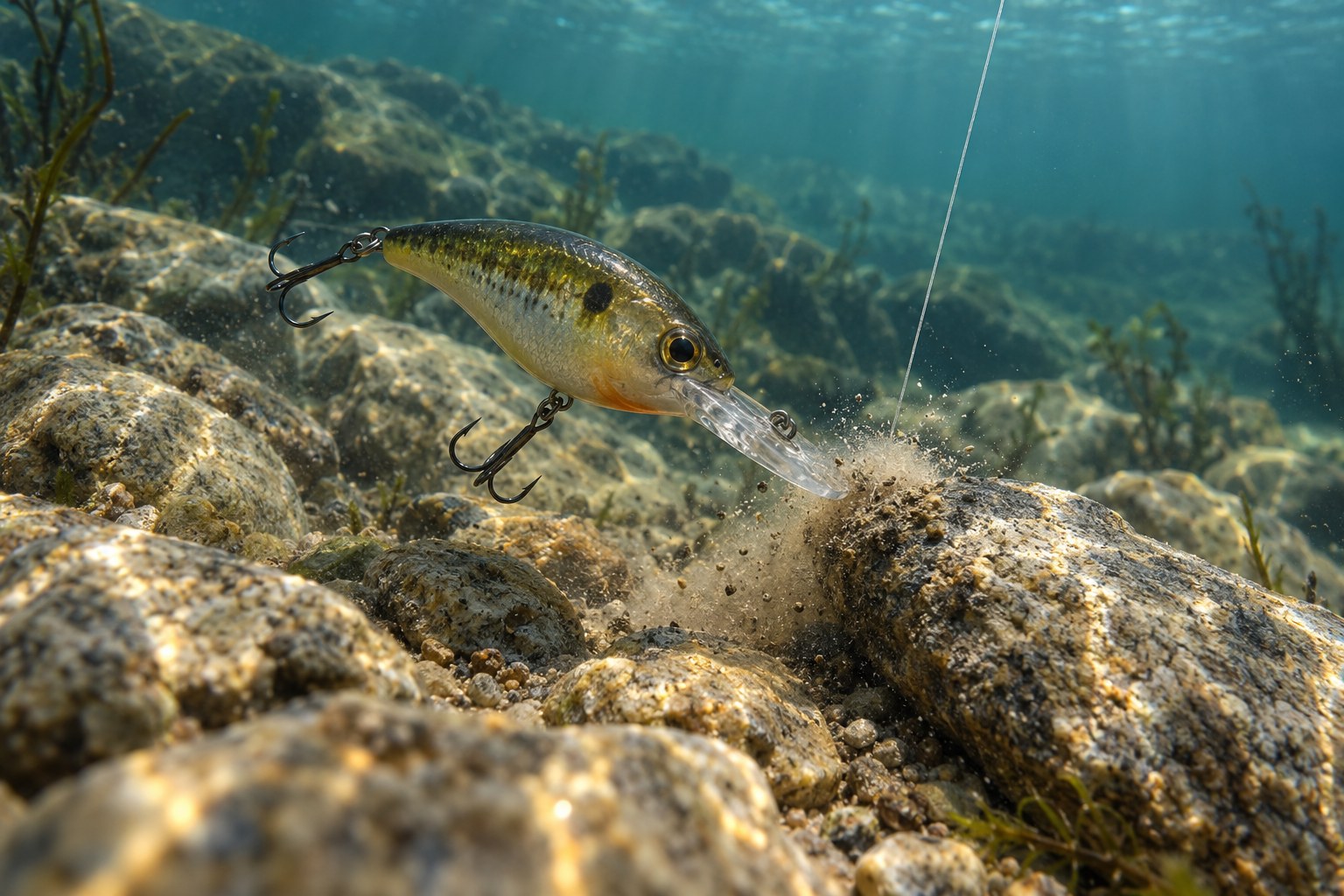
The single best confirmation is bottom contact. If your crankbait is just ticking the bottom — a light “clack” as the bill brushes gravel, or an occasional soft bump as it crosses a subtle contour change — you’re at the right depth. If you feel nothing but steady, uninterrupted wobble, you’re running too shallow. If you’re snagging on every cast or dragging through junk, you’re too deep or fishing the wrong cover.
Deflection is the second piece. When a crankbait strikes a rock, a branch, or a weed stalk, it hesitates, kicks sideways, or rolls off the obstruction and accelerates. To a following bass, that sudden break in a steady rhythm looks exactly like a wounded baitfish trying to escape. That reaction is why cranking through cover beats casting into open water. You want the bait to make contact — just not to stay stuck.
One quick tune-up if the depth never seems to come: check whether your bait is running straight. A crankbait that tracks to one side wastes energy sideways instead of diving, and it will never reach its full rated depth. A small pliers adjustment to the line-tie eyelet — bending it gently in the opposite direction of the drift — brings the bait back to centerline.
Pause, Buoyancy, and the Reaction Bite
A crankbait’s buoyancy decides what it does when you stop reeling — and that pause is often where the bite happens.
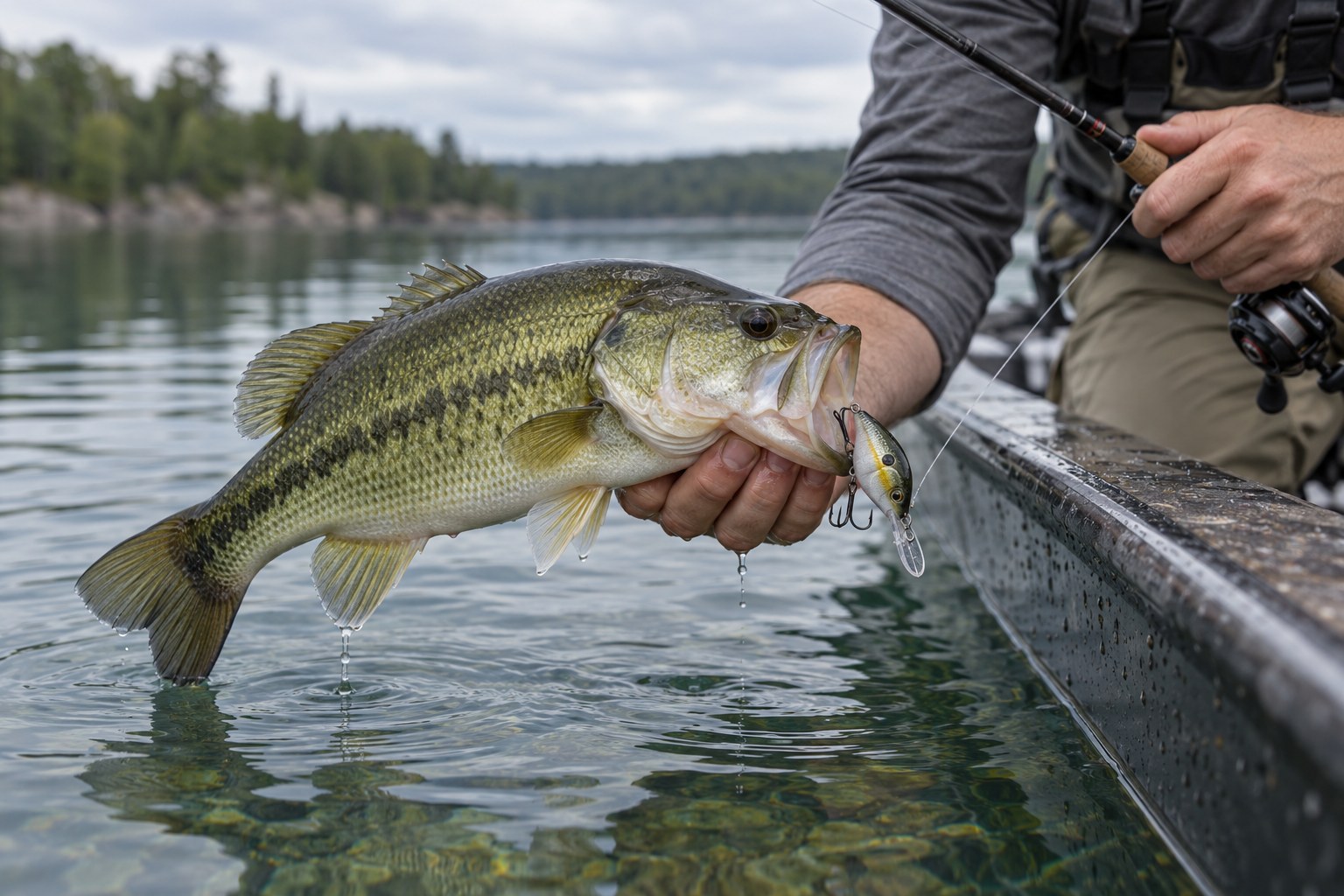
A floating crankbait rises when you pause, which lets it back out of a snag and float up over cover. A suspending bait holds its depth during the pause, which is deadly in cold water when fish won’t chase and you need the lure to sit right in their face. A sinking bait, including most lipless crankbaits, keeps dropping — you can count it down to fish holding deep, but it’s easier to snag if you let it settle into cover.
The practical takeaway is a stop-and-go retrieve. Crank steadily for a few seconds, then pause. Back off the speed, then snap it forward again. That constant change of pace keeps the bait in the strike zone longer and keeps it looking unpredictable — and unpredictable is what triggers bites when the fish are neutral or following without committing.
A Simple Depth-Control Workflow
Put it all together and every crankbait cast runs the same short checklist.
- Pick the depth band from the structure and where the baitfish are holding.
- Choose the bait class that lives in that band — shallow, medium, or deep.
- Set your line size for depth first, not just for strength. Thinner fluoro runs deeper.
- Make the longest cast you can so the bait has room to reach its working depth.
- Drop the rod tip toward the water to squeeze out the last foot or two.
- Hold a steady, thumping retrieve and feel for bottom contact.
- Adjust one lever at a time — line, distance, speed, or tip — and pay attention to what the bait tells you through the rod.
If you’re new to crankbaits entirely, start with a solid medium diver and learn its behavior before you chase deep water — our guide to crankbait fishing for beginners walks through the fundamentals. From there, picking the right depth is really just matching the lure to your target fish. And because so much of depth control is about contact, our breakdown of fishing through weeds and grass pairs naturally with this one.
Depth control isn’t about muscle or expensive gear. It’s about understanding that the box rating is a starting point and then owning the levers that move it. Get your bait into the band where the fish are actually living, keep it there as long as you can, and let the bottom contact tell you the truth. That’s the difference between casting a lure and fishing one.