
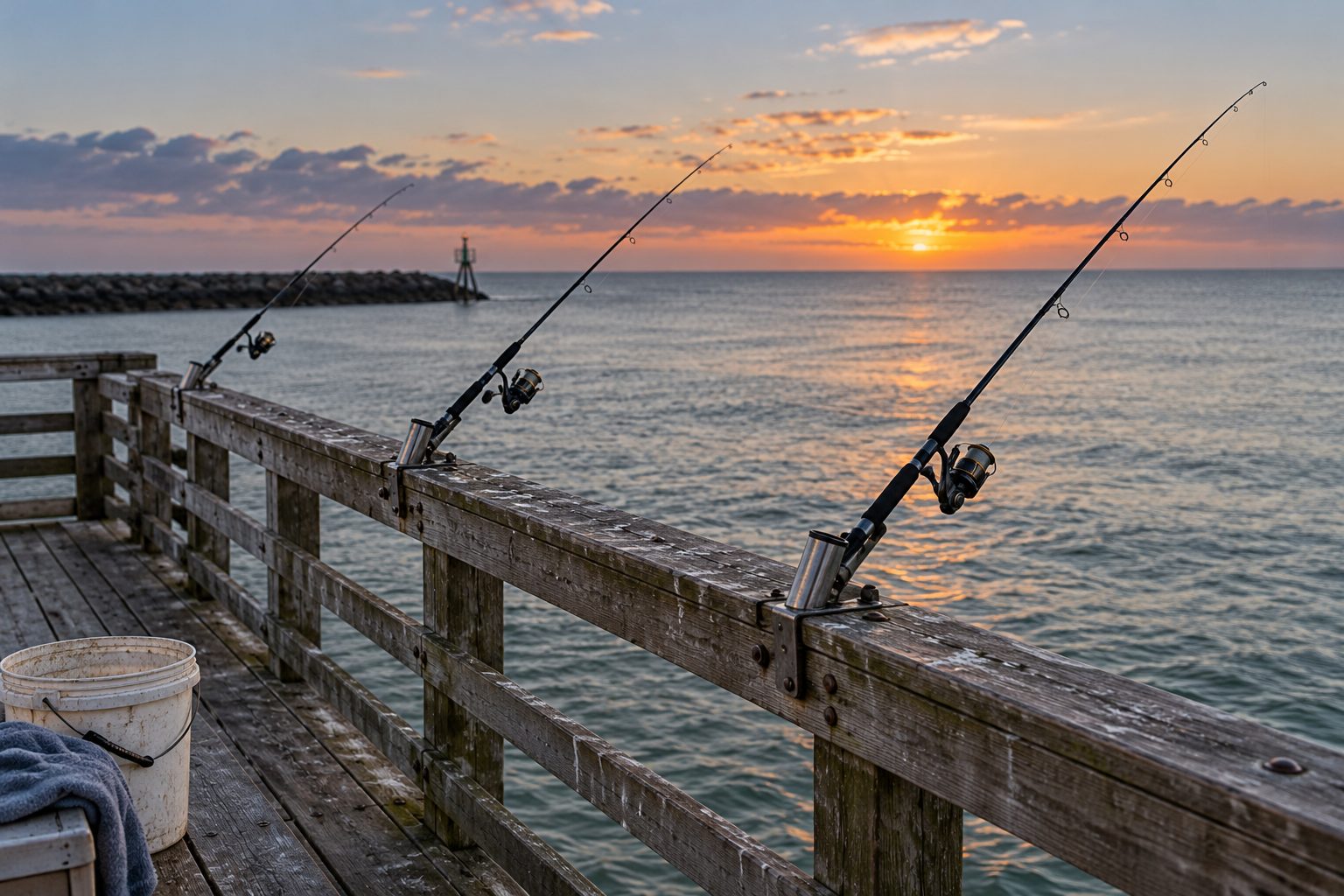
Your bait keeps ending up somewhere other than where the fish are. Maybe the current drags it under the pier. Maybe a fish picks it up, feels something wrong, and lets go. Maybe you get bit all morning and land almost nothing.
Most anglers in that situation change bait, change spots, and change nothing else. The rig is usually the variable nobody touches.
A bottom rig in saltwater has three jobs. Hold your bait at the depth the fish are feeding. Present that bait at the right height above the bottom. Let a fish eat without dragging a lead weight along with the meal.
Three rigs cover those jobs for almost everything you’ll fish from a pier or a beach: the fish finder, the high/low, and the rolling rig. Each one solves a different problem, and each one fails badly in the wrong water.
The Three Jobs a Bottom Rig Has to Do
Think about what actually happens when a fish takes your bait.
If a fish eats and feels the sinker immediately, it drops the bait. That’s not a fussy fish — that’s a fish that felt something unnatural. A rig that lets line slide through the weight fixes this, because the fish can move off a foot or two before it ever loads your rod.
The second job is height. Bottom feeders don’t all feed on the bottom. Whiting and croaker work sand within inches of the seabed. Sheepshead pick crabs off pilings a few feet up. Pompano cruise the trough behind the sandbar, hunting sand fleas right at the surface of the sand. A rig with two baits at two heights covers that uncertainty without any guessing.
The third job is staying put. A rig that won’t hold bottom isn’t fishing — it’s dragging. You need enough weight to hold your bait in place and no more, because extra weight costs you casting distance, bite sensitivity, and snags.
Every decision below is about which of those three jobs matters most in the water in front of you.
The Fish Finder Rig: Weight Down, Bait Free
The fish finder rig — also called a sliding sinker rig — is the one to learn first, because it fixes the most common bottom-fishing problem: fish feeling the weight.
How it goes together. Thread a sinker slide onto your main line. Add a small plastic bead. Tie a barrel swivel to the end of your main line. The swivel is the stopper that keeps the slide from running up your line, and the bead protects the knot from chafing against it. Then tie your leader to the swivel’s free eye and your hook at the other end.
The slide carries a snap clip for the sinker, so you can change weights without cutting and re-tying. That one detail separates a rig you’ll actually tune from a rig you’ll fish all day at the wrong weight.
Leader length is the whole trick. Eighteen to thirty-six inches covers most pier and surf work. The general rule is that stronger current calls for a longer leader — more leader lets the bait drift further from the anchored weight and swing naturally in the flow. Surf anglers chasing striped bass and bull reds often run three to four feet of leader.
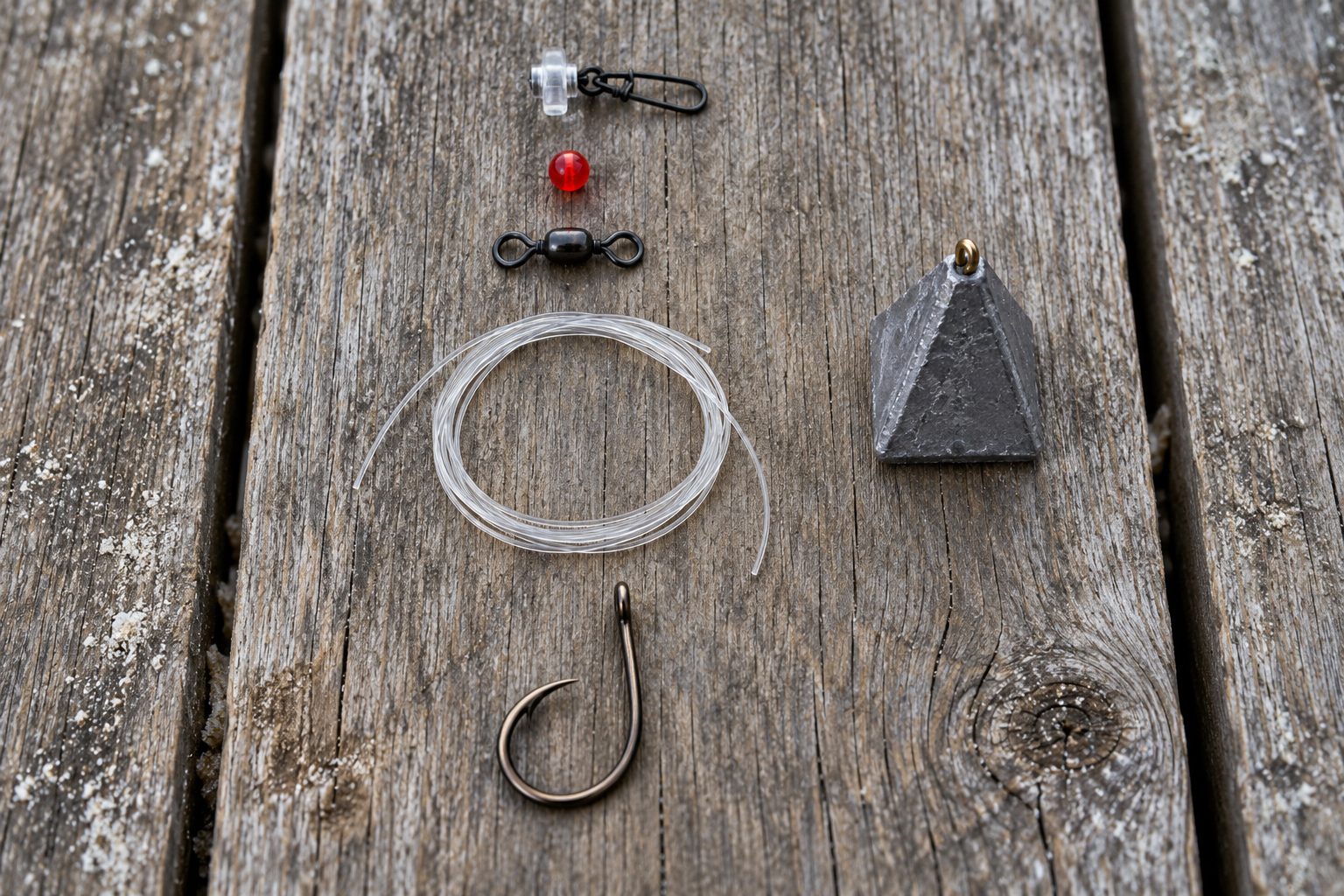
Why it works. Line pays out through the slide. A fish picks up the bait and swims off, and the only thing it feels is the bait. By the time your rod loads, the hook is already in the corner of its mouth.
There’s a casting benefit too. A big bait and a heavy sinker fixed close together spin through the air like a helicopter rotor on the cast. With a slide, the rig stays compact until it hits water, then current and wave action separate the bait from the weight on their own.
Where it struggles. It doesn’t cast as far as a compact rig. And because the bait and weight are separated on the way down, the leader can wrap around your main line in the drop. The fix is simple: hook baitfish through the nose and cut bait on its thinnest edge, so everything drops streamlined.
What it’s for. Wary fish in clear water, deeper water, moving current, and big baits. Striped bass, red drum, flounder, snapper, sharks and rays all take fish finder rigs. Scale it down to a one-ounce sinker on twenty-pound leader for puppy drum in a bay, or up to a six-ounce pyramid on fifty-pound leader for bull reds in the surf.
The High/Low Rig: Two Baits, Two Heights
If you don’t know exactly where in the water column the fish are feeding, stop guessing. The high/low rig puts two baits at two heights above a sinker and lets the fish tell you.
How it goes together. Start with twenty to forty inches of thirty- to fifty-pound monofilament or fluorocarbon leader. Tie a barrel swivel at the top and a sinker loop or snap at the bottom. Between them, tie two dropper loops — also called T-knots — spaced eight to sixteen inches apart. Thread a hook onto each loop.
The rule that prevents tangles: the gap between the loops must be longer than the loops themselves. Four-inch dropper loops need at least ten inches between them. If your loops are long and the spacing is short, the top hook can reach the bottom hook and the two wrap together on every cast.
Hooks can hang loop-to-loop, or you can snip one side of the loop an inch from the knot and snell the hook onto the resulting tag end for a longer snood. The snell gives bait more room to move and is what most pier regulars end up doing.
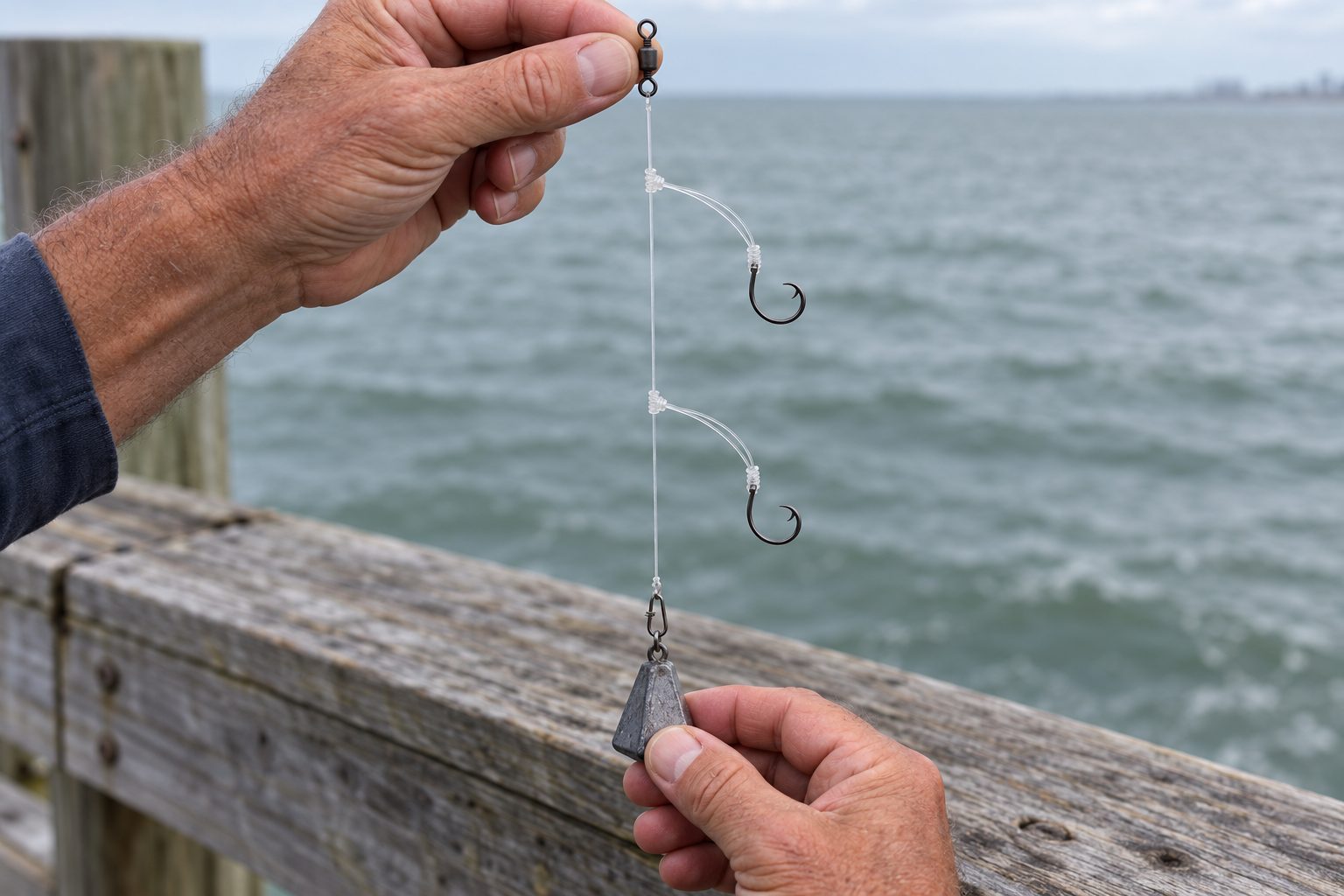
The pompano version. Add a small foam or cork float and a colored bead above each hook and you have a pompano rig — the same rig that Florida and Gulf surf anglers fish for whiting. The floats hold bait three to six inches off the sand, right where pompano and whiting root for sand fleas. The bead is not decoration: orange and pink mimic sand-flea eggs, which is a real part of what those fish are keyed on. A common build is eighteen to twenty-four inches of leader, droppers six to eight inches apart, and size 1 to 2/0 circle hooks.
Where it wins. Mixed-species water. Whiting, croaker, spot, pompano, small black drum, pinfish, juvenile sheepshead, flounder, sea bass. Two baits means a bait stealer hits one while the target takes the other, and the height difference covers fish that are rooting versus fish that are rising a foot off the sand.
Where it loses. Wave action and tidal current push a light two-hook rig around, so it’s a poor choice when you need a big bait to sit perfectly still for a big fish. And two hooks near pilings or rock mean twice the snag surface.
The Rolling Rig: Let the Current Cover Water
The rolling rig gives up control on purpose. The weight rolls free on the line, and the bait tumbles along the bottom with the current instead of being pinned to one spot.
That sounds like a downside. It’s the entire point when fish are spread out over a flat.
On a long beach with moderate lateral flow, a bait that travels ten feet along the bottom finds more fish than a bait bolted to one square yard of sand. Pompano and croaker anglers do this deliberately, letting the wash push their baits around rather than fighting it. On open sand in a gentle current, the rig fishes a line of water for you.
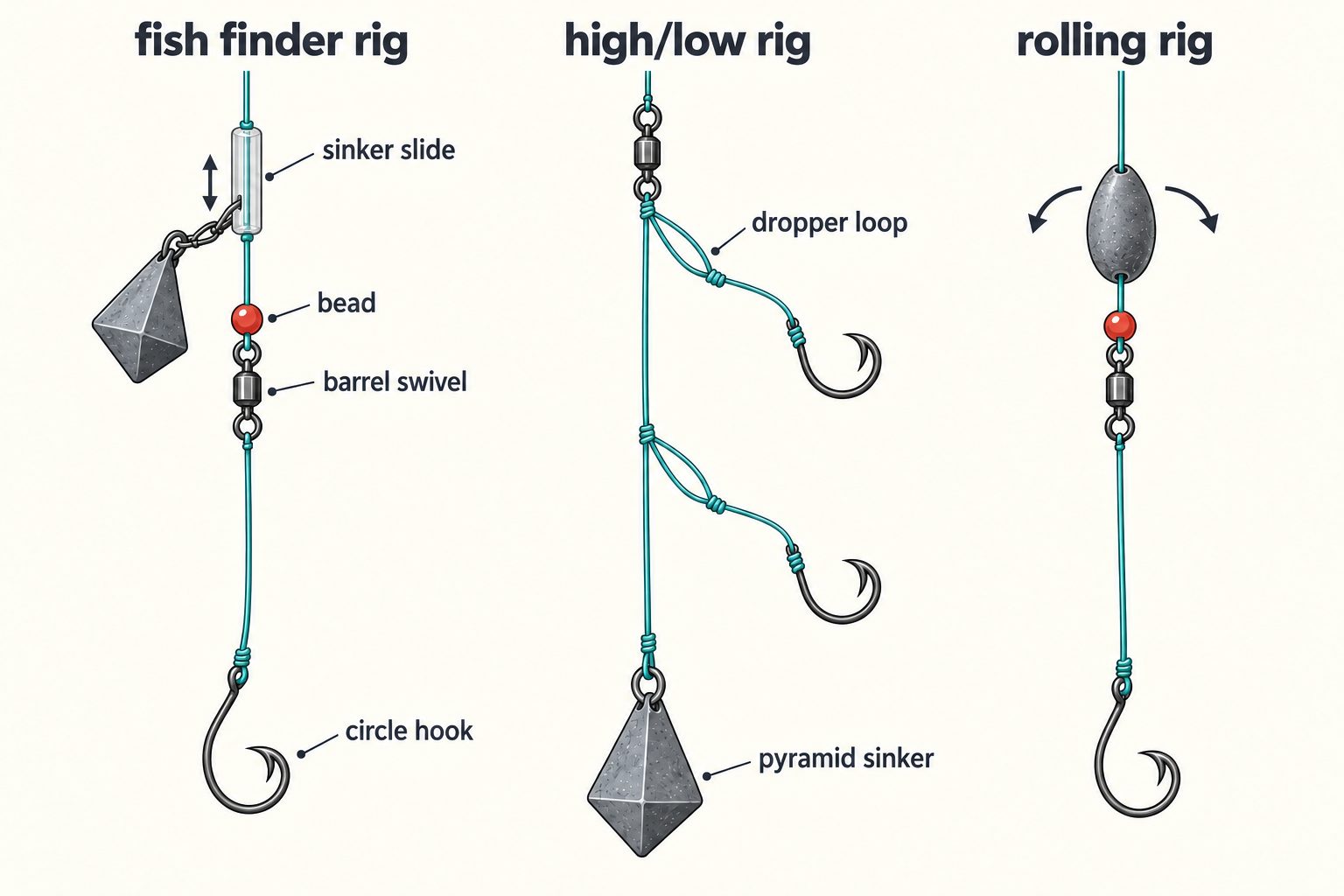
Where it breaks down. In heavy sideways current, an underweighted rolling rig sweeps down the beach into your neighbor’s lines and tangles with everything in its path. Rolling is a choice for moderate flow, not for a ripping tide.
When you need the bait to stay put instead, change the weight’s shape rather than just its size. Sputnik-style sinkers with wire arms dig in and hold in heavy surf. Pyramid sinkers plant their flat faces in sand. A bank sinker rolls — which is exactly what you want when rolling is the plan.
Sinker Weight and Shape: The Part Everyone Guesses
Most anglers fish a sinker that’s too heavy because heavy feels safe. It isn’t. Excess weight kills bite sensitivity, wedges into structure, and cuts casting distance — a six-ounce pyramid casts roughly thirty to forty percent farther than a ten-ounce.
Start here and adjust from what the water does:
- Pier, calm water, five to twenty feet: half an ounce to one ounce.
- Pier, moderate current, ten to thirty feet: one to three ounces. Around two to three ounces of pyramid holds in a moderate tide; four ounces is the move on a strong outgoing.
- Surf, calm beach through the breakers: two to four ounces.
- Surf, heavy wash: four to eight ounces, and favor a shape that grips.
A useful rule of thumb for deeper bottom fishing: an ounce per twenty feet of depth in light current, add fifty percent for moderate flow, double it for heavy.
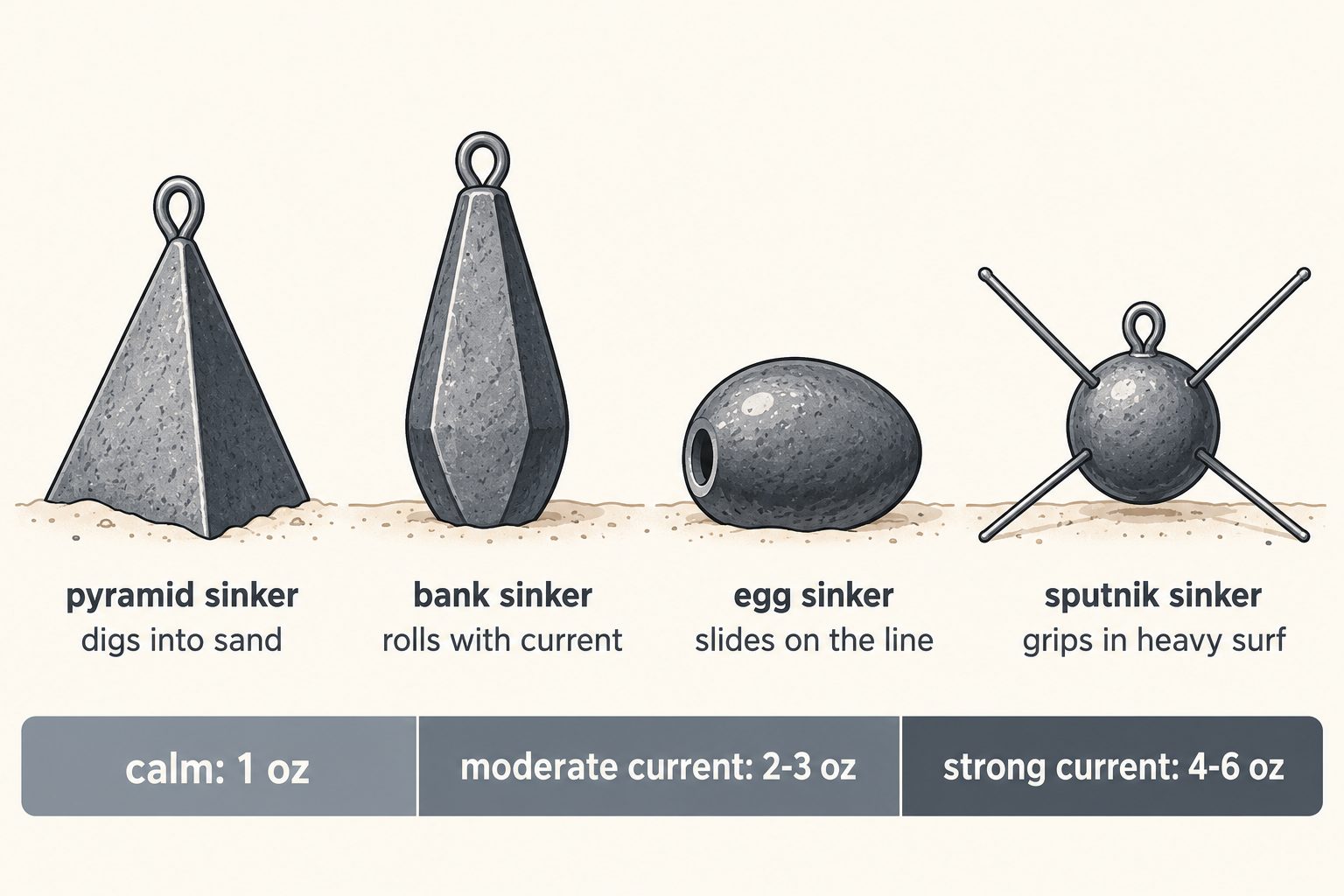
Shape matters as much as weight. Pyramids dig into sand and hold a beach position. Banks roll and suit a moving bait. Eggs slide on the line and belong on sliding rigs. Sputniks with wire arms grip hardest in surge, but they snag on rough pier bottoms.
One hardware detail that ruins more fish finder rigs than bad knots: your barrel swivel has to be wider than the hole in the sinker slide. If it isn’t, the swivel jams inside the plastic slider and your rig stops sliding when a fish picks it up. Cheap lead with sharp mold edges also cuts line — file the edges or buy smooth sinkers.
If you’re still deciding what rod to hang all this on, our guide to saltwater fishing rods for beginners covers how rod power and sinker weight pair up.
Hooking and Landing Fish on Bottom Rigs
Here’s the mistake that costs more fish than any rig choice: swinging on a circle hook.
A circle hook is designed to rotate and catch in the corner of the mouth as the fish turns away. It does that on its own under steady pressure. If you sweep the rod like you’re setting a J-hook, you pull the hook out of the mouth before it can seat. The correct move is to reel down until the line comes tight and let the bend of the rod do the work.
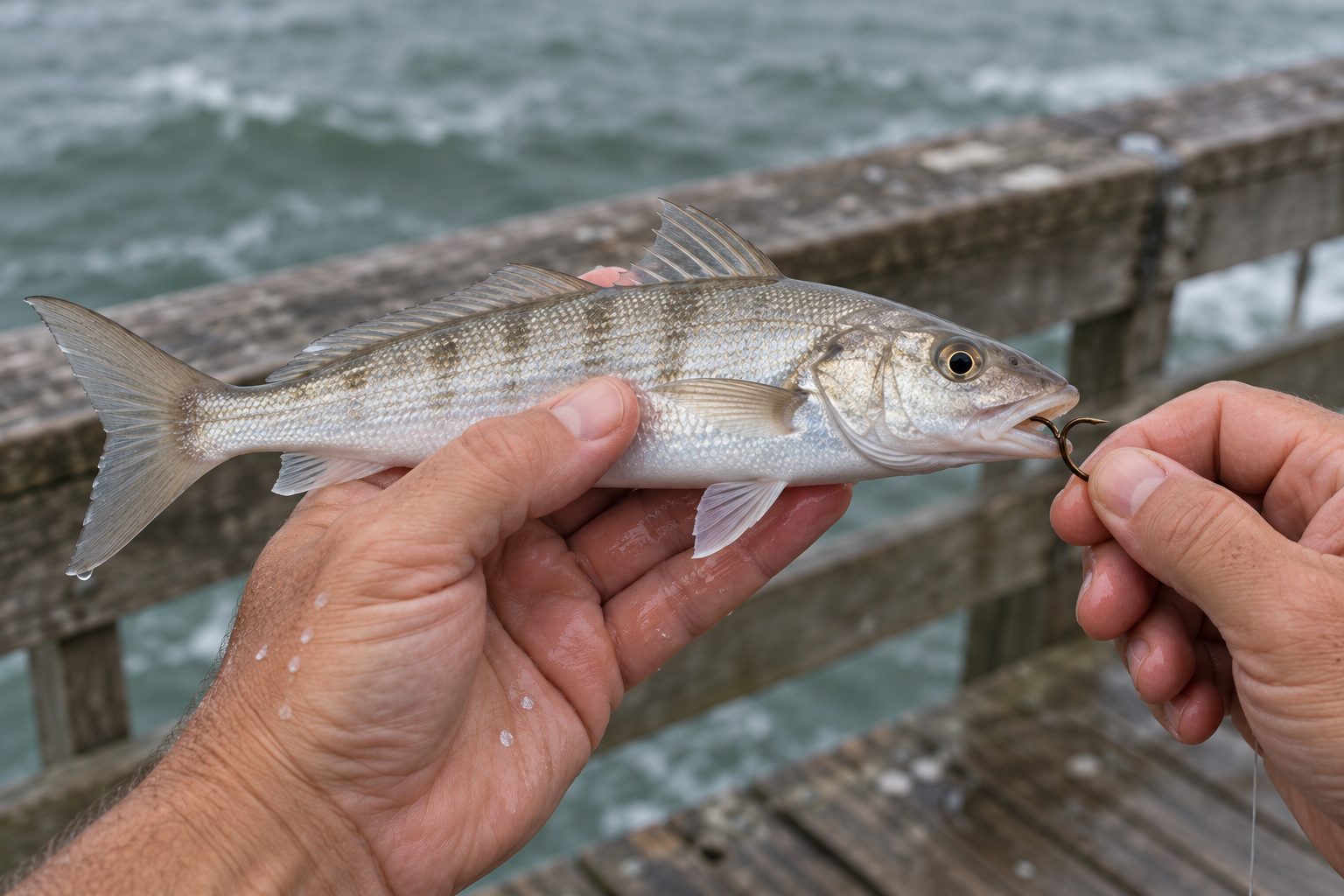
That also explains a weight interaction most people miss. With circle hooks, too light a sinker lets the entire rig slide along with the fish instead of letting the hook rotate against resistance. Going up an ounce often converts more bites into landed fish, which is the opposite of the usual “lighter is always better” advice.
J-hooks are a different story — those still need a real hook set. And in the Gulf’s federal reef fishery, non-offset circle hooks are required with natural bait, so the self-setting technique is the law as well as the better habit.
At the pier, walk a good fish to the ladder or the net instead of swinging it up over the rail. Swinging is how lines break and hooks straighten.
Reading the Conditions and Switching Rigs
You don’t need a decision chart in your pocket. You need to notice four things: current speed, what the fish are doing, what the bottom looks like, and how much structure is around.
- Current picking up or the bait swinging under the pier? Fish finder rig, longer leader, heavier weight. Let the bait drift back into the zone instead of fighting the flow.
- Fish showing at mid-height, or a mix of species? High/low. Two heights answers the question faster than experimenting with one.
- Open sand, scattered fish, gentle flow? Rolling rig, and let it cover water.
- Pilings, rock, or jetty rocks? Shorter leader, single hook, and enough weight to stay put without wedging. Two hooks near structure is a donation.
- Slack water? The bite usually flattens. Fish the moving stages of the tide and expect the weight requirement to change as the water speeds up.
Tide stage drives all of it. The first two hours of a moving tide concentrate bait and predators, and current strength at that moment tells you how much lead you need. If you’re still learning to read the stages, how to read a tide chart is the place to start, and our pier and jetty basics guide covers how to work a pier structurally.
The Rig Kit That Saves a Trip
The anglers who lose the least time are the ones who never tie knots on the pier.
Pre-tie three or four rigs at home — one fish finder, two high/lows in different hook sizes — and bag each one separately in a zip-top bag. When a fish cuts you off on a piling, you swap a bag and you’re fishing again in about a minute instead of ten.
A few small habits that pay off:
- Carry snap swivels so weight changes don’t cost you a knot.
- File the sharp edges on new sinkers before they go in the bag.
- Retire mono that has spun up. Monofilament has memory, and a rig that twisted once will twist the same way next drop.
- Keep two sizes of sinker for each weight class. The tide will make you wrong at least once a trip.
None of this is complicated. It’s just the difference between fishing a rig and hoping a rig works.
Pick the Rig for the Water, Not the Habit
Bottom fishing rewards the angler who changes something when the bite changes.
The fish finder is your default in current and clear water, because it takes the weight out of the fish’s mouth. The high/low is your default when you don’t know the feeding height or when you want two baits in the water. The rolling rig is your tool for covering open sand when the fish are spread out and the current is polite enough to let you.
Match your weight to the flow, match your hook to the bait, and let the circle hook do its job. That’s most of saltwater bottom fishing, and it’s the part you can control.