
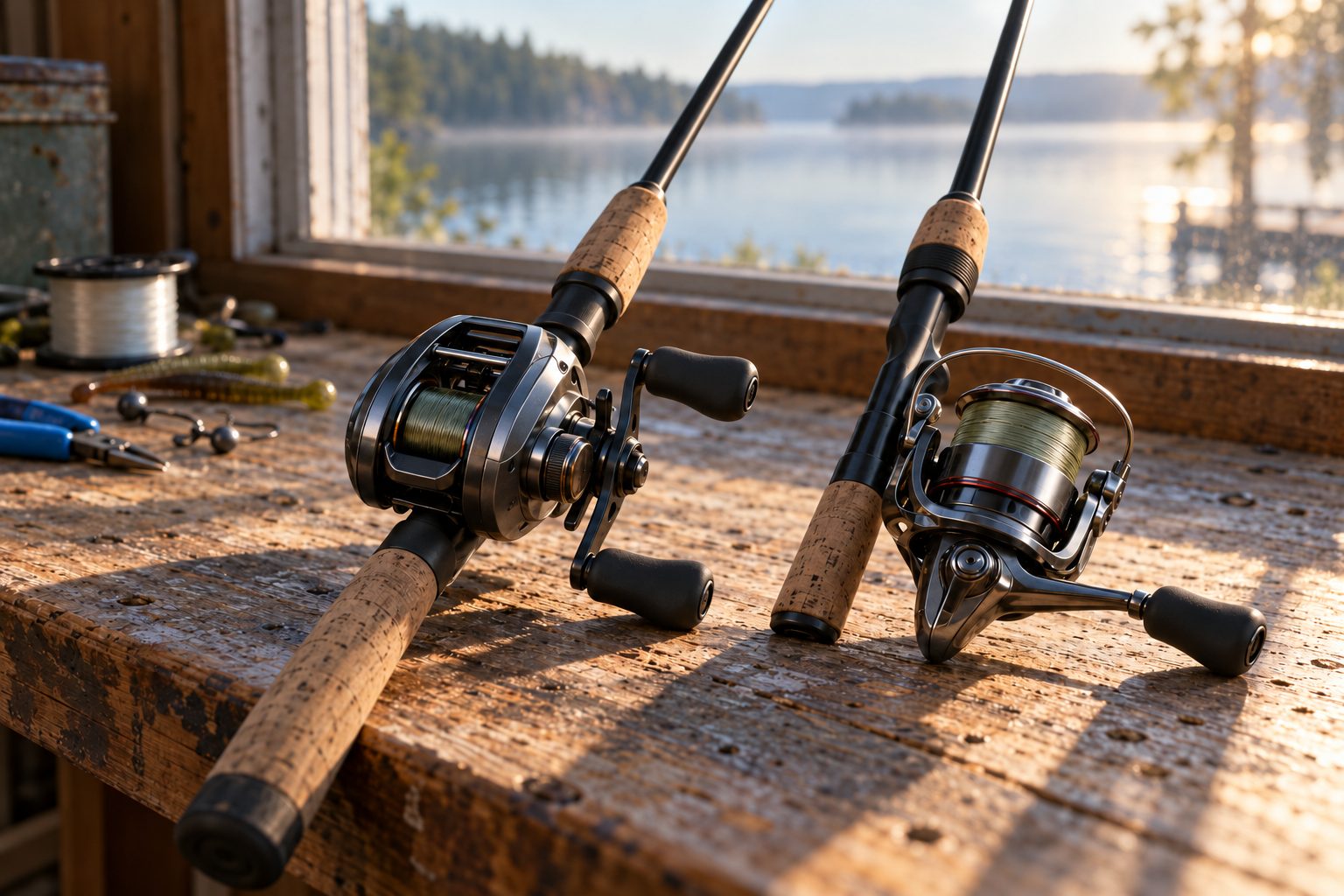
You’re standing in the reel aisle with two boxes in your hands. Both reels are the same size, the same price, made by the same company. One says 5.4:1. The other says 7.1:1. Nothing on either box tells you which one you actually need, and the clerk’s answer — “depends what you’re throwing” — is true but useless when you’re about to spend money.
Here’s the problem. That number isn’t a speed rating. It doesn’t tell you how fast your lure moves, and a bigger number is not an upgrade. Two reels with different ratios can retrieve line at almost exactly the same rate, and two reels with the identical ratio can differ by more than 30 percent.
Let’s fix that. You’ll learn what the number actually measures, the spec that matters more, and which ratios fit the techniques you fish — so the next reel you buy solves a real problem instead of adding a duplicate to the rod rack.
What a Gear Ratio Actually Tells You
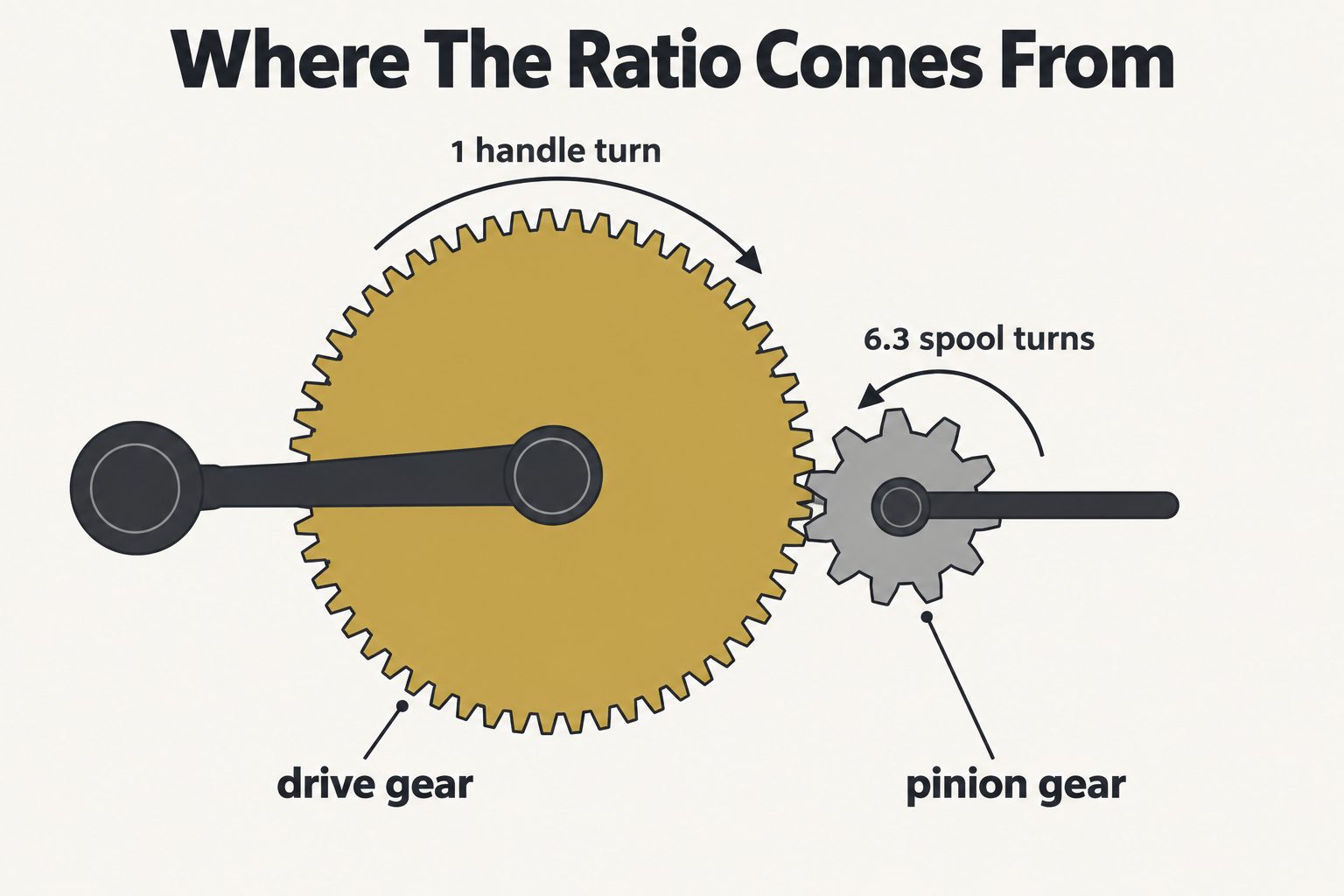
A gear ratio is how many times the spool turns for every single turn of the handle.
On a baitcaster or spincast reel, that’s the spool itself. On a spinning reel, it’s the rotor — the part that wraps line around the spool. Either way, the math is the same: a 6.3:1 reel turns its spool 6.3 times every time your hand completes one circle.
That rotation comes from two gears inside the reel: a large drive gear connected to the handle, and a smaller pinion gear that drives the spool or rotor. The ratio is just the size relationship between them. A higher ratio calls for a bigger drive gear relative to the pinion. More rotations per handle turn — and less mechanical leverage to get them.
Typical ranges by reel type give you a sense of what’s normal:
- Spinning reels usually land between 4.8:1 and 6.2:1
- Baitcasters run from about 5.0:1 all the way past 9.0:1
- Spincast reels sit around 5.0:1 to 6.0:1
Notice that spinning reels top out far lower than casting reels, yet they aren’t “slower” in any meaningful sense. That gap is the first clue that the ratio isn’t telling you what you think it is.
One thing the ratio does not describe is quality. A $60 reel and a $300 reel can both be 6.2:1. What separates them is gear material, bearing quality, drag smoothness, and how rigid the frame is under load — none of which appear in that pair of numbers.
Why the Ratio Alone Lies: Inches Per Turn
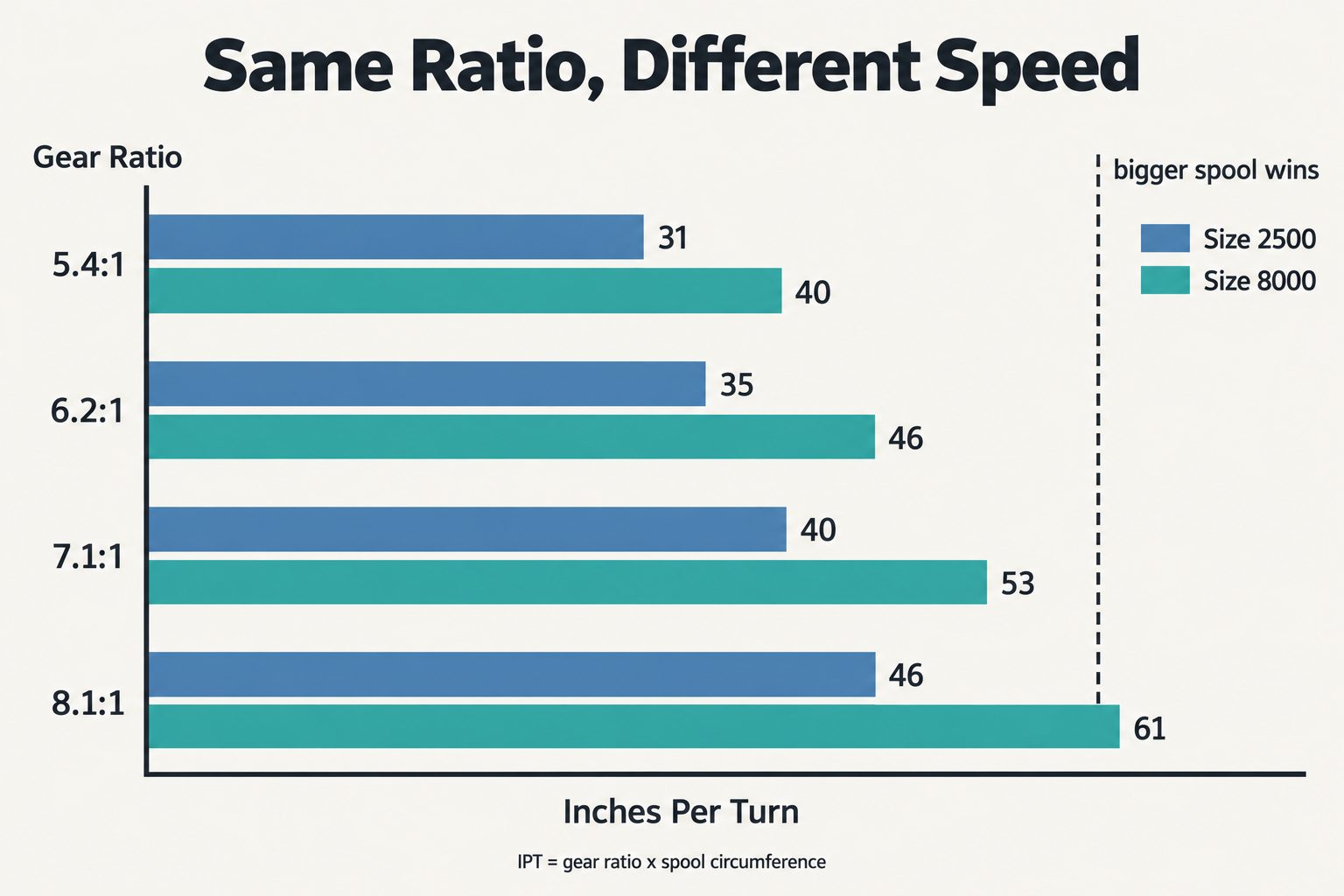
The number that actually predicts what you’ll feel on the water is inches per turn, usually abbreviated IPT. It’s the length of line your reel recovers with one full handle turn.
The relationship is simple: IPT is roughly the gear ratio multiplied by the circumference of the spool. Which means spool size is doing just as much work as the ratio.
This is where the spec sheet gets genuinely misleading. A compact spinning reel and a big surf reel can both be stamped 6.2:1 and still recover very different amounts of line, because the surf reel’s spool is so much larger in diameter. Same ratio, same number of turns — noticeably more line with every crank.
You can see the same crossover in production reels. One popular 2500-size spinning reel runs 6.2:1 and lists 34.5 inches per turn. A heavier 2500 from another brand runs only 5.6:1 — a much “slower” ratio — yet lists 33.2 inches per turn. Practically the same retrieve speed from two very different numbers.
Rough IPT bands for common baitcasters give you a working reference:
- 6.3:1 reels typically retrieve about 24 to 26 inches per turn
- 7.3:1 reels land around 28 to 31 inches
- 8.1:1 and faster reels run 33 to 40 inches
When you’re comparing two reels, look for the retrieve rate line on the box or the manufacturer’s spec page. If it’s not listed, the ratio plus spool diameter gets you close enough to make a decision. Comparing ratios across different reel sizes without checking IPT is how people end up with two reels that feel identical.
The Torque Trade-Off (Why Fast Reels Wear You Out)
Every extra bit of speed is paid for with leverage.
Think about shifting a bicycle into a low gear to climb a hill. You move forward more slowly, but each pedal stroke takes less force. A low-ratio reel works the same way: fewer inches per crank, but noticeably more pulling power at the spool for the same effort from your hand.
A high-ratio reel inverts that. You get line back quickly, but when there’s real resistance on the other end — a deep-diving crankbait digging into the water, a heavy jig, a fish making a hard run — the reel makes you work harder for it.

That difference sounds minor until you’ve made fifty casts. Retrieving a high-resistance bait on a fast reel all day tires your wrist and forearm, and fatigue isn’t just a comfort issue. When your hand gets tired, your retrieve rhythm gets choppy. A crankbait that should be swimming with a steady wobble starts stuttering. A spinnerbait that should be slow-rolled starts rising toward the surface. The bait stops doing the thing that catches fish, and you may not notice it’s happening.
So the trade-off is real and it runs both directions. Speed costs you power. Power costs you speed. Neither one is better in the abstract.
When Speed Wins
A fast reel earns its price in situations where you need line back *now*.
Flipping and pitching into cover. When a bass takes a jig at close range and swims toward you, slack builds instantly. A fast reel takes up that slack before you swing, which is often the difference between a solid hookset and a missed fish. Most anglers flipping or pitching heavy cover want 7.1:1 or faster.
Topwater walking baits and poppers. These lures work on a twitch-pause-twitch rhythm, and every twitch creates slack. A fast reel collects that slack between cadences so your next twitch actually moves the bait instead of reeling up dead line.
Jerkbaits. The same slack problem, in a more exaggerated form. Jerk, pause, jerk — if you can’t pick up the slack quickly, the pause loses its action and the bait stops triggering strikes.
Soft plastics, Texas rigs, and drop-shots. Fish often pick up a bottom bait and move toward you, which puts slack in the line at the exact moment you need contact. A fast reel keeps you connected.

Inshore saltwater. When a redfish or snook takes off toward a dock piling or a mangrove edge, speed matters for a different reason — you need to gain line and turn the fish before it cuts you off. Fast reels also help you pick up slack when a fish runs straight at the boat, which happens more often than most anglers expect.
The pattern across all of these: the fish is moving toward you, or the lure is creating slack, and the reel’s job is to erase that slack before it costs you.
When Power Wins
Now the mirror image. Low-ratio reels are the right tool whenever the resistance on the other end is high and steady.
Deep-diving crankbaits. A bait running 15 to 20 feet down has a big plastic bill pushing against a lot of water. That resistance accumulates over a retrieve, and a 5.0:1 to 5.4:1 reel grinds through it without tearing up your wrist. A fast reel can do it — for about an hour.
Big swimbaits and glide baits. These lures are designed to be fished at a specific pace. A high-ratio reel tends to rush them past fish, and it’s surprisingly hard to slow your hand down enough to fix that. A slower reel makes the correct speed the natural one.
Slow-rolled spinnerbaits and heavy bladed baits. Same logic. The slower ratio gives you room to creep a bait through structure at the speed that keeps blades thumping.
Offshore jigging and trolling. Dragging heavy metal through deep water or pulling lures behind a moving boat means constant load all session. Torque wins, and low ratios in the 4.9:1 to 5.5:1 range are standard for exactly that reason.

Live and cut bait on bottom rigs. The retrieve isn’t a presentation here — you’re recovering line to check bait or reposition. A low ratio gives you the cranking power for a heavy sinker and a big fish, and you’re not giving up anything that matters.
Surf and heavy-lure retrieves. Pulling big lures through moving water over long distances is a power job. Most surf setups land in the 4.3:1 to 5.2:1 range.
The Spool-Fill Effect Nobody Mentions
Here’s a detail that changes real-world performance and almost never makes it into buying advice: your IPT isn’t a fixed number. It drops during the retrieve.
On a long cast, most of your line is off the spool, so the working diameter is smaller than the full-spool figure the manufacturer measured. As line comes back, the diameter grows and your actual line recovery increases through the retrieve. Early in the cast you’re retrieving meaningfully less per turn than you are at the boat.
That has a practical consequence. A half-filled 7.1:1 reel can retrieve line at roughly the rate of a well-filled 5.4:1, because the effective spool diameter is so much smaller. A reel that feels fast in the store can feel sluggish on the water if the spool is low.
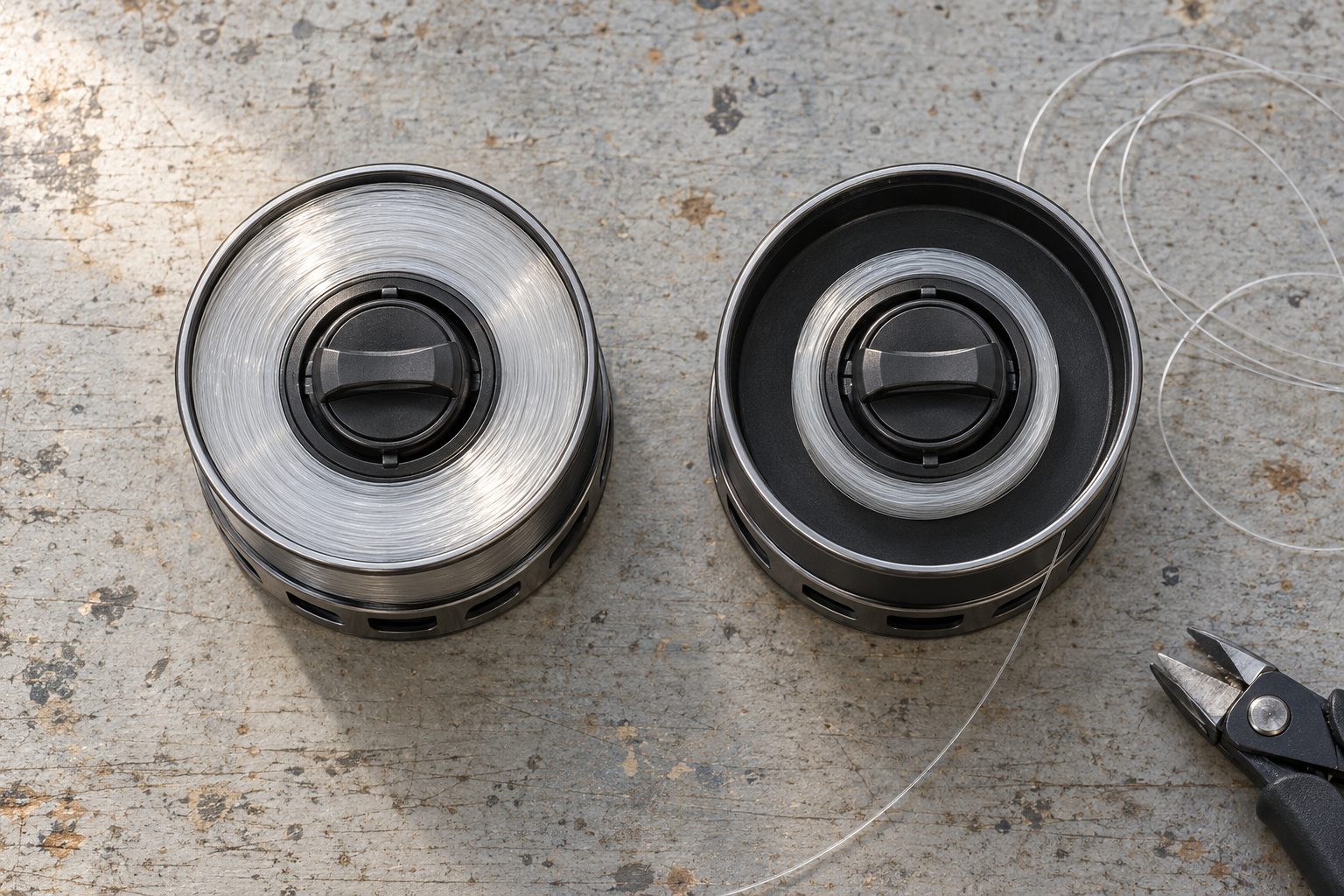
Wide spools hold their IPT more consistently across a long cast, since the line level drops more slowly as line leaves. Narrow, deep spools change diameter faster and lose speed sooner.
The takeaway: keep your spools topped off. Line level is a free performance upgrade, and it’s the first thing to check if a reel that used to feel quick suddenly doesn’t.
The Human Variable: Your Cranking Cadence
There’s one more factor in this, and it lives in your wrist rather than the reel: most anglers naturally fall into a comfortable cranking rhythm of roughly 120 handle turns per minute. You don’t think about it. It’s just what your hand does.
That rhythm doesn’t change when you change reels — but the result does.
At that same 120 turns per minute, a 5.4:1 reel retrieving about 22 inches per turn moves a bait roughly 2.5 mph, which is right in the wheelhouse for a crankbait. A 10.1:1 reel retrieving 41 inches per turn moves the same bait at about 4.6 mph at the identical cadence. Nearly double the speed without your hand working any faster.
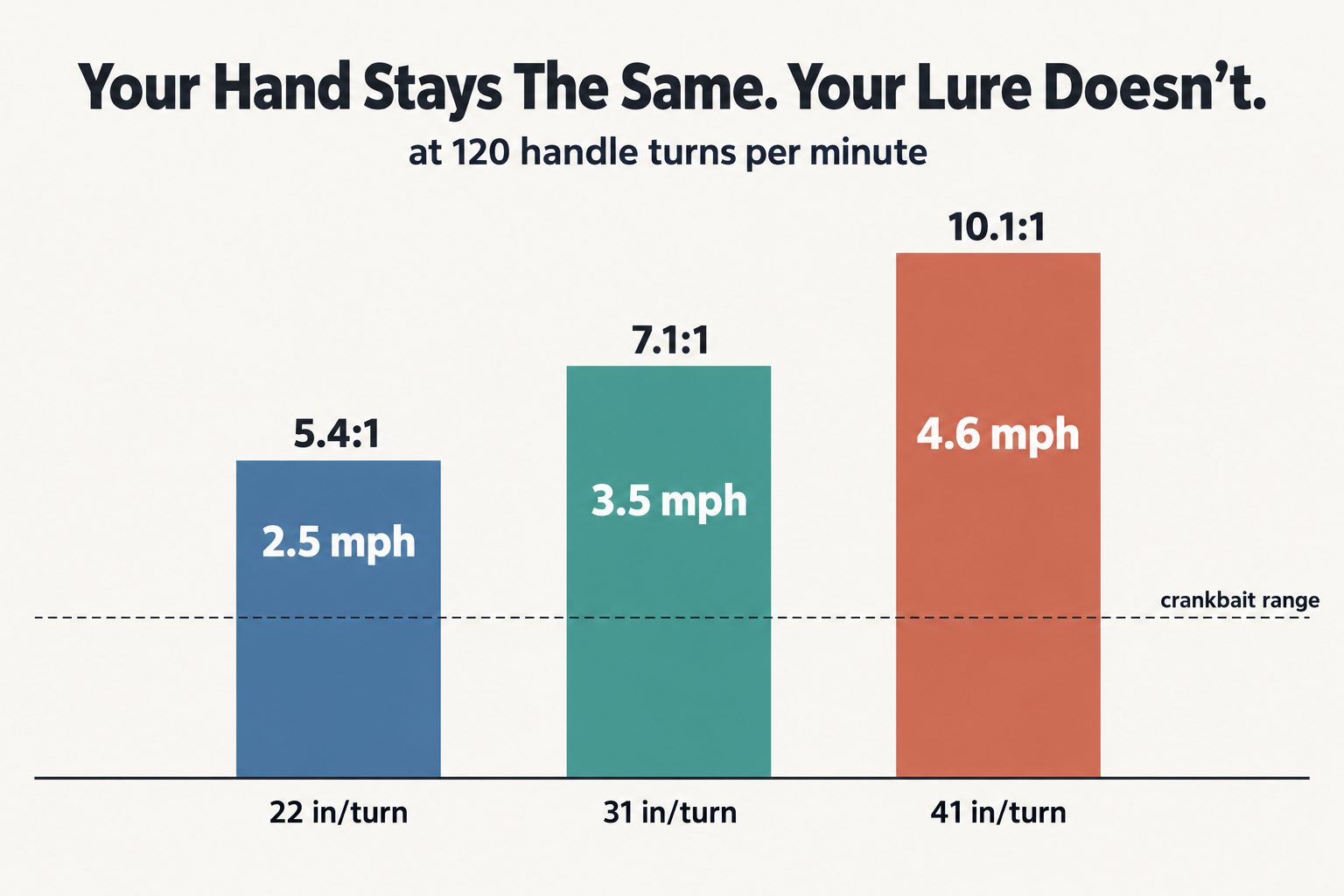
Try slow-rolling a spinnerbait at 4.6 mph and it rolls over, breaks the surface, and accomplishes nothing. That’s not a technique failure — it’s a reel mismatch.
This is the real reason to own more than one reel. You’re not buying speed or power. You’re buying the ability to fish a bait at its correct speed with your natural hand rhythm, instead of fighting your own mechanics all day.
Picking Your Second Reel
If you already own a working reel and you’re adding a second, start with a single question: what can my current reel *not* do?
If your first reel is a medium-ratio all-rounder and you’ve started throwing deep crankbaits, you’re missing power. If you’re fishing jigs and soft plastics in cover and losing fish to slack, you’re missing speed. Fix the actual gap rather than buying a slightly different version of what you already have.
If you’re buying your only reel — or replacing one that does everything — the honest answer from nearly every source is the middle. A spinning reel around 5.5:1 to 6.2:1, or a casting reel around 6.2:1 to 7.1:1, covers the large majority of freshwater situations without the wrist strain of a pure power reel or the limitations of a speed reel on crankbaits. If you’re still deciding between reel types entirely, our guide to spinning reel vs baitcaster breaks down that choice, and the reel buying guide covers size and drag.
A quick reference for narrowing it down:
- Deep crankbaits, big swimbaits, heavy slow-rolled baits: 5.0:1 to 5.8:1
- Squarebills, spinnerbaits, general freshwater: 5.4:1 to 6.4:1
- Topwater, jerkbaits, soft plastics, drop-shots: 6.2:1 to 7.1:1
- Flipping, pitching, frogs in cover: 7.1:1 to 8.1:1
Two things to keep in mind while you shop.
First, ultra-high ratios above 9:1 are specialty tools. They’re built for burning lipless crankbaits and buzzbaits and maximizing casts per hour. They aren’t a premium version of a normal reel, and they’ll make crankbait fishing miserable.
Second, don’t confuse ratio with build quality. The gears, bearings, drag, and frame are what you’re paying for as you move up in price. A well-built 6.2:1 reel will outlast a cheap 8.1:1 every time.
Get the ratio right for how you actually fish, then spend your money on the reel that’s built better inside. If you’re pairing a new reel with lighter line and smaller baits, our finesse fishing guide covers how retrieve speed fits into that whole approach.
The number on the box is a description of gearing, not a ranking. Match it to the work, and both speed and power stop being abstract specs and start being things you can feel.