
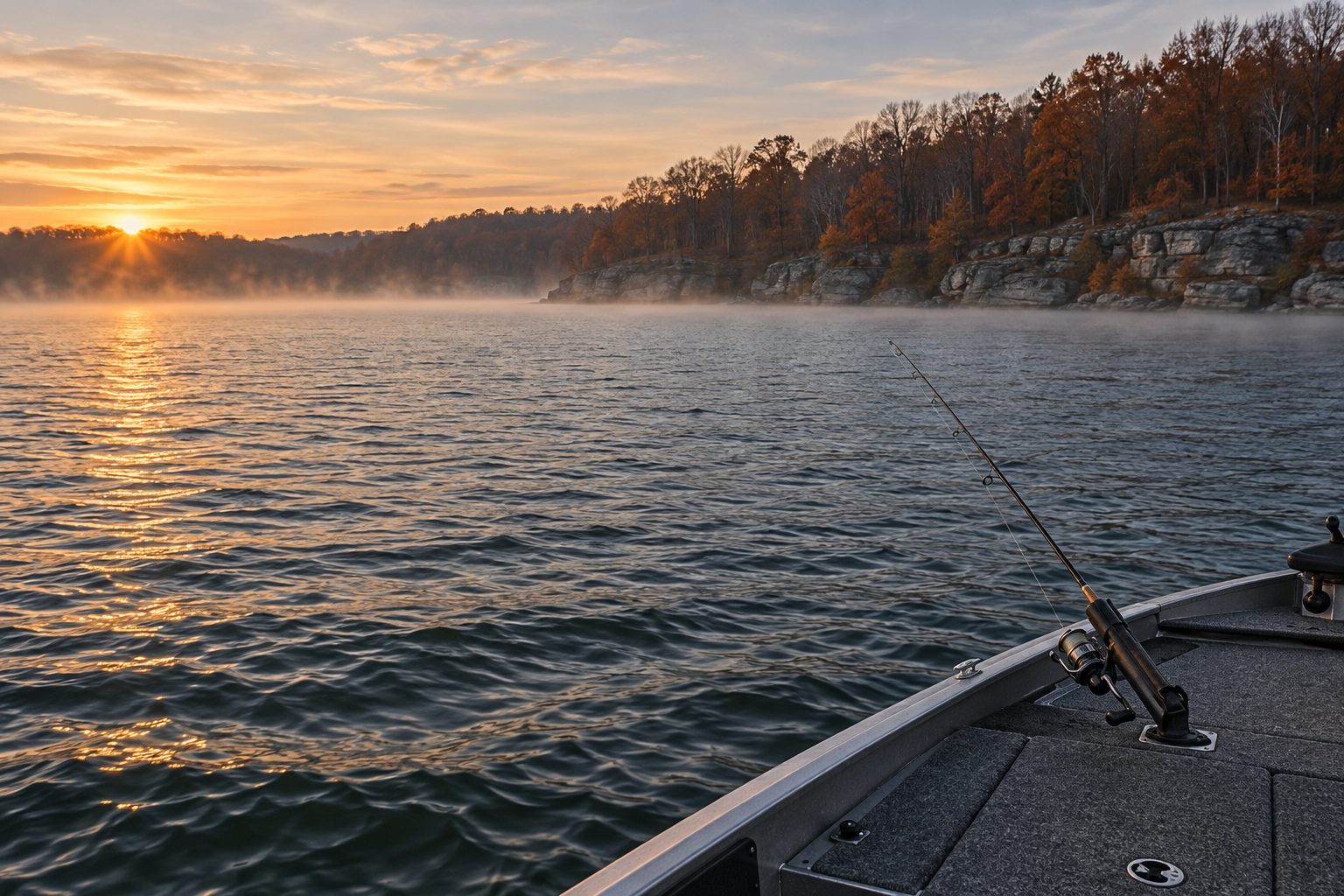
The first cold front of fall does something predictable to your local lake. The bass and walleye that were chasing moving baits all summer stop chasing anything. They slide down the bank, group up tight on hard bottom, and sit there. You can mark them on sonar and still not get bit, because a fish that isn’t going to swim three feet for a meal isn’t going to swim three feet for your crankbait either.
A blade bait is the tool for that exact situation. It’s one small piece of metal that sinks fast, lands in front of a fish that won’t travel, and vibrates hard enough to provoke a reaction. It also happens to be one of the few cold-water baits that works equally well fished straight down under the boat and cast out along a shallow bank.
This guide covers what a blade bait is, how to rig it so it actually works, the vertical and casting presentations, and the cadence change that makes the difference between a good day and a blank in water below 55 degrees.
What a Blade Bait Is (and What It Isn’t)
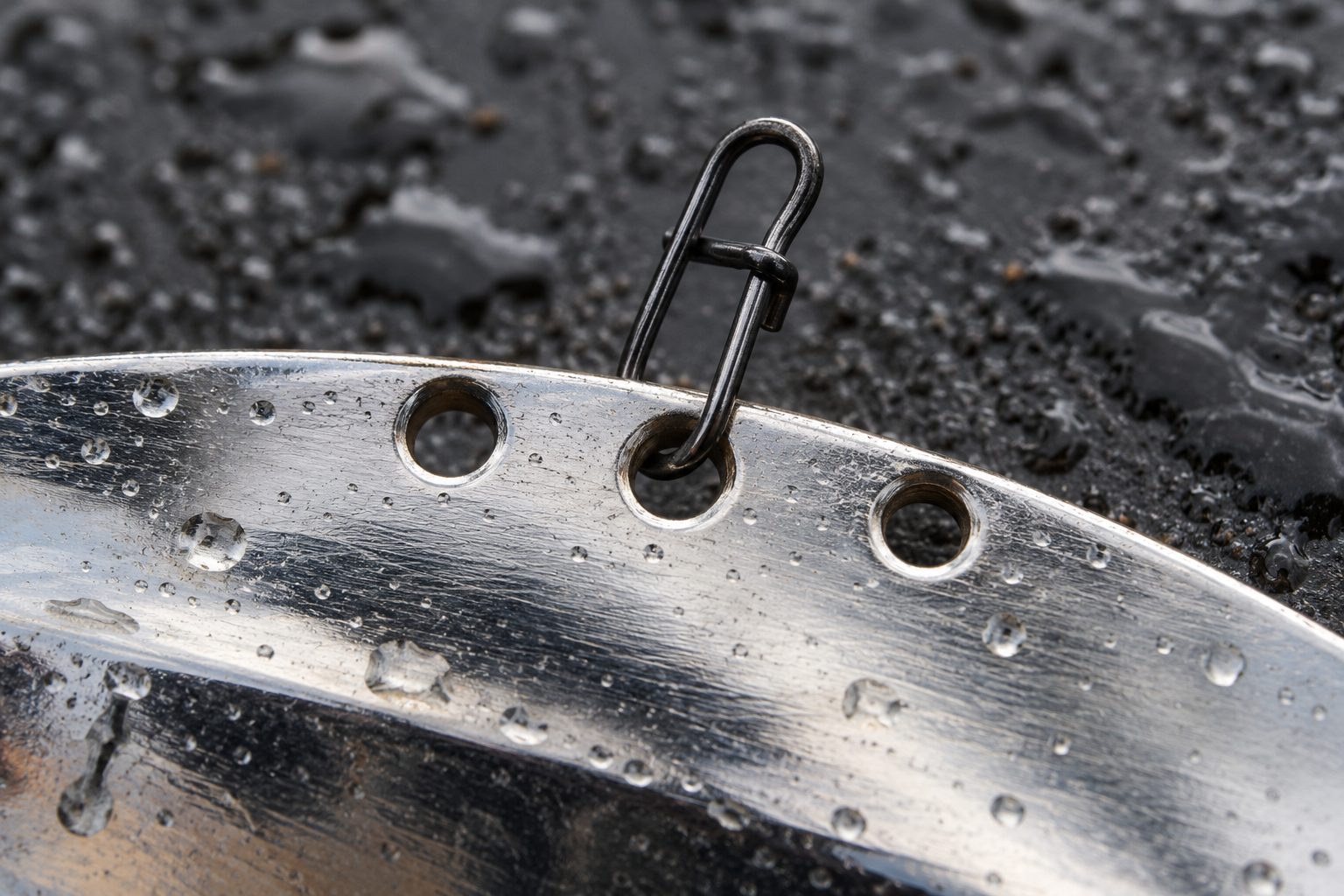
A blade bait is a stamped metal slab — thin, flat on both faces, with a heavier lead weight molded into the nose so it sinks fast for its size. Along the top spine there’s a row of two or three small holes for your line tie. Most models carry hooks fore and aft; many come with split-double hooks that most experienced anglers swap for treble hooks on split rings.
The design is old. The Heddon Sonar and the Silver Buddy date back decades, and the modern crop — Rippin’ Blades, Trago Vibs, Vaults, SteelShads — are variations on the same idea. The differences between them come down to how thick the metal is, how heavy the nose is, and where the line-tie holes sit.
Two lures get confused with a blade bait, and knowing the difference tells you when to reach for one:
- A jigging spoon hangs roughly horizontal and flutters. A blade bait fins — you’ll feel a tight, high-frequency buzz through the rod on every upward lift.
- A lipless crankbait is a horizontal search bait built to cover water. A blade bait is a depth-precision bait built to sit in front of fish you’ve already located.
The short version: this is a metal slab that vibrates on the way up and flutters on the way down. Almost everything about how you fish it comes from that one fact.
Why Cold Water Makes a Blade Bait Better
Cold water slows a fish’s metabolism, which means it stops chasing. A largemouth sitting in 45-degree water is not going to run down a baitfish. It will, however, snap at something that lands within a foot of its nose and behaves like a dying meal.
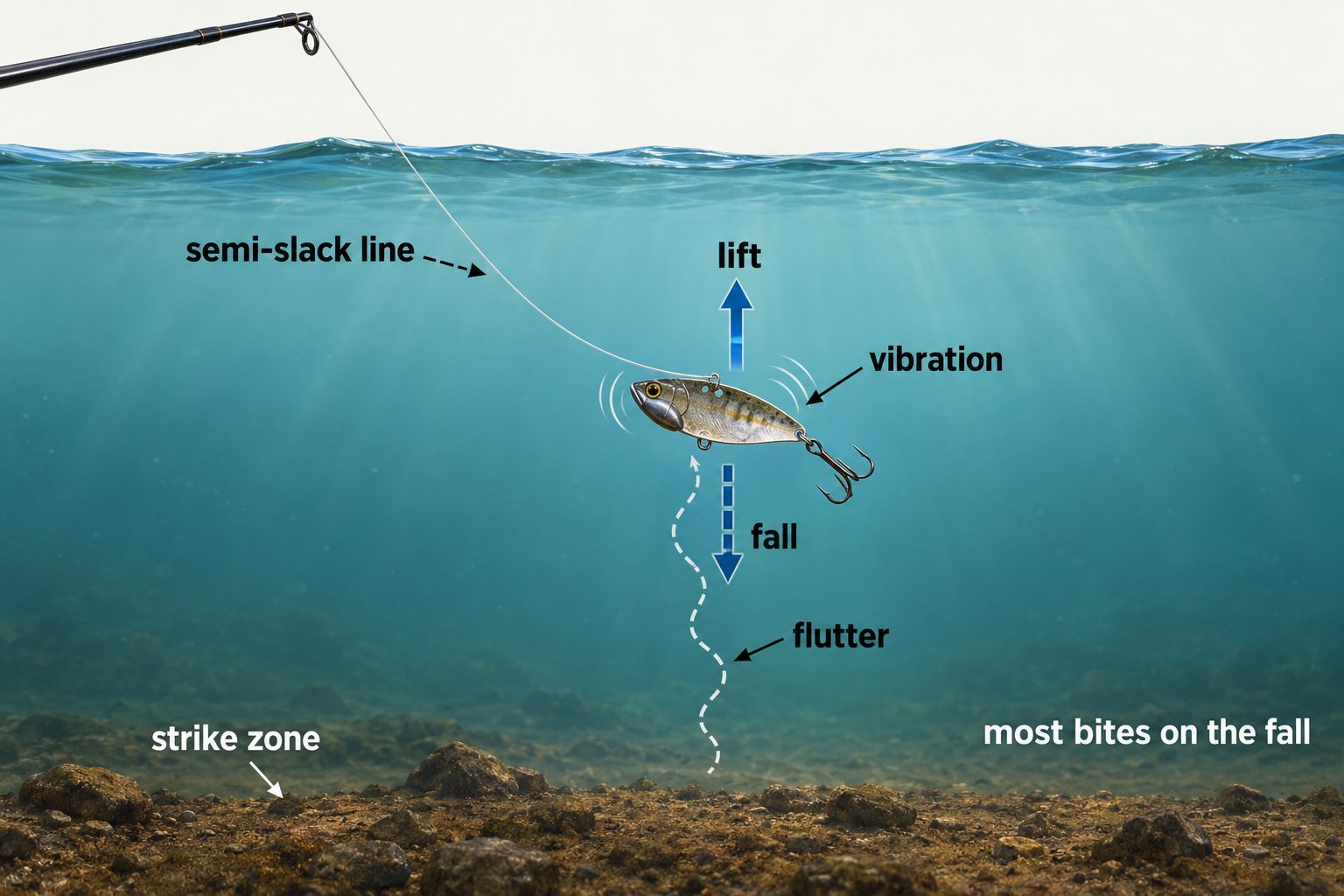
That’s what a blade bait imitates. On the lift it goes tight and fast, throwing off a hard vibration. On the fall it kicks, wobbles, and flashes like a shad giving up. Fish pick up that vibration with their lateral line as much as their eyes, so the bait keeps working in deep water where the light is poor and the water is stained.
The practical takeaway is that the lift height you use should shrink as the water gets colder. A three-foot sweep asks a lethargic fish to swim for its food, which it usually won’t do. A six-inch snap asks it to open its mouth, which it usually will. As your water temperature drops toward 40, think three or four inches of lift and five to ten seconds of pause.
Also expect most of your bites to happen on the fall or during the pause, not on the rip. That’s when the bait does its best dying-baitfish impression, and that’s why the way you handle the descent matters more than the way you handle the lift. More on that below.
When and Where to Fish a Blade Bait
The blade bait’s season runs from the first real cooldown in the fall through ice-up, and then again right after ice-out in spring before the water climbs back above the mid-50s. Fall turnover, when the lake mixes and fish reposition, is another prime window.
Where you fish it depends on what the fish are using:
- Lakes: main-lake humps, rocky points, deep ledges, channel drops, and the flats that sit next to the channel. Anywhere hard bottom meets a depth change.
- Rivers: dam tailraces, creek mouths, deep holes at bends and bridge pilings, rip-rap, wingdams, and slack water or back eddies off the current seam.
- Shallow, and this surprises people: you don’t have to fish deep. Three or four feet of water around a rockpile is a legitimate blade-bait spot, especially for bass in fall.
The reason the bait is worth carrying is precision. You mark fish on sonar at 28 feet, you drop straight down to 28 feet, and you’re fishing. No other lure family delivers a specific depth as cleanly. If you’re not sure how to read structure to find those spots in the first place, our guide on reading a lake for where fish hold covers the fundamentals.
One caution: this is not a search bait. If you want to cover water fast in warm conditions, a lipless crank is the better tool, and our crankbait depth control guide explains why. Blade baits are for fish you’ve found and want to provoke.
Weights, Line, Rod, and Rigging
Pick weight by depth. A quarter-ounce blade covers shallow structure and 10 to 20 feet. Three-eighths to a half-ounce is the everyday workhorse for 15 to 30 feet. Go to three-quarters of an ounce or heavier for deep water and current, where you need the bait down fast and pinned. A simple field rule: if you’re not ticking bottom within about two seconds of the drop, move up a size.
Use the line-tie holes to tune the mood. The forward hole gives a wider, more aggressive vibration for active fish; the middle hole is the balanced starting point; the rear hole tightens the action when fish are finicky or the water is stained.
Rigging mistakes cost more bites here than lure choice does, so get these right:
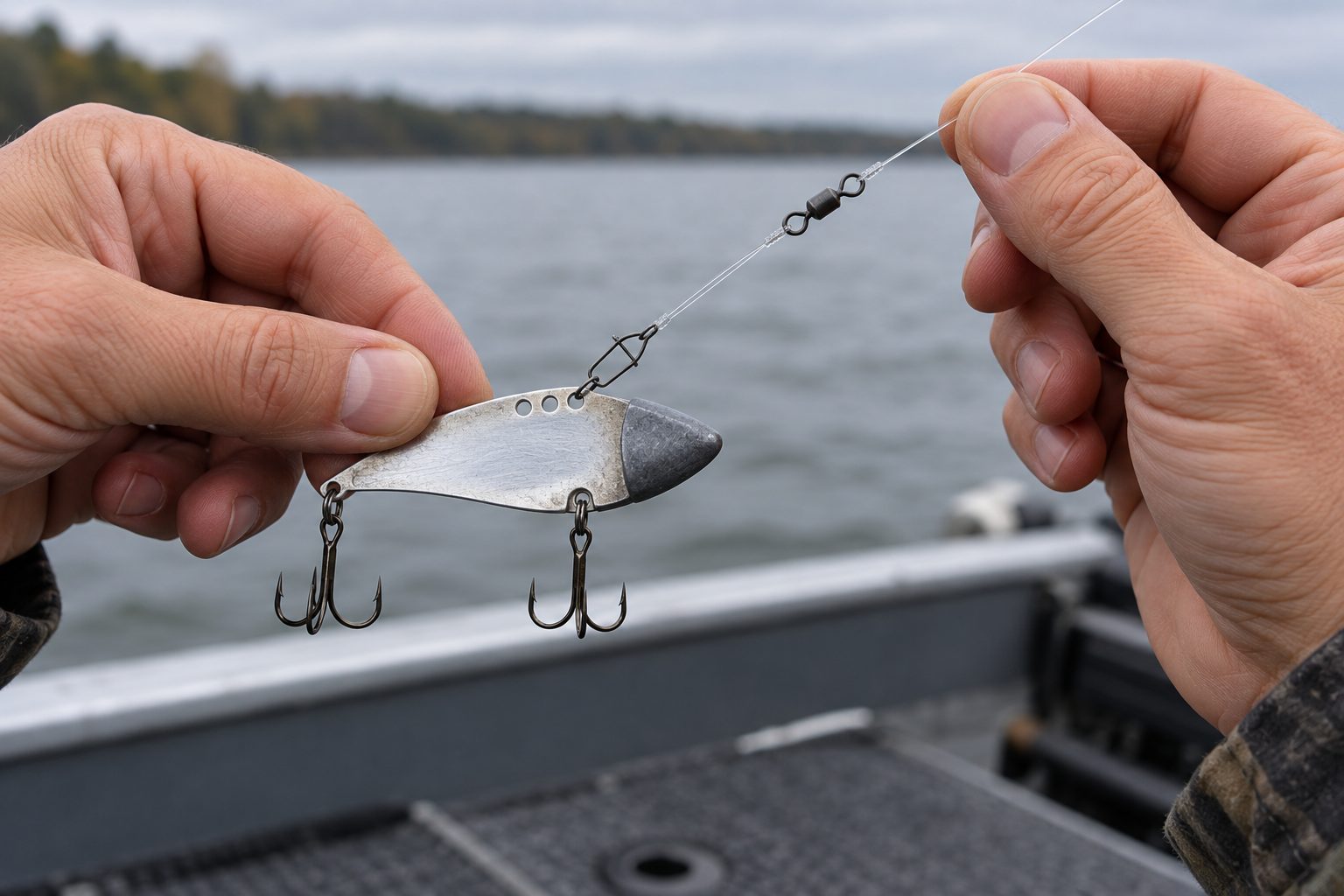
- Never tie directly to the blade. The metal edge cuts your line, and a snug knot dampens the vibration. Use a small duo-lock or crankbait snap — size 2 or 00 is plenty.
- Add a swivel about 15 inches above the bait. Vertical blade fishing twists your line, every time. A quality swivel prevents the mess.
- Swap hooks and clip the front barb. Short-shank trebles on split rings land more fish, and cutting the front hook’s barb reduces snags in rock and wood.
Line is a genuine debate worth understanding. The traditional choice is 8 to 12 pound fluorocarbon or monofilament, on the theory that a little stretch lets the bait flutter freely on the fall and keeps trebles from tearing out on the hookset. No-stretch braid can actually rip the bait away from a short-striking fish. The opposing view comes from deep-water anglers who run 10 to 15 pound braid with a short fluorocarbon leader, because 40 feet down you need the sensitivity to feel a soft bite at all. A practical split: mono or fluoro for shallow and mid-depth work, braid to a fluoro leader when you’re fishing deep. If you want the full breakdown on line materials, our comparison of monofilament, fluorocarbon, and braid goes deeper.
For a rod, use something 6-foot-3 to 7 feet, medium or medium-light power, with a fast tip, in a spinning setup. You need enough tip to feel the vibration and enough backbone to drive the hooks, but a rod so stiff that it never loads will pull hooks out of cold, barely-hooked fish. Keep your strokes in the wrist — if your elbow leaves your side, the stroke is too big.
Vertical Jigging: The Classic Cold-Water Method
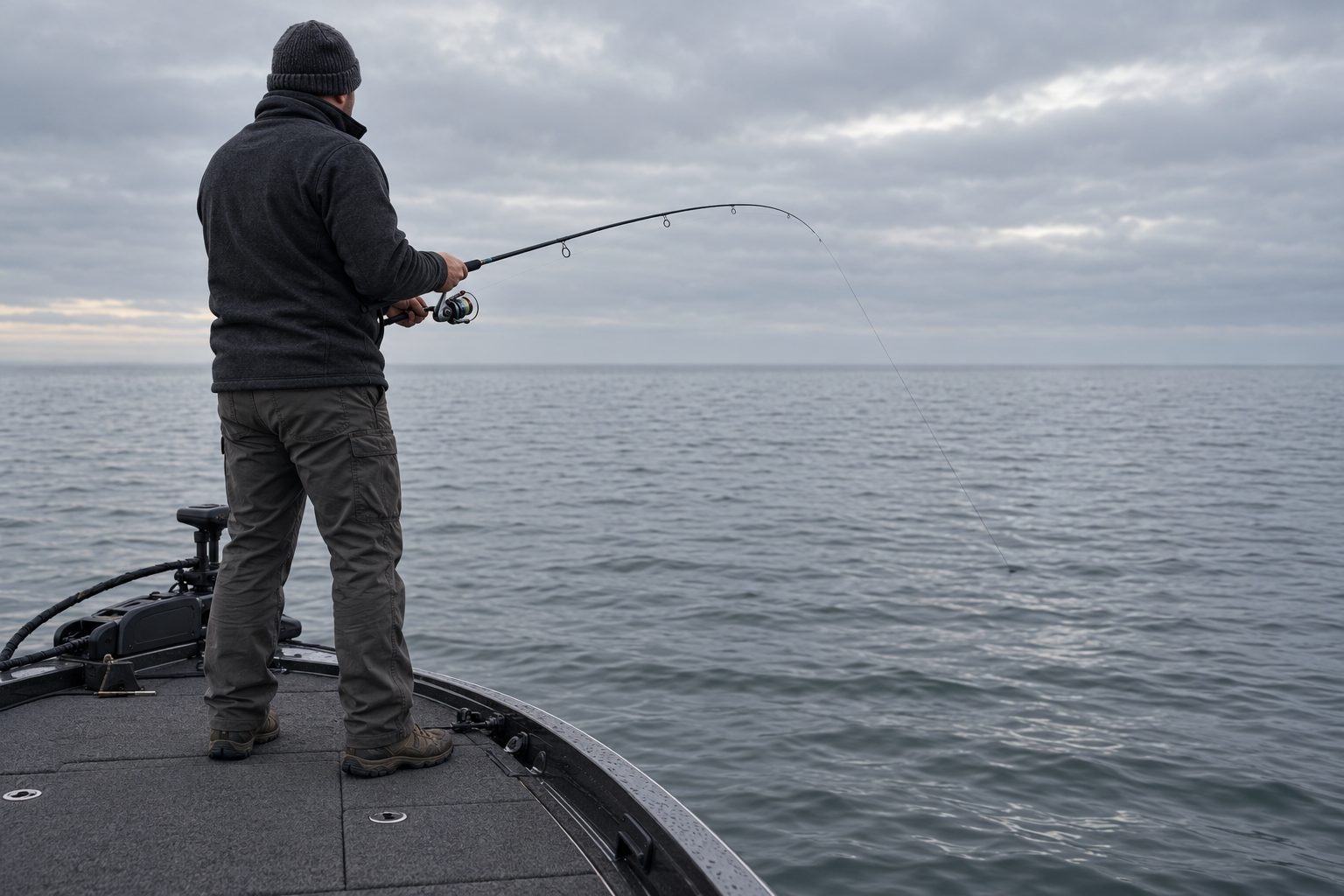
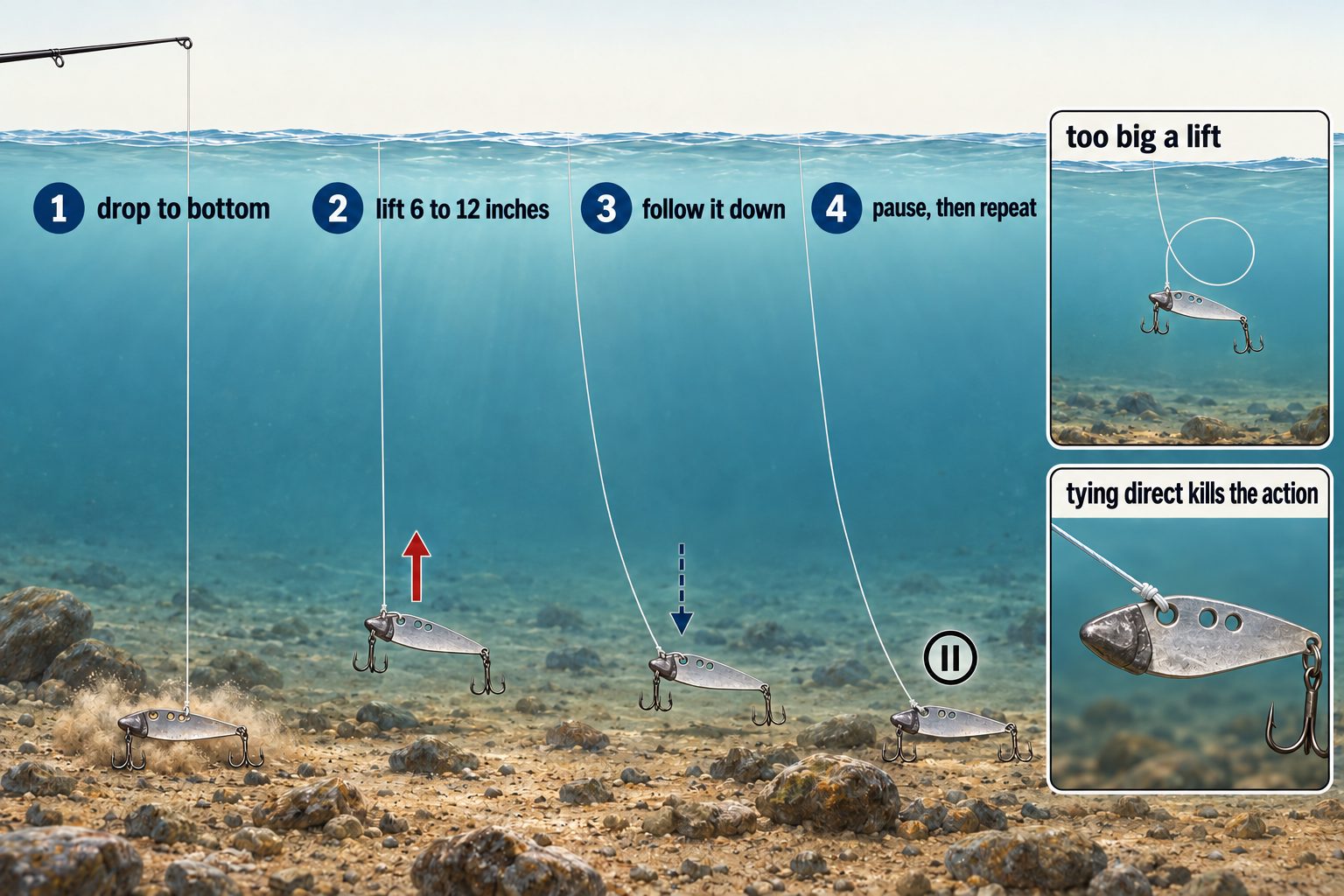
This is what the bait was made for. Position the boat over the structure or over fish you’ve marked, then run the same cycle over and over:
- Drop to bottom. Let the blade free-fall down, then take up slack until the line is just taut.
- Lift 6 to 12 inches. A sharp snap of the rod tip, not a sweeping lift. You should feel the bait buzz.
- Follow it down. Lower the rod tip and track the bait down on a semi-slack line. Not full slack — full slack kills the flutter and hides the strike.
- Pause, then repeat. Let it sit, then lift again. Touch bottom every five cycles or so to confirm you’re still in the zone.
The semi-slack descent is the part most people get wrong, and it’s the single biggest difference between anglers who catch fish on blades and anglers who don’t. If your line goes completely slack, you’ve lost contact. If it’s guitar-string tight, the bait can’t flutter. Follow it down.
Cadence changes by species. Walleye generally want a slower lift with a longer pause. Smallmouth tend to respond to a quicker, more aggressive lift-drop. Start slow and speed up until the fish answer.
Casting a Blade Bait: Cover Water, Find Fish
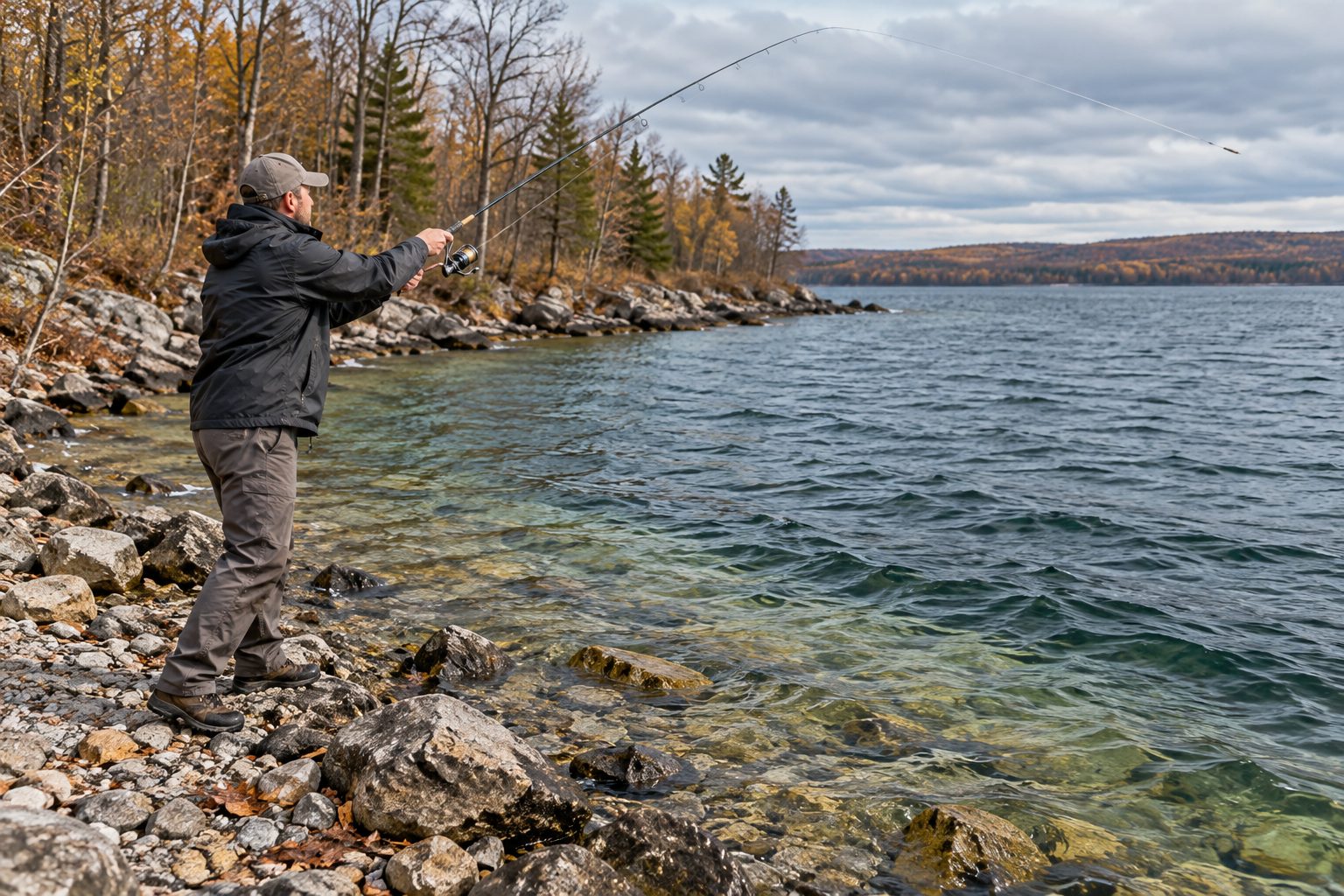
The second presentation solves the opposite problem. When fish are scattered over a flat or spread along a break instead of stacked under the boat, cast the blade out, let it sink — count it down if you know the depth — and work it back with the same lift-drop rhythm, letting it re-contact bottom on each cycle.
Pros vary the retrieve more than you’d expect. Some use short two-to-three-foot pops. Some use a slow, steady lift-and-drop. Some reel it back nearly straight like a spinnerbait with an occasional snap. Some pull long from nine o’clock to twelve and then pause. The constant across all of them is that the bait keeps getting back to the bottom. Cover water, but don’t skip the descent.
Two details that matter when casting:
- Blades are heavy and fall fast. Start moving the bait the moment it lands, or you’ll spend the day re-tying.
- When the bait reaches the boat, stop and jig it vertically for a few strokes. Followers often commit the instant the action changes.
Reading the Bite
Because the bait is constantly moving and the fish are often barely hooked, you need to know what a strike feels like. Four signals are common:
- A tick through the rod.
- The line jumping or going visibly slack.
- The bait suddenly feeling heavy.
- Resistance when you go to lift — the vibration stops because something is holding it.
On any of those, sweep the rod upward and set the hook. That last one is worth repeating: if you’re mid-lift and the buzz dies, the bait is in a fish’s mouth. Many cold-water anglers think of the cadence itself as the hookset, because the strike usually happens as the bait is falling away and the fish simply is or isn’t there on the next stroke.
Keep your hands clear of the free-swinging trebles near the surface, and use a net once a fish is at the boat.
Mistakes, Colors, and Simple Tweaks
The mistakes that cost the most fish are the ones already mentioned, gathered in one place:
- Lifting too high. Big sweeps put slack in the line and ask a cold fish to travel.
- Letting the bait drop on full slack line.
- Tying directly to the line-tie hole.
- Burning it back to the boat like a crankbait.
- Using no-stretch braid for shallow work and ripping the hooks free.
Color is simpler than the tackle aisle suggests. Silver and chrome for clear water and bright skies; gold, chartreuse, or white when the water is stained or the light is low; perch patterns when walleye are eating juvenile perch. Move the snap between line-tie holes to change the vibration before you change colors. A small black dot marked on the nose can also give fish a head-first target to strike at.
The Short Version
A blade bait is one small, heavy piece of metal that does two things well: it drops to an exact depth fast, and it vibrates hard enough on the lift to make a lethargic fish react. Fish it vertically under the boat when fish are stacked on deep structure, or cast it along a bank when they’re spread out. Either way, the bite is in the drop — lift less and pause longer as the water gets colder, and keep the line semi-slack so the bait can flutter.
That’s the whole technique. It just takes a trip or two of short lifts and long pauses before the cadence feels natural.