
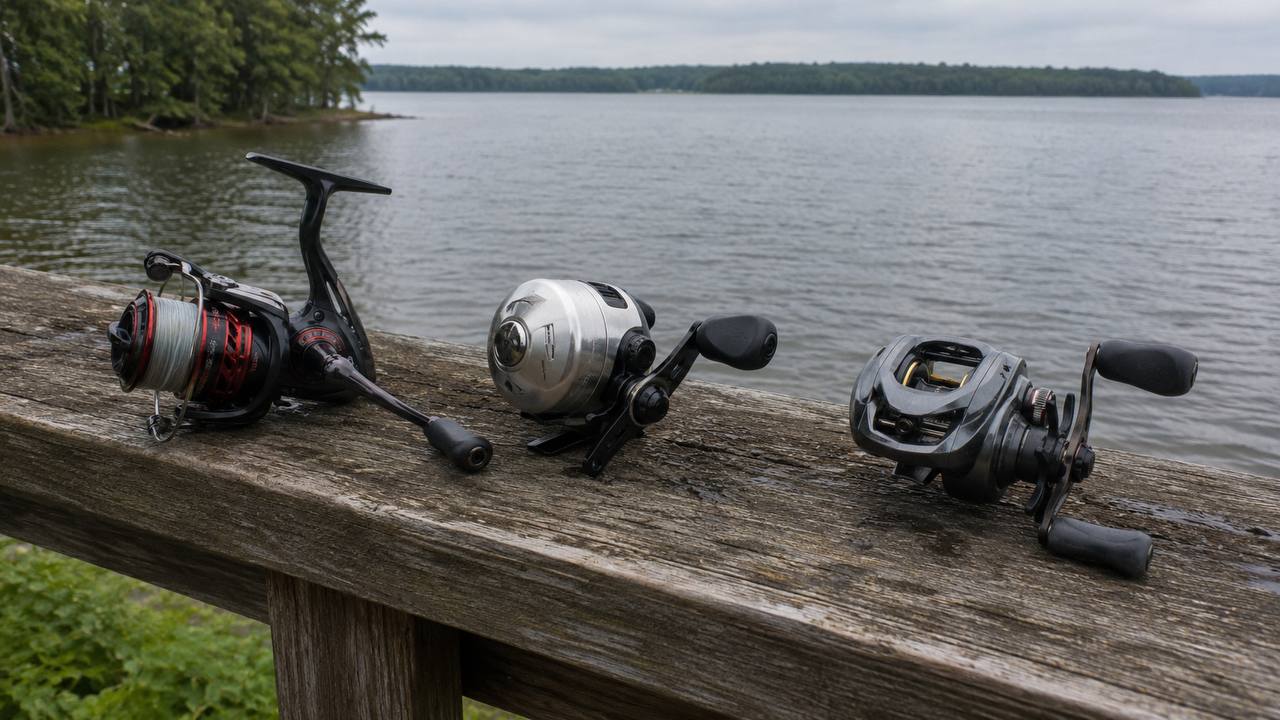
You’ve probably heard that the rod doesn’t matter as much as the reel — and that’s true. A great rod paired with a cheap, poorly-built reel will still feel stiff, tangle constantly, and snap your line when the first decent-sized fish pulls hard. The reel is the mechanical heart of your setup: it stores your line, controls drag when a fish runs, and determines how much power you have when cranking a fish in.
Most beginners spend their budget on the rod and grab the cheapest reel available. That’s backward. You don’t need an expensive reel — you need the right type for the fishing you actually plan to do.
By the end of this guide, you’ll know which reel type fits your situation, what the numbers on the box actually mean, and how to pair your reel with a rod without overthinking it.
The Three Main Types of Fishing Reels
There are three reel types you’ll encounter at any sporting goods store or online shop. Each one works differently, suits different fishing styles, and has a different learning curve.
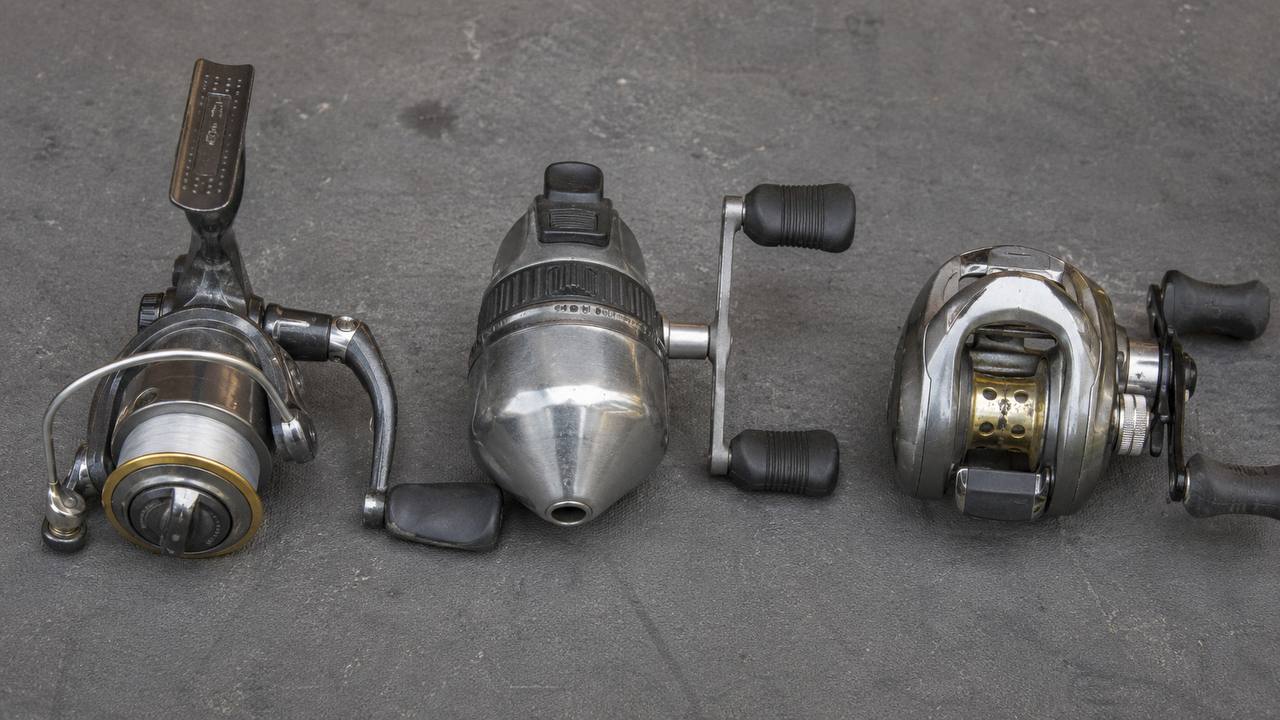
Spinning reels hang below the rod handle and use a fixed spool. They’re the most versatile option and the best all-around choice for beginners who are serious about learning to fish.
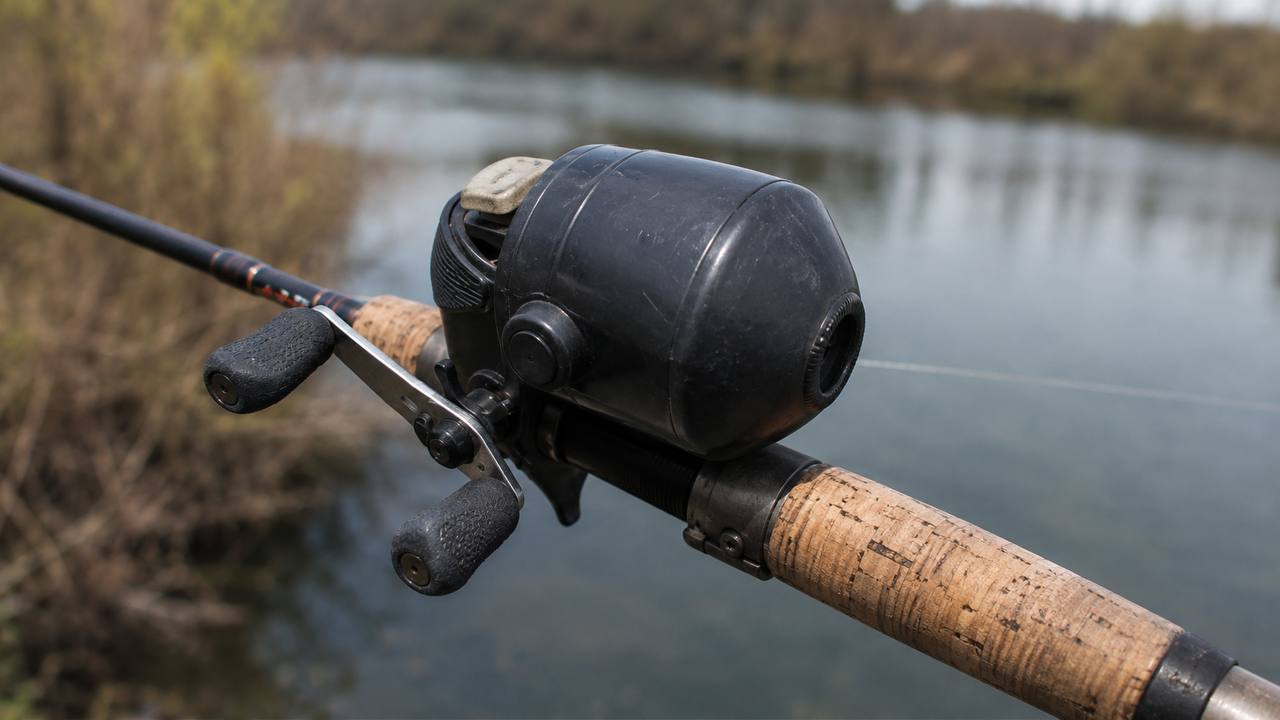
Spincast reels have a fully enclosed spool behind a protective nose cone. You press a thumb button, swing the rod, and release. They’re the easiest reel to use — almost tangle-free — but they’re limited in drag capacity and casting distance.
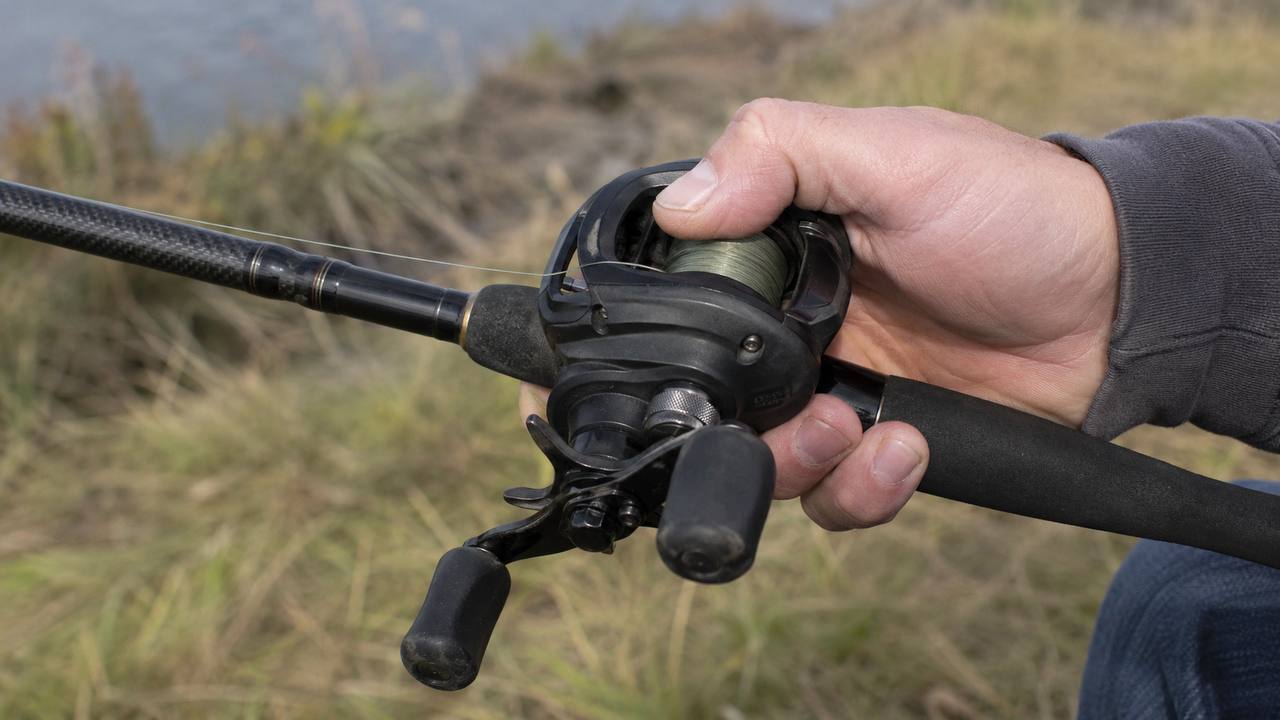
Baitcasting reels sit on top of the rod and use a revolving spool. They offer the most accuracy and power, but they have a steep learning curve. “Bird’s nests” — tangled line caused by the spool spinning faster than your lure is flying — are extremely common for new anglers.
| Reel Type | Difficulty | Best For | Typical Price |
|---|---|---|---|
| Spinning | Moderate | Most freshwater fishing | $25–80 |
| Spincast | Easiest | Absolute beginners, kids, panfish | $20–50 |
| Baitcasting | Hardest | Precision casting, heavy lures, bass | $30–120 |
Spinning Reels — The Best All-Around Choice
If you’re buying your first reel and you’re reasonably serious about fishing, a spinning reel is typically the right answer.
How a spinning reel works
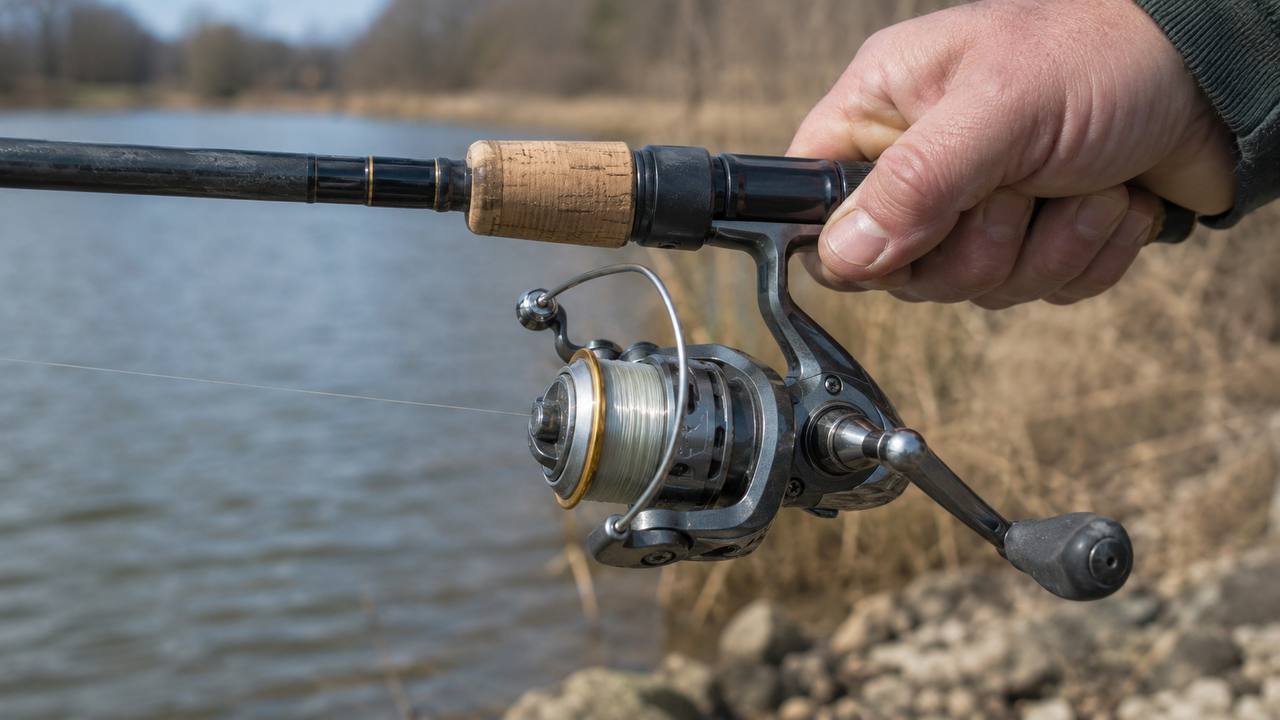
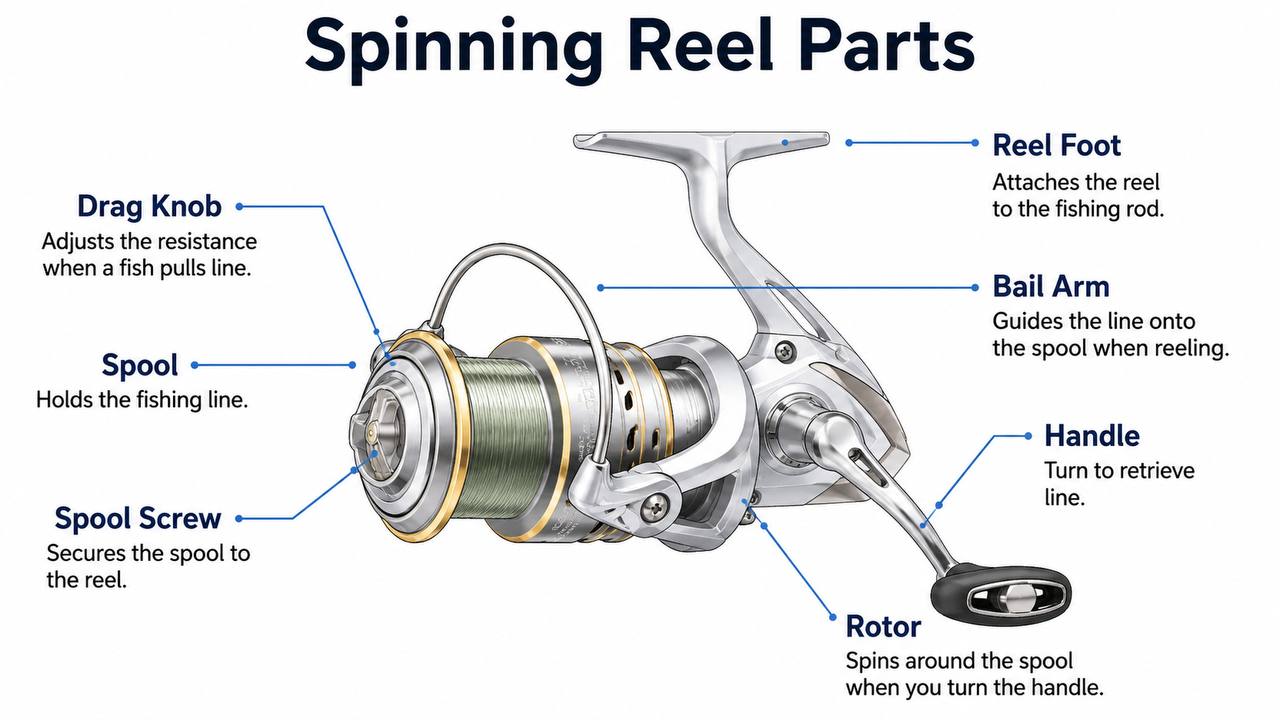
The spool sits fixed in place and doesn’t rotate during the cast. Instead, a wire bail arm flips open and rotates around the spool, guiding the line off as you retrieve. Think of it like a clothesline: the spool is the pole, and the bail is the rotating arm that guides the line on and off.
This design is forgiving. Light lures cast easily, the mechanics are simple, and you won’t spend your first afternoon untangling backlashes.
Spinning reel sizing
Spinning reels use a thousand-series numbering system: 1000, 2000, 2500, 3000, 4000, and so on. The number roughly corresponds to the reel’s size and line capacity — a higher number means a larger spool, more line capacity, and a heavier reel.
For most freshwater fishing — bass, trout, panfish, catfish — a 2000 or 3000 size is the sweet spot. It handles 6–12 lb test line comfortably, which covers the vast majority of situations a beginner will encounter.
What to look for on the spool
The spool label tells you the line capacity. You’ll see something like “10 lb / 170 yds,” which means the spool holds 170 yards of 10 lb test line. You don’t need to fill the spool completely — having 100–200 yards of line is more than enough for freshwater fishing.
Price guide
- Budget ($25–40): Shimano Sienna is the go-to budget spinning reel. It’s not fancy, but it casts smoothly and the drag works reliably.
- Mid-range ($40–80): Shimano Stradic FL, Daiwa Ninja, or Shimano Sedona step up in bearing quality and drag smoothness. Worth it if you plan to fish regularly.
Spincast Reels — Easiest for Absolute Beginners
Spincast reels get dismissed by experienced anglers, but they have a legitimate place — especially for very new anglers and kids.
How a spincast reel works
The spool is completely enclosed behind a protective nose cone at the front of the reel. There’s no bail arm to flip. To cast, you press a thumb button on top of the nose cone, swing the rod forward, and release. The button disengages a line trap inside the nose cone, letting line flow freely. When you start reeling, the trap closes again.
This design practically eliminates the major tangles that plague other reel types. You won’t get bird’s nests, and wind knots are rare.
Where spincast reels fall short
The trade-off for simplicity is capability. Spincast reels typically max out at 3–6 lb of drag, which means anything larger than a decent-sized bass or catfish can run you out of line if you don’t manage the drag carefully. Casting distance is shorter than spinning reels, and the enclosed nose cone can develop mechanical issues over time — the push-button mechanism wears out, and line can get caught inside the nose cone.
Who should actually use one
- Kids learning to fish for the first time
- Casual pond fishing for panfish or small bass
- Situations where you want the simplest possible experience
- Anglers with limited hand strength or dexterity
Zebco dominates the spincast market — they invented the push-button design. The Zebco 33 and Zebco 404 are the models you’ll see everywhere, and they’re reliable for what they are.
Baitcasting Reels — Not for Day One
Baitcasting reels deliver the best performance of any reel type — but they demand practice before you’ll cast successfully more often than you’ll create a tangled mess.
How a baitcasting reel works
The reel sits on top of the rod, flush with the reel seat. During the cast, the spool rotates and releases line. Your thumb rests on the spool and controls how fast it spins. This direct contact gives you excellent casting accuracy and power — you can place lures precisely and fight fish with direct line contact, no guides or bail arm in the way.
The bird’s nest problem
When the spool spins faster than your lure is traveling through the air, the excess line loops back onto the spool and creates a tangled mess called a “bird’s nest” or “backlash.” This happens constantly for beginners. It’s frustrating, time-consuming to fix, and it happens at the worst possible moments.
Brake systems that help
Modern baitcasting reels include brake systems designed to prevent overruns:
- Magnetic brakes use magnets positioned near the spool to create resistance through magnetic force. They’re beginner-friendly because you set a dial to a level and forget about it. Start at 50% or higher and work down as you get comfortable.
- Centrifugal brakes use friction pins or shoes inside the reel that push outward as the spool spins faster, creating mechanical resistance. They’re effective but require more tuning — you adjust individual knobs for different lure weights.
Many modern reels combine both systems for maximum overrun protection.
Should a beginner buy one?
Not as your first reel. If you’re committed to bass fishing with heavier lures — buzzbaits, jigs, worms — a baitcasting reel is worth learning eventually. Start with a spinning reel, get comfortable with casting and fishing, then transition when you’re ready for the challenge.
Drag, Gear Ratio, and What Those Numbers Mean
Reel boxes are covered in specifications. Here’s what the ones that actually matter mean.
The drag system
The drag is an adjustable friction system inside the reel. When a fish pulls harder than the drag setting allows, the drag releases line instead of your line snapping. Think of it as a circuit breaker for your fishing line.
How to set it: A good starting point is 20–30% of your line’s breaking strength. If you’re using 10 lb test, set the drag so it releases at roughly 2–3 lb of pull. You can test this with a bathroom scale or a fish scale — pull on the line while the reel is free-spooling and note when the drag starts to give.
The beginner mistake: Setting the drag too tight is the most common error. It feels secure, but the first hard run from a fish will snap your line. Setting it too loose means you’ll never tire the fish. Find the middle ground.
Gear ratio
The gear ratio tells you how many times the spool turns for each full rotation of the handle. A 5.2:1 ratio means the spool turns 5.2 times per crank.
- Low gear ratio (5.0:1 – 5.5:1): More cranking power, slower line retrieval. Better for trolling or working heavy lures slowly.
- Standard ratio (5.5:1 – 6.4:1): All-purpose. Most reels fall here.
- High gear ratio (7.0:1+): Fast line pickup, less cranking power. Useful for techniques that require quickly retrieving slack line.
Honest advice: don’t overthink gear ratios as a beginner. Most reels are in the 5.0–6.5:1 range, and the difference won’t meaningfully change your fishing in the first year.
Line capacity
The line capacity is printed on the spool and shows how much line of various test weights the reel holds. For example, “8 lb / 150 yds — 12 lb / 110 yds” means 150 yards of 8 lb test or 110 yards of 12 lb test.
You typically want a reel that holds at least 100 yards of your target line weight. Anything less and you’ll run out of line faster than you’d like.
Sealed drag
Some higher-end reels feature a “sealed” drag system, where the drag washers are enclosed to keep out dirt, sand, and saltwater. This is worth paying for if you fish saltwater regularly. For freshwater beginners, it’s a nice-to-have but not essential.
How to Match Your Reel to Your Rod
Reels and rods are designed as pairs. An oversized reel on a light rod makes the combo feel top-heavy and awkward. A reel that’s too small for a heavy rod compromises casting and retrieving performance.
Check the rod’s specifications. Most rods list the recommended reel size range on the blank or in the product specs. You’ll see something like “Reel: 2000–4000” or “Reel: Medium.” Match your reel to that range.
General pairing guide:
| Rod Power | Recommended Reel Size |
|---|---|
| Light | 1000 – 2500 |
| Medium-Light | 2000 – 3000 |
| Medium | 2500 – 4000 |
| Medium-Heavy | 3000 – 5000 |
If you’re buying a reel to pair with a rod you already own, check the rod specs first. If you’re buying both at the same time, start with the rod type you need for your target species, then select a reel that matches. See our guide to choosing a fishing rod and reel combo for the full breakdown on pairing rods and reels.
Quick-Start Recommendations
Not sure which reel to pick? Here are straightforward recommendations based on your situation:
- Buying your first reel, no experience: Spincast (Zebco 404, around $25) if you want the simplest experience, or a spinning reel (Shimano Sienna 2000, around $35) if you’re willing to learn proper casting technique. See our guide to casting a fishing rod for the basics.
- Already own a spinning rod: Buy a spinning reel that matches your rod’s recommended size range.
- Fishing primarily for bass with heavier lures: Start with a spinning reel now, plan to upgrade to baitcasting after you’re comfortable.
- Fishing with kids: Spincast. The simplicity is worth it.
- Budget under $30: Spincast. Under $50: you can get a solid spinning reel.
- Choosing line for your new reel: See our guide to monofilament vs. fluorocarbon vs. braided line for help picking the right line to pair with your reel.
There’s no single “best” reel for every beginner. The right choice depends on what you’re fishing for, what you’re comfortable learning, and how much you want to spend. A $35 spinning reel will outperform a $150 baitcasting reel for a new angler — because you’ll actually cast with it successfully.