
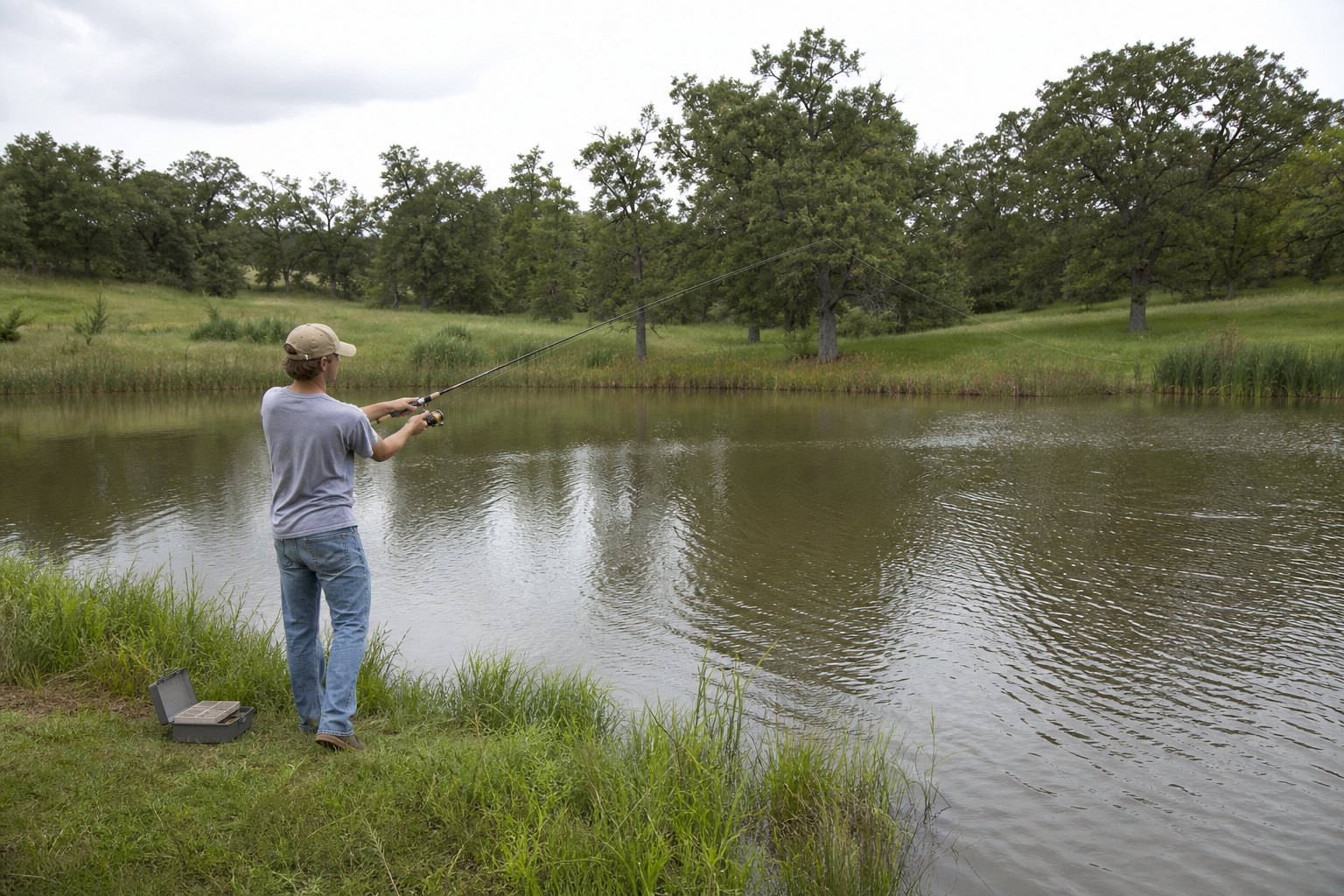
Bluegill — The Best First Fish for Any Beginner Angler
If there’s one fish that should be every beginner’s first target, it’s the bluegill. This small sunfish is the species that taught most American anglers how to fish, and there’s nothing about that that’s an accident.
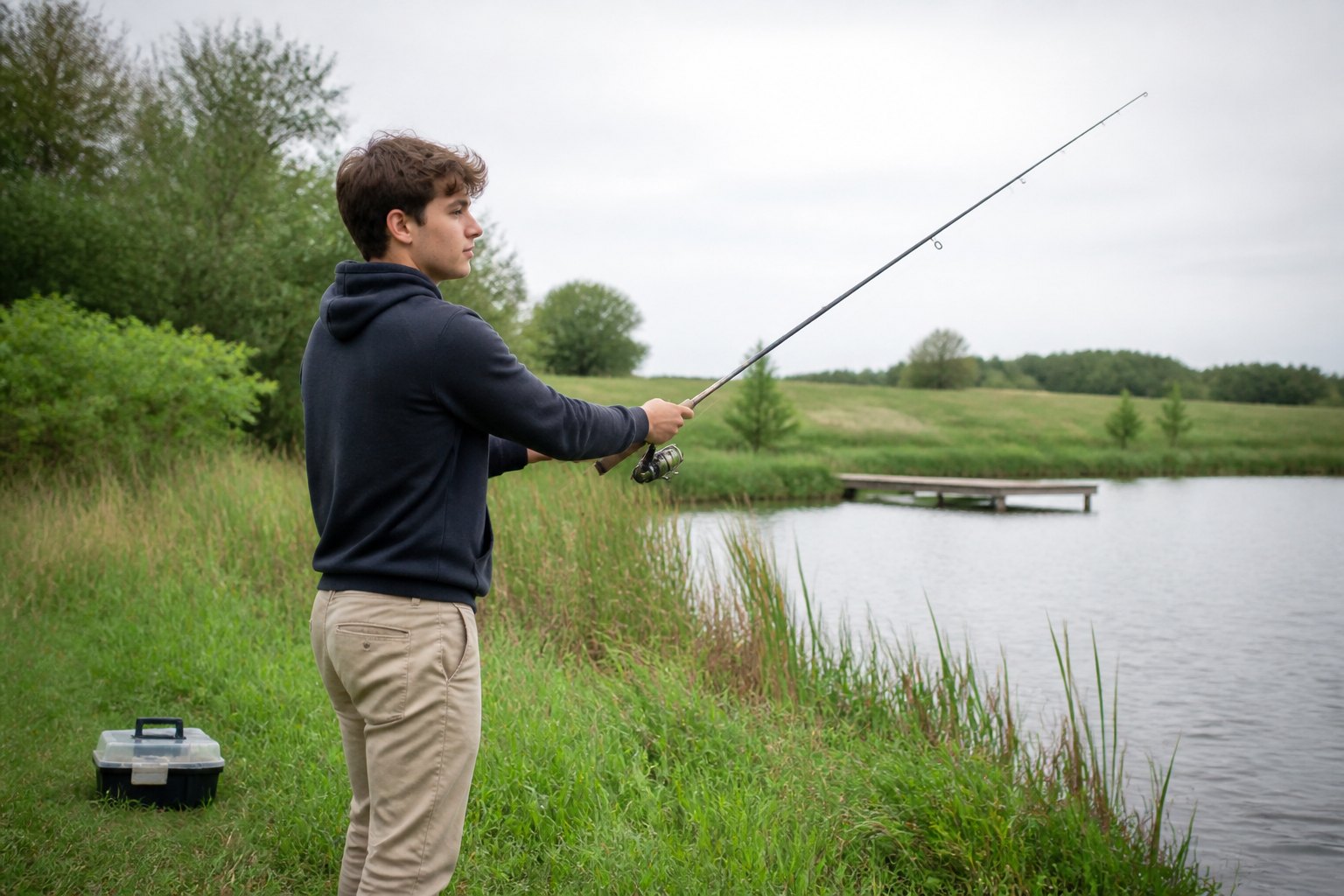
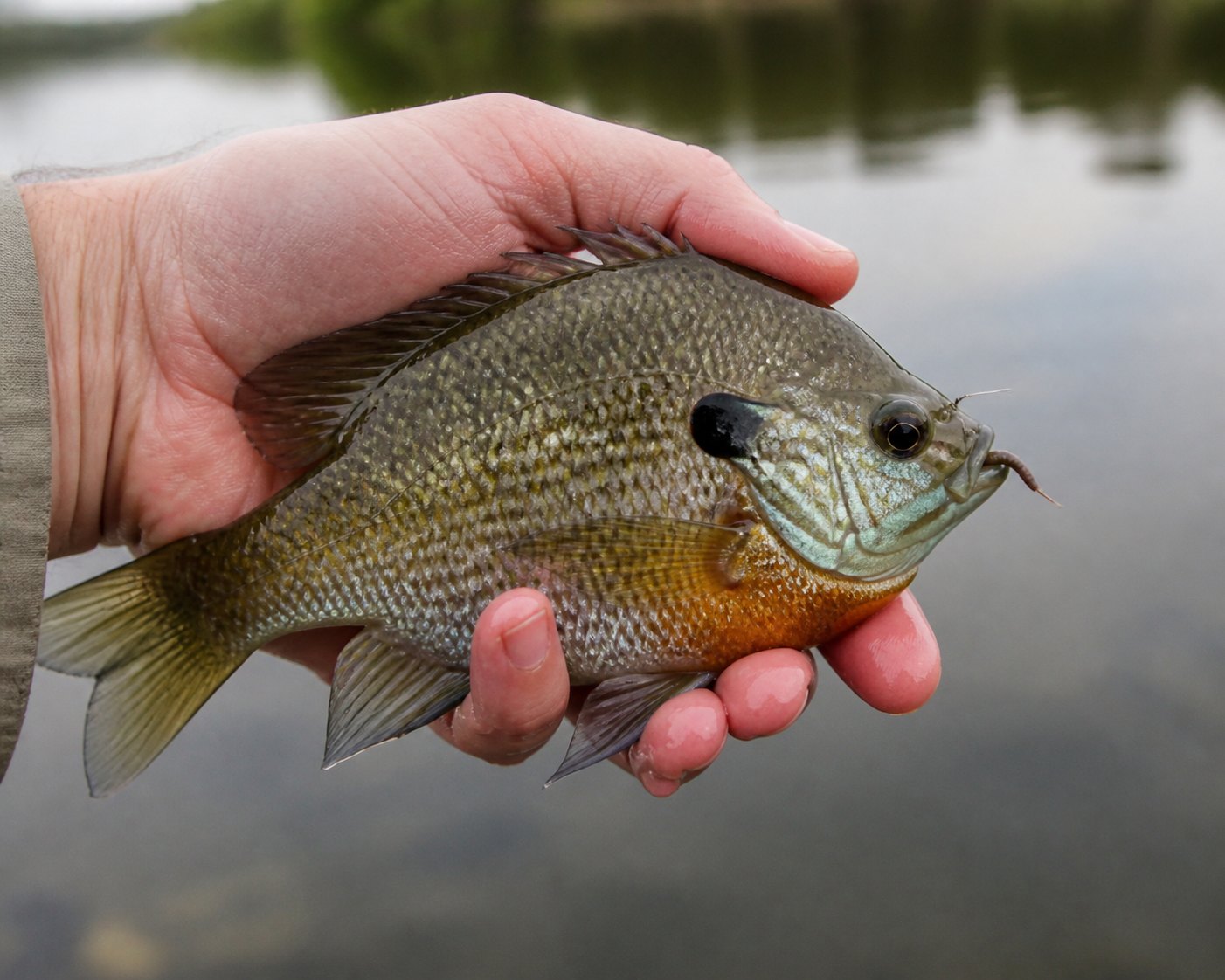
Bluegill are found in almost every pond, lake, and slow-moving stream across North America. They’re small — typically 4 to 10 inches — but they bite aggressively and put up a surprisingly fun fight on light tackle. You’ll often find them in schools near shallow cover like docks, weed edges, lily pads, and fallen trees.
What makes bluegill so beginner-friendly is their forgiving appetite. They’ll eat worms, crickets, small jigs, and even tiny artificial lures. The most effective technique for a beginner is dead simple: tie a worm on a small hook, clip a bobber to your line a couple of feet above the bait, cast near cover, and watch the bobber. When it dips or moves sideways, you’ve got a bite.
If you’ve never used a bobber before, our beginner’s guide to using a bobber breaks down exactly how this simple tool works. It’s one of the easiest pieces of gear to learn with, and it’ll help you catch bluegill, crappie, and even bass.
The beauty of fishing for bluegill is the success rate. A new angler can cast a worm near a dock and catch their first fish within minutes. That immediate feedback — hooking a fish, feeling it tug on the line, landing your first catch — is exactly what fishing should feel like on day one.
Largemouth Bass — The Most Popular Beginner Target
Once you’ve caught a bluegill and want something that puts up a bigger fight, largemouth bass are the natural next step. Bass are the most popular game fish in North America, and you’ll find them in ponds, lakes, and slow rivers across the country.
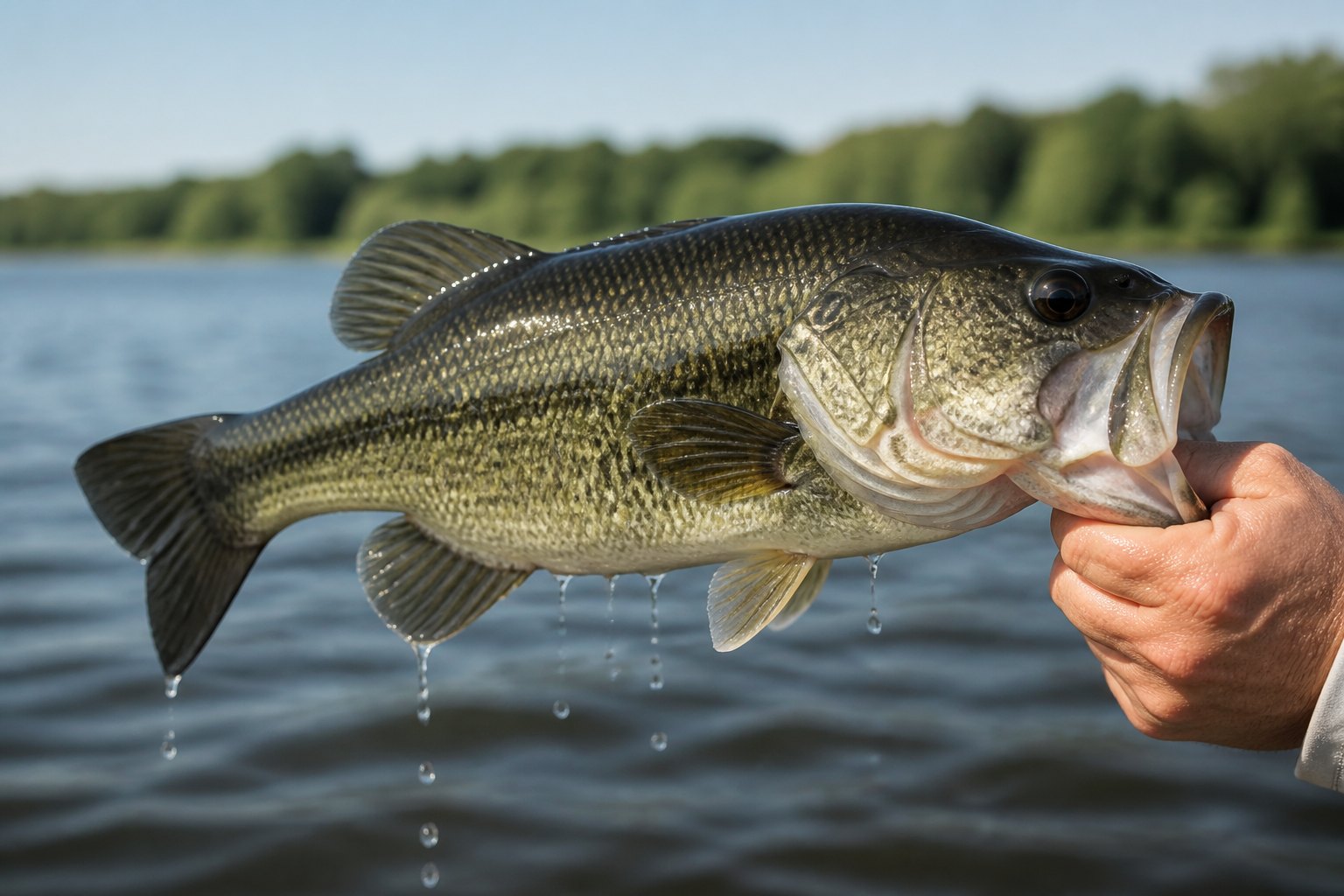
Largemouth bass are ambush predators. They don’t cruise around looking for food — they hide and wait. That means they’re always near cover: underwater vegetation, brush piles, fallen trees, rock piles, and docks. If you cast near one of these structures, you’re casting right where a bass is probably hiding.
For beginners, the easiest bass bait is a Texas-rigged soft plastic worm. It’s a simple setup that rarely gets hung up on cover (which is exactly where bass hide), and it works in almost any body of water. If soft plastics aren’t your style, this beginner’s guide to choosing lures walks through the most effective options for different situations.
Bass tend to be more active in warmer water and in shallower areas during early morning and late afternoon. Cast near the cover you can see from the bank, let your bait drift naturally, and wait for that distinctive bass strike — usually a solid thump that tells you something’s on the other end.
A typical beginner-catch bass runs 12 to 20 inches. You’ll want a medium spinning rod and 8 to 14-pound test line for bass. That’s a bit heavier than what you’d use for bluegill, but still very beginner-friendly.
Crappie — The Schooling Fish That Turns One Cast Into Multiple Catches
Crappie are the species that makes fishing feel like a numbers game. Unlike bass, which you’ll often catch one at a time, crappie tend to hang out in schools near underwater structure. Find the school, and you can catch multiple fish from a single spot.
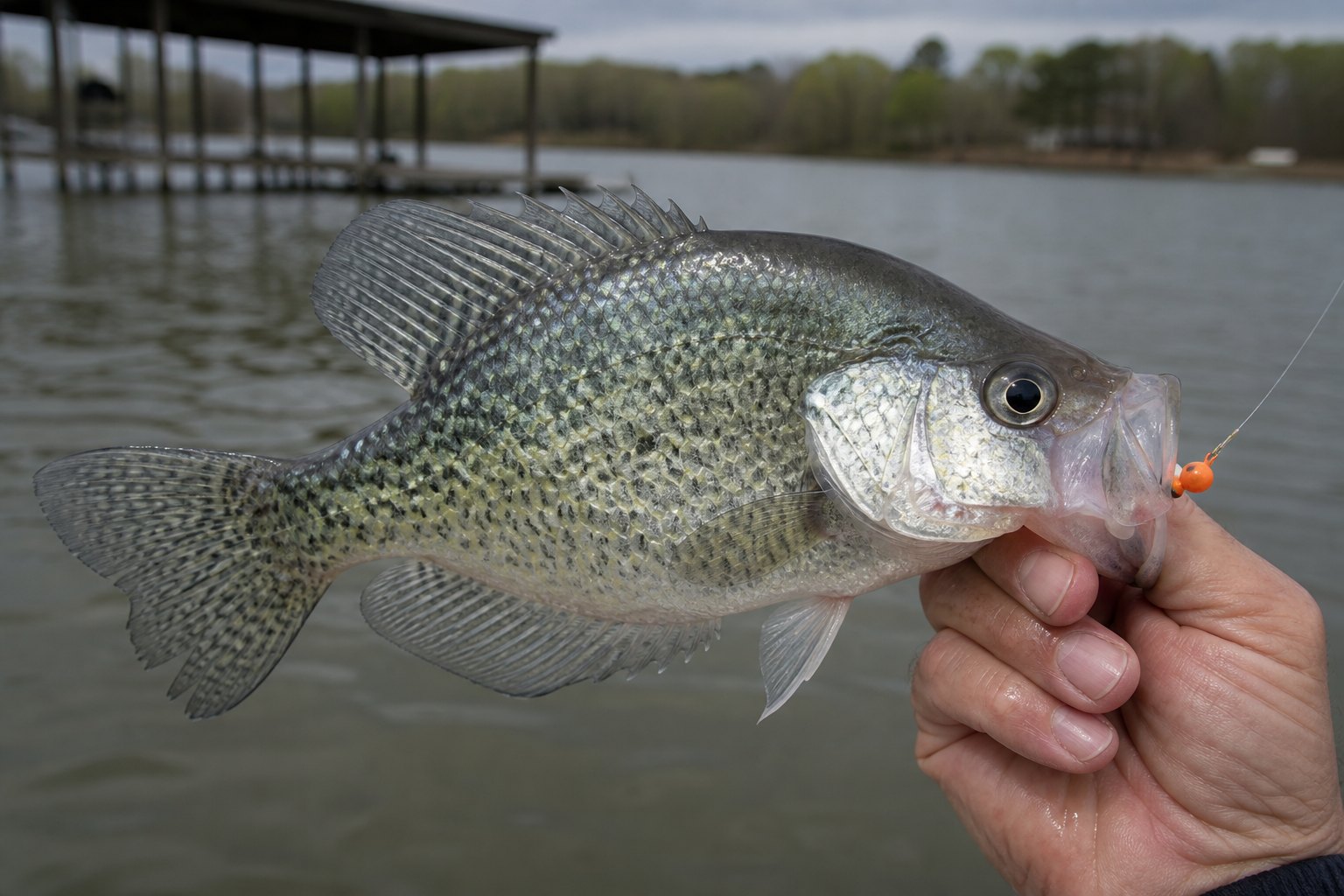
There are two main types: black crappie and white crappie. Both look similar — silvery bodies with dark mottling, large eyes, and a slightly compressed (flat-sided) shape. They grow to about 8 to 12 inches, which is a good size for a beginner to handle.
Crappie are structure-oriented fish. They hang tight to submerged trees, stumps, brush piles, boat docks, and weed lines. If you’re fishing from a boat, you can see these structures with a fish finder. From the bank, look for docks, fallen trees, or weed beds extending into the water.
The best bait for crappie is a live minnow on a small jig. Worms and crickets also work well. Artificial options include small soft plastic baits and tiny jigs in bright colors — orange, white, and chartreuse tend to draw attention in murky water.
If you’re trying to find fishing spots near you, look for public ponds or lakes with docks, boat ramps, or known weed beds. These spots almost always have crappie hanging around.
Catfish — The Most Forgiving Beginner Fish
When other fish aren’t biting, catfish will still eat. That’s why they’re the ultimate beginner backup — and honestly, some of the best beginner fish you can target period.
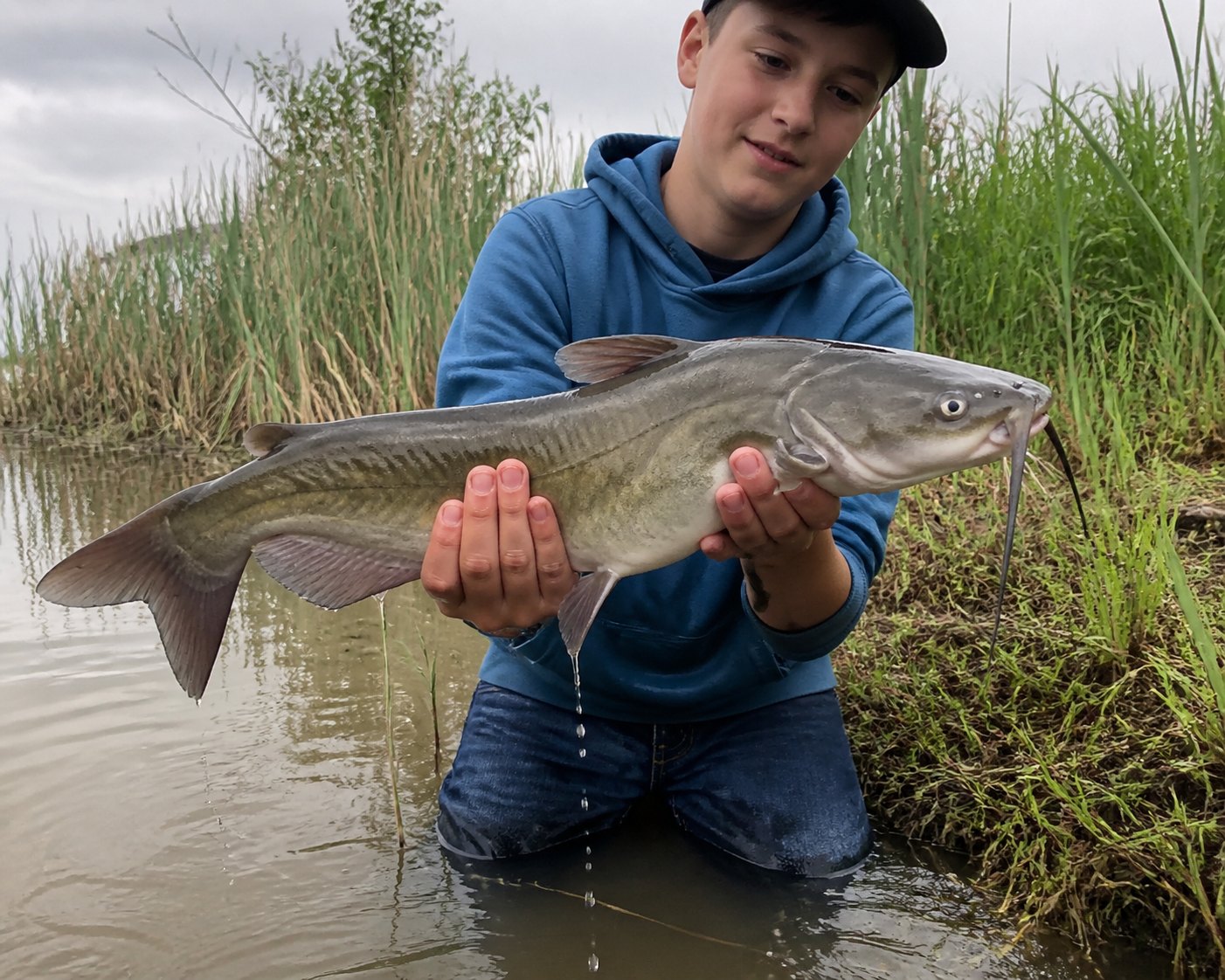
Channel catfish are found in lakes, ponds, and rivers throughout most of the United States. They’re bottom-feeders, which means you fish them differently than the species above. Instead of casting and retrieving, you drop your bait to the bottom and wait.
The bait situation for catfish is almost comically easy. Nightcrawlers are the go-to bait and they work almost everywhere. But catfish will also eat cut bait (chunks of fish), chicken liver, and even chicken breast strips straight from the grocery store. You don’t need to go to a bait shop — your kitchen might have what you need.
Channel catfish typically range from 8 to 20 inches when caught from shore, though they can grow much larger in bigger bodies of water. The fight they put up is satisfying — they don’t jump or dart like bass, but they do pull hard and steadily, which is fun on light tackle.
For fishing catfish, you’ll want a medium rod, 10 to 20-pound line, and a simple bottom-fishing rig: a slip sinker, a swivel, and a hook. Drop the bait to the bottom, set the rod in a holder, and watch for a bend in the rod or a tug on the line. If you need help understanding what to put in your first tackle box, that article covers all the basics including sinkers, hooks, and swivels.
Catfish are most active at night and during warmer weather, so evening trips from shore are often the most productive.
Perch and Sunfish — Honorable Mentions
Yellow perch are another excellent beginner fish in northern and mid-state lakes. They bite consistently on small bait, often in schools, and they taste great. They’re caught with the same ultralight gear you’d use for bluegill, so if you’re set up for panfish, you’re set up for perch too.
Other sunfish species — redear sunfish, pumpkinseed, and green sunfish — behave very similarly to bluegill and can usually be caught with the same techniques. Green sunfish can grow larger than bluegill (10 to 12 inches or more), which makes them a slightly bigger challenge while still being very beginner-friendly.
Quick Comparison — Which Beginner Fish Should You Target First?
Here’s a simple breakdown to help you decide what to target based on your situation:
| Species | Ease of Catch | Best Bait | Typical Size | Best Gear |
|---|---|---|---|---|
| Bluegill | Easiest | Worms on bobber | 4-10 inches | Ultralight rod |
| Largemouth Bass | Easy-Medium | Soft plastic worms | 12-20 inches | Medium spinning rod |
| Crappie | Easy | Live minnows on jig | 8-12 inches | Light rod |
| Channel Catfish | Easiest | Worms, chicken liver | 8-20 inches | Medium rod, bottom rig |
| Perch | Easy | Worms, small jigs | 6-10 inches | Ultralight rod |
Want the easiest catch possible? Start with bluegill or catfish. Either will get you on the board in minutes.
Want the most exciting fight? Go for bass near cover. The strike is satisfying and the fight is memorable.
Want to catch multiple fish at once? Crappie near structure. Once you find the school, you might land four or five before your buddy catches one.
Don’t care about size, just want to catch something? Catfish. They eat almost anything and they’re almost always biting, even when other fish aren’t.
What Gear to Bring on Your First Fishing Trip
You don’t need fancy equipment to catch your first fish. In fact, the simpler your gear, the easier it is to learn with. Here’s a practical starter setup:
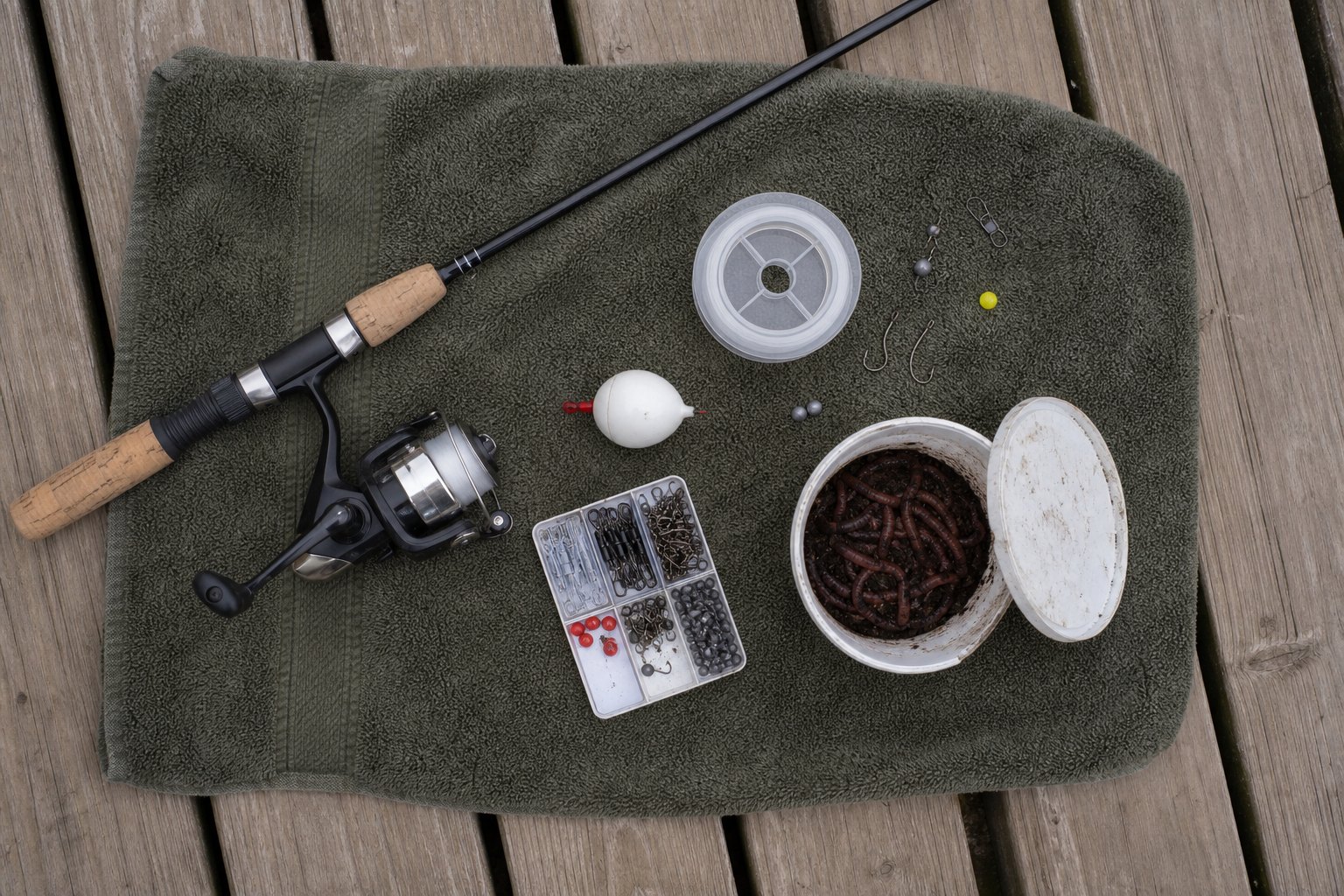
Rod and reel: A 6 to 7-foot light or ultralight spinning rod with a matching spinning reel. This setup works for bluegill, crappie, perch, and even small bass. You can learn more about choosing the right fishing reel if you want to understand the differences between reel types, but a simple spinning reel is the easiest choice for a beginner.
Line: 4 to 8-pound test for panfish (bluegill, crappie, perch). If you plan to target bass specifically, use 8 to 14-pound test.
Hooks: Small hooks (size 6 to 2) for panfish. Size 2 to 4 for bass and catfish.
Bobber: A simple slip bobber or fixed bobber. This is essential for beginners because it tells you when a fish has taken your bait.
Bait: Live worms. They work on every species listed in this article. If you can’t find worms, dried mealworms or small pieces of hot dog also work for catfish and bluegill. Check out this guide to natural bait for freshwater fishing for more options.
That’s it. No need for lures, fish finders, or complicated rigs on your first trip. Master the basics first, then expand your gear as you gain experience.
Where to Go Fishing for Your First Catch
The best fishing spot for a beginner is a place where other people are already fishing. Public ponds, neighborhood lakes, and park fishing areas are almost always stocked with beginner-friendly species like bluegill and crappie.
Look for these signs of good beginner fishing:
- A dock or pier where people are standing and casting
- Shallow water with visible weeds or cover
- A shoreline with trees or brush overhanging the water
- Local recommendations from bait shops or outdoor stores
If you’re not sure where to start, this guide to finding fishing spots near you walks through how to locate public fishing spots in your area using free resources.
What to Do After Your First Catch
Congratulations — you’ve caught a fish. Now what?
Learning to handle and unhook fish safely is the next essential skill. Whether you plan to keep your fish or release it, proper handling keeps the fish healthy and gives you better fishing in the future. If you’re going to release your catch, this guide to catch and release for beginners covers everything you need to know about minimizing harm to the fish.
After your first catch, try targeting a different species on your next trip. If you caught bluegill first, try bass. If you caught crappie, try catfish. Each species teaches you something different about how fish behave and where they live, and the more species you learn about, the better angler you’ll become.
And remember — every expert angler started exactly where you are now. The best first fish is the one that gets you excited enough to go back tomorrow.