
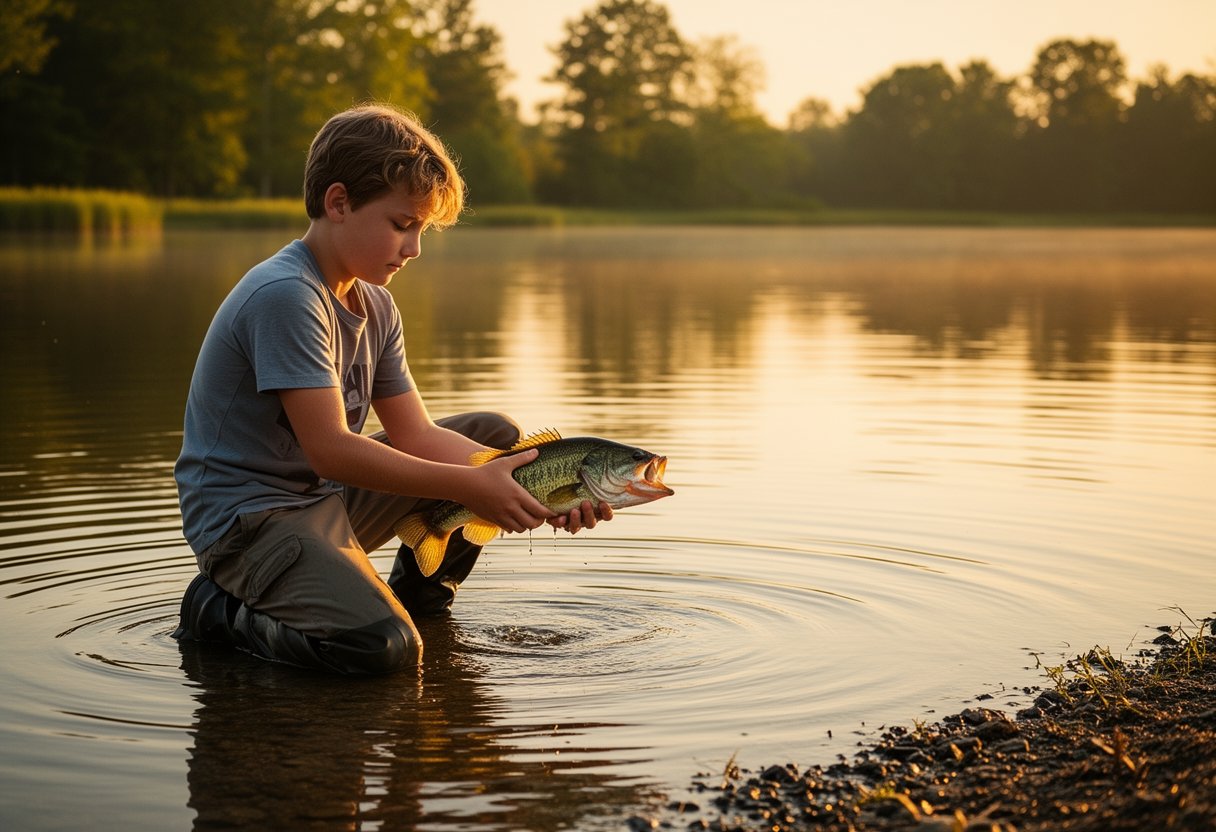
You hook a fish, fight it to the boat, and finally land it. But just because you say you’re going to release it doesn’t mean it’s going to survive. According to USGS research, about 18% of catch-and-release fish don’t make it back — and that number can climb much higher depending on how you handle the fish.
The actions you take before, during, and after landing a fish make the difference between it swimming away healthy or dying hours later. Here’s what to do — from gear choices that reduce injury, to proper handling, hook removal, reviving exhausted fish, and knowing when keeping it is actually the better decision.
Why Catch and Release Matters
Catch and release is the backbone of sustainable fishing. When fish are returned to the water healthy, they grow bigger, spawn more offspring, and keep the fishery productive for everyone who fishes that water.
But it’s not just about trophy fish. You’ll release fish in several everyday situations:
- The fish is under the legal size limit
- You’ve already filled your daily bag limit
- The water is catch-and-release only
- You simply prefer to let it go
Not all species handle release equally well. Bass, panfish, and walleye typically have good survival rates with proper handling. Trout, salmon, and many saltwater species tend to do poorly once caught.
There’s also an important rule you should know: releasing a dying fish is worse than keeping it. If a fish is badly injured or won’t recover after a revival attempt, the responsible choice is to bring it home and eat it.
Gear That Gives Released Fish a Fighting Chance
The gear you choose before you even cast has a massive effect on whether a fish survives release. You don’t need expensive equipment — just the right kind.
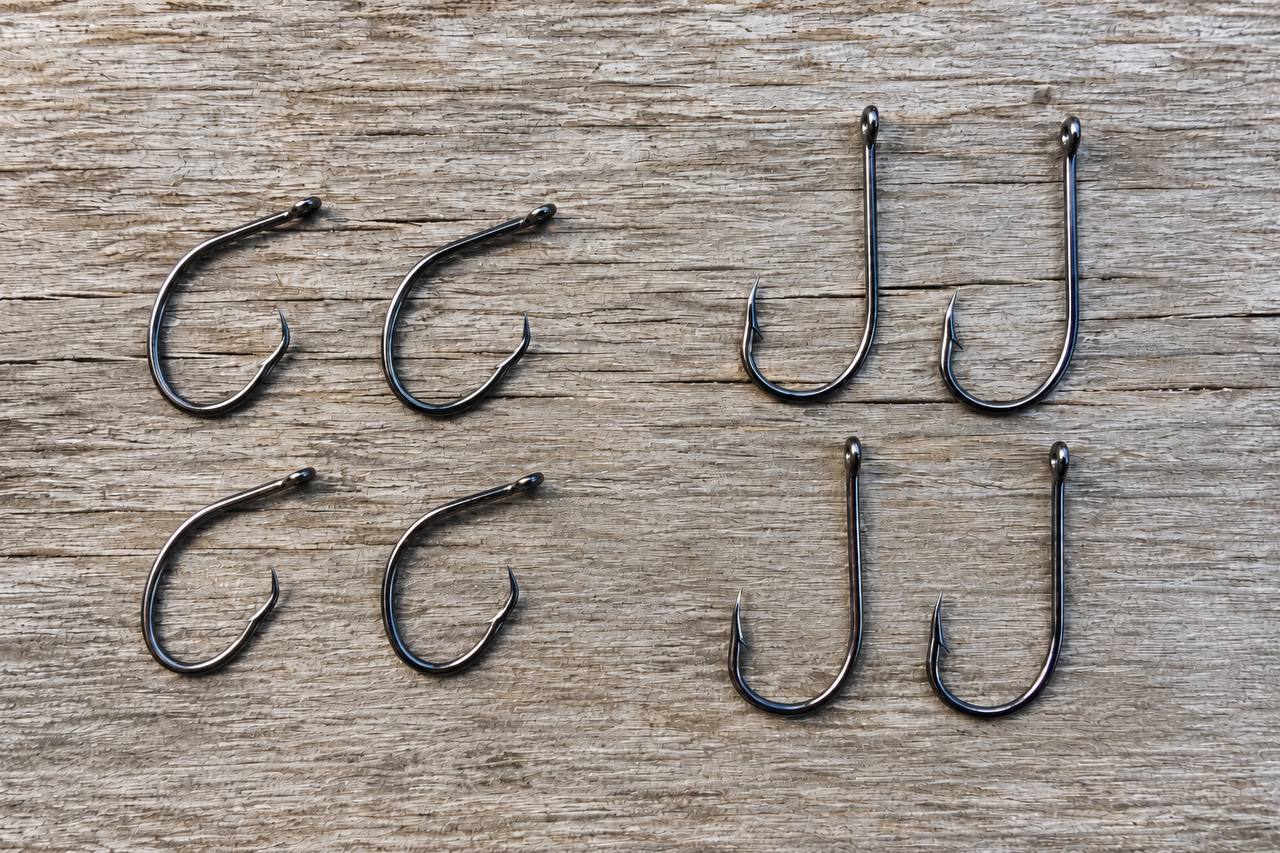
Circle hooks are the single biggest upgrade you can make. Unlike traditional J-hooks, which bend toward the point, circle hooks have a 90-degree bend. When you set the hook and the line is tight, the hook naturally rotates and catches in the corner of the fish’s jaw instead of the throat or stomach. Studies show circle hooks reduce deep hooking by up to 4 times compared to J-hooks, and J-hooks are 21 times more likely to cause bleeding injuries.
Barbless hooks or crimped barbs make removal faster and easier. The barb is what keeps a hook anchored in tissue — without it, you can slide the hook out instead of pulling through. If your lure or bait has barbed hooks, just pinch the barb flat with a pair of pliers.
Landing nets matter more than most beginners realize. Wire-frame nets with barbed mesh damage a fish’s protective mucus coating, strip scales, and can even break off fins. Soft knotless mesh nets or rubber nets let fish slide out without injury and are the standard for catch-and-release anglers.
Dehooking tools like long-nose pliers or wire dehookers let you remove hooks without touching the fish directly. Fish lip grippers are also useful for larger fish — they hold the fish securely by the jaw while your hands stay free.
Non-stainless steel hooks corrode and pass naturally if a hook gets left in a gut-hooked fish. If you fish catch-and-release waters regularly, this is a small detail that makes a real difference.
If you’re just getting started with your setup, check out our guide on freshwater rod and reel combos for beginners — the right reel helps you land fish faster, which means less fight time and better survival.
How to Handle Fish Properly
This is where most beginners make mistakes — often without realizing it. A fish’s skin is covered in a slimy layer that protects it from infection and parasites. That layer is fragile, and the way you handle a fish can destroy it in seconds.
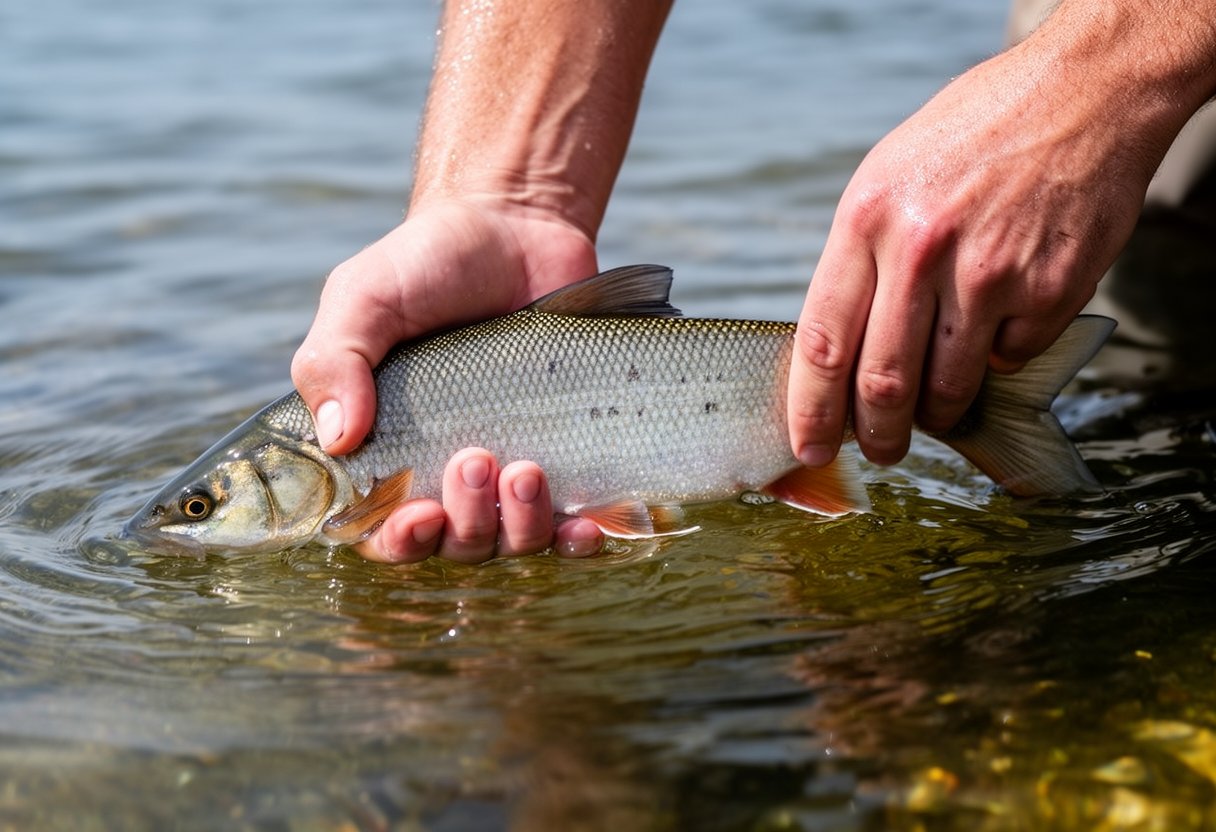
Always use wet hands. Before touching a fish, wet your hands in the water. Dry hands strip away that protective mucus coating almost instantly. Even a few seconds of dry-hand contact can cause serious stress and increase the chance of infection later.
Use the two-hand grip. The safest way to hold any fish is with one hand cupped under the forward part of the belly and the other hand supporting the tail base. This distributes the fish’s weight evenly and keeps its body supported. For small panfish (bluegill, crappie), you can hold them by the lower jaw — their mouth bones are tough enough to handle it. But anything bigger needs two hands.
Never hold a fish by its gills or jaw alone unless you’re using a proper jaw gripper tool. Bare-handed jaw holding on a medium or large fish puts pressure on the spine and can cause internal damage.
Keep the fish in the water whenever possible. If you want a photo, have the camera ready before you lift the fish. Get the shot, keep the fish cradled at or just above the water’s surface. A quick photo that takes 10 seconds is fine — a “perfect shot” that takes five minutes is not.
Minimize fight time. If you’re fishing catch-and-release waters, use slightly heavier line and a reel with a reliable drag. A fish that’s tired from a 20-minute fight is much less likely to survive release than one that was landed in three minutes.
Time out of water should be under 60 seconds. A good rule of thumb: no longer than you can hold your breath. Every second above water adds stress.
Dealing with Gut-Hooked Fish
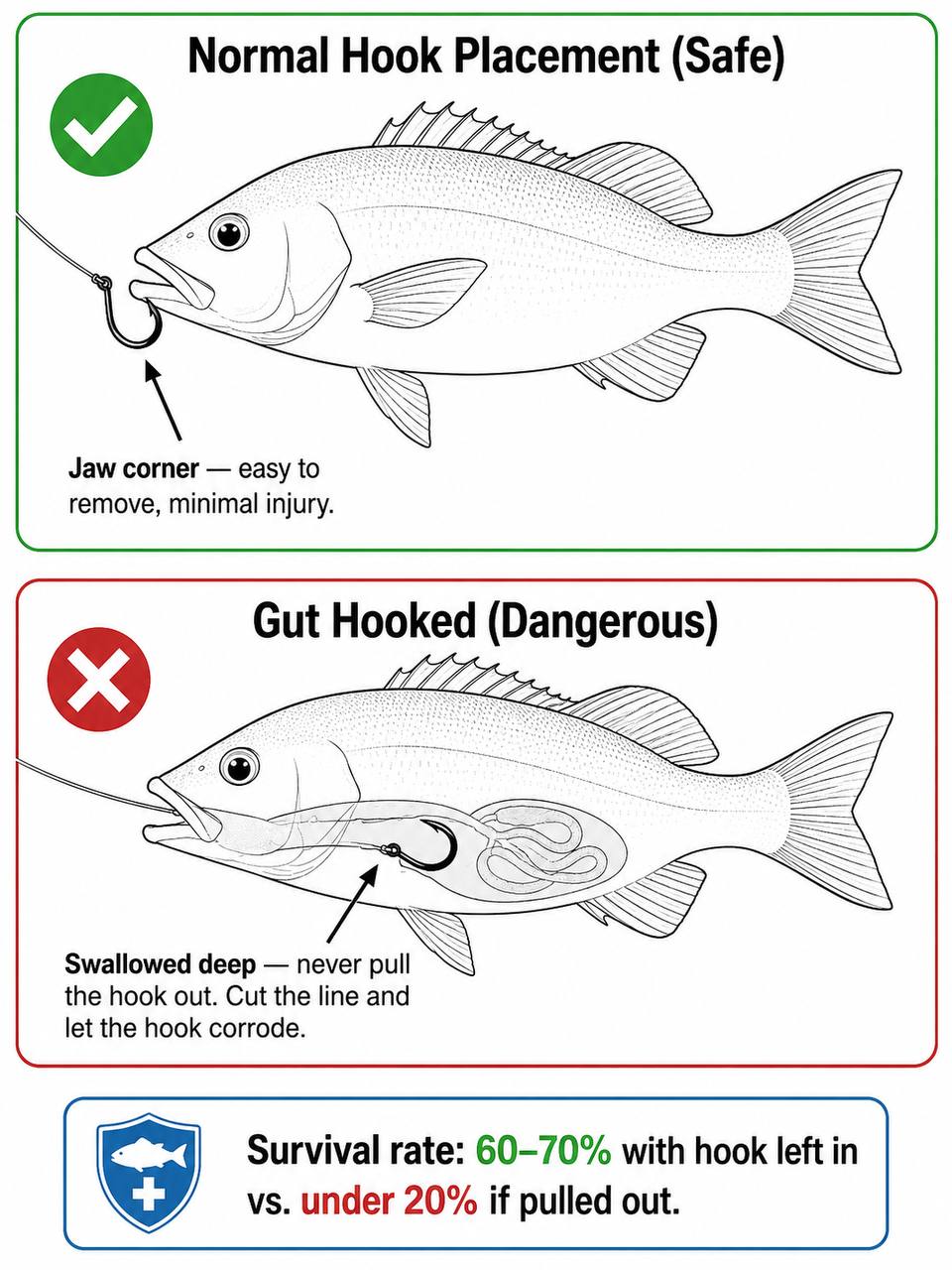
A gut-hooked fish is one that has swallowed the hook deep into its stomach or throat. It’s the worst-case scenario for catch-and-release, and it happens more often than you’d think — especially with traditional J-hooks.
Here’s the rule that matters most: never pull out a gut hook.
It sounds wrong, but the data is clear. A fish with a hook left deep inside has a 60-70% survival rate. Pull the hook out and that number drops to under 20%. The damage from removing a deeply embedded hook is simply too severe for most fish to survive.
What to do instead: Cut the line as close to the hook as you can and release the fish right away. Non-stainless steel hooks corrode inside the fish’s stomach within a few weeks and pass naturally. The fish heals around the wound site.
When a fish is too badly injured, look at it honestly. Is it bleeding heavily? Completely lethargic even in the water? Is the hook in a position that caused major internal damage? If the fish shows no sign of recovering, the kindest and most responsible thing to do is keep it. Releasing a fish that won’t survive just extends its suffering.
The Revive Procedure
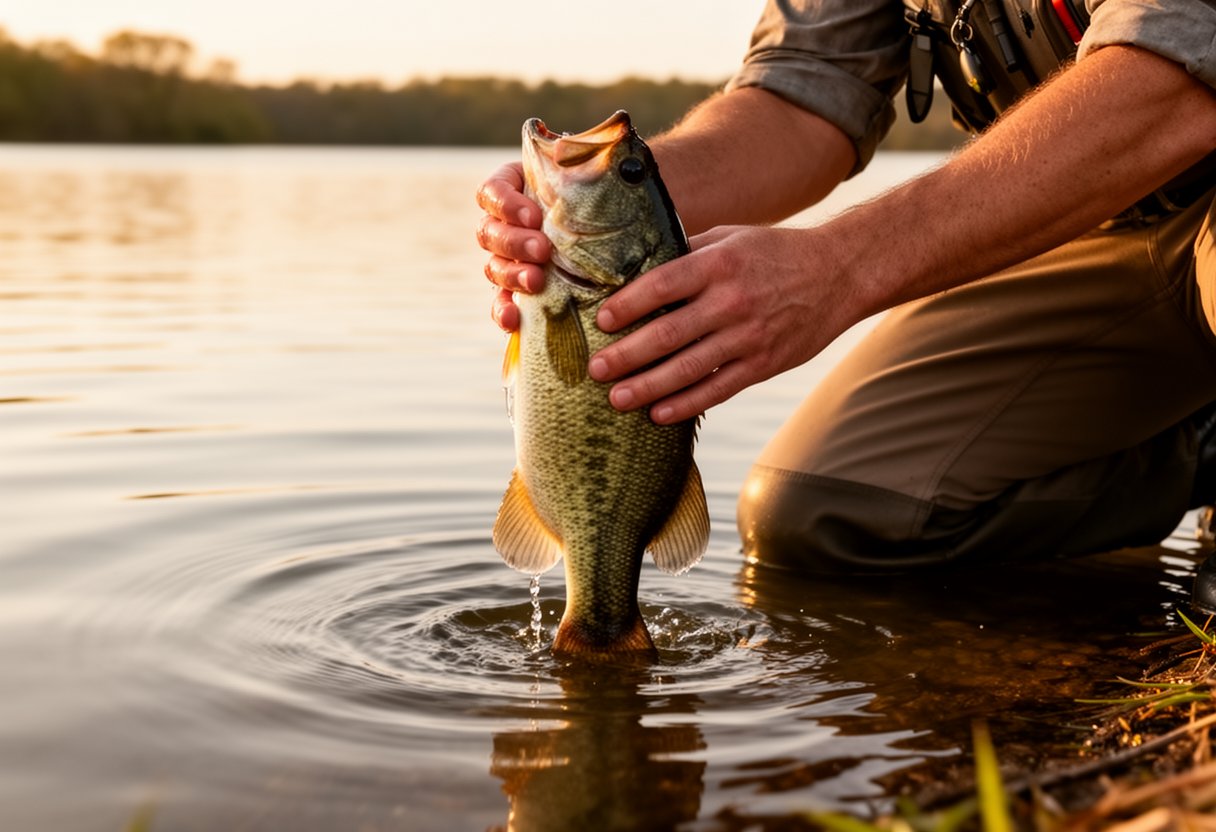
When a fish has been fighting hard, it can come out of the water exhausted — not moving, rolling side to side, or breathing heavily. These fish need help getting enough water through their gills to recover.
Follow these steps to revive an exhausted fish:
- Place the fish headfirst in the water. If you’re near a current, face the fish so water flows toward its head.
- Support with both hands. One hand under the belly, one at the tail base. Hold the fish upright so it’s vertical in the water.
- Hold gently and let water flow through the gills. Don’t rock or pump the fish — just keep it steady so water moves past the gills naturally.
- Wait for signs of recovery. The fish will start moving its tail, pushing against your hands, or trying to right itself.
- Release when the fish swims away on its own. Don’t let go until it actually shows strength — a firm tail swing and forward movement.
- If the fish doesn’t recover after a reasonable revival attempt, do not release it. Bring it home instead. A dying fish doesn’t stand a chance.
Water Temperature and Catch and Release
Warm water is harder on fish than cold water — and it affects catch-and-release survival rates significantly.
Here’s why: warm water holds less dissolved oxygen than cold water. Fish in warm water are already working harder to get enough oxygen through their gills. When you add the stress of being caught, fought, and handled, the combination can push the fish past the point of recovery.
That means summer releases carry a higher mortality risk than winter releases. If you’re fishing in hot weather, be extra careful with handling. Land the fish faster, keep it in the water as much as possible, and revive more aggressively.
If you want to understand how water temperature affects fish behavior in general, our bass temperature guide breaks down what’s happening under the surface at different temperatures.
When to Keep Instead of Release
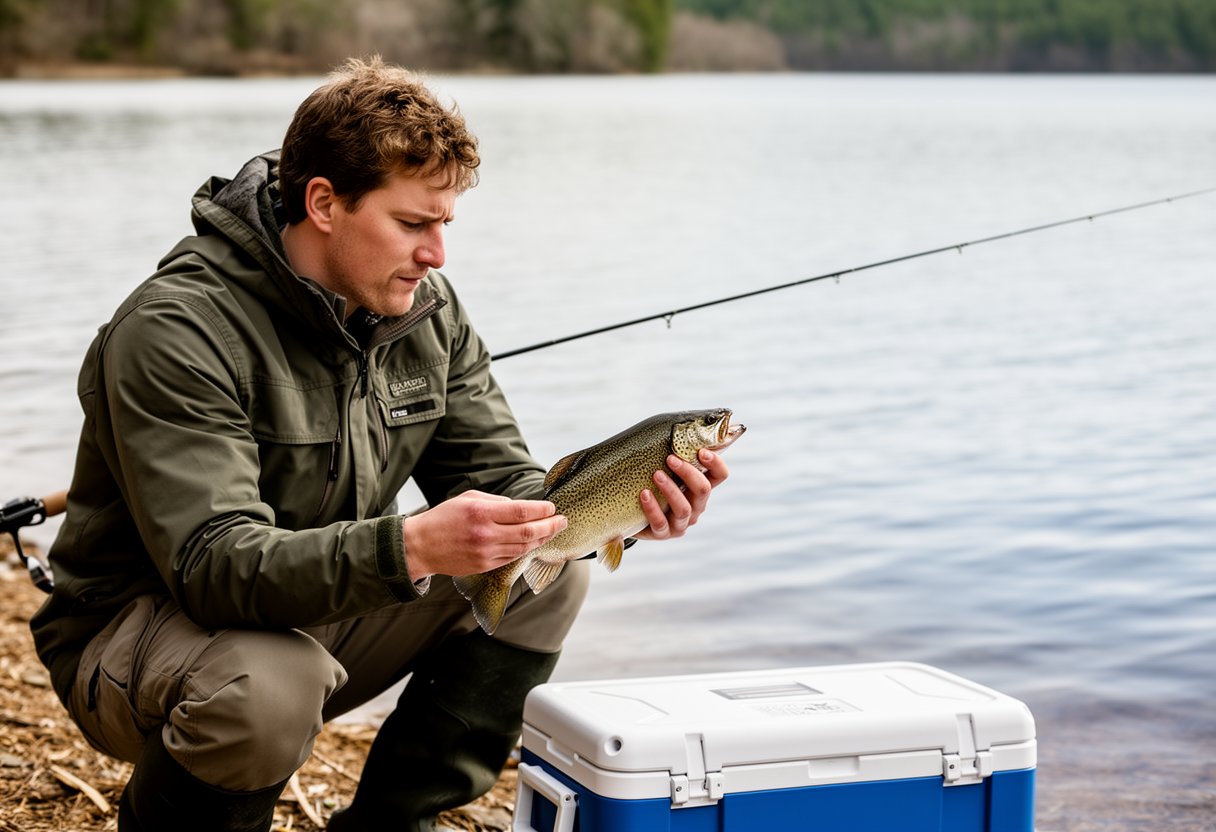
Catch and release works great in theory, but there are situations where keeping the fish is the right call:
- The fish is exhausted beyond recovery. If it won’t respond to revival after several minutes, releasing it won’t help.
- The species has poor survival rates. Trout and many saltwater species simply don’t handle release well.
- The fish is badly injured. Heavy bleeding, lost scales over large areas, or visible internal damage all point toward keeping the fish.
- You plan to eat it. If the fish is within your quota and meets size limits, eating it is a form of conservation — it removes pressure on the population and honors the resource.
Always check local regulations first. Some waters are designated catch-and-release only, and keeping any fish there is illegal regardless of condition.
If you’re new to bringing fish home, our step-by-step guide on how to clean and fillet fish for beginners walks you through the whole process.
Conclusion
Catch and release is one of the simplest ways to be a responsible angler — but only if you do it right. Wet hands, quick handling, proper gear, and a revival attempt when needed add up to a fish that actually makes it back to the water column.
The golden rule: if you’re not sure whether a fish will survive after release, it’s better to keep it. Releasing a dying fish isn’t conservation — it’s cruelty.
Handle your catches well, and that water will keep producing fish for years to come.