
Largemouth Bass Fishing for Beginners: How to Catch, Where to Find, and What to Use
There’s a reason largemouth bass are the most popular freshwater gamefish in North America. They’re everywhere, they fight hard, and they actively chase your lure instead of waiting to be coaxed. Whether you’re standing on the bank of a small pond or casting into a huge lake, if there are bass in the water, you’ve got a shot.
In this guide, we’ll cover the essentials: the gear you actually need (spoiler — it’s less than you think), which lures work best, how to find where bass are hiding, and why the season matters more than most beginners realize.
What Makes Largemouth Bass Special
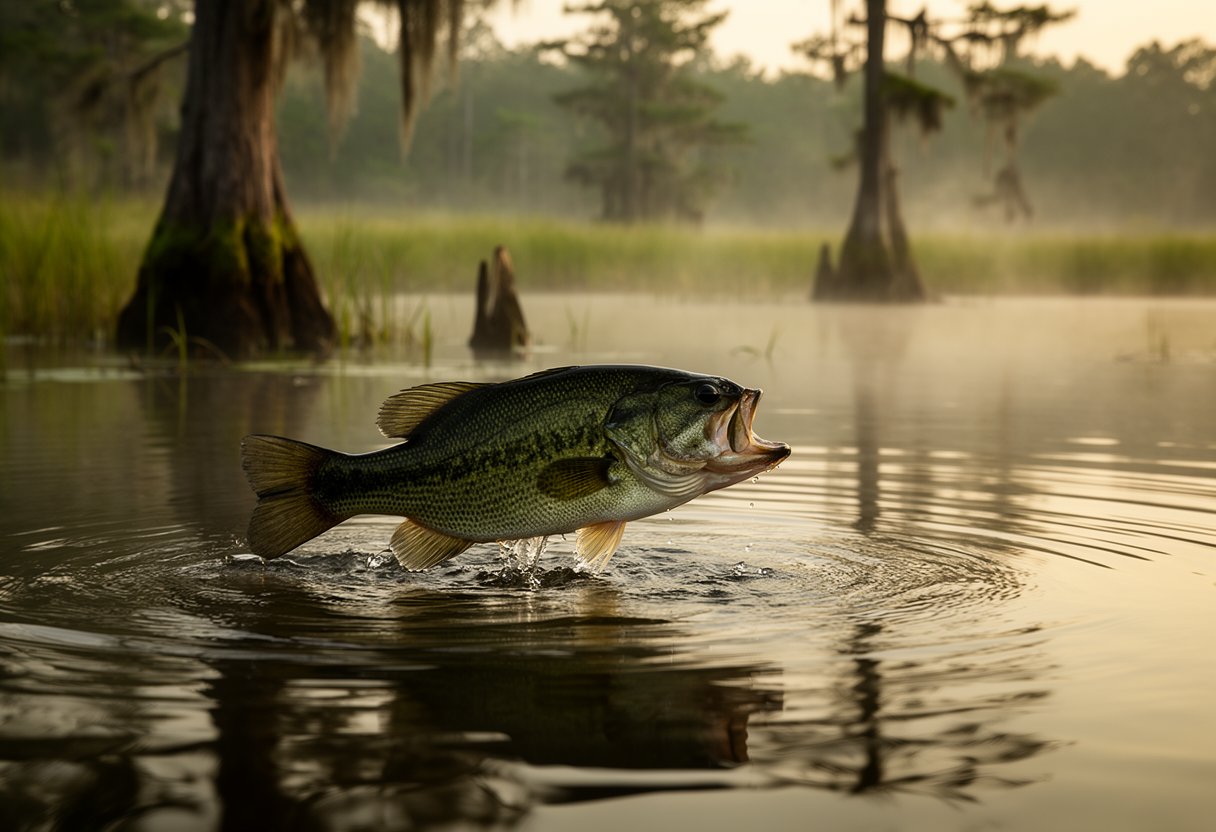
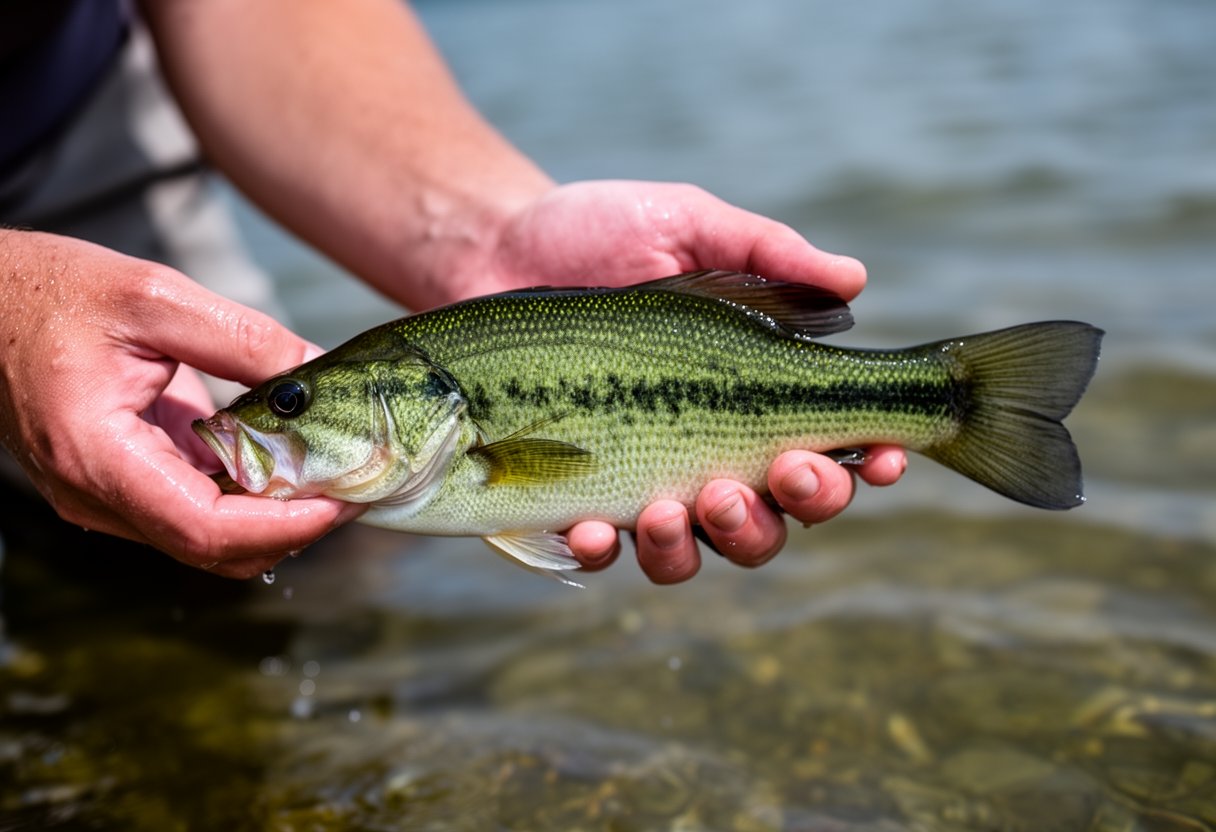
Largemouth bass are hard to miss once you know what you’re looking for. Dark green on top, fading to a lighter belly, with a bold dark stripe running horizontally along their side. And that mouth — it’s genuinely impressive. The jaw extends past the back of their eye, which means they can swallow prey close to half their own length.
The ones you’re most likely to catch fall between 8 and 12 inches, but anything over 3 pounds is a fish worth writing home about. You’ll find them in lakes, ponds, slow rivers, backwaters, and even well-maintained ditches across the lower 48 and into southern Canada.
What really makes bass great for beginners is their hunting style. They’re ambush predators — they don’t graze, they strike. An actively swimming lure is like a dinner bell. You don’t need years of experience to figure them out; you just need to understand a few core concepts.
Quick note: Smallmouth bass are a close cousin. They share a lot of the same behavior but prefer clearer, rockier water and run cooler. This guide is focused squarely on largemouth.
Where to Find Largemouth Bass
Bass aren’t randomly distributed across the lake. They’re ambush hunters, which means they position themselves near structure and cover and wait for dinner to walk by. If you want to catch bass, you need to start thinking in their language: where would I hang out if I were waiting to ambush something?
There’s a useful distinction between structure and cover. Structure refers to the underwater landscape: rock ledges, submerged humps, drop-offs, and points that jut out into deeper water. Cover is what provides shade and protection: weedbeds, lily pads, fallen trees, docks, and overhanging brush.
The most reliable bass-holding spots are:
- Weed edges — Bass patrol the line between thick vegetation and open water, striking at anything that wanders close
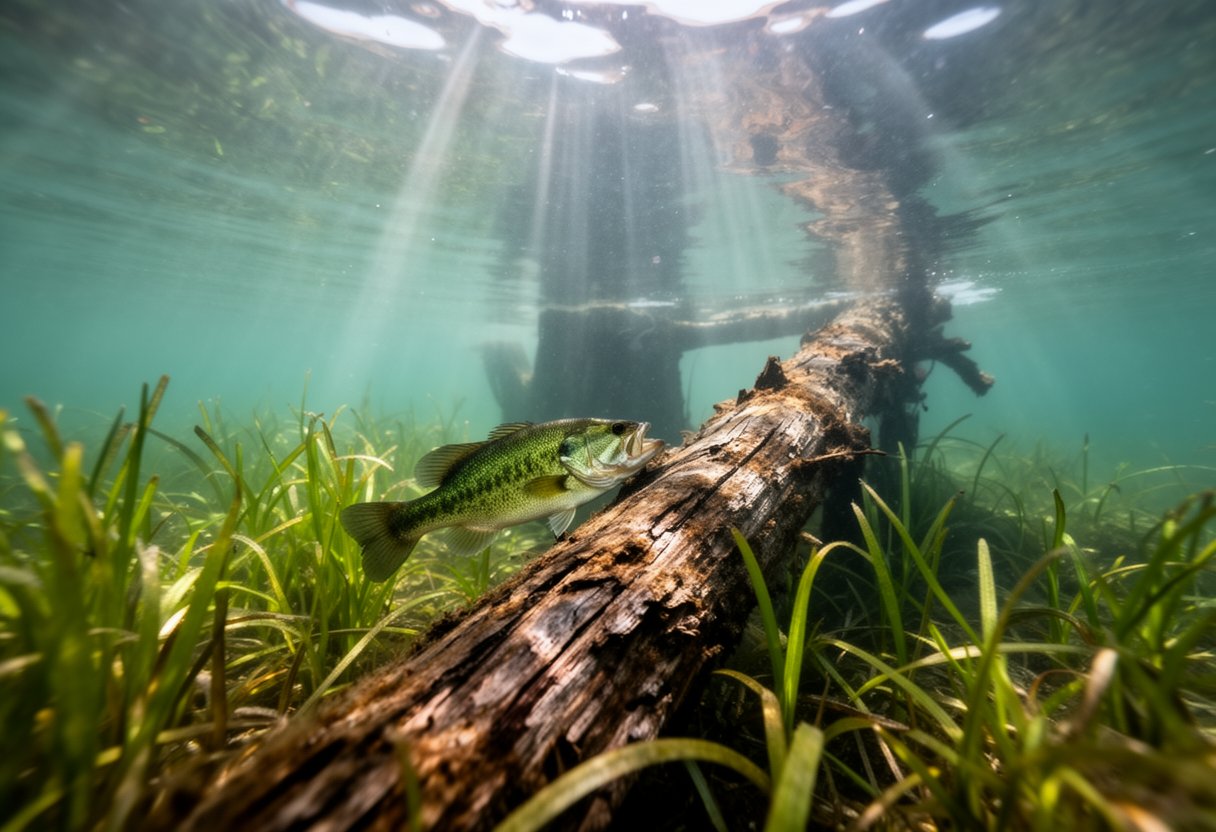
- Submerged timber — Whether it’s a standing dead tree or a log lying on the bottom, wood is a bass magnet
- Docks and piers — Man-made shade that pulls in baitfish, which pulls in bass
- Creek channels and drop-offs — Bass use these transitions like highways, moving between feeding zones
- Rocky ledges — Especially critical in the spring when bass move shallow to spawn
And here’s something that trips up a lot of beginners: bass change depth throughout the day. On a hot summer afternoon, they might be holding in 10 feet of water. At first light the same day, they could be cruising in 2 feet. Learning how to read water conditions and understand how temperature and time of day shift bass behavior takes your game to the next level. We break down the basics of reading water in this guide.
Best Gear for Bass Fishing
You don’t need to blow your budget to catch bass. But having gear that’s actually suited to the job makes everything easier — from casting accuracy to hook setting to landing the fish.
Rod
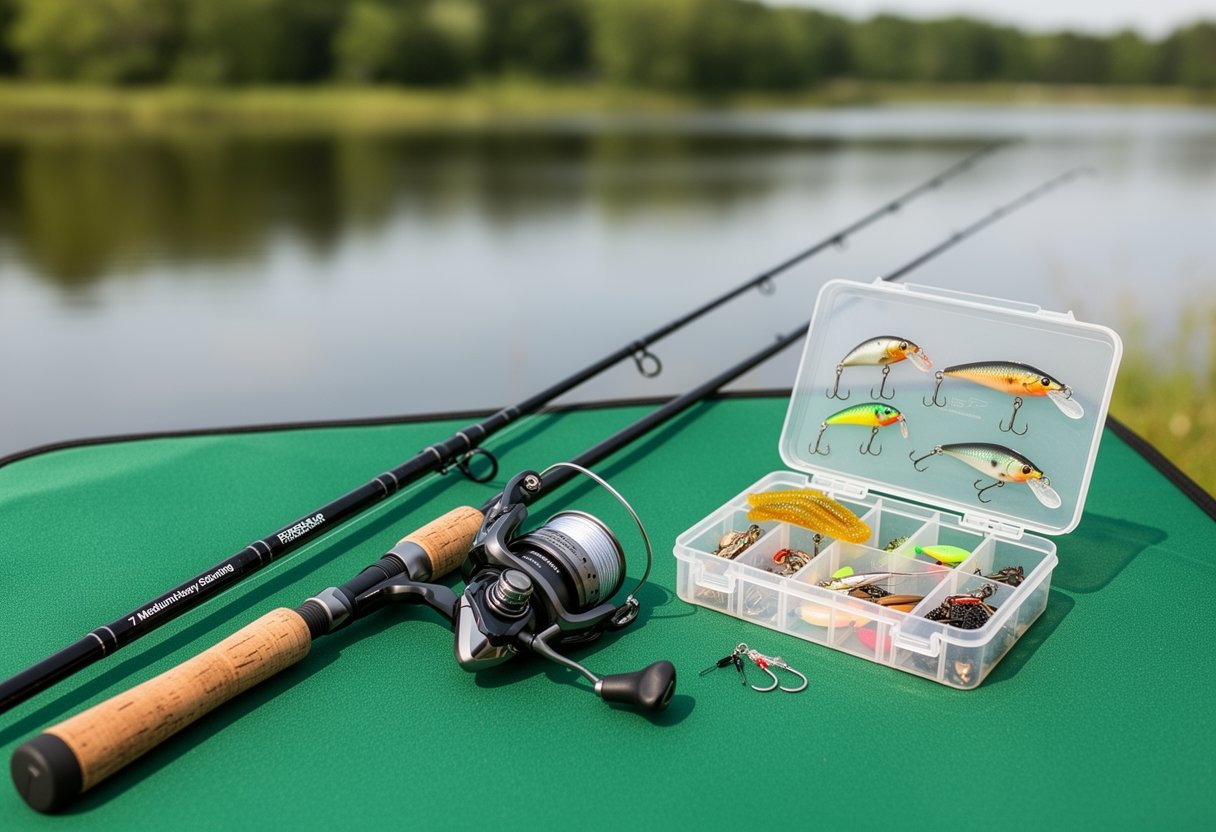
Target a 6’6″ to 7-foot rod with medium to medium-heavy power and fast action. This gives you enough backbone to pull a bass out from behind a log, while still being sensitive enough to feel a subtle tap on the bottom. Fast action means the rod flexes in the top third, which translates to solid hook-setting power when a bass strikes.
Reel
A spinning reel in the 2500-3000 class is the easiest platform to start on. Look for a gear ratio between 5.2:1 and 6.3:1 — that’s the sweet spot for retrieve speed versus cranking power. Baitcasting reels eventually earn a place in your tackle box, but they come with a learning curve (think: wind knots) that spinning reels completely avoid.
If you’re still shopping for gear, our rod and reel combo guide walks through specific setups that work.
Line
This is where a small investment makes a big difference. The two most popular setups for bass fishing are:
- Braided line with fluorocarbon leader — Run 10-14 lb braid with a 10-12 lb fluorocarbon leader tied on. The braid has zero stretch, so every tap and tick translates to your fingers. The fluoro leader is nearly invisible underwater and shrugs off rocks and logs
- Fluorocarbon all the way — 10-17 lb fluorocarbon from reel to lure. Fewer knots to worry about, and it sinks naturally. Very effective on spinning gear
We cover all the line types in detail — including when to use each one — in our fishing line guide.
Top Lures and Baits for Bass
Bass eat almost anything that moves. Crayfish, minnows, frogs, smaller fish — they’re opportunistic by nature, and that gives you a lot of flexibility on the water.
Soft Plastics
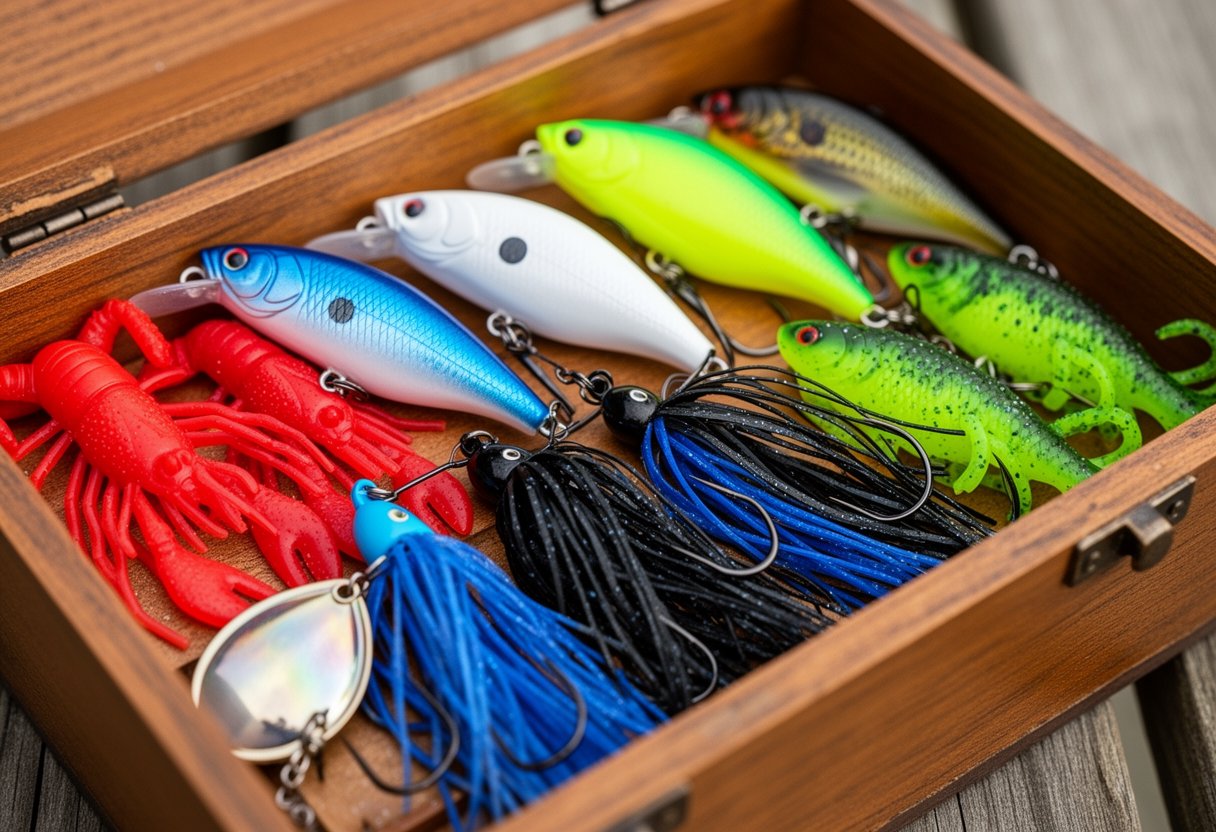
If you could only carry one category of bait, make it soft plastics. They’re cheap, versatile, and work in nearly every condition. The ones you’ll reach for most often:
- Plastic worms — A 6-inch ribbontail worm is the classic reason why. Sink it, drag it slowly, repeat
- Craw baits — Crayfish imitations that shine around rocks, logs, and any hard bottom
- Creature baits — Multi-limbed baits that survive contact with underwater debris better than almost anything else
- Swimbaits — Fish-shaped soft plastics that look like injured baitfish on the retrieve
Most soft plastics get rigged on a weighted hook, and the Texas rig (bullet weight seated in the nose of the bait, hook point buried) is the most forgiving setup for beginners because it’s weedless.
For a full breakdown of soft plastic techniques, check our soft plastic baits guide.
Crankbaits
Crankbaits are hard plastic lures with a diving bill that determines how deep they run. They’re excellent for covering water quickly and locating active fish. Square-billed crankbaits stay shallow (2-4 feet) and bounce off cover beautifully. Deep-diving crankbaits can reach 8-12 feet, which is your ticket in summer and winter.
Topwater Lures
Watching a bass blow up on the surface is genuinely one of the best feelings in fishing. Poppers create a splash-and-glug sound that triggers strikes, and walk-the-dog lures zigzag across the surface in a way that drives bass absolutely wild. Both work best at dawn or dusk, especially during summer months.
Spinnerbaits and Jigs
Spinnerbaits combine flash and vibration, and bass find them even in stained water. The built-in wire skirt means they run through weeds without snagging — a real advantage. Jigs are heavy-headed hooks with a soft plastic trailer, and they’re the go-to for dragging along the bottom or flipping into thick cover.
Live Bait
Nothing wrong with keeping it natural. Nightcrawlers (big earthworms), live crayfish, and minnows all work beautifully on bass. A simple hook-and-sinker rig, cast near cover, and you’re fishing.
The trick is matching your lure to the conditions — water clarity, structure type, and what the bass are actually eating that day. We walk through the decision framework in our lure selection guide.
Bass Fishing by Season
Water temperature drives bass behavior more than anything else, and it changes dramatically across the calendar year. If you’re fishing with the season instead of against it, your catch rate will improve noticeably.
Spring: The Spawning Window
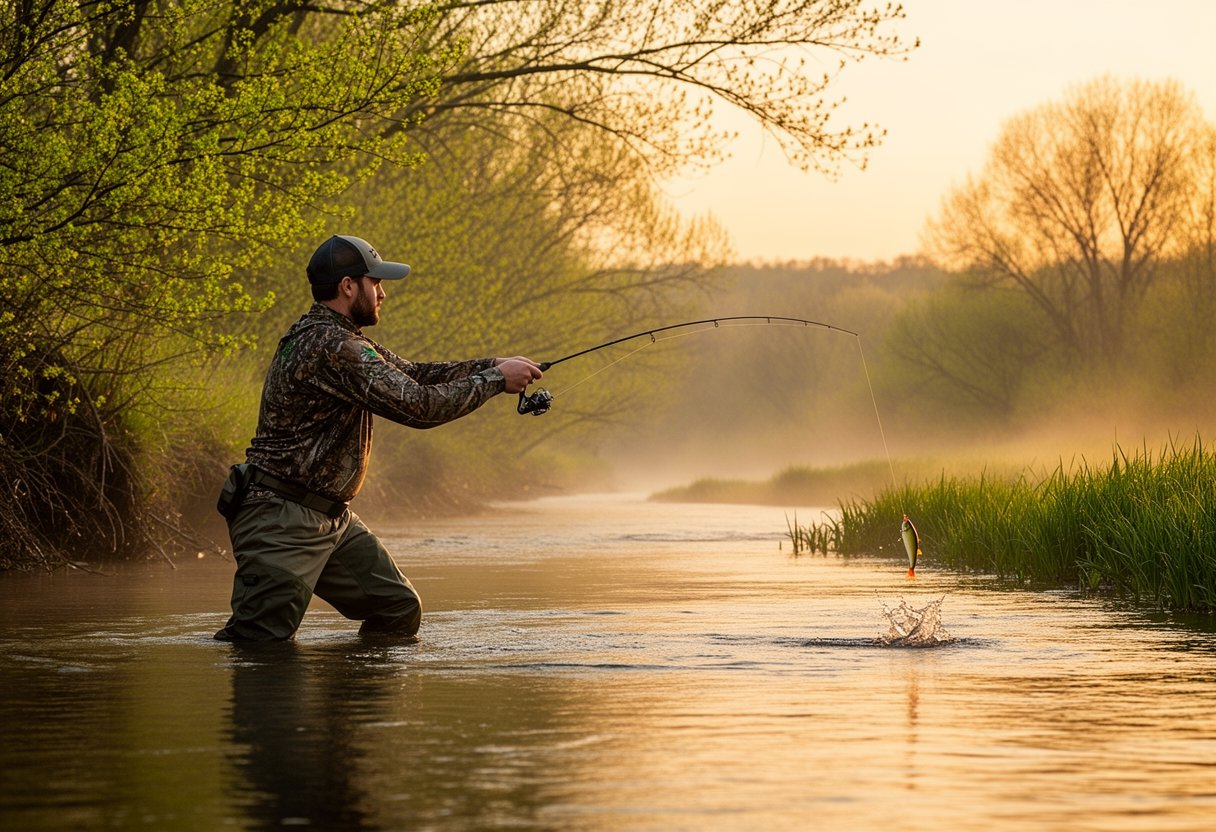
Spring is widely considered the best bass fishing season, and it’s easy to see why. Once water hits 50-55°F, bass abandon their deep winter haunts and move into shallower water. At 60°F and up, the spawning cycle kicks in.
Spawning bass are territorial and aggressive. Males dig nests in 1-4 feet of water near lily pads, weeds, and timber. Anything that swims near their nest looks like a threat, and they’ll attack it. This is the time of year when bass are most accessible from the bank.
Summer: Playing the Temperature Game
Above 80°F, bass get uncomfortable in shallow water during the day. They move deeper — creek channels, deep ledges, shaded pockets under docks. But here’s the thing: at dawn and dusk, when the sun isn’t hammering the surface, they move shallow again to feed.
Summer is prime time for topwater. A well-timed cast near the shoreline at first light can produce a strike that’ll make your day. Midday? Switch to deep-diving crankbaits or work jigs slowly along the bottom.
Fall: The Feeding Frenzy
When water cools from 65°F down toward 50°F, bass go into overdrive. They need to eat heavily to prepare for winter, and they’ll move back into mid-depth and shallow feeding areas. Every lure type works during this window — crankbaits, spinnerbaits, soft plastics, jigs. Fall is when you can be a little lazy and still catch fish.
Winter: Patience Pays Off
Below 50°F, bass basically put the brakes on. They hold in deep water near structure and don’t move much. Your job is to find them and present slowly: smaller baits, slower retrieves, and a focus on creek channels, deep rock ledges, and underwater humps. It takes more time, but a winter bass fight is still a winter bass fight — and it counts.
For a detailed look at bass behavior at specific temperature ranges, our bass temperature guide breaks it down degree by degree. And for a broader seasonal strategy that covers all freshwater species, see our seasonal fishing guide.
Bass Fishing Techniques for Beginners
You don’t need fancy casts or expensive gear to catch bass. These four techniques are the foundation — master them, and you’ll put fish on the bank.
Cast to Cover
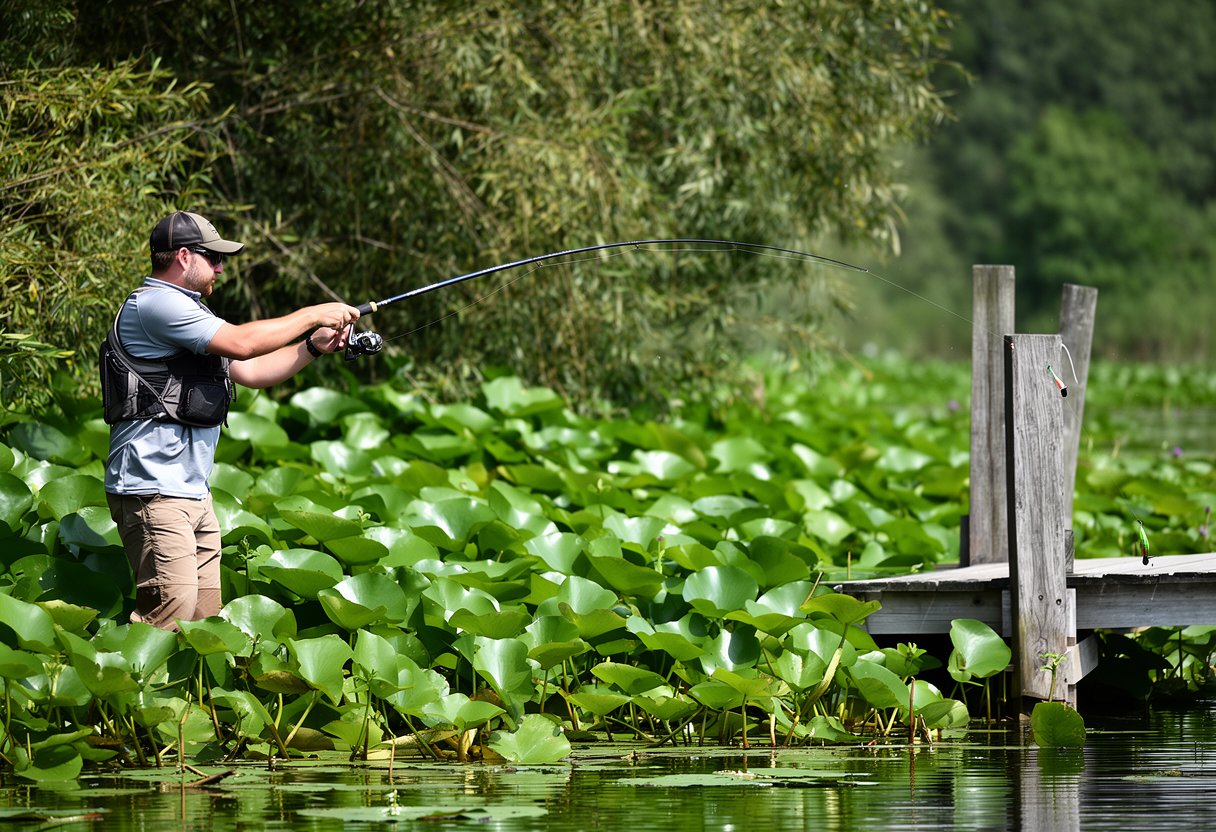
This is the most important rule in bass fishing, and it really is that simple: throw your lure near structure and cover. See lily pads? Throw right next to them. Logs? Dock posts? Weed lines? Same deal. Bass congregate near cover, and your odds of a strike jump dramatically when your lure is within arm’s reach of it.
Flip and Pitch
Flipping and pitching are shorter, more controlled casts that let you place a lure precisely next to heavy cover. They work best with jigs and heavier soft plastics. Instead of a full overhand cast, you bring the rod up and forward in a compact motion, dropping the bait exactly where you want it — no splashing, no spooking.
The “Retrieve and Pause” Rule
Most bass strikes happen during the pause, not the retrieve. Here’s the pattern: cast, let the lure sink, reel a few turns, then stop. Count to three. Reel again. That pause makes your lure look like a tired or injured piece of prey, and bass can’t resist it.
Match the Hatch
Bass anglers follow the same principle as fly fishermen: match your bait to what’s available. In clear water, natural colors do the job — green pumpkin, watermelon, brown. Stained or muddy water? Switch to chartreuse, red, or white, or use lures that create strong vibration.
If weeds and grass are part of the picture, our guide to fishing vegetation walks through weedless rigging and presentation techniques that keep you snag-free.
Handling and Releasing Bass
Largemouth bass sit at the top of the food chain in most freshwater ecosystems, and treating them with care keeps populations strong for everyone. If you’re practicing catch-and-release, follow these steps:
- Wet your hands first. Bass have a protective slime layer on their skin that dries out fast in air. Dry hands strip it away
- Keep the fish in the water whenever you can. If you need to unhook it, do it quickly with the bass supported underwater
- Hold bass horizontally by the lower jaw. Vertical handling puts pressure on the spine — keep them level
- Revive before letting go. If the bass looks exhausted, hold it gently in the water facing any current until it swims off under its own power
Quick-Start Checklist
Ready to hit the water? Here’s your five-step plan:
- Get the gear — Medium-heavy spinning rod and reel combo, 10-14 lb braided line with a fluorocarbon leader
- Pick a spot — Look for a lake or pond with visible cover: weeds, docks, fallen trees, rocky edges
- Choose a lure — Start simple: a 6-inch plastic worm on a Texas rig or a medium-sized crankbait
- Cast to cover — Throw near structure, not into the middle of nowhere
- Retrieve and pause — Reel a few turns, stop for 3 seconds, repeat. The strike usually comes on the pause
Largemouth bass fishing is one of the most rewarding things you can do with a rod and reel. The fish are everywhere, the fight is exciting, and once you internalize where bass hide and how they hunt, the bites start coming.