
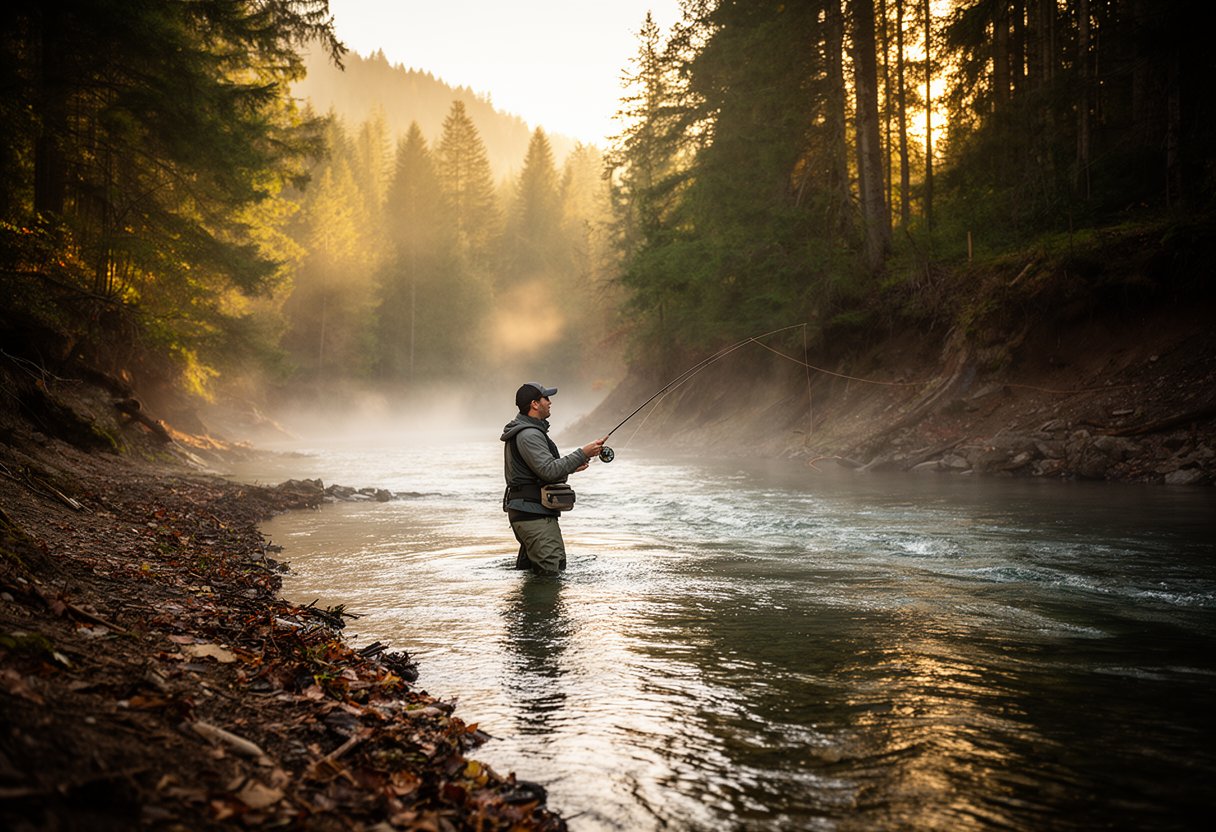
Trout fishing is near the top of almost every beginner’s bucket list. There’s something special about wading into a clear mountain stream or casting to a stocked pond and feeling that first sharp tug from a fish that fights way harder than its size suggests. The good news — trout are one of the most rewarding freshwater species you can target, and you don’t need expensive gear or years of experience to catch your first one.
This guide covers everything you need to get started: which trout species to target, where to find them, what gear to buy, which baits actually work, and how to handle these fragile fish safely. Whether you’re heading to a local stocking pond or a nearby creek, you’ll walk away with a clear plan.
The Three Main Trout Species
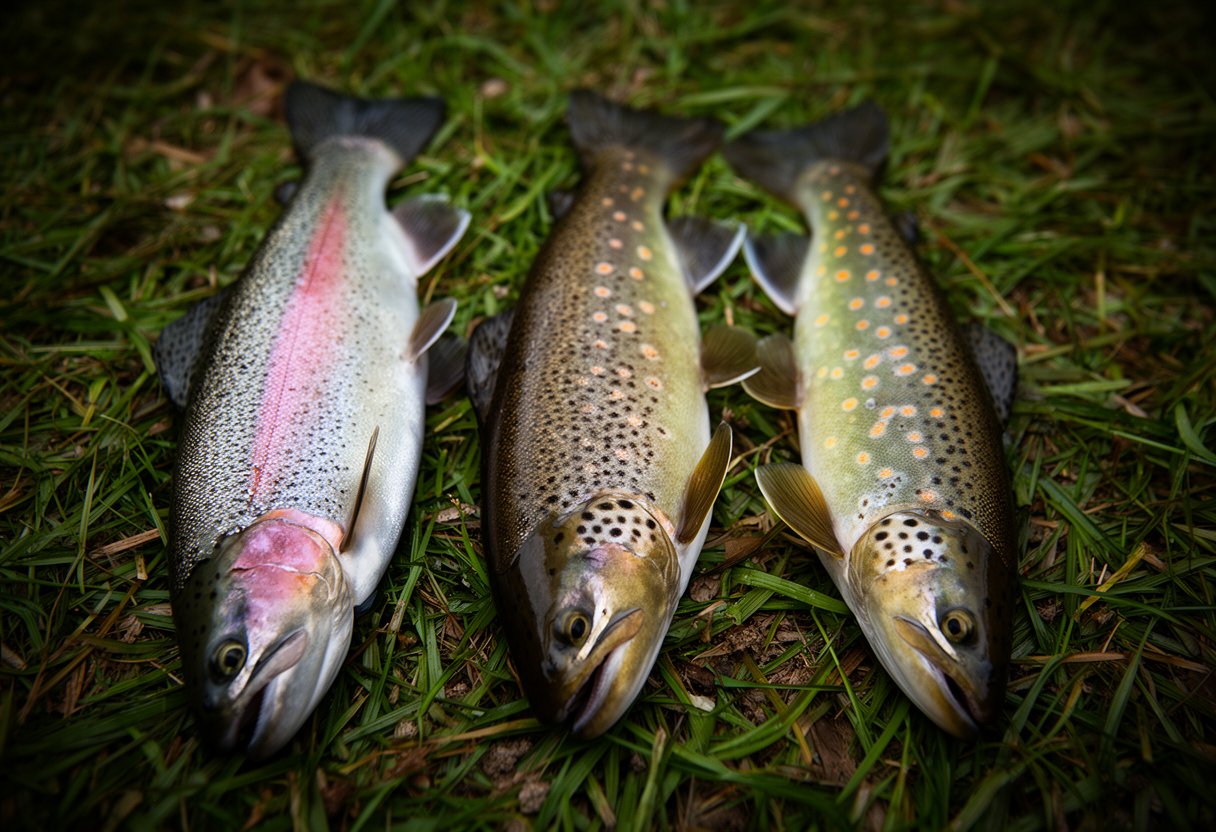
Before heading to the water, it helps to know what you’re fishing for. Three trout species dominate North American freshwater angling, and each one has traits that affect where and how you’ll catch it.
Rainbow trout are the most commonly stocked species and the easiest target for beginners. Look for a distinctive pink or red stripe running along their silvery sides. They’re aggressive feeders, especially in ponds and lakes, and they’ll chase down baits and lures with enthusiasm. Most stocking programs release rainbows, which means a stocked pond heavily favors you.
Brown trout came from Europe and have been introduced to waters across the continent. They grow bigger than rainbows — a 5-pound brown is impressive; a 5-pound rainbow is legendary. They’re darker with light spots scattered across the body and sides. Browns are more cautious than rainbows and tend to hold in deeper, slower water. They’re also the night-feeders of the trout world, often coming out to feed after sunset.
Brook trout are the smallest and most temperature-sensitive of the three. Native to the northeastern U.S. and Canada, they thrive in cold, well-oxygenated headwater streams. They’re stunning to look at — marbled patterns on the fins, greenish-brown bodies with light spots and red spots edged in blue. Brook trout fight fiercely and feed aggressively, but they need the coldest water of any trout.
The bottom line: the techniques in this article work for all three. You don’t need a separate strategy for each species — just adjust your location and timing based on what’s in the water you’re fishing.
Where to Find Trout — Understanding Their Habitat
Trout have one non-negotiable requirement: cold, well-oxygenated water. Their ideal temperature range is 45 to 65°F, and anything above 70°F becomes stressful — sometimes lethal. This single fact tells you where to look and when.
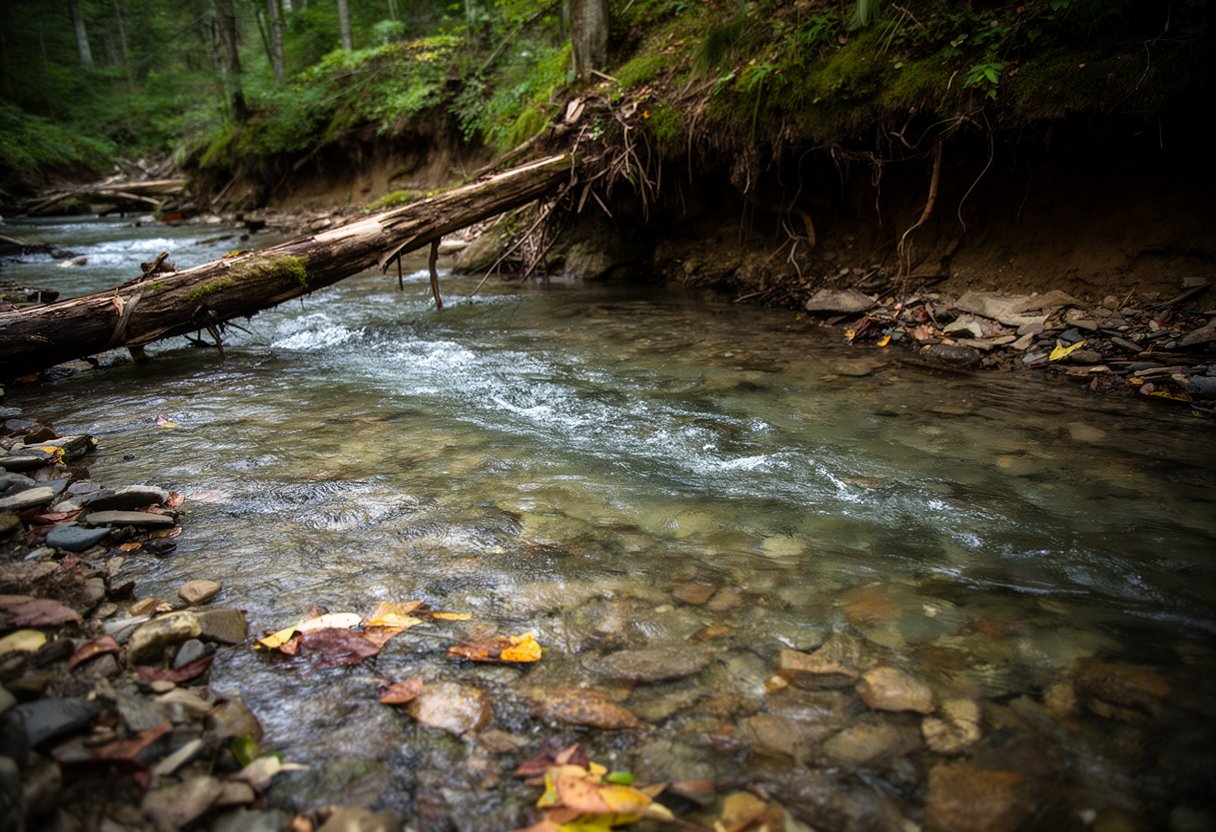
In streams and rivers, focus on these structures:
- Riffles — shallow, fast water over rocks where oxygen enters the stream. Trout hold just downstream of riffles to ambush food washing through.
- Runs — smooth, moderate-current sections between riffles and pools. This is where trout cruise and feed.
- Pools — deeper, slower water at the end of runs. Bigger trout hold here, especially on warm days.
- Undercut banks — eroded edges that create overhangs. Trout use these as both hiding spots and ambush points.
- Fallen logs and debris — anything that breaks current and creates shade. Fish hold on the downstream side of every log.
- Rocky areas — stones and boulders provide cover and trap food drifting downstream.
In ponds and lakes, the approach shifts:
- Stocked trout typically stay near the stocking point for several hours, hovering 3 to 5 feet below the surface.
- In warmer months, look for deeper water or areas near cold-water spring inputs.
- Trout in ponds often hold near the bottom but rise toward the surface to feed in early morning and evening.
Before you leave home, check your state’s fish and wildlife website for stocking schedules. A pond stocked yesterday is dramatically more productive than one that got fish a month ago.
Gear You Need
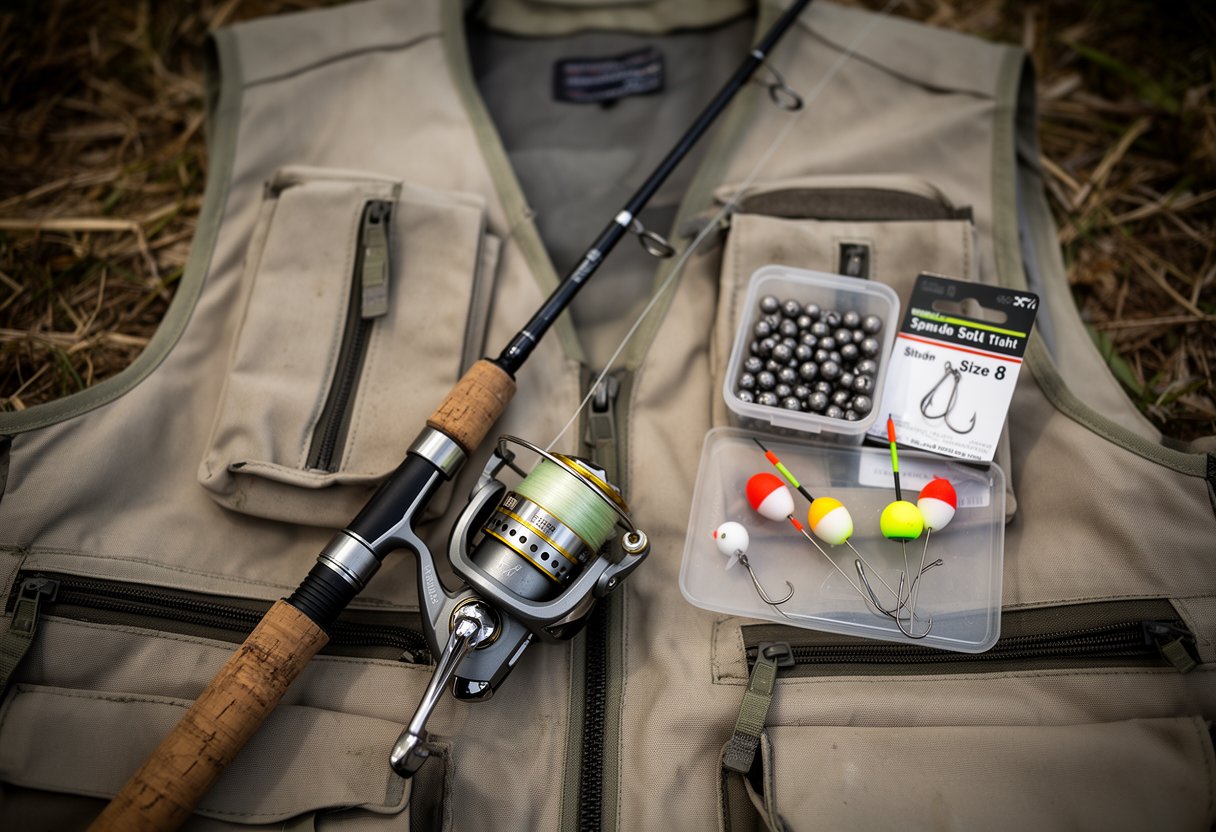
You don’t need specialized trout gear. A basic ultralight spinning setup handles everything from a small brook trout to a healthy brown.
Rod: Ultralight or light-power spinning rod, 6 to 7 feet long. That length gives you enough backbone to fight a fish while staying sensitive enough to feel light bites. For help choosing a combo, see our fishing rod and reel combos guide.
Line: 4 to 8 pound test monofilament covers every trout situation. Six-pound test is the sweet spot — light enough to not spook fish in clear water but strong enough to land a 3-pound trout. Trout have excellent eyesight, and thinner, less visible line makes a real difference.
Hooks: Sizes 6 to 10 handle most trout baits. Match hook to bait — a small worm on a size 8 or 10, a nightcrawler on a size 6.
Extras: split shot sinkers (to get bait to the right depth), bobbers (slip or fixed), and a handful of swivels (especially when using spinners).
Pro tip: Start with a bobber setup. It’s the most forgiving technique, shows you visually when a fish bites, and works almost anywhere. Once that feels comfortable, branch out.
Best Baits and Lures for Trout
Some baits work everywhere. Others shine in specific situations. Here’s what actually works, in order of reliability:
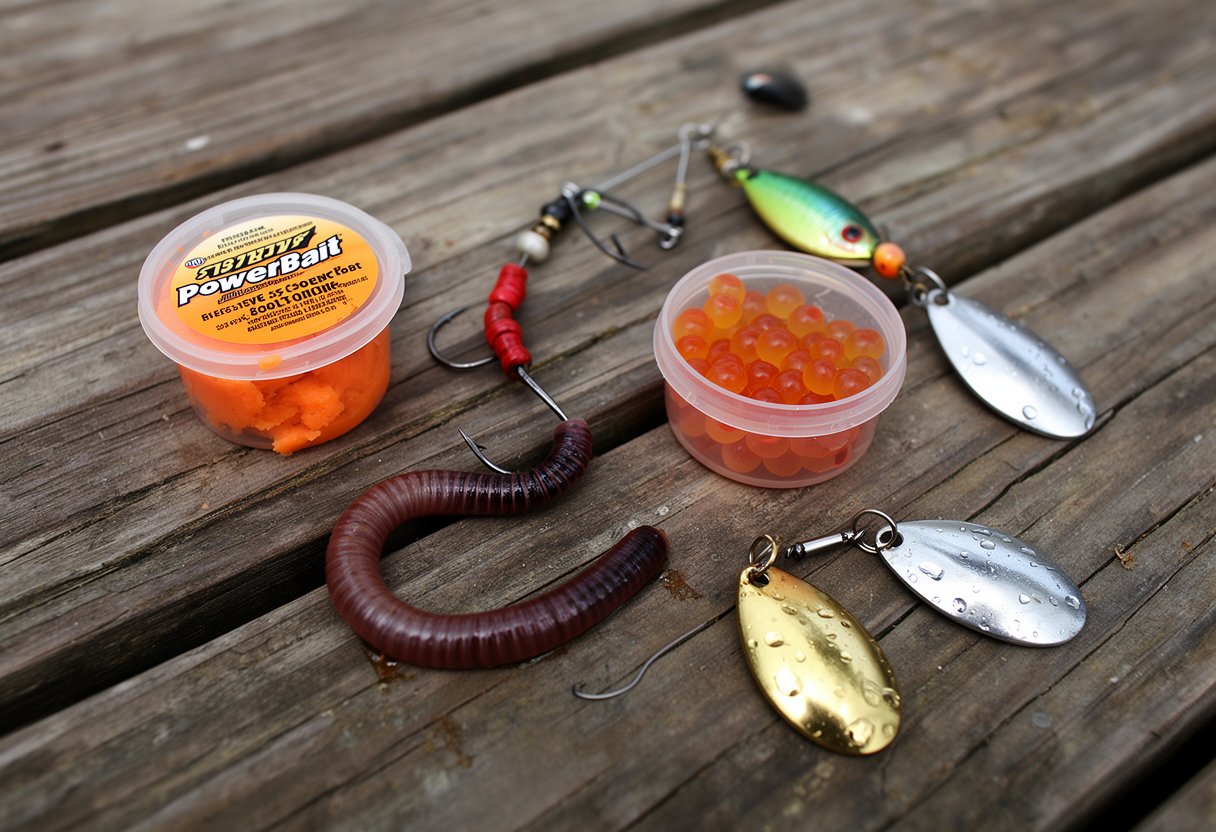
Live bait (most universal): Nightcrawlers, red worms, and small minnows work in nearly every trout situation. A nightcrawler cut to about 2 inches is arguably the best all-around trout bait on the planet. For rigging details, see our live bait fishing guide.
PowerBait: This scented dough bait is the top choice for stocked pond trout. The original orange “Bisco” flavor is legendary — it’s caught stocked rainbows for decades. Chartreuse and pink also work well. Hook it by wrapping the dough ball around your hook, covering the hook completely.
Salmon eggs and roe: These mimic natural trout food and work great in both streams and lakes. Single eggs or small roe clusters do well on a bobber rig.
Spinners: Rooster Tail and Mepps spinners are the top artificials for streams. They flash in the current and create vibrations trout feel even in slightly cloudy water. Size 2 or 3 in gold or silver covers most situations.
Spoons: Kastmaster and Little Cleo spoons imitate swimming minnows and work in ponds, lakes, and streams alike. A slow retrieve with occasional twitches outperforms a steady pull.
Match bait to your environment: At a stocked pond, start with PowerBait or worms on a bobber. In a stream, try a spinner or a minnow drifted in the current. In a lake, all of the above work — but live bait generally beats artificials for beginners.
Fishing Techniques by Environment
The water you’re fishing determines your technique. Here’s how to approach each one:
Ponds and lakes:
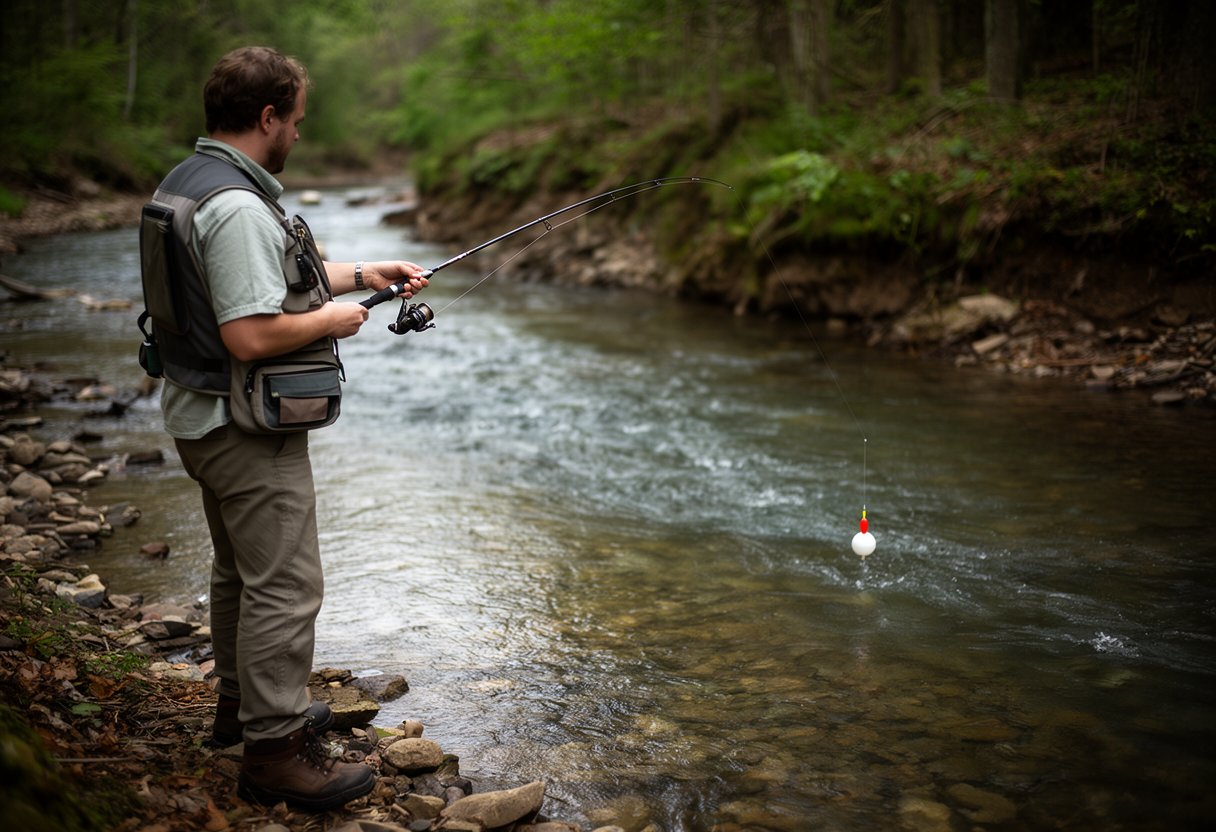
- Bobber fishing: Set your bobber 3 to 5 feet above your hook, add just enough split shot so your bait drifts down slowly, and cast to calm areas near cover. When the bobber goes under or pulls sideways, set the hook gently.
- Drift fishing: Cast upstream and let your bait drift naturally downstream. Works especially well near stocking points.
- Vertical jigging: Drop your bait straight down near structure and gently bounce it along the bottom. Good for trout holding deep.
Streams and rivers:
- Float fishing (drift fishing): Cast your bobber and bait downstream of the area you want to target and let the current carry it naturally. The bobber tells you when a fish takes it.
- Bottom fishing in pools: Weight your bait so it sits on the bottom in deep pools where bigger trout hold. Test depth by adding split shot until it reaches bottom, then adjust.
- Spinner retrieves: Cast upstream or across and let the spinner drift downstream, keeping the line tight so the blade spins. Slow and steady wins here.
General tips that apply everywhere: approach quietly from downstream — fish see and hear things coming from upstream much better than downstream. Present your bait naturally without fighting the current, and be patient. Trout don’t always bite right away. Let your presentation sit and work the water thoroughly before moving on.
For a refresher on casting, see our how to cast a fishing rod guide.
Catch and Release — Handling Trout Safely
Trout are more fragile than bass or panfish, and how you handle them makes a real difference in whether they survive release. Many waters have strict catch-and-release rules for trout, so these practices aren’t just recommended — they’re required.
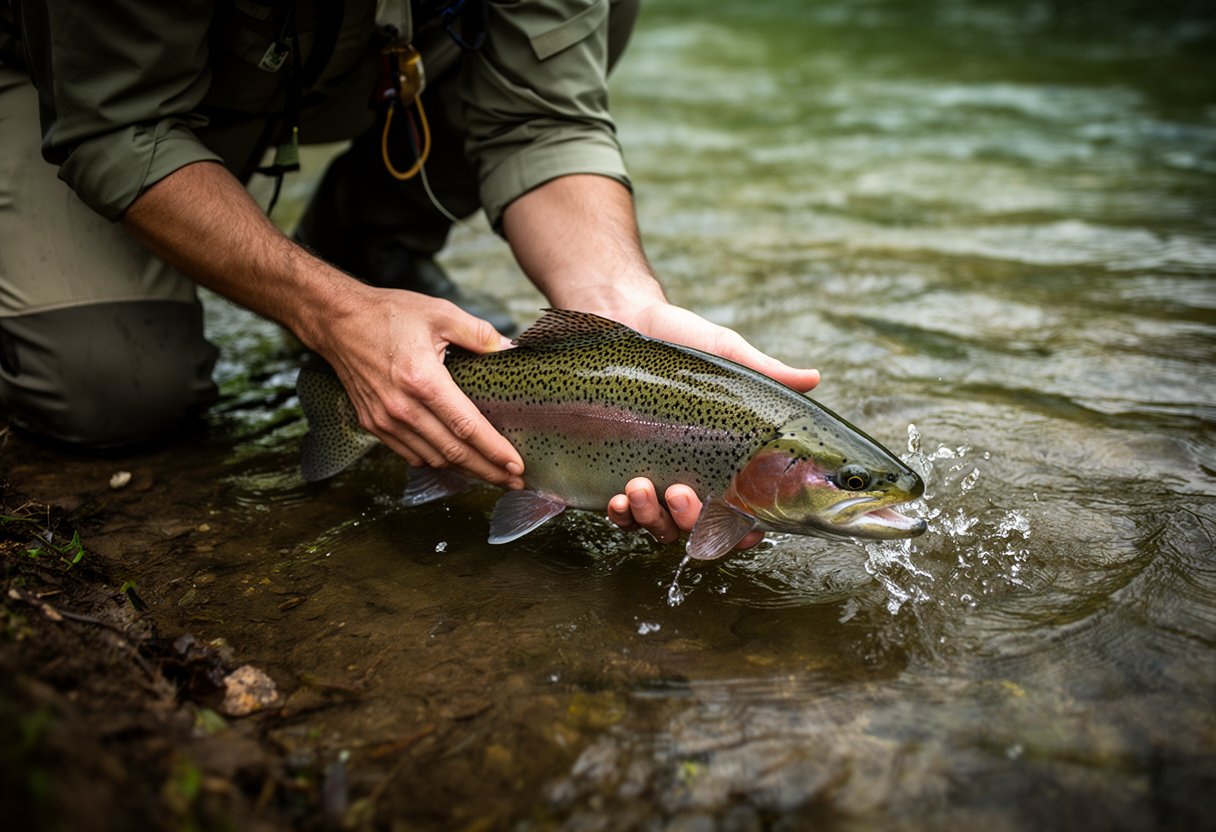
Wet your hands before touching a trout. Their skin carries a protective slime layer that prevents infection and parasites. Dry hands strip it away, and even a brief touch can cause damage.
Use barbless hooks or pinch the barbs flat. Faster hook removal means less handling time. Trout gills and mouths are delicate, and every extra second counts.
Don’t squeeze the fish or touch the gills. Support the trout gently in the water, without compressing internal organs. Never lift it by the tail or gills.
Keep the fish in the water whenever possible. If you need to remove the hook, do it with the fish submerged. A wet net helps if you have to lift it briefly.
If the hook is deeply embedded, don’t dig it out. Cut the leader close to the hook and let the fish go. The hook will eventually rust out, and trout survive this surprisingly well.
Revive the fish before letting it swim away. If the trout looks tired or disoriented after the fight, hold it gently facing upstream in the current until it recovers and swims off on its own. A fish that leaves strongly has a much better shot.
Your First Trout Awaits
You don’t need expensive gear, specialized techniques, or years of experience to catch your first trout. Start at a local stocked pond with an ultralight spinning rod, 6-pound line, and PowerBait or a worm on a bobber rig. That combination alone will put trout in your hands faster than you’d expect.
Every expert angler started exactly where you are — standing on the bank with a rod, hoping for that first bite. The difference is they kept showing up. Check your local stocking schedules, verify licensing and regulations for your state, and get on the water.
For guidance on which species to target throughout the year, see our seasonal fishing guide.
Good luck, and tight lines.