Taking your child fishing for the first time can feel overwhelming. You don't want to drown them in gear they can't handle, set expectations they can't meet, or — worst case — turn it into a safety lesson they'll never forget. Here's the good news: kids don't need expensive tackle, fancy techniques, or a detailed battle plan to love fishing. What they need is a rod that fits their hands, a simple rig that works, a pond full of fish willing to bite, and an adult who cares more about smiles than catch counts.
This guide walks through everything for setting up a kid's first fishing trip — the right gear, the simplest rig, the fish that keep them engaged, and the safety basics you shouldn't skip.
What Age Should Kids Start Fishing?
There's no magic age where kids are suddenly "ready" to fish, but a few practical milestones help set expectations.
Two- and three-year-olds can tag along as observers. They sit on your lap, hold the rod with your help, and stare at the bobber like it's the most fascinating thing in the world. At this age, fishing is really just "outside time" with a fishing rod attached — and that's plenty.
Around five to seven, most kids can actually participate. They help bait hooks (with supervision, obviously), manage a spincast reel, and reel in small fish on their own. Their coordination is good enough to handle basic tackle, and their patience stretches long enough to wait for a bite — at least for a few minutes.
Here's a useful rule of thumb: a child's attention span for focused activity is roughly two to three minutes per year of age. A four-year-old might stay focused on fishing for eight to twelve minutes before needing something else to do. An eight-year-old typically manages twenty minutes or more. Treat this as a guideline, not a stopwatch — some kids get completely absorbed and keep asking for more.
Follow your child's lead, not a developmental chart. Three years old and wants to hold the rod? Let them. Ten years old and prefers baiting hooks to casting? That's fine too. Fishing with kids is about building positive memories, not hitting benchmarks.
The Best Fish for Kids to Catch
Not all fish are created equal when it comes to teaching kids. The best first-catch species tend to share three traits: they're common, they bite often, and they're small enough for tiny hooks.
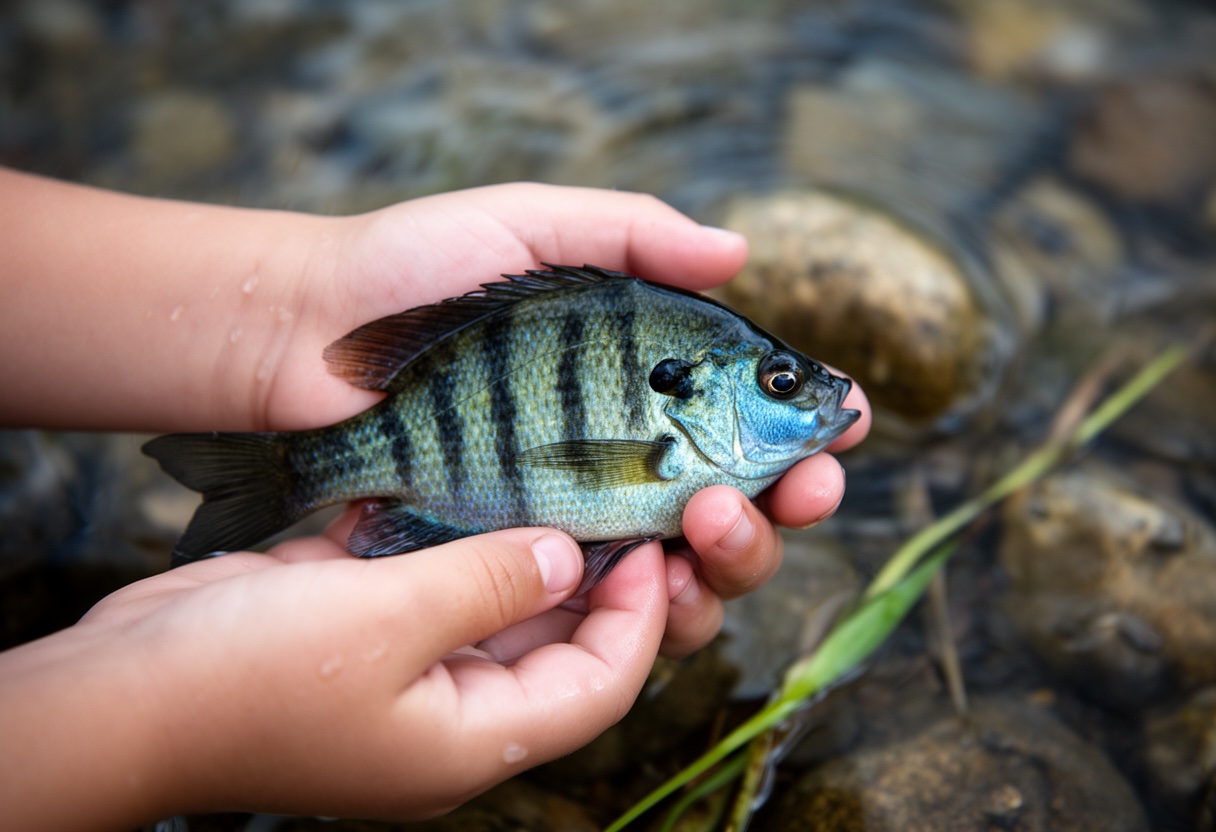
Panfish — bluegill, sunfish, and crappie — are the gold standard for beginners. They live in almost every pond and lake, school together (so one bite usually means more are close by), and go for simple bait like worms or dough balls without hesitation. Landing a bluegill on a size-six hook gives a kid that first real "I caught a fish!" moment without the drama of a large, thrashing fish.
Trout are a strong second choice, especially where stocked ponds and lakes are available. Even small trout fight hard enough to feel exciting, which makes the catch satisfying. Many state fish and game departments stock ponds year-round specifically for families — check your local stocking schedule for nearby options.
The catch rate matters far more than the species. A kid who bags five small bluegill in half an hour will beg to go back. A kid who sits for ninety minutes waiting for one bass probably won't.
For a deeper look at targeting panfish, check out our [panfish fishing for beginners](https://castdepth.com/panfish-fishing-for-beginners/) guide. And for finding productive small-water spots, our [pond fishing for beginners](https://castdepth.com/pond-fishing-for-beginners/) article has good recommendations.
Simple Gear That Kids Can Actually Use
You don't need to buy anything labeled "for kids." A lot of the branded kids' fishing sets are overpriced and flimsy. What actually matters is gear that fits the child and is simple enough that they can operate it without constant hand-holding.
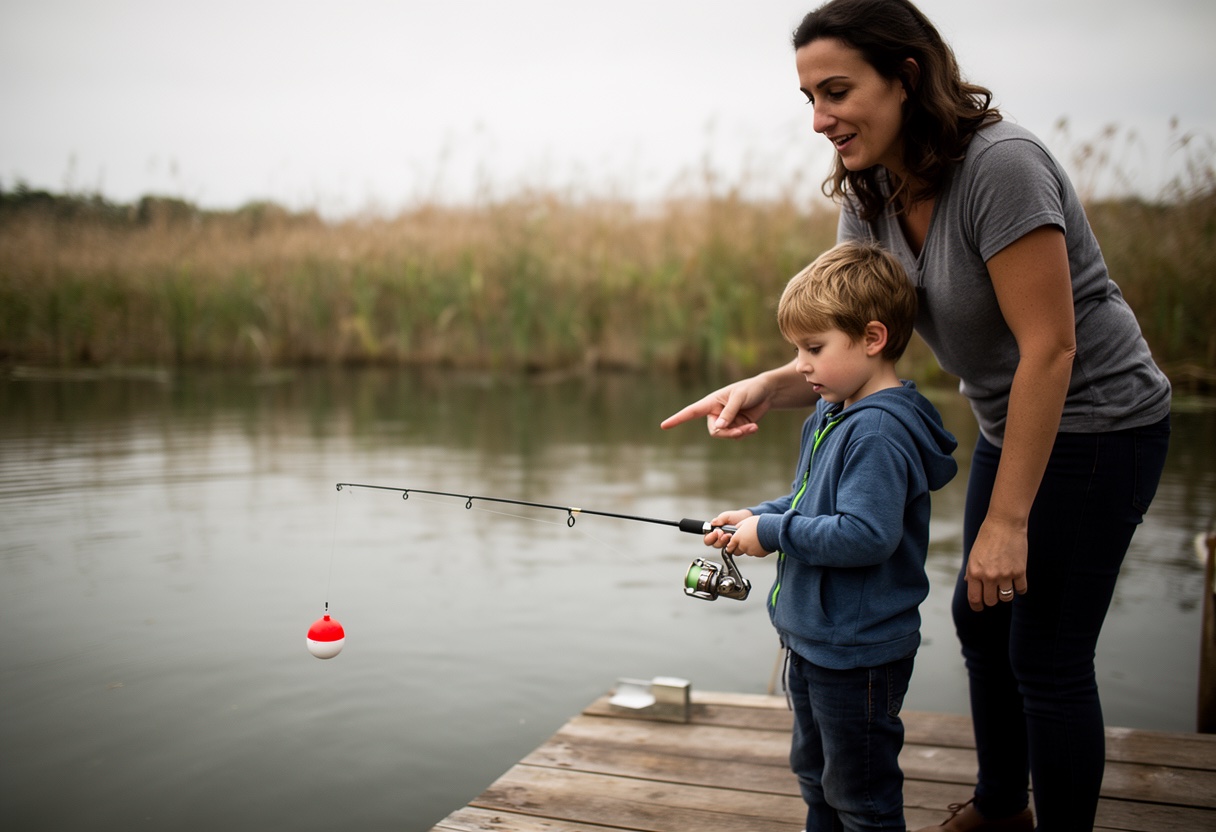
Rod: A lightweight rod between four and five feet works well for younger kids. Match the rod length roughly to the child's height — you don't want them wrestling with something that towers over them. Once they hit about eight or nine, a six-footer is a natural step up. Look for "ultra-light" or "light" power ratings — sensitive enough for small fish, light enough for small arms.
Reel: A spincast reel is the easiest option, hands down. Push the button, cast, release — no bail to flip, no line to pinch, no guessing which direction to crank. The child casts with one motion and reels with another. If you already have a lightweight spinning reel, that works too — it just takes a little more guidance in the beginning.
Line: Four to six-pound test monofilament handles panfish and trout comfortably while giving some stretch if a fish runs. Mono is also more visible in the water than braid or fluorocarbon, which helps kids track their line while they're learning.
A basic rod-and-reel combo for a beginner should cost twenty to thirty dollars, maybe a bit more. You're not building a tournament setup — you're building a first impression. For more on stretching your budget, see our [fishing on a budget for beginners](https://castdepth.com/fishing-on-a-budget-for-beginners/) guide.
The Best Rig for Kids — Slide Bobber Setup
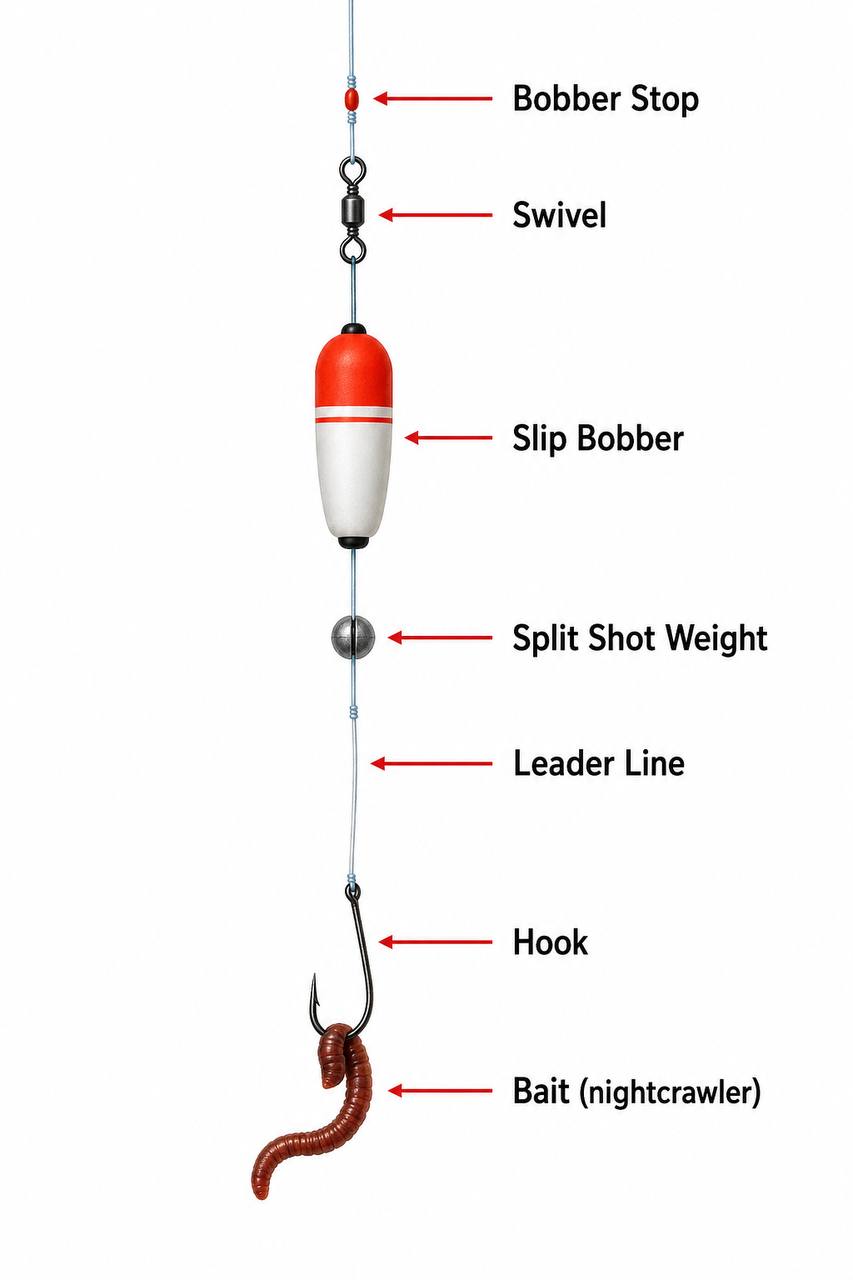
If you only teach a kid one rig, make it the slide bobber rig. It works in ponds, lakes, and rivers. It catches panfish, trout, and the occasional bass. And it's simple enough that a child can help set it up.
Here's the setup: your main line runs through a small bead (the stop bead), then through a sliding bobber, then through a swivel, with a sinker and hook below. The bobber slides freely along the line until it hits the stop bead, which sets how deep you're fishing. Want to go deeper? Slide the bead down. Shallower? Slide it up. Two-second adjustment, and kids genuinely enjoy having control over it.
The sinker sits on the bottom, holding the bait steady, while the bobber floats on the surface. Fish bites, bobber dips — reel it in.
Bait that works with this rig:
- Nightcrawlers (worms): the universal catch-all. Cut a four-inch piece and thread it on so a small tail dangles free — the wiggling movement is what draws fish in.
- Crickets: great for panfish, especially through summer. Live or freshly caught works best.
- Dough bait (Purina Tiger Nut is a common brand): ideal for kids who aren't comfortable handling worms. Pinch a piece onto the hook and you're set.
- PowerBait: floating dough bait designed for trout. Perfect for stocked ponds.
How to Keep Kids Engaged (Without Losing Your Mind)
Fishing asks for patience — and patience is still under construction in most young children. The goal is to make the downtime between bites interesting enough that boredom doesn't take over.
Limit outings to one or two hours with younger kids. Most children need a break after about thirty minutes of actual fishing. That doesn't mean you're done — it means you switch gears. Let them skip stones, explore the bank, find interesting rocks, or just burn off energy for a few minutes. Then settle back in.
Pick spots where fish are dense. Small ponds, stocked lakes, and urban fishing piers typically pack more fish per acre than large open water. The faster they see bites, the longer they stay interested.
Bring snacks and water. A fishing trip with kids should feel like a picnic that happens to involve rods, not a structured lesson.
Move if there aren't bites. If you're sitting in a spot for ten minutes and nothing happens, relocate. Don't wait for fish to find you — put the rod in the water where fish already are.
Keep a small bucket or livewell handy. Kids love watching their catch swim around. A clear bucket with pond water and a few bluegill doubles as a miniature aquarium and a serious motivation booster.
Celebrate the effort, not just the catch. "You reeled that in all by yourself!" lands harder than "Nice fish." Reeling, unhooking, handling gear — that's where the real learning lives.
Safety Essentials Every Parent Should Know
Fishing involves sharp hooks, slippery ground, and open water. You don't need to be anxious, but a few basic habits prevent the vast majority of accidents.
Use barbless hooks. This is the top priority. Barbless hooks slide right out if a child accidentally gets snagged. If you're using barbed hooks, bend the barbs flat with needle-nose pliers before you leave. Circle hooks — where the point curves inward — are an even safer option since the tip rarely faces outward.
Life jackets near water. Even fishing from shore, a properly fitted life jacket is smart if the bank is steep or the water is deep. Most states require kids on boats to wear one — the same thinking applies near the water's edge.
Proper shoes. No bare feet. A kid walking around fishing gear needs closed-toe shoes or water shoes. Hooks lying in grass or sand are nearly invisible until you step on them.
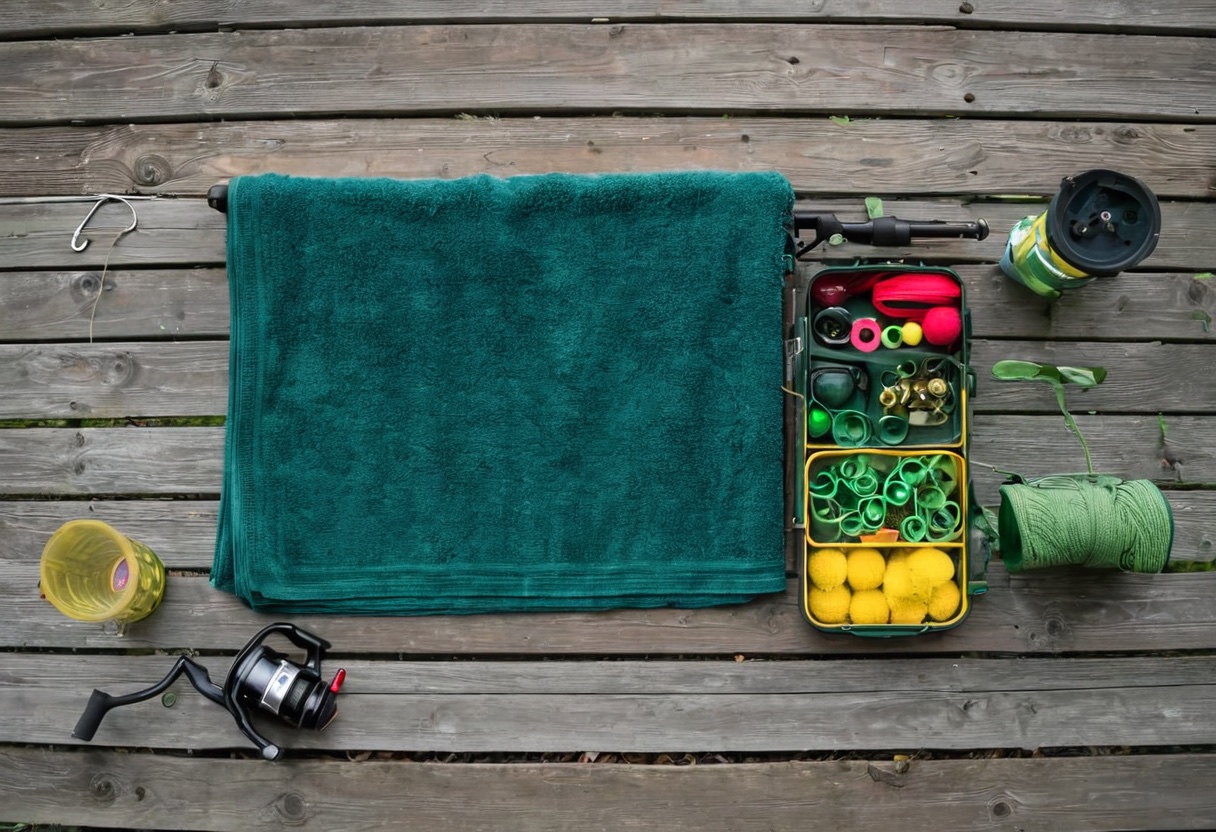
Store hooks and sharp gear securely. When you're not actively fishing, hooks go in a closed tackle box — not on the towel or the ground. Same rule for pliers and fishing knives.
Prefer non-lead weights. If your child is handling sinkers, non-lead alternatives like tungsten or tin remove the risk of lead exposure entirely. If you use lead weights, make sure kids wash their hands after.
Sun protection. Water reflects UV light, so sunburn comes faster on the water than on land. Sunscreen, hats, and sunglasses are non-negotiable. Polarized lenses also cut surface glare, which helps kids (and adults) see better.
Bring a basic first aid kit. You probably won't need it, but having bandages, antiseptic wipes, and tweezers on hand means a minor hook snag doesn't become a frantic drive to urgent care.
Show them how it's done. Demonstrate unhooking with pliers. Show them to hold hooks by the shaft, not the point. Kids learn more from watching you than from being told what to do.
Making Your First Trip a Success
The first trip doesn't need to be flawless. It needs to end with your kid saying "can we come back?"
Here's a practical checklist for trip day:
- Keep it short. Sixty to ninety minutes is plenty for a first outing. There's always a next time.
- Go where fish are guaranteed. A stocked pond or small lake with known panfish beats a big, unfamiliar lake every time.
- Pre-rig at home. Set up the slide bobber rigs, bait the hooks, and pack everything into a tackle bag before you leave. Less fumbling means more fishing.
- Pack the essentials: snacks, water, sunscreen, a chair or blanket, a small bucket, and a backup activity — a ball, a book, a deck of cards, whatever your kid enjoys.
- Leave while they still want to stay. The memory of wanting more is better than the memory of being exhausted and cranky.
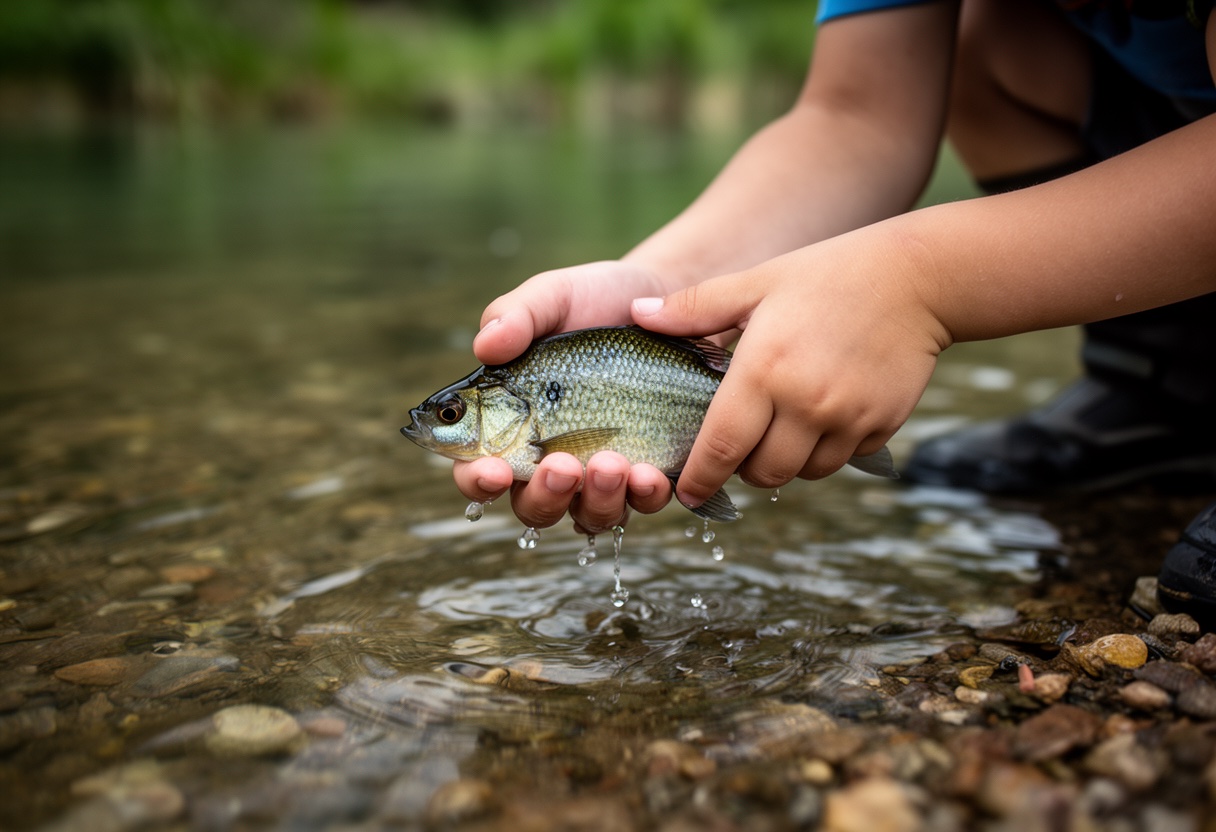
- Teach catch-and-release. Panfish and trout handle being released fine. Show your child how to hold the fish gently and slide it back into the water. It's a simple lesson in conservation that makes the whole experience feel more meaningful.
The point of fishing with kids isn't to produce competitive anglers. It's to create a positive feeling about being outside, spending time together, and the quiet satisfaction of waiting for something good to happen. The technique comes later — if they want it to.