
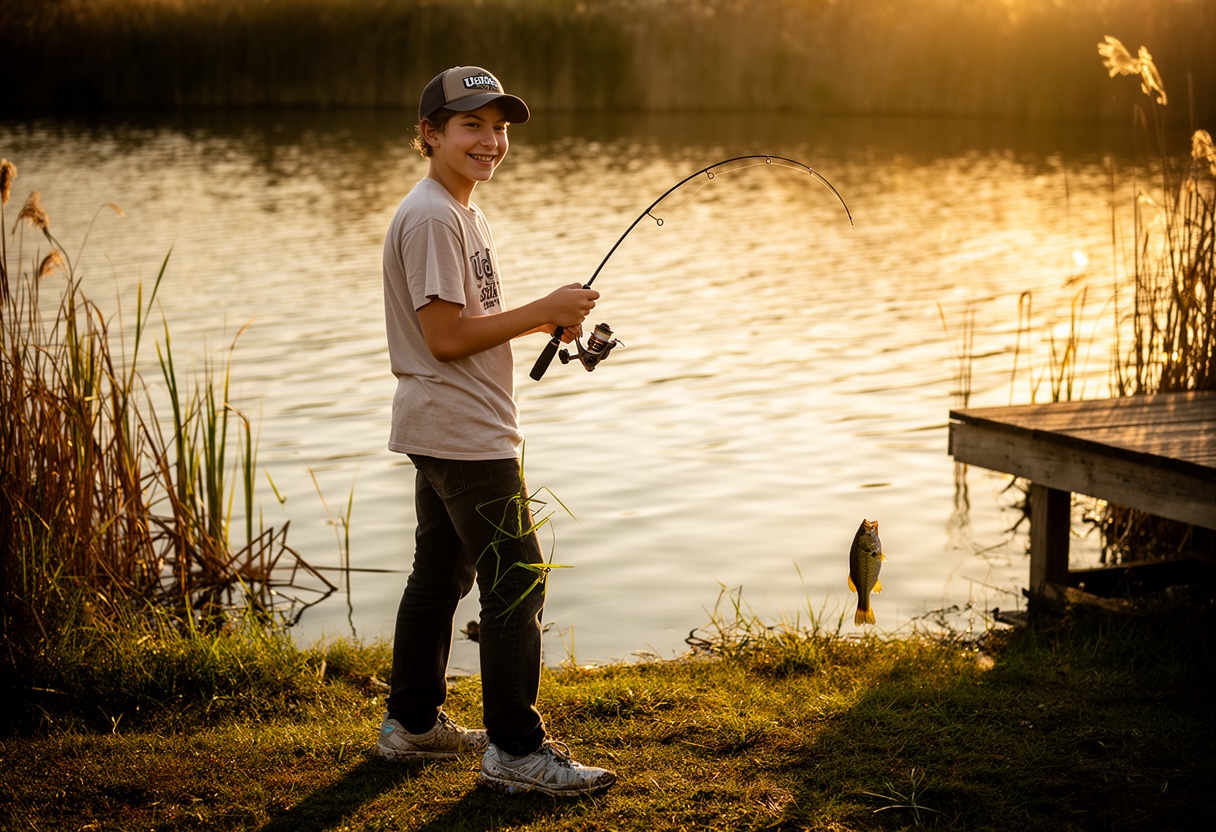
Fishing has a reputation for being expensive. Walk into a big-box sporting goods store and you’ll see $300 rods, $200 reels, and bins full of lures that look like they cost more than your car insurance. But here’s the truth: you can start fishing — and actually catch fish — with less than $100. In fact, many experienced anglers still use the same gear they bought for under $50 when they started.
You Don’t Need to Spend a Fortune to Start Fishing
The biggest barrier to fishing isn’t skill. It’s the assumption that you need expensive equipment to enjoy it. You don’t. A fish can’t tell the difference between a $40 rod and a $400 rod — it just sees a lure or a piece of bait. The rod is there to help *you* handle the fight, not to impress the fish.
Here’s what a complete beginner fishing setup actually costs in 2026:
- Rod and reel combo: $30–50
- Basic tackle (hooks, sinkers, bobbers): $5–10
- A few lures: $5–10
- Needle-nose pliers: $5
- Fishing license: ~$25/year (varies by state)
That’s around $70–$100 total to go from zero to catching fish. A single dinner out costs more than your entire starter kit.
If you’re on an especially tight budget, you can start even lower. Some states offer free fishing days where no license is required. Worms can be dug from your yard for free. And many beginners borrow a friend’s rod for their first few outings to see if they even like the sport before buying anything. The point isn’t to suffer through broken cheap gear — it’s to remove the financial barrier that keeps people from trying.
The $50 Starter Setup — What You Actually Need
Let’s get specific about what to buy. This is the setup that gets you on the water catching fish, not sitting on a shelf.
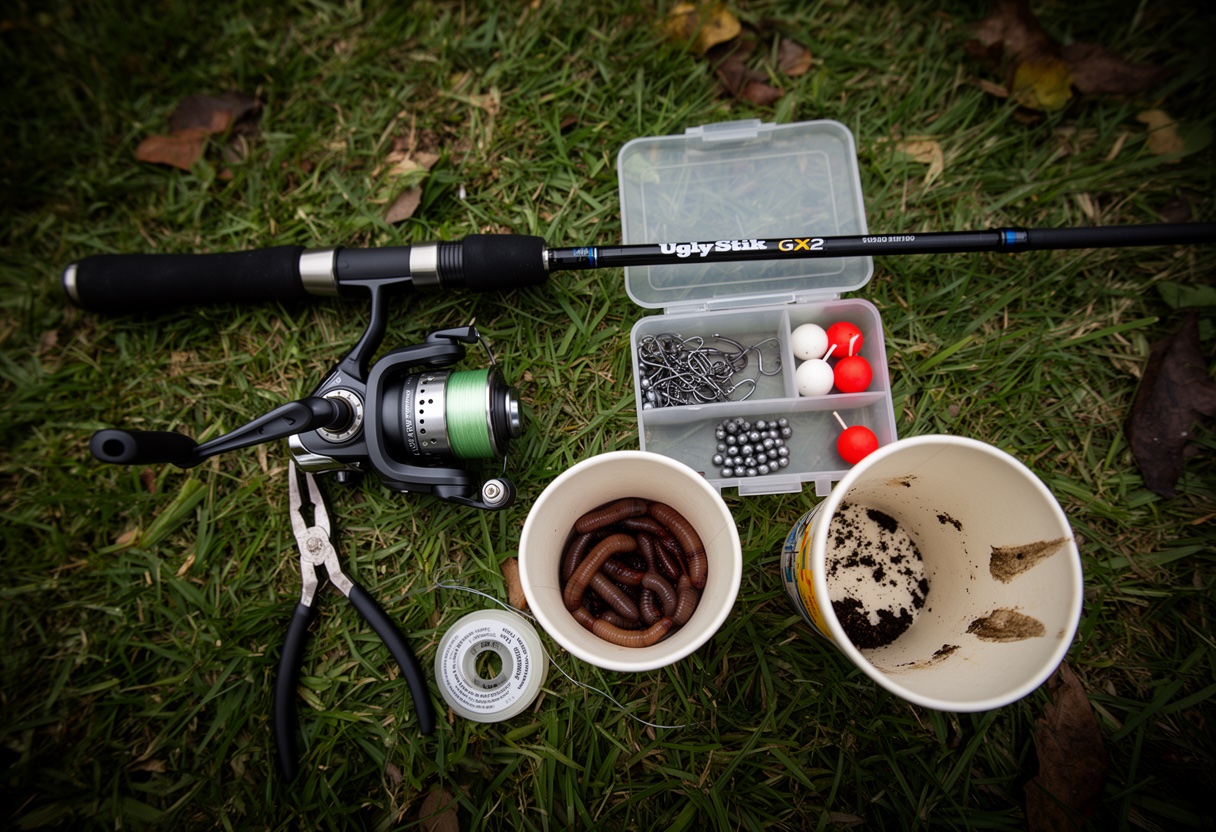
The combo: Ugly Stik GX2 spinning combo (~$45–$50)
This is the most recommended budget fishing combo across every beginner fishing forum, and for good reason. The Ugly Stik GX2 isn’t some marketing gimmick — it’s genuinely durable, surprisingly sensitive, and handles everything from small panfish to decent-sized bass. The rod blank is fiberglass-reinforced, meaning it can take abuse from a beginner who doesn’t yet know how to handle a rod properly. The reel is pre-spooled with monofilament line, so you don’t need to know how to wind line yet.
If the pink version is on sale for $25 at Walmart, don’t overthink it — the pink ones are functionally identical to any other color. It’s not a gendered product; it’s just a clearance price point.
Terminal tackle (~$5–$10):
You’ll need a small handful of basics. Head to the fishing aisle and grab:
- A pack of split-shot sinkers (the small ones you pinch onto your line)
- A box of size 8–10 hooks (works for worms and small baits)
- A few bobbers (those red-and-white floats — they let you fish worms suspended in the water column instead of on the bottom)
That’s enough tackle for dozens of fishing trips. You can reuse hooks and sinkers endlessly unless you lose them to a snag.
Live bait or a couple of lures (~$3–$5 per outing):
Earthworms are the easiest, cheapest, and most effective bait for beginners. Most bait shops sell them for $3–$5 per cup. If you have a yard, you can dig your own after a rain — completely free. A few beginners prefer starting with a simple plastic worm or spinnerbait, and that works fine too. See our soft plastic baits guide for a breakdown of the most versatile beginner lures.
Needle-nose pliers (~$5):
You will need a tool to remove hooks. Needle-nose pliers from any hardware store work perfectly. You don’t need “fishing pliers” with the fancy hook-removal notch — regular pliers are fine when you’re starting out.
See also our freshwater rod and reel combo guide for more detail on how spinning combos work and why they’re the best choice for beginners.
The $100 Setup — A Smarter Long-Term Investment
If you can stretch your budget a bit, spending around $100 gives you noticeably better performance — smoother casting, more sensitive bite detection, and a reel drag that actually works properly. This is the sweet spot where you pay a little more and get a setup that will last you for years, not months.
Here’s how to build it:
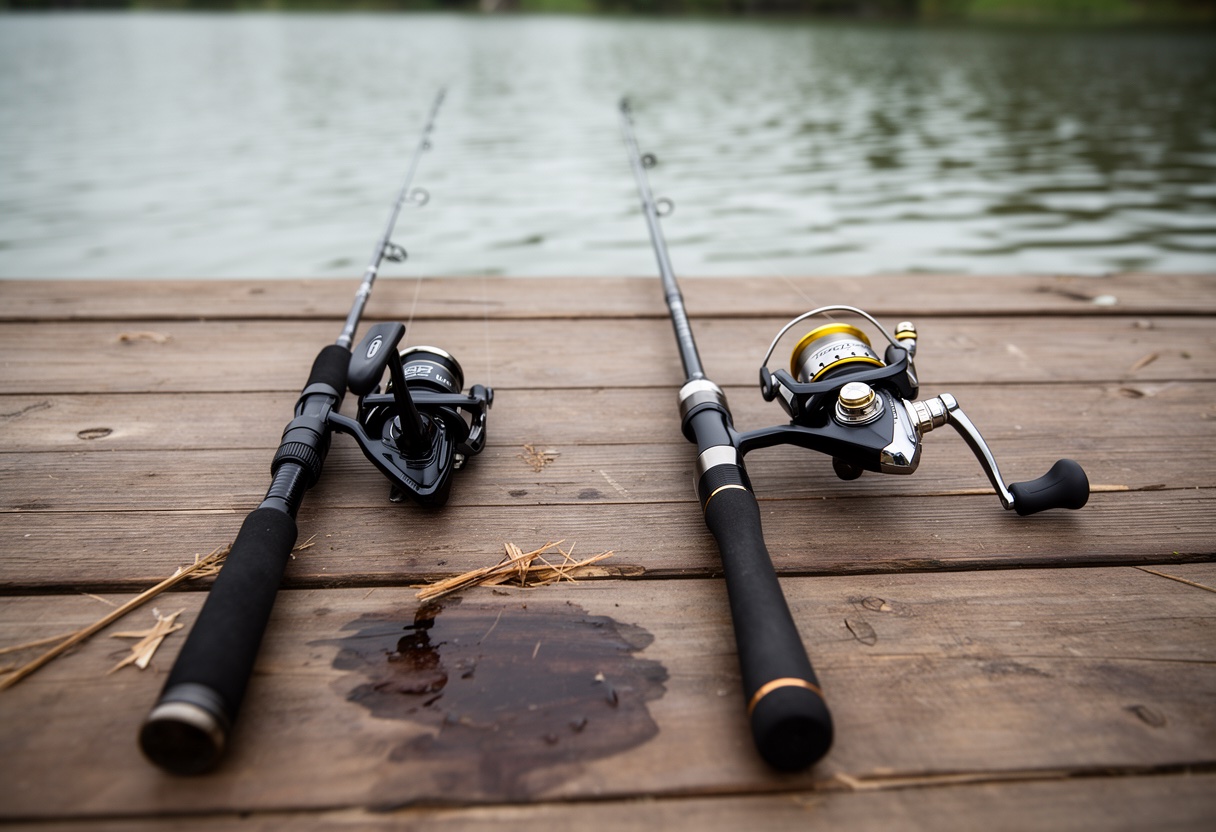
Ugly Stik GX2 rod alone (~$30–$35) + Pflueger President reel (~$40–$50 on sale)
The Pflueger President has a ceramic drag system and six stainless steel ball bearings — it’s smooth enough for intermediate angling and handles fish well into double digits. Pair it with the same GX2 rod blank, and you’ve got a setup that outperforms most pre-made combos in the $80–$120 range.
Quality braided line (~$15):
Braided line (like Daiwa J-braid at around $15 for 300 yards) is dramatically more sensitive than monofilament. You feel bites earlier, casts go farther, and the line doesn’t stretch — meaning your hook sets are sharper. For a beginner, this makes a real difference in how many fish you actually hook versus feel tug at.
Better terminal tackle (~$10):
With a better rod and reel, you’ll want slightly better hooks and sinkers too. The difference between a 25-cent hook and a dollar hook is subtle, but it adds up over a season.
Total: around $100–$110. It’s not a huge jump from the $50 starter kit, but the improvement in your experience is noticeable from day one.
What About a Fishing License?
Fishing licenses are mandatory in virtually every state, and the cost is one of those “hidden” expenses that doesn’t come up when you’re browsing rods online.
The average annual resident fishing license in the United States runs around $25. Some states are cheaper — Louisiana’s is about $12 — and some are pricier — Alaska’s can run $80+ for a full sport fishing license. But for most beginners fishing freshwater, $20–$35 per year is the typical range.
Here’s how to reduce that cost:
- Free fishing days: Every state offers at least one — usually two or three — days per year when no fishing license is required. These are typically in spring (April–May) and sometimes in September. All other fishing regulations still apply, but you can fish legally without buying a license on those specific dates.
- Multi-day passes: If you’re unsure whether you’ll stick with fishing, many states sell 1-day ($5–$15) or 3-day ($10–$20) licenses. These let you test the waters without committing to a full year.
- Family licenses: Some states offer family or household licenses that cover multiple anglers for a slightly higher price than a single license.
Your license isn’t just a fee — the revenue funds fish stocking, habitat restoration, boat ramps, and public access areas. The free public ponds you’ll be fishing at? Your license fees help maintain those.
For more details on licensing rules and regulations, check our fishing license and regulations guide.
Where You Fish Matters More Than What You Use
This is the most important point in this entire article: where you fish typically matters far more than what you fish with.
A $40 rod and reel combo at a fishable public pond will catch more fish than a $400 setup at a spot where nobody’s fishing. Location and technique beat gear every single time, especially when you’re comparing reasonable budget gear against premium gear.
And the best news? Most of the best beginner fishing spots are completely free:
Public ponds and lakes: Most communities have at least one public fishing pond, often maintained by the city or county. These are typically stocked with fish — panfish, bass, catfish, or trout depending on your region. There’s no admission fee, no membership, and no reservation required. You walk up to the bank, cast your line, and fish.
Rivers and creeks: Flowing water is one of the most overlooked beginner fishing resources. Rivers typically have a mix of species and often have bank access that’s completely free. Our guide to fishing in current covers how to read river fishing spots and adjust your technique for moving water.
Piers and jetties: If you live near the coast, public piers are one of the best free fishing locations available. You don’t need a boat, the structure concentrates fish, and the fishing is typically good for species like surfperch, croaker, and even larger game fish depending on the season. See our pier and jetty fishing guide for saltwater pier fishing basics.
Bait and Lures on a Budget
Once you’ve bought your rod and reel, the ongoing cost of fishing comes down to bait and lures. This is where many beginners accidentally waste money.
Live bait is the cheapest option:
Worms cost $3–$5 per cup at a bait shop, and a single cup can last two or three fishing trips if you store them properly (a ventilated container in the refrigerator with damp paper towels). If you dig your own, the cost drops to zero. Minnows run $2–$4 for a small bucket of five to ten, and they’re typically more expensive per fish caught than worms, so stick with worms for maximum value.
A few quality lures beat a box of junk:
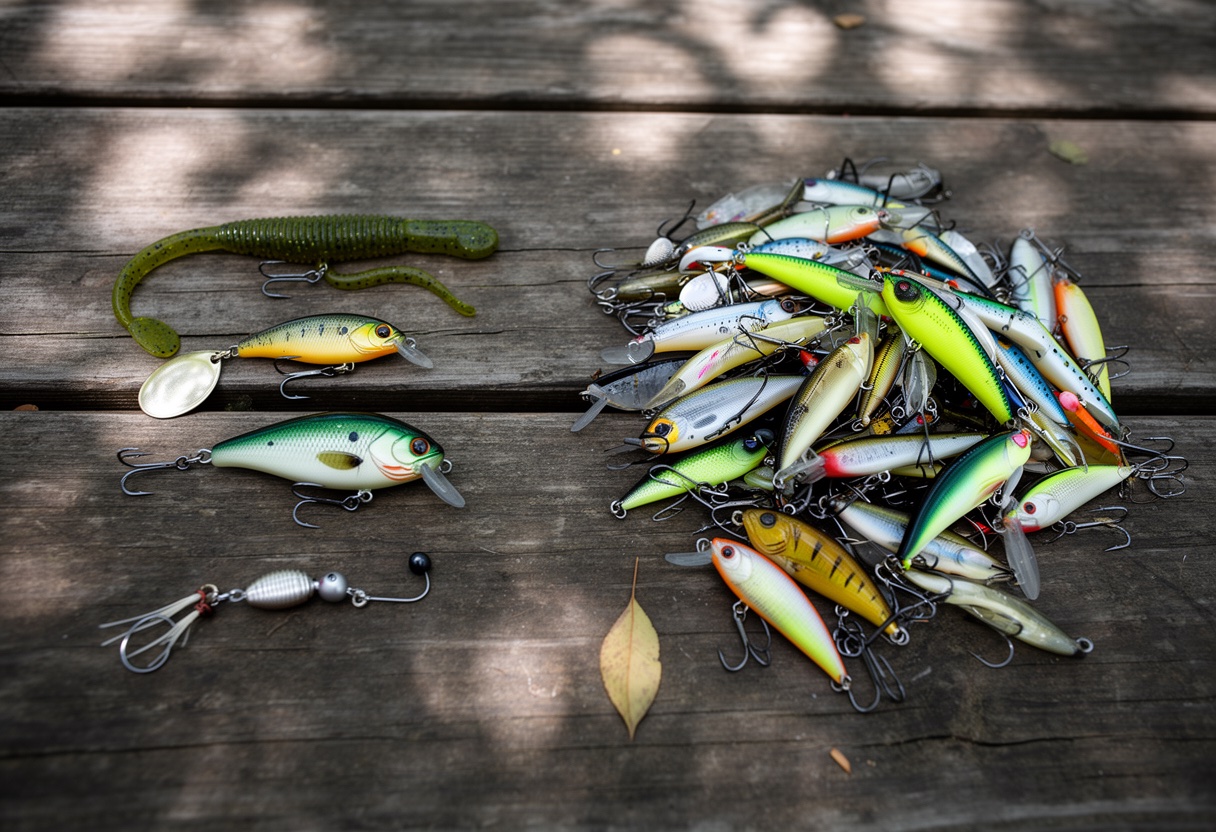
Here’s a rule that applies whether you have $5 or $50 to spend on lures: quality over quantity. Three well-chosen lures will catch more fish than a $15 box containing fifty random pieces.
For a beginner on a budget, these three lures cover the vast majority of freshwater situations:
- A 3-inch green pumpkin soft plastic worm — works with panfish, bass, and catfish. Tied to a jig head or fished on a weightless Texas rig, this single lure can catch almost everything in a pond.
- A small inline spinner (like a Mepps Size 2 or Rooster Tail) — covers trout, bass, crappie, and perch. Cast it near structure and retrieve at a steady pace.
- A shallow-running crankbait — catches bass and panfish when fished along the bottom near cover.
That’s roughly $10–$15 total for three lures that handle most freshwater situations. You don’t need the other forty-seven pieces in the value pack.
Gear That Scales With You
One of the things that makes fishing on a budget actually work is that the sport scales naturally. You don’t need to buy your “forever” setup on day one. Start cheap, fish for a while, and upgrade gradually.
Season one: Buy the $50 combo. Fish it hard. Learn to cast, learn to read water, figure out what species you enjoy targeting most. Most beginners who start with a budget setup will fish it for an entire season and catch plenty of fish.
Season two (maybe): If you find yourself still fishing regularly, consider upgrading the reel first. The reel is where the biggest performance gains come from — a better drag, more bearings, and smoother retrieval make every cast feel noticeably better. The Ugly Stik GX2 rod from your first combo is still perfectly usable, so you only need to buy the reel.
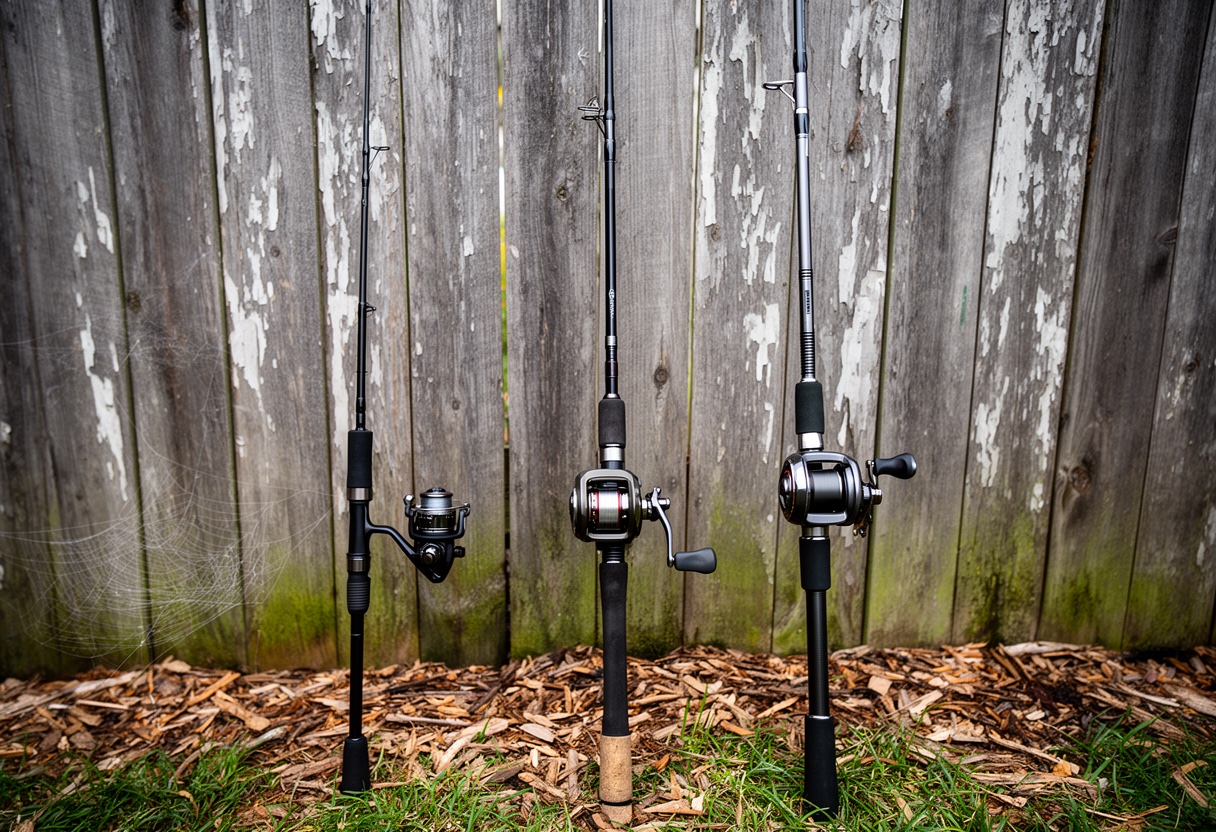
Beyond that: From here, it depends entirely on what you enjoy. If you love bass fishing, you might invest in a casting rod and reel. If you’re more into trout, you’ll want an ultralight setup. If saltwater calls to you, check our saltwater fishing rods guide. The key principle is the same: upgrade one piece at a time, and your old gear becomes a perfectly serviceable backup.
Common Budget Traps to Avoid
After covering what *to buy, it’s worth mentioning what not* to buy. These are the traps that cost beginners money without improving their fishing:
“100-piece” value tackle kits: If you’ve never fished before, these look like an incredible deal. $20 for a hundred pieces of tackle sounds unbeatable. It isn’t. Most of those hooks are too large or poorly shaped for the species you’ll be targeting. The lures have thin metal hooks that bend instantly. The sinkers are the wrong shape for most situations. You end up with a plastic box of junk that takes up space and gives you false confidence. Buy the three or four items you actually need — you’ll spend about the same and catch significantly more fish.
Rod-and-reel combos that include “everything”: Some pre-assembled combos advertise that they come with a tackle box, lures, pliers, and a carry bag. On paper, that’s a great deal. In practice, every single included item is the lowest-quality version of itself. The rod and reel in these bundles are typically worse than comparable stand-alone combos because the manufacturer has to cut costs across every component.
Fishing apparel marketed as essential gear: You do not need $80 fishing shorts, $60 boots, or a $40 fishing hat to start. Wear what you’re comfortable in. A t-shirt, jeans or shorts, and sneakers are fine for your first fifty fishing trips. You’ll figure out what gear is actually useful once you’ve spent time on the water.
Buying lures before knowing what works locally: This is the most common mistake. Beginners buy $30 worth of lures online based on YouTube recommendations, arrive at the pond, and discover that nobody bites on anything they brought. Before buying lures, ask someone who fishes that body of water — or check with the local bait shop. The right lure for your spot costs the same as the wrong one, and it catches ten times as many fish.
The Bottom Line
Fishing is one of the most affordable outdoor hobbies available. A complete beginner can get everything needed — rod, reel, tackle, bait, and a license — for around $70–$100. That’s less than a decent pair of running shoes.
The gear you start with doesn’t need to be perfect. It needs to be functional. Fish don’t care what you hold, and neither should you. Cast your line, learn the basics, and upgrade gradually as you figure out what you actually enjoy about the sport. The best fishing setup is the one that gets you on the water.