
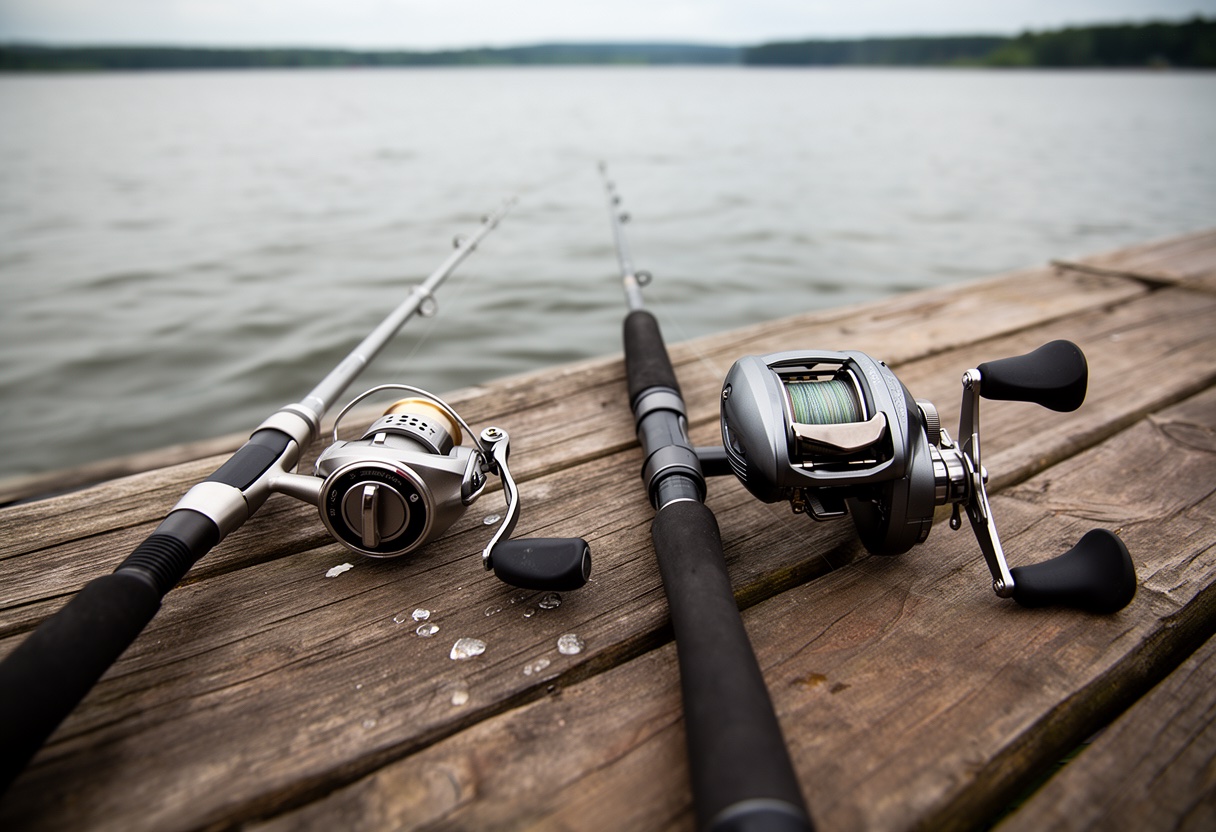
You’ve decided to start fishing. You walk into the nearest tackle shop or open your favorite online store, and immediately you’re faced with a wall of fishing rods and reels. Some have the reel mounted underneath the rod, others on top. Some have a bail arm that flips open and closed, others have an exposed spool that spins when you cast.
The two main reel types you’ll see are spinning reels and baitcasting reels. And if you’re like most beginners, you probably noticed baitcasters first — that’s what the pros use on TV, that’s what you see on YouTube videos, and that’s what looks the most “real.”
The honest answer: for most beginners, a spinning reel is the better choice. But baitcasters aren’t wrong — they just require more patience to learn. This guide breaks down exactly how each type works, where each excels, and how to pick the right one for your situation.
How a Spinning Reel Works
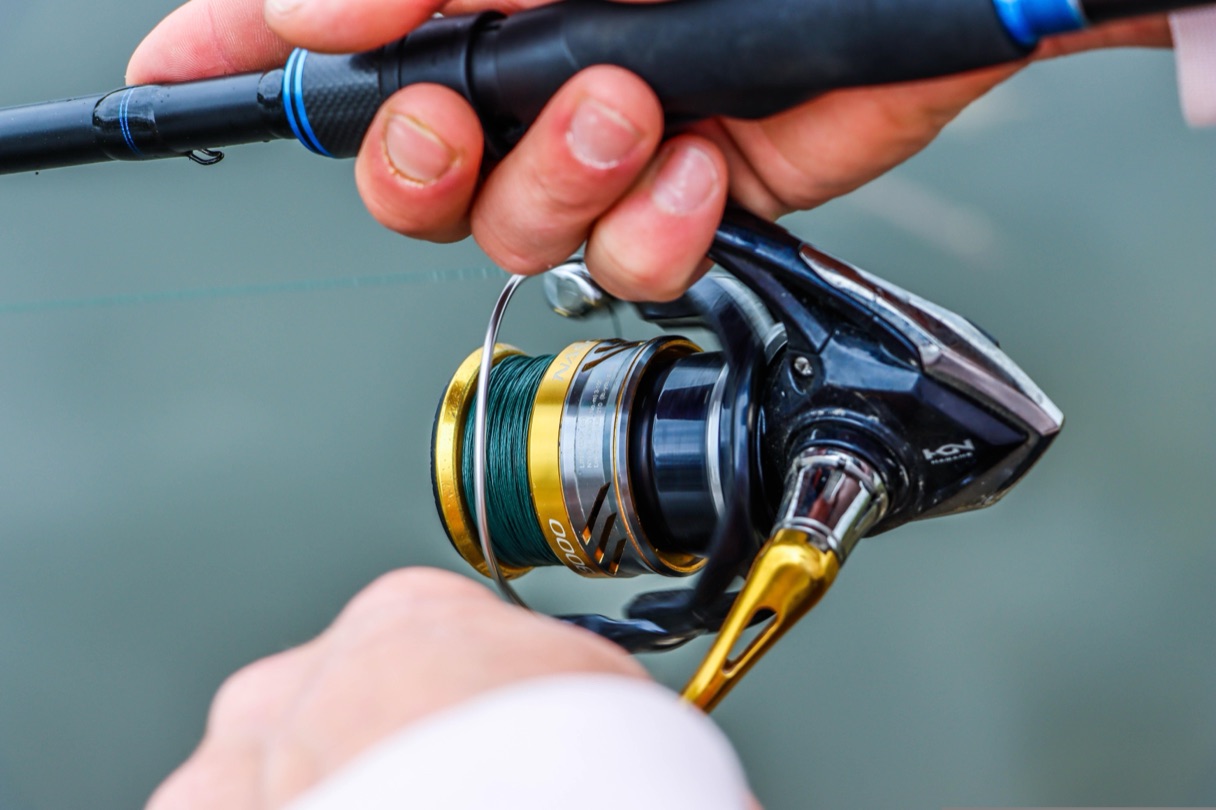
A spinning reel is designed for simplicity. The reel body hangs below the rod, and the key feature is what’s called a fixed spool — meaning the spool does not rotate when you cast. Instead, it stays stationary while line flows off it through an open bail arm.
Here’s the basic operation:
- Open the bail — Flip the metal ring (bail) with your finger so it’s in the open position. This unlocks the line so it can flow freely off the spool.
- Cast — Pull the line out with your free hand to the distance you want, then swing the rod forward. Line flies off the stationary spool.
- Close the bail — After your lure hits the water, rotate the bail arm back closed. This reconnects the line to the spool.
- Reel in — Turn the handle, and the spool rotates to retrieve line and your lure back toward you.
This design is forgiving. Even if you don’t time your cast perfectly, the line still comes off the reel cleanly. There’s no spool to accidentally overspin, which means no tangles mid-cast. It’s this fundamental simplicity that makes spinning reels the go-to recommendation for anyone picking up fishing for the first time.
How a Baitcasting Reel Works
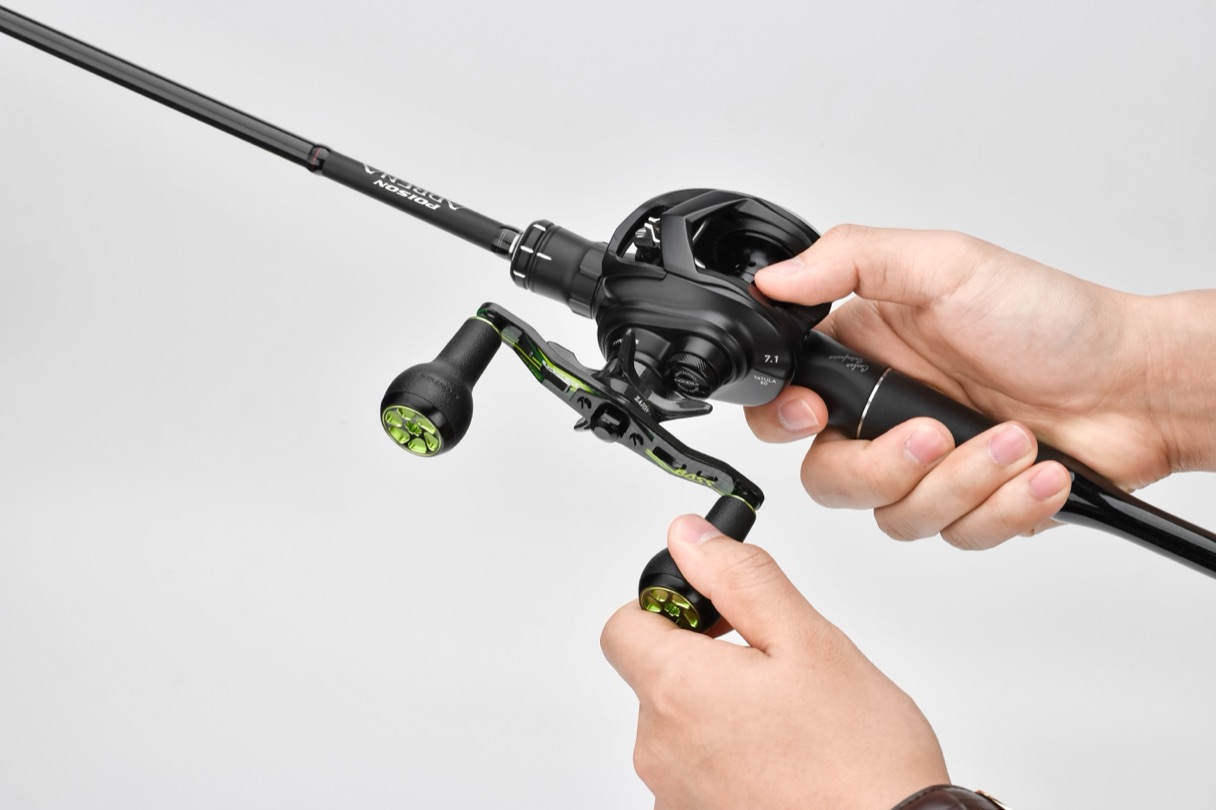
A baitcasting reel operates on a completely different principle. The reel mounts on top of the rod, and the spool is exposed and rotates during the cast. When you swing the rod forward, the spool spins and line flies off it directly — no bail arm to flip open.
This sounds simple enough, but it introduces a critical challenge: you need to control the spool speed with your thumb. If the spool spins faster than your lure is traveling through the air, the line keeps flying off even after the lure lands, creating a tangled mess commonly called “backlash” or a “bird’s nest.”
The basic operation:
- Thumb on the spool — Before casting, place your thumb lightly on top of the spool. This is your brake.
- Cast — Release line with your index finger as you swing the rod. The spool begins spinning.
- Control with your thumb — As the lure slows down in flight, press your thumb against the spool to slow it. When the lure hits the water, the spool should stop spinning almost instantly.
- Reel in — Turn the handle to retrieve. Baitcasting reels typically have higher gear ratios, meaning you retrieve line faster per crank.
This design gives you more power and precision. Heavy lures travel farther and more accurately. You can cast directly into tight spaces around logs, stumps, and docks. But the thumb-control skill takes time to develop — usually 1–2 weeks of dedicated practice before backlash becomes a rare event instead of the norm.
Why Spinning Reels Are the Best Choice for Most Beginners
The biggest reason spinning reels win for beginners is that they eliminate the most frustrating problem in fishing: tangles. When you’re already learning how to read water, choose lures, and handle fish, adding constant line tangles to the mix turns fishing from fun to frustrating.
Spinning reels also handle light lures with ease. Tossing a 1/8-ounce jig or a small crankbait is natural on a spinning reel. On a baitcaster, lures under 3/8-ounce are difficult to cast because they don’t have enough weight to spin the spool consistently. This matters because many beginner-friendly species — panfish, trout, small bass — are caught on lightweight lures and baits.
Versatility is another advantage. A single spinning setup can handle a surprising range of fishing situations:
- Panfish on small jigs and live bait
- Trout on spinners and spoons
- Bass on soft plastics, crankbaits, and topwater
- Saltwater species from snook to redfish
- Even light trolling for walleye or salmon
The ergonomic design also matters. With the reel mounted below the rod, you can hold the rod with one hand and flip the bail with the same hand. You can also hold bait in one hand while operating the reel with the other — something that’s awkward or impossible on most baitcasting setups.
Spinning vs Baitcasting: Side-by-Side Comparison
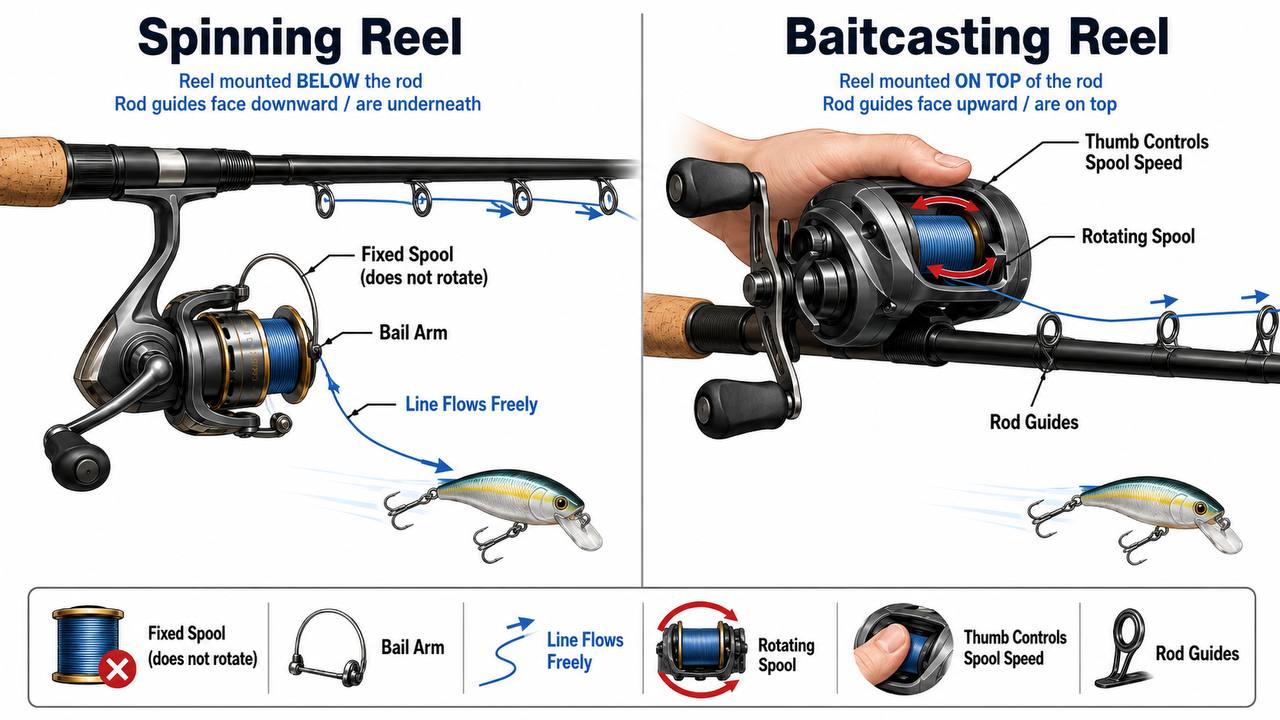
Looking at the two reel types directly helps clarify where each one earns its place:
Ease of use: Spinning reels win decisively. The fixed-spool design means you can’t backlash, and the bail system is intuitive. Most beginners land their first cast successfully. Baitcasting reels require 1–2 weeks of practice before you can cast consistently without tangles.
Casting distance: It depends on lure weight. With heavy lures (1/2 oz and up), baitcasters generally cast farther because the rotating spool releases line with minimal friction. With light lures (under 3/8 oz), spinning reels cast significantly farther — often much farther — because baitcasters struggle to spin the spool with light weight.
Line capacity: Baitcasters hold more line, especially when using braided line. The spool design accommodates larger diameters and thicker lines (20–65 lb braid is common). Spinning reels typically hold 100–250 yards of 6–14 lb monofilament or fluorocarbon.
Precision: Baitcasters excel at placement. The direct thumb control lets you dial in casts to specific spots — under overhanging branches, beside stumps, into small windows of open water. Spinning reels are accurate enough for most situations but lack that pinpoint control.
Drag systems: Both offer smooth, reliable drag for beginner applications. Entry-level spinning reels typically have 10–15 lb max drag. Entry-level baitcasters offer similar or slightly higher drag. For targeting species under 15 pounds, either is more than adequate.
Cost: At the entry level, both reel types are comparable. A decent beginner spinning reel runs $30–60, while a beginner baitcasting reel with magnetic brakes is $40–80. You won’t dramatically overpay choosing either type.
When a Baitcaster Makes Sense for Beginners
Despite the learning curve, there are situations where starting with a baitcaster actually makes sense:
Heavy cover fishing. If your primary fishing destination is a lake thick with vegetation — submerged grass, lily pads, or standing timber — baitcasters handle heavy line and heavy lures more naturally. Techniques like flipping and punching jigs through thick cover are significantly easier with a baitcaster.
You have a mentor. If you’re learning from someone experienced — a parent, friend, or fishing guide — who can teach proper thumb technique from day one, the baitcaster learning curve drops from frustrating to manageable. Good instruction makes the difference between giving up in three days and mastering the cast in a week.
Modern magnetic brakes help. Today’s beginner baitcasting reels come equipped with adjustable magnetic brake systems that dramatically reduce backlash. Brands like Shimano, Abu Garcia, and Daiwa include multi-level magnetic adjustment on their entry-level models, making the spool much more forgiving than the mechanical friction brakes of previous decades.
Species-specific demands. If you’re primarily targeting species that demand heavy line and big lures — catfish, carp, or large bass — a baitcaster’s power and line capacity give you a real advantage from the start.
What About Spincast Reels?
If you’ve been shopping, you’ve probably noticed a third option: the spincast reel. These are the push-button reels with a closed plastic cover over the spool. You press a button, cast, and the reel handles the rest.
Spincast reels are genuinely the easiest to cast — even easier than spinning reels. But they come with significant trade-offs:
- Durability: The closed-face design traps water, sand, and debris inside the reel body. Most spincast reels don’t survive more than a single season of regular use.
- Line capacity: Limited compared to spinning or baitcasting reels, typically holding 100–150 yards of light line.
- Versatility: Best suited for light lures and small species. Trying to use a spincast reel for anything more than casual panfishing or pond fishing usually leads to disappointment.
Spincast reels make sense for three situations: a child’s first reel, ice fishing, or very casual pond fishing with minimal equipment. For everyone else, skip the spincast and start with a spinning reel. The learning curve between spincast and spinning is minimal — you’ll learn to flip a bail arm in about 30 seconds — but the spinning reel will last years instead of months.
Which Reel Should You Buy First?
If you’re still unsure after reading this guide, here’s the straightforward answer: start with a spinning reel.
It’s the most forgiving option, handles the widest range of lures and situations, and won’t punish you with constant tangles while you’re learning the basics. You can always add a baitcasting setup later — most experienced anglers own both reel types and use each one where it makes the most sense.
When buying your first spinning reel, invest in the $40–60 range. Brands like Shimano (Sienna, Sedona), Abu Garcia (Revo SX, Cardinal), and Daiwa (Legalis) offer reliable entry-level models that will last for years. The cheapest options under $25 tend to have rough drags, stiff handles, and bearings that seize within a season.
The line you choose also affects reel performance — our guide to monofilament vs fluorocarbon vs braid breaks down which line pairs best with each reel type.
For a broader look at choosing your first complete setup, see our guide to choosing a fishing reel for beginners.