
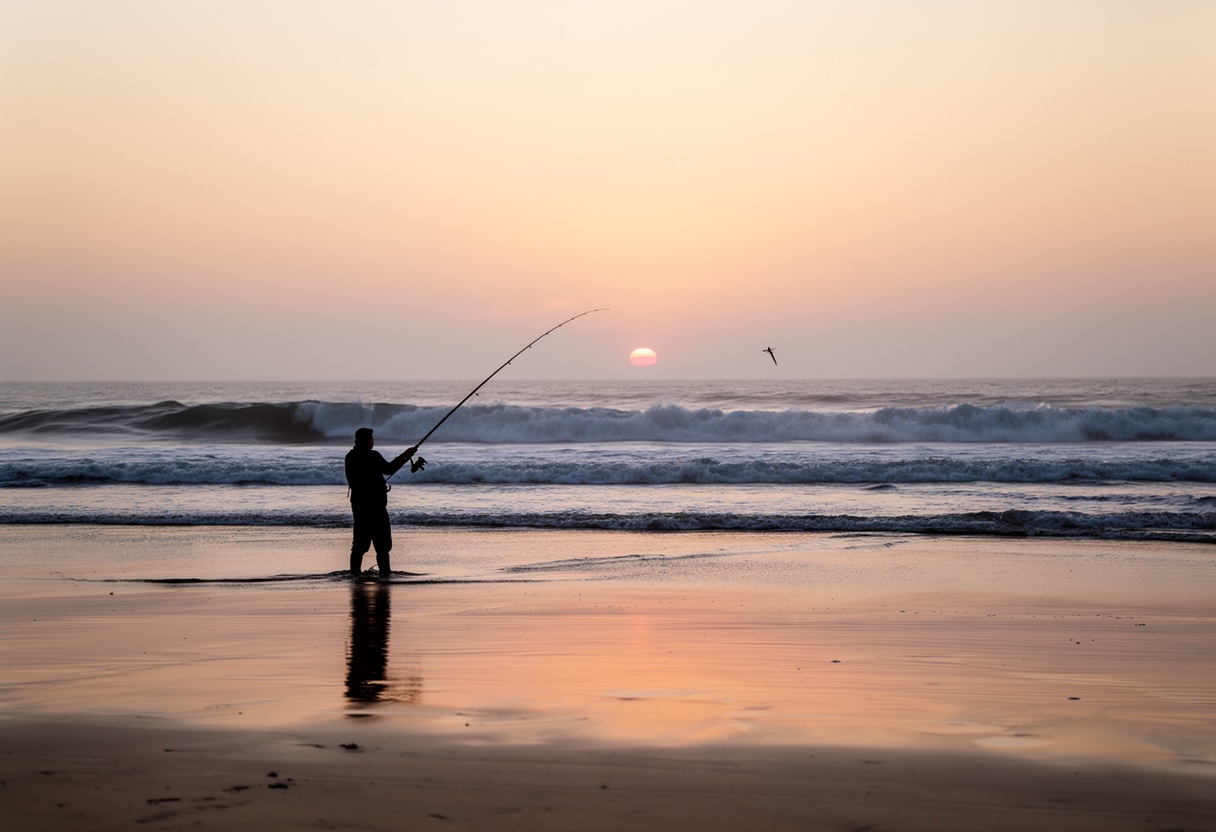
What Is Surf Fishing and Why Start Here?
Standing at the edge of the ocean with a rod in your hands, waves rolling in from every direction, and no idea where the fish are — that's what intimidates most beginners about surf fishing. The good news is that surf fishing is one of the most accessible forms of saltwater angling. You don't need a boat, electronics, or an expensive trip. You need a rod, a reel, some bait, and a beach.
Surf fishing means fishing from the shoreline in the ocean. You cast out from the sand, let your bait settle in the surf zone, and wait for a fish to find it. It works on both the East and West Coasts, in the Gulf, and pretty much anywhere there's ocean and sand. You can catch striped bass, red drum, bluefish, pompano, flounder, sharks, and dozens of other species — all from the shore.
The barrier to entry is remarkably low. A decent starter setup costs less than $200. The real skill in surf fishing isn't owning expensive gear — it's learning to read the water and figure out where fish are likely to be. That takes a bit of practice, but it's a skill anyone can develop.
Choosing Your First Surf Fishing Rod and Reel
Surf fishing rods and reels are bigger than what you'd use for freshwater, and that's where the confusion starts. There are rods from 8 to 14 feet long, reels in a dozen sizes, and line in every thickness. Here's what to look for.
Rod length: A 10 to 12-foot rod is the sweet spot for beginners. Longer rods give you more casting distance, but they're harder to handle — especially when fighting a fish on the beach. Shorter rods are easier to manage but won't get your bait as far out. Start at 10 feet and upgrade later if you need distance.
Rod power: Medium-heavy is the right choice. It handles sinkers in the 2 to 6-ounce range, which covers most surf fishing situations. The line and lure weight ratings are printed right on the rod blank — always stay within those ratings. Casting a heavier weight than the rod is rated for can crack it.
Rod action: Moderate to medium action works best for natural bait fishing. Fast action rods are better for lures. Since most surf fishing uses live or natural bait, a moderate action gives you better feel and more backbone when fighting fish.
Reel size: You'll want a spinning reel in the 4500 to 6500 size range, with at least 300 yards of line capacity. Salt and sand are the enemies of fishing reels, so look for one that's sealed or waterproof. A triple disc drag system is recommended — it handles the runs from bigger fish much more smoothly than standard drag washers. The Daiwa BG, Penn Battle, and Shimano Saragosa are all proven surf reels in the $100 to $250 range.
Line and Leaders for Surf Fishing
Use 20 to 30-pound braided main line. Braid casts farther than monofilament because of its thinner diameter, and its zero stretch gives you better bite detection at long distances. When you're casting 80 to 100 yards out, you need every bit of sensitivity you can get.
You also need a shock leader — 3 to 4 rod lengths of 30 to 50-pound monofilament tied to the braid with an Albright or FG knot. The shock leader absorbs the stress of power-casting heavy sinkers, which would otherwise damage the braid. It also provides abrasion resistance against shells and structure on the bottom. Think of it as a sacrificial buffer between your main line and whatever's down there.
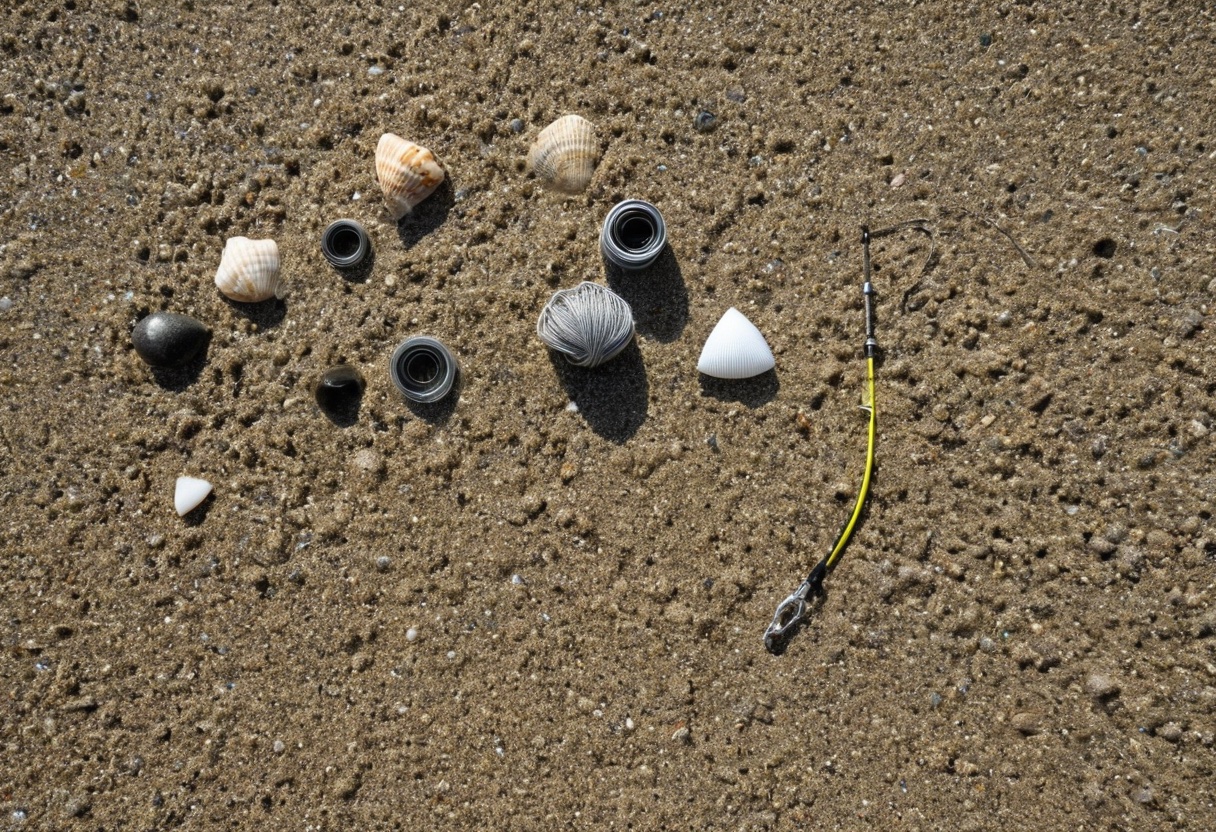
Sinkers and Weights — Keeping Your Bait in Place
Without the right sinker, your bait won't stay put in the surf. Waves and currents will sweep it back to shore before any fish find it. There are three main types of sinkers used in surf fishing, and each has a specific job.
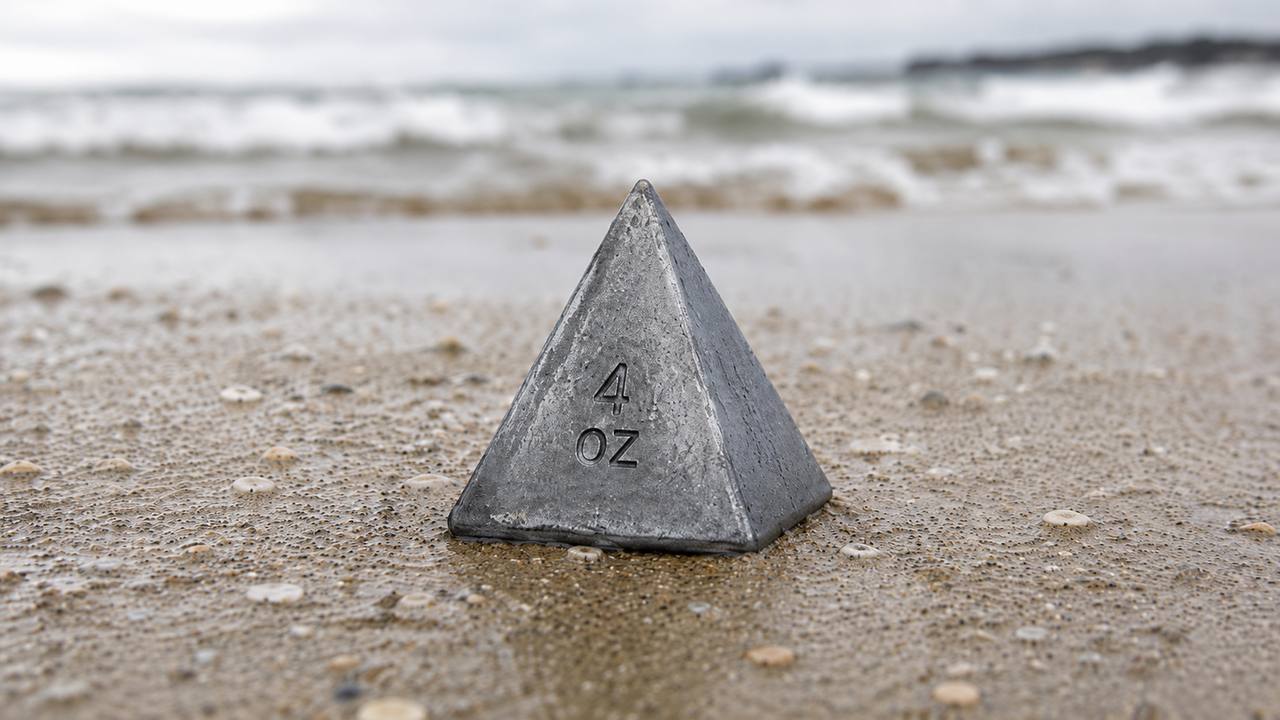
Pyramid sinkers are the standard. They come in 3 to 6-ounce sizes and are the most common choice for a reason — the pyramid shape digs into sand and holds the bottom against wave action and current. Start with a 4-ounce pyramid sinker as a general-purpose choice.
Bank sinkers are the lighter-duty option. They work fine in calm conditions or on soft sand bottoms. They snag less than pyramid sinkers, which matters when you're fishing over rocky or shell-covered bottom.
Sputnik sinkers have wire arms that grip the bottom aggressively. They're the nuclear option — use them in the heaviest current and surf conditions where nothing else will hold.
How much weight you need depends on three things: how far you need to cast, how strong the current is, and what the bottom is made of. When in doubt, start with a 4-ounce pyramid sinker and adjust from there.
Reading the Surf — Where to Cast
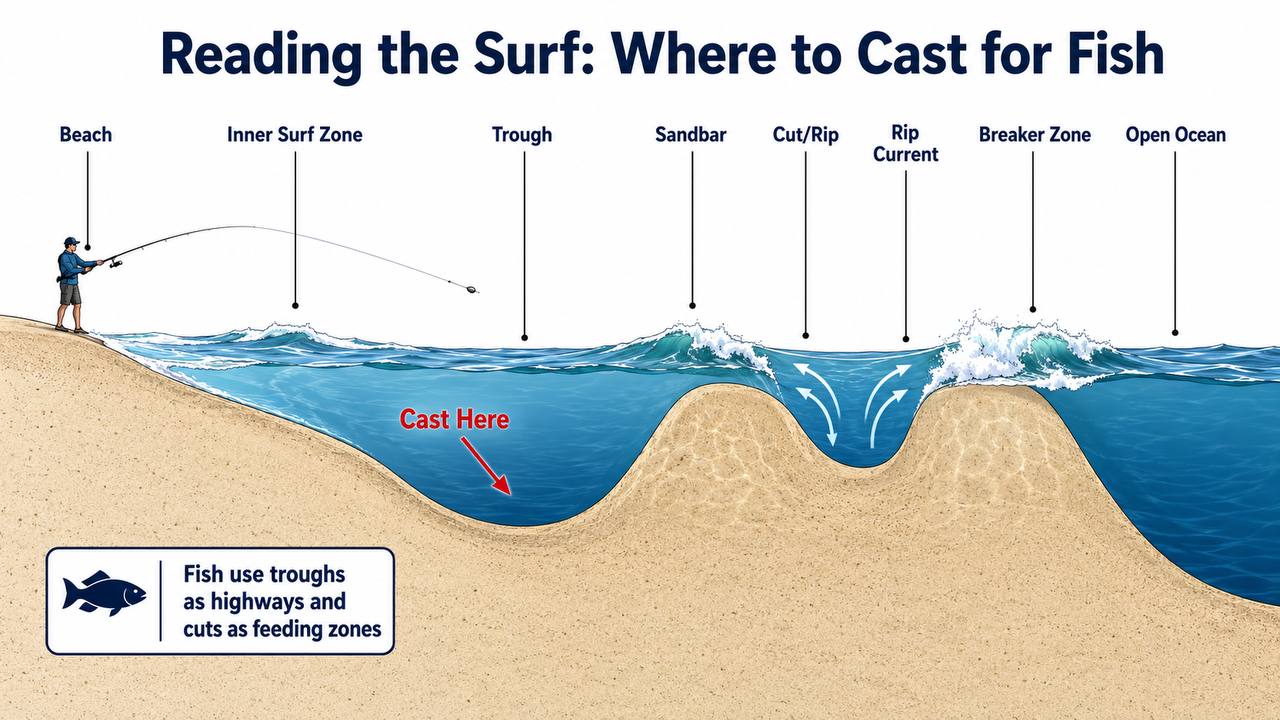
This is the most important skill in surf fishing. Knowing where to cast is worth more than every piece of gear in your bag combined. The ocean looks like a flat, featureless expanse from the shore, but there's structure underneath — sandbars, channels, and currents — and fish use all of it.
Troughs are deeper channels of water between sandbars and the beach. They look like calm, darker water flanked by breaking waves on either side. Fish use troughs as highways to move along the beach and as feeding lanes where current funnels bait. If you can identify one trough, you've found your fishing spot.
Cuts (also called rips or run-outs) are breaks in the sandbar where deeper water flows between the open ocean and the inner trough. They look like darker gaps in the line of breaking waves. Cuts concentrate baitfish being pulled in and out by the tide, and predators stack up in and around cuts waiting to ambush them. A cut in the outer bar is one of the highest-percentage spots on any beach.
Sandbars are the shallow ridges where waves break. Fish don't typically spend much time on top of sandbars — they work the edges. Cast to the drop-off on either side of the bar, not on top of it.
Rip currents are narrow channels where water flows back out to sea. They look like a strip of choppy, discolored water moving offshore through the surf zone. Rips pull bait out to sea and create a natural feeding conveyor belt. Cast just to the side of a rip current, not directly into it — your bait will get carried too far offshore.
The best time to read the beach is at low tide, when underwater structure is most visible. Walk the beach before you fish and identify your spots. At high tide, those structures will be submerged, but the fish will still be using them. Mark your spots mentally or use landmarks on the beach to remember where to cast.
Don't neglect casting in close, either. Fish can be surprisingly close to shore — sometimes right behind the breaking waves. It's easy to fixate on distance and forget that a 40-yard cast into the right spot will outproduce a 120-yard cast into nowhere.
Other Beach Types
Not all surf fishing happens on flat, sandy beaches. Rocky shorelines often hold more life than sand — look for points and corners that create or trap current. Outflows, breachways, and inlets are extremely reliable spots. Tidal water moving back and forth is always filled with bait, and bait always means fish. They're similar to river fishing, just with saltwater species.
Bait Selection for Surf Fishing
The bait you choose depends on what species you're targeting and what's available at your local bait shop. Here's a breakdown of the most common options.
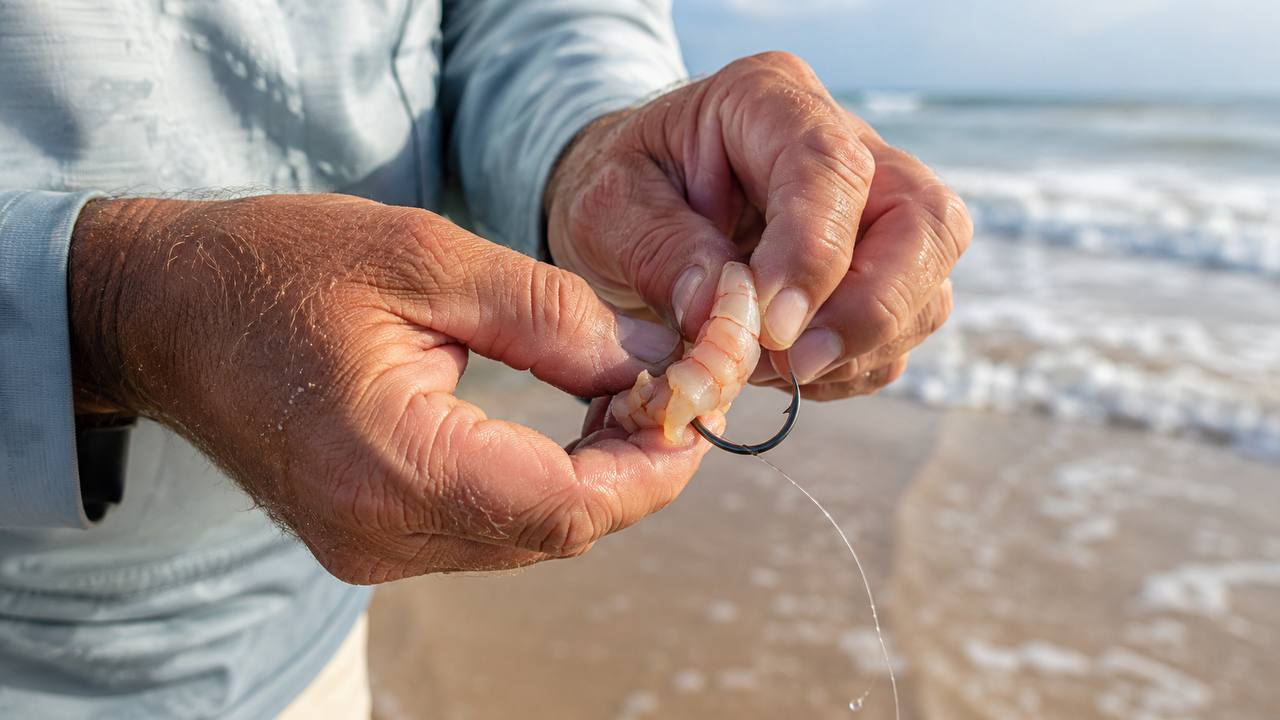
Shrimp — fresh, not frozen — is considered the best all-purpose dead bait for surf fishing. Many saltwater species are highly scent-sensitive, and fresh shrimp has a much stronger scent than frozen. Break larger shrimp into pieces for smaller species. A common saying among surf fishermen is "even an elephant eats a peanut" — a small piece of fresh shrimp will often produce as well as a whole one.
Sand fleas (also called mole crabs) are the primary bait for pompano, whiting, and other small surf species. You can dig them live from the beach near the water's edge, or buy blanched and frozen at bait shops. Use them whole — they're relatively small.
Clams work well for larger species like striped bass and red drum. They're available fresh, frozen, or salt-cured. Cut them into bite-sized pieces.
Live bait — mullet, minnows, and small crabs — creates movement and scent trails in the water that attract predators. Live bait is harder to source and maintain than dead bait, but it can make a difference when fish are selective.
Cut bait — mackerel, pogies, and menhaden — is the go-to for larger species like sharks, drum, and stripers. The stronger the scent, the better, because you're relying on smell to draw fish in from distance.
Start with fresh shrimp. It works for more species than any other single bait, and it's available at almost every bait shop.
Surf Fishing Rigs That Actually Work
Four rigs handle roughly 90% of surf fishing situations. Master these and you're covered coast to coast.
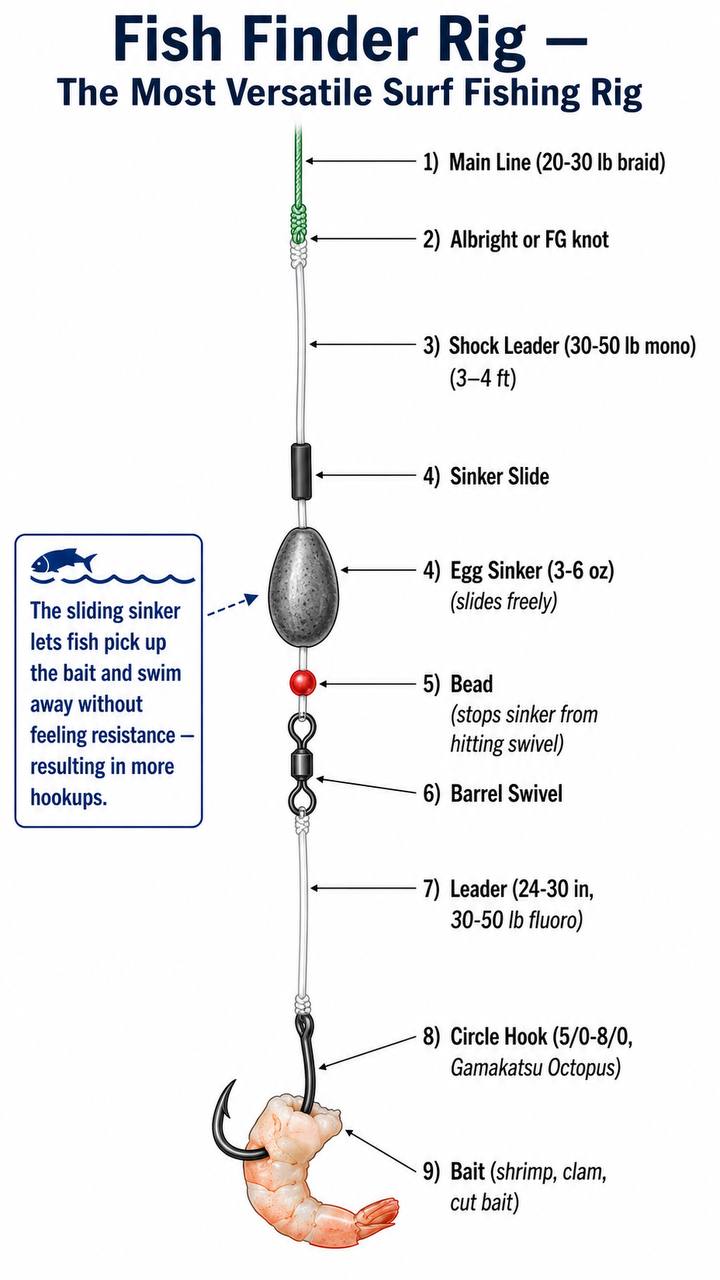
The Fish Finder Rig is the most versatile surf fishing rig, and it should be your default. Thread a sinker slide or egg sinker onto your leader, add a bead, tie on a barrel swivel, then run 24 to 30 inches of 30 to 50-pound fluorocarbon or monofilament leader to a circle hook. The key feature is the sliding sinker — fish can pick up the bait and swim away without feeling resistance from the weight. That makes a big difference in hook-up rates. It works for striped bass, red drum, bluefish, and sharks. Use Gamakatsu Octopus circle hooks in sizes 5/0 to 8/0, depending on your target species.
The Pompano Rig is a two-hook dropper rig designed specifically for pompano, whiting, and other small surf species. Two dropper loops are spaced 12 to 16 inches apart, each with a size 2 to 2/0 hook, and a loop at the bottom for the sinker. Add small Styrofoam floats — called pill floats — above each hook to lift the bait off the bottom and away from crabs. Bait with sand fleas, shrimp bits, or Fishbites. This rig produces numbers when smaller species are running the beach.
The Carolina Rig uses an egg sinker above a swivel with a 2 to 4-foot leader to the hook. It's similar to the fish finder rig but with a free-sliding egg sinker instead of a clip or slide. It's particularly effective for flounder, which tend to pick up bait gently and need zero resistance to commit.
The Fireball Rig is a variation of the fish finder rig that adds a bright-colored float bead above the hook. The colored bead lifts the bait slightly off the bottom and adds visual attraction. It works well for pompano and whiting in stained water, where the extra visibility helps fish locate the bait.
Casting, Tides, and Safety
The Overhead Cast
The overhead cast is the standard for surf fishing with a long rod. With a two-hand overhead technique, you hold one hand near the reel seat and the other about a foot above it. Swing the weight back and release forward — the timing of the release matters more than how hard you swing.
The longer rod acts as a lever. The weight does most of the work, not your arm strength. It feels counterintuitive at first, but letting the rod load and unload is what gets your bait 80 yards out. Muscle it, and you'll just get tired and inaccurate.
In windy conditions or when there are obstacles behind you — dunes, parked cars, other fishermen — a sidearm cast is a useful alternative. It's less powerful but easier to control in tight spaces.
Reading Tides
Tides matter more than time of day in surf fishing. Focus on tide charts, not sunrise and sunset — though low-light periods at dawn and dusk are typically productive. Most saltwater species come closer to shore during low light, whether it's nocturnal predators finishing their feeding run or daytime fish hungry after a night of fasting.
An incoming tide typically pushes baitfish and predators closer to shore, which means better fishing near the beach. A falling tide often pulls everything back out. Fishing a spot over multiple visits and tracking your catches by tide phase helps you learn the patterns for that specific beach.
Safety on the Beach
The ocean is an unforgiving environment, and surf fishing means spending a lot of time in it. A few basic safety habits go a long way.
Rip currents are the biggest danger. Know how to identify them — choppy, discolored water moving offshore through the surf zone. If you're caught in one, swim parallel to shore, not directly against the current. Fighting a rip current head-on is exhausting and rarely works.
Sun protection is essential. Surf fishing typically means hours of direct sun exposure with limited shade. Wear a hat, sunscreen, and sunglasses. Sunburn on your first trip will make you swear off surf fishing permanently.
Check the weather forecast before you go. Storm surges and sudden weather changes are real dangers, especially if you're fishing alone.
Wear appropriate footwear. Sand, shells, and rocks cause cuts and blisters. Water shoes or sturdy sandals are worth it.
Use rod holders — sand spikes are cheap and make a huge difference. Holding a 12-foot surf rod for hours is exhausting, and you don't need to. Plant your rods in the sand, set your alarms or bite indicators, and take a breather.