
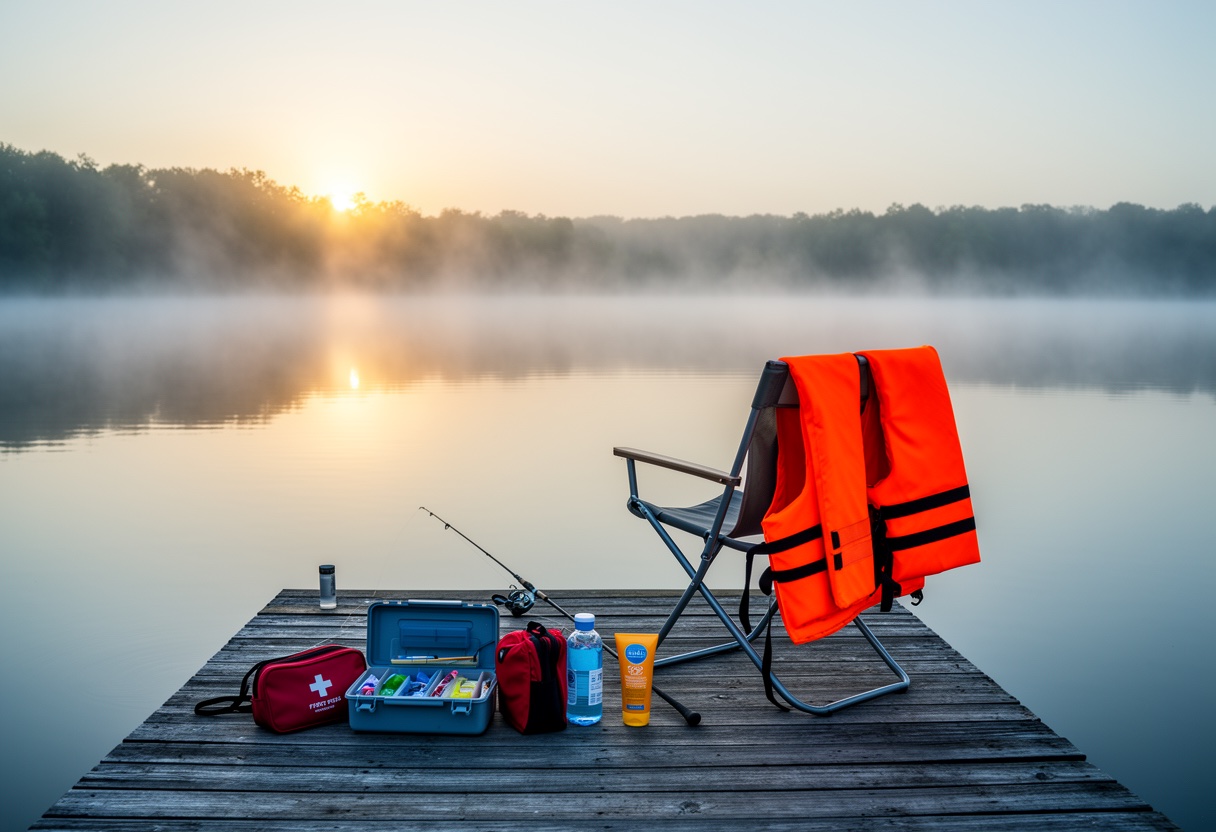
Fishing is supposed to be relaxing — you grab a rod, head to the water, and spend a few hours catching something. But beginners often skip the preparation part and focus entirely on the gear. The problem is that a lot of fishing injuries and emergencies happen because anglers didn’t think about what could go wrong before they arrived.
Safety on the water isn’t about being paranoid. It’s about having a plan so you can enjoy the day instead of worrying about it. The tips below cover the most common risks — sunburn, drowning, hook injuries, sudden storms — and how to prevent each one before it becomes a problem.
Before You Go: The Pre-Trip Safety Checklist
The safest anglers are the ones who prepare before they leave home. A pre-trip checklist takes about five minutes and covers the basics that most beginners overlook.
Check the weather forecast. This isn’t just about seeing if it’s raining. Wind matters more than temperature — strong winds create choppy water, make casting harder, and can capsize small boats. Check the marine forecast if you’re boating; it includes wind speed, wave height, and storm warnings that land forecasts don’t always cover.
File a float plan. A float plan is simply telling someone where you’re going, when you expect to return, and who to call if you don’t. It doesn’t need to be formal — a text message to a friend or family member is enough. If you’re fishing solo, this is the single most important safety step you can take.
Pack the essentials. Your gear should include a basic first aid kit, at least one working communication device (a phone in a waterproof case works for most situations), and enough water for the duration of your trip. Dehydration is more common than most anglers expect, especially on sunny days.
Dress for the conditions. Layers are key — mornings on the water are often cooler than the forecast suggests, and temperatures can shift quickly. Wear closed-toe, non-slip footwear whether you’re fishing from a boat, dock, or the shore. Sandals and flip-flops are a leading cause of foot injuries on wet surfaces.
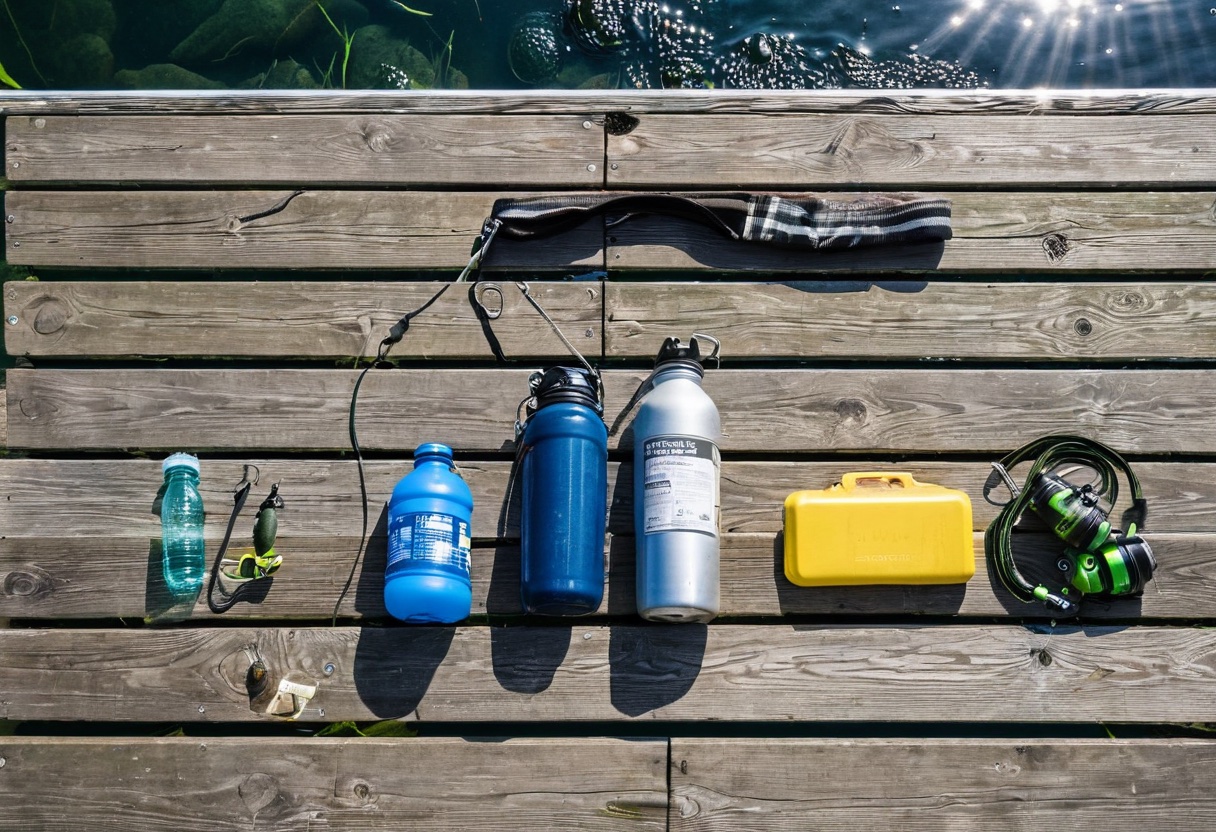
A pre-trip safety check takes five minutes and can prevent problems on the water.
Sun Protection on the Water
Sun exposure is one of the most underestimated hazards in fishing. Water reflects UV rays, which means you’re getting hit from above and below. Most anglers don’t realize they’re being exposed to roughly twice the ultraviolet radiation compared to standing on dry land.
Apply broad-spectrum sunscreen with at least SPF 15 before you head out, and reapply every two hours. If you’re sweating or getting splashed, reapply more often — water washes sunscreen off faster than most people expect.
Don’t forget the spots you typically miss: ears, back of the neck, the backs of your hands, and the top of your feet. These areas absorb direct sun during long days on the water and burn faster than the rest of your body.
Protective clothing matters just as much as sunscreen. A UPF-rated long-sleeve shirt blocks UV rays without trapping heat, and a wide-brim hat shades your face and ears better than a baseball cap. Polarized sunglasses protect your eyes from UV damage and also reduce surface glare, helping you see hazards like rocks, submerged logs, or lost hooks near the water’s surface.
Lip balm with SPF is another easy overlook. Your lips can burn just like any other exposed skin, and the pain from a sunburned lip lasts longer than most other sunburns because the skin is thinner.
If you’re fishing with children, apply sunscreen before they start playing near the water. Kids burn faster than adults, and the reflected UV from water accelerates the process.
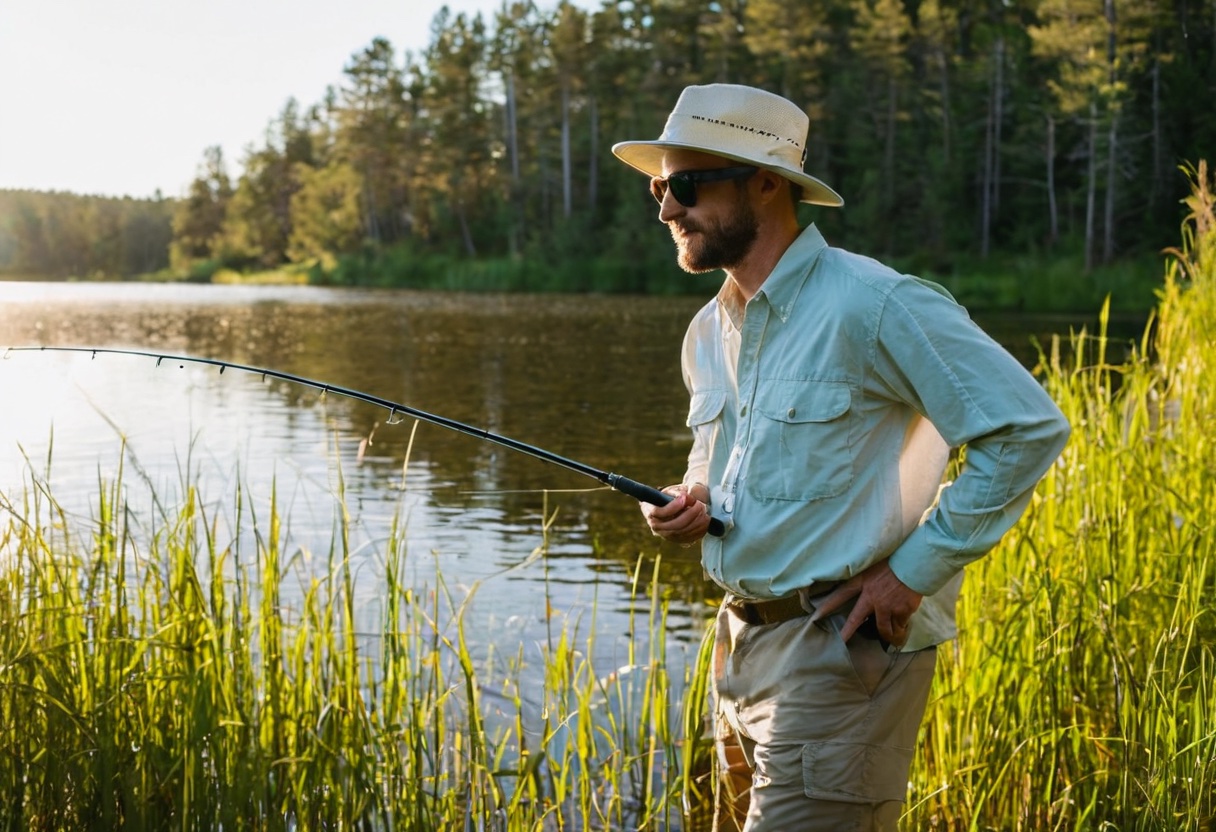
Proper sun protection includes more than sunscreen — clothing and eyewear matter just as much.
Why You Should Always Wear a Life Jacket
According to US Coast Guard statistics from 2024, 87% of boating drowning victims were not wearing a life jacket. Drowning accounts for 76% of all boating fatalities, making it the leading cause of death on the water.
The number that stands out is that 87%. It means the vast majority of boating drownings could have been prevented by wearing a personal flotation device, commonly called a PFD or life jacket.
Life jackets come in several types. Type III is the most common for recreational fishing because it’s designed for all-day comfort while still providing adequate flotation. Types I and II offer more buoyancy but are bulkier and typically used for commercial or offshore work. For freshwater fishing on lakes and rivers, a Type III PFD is usually the right choice.
State regulations vary on when life jackets are required. Some states mandate that children under 13 wear a USCG-approved PFD while the vessel is underway. Other states only require one life jacket per person on board. The best practice, regardless of local laws, is to wear your life jacket whenever you’re on or near the water.
A common misconception is that good swimmers don’t need life jackets. Most boating drowning victims were capable swimmers. Cold water immersion, unconsciousness from a fall, or sudden exhaustion can incapacitate anyone regardless of swimming ability.
For beginners, the right life jacket is one that fits properly and is comfortable enough to wear for extended periods. If you find yours too bulky or restrictive, try a different style — modern fishing PFDs often include pockets, rod holders, and adjustable straps that make them practical for all-day use.
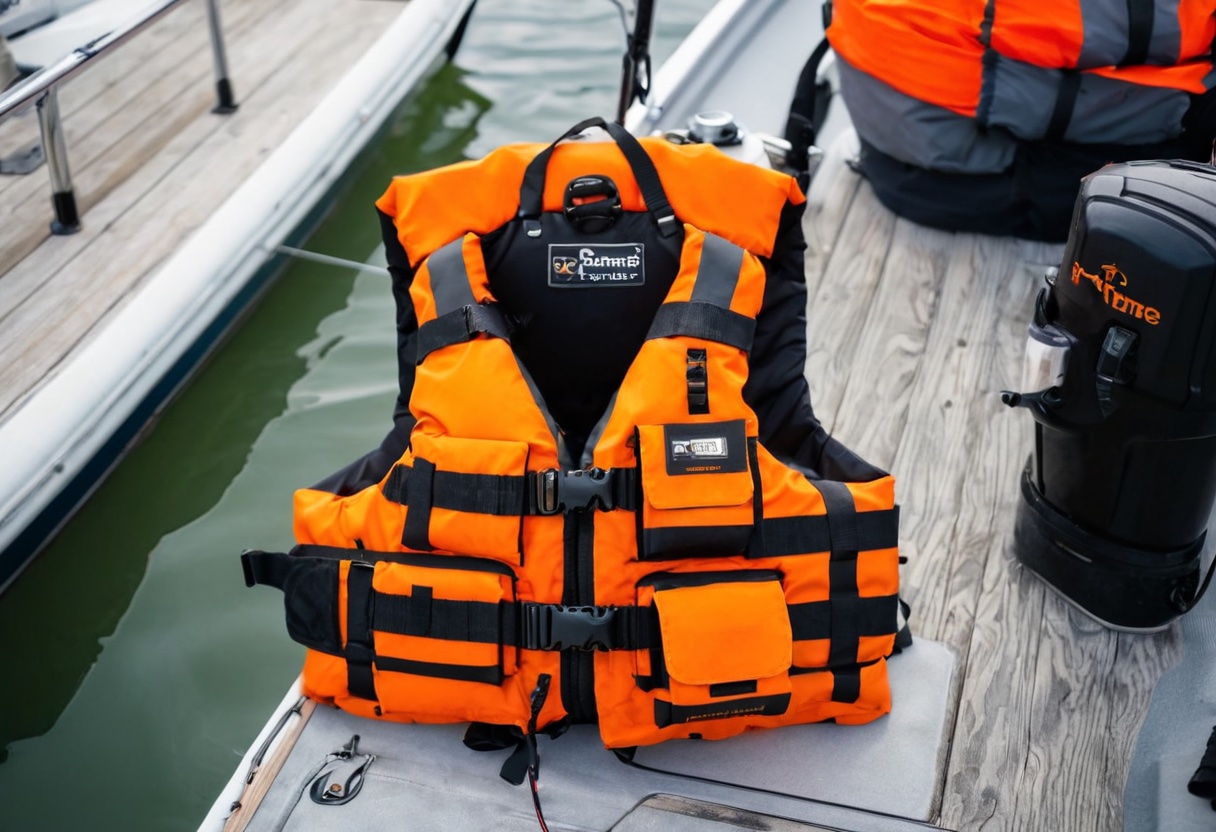
87% of boating drowning victims were not wearing a life jacket — making it the single most important piece of safety gear.
Handling Hooks, Knives, and Fish Safely
The most common fishing injuries are self-inflicted, and most of them are preventable with basic handling techniques.
Hook safety. Never put hooks in your mouth — whether you’re threading line or attaching lures. Keep hooks closed in your tackle box and work away from your face and body when handling them. If you accidentally get hooked, cut the line first to remove tension, then remove the hook. For small hooks, you can push them through the skin or use a loop of fishing line to pull them out. For larger hooks or hooks embedded in sensitive areas like the face, hands, or near joints, seek medical attention.
Knife safety. Fillet knives are extremely sharp and typically have long, thin blades designed for precision cuts. Always cut away from your body and use a cutting board or mat rather than freehand filleting over the edge of a boat. Keep a separate cutting surface in your gear and never rush a cut — most knife injuries happen when anglers are in a hurry.
Fish handling. Watch for teeth, barbs, and sharp scales. Pike have prominent teeth, catfish have barbs on their dorsal and pectoral fins, and many species have rough scales that cause painful scratches. Using lip grips or wetting your hands before handling fish reduces the risk of injury and also helps the fish if you plan to release it.
Wire cutters (Dikes) belong in every angler’s first aid kit. They cut through hooks and fishing line, making embedded hook removal much easier than trying to bend or pull the hook out by hand.
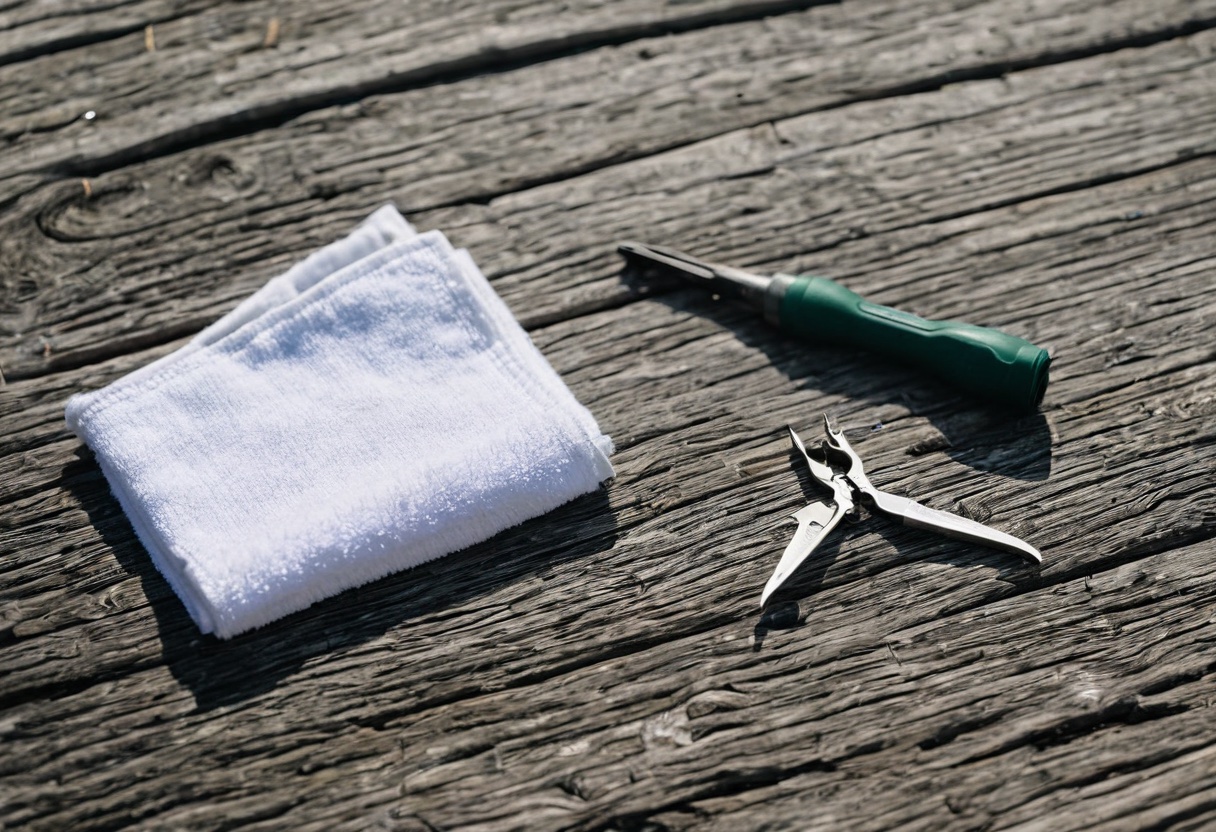
Keeping the right tools in your first aid kit makes hook removal fast and less painful.
Weather Awareness and When to Turn Back
Weather-related incidents kill more anglers than any other single factor. Understanding how to read conditions and respond to changes can save your life.
Before you leave, check the marine forecast and understand the difference between a storm watch and a storm warning. A watch means conditions are favorable for a storm — stay alert. A warning means a storm is expected or already occurring — do not go on the water.
Once you’re on the water, learn to recognize signs of approaching storms. Darkening water is one of the earliest indicators — when the water surface turns a murky gray or black color, rain is likely less than 30 minutes away. A sudden wind shift, dropping barometric pressure, or a rapid increase in wave height are all signals to head for shore immediately.
If thunder or lightning occurs while you’re fishing, stop immediately and get off open water. Put the boat in motor and return to shore, or if you’re fishing from a bank, move away from the water and avoid standing near tall trees. Fishing rods act as lightning conductors — drop your rod and move to a low, open area.
Heatstroke is a real risk on hot days. Signs include dizziness, nausea, confusion, and a cessation of sweating. If you feel these symptoms, move to shade, drink water, and cool down with wet clothing or a damp towel. Heatstroke can become life-threatening within minutes if untreated.
Hypothermia can occur even in summer if you fall into deep lake water. Deep water temperatures can be 50°F or colder even in mid-summer. Immersion in cold water causes loss of muscle control within minutes, making it nearly impossible to climb back into a boat. Wear a life jacket that keeps you afloat even if you can’t swim.
There’s no shame in ending a fishing trip early. If conditions feel wrong, they probably are, and turning back is always the right call.
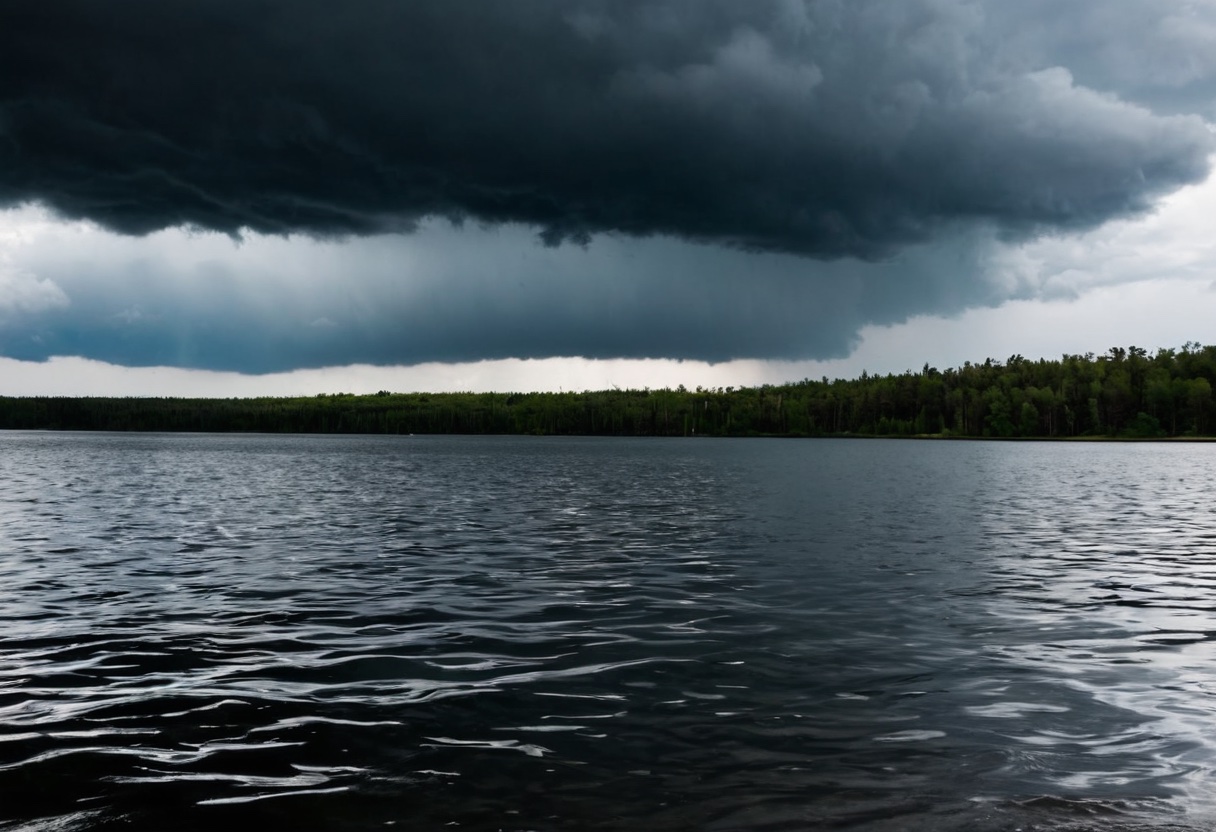
Darkening water and shifting wind are early signs to head for shore before a storm hits.
Safety on Boats, Docks, and Shore
Different fishing venues carry different risks, and each one requires specific attention.
Boat safety. Keep the boat’s weight evenly distributed and maintain a low center of gravity. Standing in a moving boat is one of the leading causes of boating accidents — sit down while the boat is in motion. Keep the deck clear of fishing rods, tackle boxes, and other tripping hazards. Mixing alcohol and boating is the leading contributor to fatal boating accidents, so if you’re bringing drinks on the water, keep them non-alcoholic.
Dock and pier safety. Wet wood is slippery, and algae growth makes it even more hazardous. Walk slowly on docks and piers, and always face the water when moving — never turn your back on deep water. Railings exist for a reason, and leaning over or climbing them is one of the most common causes of pier-related accidents.
Shore fishing. Bank stability is a concern, especially on muddy or eroded banks that can collapse under weight. Watch for sudden drop-offs and avoid standing directly on the edge of steep banks. If you’re fishing solo from a remote shore location, make sure someone knows where you are and when to expect you back.
For more specific guidance on different fishing venues, check our guides on kayak fishing for beginners and bank fishing for beginners.
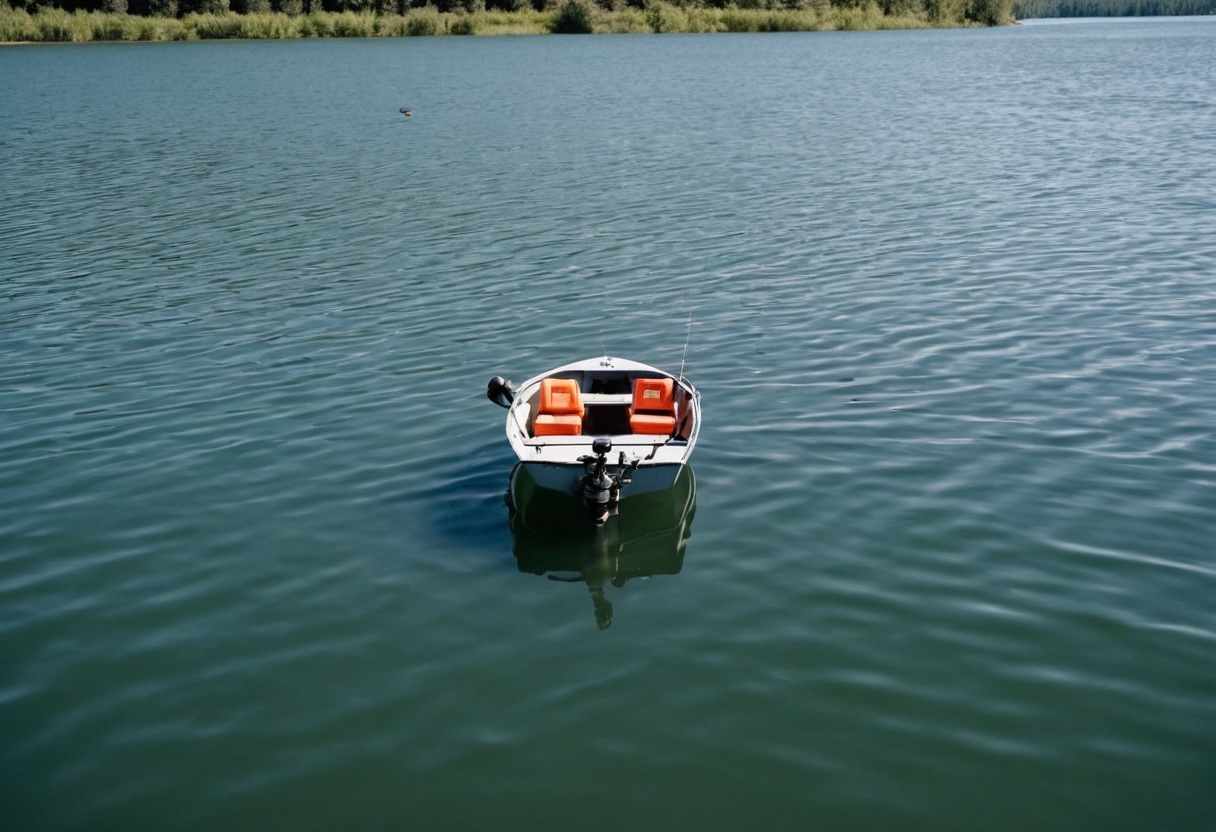
Life jackets visible and accessible is step one; wearing them is step two.
Building Your Fishing First Aid Kit
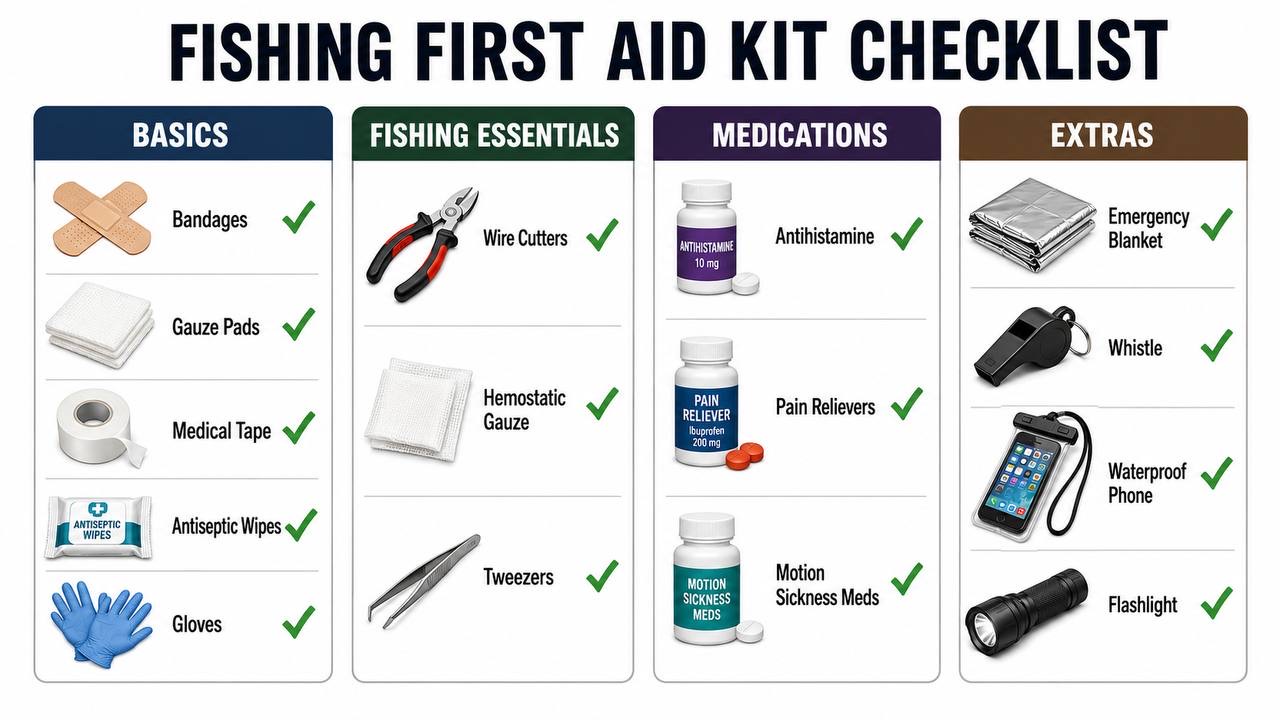
A fishing first aid kit is a standard first aid kit plus a few items specific to the hazards anglers face. Here’s what to include:
Basics. Adhesive bandages in various sizes, gauze pads, medical tape, antiseptic wipes, and disposable gloves. These cover cuts, scrapes, and minor wounds that happen on almost every fishing trip.
Fishing-specific additions. Wire cutters for removing embedded hooks, hemostatic gauze (such as Quick Clot) for controlling bleeding from deeper cuts, and tweezers for removing splinters or fish barbs. These items address injuries that are unique to fishing and aren’t typically in a standard first aid kit.
Medications. An antihistamine like Benadryl for allergic reactions to insect bites or fish oils, pain relievers for headaches or muscle pain, and motion sickness medication if you’re prone to seasickness on boats.
Extras. An emergency blanket, a whistle for signaling, a small flashlight, and your phone in a waterproof case. These items won’t prevent injuries, but they make a big difference if something goes wrong.
Keep everything in a waterproof container and check the contents after each trip, replacing anything you used or that’s past its expiration date.
A well-stocked fishing first aid kit should cover basics plus fishing-specific supplies.
Safety Tips for Fishing with Kids
Kids add excitement to fishing trips, but they also introduce unique safety considerations that require extra attention.
Constant supervision near water is non-negotiable. Never leave children unattended near the water’s edge, even for what seems like “just a second.” Drownings happen quickly and silently, and most occur within arm’s reach of an adult.
Use kid-sized life jackets that are properly fitted. An adult life jacket that’s too loose won’t keep a child’s head above water if they fall in. Make sure the jacket is USCG-approved and sized for the child’s weight, not their age.
Start with simple setups. A rod, line, bobber, and worm hook introduces kids to fishing without the complexity of multiple hooks, spinning lures, or bait rigs that increase the risk of tangles and hook injuries. Fewer hooks and less gear complexity means fewer hazards for young anglers to encounter.
Teach kids not to run on docks, boats, or slippery banks. Wet surfaces are slippery, and a fall from a dock into deep water can cause serious injuries even for adults. Establish clear rules about walking carefully and staying near railings or adult supervision.
Keep bait and small lures out of reach when they’re not in use. Small hooks, split shot weights, and soft plastic lures are choking hazards for young children.
Make safety part of the fun. Let kids help pack the safety gear and frame life jackets as their “superhero gear.” When safety becomes part of the ritual rather than a restriction, kids are more likely to cooperate and develop good habits that last throughout their fishing careers.