
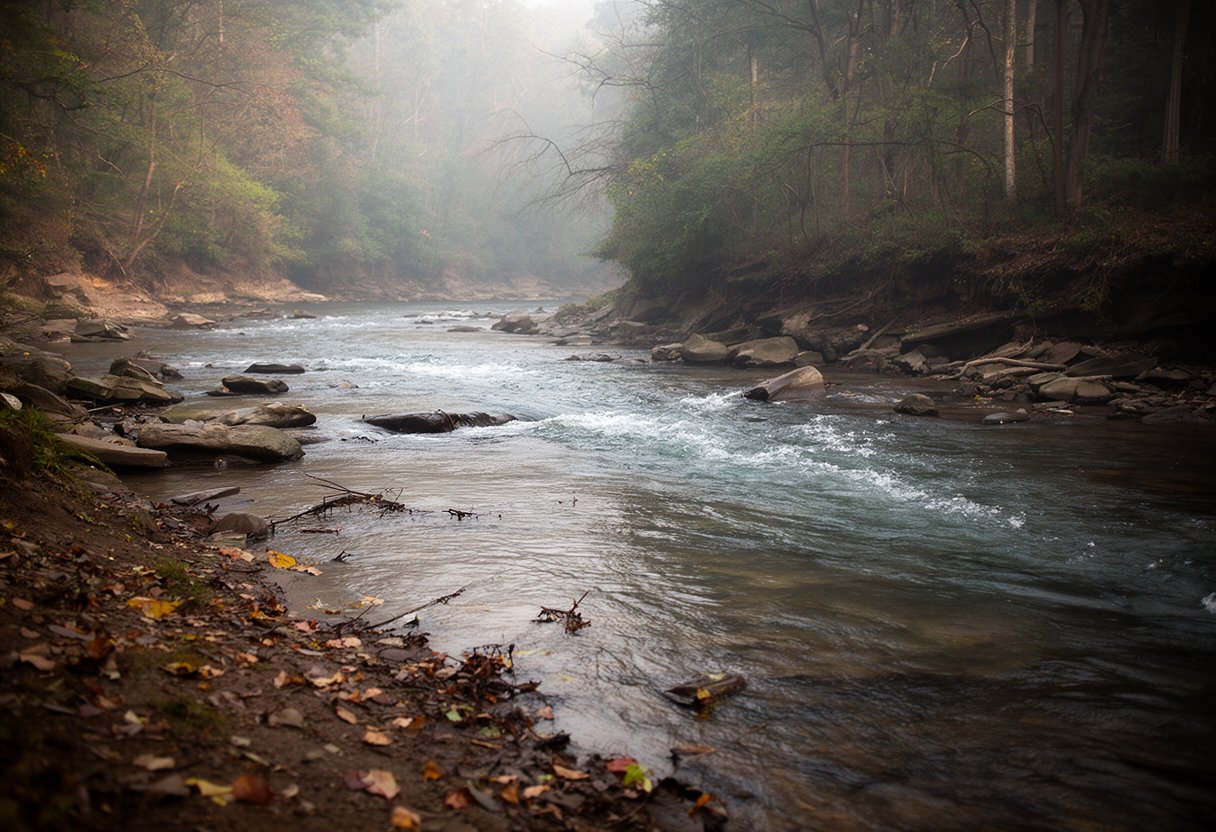
If you’ve been fishing lakes and ponds, moving to a river feels like learning to fish all over again. Your bait gets swept away before a fish can find it. Fish seem to be hiding in water you can’t figure out. Wading in current feels risky even in shallow sections.
River fishing is not that different from what you already know — you just need to learn how to read current. Once you understand where fast and slow water meet, you’ll start seeing the river in a completely new way.
How Rivers Are Different from Lakes and Ponds
In a lake, fish hold near structure — weeds, drop-offs, submerged logs. In a river, structure still matters, but current is the dominant force. Fish position themselves based on how water moves, not just what’s underneath them.
Every river has invisible lanes of water moving at different speeds. The fastest water runs in the center channel. The edges, corners, and behind obstacles, the water slows down. Fish are energy-conscious creatures — they want to eat without wasting energy fighting the current. So they sit in slower water right next to faster water, waiting for food to drift by.
The other thing that makes rivers different is change. Even on the same day, water level and flow can shift. After a rain upstream, the river might be moving noticeably faster by the afternoon. What looked like a deep pool in the morning could be a fast run by noon. River fishing rewards observation more than almost any other type of fishing. If you take five minutes to watch the water before casting, you’ll learn more than if you start throwing lures immediately.
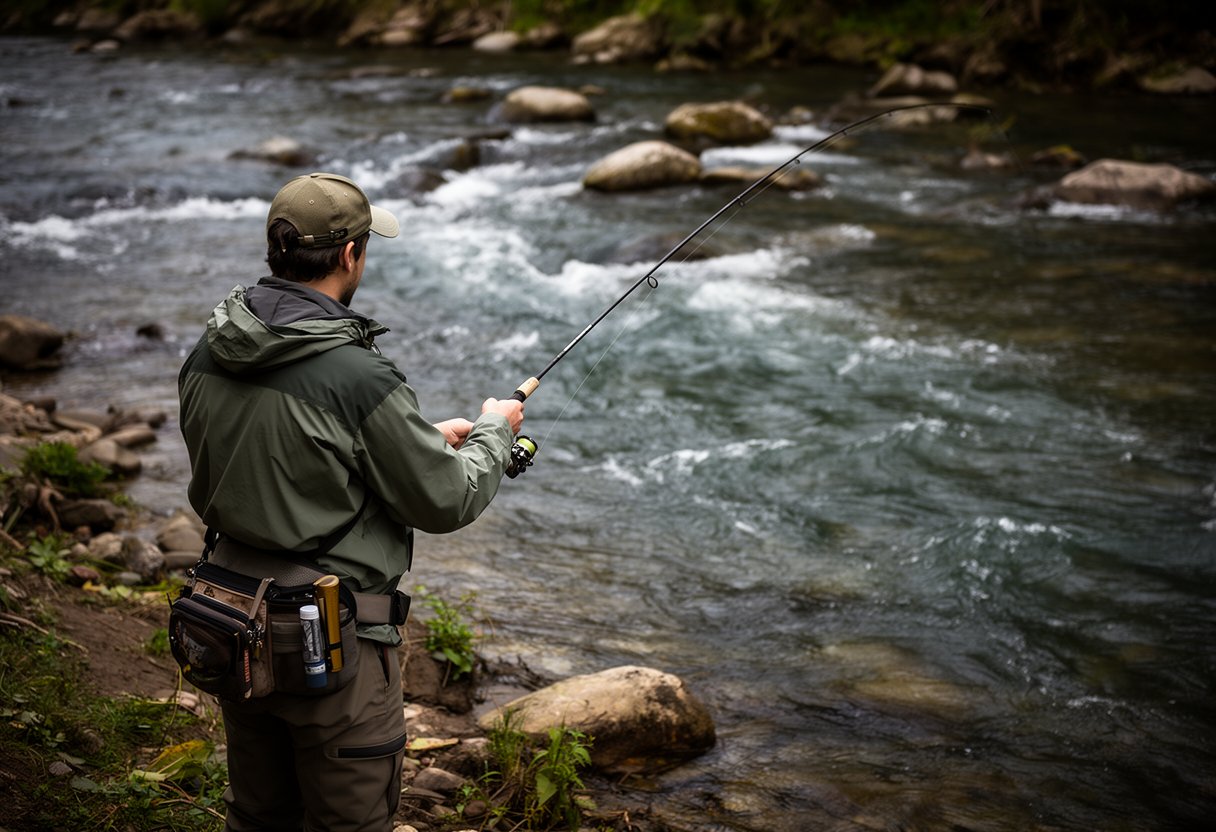
Understanding how current works does not require any special gear. It requires standing on the bank and watching what the surface tells you. Ripples, eddies, and changes in water color all point to features underneath that hold fish.
Reading River Current: Where Fish Actually Hold
Every river section breaks down into a few basic features. Learning to spot these features from the bank is the single most important skill in river fishing.
Riffles are shallow, fast-flowing sections with rocks and gravel on the bottom. The water is highly oxygenated here, and insects thrive. Fish feed actively in riffles but typically don’t hold in them for long — the constant effort of holding position in fast shallow water is too tiring. Think of riffles as the river’s feeding zone.
Runs sit between riffles. They are deeper with smoother flow, allowing for longer and more controlled presentations. Fish hold along the edges of runs, particularly where the fast center current meets slower water near the bank.
Pools are the deepest sections, usually found downstream of riffles. The current slows significantly in a pool, and fish use these areas to rest between feeding runs. Larger fish — bass, pike, catfish — tend to hold in or near pools, using them as ambush points.
Between these larger features, you’ll find two critical micro-features:
Current seams are the boundaries where fast water and slow water meet. You can often see them as a line or swirl on the surface. Fish hold along seams because food gets swept in from the fast water, and the fish can intercept it without having to move far. Trout are drift feeders that hold in seams specifically to intercept food moving downstream.
Eddies form behind obstacles — rocks, islands, log jams, or even the riverbank itself. In an eddy, the water actually flows backward or swirls in place. Fish love eddies because they offer calm water right next to productive current. Small baitfish gather in eddies, and larger predators hang right at the edge where the eddy meets the main current.
One more concept: the thalweg. This is the deepest, fastest channel running through a river — think of it as the river’s main artery. The thalweg usually follows the outside of bends. Fish use the thalweg as a travel route, holding along its edges where food concentrates.
River bends follow a simple rule: the outside of the bend is faster and deeper (more erosion, deeper pools). The inside of the bend is slower and shallower (sand and gravel buildup). Fish on the outside hold near the thalweg edge. Fish on the inside hold near the bank where current slows.
Where to Cast: Targeting the Right Spots
Now that you can identify river features, the next question is where to actually cast. Here is the basic rule: target slower water right next to faster water.
If you see a current seam, cast into the slower side. Fish are facing upstream along that seam, waiting for food. If you see an eddy, position yourself upstream of it and cast toward the calm pocket. If you see undercut banks, logs, or rocks, cast near them — structure plus current break equals fish.
Specific spots to look for:
– Edges of runs — where fast center current meets slower bank water – Upstream of eddies — cast toward the calm pocket behind rocks or islands – Undercut banks — eroded edges create shaded shelter, especially on river bends – Behind large rocks — eddies form on the downstream side, holding both baitfish and predators – Bridge pilings — create current breaks and shade on both sides – Confluences — where tributaries or smaller streams meet the main river, food concentrates from both directions
Before heading out, use Google Maps satellite view to scout your stretch. Look for bends, islands, and obvious structure. You won’t see underwater rocks from a screen, but the surface features — bends, islands, narrow points — give you a good map of where current breaks will form.
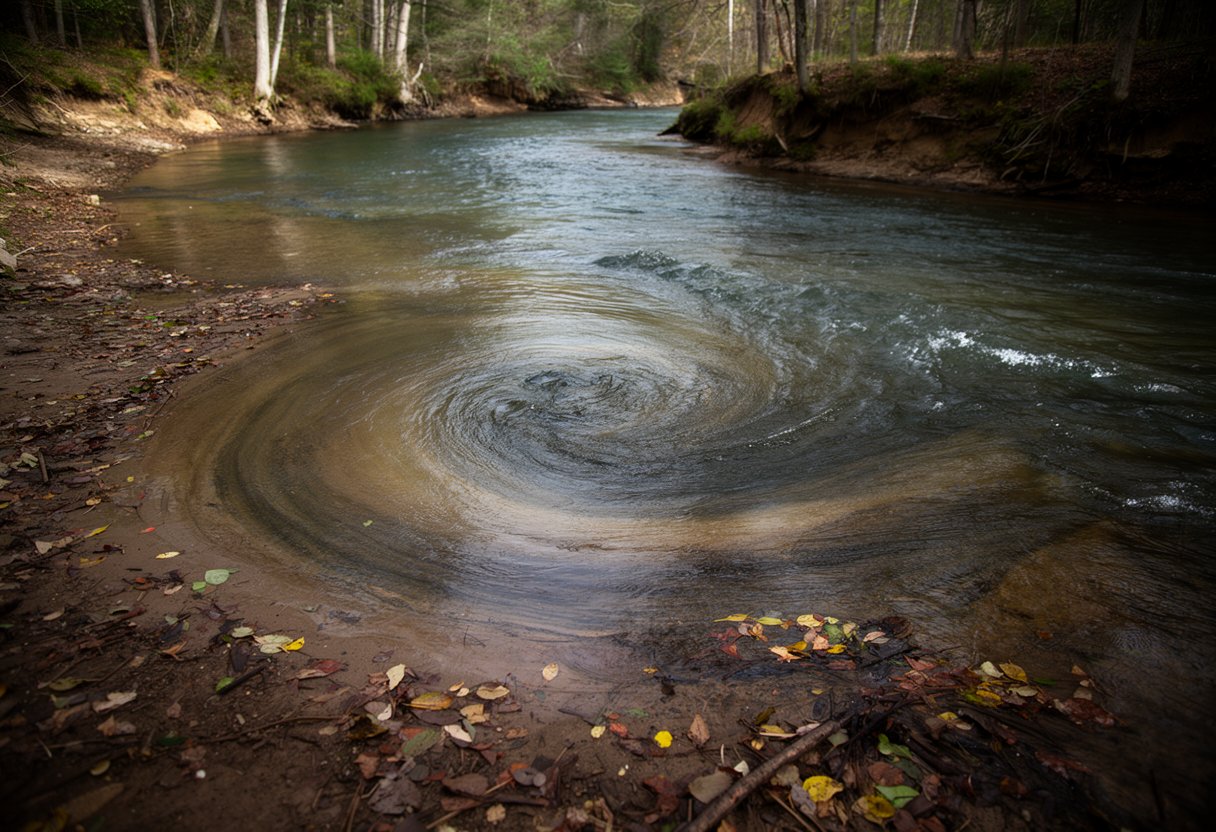
Watch for five minutes before casting. Surface disturbances — ripples, swirls, differences in water color — tell you where current changes below. A dark patch often means deeper water. White water means shallow rocks. Calm glassy water in a river usually means an eddy or backwater.
Drift Fishing: The Go-To River Technique
Drift fishing is the most effective technique for river fishing, and it works whether you’re using live bait or artificial lures. The concept is simple: let the current present your bait naturally instead of fighting the current.
Here is how it works:
1. Cast slightly upstream at an angle. Do not cast dead straight upstream — that causes your line to drag against the current and creates an unnatural presentation. Cast at roughly a 30-45 degree angle upstream. This gives your bait room to drift naturally downstream.
2. Let your bait drift downstream with the current. Keep your rod tip high and the line relatively taut. You want to feel every bump and tug — fish bites in a river can be subtle because the current creates constant pressure on the line.
3. Mend the line as needed. Mending means lifting your rod tip and flipping a section of line upstream. This resets the line’s position so it doesn’t drag the bait faster than the current. If your bait starts moving too quickly, mend the line. If it’s drifting at the right speed, leave it alone.
4. Follow the drift with your rod tip. As your bait moves downstream, walk downstream with it, keeping the rod pointed toward the bait. This maintains a natural presentation and keeps the line out of fast surface current that could speed up the drift.
5. Adjust your weight. In a river, weight selection matters more than in still water. If your bait is too light, it drifts on the surface and never reaches the fish holding near the bottom. If it’s too heavy, it bounces along the bottom and snags on rocks. Start with a weight slightly heavier than what you’d use in a lake, then adjust based on how the bait moves.
6. Set the hook when you feel a change. In current, bites feel different. A sudden increase in line tension, a change in drift speed, or the line going slack when it should be tight — all of these can indicate a bite. Set the hook with a firm lift of the rod tip.
Drift fishing works with almost any bait or lure. Live bait like minnows, worms, and nightcrawlers drift particularly naturally. Soft plastics on a weighted hook work well too. Even spinners and spoons can be drifted — just let the current carry them instead of retrieving by hand.
Gear Adjustments for River Fishing
You don’t need to buy a new rod to fish a river, but there are a few adjustments that make river fishing much more manageable.
Heavier weights. This is the biggest change from still-water fishing. Current pushes bait and lure, so you need enough weight to hold your desired depth. A slip sinker or inline weight that’s 1-2 sizes heavier than your lake-fishing setup is a good starting point. Adjust from there.
Line choice. Braided line has advantages in rivers. It has less stretch than monofilament, which means you feel bites better in current. It also cuts through the water more efficiently, reducing the drag that current creates on the line. If you’re using monofilament, consider a slightly heavier test than usual.
Rod length. If you’re fishing near structure — undercut banks, rocks, logs — a shorter rod (6 to 7 feet) gives you better accuracy. If you’re casting across wide runs from the bank, a longer rod (7 to 8 feet) helps you reach the productive water. Most anglers find a 7-foot medium-power rod handles river situations well.
Live bait versus lures. Both work in rivers, but live bait often has the edge because it drifts more naturally. A minnow on a hook looks like a struggling baitfish being carried by current. That said, soft plastics and even hard baits work fine — you just need to adjust your retrieve speed to match the current rather than set your own pace.
See our guide on monofilament vs. fluorocarbon vs. braid for a deeper breakdown of line choices.
Wading Safety: Staying Safe in Moving Water
Wading in a river adds access to better fishing spots, but it also introduces real risks. Moving water is unpredictable, and cold water can cause problems within minutes. Here are the safety basics every river angler should know.
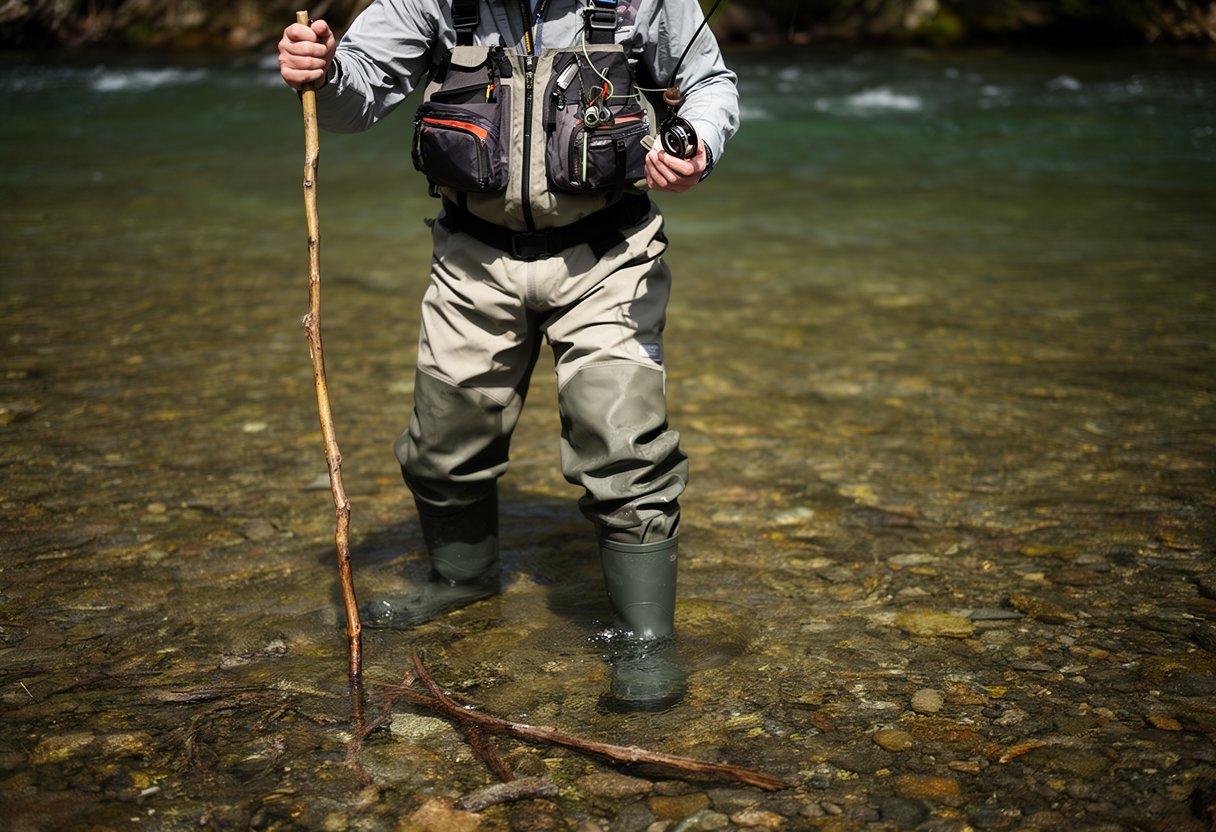
Always use a wading staff. A wading staff acts as a third leg, giving you significantly more stability in current. It also lets you probe the water ahead to check depth and feel for soft bottoms, rocks, or debris. Plant the staff upstream of you when the current is swift.
Wade at an angle, quartered upstream. Never face directly downstream. Angle your body upstream so you can feel the current building behind you. If you slip, you want to fall upstream — not downstream — so the current pushes you toward the bank, not into deeper water.
Keep your body sideways in strong current. A sideways stance reduces the surface area the current pushes against, making it harder to knock you off balance.
Wear a wading belt. If you wear waders, a wading belt is non-negotiable. A wading belt lets you quickly shed your waders if you fall in and get swept away. Waders fill with water and become extremely heavy — without a belt, you cannot get them off while underwater. The belt is the single most important safety feature for waders.
Know when to stay on the bank. Skip wading during these conditions: – Peak runoff or rising water levels – When you cannot see the river bottom – Current that reaches waist depth or higher – Thunderstorms (flash flood risk plus lightning) – After dark – When you’re tired or your judgment is impaired
Cold water is a real danger. Hypothermia can set in within minutes in cold river water, even in summer if the river is fed by snowmelt. If you plan to wade regularly, consider a personal flotation device (PFD) — especially on bigger rivers.
Never wade alone on an unfamiliar river. Someone who knows the stretch can spot dangerous spots you might miss.
Your First River Fishing Trip: A Quick Checklist
Here is what to do on your first outing:
1. Walk the stretch before casting. Spend 10-15 minutes walking along the bank. Identify riffles, runs, pools, bends, and eddies. Look for structure — logs, undercut banks, rock piles.
2. Start in an eddy or backwater. These are the calmest spots. Practice your drift technique here before trying faster water.
3. Use heavier weight than you think you need. You can always reduce it. Starting too light is the most common beginner mistake in rivers.
4. Watch for five minutes before casting. Sit quietly and observe the water. Look for surface disturbances, current changes, and any signs of fish (tailings, rising fish, surface activity).
5. Stay on the bank. Your first trip, there’s no need to wade. Find good bank access and focus on learning to read the water and present your bait correctly.
6. Check water level reports. Many rivers have gauges online. A quick search for “[river name] water level” before you leave home can tell you if conditions are safe and productive.
7. Keep the rig simple. Live bait on a slip bobber rig or a simple bottom rig works great for river fishing. You don’t need fancy terminal tackle on your first trip.
River fishing opens up an entirely new world of fishing. The learning curve is real, but once you start reading current and understanding where fish hold, river fishing becomes one of the most rewarding forms of angling. Start slow, stay safe, and let the water teach you.