
If you’ve fished long enough, you’ve probably heard someone describe a topwater strike in the same breathless way: the water explodes, a bass launches itself out, and for a split second everything looks like an action movie. It is that exciting.
But if you’ve never tried topwater fishing yourself, the reality can be frustrating. There are too many lure types to figure out, each one requires a slightly different retrieve, and the single biggest mistake — setting the hook before the fish actually has the lure — ruins strikes that look perfect from the shore. You cast out, something huge splashes, you yank the rod back… and the fish peels off, lure still in its mouth.
This guide walks through what topwater fishing is, which lure to buy first, how to actually work the bait, when the fish will bite, and — most critically — what to do in that half-second window when a fish strikes.
What Is Topwater Fishing?
Topwater fishing is exactly what it sounds like: casting a lure that rides on or just above the water’s surface instead of swimming underneath it. These lures create splashes, commotion, and noise — all visible to the fish below.
The strikes are dramatic. A largemouth bass will launch from below the surface with its mouth wide open, and the entire top layer of water erupts. Most anglers consider it the most exciting type of freshwater fishing there is.
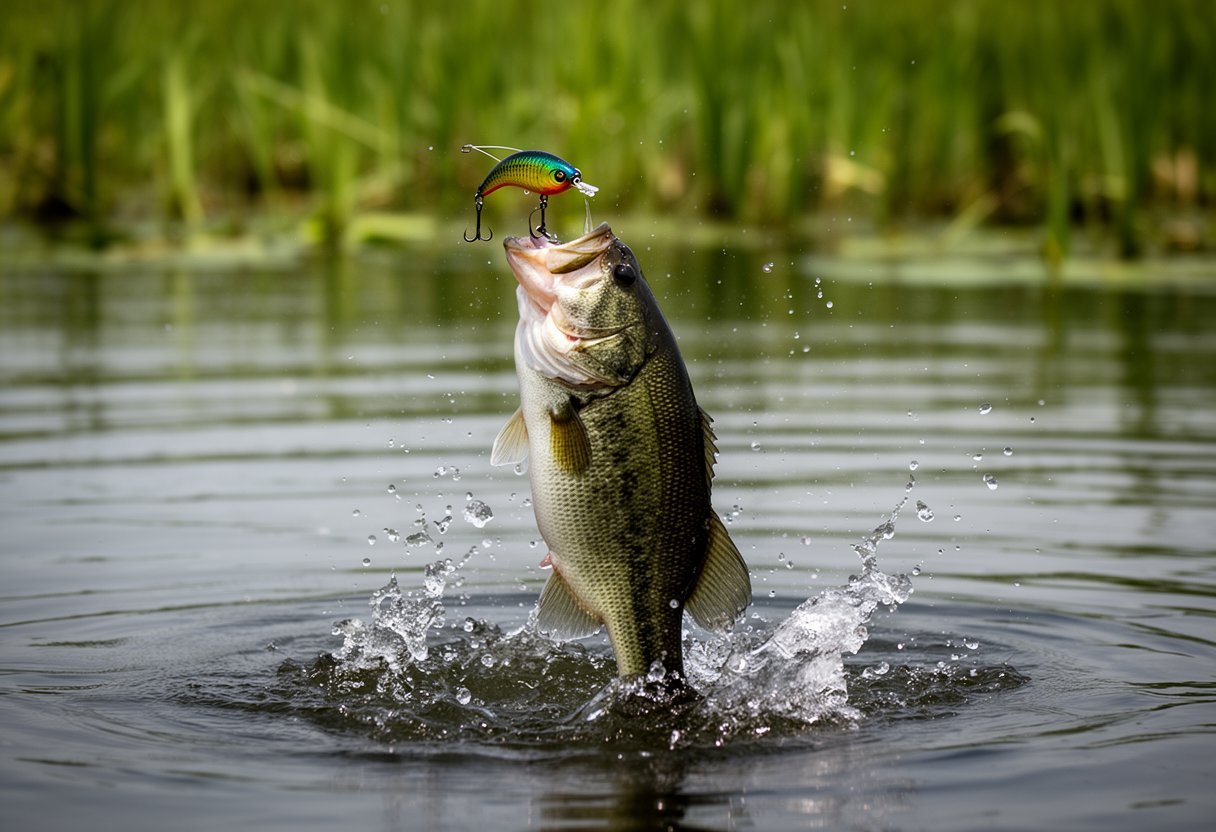
Bass — largemouth and smallmouth — are the primary targets. But topwater lures also work for pike, musky, trout, and several saltwater species. The reason is simple: predatory fish are hardwired to attack anything struggling at the surface. It is an easy meal within reach, and the visual trigger alone is often enough to make a fish strike.
If you’re still figuring out the basics of lure selection, our guide to choosing the right lure for your target species covers how to match lures to the fish you’re after.
The 5 Types of Topwater Lures Every Beginner Should Know
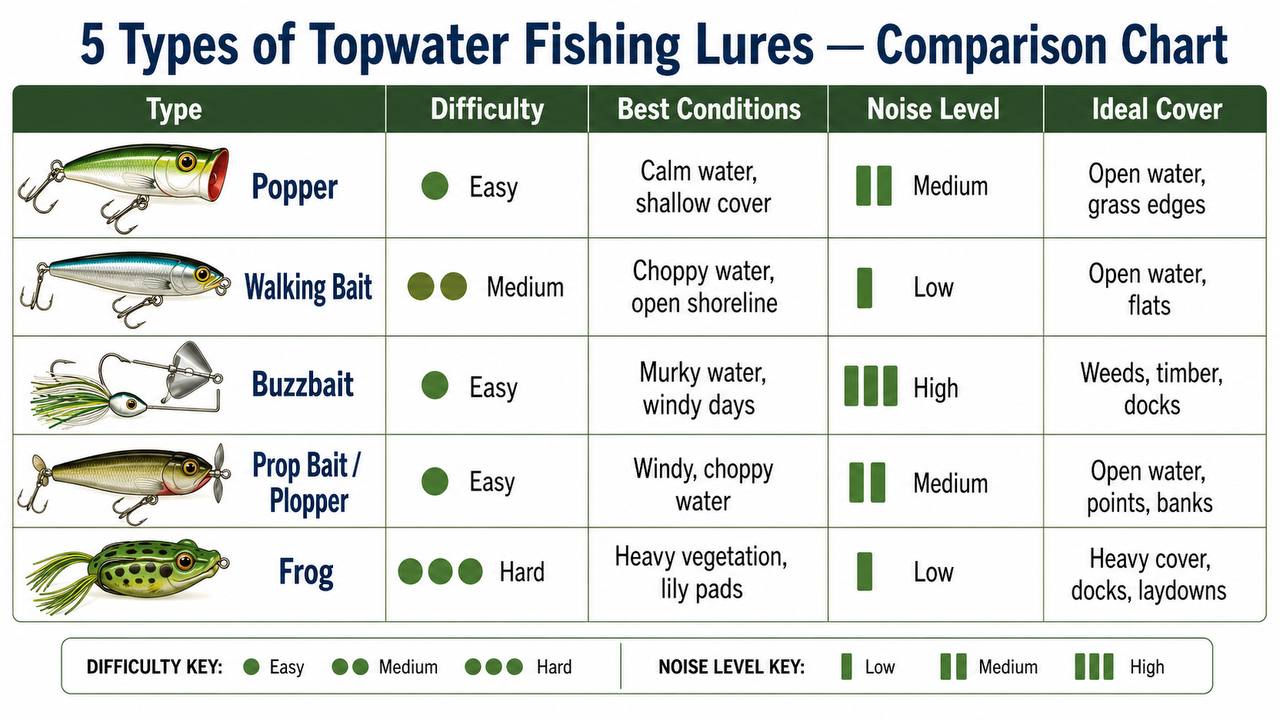
You’ll see dozens of topwater lures at any tackle shop, but they boil down to five categories. Knowing the difference is what lets you pick the right tool for whatever water you’re fishing.
1. Popper
A popper has a concave or angled face at the front. When you jerk the rod tip, that face digs into the water and kicks a spray of droplets forward. The popper is the most versatile topwater lure and the one most experienced anglers reach for when conditions are tricky. Between pops, the lure sits motionless on the surface — right where the fish can find it. That pause is actually where a lot of strikes happen, especially with selective or pressured fish.
2. Walking Bait (Walker)
Walking baits — often called “Spooks” after the most popular brand — zigzag across the surface when you twitch the rod tip back and forth. Right, left, right, left. The result is a darting, side-to-side motion that imitates an injured baitfish. Walkers cover more water than a popper, but they take a bit more rod skill to get the rhythm right. They work best on calm water where the fish can clearly see the side-to-side action.
3. Buzzbait
A buzzbait carries a spinning propeller blade on a wire arm ahead of the lure body. Reel it in and the blade spins rapidly, creating a loud buzzing sound and constant water movement. The beauty of the buzzbait is that it does most of the work for you — just reel at a steady pace. It is particularly effective in murky water, on windy days, and when fish are sluggish and need that extra noise to locate the bait.
4. Prop Bait / Plopper
Prop baits and ploppers feature a small propeller cup mounted on the front. As you retrieve, the cup churns water and produces a gurgling, splashing sound. If you talk to experienced anglers on fishing forums, the advice is nearly unanimous: start with a plopper. “Throw it out, reel it in, the bait does the work” is the most common refrain. The retrieve is simple — a steady reel-in — and the propeller creates enough action to trigger strikes even from a beginner.
5. Frog (Hollow-Body)
Hollow-body frogs have paddle-like back legs that kick water as you retrieve them. What sets them apart is their design: the hooks are buried inside the lure’s body, making it virtually snag-proof. You can throw a frog straight into thick lily pads, weed mats, and around dock pilings without losing it. Frogs tend to be the most expensive topwater lures, but if you fish heavy cover, they are essential.
How to Fish Each Topwater Lure
Picking the right lure is only half of it. Each one moves differently, and getting the retrieve rhythm wrong is the second most common reason beginners come home empty-handed.
Popper: Short, sharp twitches of the rod tip followed by a pause. Twitch twice, hold still for 1-2 seconds, then twitch again. Many strikes happen during the pause, when the lure sits motionless and a curious fish comes in for a closer look.
Walking bait: Alternating rod twitches — right, left, right, left — with steady reeling between twitches. You’re looking for a consistent zigzag pattern. If the lure isn’t walking side-to-side, shorten your twitches or pick up the retrieve slightly.
Buzzbait: Steady retrieve at a moderate pace. No twitching required. The spinning blade creates all the action you need. You can adjust the speed — faster for active fish, slower when conditions are sluggish — but the basic retrieve is just reel-in.
Prop bait / Plopper: Steady retrieve with the option to vary speed. The propeller does the heavy lifting here, so even a constant reel-in produces good surface action. Some anglers add short pauses for variety, but the simple steady-reel approach works in most situations.
Frog: Steady retrieve along the edge of cover — weed lines, lily pad borders, dock structures. A few anglers add twitches to make the frog’s legs kick harder, but a smooth retrieve is plenty effective for beginners.
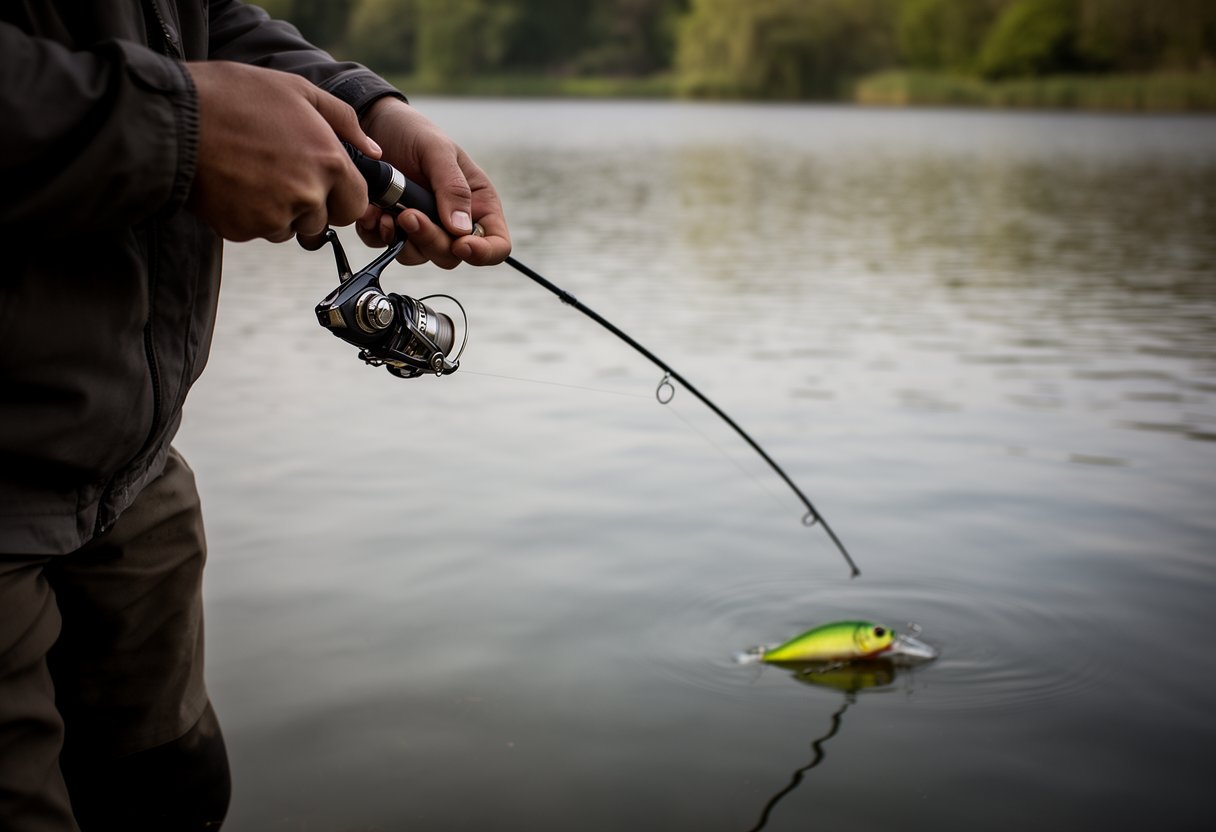
One rule that applies to all of them: stick with a single retrieve cadence for 20-30 seconds before changing pace. Fish need time to locate the lure and commit to a strike. Changing speed every couple seconds rarely gives them that chance.
When Does Topwater Fishing Work Best?
Topwater lures are not equally effective at all times of day or in all conditions. Fish have to feel comfortable enough to come to the surface, and several factors determine whether they will.
Time of day is the most important variable. Dawn and dusk are the peak windows for topwater strikes. In low-light conditions, fish feel safer feeding near the surface because predators — including people standing on the bank — have a harder time spotting them. If you only have time for one topwater session, make it at sunrise or sunset.
Season plays a role too. Summer evenings are prime topwater time — warm surface water, long days, and highly active fish. Spring is also excellent, especially around spawning time when bass move shallow to guard their nests and will aggressively attack anything that gets close.
Weather conditions can stretch or shrink the bite window:
- Overcast skies are a topwater angler’s best friend. The diffuse light keeps fish comfortable at the surface, and the strike window often extends well into the middle of the day.
- Calm water is ideal for walking baits, where that side-to-side movement needs to be clearly visible.
- A light chop or moderate breeze works perfectly with plopper-style baits — the natural surface disturbance masks the lure’s noise just enough to make it look like wounded prey.
- Murky or stained water favors buzzbaits, where the loud noise helps fish find the bait in low-visibility conditions.
Water temperature is another piece of the puzzle.
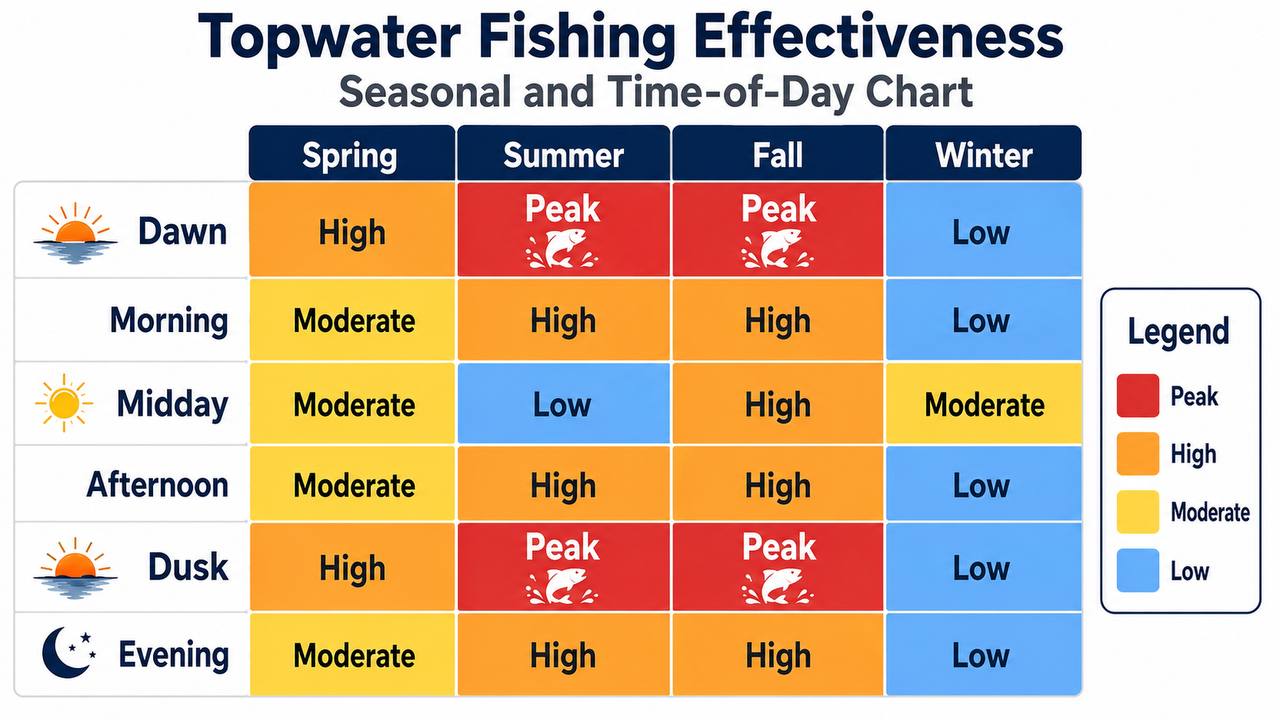
Surface feeding behavior typically kicks in when water temperatures climb above 60°F. Below that, fish tend to hold deeper and topwater lures become much less productive.
What Gear Do You Need for Topwater Fishing?
You do not need to buy a new rod to try topwater fishing. Most beginner rod-and-reel combos handle topwater lures just fine. Here is what actually matters:
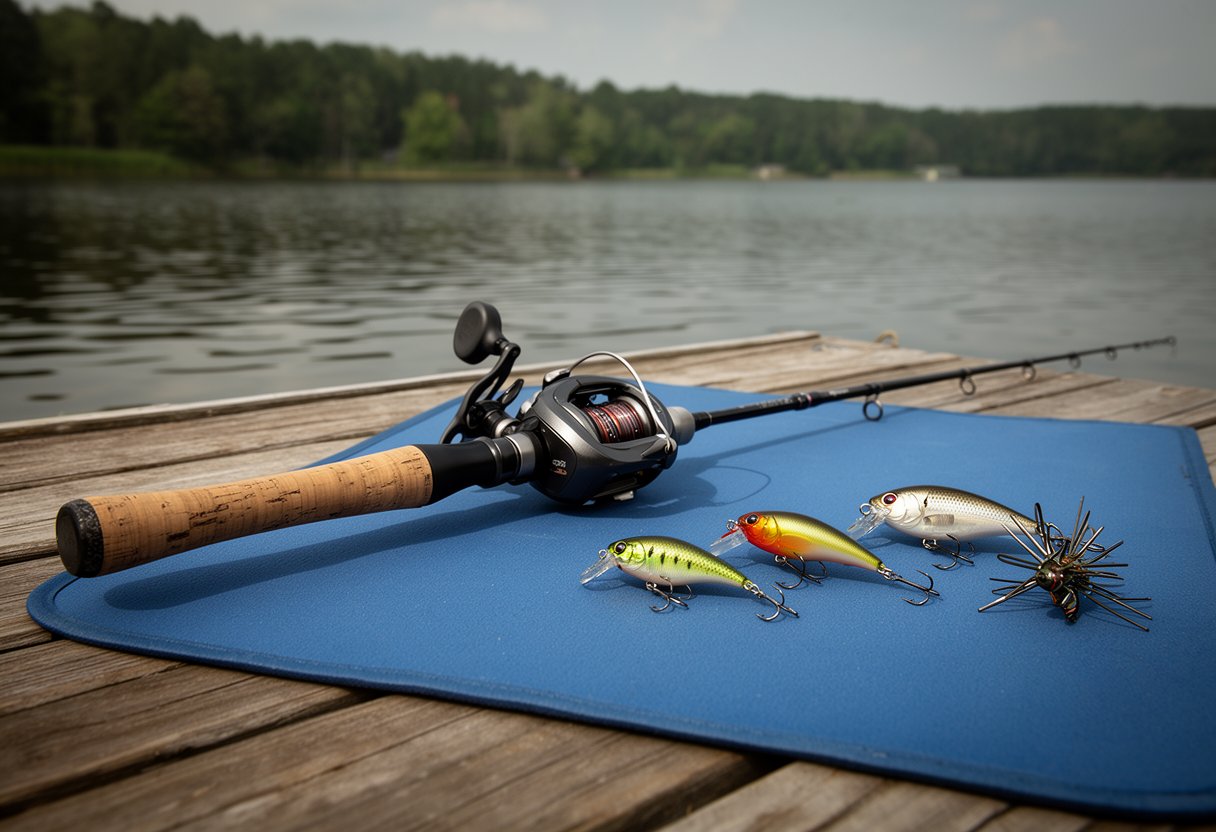
Rod: Medium to medium-heavy power with a fast action. This gives you enough backbone to set the hook on a hard-mouthed bass while still being sensitive enough to feel that subtle “thump” when a fish takes the lure.
Reel: A spinning reel is the easiest platform for beginners and works with every type of topwater lure. Baitcasting reels offer more precision for walking baits, but they have a steeper learning curve — skip them until you’re comfortable with the basics.
Line: Braided main line (8-15 lb test) is the standard for topwater fishing. Braid has virtually no stretch, which means your hook set reaches the lure instantly — important when you have maybe half a second after a strike. Braid also floats, so it won’t drag the lure below the surface. Add a 10-15 lb fluorocarbon leader for extra invisibility in clear water.
Sharp hooks are non-negotiable. Topwater strikes are fast, and dull treble hooks will simply pull out of the fish’s mouth. Run your fingernail along the hook point before every outing — if it doesn’t scratch cleanly, replace the hook or the lure.
If you’re still deciding on a rod-and-reel combo, our freshwater rod and reel guide covers what to look for based on the techniques you plan to use.
The #1 Mistake Beginners Make (And How to Avoid It)
If there is one thing that ruins more topwater strikes than any other, it is setting the hook too soon. Period.
Here is the sequence: you cast out, you’re retrieving the lure, and suddenly a massive splash erupts right in front of you. Every instinct screams to yank the rod back immediately.
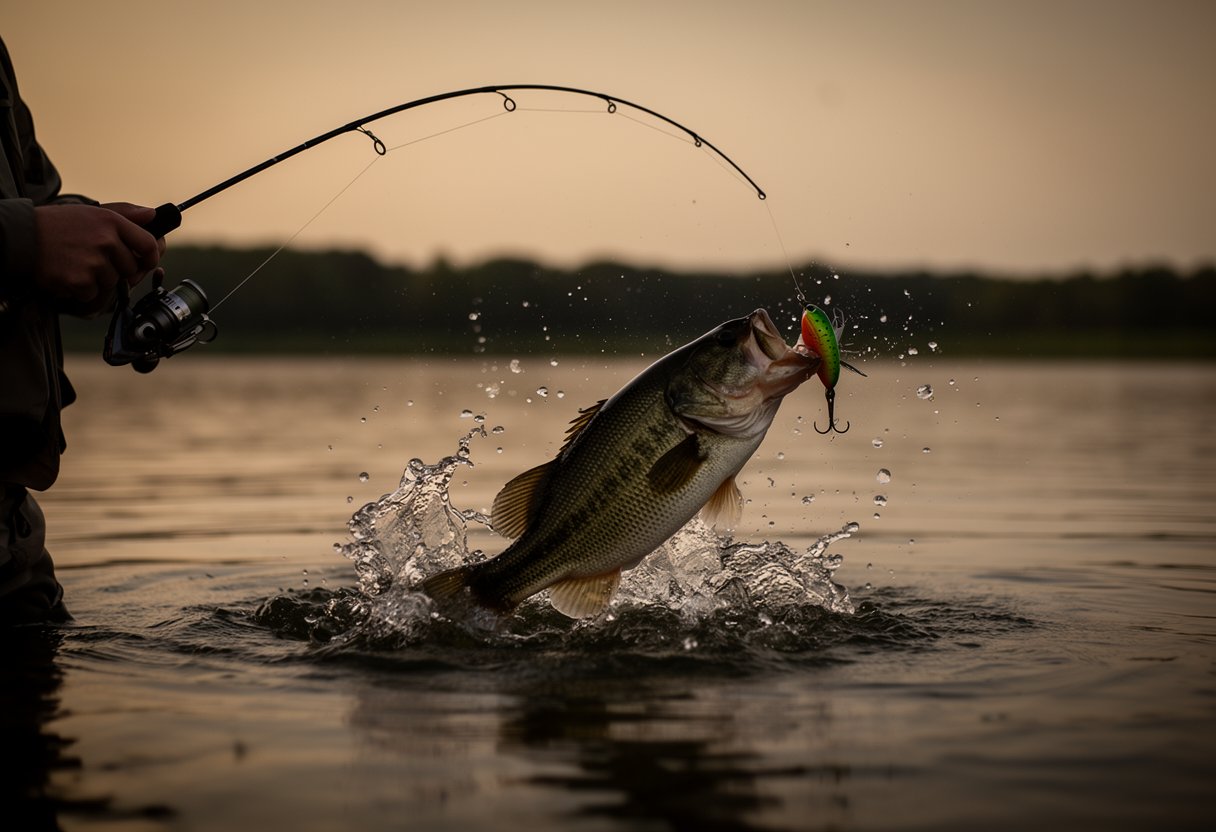
But the splash you see is often the fish approaching the lure, not the fish actually taking it. The explosion startles anglers into setting the hook before the bass has sucked the lure into its mouth.
The rule that separates successful topwater anglers from frustrated ones is simple: wait 1-2 seconds after the splash.
Watch the lure. If the fish has taken it, the lure will disappear beneath the water or you’ll feel a sudden weight on the line. That is the moment to set the hook. If the fish spits the lure during that brief pause, you can always cast again. If you set too early, the strike is gone.
Do not overdo the hook set, either. The treble hooks on topwater lures are typically made from thinner wire than hooks on subsurface lures. Setting too aggressively can actually tear the hook free from the fish’s mouth. A firm, controlled sweep of the rod is enough — you do not need to slam the rod backward.
For a more detailed look at hook-setting technique across all types of fishing, check out our hook setting and fish-fighting guide.
Two other common mistakes that cost beginners topwater fish:
Casting randomly instead of targeting cover. Short, precise casts to specific structures — weed edges, dock pilings, fallen trees, lily pad borders — consistently outperform long, careless casts across open water. Bass hold near cover, and they rarely venture far from it to chase a surface lure.
Changing retrieve speed too quickly. Fish need time to locate and commit to a topwater lure. Changing pace every couple of seconds gives them no chance to react. Pick a cadence, commit to it for at least 20-30 seconds, then adjust if nothing happens.
Getting Started: Your First Topwater Lure
If you’re buying your first topwater lure, start with a prop bait or plopper. It requires the least technical skill to retrieve, and the propeller creates enough surface action on its own that even a beginner can trigger strikes.
If you want something more versatile that handles a wider range of conditions, a popper is the next best choice. It works on both active and selective fish, and the pause-and-pop retrieve is straightforward to learn.
Practice on a calm pond or lake before heading to heavily pressured water. Dial in your retrieve rhythm until it feels natural, then start targeting specific cover — cast to weed edges, submerged branches, and along the shoreline.
Expect to miss a few fish in the beginning. Even experienced anglers blow topwater strikes, especially during their first season. The timing of that hook set comes with repetition, and every splash you see gets you a little closer to landing the fish.