
You’ve picked up a fishing rod. You’ve heard ponds are the easiest place to start. But once you stand at the water’s edge, what actually happens next? What fish are in there? What bait should you bring? Where do you cast so you’re not just fishing empty water?
If you’re a complete beginner, pond fishing is the most forgiving way to learn. The water is small and manageable, the fish are predictable, and you can walk right up to it. This guide covers everything you need to know for a productive first trip to a pond — from what’s swimming below to the simplest rigs that actually work.
What Is Pond Fishing and Why It’s the Best Place to Start
Pond fishing means targeting freshwater fish in a small, still body of water — typically an acre or less. A neighborhood pond, a park lake, a community fishing spot, or even a private farm pond all qualify. The thing that separates a pond from a larger lake is that you can see most of it from the shore.
That visibility is exactly why ponds make the best training ground for a new angler. You don’t need a boat. You don’t need a long drive. You don’t need to manage currents, wind, or deep water. You walk up to the bank, cast a line, and start learning.
Most beginners already have a pond within a short drive. Parks, nature centers, and some residential communities maintain ponds specifically for fishing. The slower, more relaxed pace of pond fishing also means you won’t feel rushed — there’s no current pulling your bait away, and the fish tend to hold in predictable areas.
Pond fishing is also the least intimidating way to enter the sport. If you’re reading this, you probably want to catch fish without spending a fortune on gear or spending a weekend lost in fishing terminology. A pond lets you do both.
What Fish Live in a Typical Pond
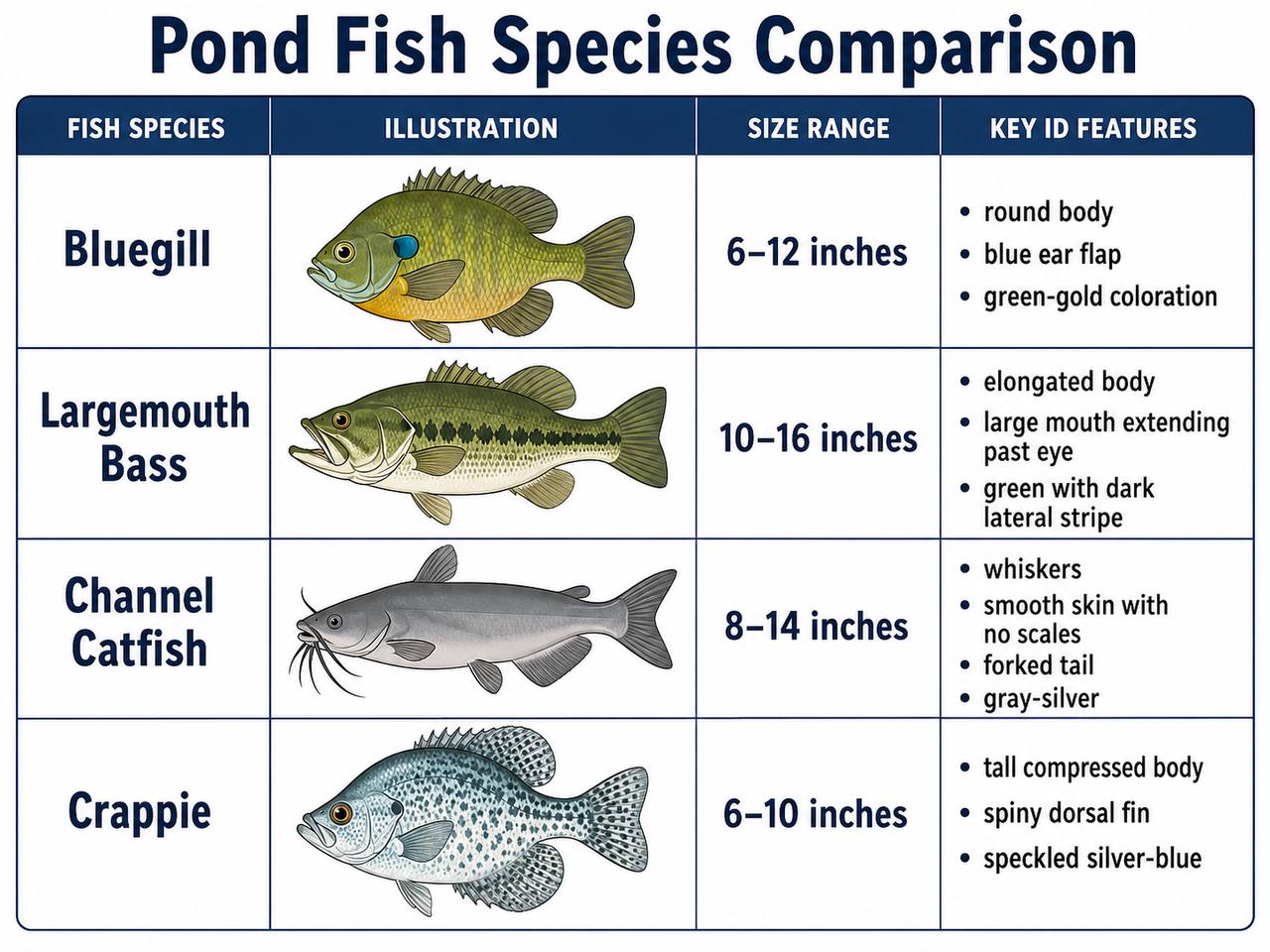
If you walk up to a randomly chosen pond, you’ll almost always find the same four species. Managed ponds are typically stocked with a balanced mix that includes one predator, one forage fish, and one bottom feeder. Here’s what you can expect:
Bluegill (Sunfish): The most abundant fish in any pond and the easiest to catch. Bluegill are small, colorful fish with a distinctive blue edge on their gill cover. They grow to about 6-12 inches and hang out in shallow water near vegetation. For a beginner, bluegill are the species that makes you feel like you’re actually catching something — they bite frequently and hook easily.
Largemouth Bass: The top predator in most ponds. Bass are the fish that make pond fishing exciting. They grow larger than the other species in the pond, often reaching 10-16 inches, and fight harder when hooked. Bass hang around structure — docks, fallen trees, and weed edges — and will strike both live bait and artificial lures.
Channel Catfish: The bottom feeders of the pond. Catfish have whisker-like barbels around their mouth, smooth skin with no scales, and a forked tail. They live near the bottom and are extremely tolerant of conditions that would stress other fish. They’re great for beginners because they’re less spooky than bass — you don’t need to be perfectly quiet or positioned to catch one.
Crappie: Not every pond has crappie, but larger ponds often do. Crappie are tall, compressed fish with a speckled silver-blue pattern and a spiny dorsal fin. They tend to school together and bite well during spring and fall.
Some ponds also contain redear sunfish (often called “shellcracker”) as part of a managed stocking program. These look similar to bluegill but have a more reddish throat and prefer harder bottoms.
The bottom line is that a single pond typically holds three to four species you can catch with the same basic setup. You don’t need to specialize in one fish — everything is in the same body of water, often in the same general area.
What Gear You Need for Pond Fishing
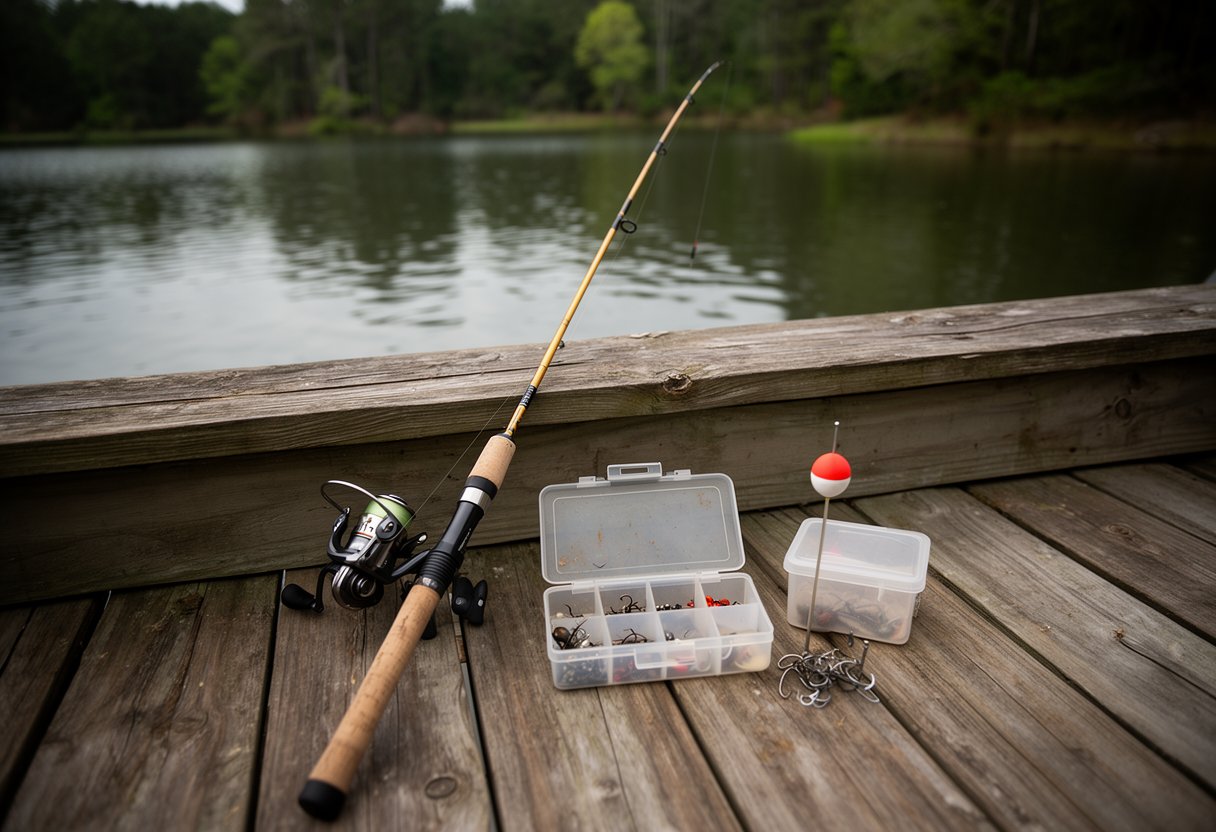
Pond fishing requires the least gear of any fishing environment. You don’t need multiple rods, specialized tackle, or expensive electronics. Here’s the complete list:
One spinning rod and reel combo: A medium-light spinning rod paired with a size 500-1000 reel handles everything you’ll encounter in a pond. This single setup catches bluegill, bass, and catfish without any adjustments.
6-pound test line: This line weight handles small panfish comfortably without being too thin for a 2-pound bass. It casts well on a light reel and gives you enough strength for the occasional bigger fish.
Hooks: A small packet covering size #6 and #8 (for panfish) and size #2 (for bass) covers everything.
A bobber and split shot weights: These two inexpensive items let you set up a simple float rig that works for nearly every species in the pond.
A landing net (optional but helpful): You don’t need one, but a small net makes landing bass and larger fish much easier.
A cooler or stringer: If you plan to keep fish, bring something to keep them fresh.
The total cost to get started is typically under $50 for a basic spinning combo and a small tackle box. If you’re looking for gear recommendations, our guide to fishing rod and reel combos for beginners covers what to look for.
Best Bait for Pond Fishing
The best bait for pond fishing is the bait that catches multiple species — that way you’re not switching baits every time you change targets. Live baits are the most versatile option, and they’re also the most forgiving for beginners who haven’t learned to work artificial lures yet.
Nightcrawlers (earthworms): The universal pond bait. Nightcrawlers catch bluegill, bass, and catfish — every species in a typical pond. Thread a worm on a hook, cast it out, and you’re fishing for everything at once. If you bring only one bait, make it nightcrawlers.
Live minnows (fatheads): Small minnows like fatheads are excellent for panfish and crappie. They swim naturally in the water, which triggers strikes from baitfish-eating species like bass and crappie. Fatheads are the right size for bluegill — larger shiners work better if you’re targeting bigger panfish or crappie.
Crickets: An underrated bait for sunfish. Crickets are easy to keep alive in a bait bucket, and bluegill love them. A hook through the thorax keeps the cricket active for a long time.
Soft plastic swimbaits: If you prefer artificial bait, a small paddle-tail or curly-tail swimbait on a light jighead works for both bass and crappie. It’s the simplest artificial lure to cast and retrieve.
Budget options: Canned corn and cut hot dogs work surprisingly well for bluegill and other sunfish. They’re cheap, easy to keep, and don’t require a live bait license in most states.
If you’re new to fishing with live bait, our live bait guide for beginners covers how to hook, store, and handle each type.
Where to Cast in a Pond
Casting into open water and hoping for a bite is the most common beginner mistake. Fish in ponds don’t spread evenly across the water — they concentrate around specific features. Here’s where to look:
Docks and structures: Docks create shade and cover, which fish seek out. Bass often hide near dock pilings, while bluegill hang around the edges where the dock meets open water. If a pond has docks, start there.
Aquatic vegetation edges: The border between open water and lily pads, weeds, or other vegetation is one of the most reliable fish-holding areas. Fish use vegetation for shelter and food. Cast right along the edge of the vegetation, not deep into it.
Creek channels and inlets: Most ponds have at least one stream or pipe that feeds water into them. Fish use these channels as travel routes. You’ll often find bass moving along creek channels on their way to or from shallow spawning areas.
Fountains and aeration systems: Aeration pumps add oxygen to the water, and fish are attracted to oxygen-rich areas. If a pond has a fountain or aerator, cast nearby.
Deep edges and drop-offs: Even in a small pond, there are typically areas where the bottom drops off more quickly. These deeper edges hold fish, especially on bright or hot days when fish retreat to cooler water.
The tricky part about ponds is that fish can see and sense movement more easily than in larger lakes. If the water is clear, make longer casts — standing right at the edge and casting short distances means fish can see your shadow and hear your footsteps through the shallow water. A cast of 15-20 feet or more puts your bait well away from your presence.
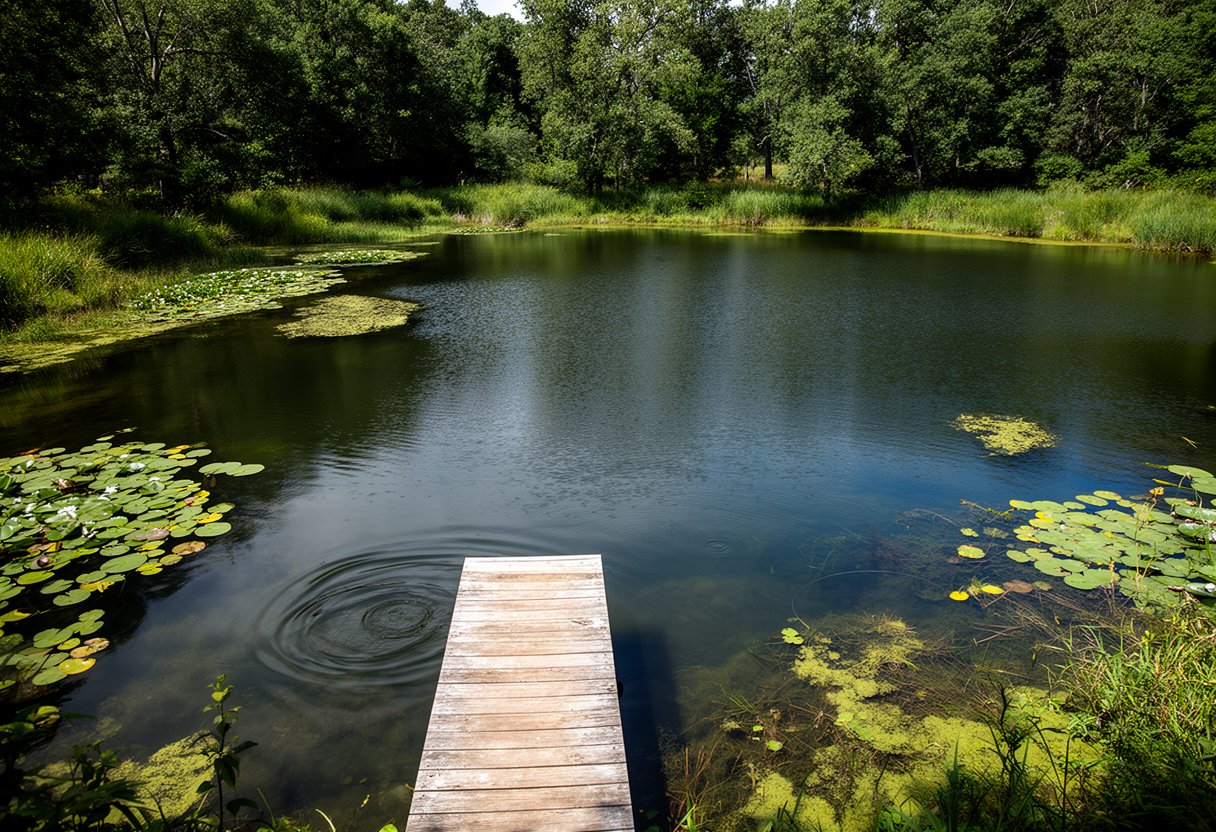
You can also “read” the water for signs of fish. Look for ripples on the surface (a bass chasing baitfish), birds diving (they’re catching small fish), or shadows moving beneath the surface. These are all clues that fish are active in a particular area.
Basic Techniques That Work in Ponds
Pond fishing doesn’t require advanced techniques. Three simple methods cover everything a beginner will encounter:
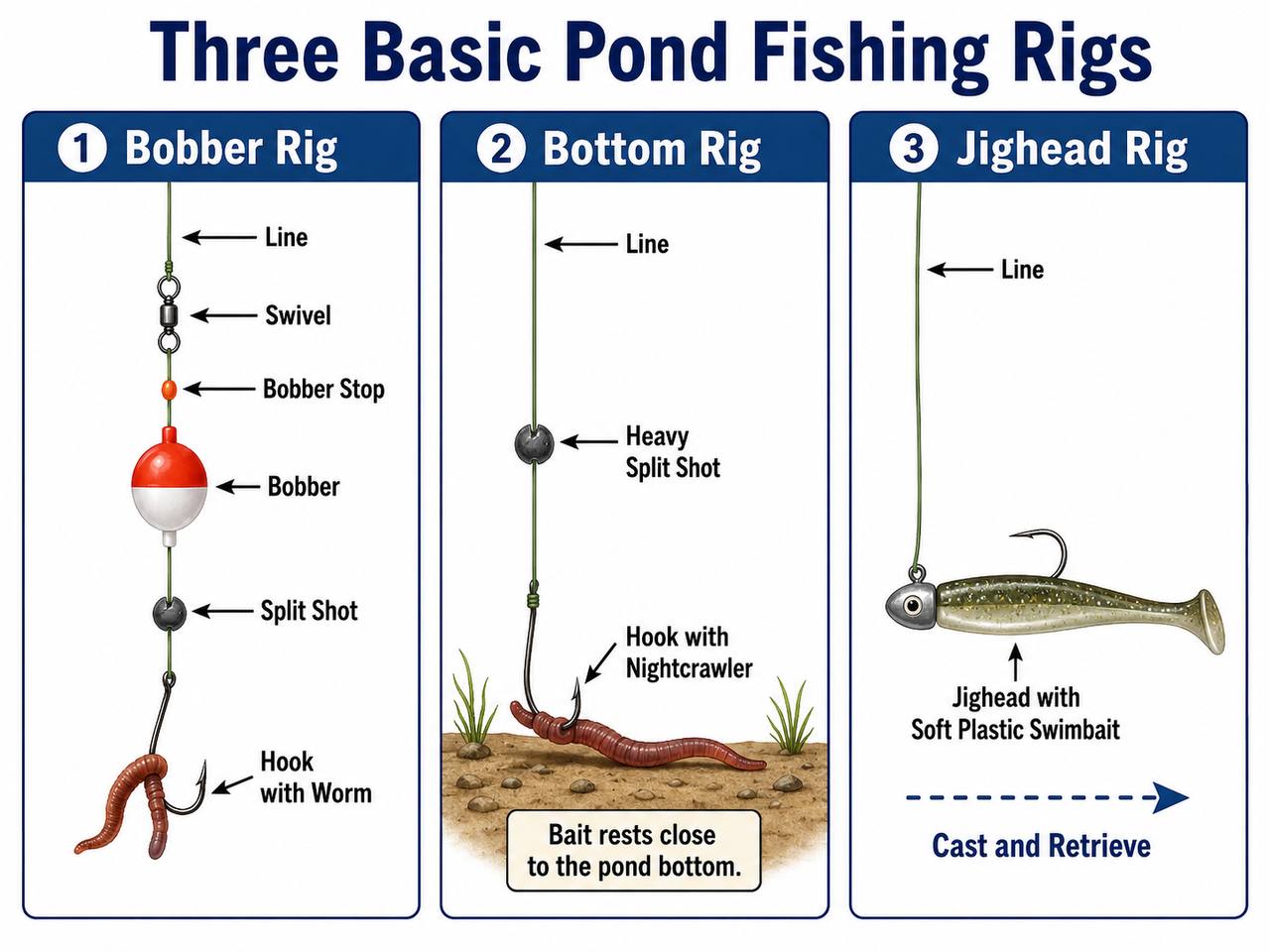
Float (bobber) fishing: The most beginner-friendly technique. Thread a bobber onto your line, add a small split shot weight below it, and tie on a hook with bait. The bobber suspends your bait at a specific depth — for panfish, start with the bait 1-2 feet off the bottom. When the bobber dips or goes under, set the hook with a smooth upward motion of the rod.
Bottom fishing: Drop your bait to the bottom of the pond with a bit more weight. This technique targets catfish and bass that hold near the bottom. Let the bait sit still and watch your line — a tug or movement is your signal to set the hook.
Casting and retrieving: Cast a soft plastic swimbait or small jig and retrieve it at a moderate pace. Vary the speed — sometimes a slow retrieve works better, sometimes a faster one triggers a strike. Watch the rod tip for subtle bites, especially with bass.
Knowing when to set the hook matters more than the technique itself. A bobber going under the water, a rod tip that bends sharply, or a firm tug on your line are all signs that a fish has taken the bait. Set the hook with a firm but smooth lift of the rod — no violent jerks.
If you’re unfamiliar with the basics of hook setting and fighting a fish, our set the hook and fight the fish guide walks through the mechanics step by step.
The number one mistake beginners make in ponds is overcomplicating their rig. A bobber, a weight, a hook, and bait is a complete fishing setup. You don’t need to add more components to catch more fish.
Best Times to Fish a Pond
Timing matters in ponds more than in larger lakes because the water is shallow and temperature changes faster. Here’s when you’ll have the best luck:
Dawn and dusk: The early morning and evening hours are the most productive times to fish a pond, regardless of species. Fish are typically more active during low-light conditions, and the cooler water temperatures make them more comfortable.
Early morning (6-9 AM): Fish tend to be closer to the surface in the morning, making them easier to target with a simple bobber rig. This is also the time when bass move into shallower water to feed.
Evening and sunset: Bass are especially active during sunset, often moving into shallow cover to hunt. Sunfish also feed heavily in the evening.
Spring and fall: These seasons offer the best overall pond fishing. In spring, bass are spawning in shallow water and bluegill are active. In fall, all species feed heavily before winter.
Summer: Early morning is your best window. During hot midday hours, fish retreat to deeper or shaded areas. Oxygen levels in ponds can also drop during summer, which makes fish less active.
Overcast days: Cloudy weather is often better than bright sunny days for pond fishing. Fish feel more comfortable feeding in shaded or diffuse light conditions.
For a deeper look at how fishing changes through the seasons, our seasonal fishing guide covers month-by-month patterns.
Tips for Your First Pond Fishing Trip
You know the basics. Here’s a practical checklist for your actual first trip to a pond:
- Arrive early. Get to the water before peak hours so you’re settled in when fish start feeding.
- Be quiet. Fish in small water hear and sense vibrations more easily than in larger lakes. Talk quietly and avoid stomping around.
- Start with the simplest rig. A bobber, weight, and nightcrawler covers every species in the pond. Don’t bother setting up multiple rods.
- Pick a spot and give it 20-30 minutes. Moving around too quickly is a common beginner mistake. Fish take time to approach your bait, especially in a small pond where they’re more cautious.
- Keep a simple note of what works. Write down the bait, depth, and location when you catch a fish. This becomes your personal pond-fishing reference.
- Bring water, snacks, and sun protection. Comfort matters — sitting quietly for an hour in the sun without water is miserable and shortens your trip.
If you need to put together your first tackle box, our starter kit checklist covers every essential item.
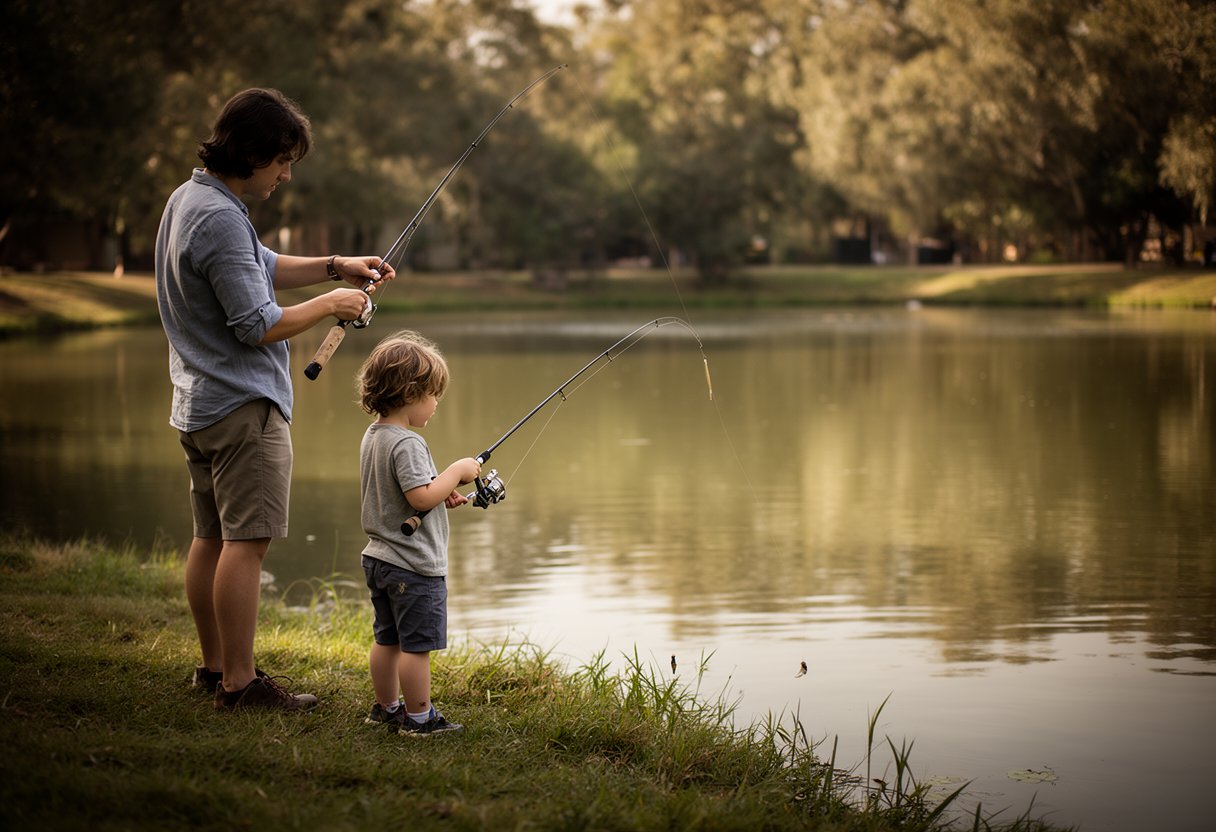
Pond fishing is one of the most rewarding ways to learn the sport. It’s simple enough that a first trip can end with fish on the line, and it builds the casting, hook-setting, and patience skills that carry over to every other fishing environment. Grab a basic spinning combo, bring a handful of nightcrawlers, and head to the nearest pond — you’re ready to start fishing.