
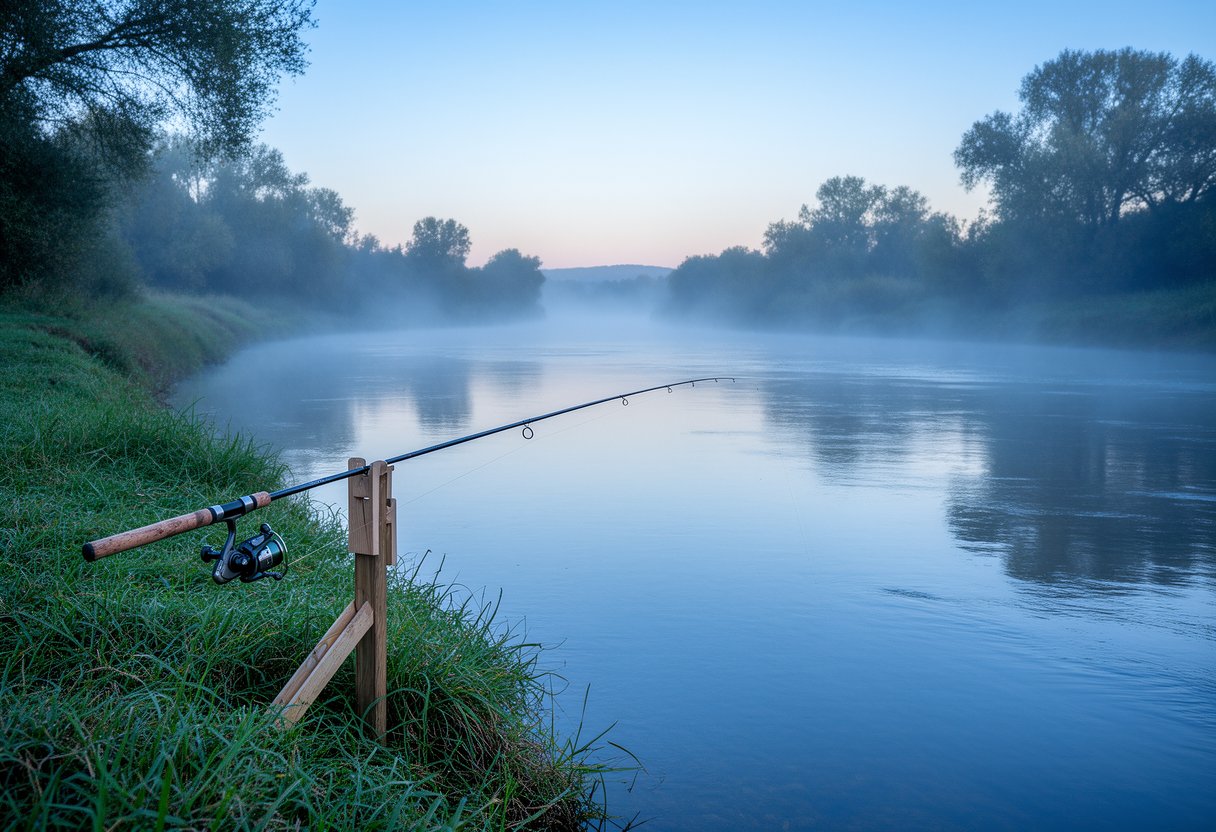
You’ve probably caught bass or sunfish before — maybe even trout. They fight, they look great on camera, and there are a thousand YouTube videos that tell you exactly how to catch them. Catfish, on the other hand, feel like a whole different world. They’re nocturnal, they live in the murky deep, they seem to require a boat and some fancy gear you’ve never even heard of.
Here’s what most people don’t tell you: catfish are probably the easiest “big fish” you’ll ever catch, and you can do it from the bank. They find food by smell, not sight, which means they’re far less picky than bass or trout. A simple rig, a strong-smelling bait, and a decent location are all it takes. And here’s the funniest part — even experienced anglers often find that beginners outfish them when it comes to catfish. The species doesn’t care how many years you’ve been fishing. It cares about what you have dangling at the end of your line.
Why Catfish Are the Perfect First “Big Fish”
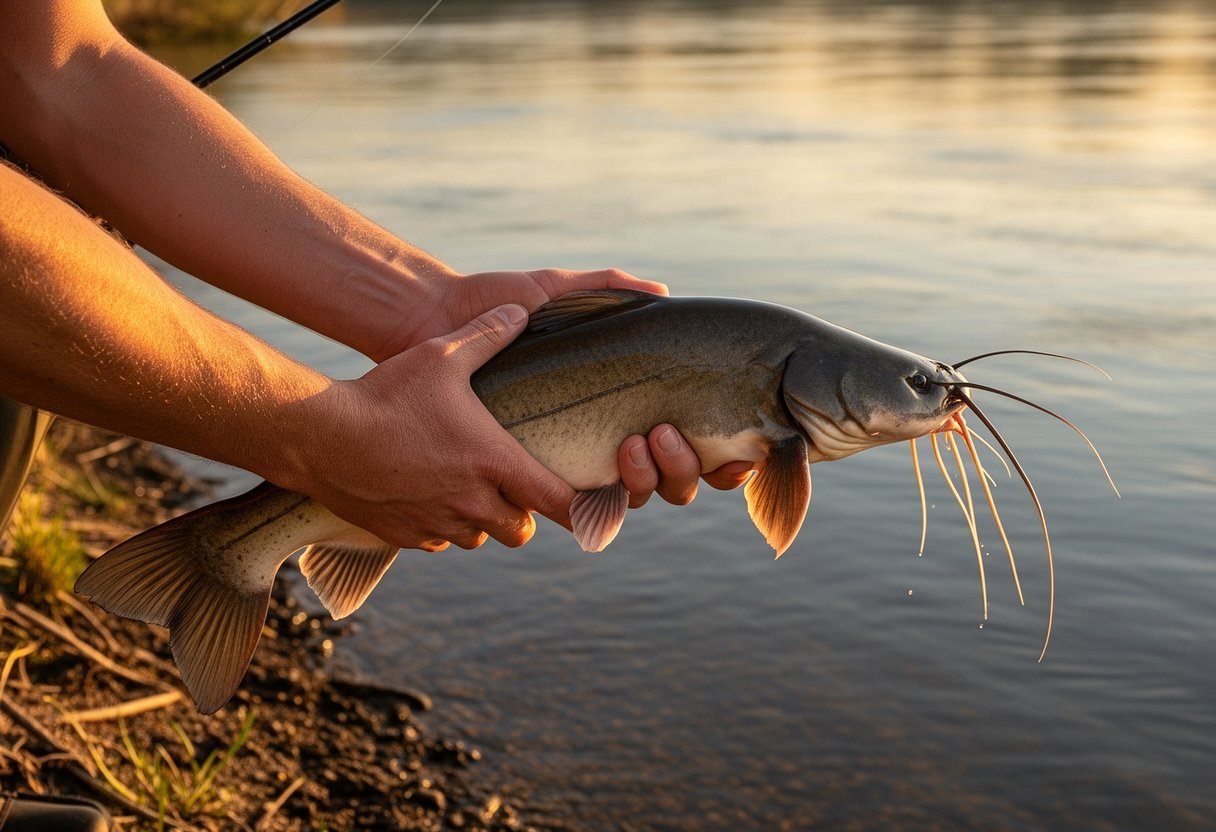
Channel catfish are the most common catfish species across North America. You’ll find them in rivers, lakes, and reservoirs from Maine to Florida and all the way across the Midwest. They typically grow between 2 and 8 pounds — substantial enough to put a real bend in your rod and make you feel like you’re doing something right, but manageable enough to land from the bank without dragging a net into the water.
What makes them so beginner-friendly comes down to pure biology. Catfish locate food primarily through an incredibly well-developed sense of smell, plus taste buds spread across their entire body. They don’t need to see your bait clearly — they just need to smell it. That means cloudy water, night fishing, and overcast days are all fine. In fact, they’re often better.
These are opportunistic feeders. They’ll eat almost anything that smells like food and sinks to the bottom. They don’t have the visual pickiness of bass, which can refuse a lure if the light hits the water at the wrong angle or the water is stained. Catfish simply follow a scent trail and bite. Most anglers agree that catfish are the great equalizer — the species where a first-timer’s chance is almost as good as a veteran’s.
What You Actually Need: Simple Catfish Gear
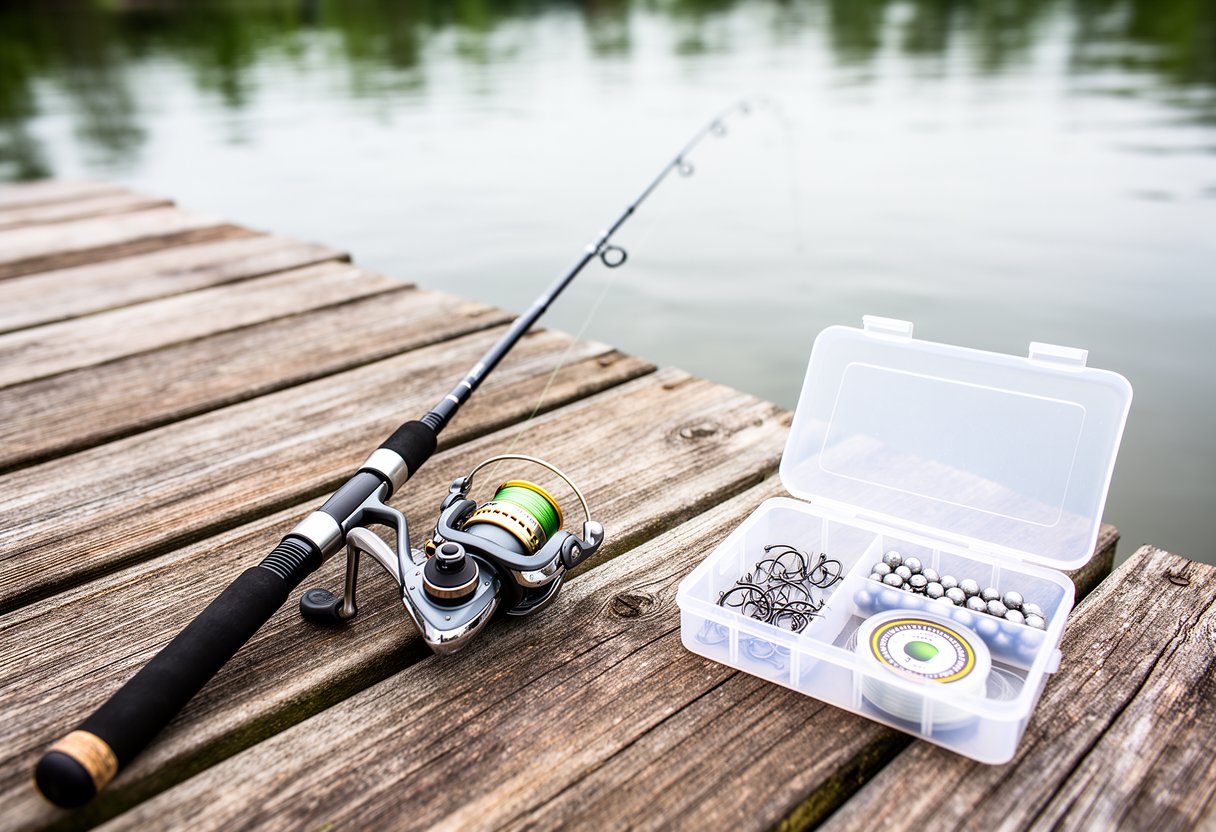
Let’s get something straight: you don’t need a dedicated “catfish rod.” If you already own a medium-heavy spinning combo — maybe something you bought at Walmart last summer — it will work just fine. That said, here’s what makes a good shore catfish setup if you’re starting from scratch:
Rod: A 7- to 9-foot rod in medium-heavy to heavy power. Shore fishing benefits from a longer rod because it helps you cast farther and gives you better leverage when the fish decides to run for deep cover.
Reel: A spinning reel in size 2500-4000 is perfect for beginners. Spinning reels are just easier to use than baitcasting reels, especially when you’re learning to cast those heavy sinkers without getting line twist.
Line: 10- to 15-pound monofilament line. Catfish typically don’t run at the speed of bass, so you don’t need the stretch-free sensitivity of braided line. Mono is forgiving, visible (so you can actually see line movement), and affordable. If you want to upgrade later, braided line in 20-30 pounds with a mono leader works well too.
Hooks: Circle hooks are the ideal choice for catfish. They self-hook — when the fish swims away with bait in its mouth, the hook naturally rotates and catches in the corner of the jaw. Better hook-holds, safer releases. Size 3/0 to 5/0 is the sweet spot for channel catfish.
Sinker: Egg sinkers in 1 to 3 ounces. Egg sinkers slide freely on your line, which is the whole point of the rig setup covered next.
Keep it simple. The gear you need costs under $50 total, and much of it is probably already sitting in your tackle drawer. If you’re buying your first rod and reel, a medium-heavy spinning combo aimed at general freshwater fishing works perfectly. For guidance on picking your first setup, see Freshwater Rod & Reel Combo Guide.
The Slip Sinker Rig: Your Go-To Catfish Setup
The slip sinker rig is the most versatile catfish rig for shore fishing. It’s used on rivers, lakes, and ponds across the country because it does three things well: keeps your bait on the bottom where catfish feed, lets fish pick up the bait without feeling resistance, and it’s simple enough to tie in under a minute.
Here’s how it works. The sinker slides freely on your mainline, held in place by a small bead and the knot at the top. When a catfish picks up the bait, it doesn’t feel the weight of the sinker — it just feels the bait. That matters because catfish are bottom feeders that explore food slowly. Any extra weight on the line can make them suspicious, and they’ll just drop the bait.
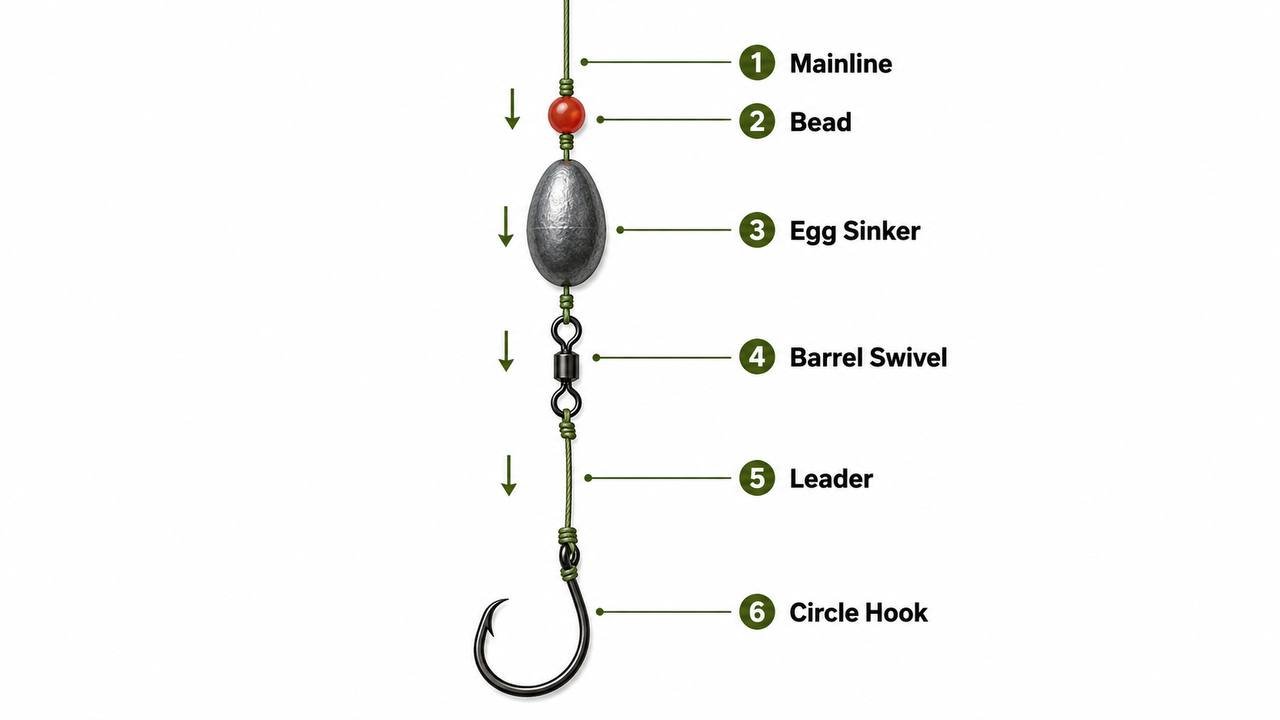
Building the rig, from top to bottom:
- Start with your mainline. If using a spinning reel, tie a loop knot or simply double the line through the first bead.
- Thread on a small plastic bead. This bead sits against the sinker and protects the knot above it from friction. It also makes a soft clicking sound when the sinker moves, which some anglers believe actually attracts catfish.
- Add the egg sinker. The sinker slides freely on the line. Choose 1 to 3 ounces depending on current and depth — heavier for moving water, lighter for still water.
- Thread on a barrel swivel. The swivel prevents line twist and serves as the connection point between your mainline and leader.
- Tie on a leader. Use 12-18 inches of 15-20 lb monofilament. The leader protects against abrasion from catfish whiskers and rocky bottom.
- Attach a circle hook. Size 3/0 to 5/0, tied with a strong knot like a Palomar or improved Clinch.
Once the rig is built, put your bait on the hook, cast to your chosen spot, and let it settle to the bottom. Set the rod on a bank holder or rest it against a forked branch, and wait.
For readers who want to learn more about knots, the Fishing Knots for Beginners guide covers Palomar, Improved Clinch, and loop knots in detail.
Best Baits for Catfish (What Actually Works)
Catfish find food by smell, so the golden rule of catfish bait is pretty simple: the stronger the scent, the better. Here’s a breakdown of what actually works, ranked by effectiveness and accessibility.
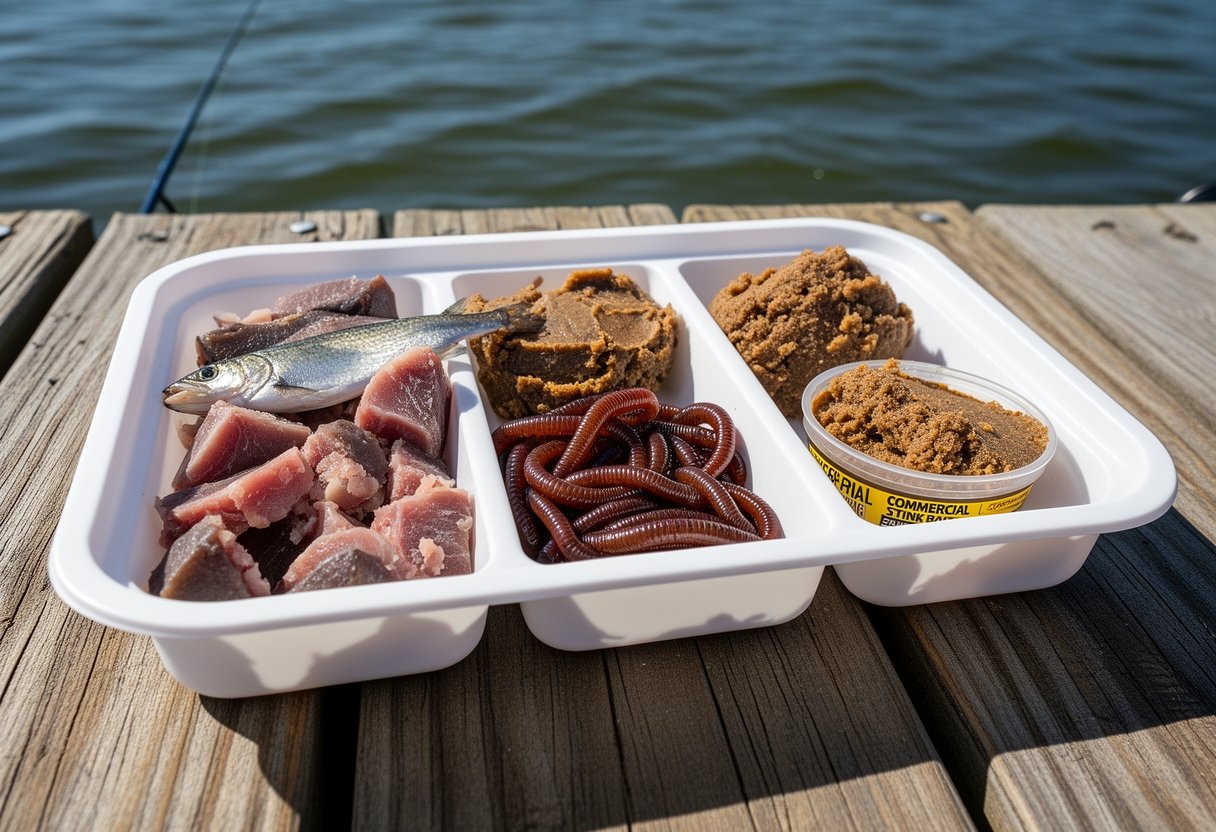
Cut bait (shad, herring, mackerel) is widely considered the gold standard for channel catfish. Cut bait works because oily fish release a strong scent trail in the water. Buy a few small bait fish from a bait shop, cut them into 2-3 inch chunks, and hook them so they dangle naturally. In moving water, cut bait is nearly unbeatable because the current carries the scent downstream right into the noses of holding catfish.
Live bait (shad, minnows, crayfish) is highly effective but requires keeping the bait alive until you fish. Live bait moves, creates vibration, and triggers a predatory response. Crayfish are particularly good in rivers and creeks where channel catfish naturally feed on them. The downside is you need a bait well or livewell, and live bait typically doesn’t last more than a day.
Stink baits and dough baits are beginner-friendly and require zero preparation. These commercial baits come in cans or tubs and are designed to release strong aromas in the water. They excel in warm summer water when catfish feeding activity is high. Simply hook a golf-ball-sized piece and fish it. Brands like Berkley Gulp! and various “dough ball” formulations are widely available at any tackle store.
Nightcrawlers work well for smaller channel catfish (under 4 pounds) and are the easiest bait to source — almost any bait shop sells them, and you can even find them in garden centers. Thread several nightcrawlers onto the hook to create a larger, more visible target. They’re less effective than cut bait for larger fish, but they’ll definitely catch channel cats in pond or slow-water situations.
Hot dogs sound unusual, but they’re a legitimate catfish bait, especially in urban ponds and smaller waters. Cut a hot dog into 2-inch chunks and hook them the same way as cut bait. They work because they release fat and salt into the water, creating a scent trail. Don’t laugh — many seasoned catfish anglers swear by this approach for catching steady numbers of channel cats in smaller waters.
Season matters too. Stink baits and dough baits typically outperform in summer heat when water temperatures are above 75°F. Live bait and cut bait are usually better in cooler spring and fall water.
Where and When to Fish for Catfish from Shore
Location and timing matter more than gear or bait when it comes to catfish. You can have the perfect rig and the best bait in the world, but if you’re fishing the wrong spot at the wrong time, you’ll come up empty.
Where to Find Catfish
Catfish typically hold near structure and in deeper water during the day. Here are the most productive shore-accessible spots:
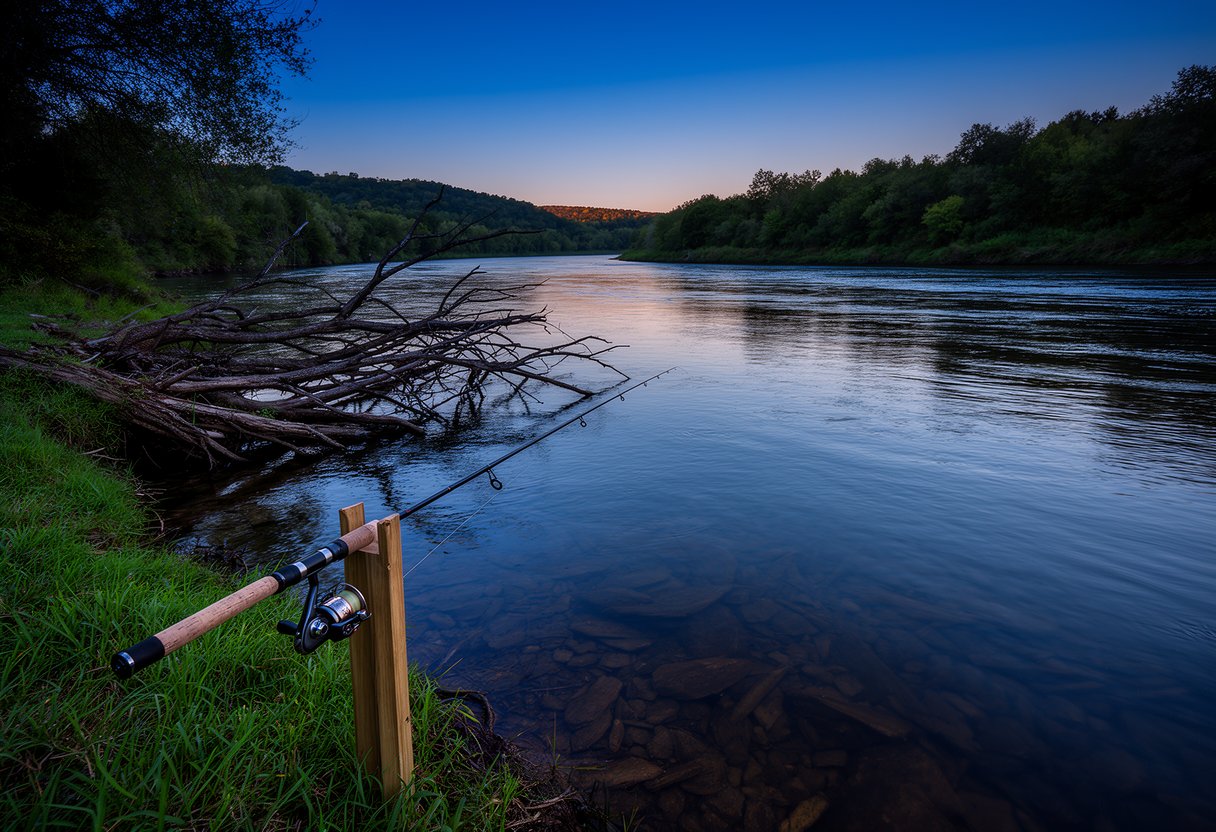
River bends and deep holes are prime real estate. Catfish tend to hold in the deeper water on the inside of river bends, where the current slows and food accumulates. Any deep hole along a river is a natural catfish highway — they move through these spots regularly, especially at night.
Near structure is the next best bet. Fallen trees, rock piles, bridge pilings, and docks all attract catfish because they provide cover and concentrate food. Cast near any visible structure from the bank, and you’re fishing where the fish are.
Creek mouths and tributary inlets draw catfish because these areas funnel food and nutrients into larger bodies of water. The mixing zone between tributary and main water is a feeding hotspot, especially during low-flow conditions.
Areas behind current breaks work well in rivers. Catfish are efficient feeders — they hold behind rocks, logs, or any structure that breaks the current, and wait for food to drift by. They’re conserving energy while staying close to food sources.
When Catfish Bite Best
Night is prime time. Catfish are nocturnal feeders — their activity peaks after sunset. If you can only fish once, fish from dusk through midnight. That’s when channel catfish are most actively feeding and most likely to take bait.
Dusk and dawn are the most productive windows if you can’t fish at night. The transition periods between light and dark trigger feeding activity in most catfish species.
Water temperature matters. The sweet spot for channel catfish is 65°F and above. Below 50°F, their metabolism slows down and they tend to hold in the deepest, warmest water and feed very little. In summer, they’ll move shallower at night. In spring and fall, they’re typically most active overall because water temperatures are in their preferred range and they’re feeding heavily.
Stable weather produces more consistent fishing. Catfish often scatter or stop biting during rapid temperature swings or barometric pressure drops. If the weather has been stable for a couple of days, expect decent action.
How to Handle and Unhook a Catfish Safely
If you’ve never handled a catfish before, they can be a little intimidating. They have sharp spines on their dorsal fin (the one on their back) and pectoral fins (the ones near their gills) that can deliver a painful puncture. Interestingly, smaller catfish — under about 16 inches — often have sharper barbs than larger ones. The barbs actually wear down as the fish ages.
Here’s how to stay safe:
Always use pliers. Never unhook a catfish by hand. Pliers let you reach into the mouth, grip the hook, and remove it without getting close to the fin spines. Circle hooks make this much easier — they typically hook in the corner of the mouth, so a gentle push forward on the barb usually frees it.
Wet your hands first. Catfish have a protective slime coat that helps them resist infection. Dry hands strip this coating, so wetting your hands before handling reduces stress on the fish and actually makes your grip slightly better too.
Belly grip or top-side grip. For smaller fish, supporting the belly with your hands while avoiding the pectoral spines is safe. For larger fish, grab the lower jaw firmly with one hand while supporting the belly with the other. The key is to never reach over the dorsal fin.
Keep it brief. Quick handling is better for both you and the fish. Unhook, take your photo if desired, and release. Catfish fight harder than most beginners expect, so don’t be surprised by the struggle.
Your First Catfish Trip: A Step-by-Step Checklist
Ready to go? Here’s a practical checklist for your first shore catfish outing:
- Choose a spot. Look for a river bend, a deep hole, or any shore access near structure like fallen trees or a bridge.
- Time it right. Arrive 30-45 minutes before dusk. Set up your gear while there’s still light, then start fishing as the sun goes down.
- Rig up. Assemble a slip sinker rig with a 2-3 oz egg sinker and a 4/0 circle hook.
- Pick your bait. If you’re a total beginner, start with cut bait or stink bait — both are the most accessible and require the least preparation.
- Cast to structure. Aim for the deeper water near the bank edge, near any visible structure, or just downstream of a current break.
- Let it settle. Wait 30-60 seconds for the rig to sink to the bottom.
- Set the rod down. Use a bank holder if you have one, or rest the rod against a forked branch or even a sturdy rock. You want the rod tip pointing up at a 45-degree angle.
- Wait patiently. Catfish often take bait slowly — they explore it with their barbels before committing. Don’t strike at every line movement. Wait for a firm bend in the rod or a steady pull of line.
- Set the hook. When you see a solid bite, sweep the rod tip upward in a firm, controlled motion. Circle hooks typically set themselves, but a light hookset helps.
- Land the fish. Fight the fish steadily, keeping line tension. Catfish don’t typically make long runs like bass — they more often make powerful surges toward deep cover. Steady pressure wins.
- Unhook with pliers. Never grab the fish with bare hands near the fins. Remove the hook and either release or keep the fish, following your local regulations.
Common mistakes to avoid:
- Fishing in shallow water during the day. Catfish feel exposed in shallow water when the sun is up. Deep holes are your best bet in daylight.
- Using too-light line. Below 10-pound test, you risk breaking off when a catfish runs for cover. Catfish love structure, and structure digs light line.
- Giving up too quickly. Catfish fishing often requires patience. It’s not uncommon to sit for 20-30 minutes between bites, especially if you’re fishing a productive spot during a decent window. Stay with it.
Catfish fishing from shore is one of the most rewarding ways to start fishing. The fish are abundant, the gear is simple, and the fight of a 5-pound channel catfish will make any beginner feel like a seasoned angler. The key is to fish smart — pick the right spot, time, and bait — and let the catfish do the rest.