
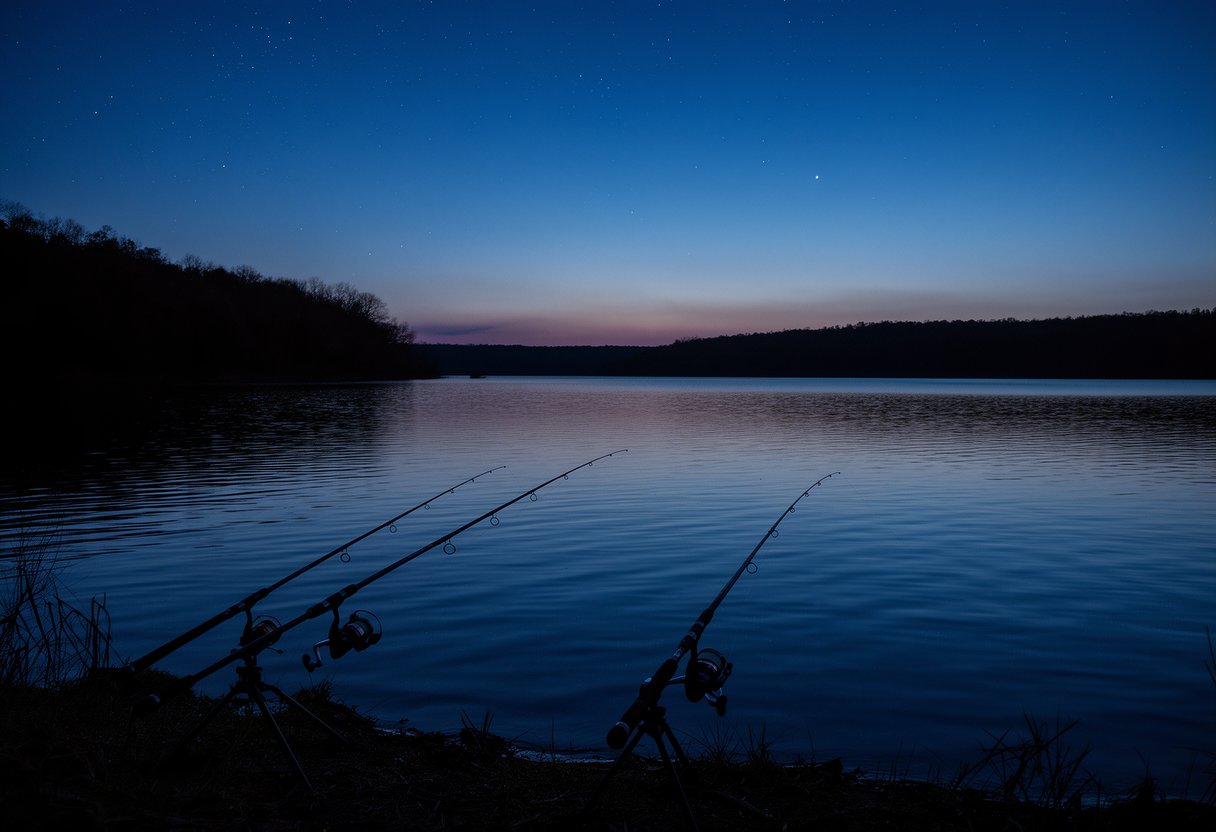
If you’ve ever heard that fish bite better at night, you’ve probably also felt a quiet hesitation about fishing in the dark. What gear do you need? How do you even see your line? Is it worth the extra preparation? The honest answer is that night fishing is simpler than it sounds — most of your daytime skills transfer directly, and the adjustments are smaller than you’d expect.
This guide covers what changes when the sun goes down, what fish to target, the gear you actually need, and a step-by-step game plan for your first night out.
Why Fish Bite Better at Night
There is a real behavioral shift when the light fades, and it works in your favor. During the day, predator fish are themselves under pressure from larger species watching from deeper water. Once darkness rolls in, that pressure drops. Bass, crappie, and catfish typically move into shallower areas where baitfish and insects concentrate.
Fish also switch from sight-based hunting to vibration and scent-based detection at night. Every fish has a lateral line — a sensory organ that runs along both sides of its body and detects water movement and pressure changes. In low light, the lateral line and sense of smell become their primary way of locating food. This means lures and bait that produce strong vibration or scent have an advantage after dark.
Most baitfish stay closer to the surface at night because that is where the remaining natural light filters through. The bigger fish follow them. You will typically see the heaviest feeding during dusk and dawn, but many species continue actively through the night, especially on cloudy or moonlit evenings.
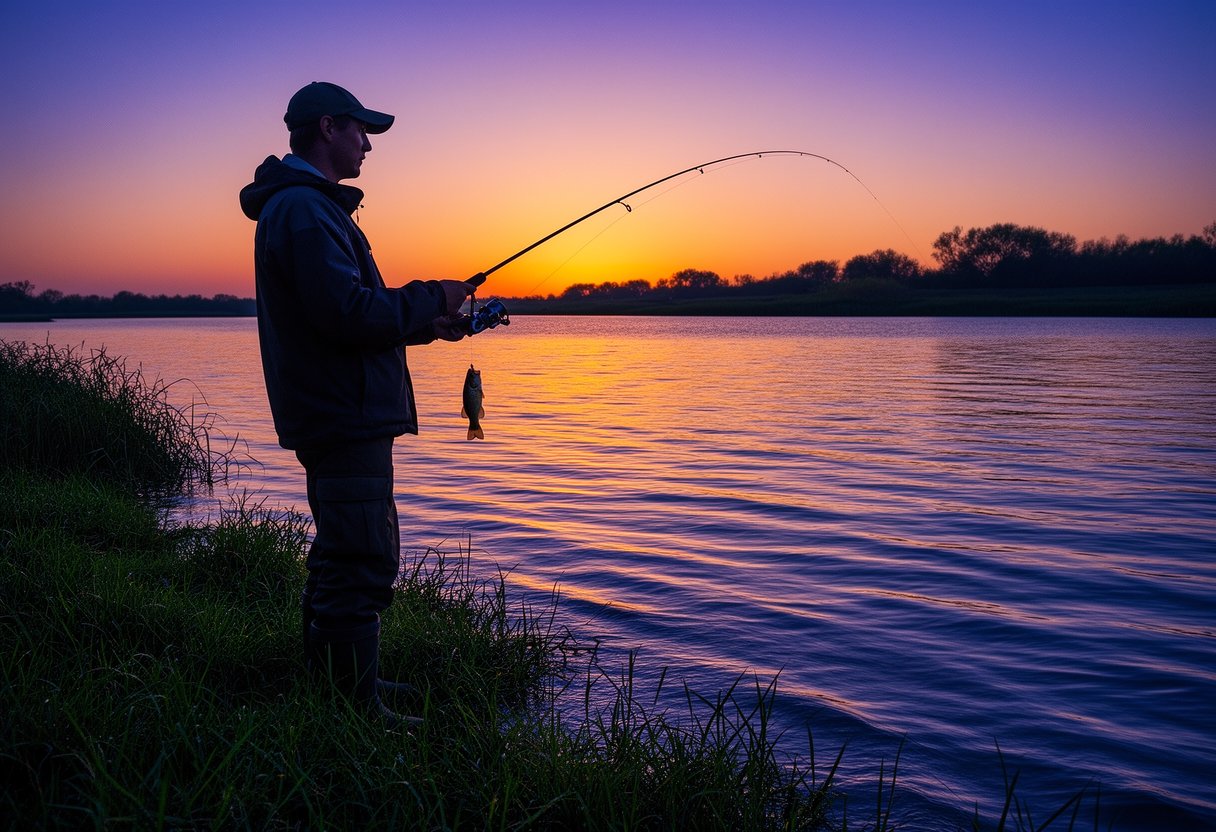
Understanding these nighttime patterns helps explain why night fishing often feels more productive — you are fishing at the time of day when predators are most active and least cautious.
What to Target: Best Fish for Night Fishing
Not every species is equally active after dark, but the fish you already know how to catch during the day typically make excellent night targets.
Catfish are arguably the easiest species to target at night. They are opportunistic feeders that actively scavenge in the dark, relying almost entirely on their whiskers and sense of smell to find food. A piece of nightcrawler or cut bait on the bottom near a bank, dock, or fallen tree will typically produce results. If you want to learn more about catfish fishing in general, our catfish fishing for beginners guide covers bait selection and rigging in detail.
Bass (largemouth and smallmouth) shift their habits as the light fades. During the day, they typically hold near deeper structure. At night, they move into shallower water and patrol shorelines, weed edges, and dock pilings. They are active hunters after dark and respond well to spinnerbaits and surface lures that create noise and vibration.
Crappie are classic night fishing targets. They tend to school up near underwater lights — many piers and docks have lights that attract plankton, which attracts baitfish, which draws crappie. Even without artificial lights, moonlight reflecting off the water surface can create productive crappie zones.
Panfish like bluegill and sunfish are also active at night, especially near shore structure. They are often caught incidentally while targeting bigger species, making them a reliable backup if the action is slow.
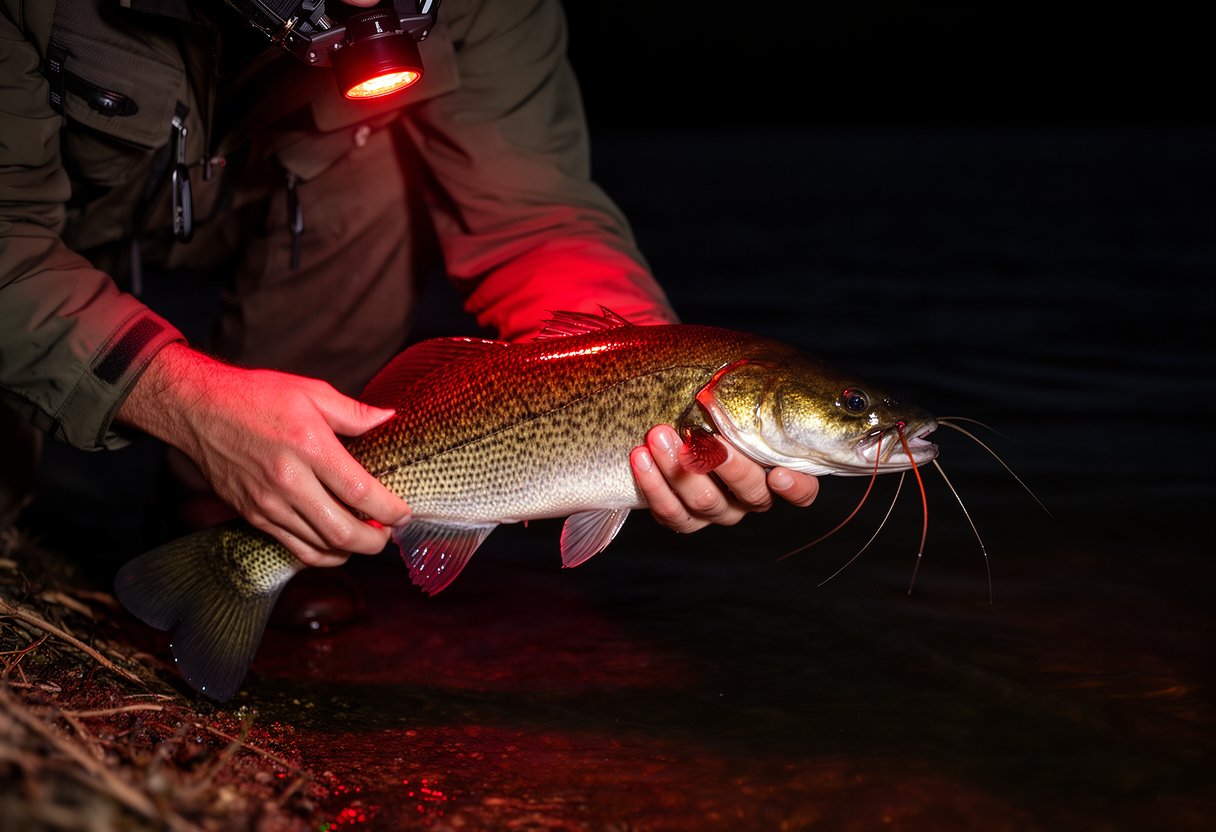
For beginners, catfish and bass are typically the best starting points. Catfish are forgiving — they will eat almost anything that smells right — and bass will actively chase a spinnerbait even in complete darkness.
Essential Night Fishing Gear
You do not need an entirely new set of gear for night fishing. A few additions to your daytime kit are enough to make a noticeable difference.
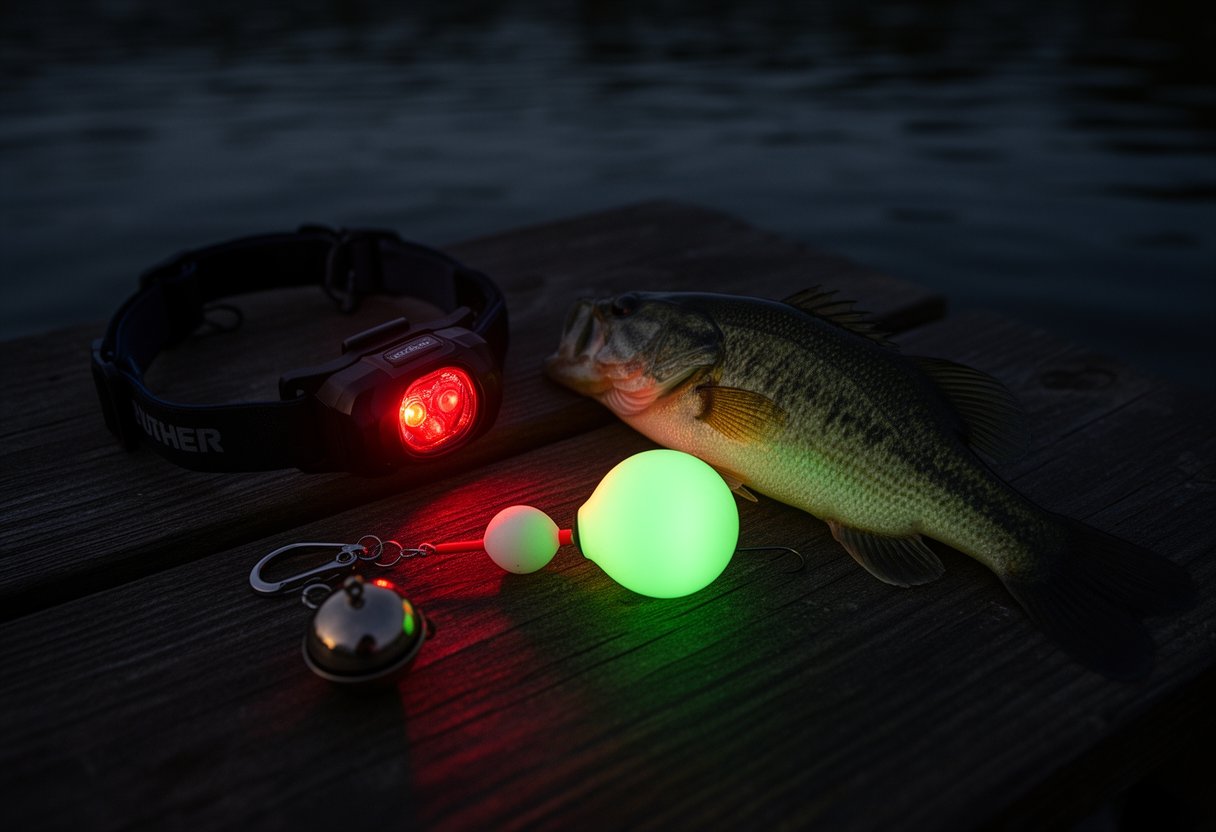
Headlamp with red light mode is the single most useful night fishing tool. Red light preserves your natural night vision while still providing enough illumination to bait hooks and handle fish. Look for a headlamp where the red mode does not require cycling through white light first — you do not want a burst of white light ruining your adaptation to the dark.
Strike indicators make it possible to detect bites without staring at your line in the dark. Clip-on bells attach to the rod tip and ring when the line moves. Glow-in-the-dark bobbers charge in daylight and glow after dark, giving you a visual bite signal. Both options let you keep the rod in a holder instead of holding it the entire time.
Glow-in-the-dark line tips or bobber floats help you monitor your setup at a glance. Even a small section of glow material near the rod tip gives you enough visual reference to tell whether your line is tight or slack.
Backup batteries belong in your pocket, not your tackle bag. Searching a tackle bag in the dark is frustrating and time-consuming. Keep spare batteries accessible so you can swap them quickly if your headlamp dims.
For bait, live bait typically outperforms artificial lures at night because fish depend more on scent. Nightcrawlers, cut bait, and minnows are all reliable choices. If you prefer artificials, dark-colored lures (black, dark purple, or blue) create more contrast in low light.
If you want a refresher on using live bait, our live bait guide covers hooking techniques and bait selection.
Techniques That Work After Dark
The techniques that work best at night are typically the same ones that work well during the day — you just adjust for the fact that fish are shallower and rely on different senses.
Bottom fishing with the rod in hand is the simplest and most effective technique for beginners. Drop your bait to the bottom near a bank, dock, or fallen structure. Hold the rod and feel for bites — the lateral line vibration that fish use to find food also means their strikes transmit clearly through the line. You do not need to see your line to set the hook; you just need to feel the tug.
Spin casting is another beginner-friendly approach. Cast your bait or lure near the shore, let it sink to the desired depth, and retrieve slowly. The rod stays in your hand, so you feel every nibble and pull.
Spinnerbaits are one of the most effective lures for night bass fishing. The blade creates vibration and the hook assembly creates noise — exactly what bass detect through their lateral line in low light. Large Colorado blades add a heavier “thump” that travels farther through the water. Slow-rolling a spinnerbait along the bottom is one of the most productive night bass tactics.
Surface lures with rattles also work well at night. The sound of a rattle carries farther in darkness than visual cues, and bass actively hunt near the surface after dark. Topwater strikes at night are dramatic and exciting.
One thing that changes significantly at night is noise discipline. Fish are more sensitive to sound after dark. Keep conversations quiet, avoid clanging tackle boxes, and move carefully on the bank. A small rock that is obvious in daylight can be a trip hazard in the dark, and falling or stumbling creates vibrations that spook fish.
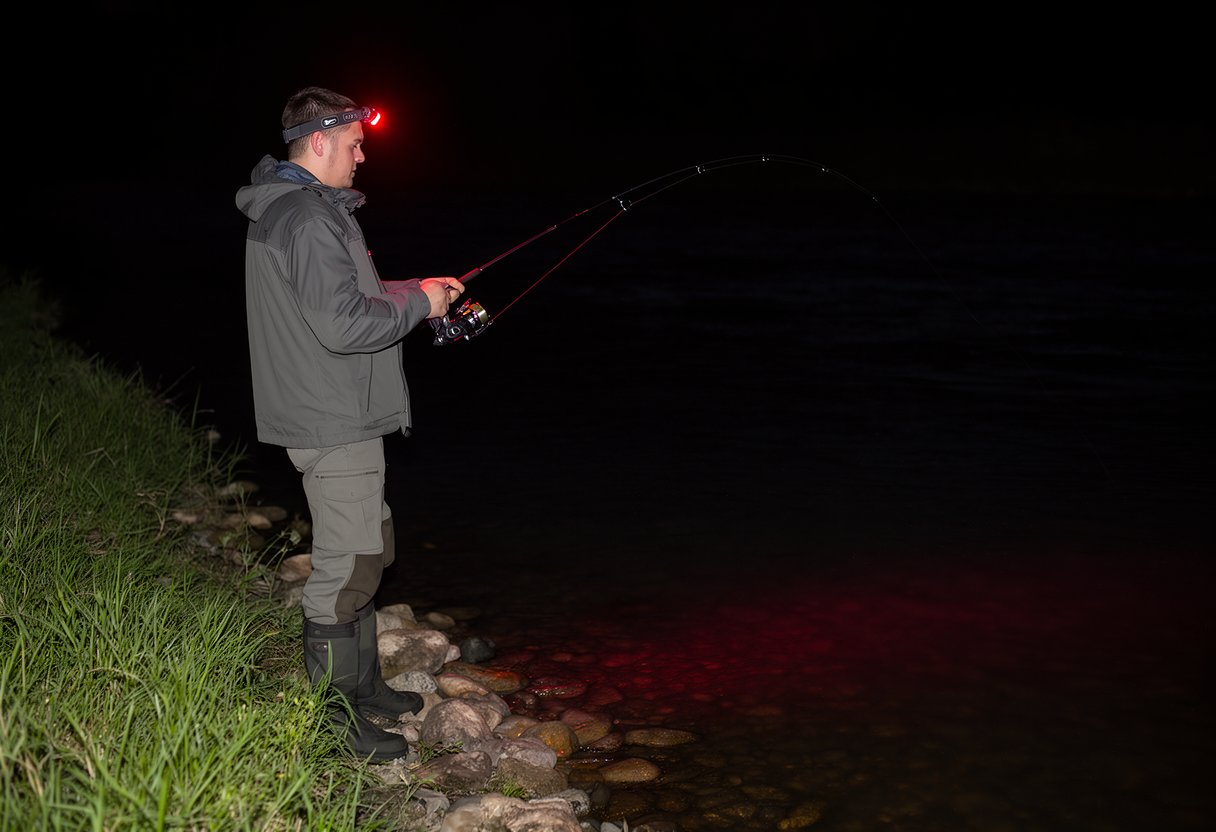
Scouting your spot during the day before a night session is one of the best things you can do. Walk the bank, identify safe footing, note where the structure is, and plan your casts. When the sun goes down, you already know what you are fishing.
Night Fishing Safety: What to Know Before You Go
Night fishing is safe as long as you treat it with the same respect you would any activity in the dark. The hazards are not fish-related — they are about footing, visibility, and preparedness.
Scout your fishing spot during daylight hours. Walk the path from your parking spot to the water, note any uneven ground, steep banks, or dense vegetation, and plan where you will stand. A location you know well from daytime fishing is always the best choice for a first night out.
Tell someone where you are going and when you plan to return. This is standard outdoor safety, but it matters more when no one can see what you are doing. If you fish from a boat, wear a life jacket — it is mandatory on most public waters and essential after dark.
Carry a first aid kit and keep your phone in a waterproof case or sealed bag. Snake encounters are more likely at night, but they are rare near active fishing spots. Be aware of your surroundings, step deliberately, and use your headlamp if you need to navigate tricky terrain.
Your First Night Fishing Trip: A Simple Game Plan
Here is a practical plan for your first session. Follow it step by step, and you will have a productive and enjoyable evening.
Step 1: Pick a spot you already know. Choose a lake, pond, or river where you have fished during the day. Familiarity with the terrain and water is your biggest safety advantage.
Step 2: Arrive before full dark. Use the transition from dusk to night to orient yourself. Set up your rod, find safe footing, and identify your casting target before visibility drops.
Step 3: Start simple. Use bottom fishing with live bait — a nightcrawler or chunk of cut bait on a weighted hook dropped near the bottom. Keep the rod in your hand and feel for bites.
Step 4: Use a strike indicator. Clip on a bell or put a glow bobber on your line so you do not need to stare into the darkness to detect action.
Step 5: Use red light until you need white. Keep your headlamp on red mode for general awareness. Switch to white only when you need to bait a hook or handle a fish, then switch back to red.
Step 6: Pack the essentials. Headlamp with backup batteries, strike indicator, live bait, a small first aid kit, water, and a light snack. You do not need much beyond that.
Step 7: Stay quiet and be patient. Fish are more sensitive to noise at night, so keep movement minimal and conversations low. Then sit back, feel the rod, and enjoy one of the most rewarding experiences in fishing.
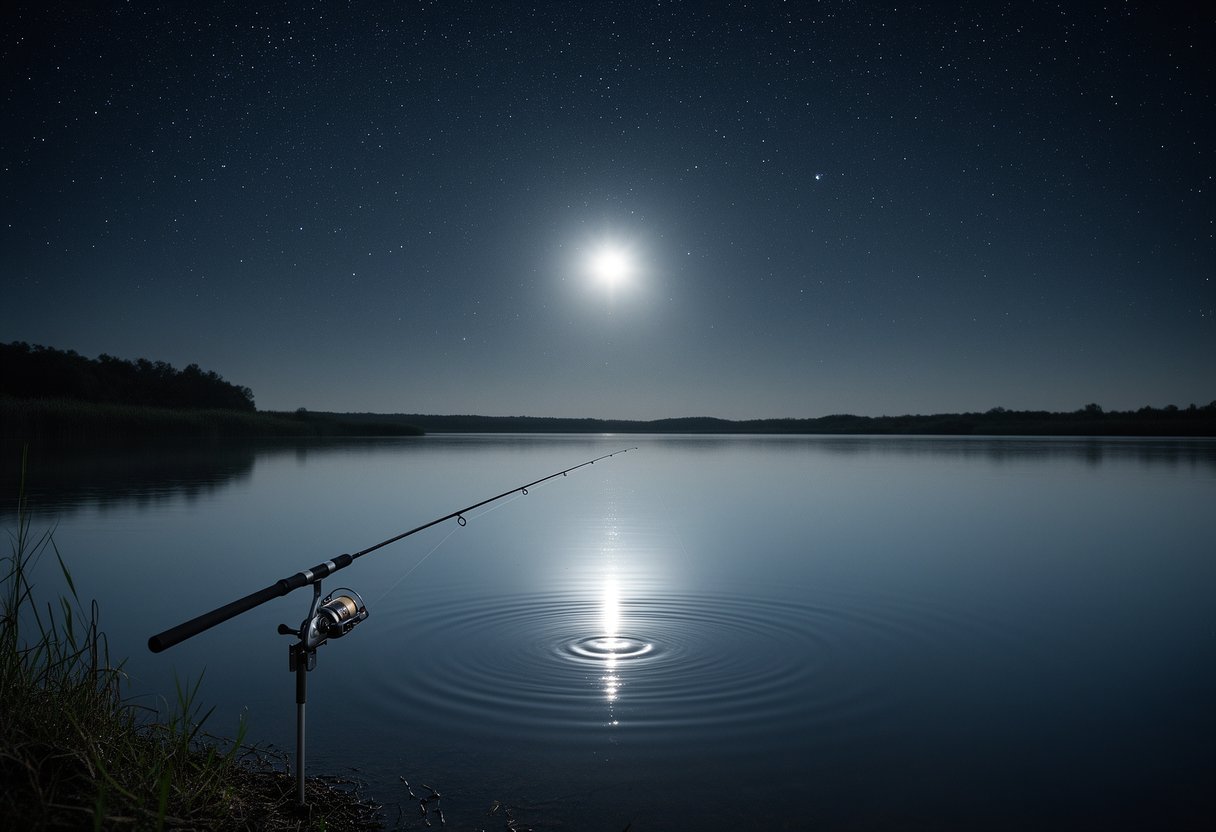
Night fishing rewards patience, preparation, and a willingness to trust your other senses. The first time you set the hook on a fish you felt but never saw, the experience will likely stick with you for a long time.