Introduction — Getting Your First Cast Right
You’ve got a rod and reel in your hands, maybe a lure tied on, and you’re standing at the water’s edge. Now what? Getting that lure or bait into the water is the first real skill every angler needs to learn.
Everything else in fishing — choosing bait, reading the water, setting the hook — comes after you can actually cast. And if you’ve tried before, you know it feels awkward at first. The motion doesn’t come naturally, and it’s easy to tangle your line or get frustrated.
That’s completely normal. Casting asks your body to coordinate several actions at once. Like any physical skill, it takes a few practice sessions to build the muscle memory needed to do it smoothly.
This guide walks you through how to cast a fishing rod step by step, starting with the easiest reel type and building from there. You’ll find clear instructions for spinning reels, spincasting reels, and baitcasting reels, plus beginner casting tips for common problems and safety advice.
Fly fishing is intentionally not covered here — it uses a completely different casting method and deserves its own guide. If you’re new to fishing altogether, check out our beginner fishing 101 guide for a broader introduction to the basics.
Before You Cast: Quick Setup Check
Many casting problems trace back to setup issues, not bad technique. Taking a minute to check your gear before you swing can save you a lot of frustration.
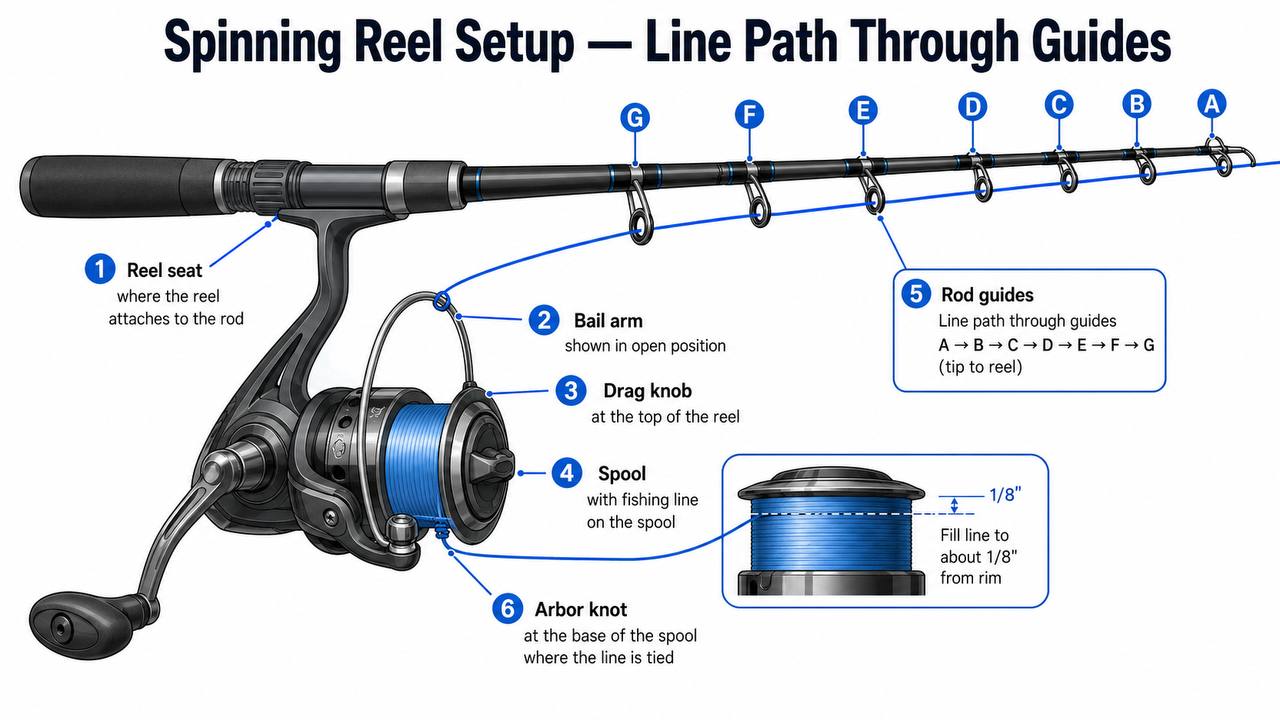
Attach the reel to the rod
Slide the reel onto the rod’s reel seat and tighten the locking rings or knobs until the reel sits firmly in place. The reel should not wiggle or shift when you hold the rod. If you still need to choose a rod and reel, our freshwater rod and reel combo guide walks you through picking a beginner-friendly setup.
Thread the line through the guides
Run your fishing line through every guide on the rod, starting at the tip and working your way down toward the reel. Each guide is one of the small rings along the rod that the line passes through. Missing even one guide typically causes line twist and reduces casting distance, so double-check your work.
Tie the line to the spool
Secure the line to the reel spool using an arbor knot. The arbor is the center of the spool where line is first attached. This is one of the simplest knots to tie and holds reliably for casual fishing.
Fill the spool to the right level
Wind fishing line onto the spool until it sits about 1/8 inch below the rim. Overfilling the spool often causes line to slip off and create tangles. Underfilling it reduces your casting distance because there isn’t enough line to support longer casts.
Set the drag before you cast
The drag is the reel’s friction system that controls how much resistance the line feels when a fish pulls. Setting the drag before your first cast prevents the line from breaking if a fish strikes right away.
Aim for roughly 25–30% of your line’s breaking strength. A good way to test it: pull on the line — it should give with steady resistance, not snap or feel like a dead weight.
Check your lure weight
Look at the rod blank or reel for the recommended lure weight range. Using a lure that’s too heavy or too light for your rod typically results in poor casting performance and can potentially damage the rod. Most beginner rods work well with lures in the 1/16 oz to 1/4 oz range, but always check what your specific rod says.
Open the bail (spinning reels only)
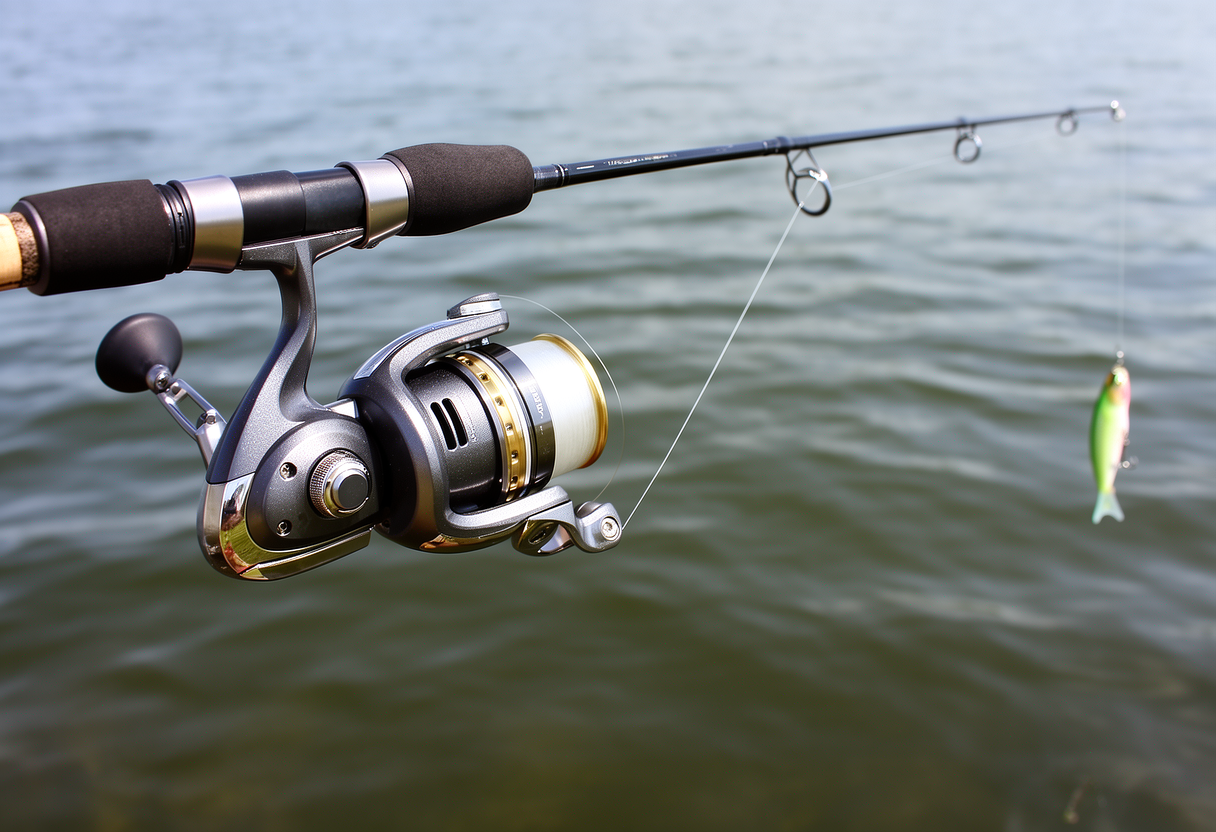
The bail is the wire arm that wraps around the spool on a spinning reel. Flip it open before casting so the line can freely unwind from the spool. Forgetting to open the bail is one of the most common beginner mistakes.
How to Cast with a Spinning Reel (Step-by-Step)
Spinning reels are the most beginner-friendly reel type available. They’re forgiving, nearly tangle-free when set up correctly, and used by anglers at every skill level. Learning how to cast a spinning reel is the best starting point for anyone new to fishing.
The Overhead Cast (Most Common Casting Method)
The overhead cast is the single most useful cast you’ll learn. You’ll use it in most fishing situations, from lake banks to boat rails.
Here’s the sequence, step by step:
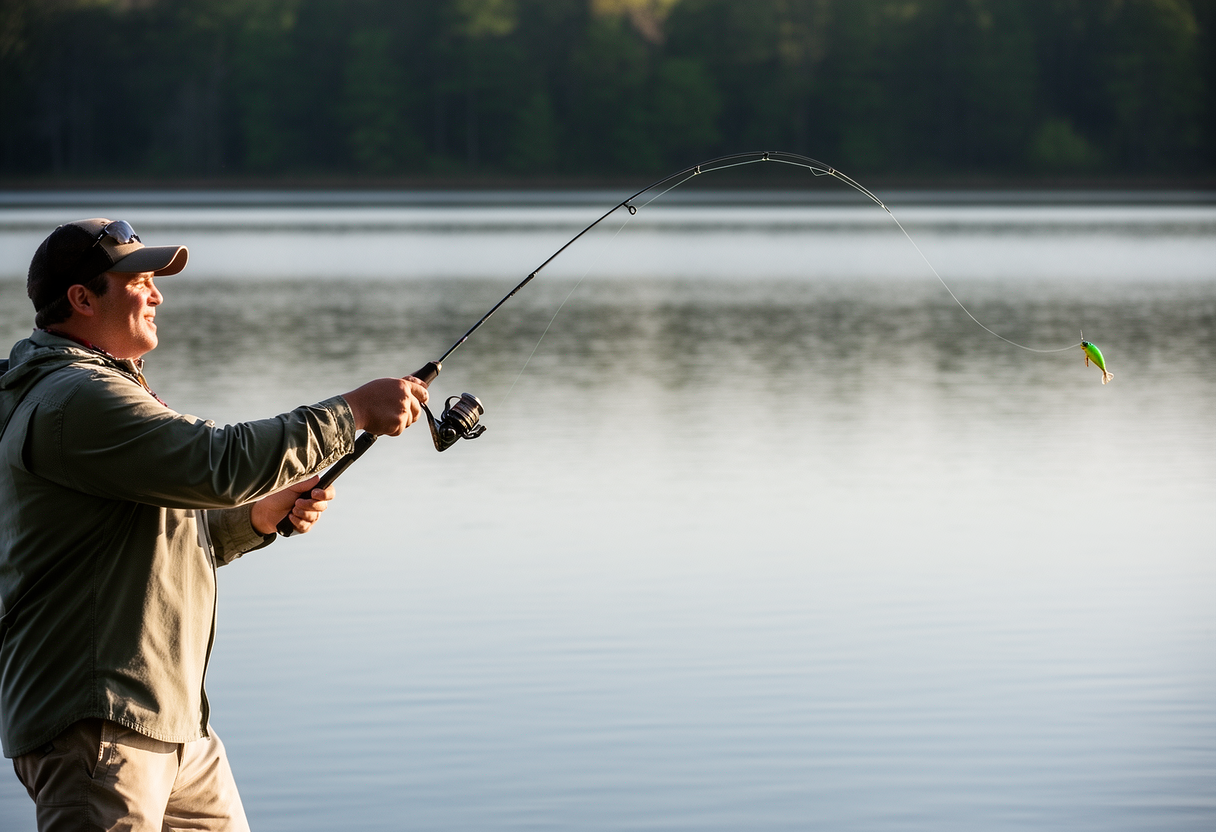
- Get into position. Stand with your feet shoulder-width apart for balance. Point the rod toward the water at roughly the 1 o’clock position (up and slightly forward).
- Look behind you. Before every cast, check that the area behind you is clear of people, dogs, and obstacles. This is not optional — we’ll cover casting safety in detail later.
- Hold the line against the rod. Use your index finger on your casting hand to press the line down against the rod blank. This prevents the line from unwinding before you’re ready.
- Flip the bail open. If the bail arm isn’t already open, use your non-casting hand to flip it over the spool. You should hear or feel a click when it locks in the open position.
- Begin the backcast. Slowly bring the rod back over your shoulder to about the 10 or 11 o’clock position. Keep the rod tip pointing up and slightly behind you. Don’t rush this part — a smooth, controlled backswing sets up everything that follows.
- Sweep forward toward your target. Using your wrist and forearm — not your entire arm — swing the rod forward smoothly toward the water. Think of it as a gentle flicking motion rather than a full-body swing.
- Release the line. As the rod points toward roughly 2 o’clock, lift your index finger off the line. The lure continues forward on its own momentum from the rod’s action.
- Land the cast. Lower the rod tip toward the water as the lure approaches its landing spot. This helps the line settle flat instead of forming a loop that can tangle.
- Close the bail. Flip the bail arm closed by hand, or give the reel handle one turn to do it automatically. The bail must be closed before you start reeling in, or the line won’t wind back onto the spool.
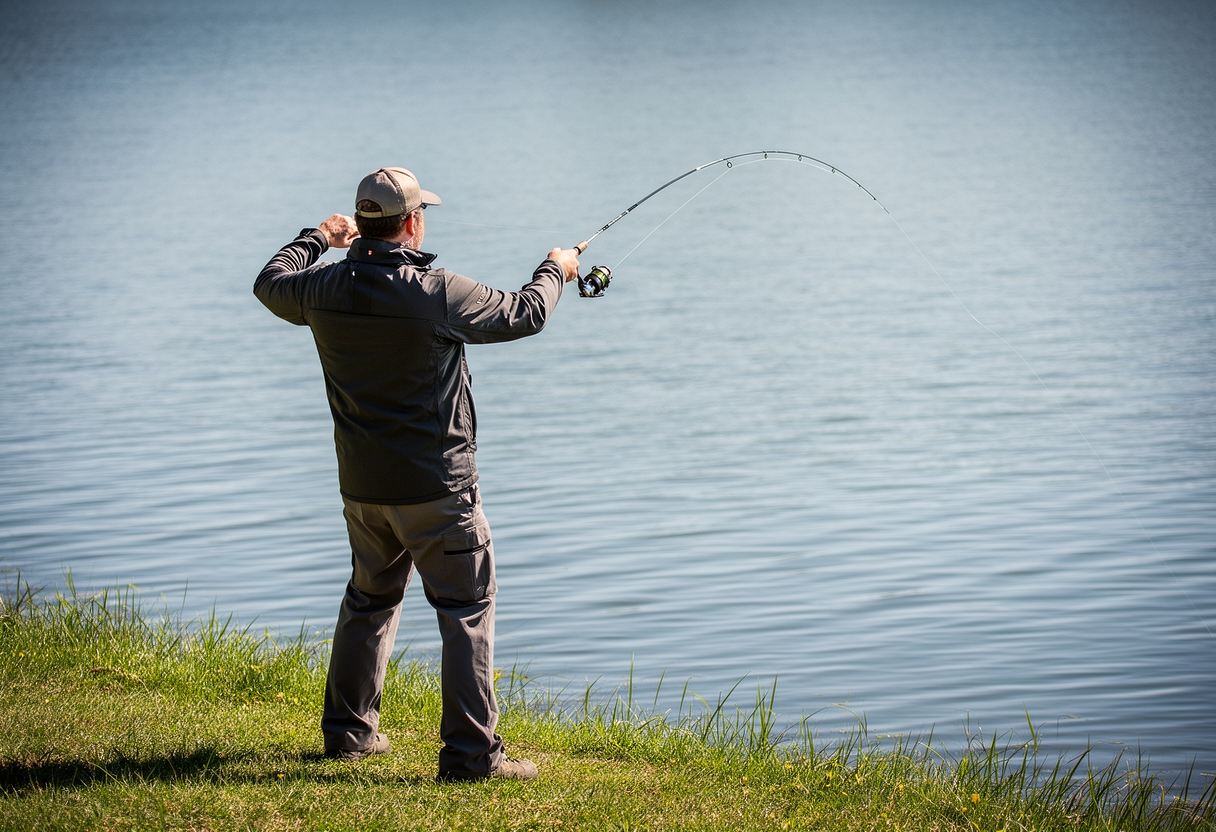
A note on power: Beginners tend to over-swing. You don’t need strength to cast — you need timing and a smooth motion. A controlled sweep typically sends the lure farther than a wild, powerful jerk. Let the rod do the work.
The Side Cast (For Tight Spaces)
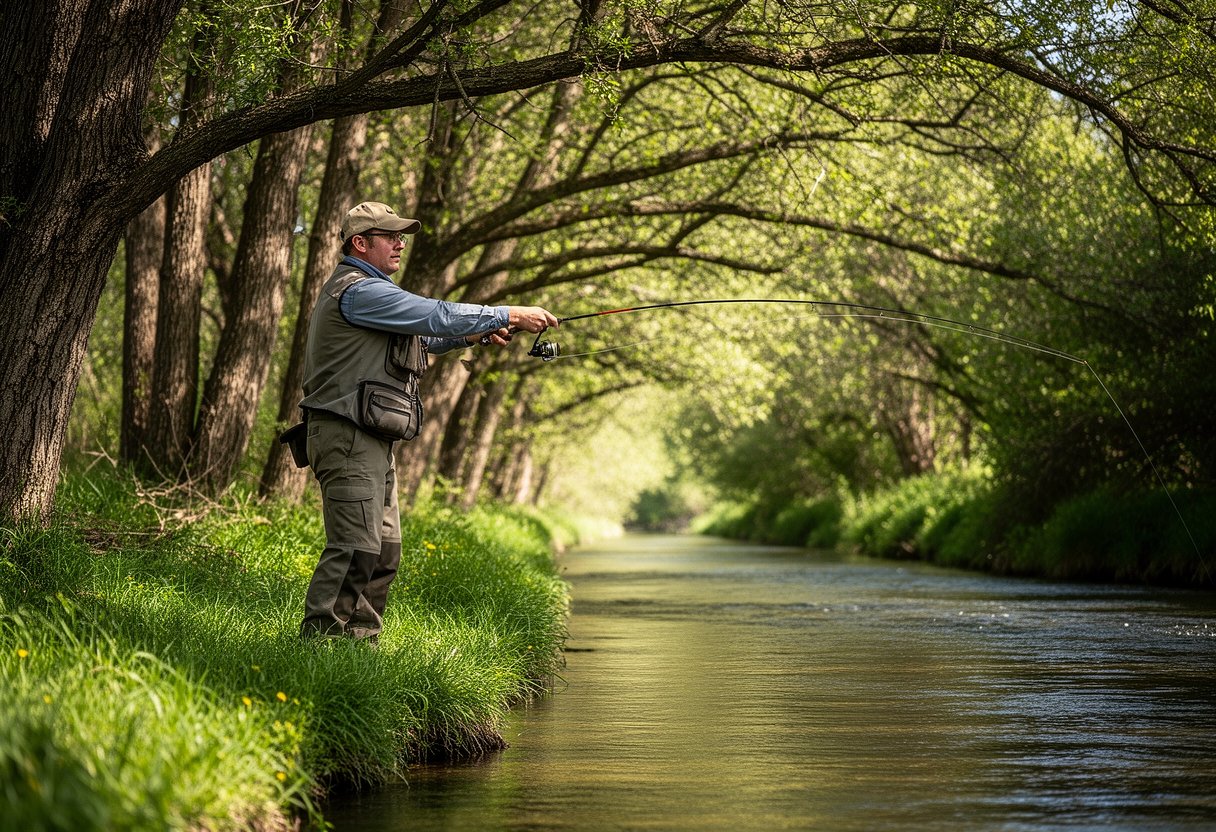
Not every casting situation has room for a full overhead swing. When you’re fishing near trees, bushes, or other anglers, the side cast is your best option.
The setup is the same as the overhead cast — open the bail, hold the line with your index finger, and check behind you. The difference is in the swing.
Instead of bringing the rod back over your shoulder, sweep it sideways. If you hold the rod in your right hand, swing to the right. Left-handed setup means swinging to the left. The rod stays roughly level, and the lure flies out on a lower arc.
This lower arc reduces the risk of snagging overhead branches and keeps the lure away from people standing nearby. It’s especially useful on narrow banks, under docks, or when fishing with kids who might be walking behind you.
The side cast typically doesn’t achieve the same distance as an overhead cast. But accuracy and safety matter more than raw distance when space is limited.
Common Spinning Reel Mistakes and Fixes
| Problem | Fix |
|---|---|
| Line wraps around the rod tip during the backcast | Keep the rod tip pointed up throughout the entire swing. Don’t let it drop below horizontal on the backcast. |
| Lure lands short of the target | Try releasing your finger later in the arc. Also check that your forward sweep is smooth, not a stop-and-go motion. |
| Lure flies too far or out of control | Soften your release point and reduce the power of your swing. Most beginners over-swing on their first attempts. |
| Line twist builds up over multiple casts | Add a swivel between your line and your lure. Also re-check that every guide on the rod is threaded correctly. |
| Bail isn’t closed before reeling | Always close the bail after each cast — by hand or with one turn of the handle — before you start retrieving. |
How to Cast with a Spincasting Reel
Spincasting reels feature a fully enclosed design with no exposed spool or bail arm to flip. This makes them nearly tangle-free and the easiest reel type for absolute beginners and young anglers. If you want to learn how to cast with a spincasting reel, the process is simpler than spinning because there’s one fewer moving part to manage.
Here are the steps:
- Let out about 12 inches of line. The lure should hang roughly a foot off the rod tip before you cast. Too much line out increases the chance of a tangle; too little makes it hard for the lure to launch cleanly.
- Press and hold the thumb button. On the back of the spincasting reel is a button that releases the line. Press it down and keep it held throughout the casting motion.
- Stand with feet shoulder-width apart. Point the rod at roughly 1 o’clock toward the water, the same starting position as the spinning reel overhead cast.
- Check behind you. The same safety rule applies — make sure nobody is standing in your casting arc.
- Sweep the rod back. Bring the rod to about 10–11 o’clock while keeping the thumb button depressed.
- Sweep forward toward your target. Use the same smooth wrist-and-forearm motion as the overhead cast described above.
- Release the thumb button. When the rod points at your target, let go of the button. The lure launches forward on its own momentum.
- Lower the rod tip. Guide the line down as the lure lands to help it settle flat.
- Turn the reel handle. Spincasting reels don’t have a bail to close — you simply start reeling in.
Note on TriggerSpin hybrids: Zebco manufactures a TriggerSpin reel that uses a trigger-based release instead of a thumb button. The basic casting motion is the same — you just press a trigger on the handle to release the line instead of a button on the reel body.
Common Spincasting Issues
Line tangles inside the closed face can happen, though they’re relatively rare. They’re usually caused by jerky, inconsistent casting motions. Keeping your sweep smooth tends to prevent this.
Thumb buttons can jam if debris gets inside the reel body or if the line isn’t seated properly in the guide tube. Holding the thumb button longer during the backcast — and only releasing it once the forward sweep has begun — prevents premature release that can cause the lure to stick.
How to Cast with a Baitcasting Reel
Baitcasting reels offer precision and power, but they come with a steeper learning curve. They’re included here so readers who already own one aren’t left behind. The honest recommendation, though, is to start with a spinning reel and learn the basic casting motion before adding thumb spool control to the equation.
Why Baitcasting Is Harder
With a baitcasting reel, the spool spins freely during the cast. There’s no bail arm to open and close — instead, your thumb resting on top of the spool controls how fast line comes off. This gives you more direct control but also means more responsibility.
If the spool spins faster than the lure is traveling, the line overshoots and wraps around itself. This creates what’s called a backlash (or “bird’s nest”).
Setup Differences for Baitcasting
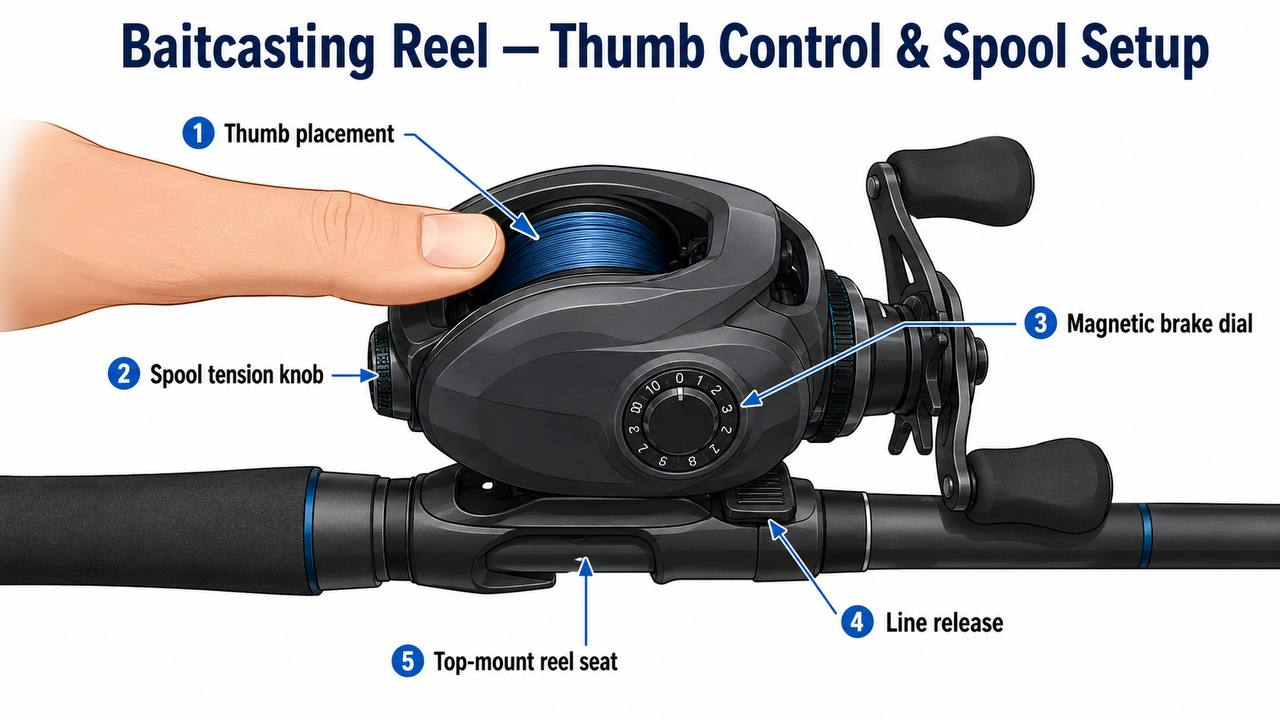
Baitcasting reels mount on top of the rod rather than underneath it, and they dispense line horizontally. This is why they’re also called “overhead reels.”
For easier learning and fewer backlashes, consider starting with a 6’6″ to 6’10” medium-heavy rod paired with 15–17 lb monofilament line. Heavier line is more forgiving when you’re learning because it’s less prone to tangling.
Before casting, adjust the spool tension (a knob at the base of the spool) so the lure drops slowly when you point the rod downward. It shouldn’t free-fall or stay stuck — a slow, controlled descent is the goal.
Set your magnetic or centrifugal brakes (dials or switches on the reel body) to about 50–75% for your first attempts. These brakes slow the spool’s rotation and reduce backlash risk.
Step-by-Step Baitcasting Cast
- Hold the rod in your casting hand with your thumb resting on top of the spool. Your thumb is the brake.
- Open the line release. This is either a finger flap on the reel body or a lever on the handle that frees the line to unwind.
- Point the rod at roughly 1 o’clock toward the water.
- Sweep the rod back to 10–11 o’clock.
- Sweep forward toward your target with a smooth motion.
- Press your thumb firmly against the spool as the lure flies through the air. This is the most important step — your thumb controls the spool speed and prevents backlash.
- Ease off thumb pressure as the lure slows down and approaches the water. This lets the spool finish spinning without stopping the lure short.
- Close the line release and begin retrieving.
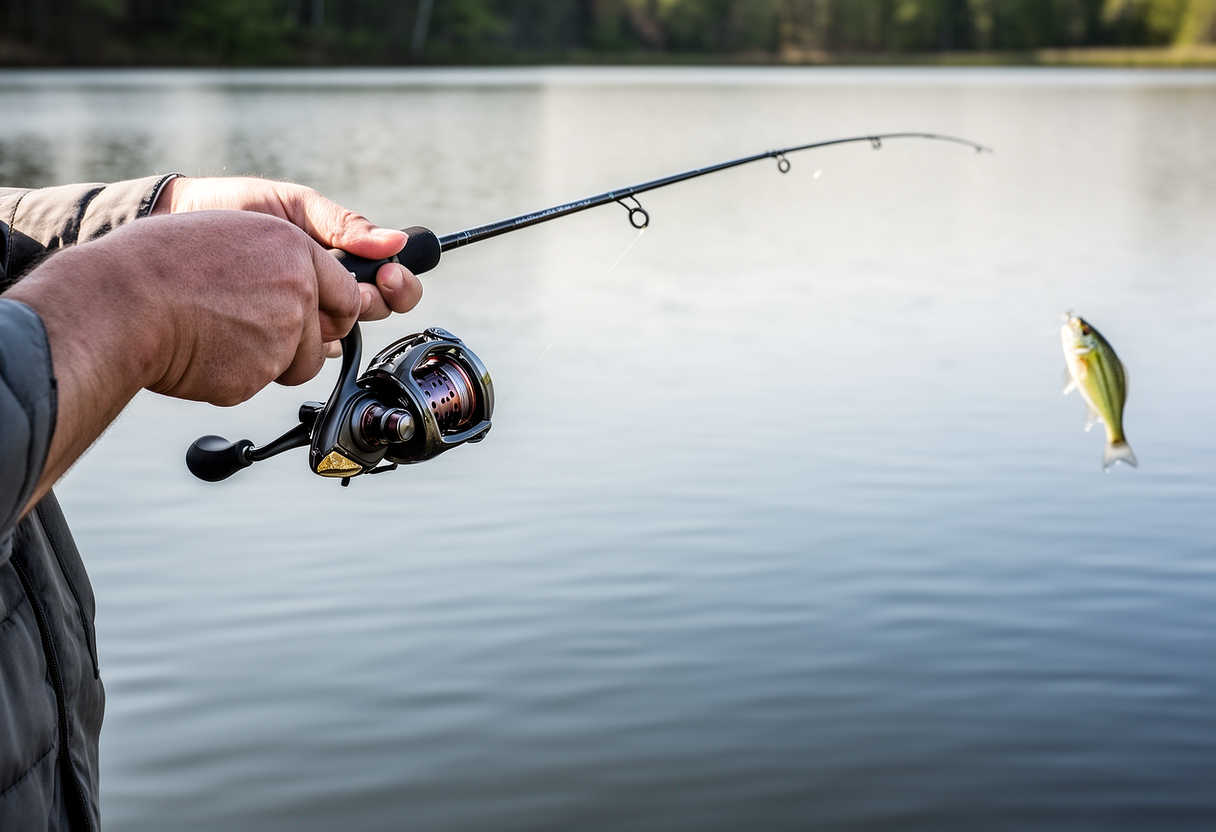
Thumb control typically becomes instinctive with practice. The more you cast, the more naturally your thumb adjusts pressure in response to the lure’s speed. Start with heavier lures during practice — they’re easier to control and tend to cause fewer backlashes.
Practice Drills to Build Your Cast
Muscle memory doesn’t develop in a single session. Short, focused practice sessions spaced out over several days produce better results than one long practice day. Try these drills:
Off-water practice
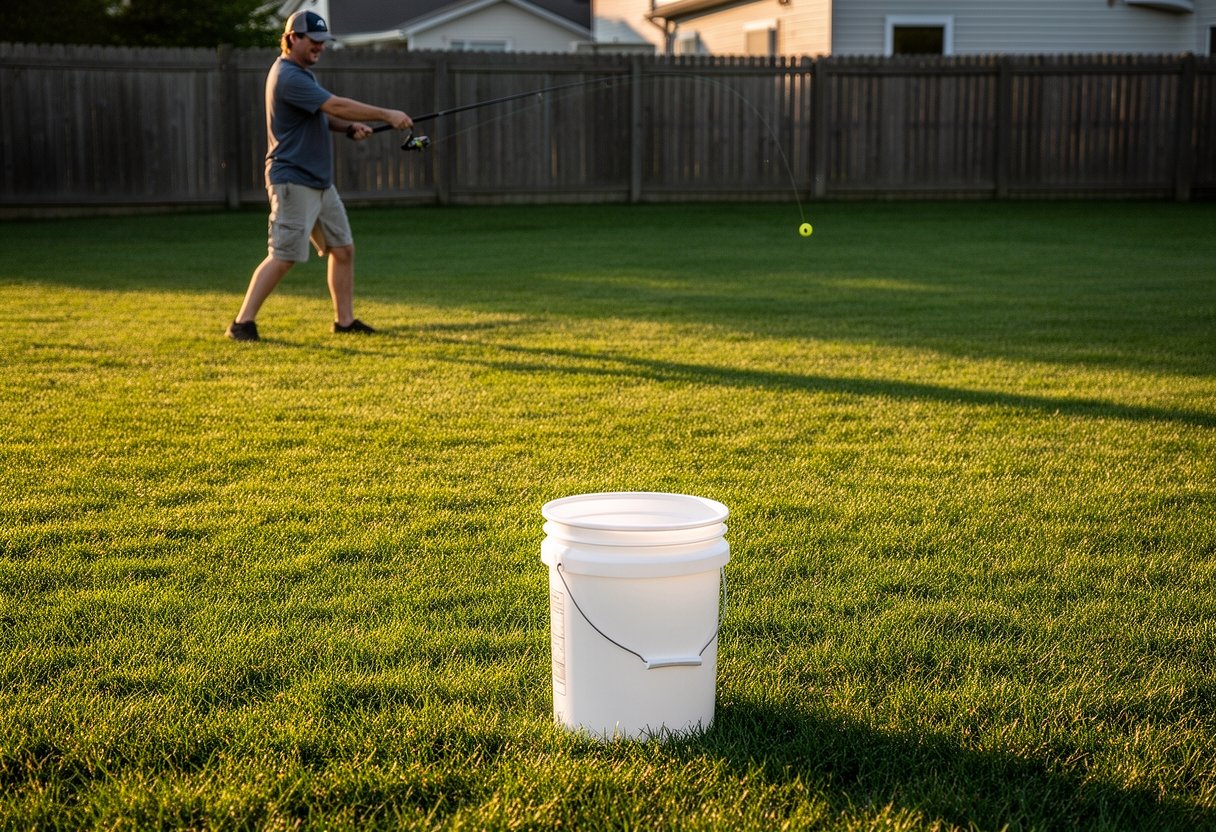
Set up in your backyard or any open grassy area. Use a rubber practice plug or a hookless lure so you don’t have to worry about damaging equipment or losing hooks in the grass. This takes the pressure off — no fish, no audience, just repetition.
Target casting
Place a bucket, cone, or hula hoop 20 feet away and aim for it. Accuracy matters more than distance when you’re starting out. Hitting a target consistently at close range is a better foundation than blasting the lure 80 feet with no control.
Distance progression
Once you can reliably hit your target at close range, move it further out — 10 feet at a time. Gradually extending your distance helps you build a longer cast while maintaining control.
Consistent routine
Aim for 10–15 minutes of practice per session. These beginner casting tips work best when you practice regularly rather than cramming. If you own multiple reel types, rotate between them during practice to compare how each one feels.
Casting Safety
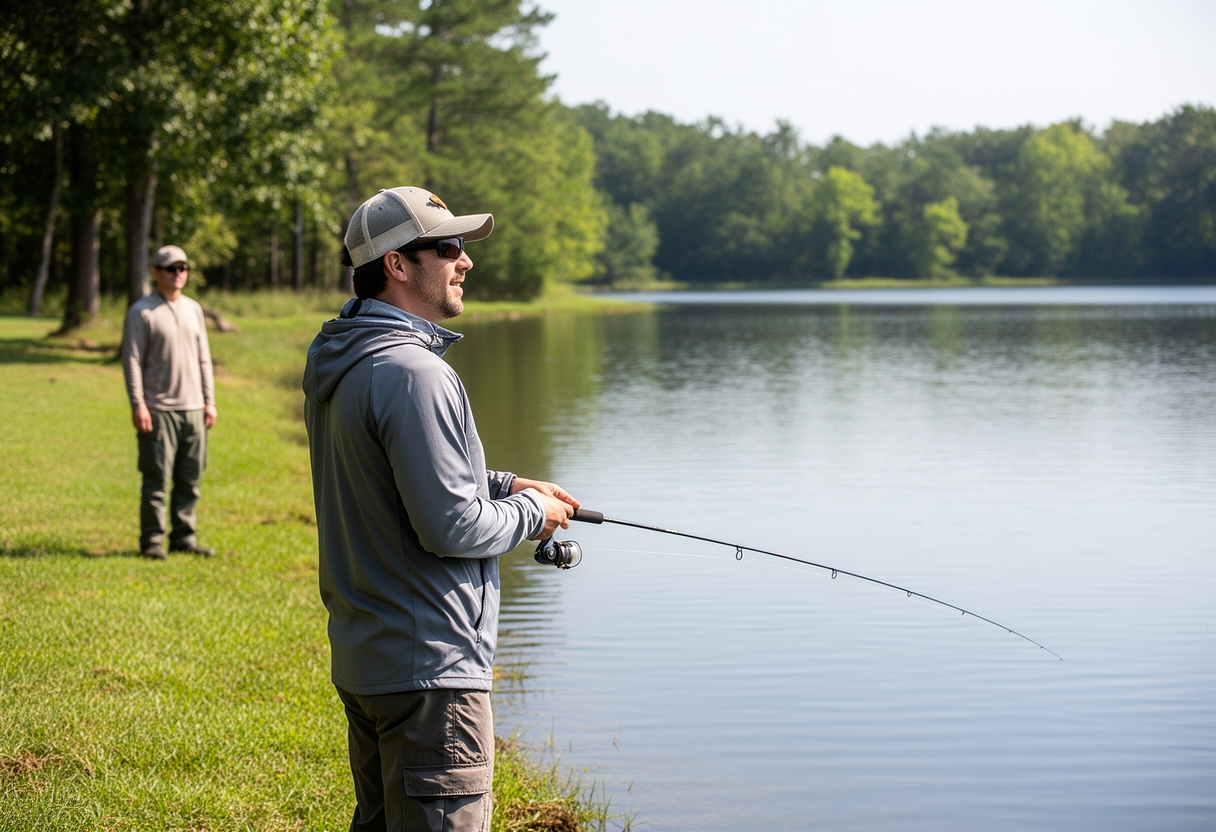
Hooks are sharp, rods are long, and fishing lines can snap under tension. Casting safety isn’t something to think about once — it’s a habit you build into every single cast.
- Always look behind you before every cast. Not just the first one. People move. Dogs run up. Kids wander. Check before each and every cast.
- Tell people nearby before you cast. A simple verbal warning like “casting now” gives everyone a heads-up and helps prevent accidents.
- Wear a hat. A ball cap or wide-brim hat shields your face and head from stray hooks during backlashes or mis-casts.
- Consider lightweight fishing gloves. They improve your grip on the rod and protect your hands from line burn or accidental hook snags.
- Know your casting arc. The casting arc is the full path your rod and lure travel from the backswing through the forward cast. Stay aware of everything inside that arc — trees, power lines, other anglers, and structures.
- Never cast near power lines. Even fishing line can conduct electricity or cause electrical shorts if it contacts a line. Stay well clear of any overhead wires.
- Handle hooks carefully. Whether you’re baiting the hook or removing a fish, treat every hook as sharp and dangerous. Use pliers or a hook removal tool when possible.
- Shorter rods reduce risk. When fishing with beginners or children, a shorter rod reduces the casting arc and lowers the chance of accidents.
Troubleshooting Quick Reference
| Problem | Fix |
|---|---|
| Line tangling on a spinning reel | Check that all rod guides are threaded. Make sure the bail is closed properly before reeling. Avoid jerking the rod on the backcast. |
| Lure won’t fly far | Verify you’re using the right line weight for your rod. Release at the correct point in the arc (around 2 o’clock). Practice a smooth sweep instead of a power swing. |
| Line twist buildup over time | Add a swivel between your line and your lure. Check that all guides are aligned. Consider retieing and reloading the spool if twist is severe. |
| Backlash on a baitcasting reel | Increase spool tension. Raise brake settings. Maintain firmer thumb pressure on the spool. Make sure your lure weight falls within the rod’s recommended range. |
| Lure dives before hitting the water | Lower the rod tip faster as the lure approaches the surface. Keep the line taut during flight to maintain control. |
| Spincasting reel won’t release lure | Clear debris from the closed face. Make sure line is seated properly in the guide tube. Hold the thumb button longer during the backcast. |
Next Steps — What to Do After You Can Cast
You’ve learned how to cast a fishing rod — now comes the fun part. Here’s what to focus on next:
- Learn to tie reliable knots. Your casting doesn’t matter if the knot holding your lure comes undone. Our fishing knots for beginners guide covers the essential knots every angler should know.
- Choose the right bait and lures. What you’re casting matters just as much as how you cast it. Browse our guide to soft plastic baits for beginners and learn about matching your bait to the season and species you’re targeting.
- Learn to set the hook and fight a fish. When something bites, you’ll want to be ready. Our set the hook and fight the fish guide walks you through what happens after the lure hits the water.
- Stock your tackle box. Having the right lures, weights, and terminal tackle on hand makes practice sessions and first fishing trips much easier. See our tackle box starter kit guide for a practical list of essentials.
- Planning for saltwater? If you’ll be fishing the ocean or estuaries, your rod and reel choices may differ from freshwater setups. Check out our saltwater fishing rods for beginners guide.
Most importantly, keep casting. Muscle memory builds with repetition, and every trip to the water is practice. Your first few casts might not land where you want them to — that’s completely normal. Every experienced angler started exactly where you are right now.