You’ve probably noticed something strange about fishing: some days the fish bite like crazy, and other days they ignore everything you throw at them. You picked a good spot, used the right lure, cast decent — but nothing happens. Then a buddy says something like “the pressure’s off today” and you wonder whether they’re talking about stress or the weather.
They mean barometric pressure. And it matters more for fishing than most beginners realize.
This guide explains what barometric pressure is, how it affects fish, and how to use the free weather app on your phone to figure out when to hit the water.
What Is Barometric Pressure?
Barometric pressure is the weight of the air pressing down on everything around you. Imagine being at the bottom of an ocean — except the “ocean” is the atmosphere, and its weight changes constantly.
In the United States, barometric pressure is measured in inches of mercury (inHg). Most other countries use millibars (mb). At sea level, the standard reading is about 29.92 inHg (1013 mb). When your weather app shows a number higher than that, you’re under high pressure — usually clear skies and calm weather. Lower means low pressure — clouds, wind, maybe rain.
The number itself matters less than which way it’s moving. A steady 29.80 inHg can produce great fishing. A rapid swing from 30.10 down to 29.60 in two hours can shut fish down completely. Fish feel the rate of change, not the absolute value.
Pressure changes because weather systems move in and out. A cold front passing through drops pressure quickly. A high-pressure system settling in brings clear skies and rising readings. These shifts happen all the time, and fish respond to them.
How Barometric Pressure Affects Fish — The Swim Bladder
Most fish have an organ called a swim bladder — a small gas-filled sac that helps them stay at the right depth without constantly swimming. Think of it as a built-in flotation device. To go deeper, the fish releases gas from the bladder. To rise, it fills with gas.
Here’s the connection to weather: atmospheric pressure directly affects the swim bladder. When barometric pressure drops, there’s less weight pressing down, and the gas in the bladder expands. When pressure rises, the extra weight compresses it. Both changes can make fish uncomfortable — kind of like how your ears pop during a plane ride.
Fish with larger swim bladders — trout, bass, snapper — feel pressure changes more strongly. Bottom dwellers like catfish have smaller bladders and typically aren’t as affected by pressure swings. That’s why you’ll hear that catfish fishing is less weather-dependent than bass fishing.
When pressure changes make fish uncomfortable, they move to a different depth where the water pressure balances their swim bladder better. Rising pressure pushes them deeper. Falling pressure lets them move shallower. This depth shift also affects how aggressively they feed — uncomfortable fish don’t hunt as hard.
Rising Pressure — What Happens and How to Adjust
When barometric pressure is rising, fish typically move to deeper water. The increased atmospheric weight compresses their swim bladder, and they seek out deeper water where the water pressure helps compensate.
Rising pressure doesn’t mean fish stop biting — it means they’re harder to find and less aggressive. The key is adjusting your approach:
- Fish deeper structure. Drop-offs, creek channels, submerged logs, and steep banks are where fish go during high pressure. Skip the shallow cover and cast toward deeper water.
- Slow down your presentations. Fish in deeper water during rising pressure won’t typically chase a fast-moving lure. Use slower retrieves, let bottom-bouncing lures sit longer, and give fish more time to commit.
- Smaller lures can help. A smaller profile looks like easier prey to a reluctant fish. Switching from a 5-inch worm to a 3-inch grub often makes a difference.
The best window during rising pressure is the transition period — when pressure is still climbing but hasn’t peaked yet. Fish are still moving and feeding before they settle into deeper, less active patterns. Two or three days after a storm passes, as pressure settles into a moderate zone around 29.70 to 30.40 inHg, is often some of the best fishing you’ll experience.
Falling Pressure — The Best Fishing Window
Falling barometric pressure is widely considered the best condition for fishing, and the reason is straightforward: fish can sense the change before it happens and start feeding aggressively.
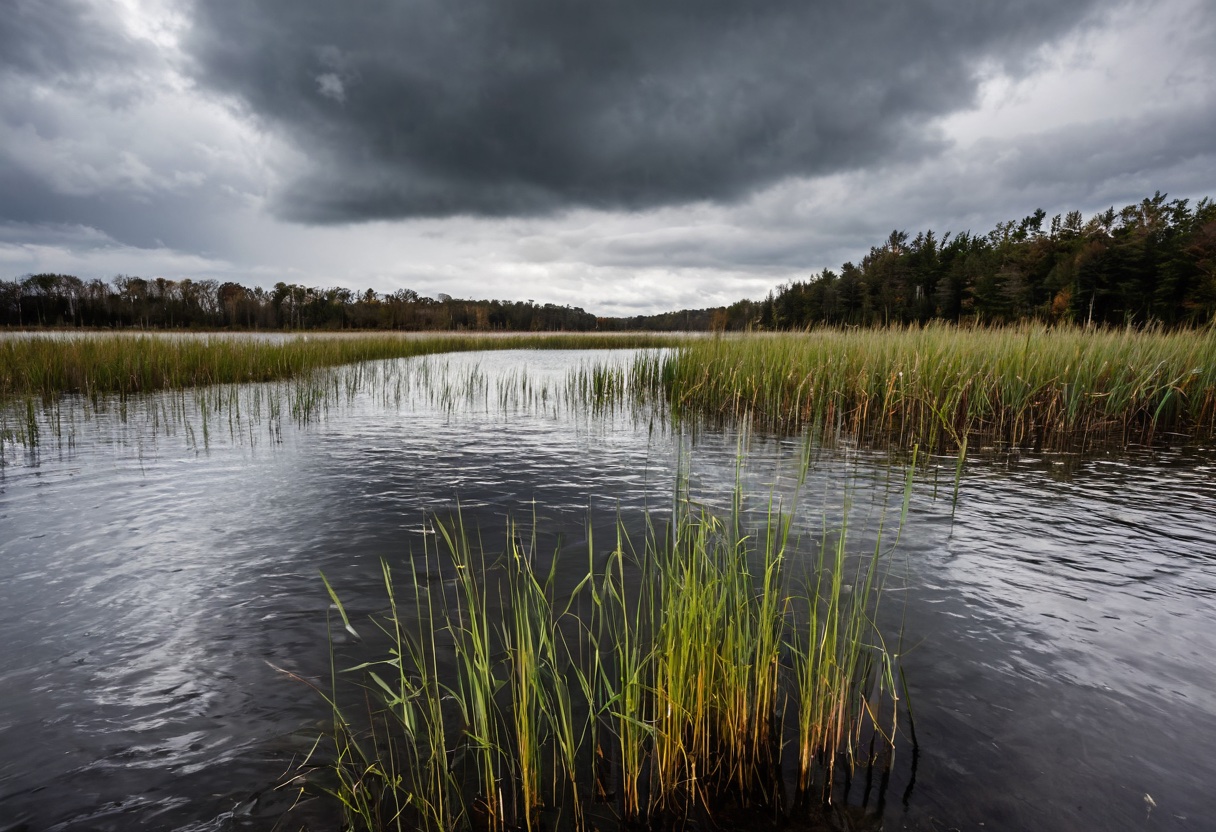
Think of it like a storm warning for fish. When pressure begins to drop, changing weather is usually on the way — clouds, wind, possibly rain. Fish seem to know this and increase their feeding activity to stock up before conditions get worse. Gradually falling pressure with overcast skies and light rain is about as good as fishing gets.
During falling pressure, fish move shallower and are more active. The swim bladder expands slightly as atmospheric weight decreases, making fish more comfortable in shallow water. So:
- Fish shallower than usual. Weed edges, docks, and points that stick out into the main lake become prime targets.
- Normal retrieve speeds work. Fish are actively hunting, so you don’t need to slow everything down. A standard twitch-and-pause or steady retrieve produces results.
- Be ready for aggressive strikes. During a pressure drop, fish strike harder and faster. Keep your line taut and set the hook promptly.
There is a catch: if pressure drops too rapidly — like a sudden squall line — fish can shut down just like they do during extreme high pressure. Gradual changes produce the best fishing, not violent ones.
Reading Barometric Pressure on Your Phone
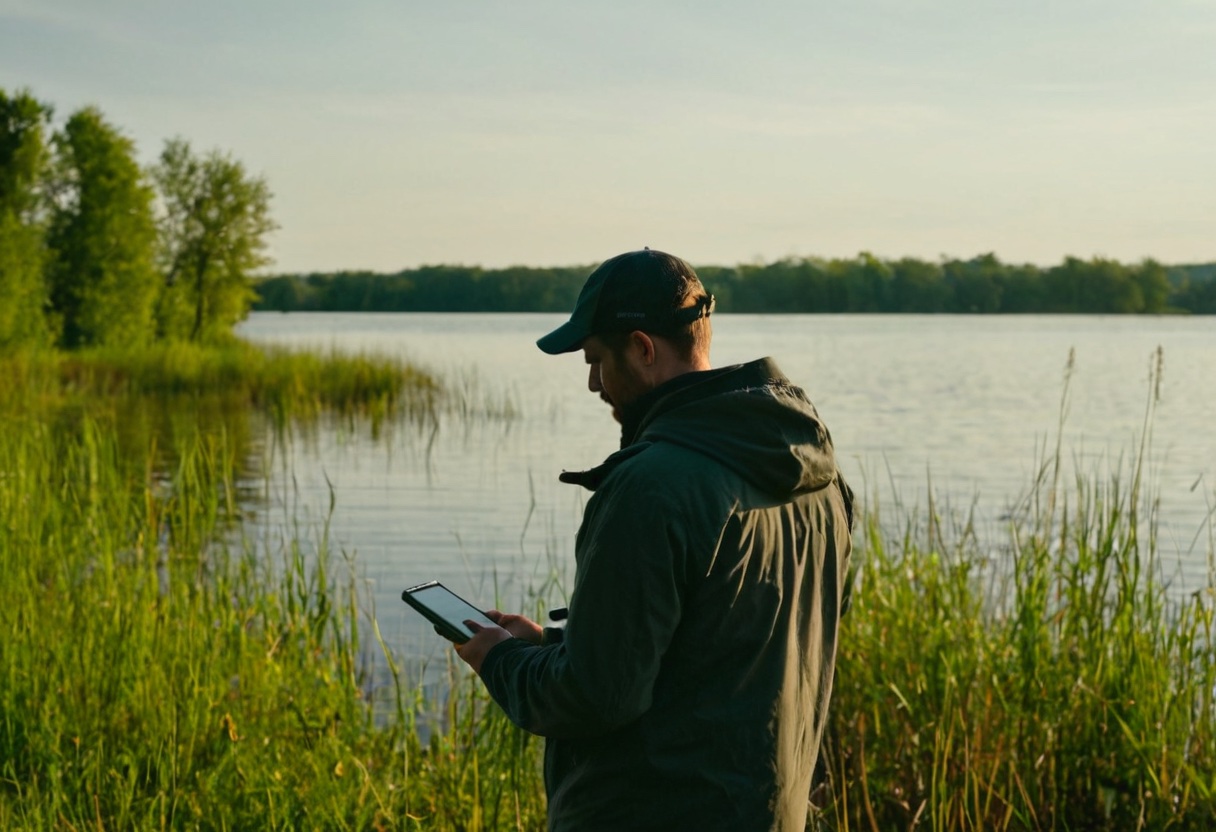
You don’t need a fancy weather station or a dedicated fishing barometer. Most smartphone weather apps show barometric pressure somewhere in their display.
On Apple Weather, scroll down past the temperature and hourly forecast — barometric pressure is usually listed under the detailed conditions. Android’s built-in weather widget often shows it in the extended forecast. If your default app doesn’t include it, any free weather app will. Search for “barometric pressure” in your app store and you’ll find plenty of options.
What to look for:
- The ideal range for most freshwater fishing is 29.70 to 30.40 inHg. Within this band, fish are typically comfortable and feeding normally.
- The trend matters more than the number. Check whether pressure is rising, falling, or stable. A falling trend within the ideal range is the best combination.
- Avoid extremes. Readings above 30.50 inHg or below 29.50 inHg typically suppress fish activity. Rapid changes of more than 0.10 inHg per hour can also shut fish down.
Dedicated fishing apps like BassForecast and onX Fish incorporate barometric pressure into their predictions, showing expected fish activity throughout the day. These are free or low-cost and worth downloading if you fish regularly. See our seasonal fishing guide for more on timing your fishing by season, and our guide to reading water for finding fish once you’re on the water.
Practical Tips — Using Pressure to Plan Your Trip
Here’s a simple framework for using barometric pressure to improve your fishing:
The morning of your trip: Check your weather app. Note the current pressure reading and whether it’s rising, falling, or stable. If it’s in the 29.70–30.40 range and falling or stable, you’re in a good window.
Adjust your depth based on pressure direction: High and rising? Fish deeper. Falling? Fish shallower. Stable? Fish wherever the fish are — pressure isn’t pushing them around.
Adjust your speed based on pressure: High pressure means slower retrieves and smaller lures. Falling pressure means normal speed and standard lure sizes.
Bad pressure doesn’t mean no fish. Even during high-pressure days, fish still eat — they just hold in different spots and feed less aggressively. The difference between a good day and a great day is often just knowing where to look and how slow to go.
Combine pressure with other factors. Barometric pressure is one tool, not the whole toolkit. Water temperature, time of day, season, and water clarity all affect fish behavior. A falling pressure reading on a 70°F spring day is a different scenario than falling pressure on a 40°F January day. Use pressure as a guide, not a rule.
Fishing is full of variables you can’t control. Barometric pressure is one you can. Taking 30 seconds to check it before you head out might be the easiest way to improve your days on the water.