
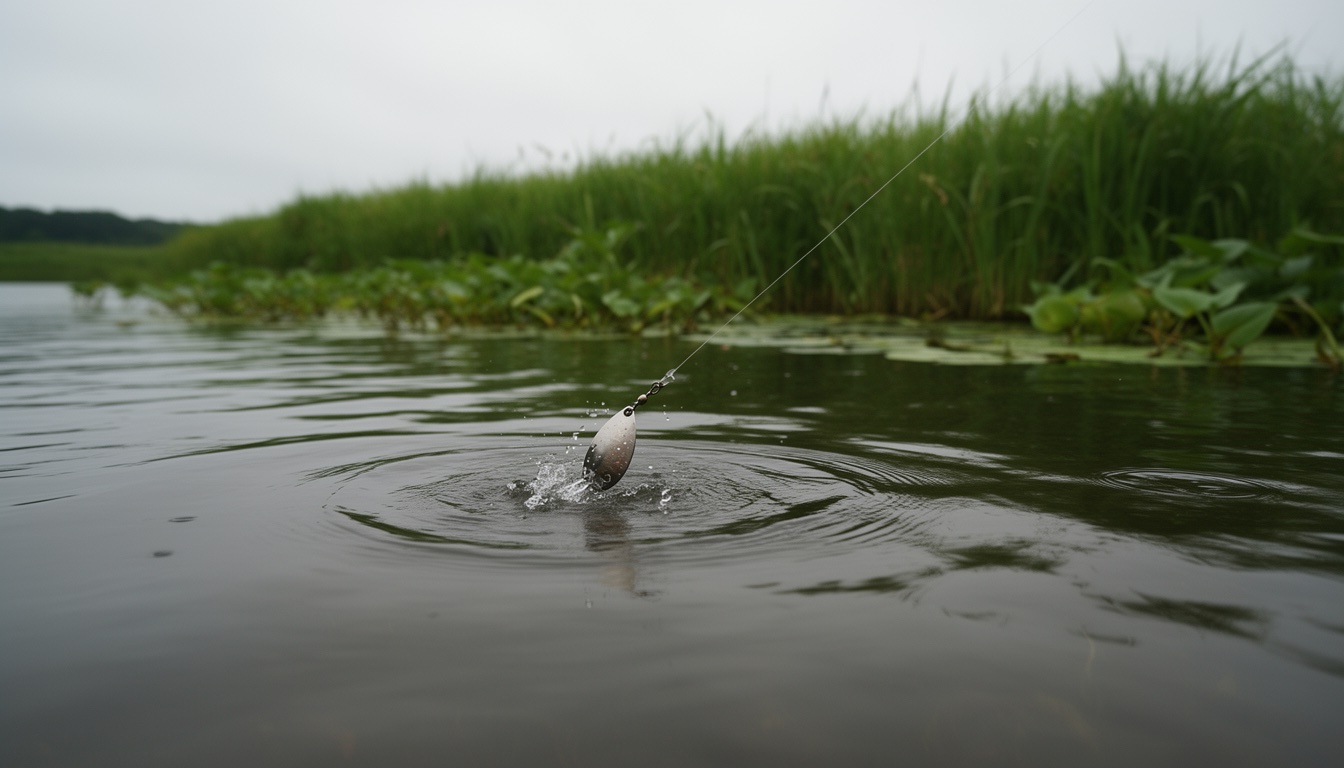
If you’ve ever cast a soft plastic only to have it snag every blade of grass in the lake, or fought with a crankbait that just wouldn’t spin right, you’ve probably wondered if there’s a better option. There is — and it’s called a spinnerbait.
A spinnerbait is about as close as beginners get to an all-purpose fishing lure. It works in weeds, around docks, in clear water and dirty water alike. It’s weedless, hard to mess up, and catches more species than almost any other lure in your tackle box.
What Is a Spinnerbait?
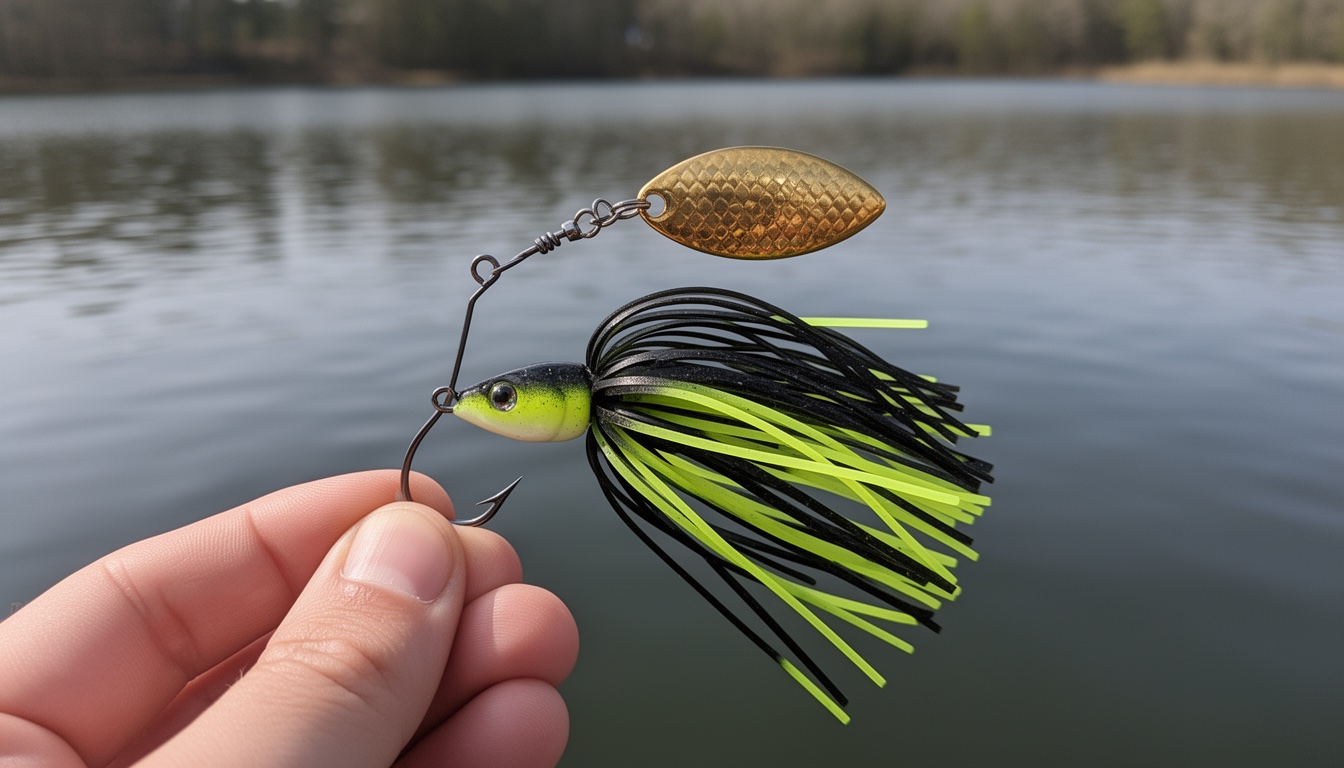
A spinnerbait is an artificial lure built around a wire frame with two attached parts: one or more metal blades and a soft plastic skirt. When you reel it in, the blades spin like tiny propellers. That spinning creates two things fish can detect — flash (sunlight bouncing off metal) and thump (vibration moving through the water).
The plastic skirt gives the lure its body shape. It pulses and undulates like a small baitfish, so the spinnerbait reads as something real even though it’s mostly wire and metal.
The big advantage: spinnerbaits are largely weedless. The wire frame deflects grass, leaves, and debris. The blade pushes vegetation out of the way. You can run one right along a thick weed line and it rarely comes back empty.
There are two frame styles:
- Safety-pin: The blade(s) sit offset from the hook, shaped like a safety pin. Most common type and the best all-around choice for beginners. It handles heavier cover and more situations.
- Inline: The blade(s) sit on the same line as the hook, running straight through the center. Inline spinnerbaits track cleaner and more evenly — good for panfish and finesse situations.
Start with a safety-pin spinnerbait. It does everything an inline can do, and more.
Choosing Your First Spinnerbait
Not every spinnerbait is the same. Blade shape, weight, and color all change how the lure behaves. Here’s what actually matters.
Blade type is the biggest decision. There are two main shapes:
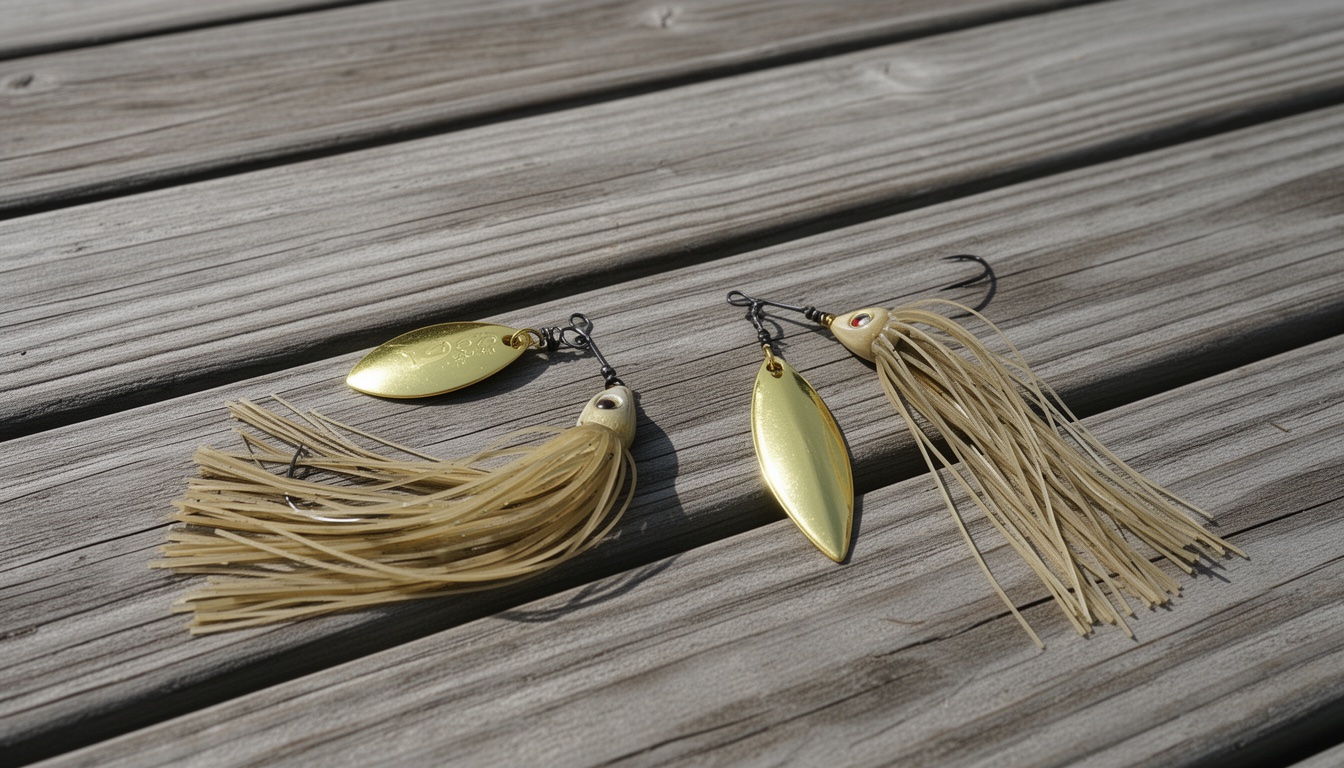
- Colorado blade — nearly round and wide. It moves more water, which means more vibration (thump) and less flash. Colorado blades run deeper and work best in stained or murky water. They need a slower retrieve to keep spinning.
- Willow leaf blade — narrow and pointed. It creates more flash and less thump. Willow blades run shallower and suit clear water better. They spin fine at faster speeds.
If you’re buying your first spinnerbait, go with a Colorado blade. It’s the most forgiving — you can fish it slow without the blade stalling, and it handles the stained water most beginners actually encounter.
Weight determines how deep the spinnerbait goes and how it handles wind and current. The most versatile weight is 3/8 ounce — deep enough to reach bass-holding structure, light enough to retrieve smoothly. Heavier weights (1/2 oz and up) suit thick cover, deep water, or windy days. Lighter weights (1/4 oz) work for panfish or finesse situations.
Color doesn’t matter as much as most anglers think, but there is a simple rule: dark colors (black/blue, black/chartreuse) for stained or low-light water, and natural colors (silver, white) for clear water. A black/blue skirt with a gold or silver blade covers most situations.
How to Retrieve a Spinnerbait
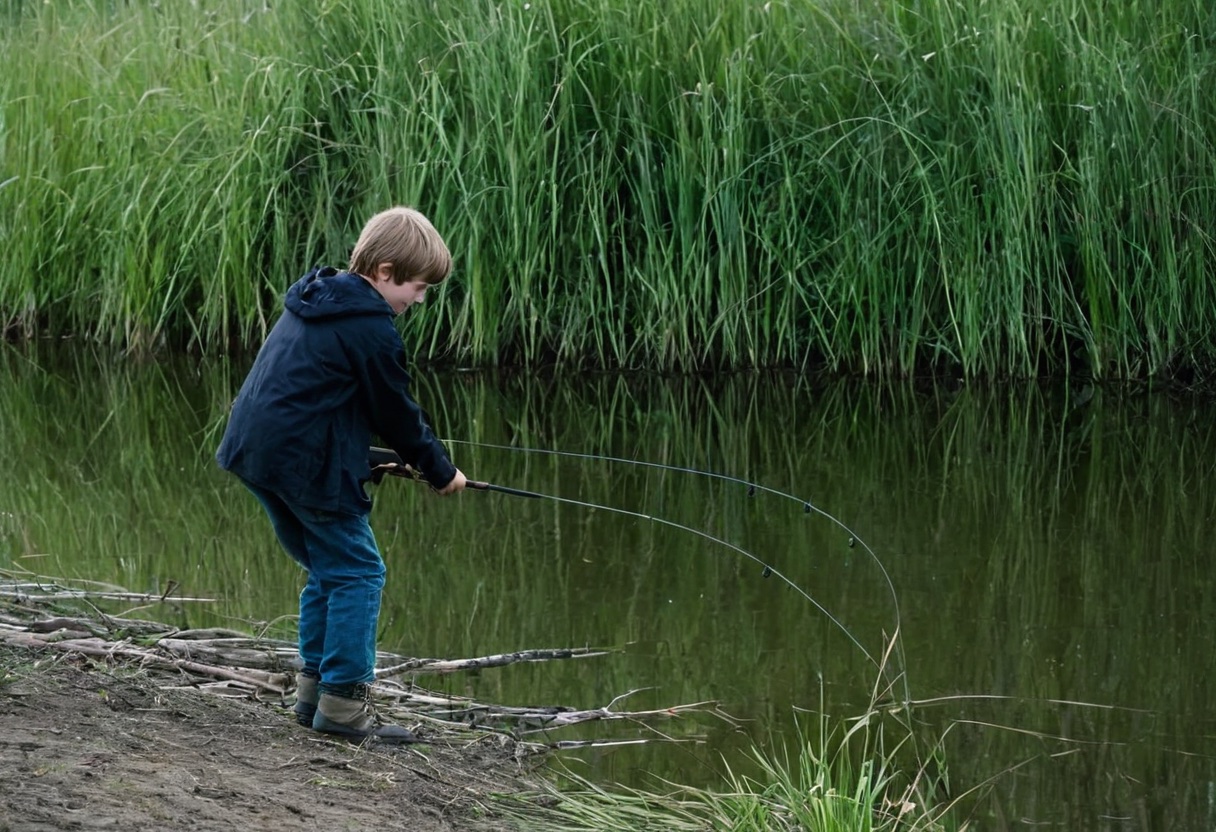
Most beginners overthink spinnerbait retrieves. The basic steady retrieve catches the most fish — everything else is a variation.
The steady retrieve is your foundation. Cast out, let the lure sink for a couple of seconds, then reel at a speed that keeps the blades turning. You’ll feel a faint vibration in your line when the blade is spinning right. Keep reeling steadily until a fish strikes or you bring it in.
The slow-roll is for less-active fish. Reel slowly enough that the blade is just barely turning. The spinnerbait bounces along the bottom, bumping weeds and structure. This works especially well in cooler water when fish hold tight to cover.
The stop-and-go adds variety. Reel steadily for a few turns, then pause. When you stop, the blade slows and the skirt settles. Fish often strike during that pause — it reads like an injured baitfish. Reel again and repeat.
Bouncing off the bottom works great near cover. Cast near a grass edge or rock ledge, let the spinnerbait sink to the bottom, then reel at just the speed that keeps the blade spinning. The lure bounces up and down along the structure — like a baitfish darting in and out of cover.
Where to Cast a Spinnerbait
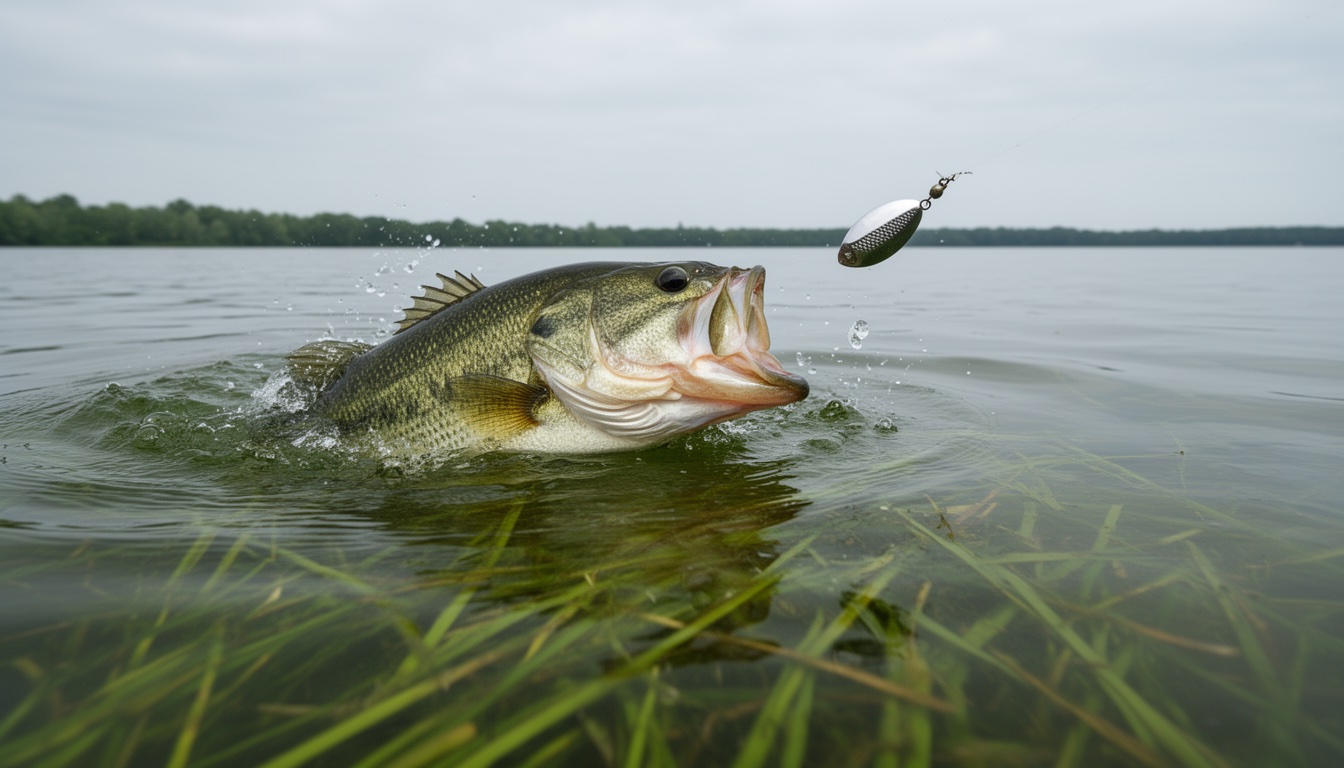
A spinnerbait’s strength is being fished right next to cover. That’s where bass hold, and that’s where this lure shines.
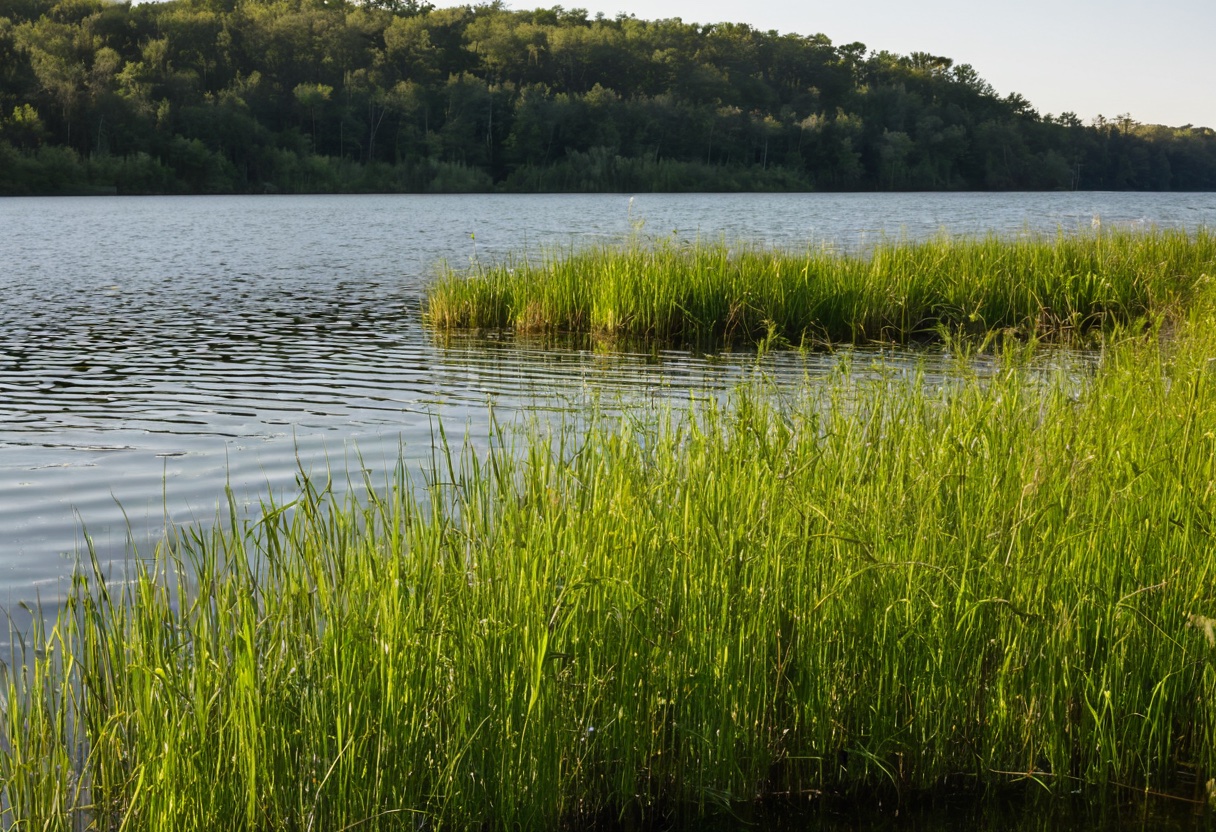
Grass edges and weed lines are the spinnerbait’s sweet spot. Bass usually ambush baitfish at the edge of vegetation, and the spinnerbait’s weedless design lets you walk it right along that line without getting hung up. Cast parallel to the grass edge — don’t cast perpendicular or the blade will drive right into thick cover.
Dock pilings provide shade, structure, and food. Work the spinnerbait in and around pilings, keeping it moving so it doesn’t get tangled. A steady retrieve around docks often produces quick bites.
Rock ledges and shallow flats are great in spring and fall. Bass move shallow to feed, and a slowly retrieved spinnerbait along a rock edge or flat triggers reaction strikes.
Current seams in rivers concentrate baitfish — and the predators that eat them. Let the current carry the spinnerbait naturally and reel just fast enough to keep the blade turning.
What Fish Take Spinnerbaits
Largemouth bass are the primary target for spinnerbaits. They’re drawn to the flash and vibration, and they usually hold near the cover where you’d be fishing one anyway. Smallmouth bass take them too, especially along rocky structure.
But spinnerbaits aren’t just a bass lure.
- Bluegill and crappie will hit a smaller 1/4 oz inline spinnerbait — panfish fishing with a tiny spinnerbait is one of the best ways to get kids excited about fishing.
- Trout in tailwaters and stocked lakes take spinnerbaits too, particularly silver or white ones that mimic minnows.
Best Times and Conditions
Spinnerbaits work best when the water is 55°F or warmer — roughly spring through fall. Cold water slows fish metabolism, and the loud vibration of a spinnerbait can sometimes spook them when they’re not actively feeding.
That said, spinnerbaits are arguably the best lure for stained or murky water. In dirty water, fish rely more on their lateral line (vibration sense) than their eyes. A spinnerbait’s thump carries farther than any other type of lure.
Windy days are actually a bonus. Wind creates surface chop that hides your line, making fish more comfortable approaching the lure. The spinnerbait’s weight also handles wind better than a light soft plastic.
Dawn and dusk are peak times. Low-light conditions make fish more aggressive, and the blade flash stands out against the dim water.
Common Beginner Mistakes to Avoid
Reeling too fast is the #1 spinnerbait mistake. When you reel fast, the blades spin but the lure stays shallow — well above where fish are. Find a speed where the blades turn steadily and the lure stays in the strike zone. If you’re not getting bites, slow down.
Not letting it sink wastes the first few feet of the water column. Spinnerbaits are fished on the descent. After casting, count to two before you start reeling. That lets the lure reach its working depth.
Fishing in open water misses the point entirely. Spinnerbaits excel near cover — grass, docks, rocks, timber. Throwing one in the middle of open water means you’re fishing without the structure that holds fish.
Setting the hook too early costs bites. Bass often follow a spinnerbait for several seconds before committing to the strike. Wait for the solid, heavy pull — not a light tap or follow.
Using the wrong blade for the conditions. Colorado blades in crystal-clear water with fast-moving fish? The fish see right through it. Willow blades in muddy water fished slowly? The blade won’t thump enough to draw fish in. Match the blade to the water clarity and your retrieve speed.
Final Thoughts
Spinnerbaits are the lure you grab when you’re not sure what the fish want. They work in almost every condition, push through almost any cover, and catch more species than any other single lure. If you add one to your tackle box, start with a 3/8 oz Colorado blade in black/blue — it’ll cover more water than you’d think.
For more on other hard baits worth knowing, check out our guides to crankbait fishing and jerkbait fishing. If you’re targeting panfish specifically, our panfish fishing guide covers the best rigs and baits for bluegill and crappie.