How to Keep Fishing Bait Alive: Transport and Storage Tips for Beginners
You pull into the boat ramp and reach for your bait bucket. The minnows float belly-up. The worms are dried out and limp. You just spent real money, and it’s all going to the trash before the first cast.
That happens to more beginners than you’d think — and almost all of it is preventable.
Keeping live bait alive on the way to the water comes down to a handful of simple rules. Master them, and your bait will still be moving when you reach the lake, which matters more than anything else for a first catch.
Why Your Live Bait Dies Before You Cast
Three things kill live bait in transit: heat, oxygen loss, and shock.
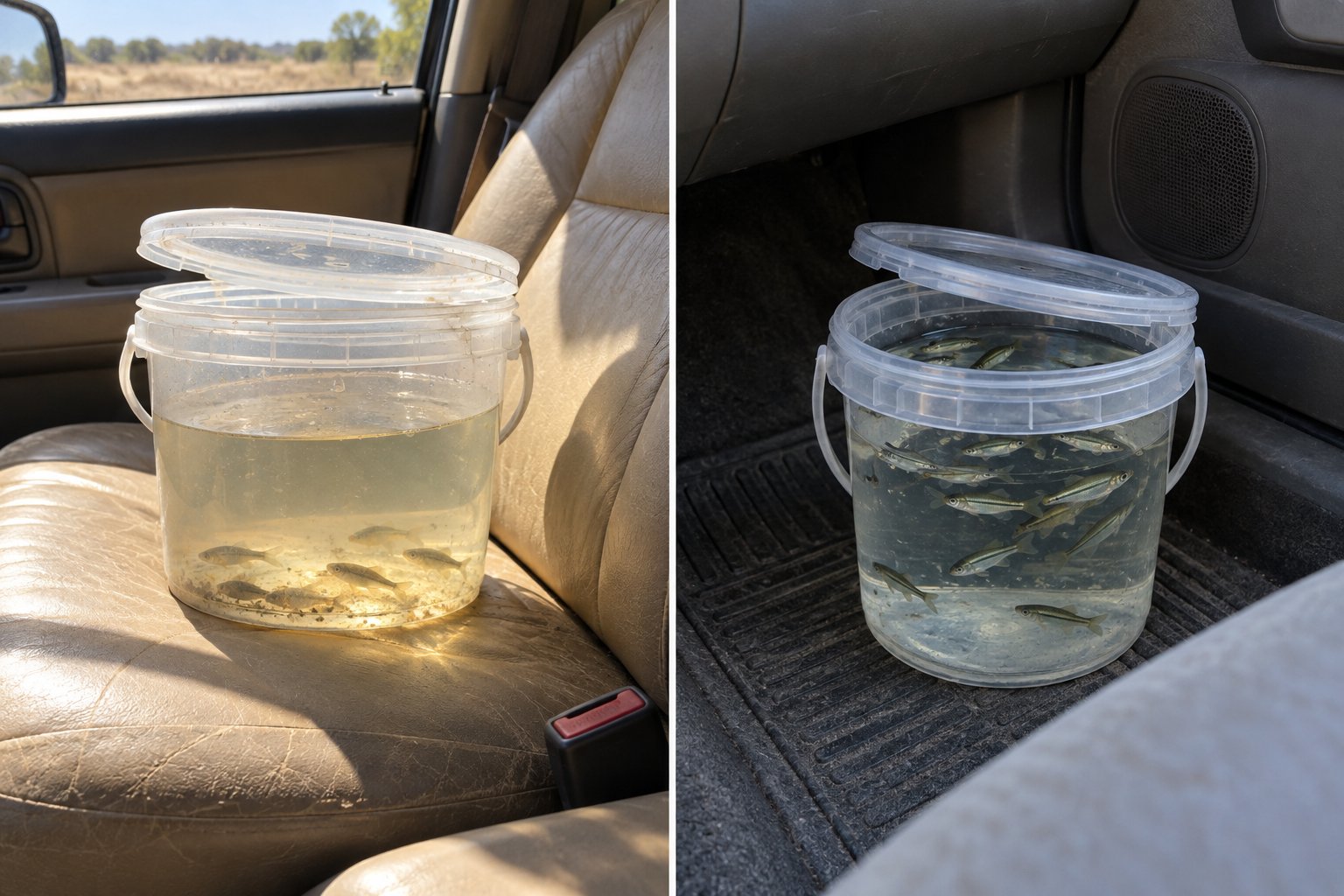
Heat is the number one killer. Minnow survival drops off sharply once the water in your container climbs above 60°F. In a Florida summer, a sealed bucket sitting on a car seat can hit that in under ten minutes.
Oxygen loss happens when too many fish share too little water. Minnows have a fast metabolism and burn through the dissolved oxygen in a closed container. Without fresh air, they suffocate.
Shock comes from sudden changes — dumping cold tap water over warm minnows, or hauling a bucket from a cool truck into a hot parking lot. A fish that survives a shock can still die within hours, even if the conditions look fine afterward.
The Four Rules That Apply to Every Bait
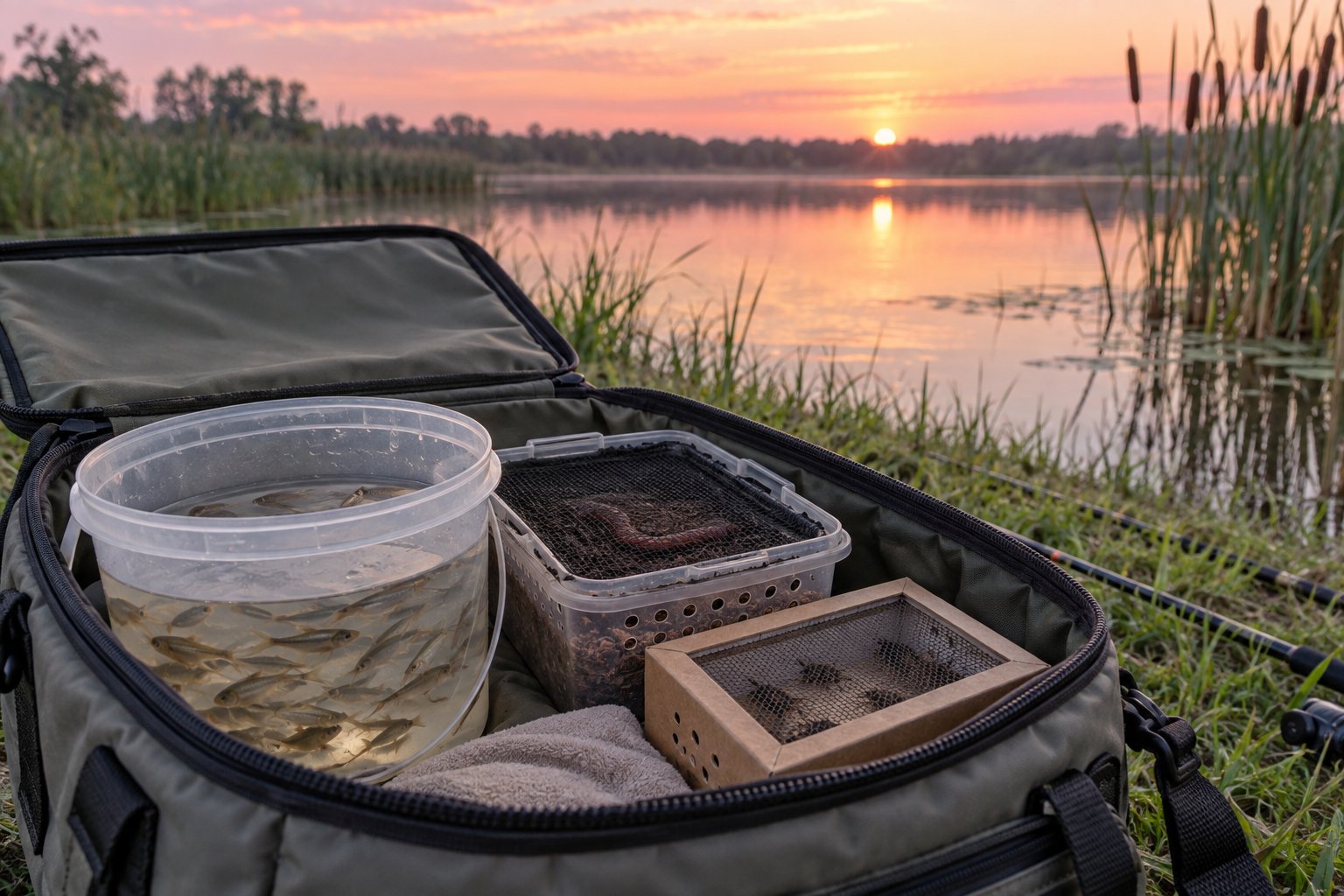
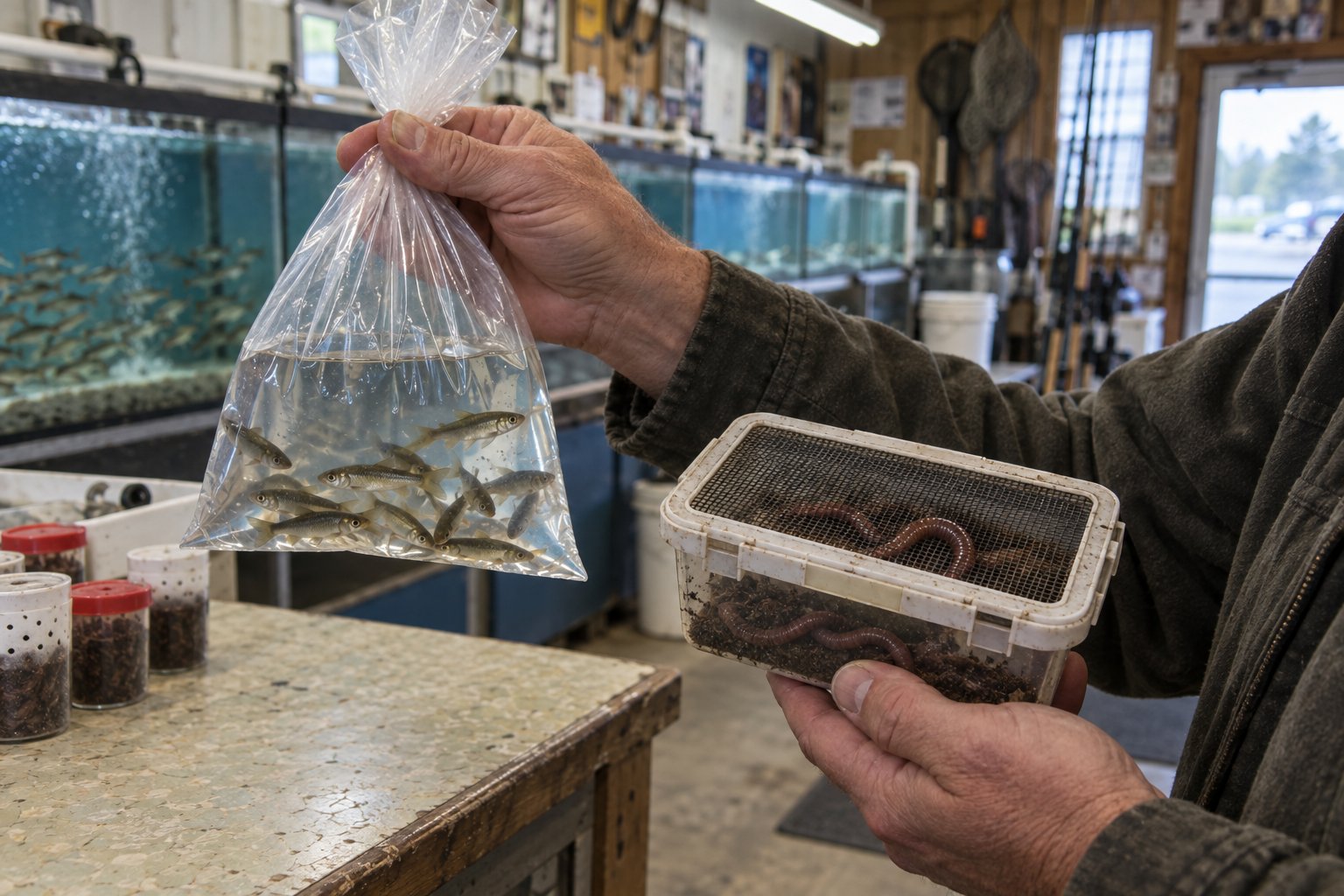
Whatever you’re carrying — minnows, worms, or crickets — these four rules cover most of what you need:
- Keep it cool and shaded. Out of direct sun, out of the hot car interior, every single time.
- Don’t overpack. Crowding depletes oxygen fast. Buy less than you think you’ll need.
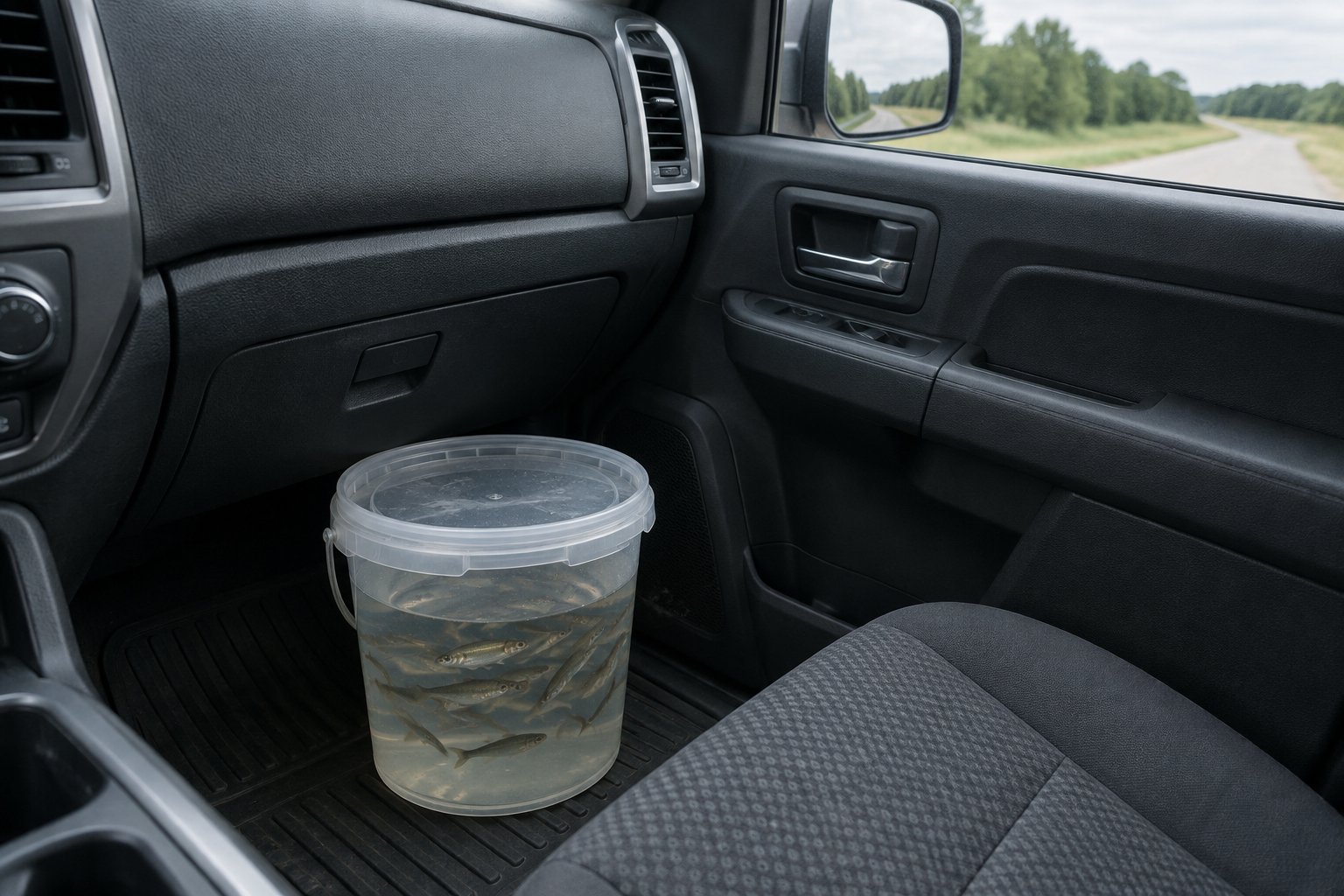
- Don’t let it get jostled. A container that bounces around the truck stresses the bait. Set it on the floor, not on a seat.
- Check before you fish. Open the container at the water. Gasping, flopping bait means the water went bad — change it or start fresh.
If you do nothing else, do these four. They prevent the vast majority of transport losses.
Minnow Transport: What to Do and What to Avoid
Minnows are the trickiest live bait to move because they’re small, active, and oxygen-hungry.
Pick the right container. A rigid plastic bucket or bait cooler with a tight-fitting lid is the standard. Avoid plastic bags — they tear, they trap heat, and they give the fish nowhere to move. Glass jars break.
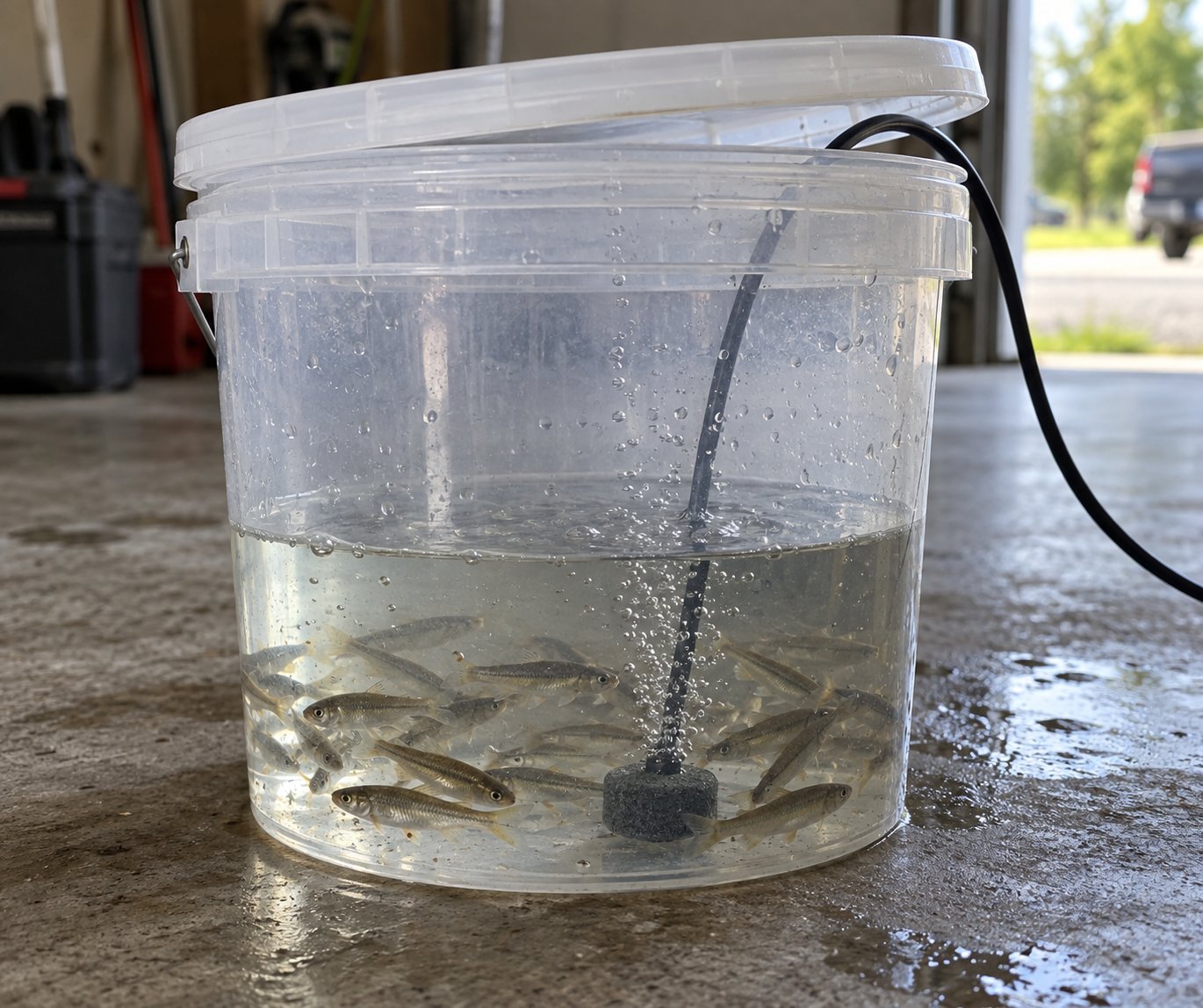
Use enough water. A good rule of thumb is about one gallon per 10 to 15 small minnows. More water means more oxygen buffer and a slower temperature swing. For storage, keep the fish to no more than two layers deep.
Use the best water you can get. If you’re buying bait near the water you plan to fish, ask the bait shop to fill the container from that source — or scoop a bucket yourself if the rules allow. Zero chemistry and temperature shock is the ideal. The next best option is dechlorinated tap water that’s been sitting at room temperature. Chlorine in untreated tap water is toxic to small fish, so if you top off with tap water, treat it with a small bottle of dechlorinator first.
Aerate for long drives or warm days. For trips over an hour, or any drive in summer heat, a battery-powered air pump with an air stone makes a real difference. Small bubbles push oxygen into the water more efficiently. Keep the lid cracked open just enough to let carbon dioxide escape, but not so wide that the container becomes a heat trap.
Put it on the floor. The passenger footwell or the truck bed floor is cooler and steadier than a seat. A bait bucket on a sun-baked seat is the most common beginner mistake, and the easiest one to avoid.
Storing Minnows Overnight
If you’re fishing the next day, don’t leave minnows in the car overnight. A parked car in summer turns into an oven.
Store them in a cool, dark place: a closet, a basement, or a garage. The target temperature is 38 to 50°F. Below that range, the minnows’ metabolism slows down dramatically and they burn through oxygen much more slowly.
Without aeration, you can realistically expect four to six hours of survival in cool water if you do a 25 percent water change every two to three hours. With a small battery-powered air pump running, the same batch can last several days.
And one honest rule: buy less than you think you’ll need. Fresh bait from the shop that morning will almost always outperform bait you’ve been storing, no matter how well you store it.
Nightcrawler Transport and Storage
Nightcrawlers are more forgiving than minnows, but they fail in different ways. They don’t need water — they need moisture and air.
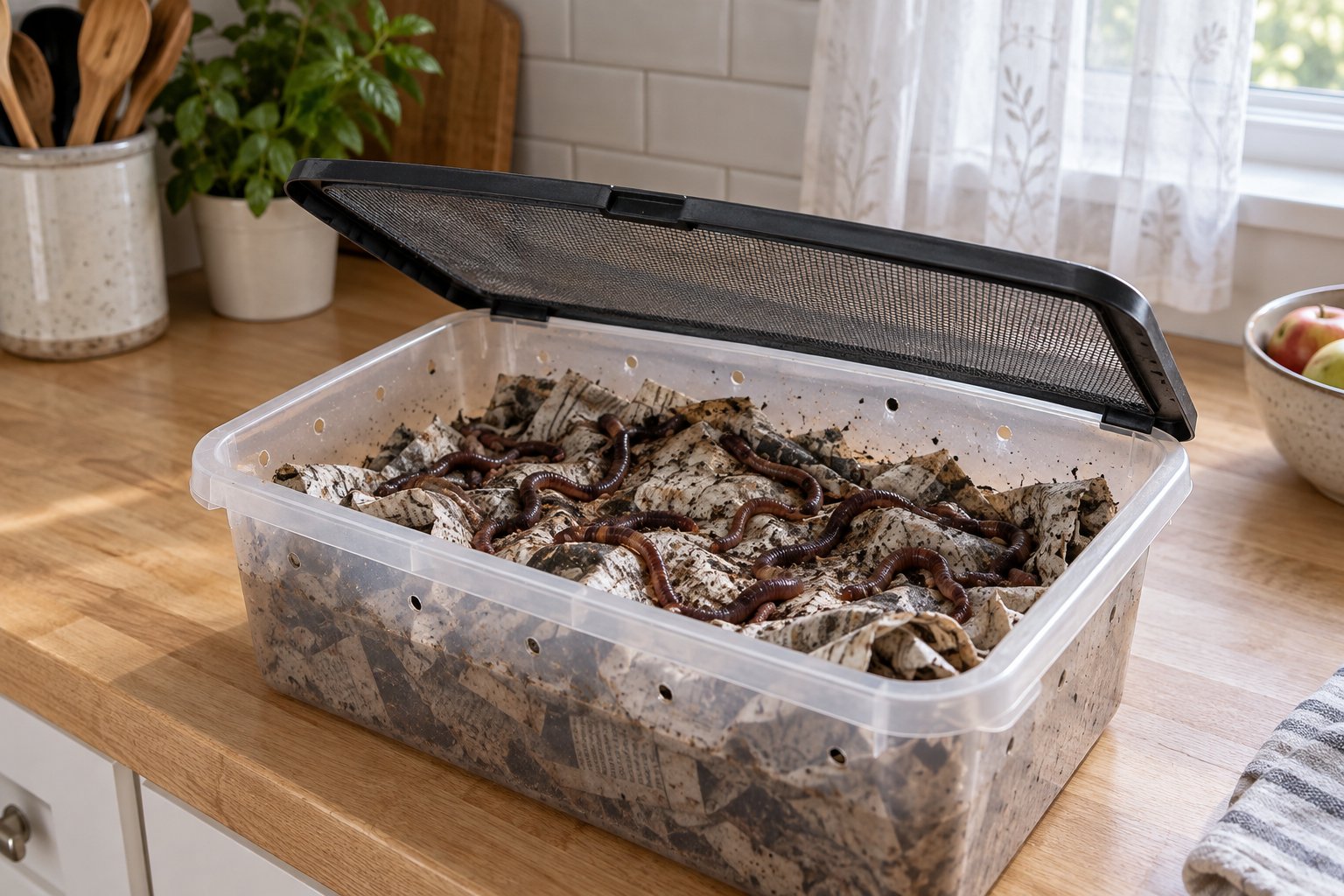
Keep them damp, not wet. A sealed plastic bag with wet worms is a death trap. Worms breathe through their skin and suffocate in standing water. Instead, line a ventilated container with damp newspaper or a damp cloth. The goal is a moist surface with no puddles.
Ventilation is non-negotiable. Use a worm box, a ventilated plastic tub, or a container with air holes. Never a sealed bag.
Keep them cool. Nightcrawlers are happiest around 50 to 60°F. Above 75°F they start dying quickly; below 40°F they go sluggish but survive short periods fine. A kitchen counter out of the sun is usually plenty for a day of fishing.
For a cooler setup: put a damp (not wet) towel on the bottom, lay the worms on top, and close the lid with the vents open. That’s essentially the bait shop method, and it works.
You don’t need to feed them for a day or two. For longer storage, a small piece of vegetable — lettuce, carrot — keeps the population healthy, but that’s a keeper-worm concern, not a trip concern.
Cricket Transport
Crickets are popular for panfish, and they’re easy to lose if you forget one thing: they need air more than they need anything else.
Use a ventilated container — a plastic bin with a mesh or perforated lid, or a cardboard box with a mesh top. A sealed container will kill a box of crickets in a couple of hours.
Inside, give them something to climb on and hide in: egg crates, cardboard tubes, or crumpled newspaper. Crickets stress and injure each other when they’re packed flat with nowhere to go.
For a drive of an hour or two, you don’t need to provide food or water. For longer storage, a piece of apple or lettuce — with a lid on it so the moisture stays inside — works as both food and a moisture source.
Don’t leave crickets in a hot car. They die quickly above about 90°F, which a closed car reaches on any summer morning.
Common Beginner Mistakes That Kill Bait
Here’s the short list of things that turn a full bucket into a dead bucket:
- Leaving the container in direct sun on a car seat.
- Using warm, untreated tap water to top off minnows.
- Overpacking the bucket — too many fish, not enough water.
- Storing bait in the trunk overnight in summer heat.
- Not checking the water before you cast. If it smells, looks cloudy, or the fish are gasping at the surface, it’s done.
- Buying too much live bait for one trip and forcing it to be stored instead of fished.
None of these require expertise to avoid. Each one just takes a moment of thought before you close the car door.
Live bait is cheap compared to the fishing trip you’re planning around it. Keep it cool, keep it breathing, keep it from getting shaken, and it will work as hard for you at the lake as it did in the bait shop tank. When you’re ready to head out, a clear plan for where to fish and what to bring — covered in our guide to planning your first fishing trip — pairs well with live bait. And once the fish are on, our live bait fishing guide walks through rigging and presentation for minnows, worms, and crickets.