
Introduction — Why Panfish Fishing Is Perfect for Beginners
If you’ve never fished before — or tried a few times without catching anything — you’re in the right place. Panfish fishing for beginners is the ideal starting point because panfish (bluegill, crappie, sunfish, and perch) are the most common freshwater fish in North America. They live in nearly every pond, lake, and slow-moving river. They bite readily, fight well on light gear, and taste great if you choose to keep a few.
Getting started requires very little investment. A complete beginner setup — rod, reel, line, hooks, bobber, and split shot sinkers — costs roughly $30 to $60. You don’t need a boat, expensive tackle, or years of experience. This guide covers everything from species identification to gear, bait, rigging, where to find panfish, and how to land your first fish. No prior knowledge needed.
If you want even more foundational knowledge about fishing basics, check out our Beginner Fishing 101 guide.
What Are Panfish? Identifying Bluegill, Crappie, Sunfish, and Perch
“Panfish” is a non-scientific term for smaller freshwater fish that fit in a frying pan. It most commonly covers sunfish species (bluegill, pumpkinseed, redear), crappie (black and white), and yellow perch. These fish share similar habitats and feeding habits, and you catch them with the same basic tackle. Knowing how to identify them helps you target the right species and understand their behavior.
Bluegill
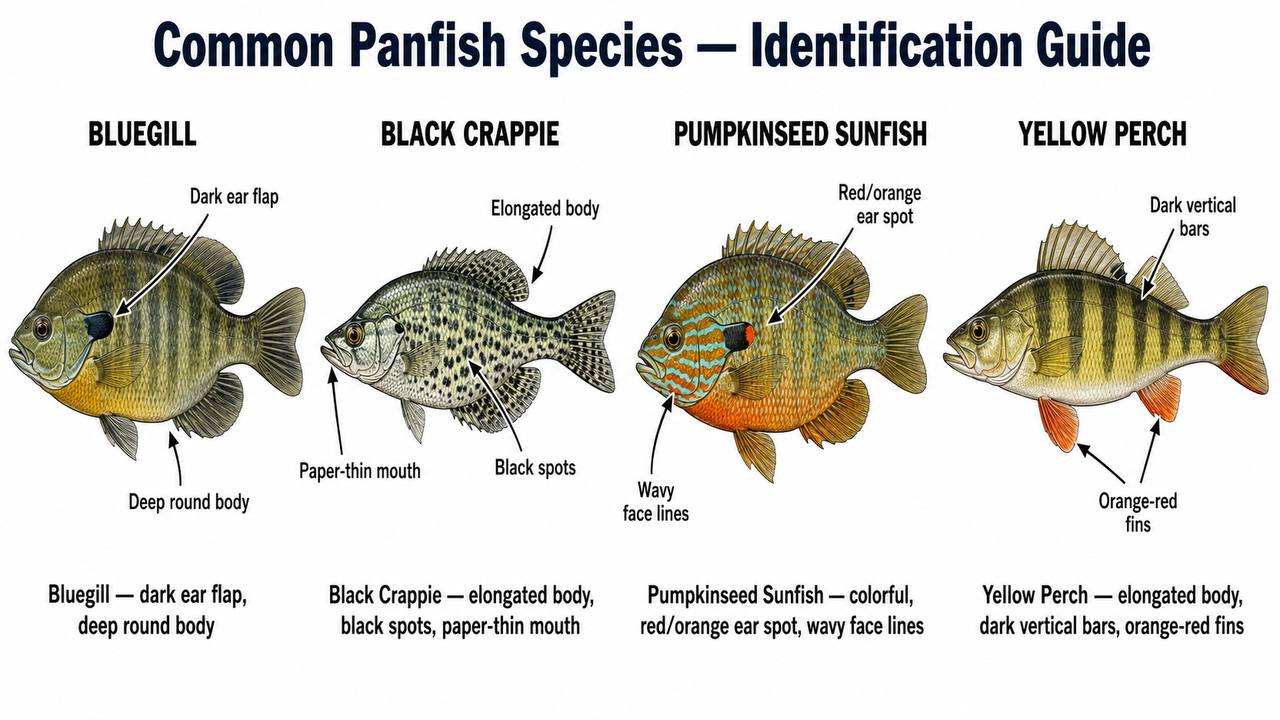
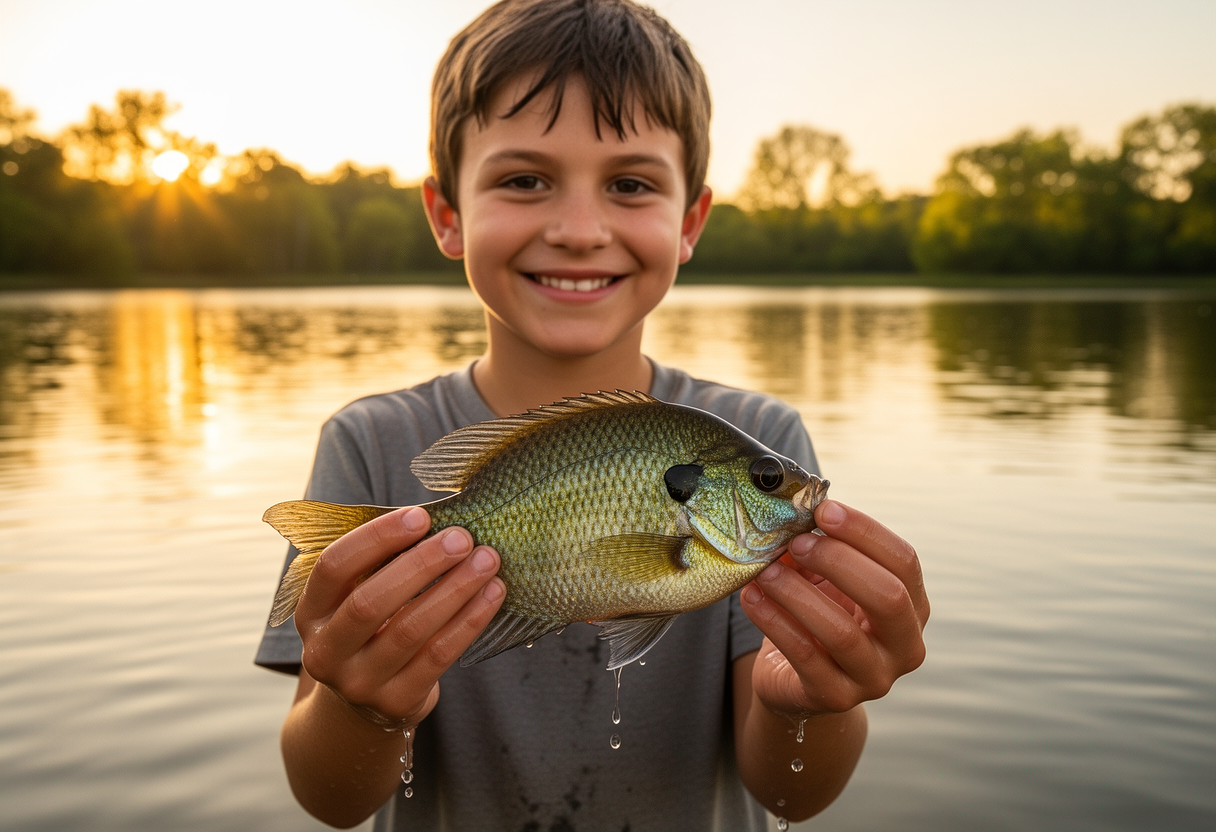
The most common panfish in North America. Bluegill have a large, deep, rounded body with a very small mouth. Look for the dark blue or black ear flap (operculum flap) on the gill cover. Their color ranges from olive-green to a yellow-orange belly. Dark vertical bars may be faintly visible. They typically grow 4 to 10 inches and can reach up to 1 pound. Bluegill are aggressive biters and respond well to small hooks baited with worms or crickets — making them the ideal first target for learning how to fish for sunfish.
Black Crappie and White Crappie
Crappie have a more elongated, compressed body than bluegill. Black crappie are silver-green with irregular black spots scattered across the body. White crappie are lighter silver with 5 to 10 dark vertical bars instead of spots. Both species have paper-thin mouth tissue — a crucial detail that affects how you set the hook. Crappie typically range from 6 to 12 inches. For crappie fishing tips beginners should remember: use light-wire hooks and a very gentle hookset to avoid tearing that delicate mouth.
Pumpkinseed and Redear Sunfish
Pumpkinseed sunfish are among the most colorful freshwater fish — orange or red belly, blue-green wavy lines on the face, and a bright red spot on the ear flap. They have a small mouth and typically reach 4 to 8 inches. Redear sunfish (also called “shellcrackers”) have a red border on the ear flap and eat snails and shellfish. They grow larger than bluegill, reaching up to 12 inches and over 2 pounds.
Yellow Perch
Yellow perch have an elongated body, yellow-green coloring with 5 to 9 dark vertical bands, and orange-red lower fins. They have a slightly larger mouth than sunfish and travel in schools — if you catch one, more are likely nearby.
The Best Panfish Fishing for Beginners Setup — Gear That Won’t Break the Bank
A good panfish setup doesn’t need to be expensive or complicated. The key is matching light gear to the small size and soft mouths of panfish. Here’s everything you need for a complete starting kit.
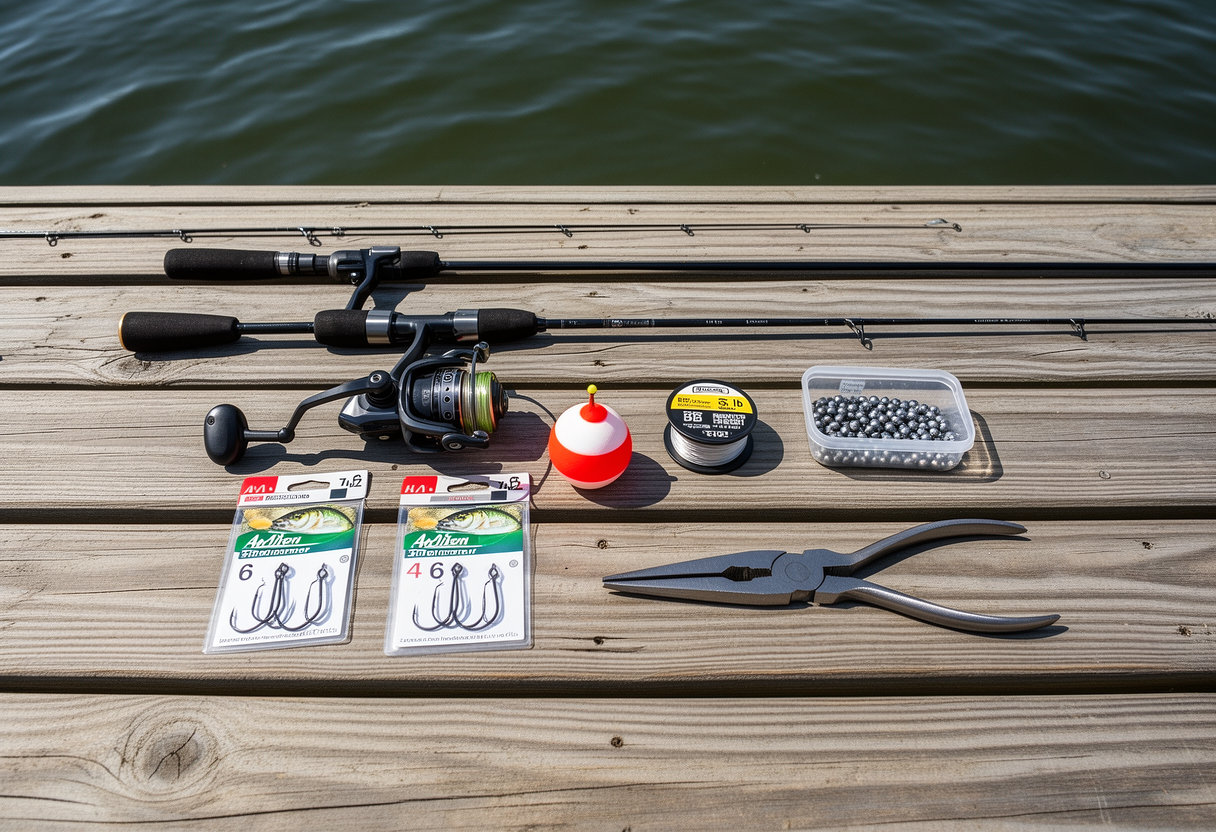
Rod and Reel: A spinning rod and reel combo ($30 to $60 total) is the recommended starter — versatile and easy to learn. For absolute beginners, especially kids, a spincast (push-button) combo ($25 to $50) is even simpler. Choose a 5- to 7-foot ultralight (UL) or light (L) power spinning rod. Shorter rods (5 to 6 feet) are easier to control; longer rods (6 to 7 feet) cast farther. Pair with a small spinning reel in size 500, 1000, or 2000.
Line: Monofilament line in 4- to 6-pound test is the go-to choice for panfish fishing for beginners. Four-pound test offers a more natural presentation; 6-pound test gives more strength around light cover. Fluorescent or high-vis yellow helps beginners see line strikes.
Hooks: Size #6 to #8 Aberdeen (long-shank) hooks are the sweet spot for bluegill and most panfish. The long shank makes hook removal from small mouths easier. For crappie, use size #4 to #6 light-wire Aberdeen hooks. For tiny baits like corn or waxworms, size #10 to #12 hooks work better.
Bobbers (Floats): Clip-on or spring-loaded fixed bobbers are the simplest option — just clip them onto the line at your desired depth. Thill-style balsa floats are sensitive and easy to see. For deeper water, you’ll need a slip bobber (covered in the rigging section below).
Split Shot Sinkers: Small BB or #7 size split shot, crimped 6 to 12 inches above the hook. This provides enough weight for casting without spooking fish.
Total beginner budget (excluding bait): Approximately $30 to $60 for a complete setup — rod, reel, line, hooks, bobbers, and split shot.
Best Bait for Panfish — What Works and How to Rig It
Choosing the best bait for panfish doesn’t need to be complicated. Live bait is the most effective option for beginners, and the simplest choice works best.
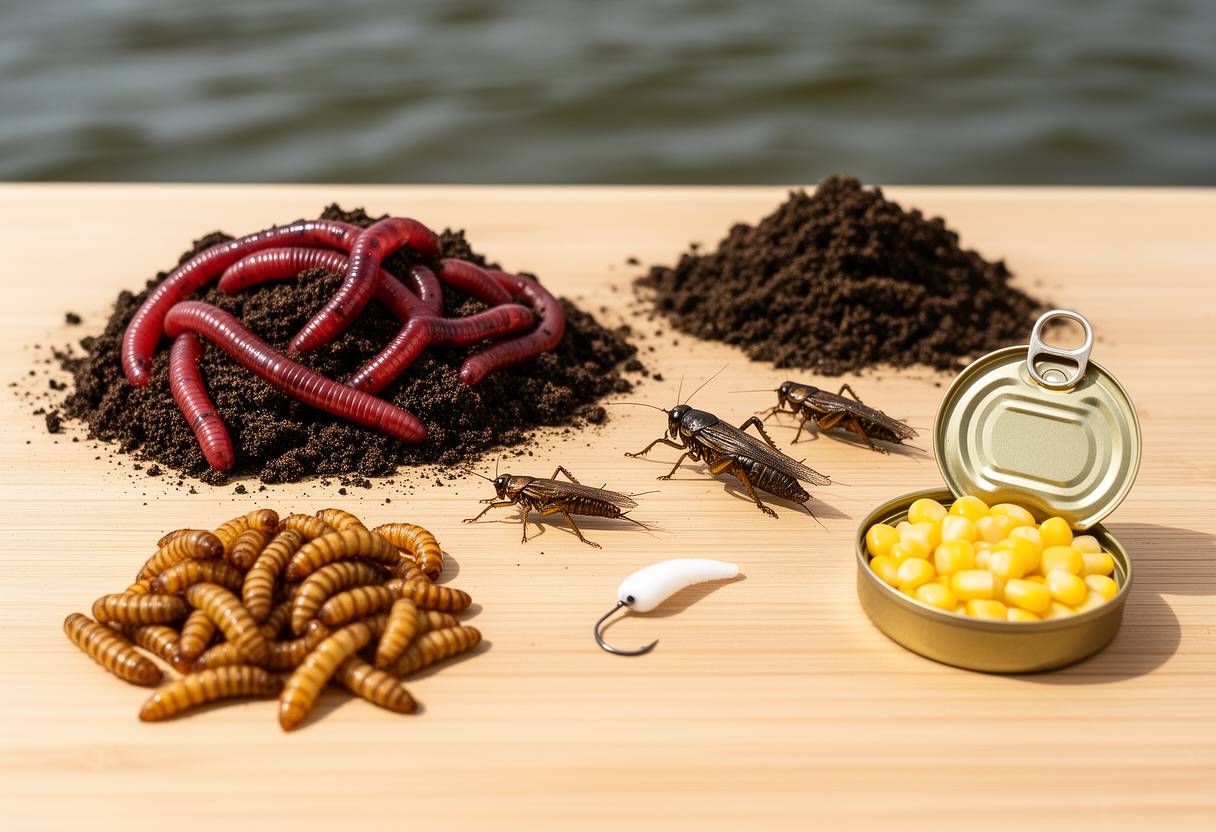
Earthworms (red wigglers or nightcrawlers): The top panfish bait, period. Worms are widely available, stay on the hook well, and attract all panfish species. Thread the hook through the middle of a worm, leaving both ends free to wiggle. Important: a whole nightcrawler is too large for a bluegill’s small mouth. Tear off a quarter-inch to half-inch piece instead.
Crickets and grasshoppers: Excellent for bluegill and sunfish, especially in summer. Hook them through the thorax or back.
Redworms, mealworms, and waxworms: Small and easy to hook. They work well on size #8 to #10 hooks and are effective when panfish are being picky.
Fathead minnows: The best choice for crappie and yellow perch. Hook a minnow through the lips on a small jighead under a bobber for a horizontal presentation.
Artificial options: Small jigs (1/64 to 1/32 ounce) in white, chartreuse, or black; tiny soft plastic grubs (1 to 2 inches); inline spinners in sizes #0 to #2; and small crankbaits. Dough balls and canned sweet corn are surprisingly effective cheap alternatives.
Beginner pro tip: Start with live earthworms under a bobber. This is the most reliable method with the highest catch rate for beginners.
Where to Find Panfish — The Best Beginner Fishing Spots
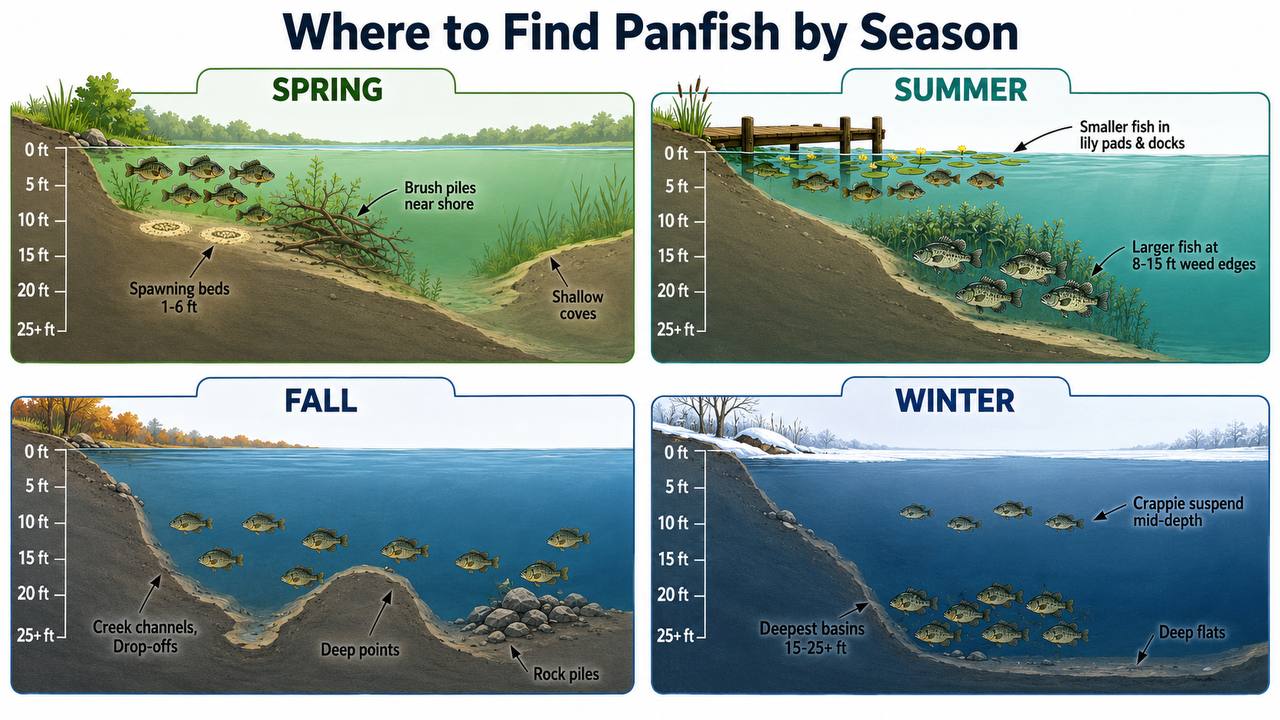
Wondering where to find panfish in a lake or pond? The general rule is simple: panfish relate to cover and structure. They use submerged logs, brush piles, weed edges, docks, rocky shorelines, and overhanging branches for protection from predators and for ambushing food. Knowing where panfish are at each time of year will dramatically improve your success.
Spring (Best Season for Beginners)
When water temperatures reach about 55 to 72°F, panfish move into the shallowest water of the year to spawn — typically 1 to 6 feet deep. Bluegill and sunfish form spawning colonies: circular nests (beds) in gravel or sand bottoms in less than 5 feet of water. Look for these beds along brush, pencil reeds, and the backs of protected pockets and coves. Crappie spawn slightly deeper (3 to 6 feet) and earlier, when water reaches roughly 55 to 62°F. Spring is the easiest time to catch panfish from shore.
Summer
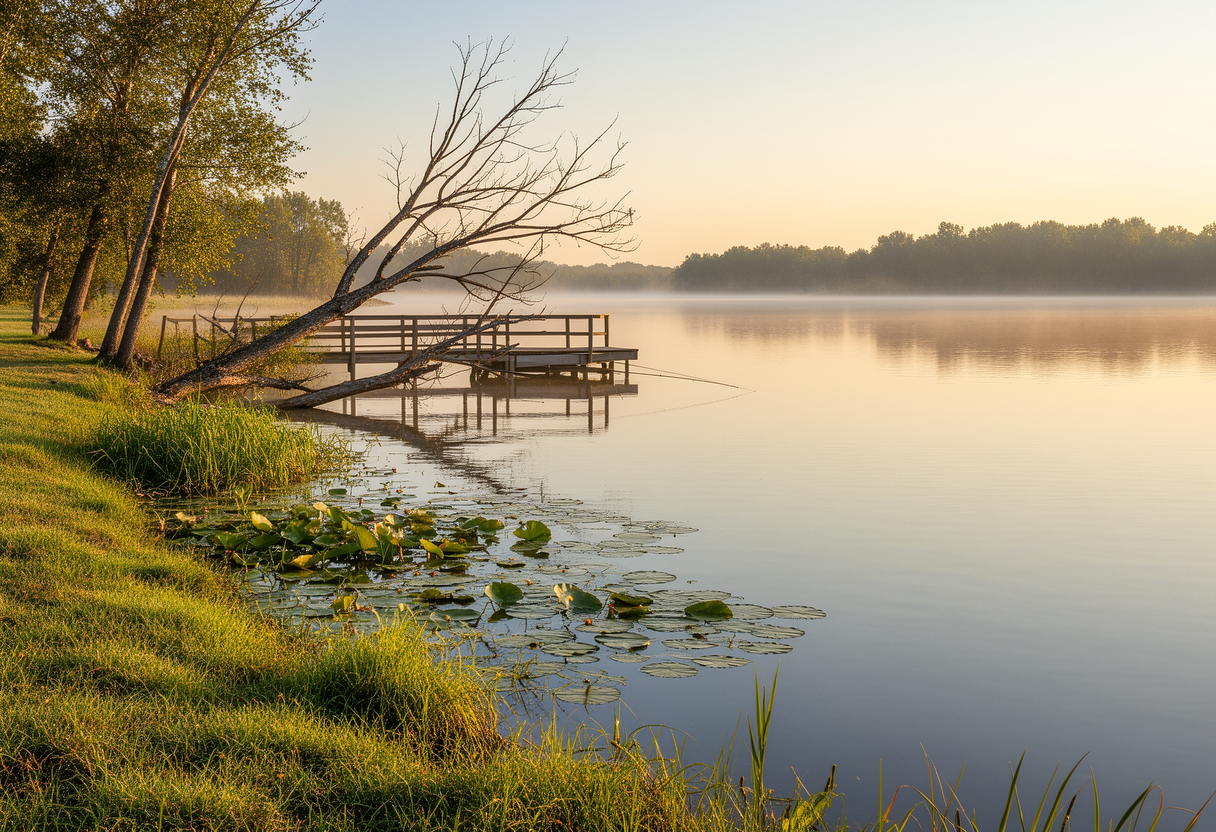
Young bluegill remain in shallow lily pads, docks, and weed cover. Larger bluegill move to deeper weed edges (8 to 15 feet). Crappie suspend near structure — fallen trees, deep weed lines, brush piles, and docks.
Fall
As surface waters cool, panfish move deeper. Focus on creek channels, drop-offs, deep points, and deep weed edges.
Winter
Panfish congregate in the deepest areas of lakes. Crappie tend to suspend in deep water, while bluegill relate to deep flats and structure. (Ice fishing is a popular method for winter panfish but is outside the scope of this beginner guide.)
Best Shore-Fishing Spots (No Boat Needed)
– Public fishing piers and docks – Lake shorelines near weed edges – Pond banks near fallen trees or brush piles – Creek inlets into lakes – Bridges and causeways – State park fishing areas with known panfish populations
Simple Panfish Rigging — Fixed Bobber and Slip Bobber Setups
Once you have your gear and bait, you need to rig it properly. These two rigs cover almost every panfish fishing situation a beginner will face.
Fixed Bobber Rig (Simplest — Best for Water Less Than 5 Feet Deep)
1. Slide a clip-on or spring-loaded bobber onto your line at the desired depth (for example, set the bobber 2 feet from the hook for water that is 2 to 3 feet deep). 2. Tie a size #6 or #8 Aberdeen hook to the end of the line. 3. Pinch one or two small split shot sinkers 6 to 12 inches above the hook — enough weight to cast but not so much that it sinks the bobber. 4. Bait the hook with a small piece of worm or a cricket. 5. Cast out. The bobber sits upright on the surface. When a fish bites, the bobber dips, twitches, or goes under.
Slip Bobber Rig (For Water Deeper Than Your Rod Length)
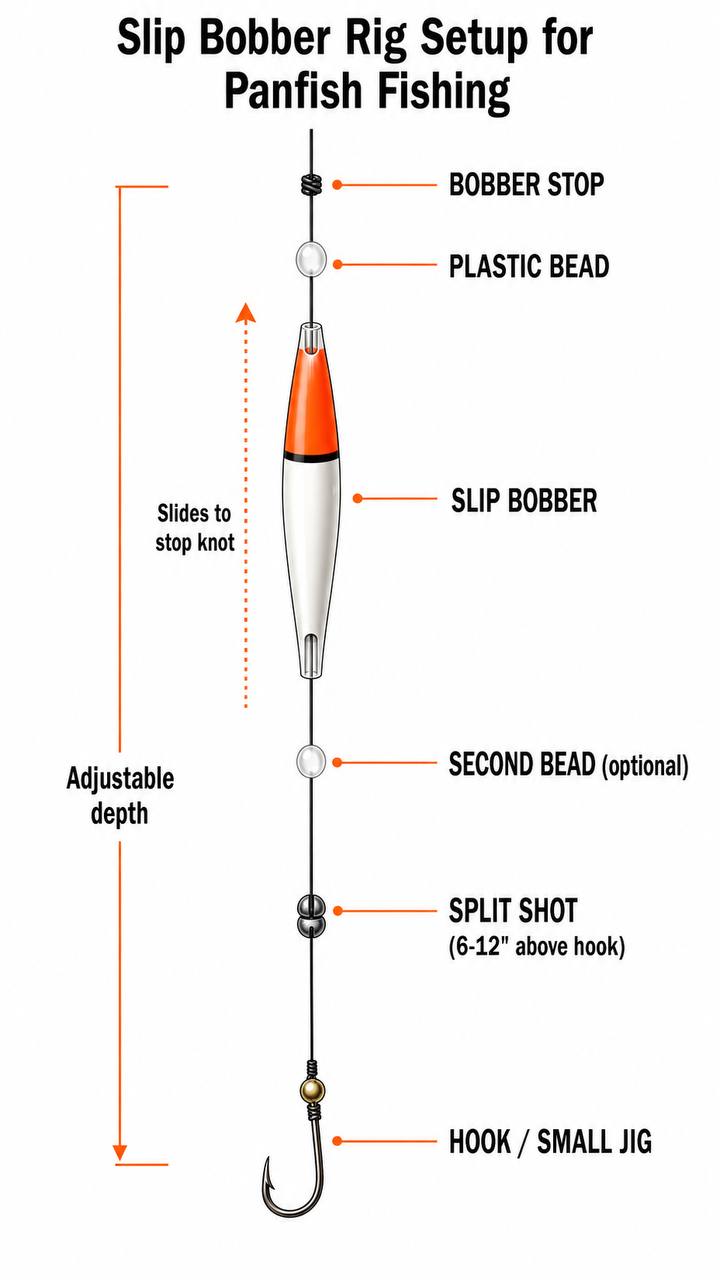
A slip bobber rig for panfish lets you fish at any depth, even when the water is deeper than your rod. Here’s how to set it up, in order from top to bottom on the line:
1. Bobber stop — a small rubber band or thread knot that slides on the line; set it at your desired depth. 2. Plastic bead — keeps the bobber stop from slipping through the float. 3. Slip bobber — a hollow-stem float that slides freely up the line. 4. *(Optional)* Another small bead below the bobber. 5. Tie on a hook or small jig at the end of the line. 6. Add split shot 6 to 12 inches above the hook for casting weight.
When you cast, the bobber slides up the line to the stop knot, suspending your bait at the perfect depth while casting remains easy.
Basic Split-Shot Rig (Minimal or No Bobber)
Tie your hook to the end of the line, crimp one or two small split shot 12 to 18 inches above the hook, and cast out. Let the bait settle and retrieve slowly along the bottom with pauses. This rig works well for jigging or when panfish are holding near the bottom.
Panfish Fishing Techniques — How to Actually Catch Fish
Having the right gear and bait only matters if you know what to do once your rig is in the water. Here are the key techniques for catching your first panfish.
Cast near cover. Cast toward visible structure — weed edges, docks, fallen trees, lily pads, and overhanging branches. Don’t cast into the middle of open water. Panfish hold tight to cover, and that’s where the bites will come.
Read the bobber. A typical panfish bite starts with tiny bobs or twitches as the fish inspects the bait. Then the bobber goes under or moves sideways. Wait about half a second after it goes under before setting the hook.
Set the hook gently. Use a gentle upward snap of the rod tip. Crappie have paper-thin mouths, and bluegill have very small mouths. A hard hookset will tear right through. A gentle lift is all you need.
Fish slow. Panfish typically don’t chase fast-moving bait. After casting, let the bait sit for 30 to 60 seconds. If nothing bites, give it a slight twitch and let it settle.
Adjust depth. If you’re not getting bites, move the bobber up or down by 6 to 12 inches. Panfish often suspend at very specific depths, and a small adjustment can make the difference between no bites and a steady catch.
Try different spots. If one spot doesn’t produce bites after 10 to 15 minutes, move to another nearby. Panfish concentrate around specific cover, and finding an active school often means trying a few locations.
Fish the best times. Early morning (dawn to about 9 AM) and late evening (dusk to dark) are the peak feeding windows. Overcast days extend the good bite through midday. Spring spawning season is the most productive time of the year for beginners.
Catch-and-Release Best Practices for Panfish
Whether you plan to release your catch or keep a few for a meal, handling panfish properly ensures they survive and stay healthy. Panfish have delicate scales, small mouths, and sharp spines — they need a bit of extra care.
Minimize fight time. Land the fish quickly — a tired fish takes longer to recover after release.
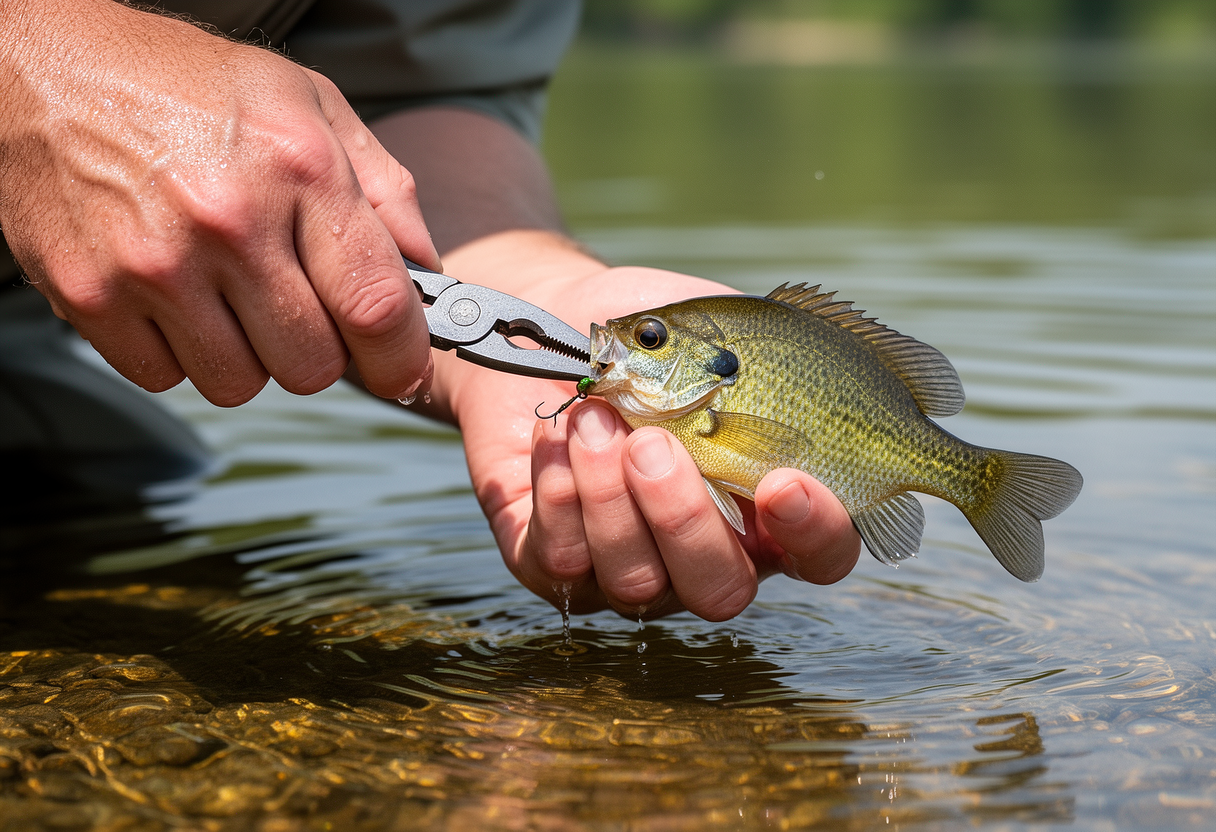
Wet your hands before handling. Dry hands remove the protective slime and scales, leaving the fish vulnerable to infection.
Handle sharp spines safely. Bluegill and crappie have sharp dorsal spines that can stick you. Smooth the spines down with your palm before gripping by running your hand from head to tail along the top of the fish.
Use long-nosed pliers or forceps for hook removal. Panfish have small, tough mouths, and hooks can go deep. Pliers make removal safer for both you and the fish.
If the hook is deeply swallowed: Cut the line as close to the hook as possible rather than forcing removal. The hook will rust out over time without harming the fish.
Crush barbs before you fish. Pinching the barb down with pliers before your first cast makes hook removal much easier and reduces injury to the fish.
Keep fish in water as much as possible. Air exposure should ideally be less than 60 seconds. Only remove the fish from water briefly for hook removal and a quick photo if you’d like.
Support the fish horizontally when holding it — never hold a panfish vertically by the jaw. Their mouths aren’t designed to support their body weight that way.
Revive before release. Hold the fish gently in the water, facing into any current, until it swims away on its own.
Check local regulations. Some waters have minimum size limits and bag limits that vary by state. For example, the New York DEC Big Panfish Initiative sets an 8-inch minimum for bluegill and pumpkinseed in certain waters. Always check the rules for your specific water body before keeping any fish.
Common Beginner Mistakes When Panfish Fishing
Here are the most frequent mistakes beginners make, in a quick problem → fix format. Addressing these will dramatically improve your success rate.
Using hooks that are too big: Beginners often reach for bass hooks (size 1/0 to 4/0). Panfish have very small mouths — the sweet spot is size #6 to #8.
Using bait that is too big: A whole nightcrawler is too much for a bluegill. Tear off a quarter-inch to half-inch piece. Hook crickets individually, not in bunches.
Fishing at the wrong depth: Beginners often cast out with bait sitting on the bottom while panfish are suspended near the surface. Always set the bobber so the bait is at the right depth — 1 to 3 feet for shallow spring panfish.
Not using a bobber: Bobbers are the most beginner-friendly way to fish for panfish. They suspend bait at the right depth and give you a visible bite indicator. Fishing without one makes it much harder to detect bites.
Using heavy bass gear: Heavy rods and thick line (10+ pound test) spook panfish and steal sensitivity. A 5- to 6-foot ultralight rod with 4- to 6-pound monofilament is the ideal setup.
Setting the hook too hard: Panfish have soft, paper-thin (crappie) or small (bluegill) mouths. A hard hookset tears right through. Use a gentle upward snap of the rod tip.
No split shot on the line: Without a small split shot, bait floats up to the surface instead of hanging naturally. A BB-size shot 6 to 12 inches above the hook improves casting and presentation.
Fishing at the wrong time: Beginners often head out at midday in July when fish are deep and inactive. Early morning or late evening, especially during spring spawn, produces dramatically more bites.
Giving up too quickly: If you know panfish are present, try different depths, different baits, and different spots before moving on.
Ready to Catch Your First Panfish? — Panfish Fishing for Beginners Starts Here
Panfish fishing is the perfect place to start your fishing journey. The basics are simple: use an ultralight spinning setup with 4- to 6-pound monofilament line, bait a size #6 or #8 Aberdeen hook with a small piece of earthworm, set a clip-on bobber at the right depth, and cast near structure. Fish during early morning or late evening in spring when panfish are in shallow water spawning.
Panfish are abundant, willing biters, and found in waters across North America. The odds are in your favor when you follow these basics. Every expert angler started with their first panfish.
To build on what you’ve learned here, check out our guide to Fishing Knots for Beginners to learn the knots you’ll need to tie your rigs, and our guide on how to Set the Hook and Fight Fish to refine your hook-setting and landing technique.
Remember to check local fishing regulations before your first trip, and most importantly — enjoy the experience. Panfish fishing for beginners is about getting outside, learning something new, and having fun at the water’s edge.