

You pull up to a weedline with two rods on the deck. One has a swim jig, one has a chatterbait. Both are cast-and-wind baits aimed at the same strip of grass, and both catch bass. So which one goes in the water first?
Most anglers answer that with habit — whatever they tied on last trip. It works, sort of. But it means you never learn why one bait outfished the other, and every stretch of grass that produced last week comes as a surprise when it goes quiet.
There’s a real decision behind it, and it comes down to three things you can read from the boat: how clear the water is, what the wind is doing, and how the grass is built. Get those three right and the bait choice mostly makes itself.
What Each Bait Actually Is
The two baits look similar in hand and behave nothing alike in the water. Before the decision rules, here’s the short version of what you’re holding.
The Swim Jig
A swim jig is a jig head with a weed guard, a skirt, and a soft-plastic trailer threaded onto the hook. No blade, no extra hardware, nothing hanging off the nose.
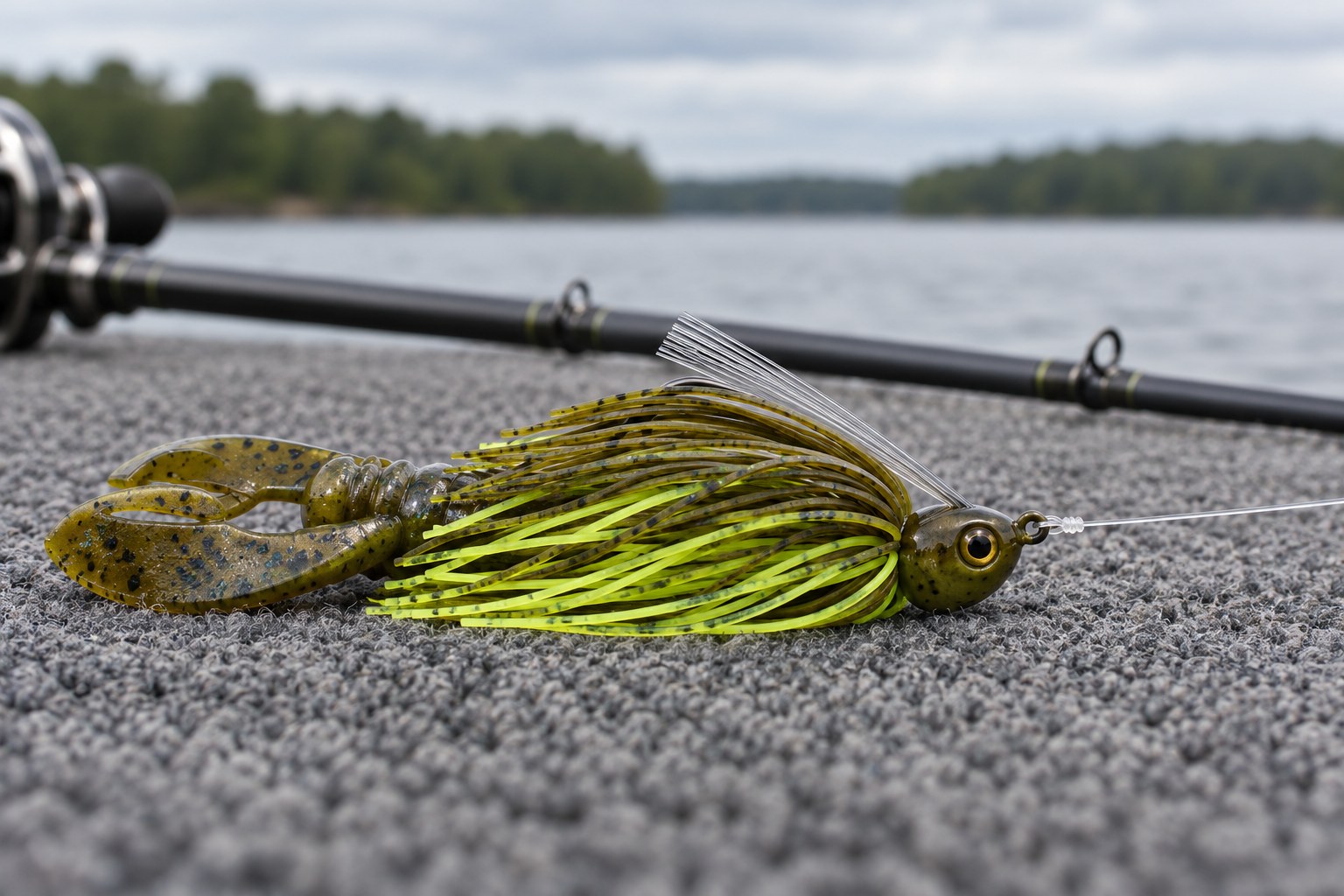
That matters more than it sounds. The only parts of a swim jig that can snag grass are the line tie and the hook point, and the weed guard — a fan of stiff fibers over the hook point — covers the second one. So the bait slides through cover instead of loading up on it.
In the water it reads as a bluegill or a shad moving through the grass. It’s a profile bait: no noise, no flash. It just looks like food, and it fishes clean enough that you can put it tight against stems and pad edges and still get it back.
The Chatterbait
A chatterbait — also called a bladed jig — is a jig with a metal blade attached at the nose. As you reel, the blade hunts side to side and vibrates, which is where the name comes from. Standard sizes run from about 1/4 ounce, through the 3/8 and 1/2 ounce workhorses, up to 3/4 ounce for deeper edges.
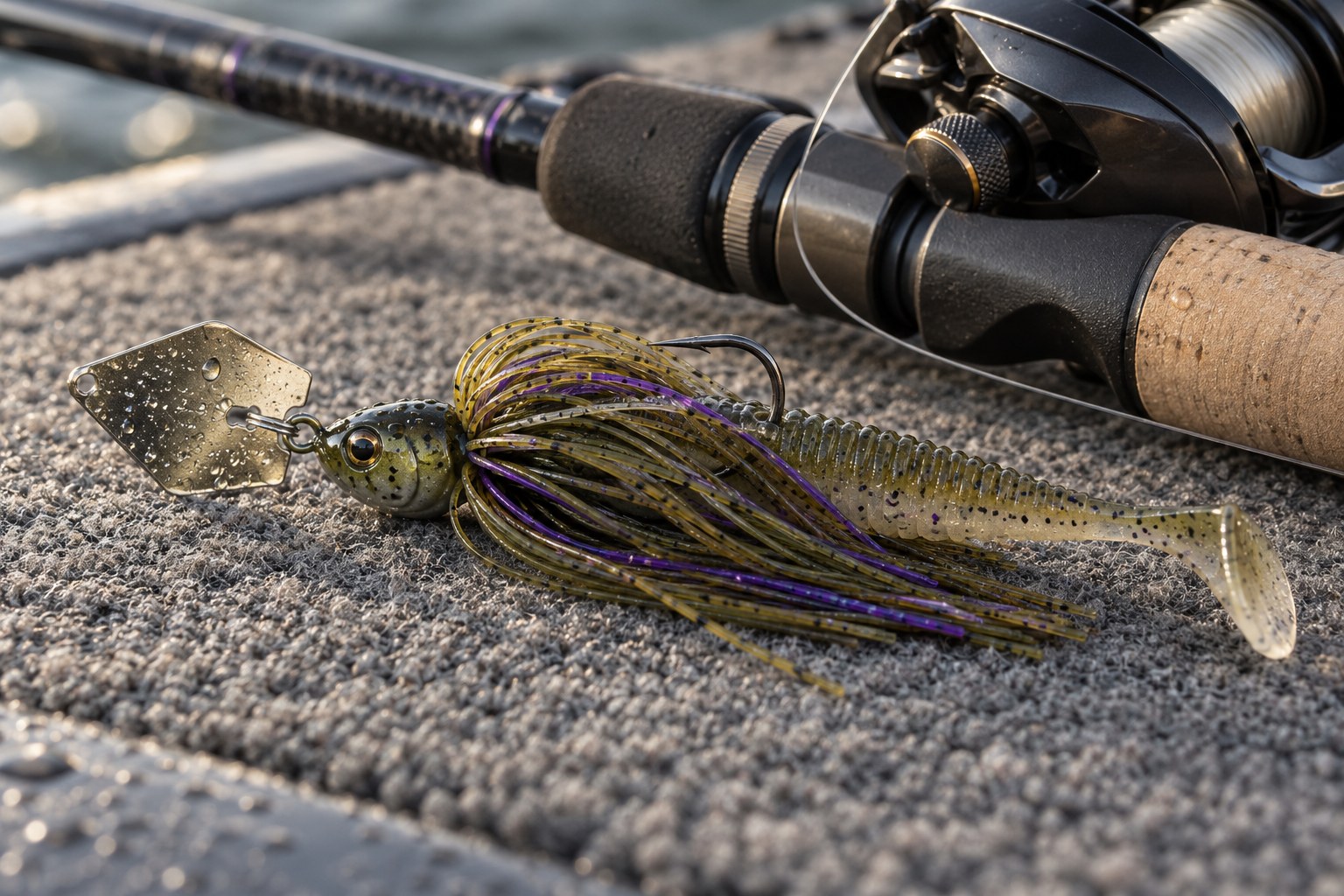
The blade is the whole point. It puts out vibration and flash that a bass feels through its lateral line — the pressure-sensing organ running down its side — before it ever sees the bait. That’s why a chatterbait draws fish from farther away than a swim jig does.
The trade-off is that blade. Every grass stalk you drag it past is a chance to foul. A quick snap of the rod tip usually frees it, because when you kill the vibration you can feel the difference, but you’ll spend real time cleaning it in thick cover.
The Real Difference: Vibration vs. Profile
Bassmaster Elite pro Brandon Palaniuk put it better than I can: the vibration of a bladed jig versus the swimming action of a jig “plays differently to their senses yet looks very similar.”
Two things follow from that, and they explain everything else below.
A chatterbait has a wide strike radius. It can pull a bass out of cover from several feet away. It also works in water where visibility is poor, because the fish aren’t relying on their eyes.
A swim jig has a tight strike radius. It has to be delivered close to a fish that’s already in a biting mood. What it gives up in reach, it makes up for in realism and in how cleanly it fishes through thick grass.
There’s one more difference that decides a lot of bites: the fall. Kill the retrieve on a swim jig and it pendulums down through a hole in the canopy at maybe a foot per second, and bass sitting under a mat will eat it on that drop. Kill the retrieve on a chatterbait and you’re reeling a dead piece of lead. It has no action without forward speed.
That’s the whole trade: reach and noise versus stealth and the fall.
Decision Rule #1: Water Clarity and Wind
Start here, because clarity flips the answer faster than anything else.
As a working rule, if you can’t see your bait about 18 inches down, the water is chatterbait water. If you can see it two and a half to three feet down, it’s swim jig water. Somewhere in between, check the wind.
These numbers are rules of thumb from anglers who fish grass constantly, not lab measurements. Treat them as a starting point and let the fish correct you.
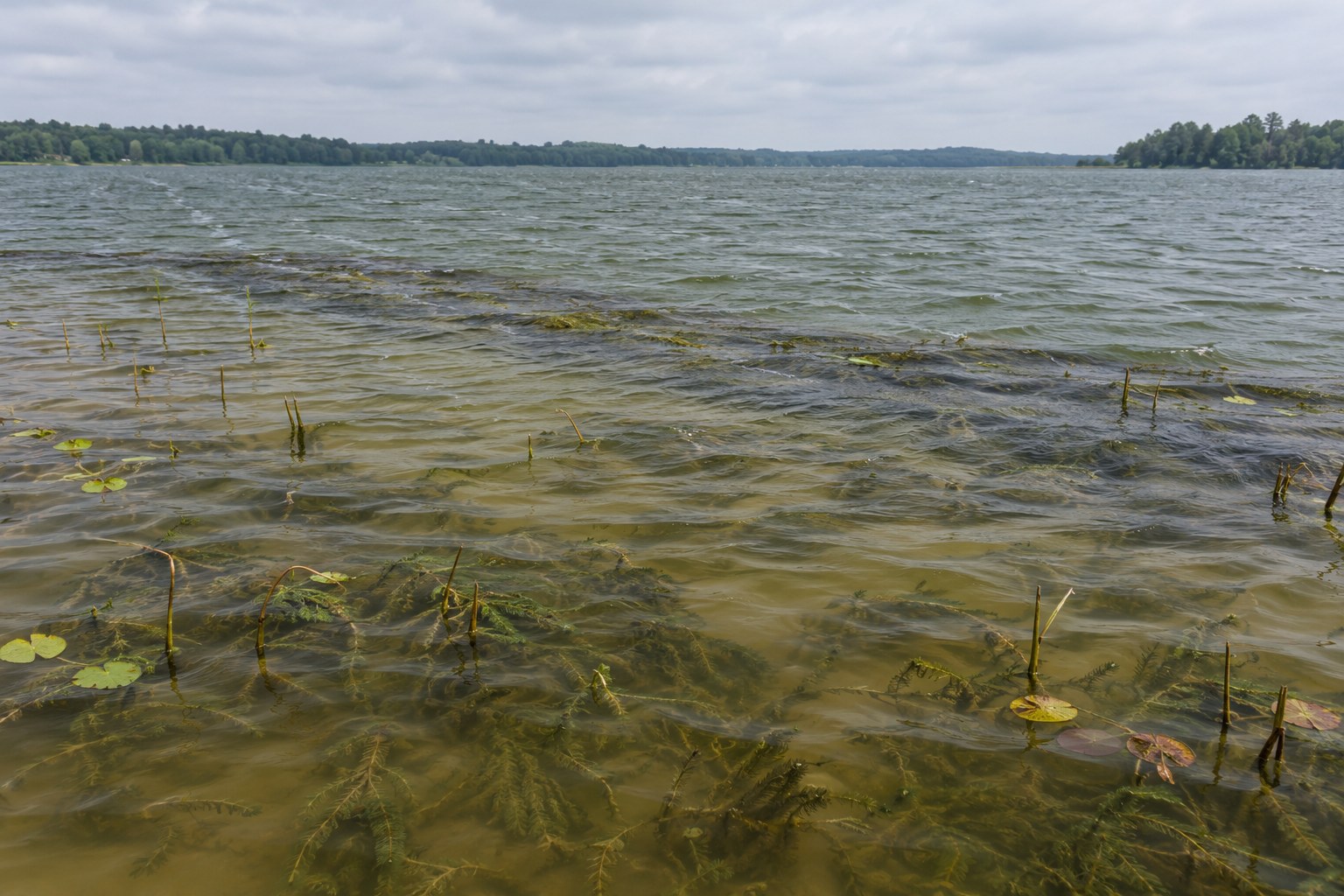
Why clarity changes the answer. In stained or muddy water, bass hunt mostly by feel. A vibrating blade is the loudest signal you can put in front of them short of a spinnerbait, so it wins. In clear water, that same blade is a neon sign. Bass get a long look at a bait with a piece of hardware on its face, and pressured fish in clear lakes tend to refuse it.
Now the wind. Chop on the surface does two things: it breaks up the light so bass feel safer in the shallows, and it masks the bait’s vibration. Wind also positions fish — it pushes baitfish into grass edges. Palaniuk leans on the bladed jig specifically when the surface is disturbed by wind.
Glassy, calm water is swim jig water. There’s no chop to hide behind, so a quieter bait gets eaten and a noisy one gets followed without commitment.
Decision Rule #2: Read the Grass
Grass density decides as much as clarity does, especially in summer when the beds have grown in.
Sparse to moderate grass, topping out a foot or two below the surface, with lanes through it: chatterbait. This is where the blade earns its keep. You want the bait ticking the tops of the stalks and ripping free — that sudden stop and restart is one of the best reaction triggers in bass fishing.
Matted, topped-out grass, or a thick canopy: swim jig. You’re fishing over and through it rather than into it. Cast past a mat, swim the jig across the top, and let it fall into the first hole you cross.
Vertical, stalky cover — pencil reeds, lily pad stems, water willow: swim jig, every time. The blade fouls on every vertical stem it touches.
The outside weed edge in four to six feet of water with a breeze: chatterbait. This is the classic setup — fish the edge, parallel to it, and cover water.
Isolated clumps and points sticking off a flat: both work. Palaniuk keys on exactly these — little points or isolated pieces of grass that stick out from the main bed, and ditches that come out of the grass. This is the highest-percentage water on most grass flats, so it’s worth fishing twice with two different baits.
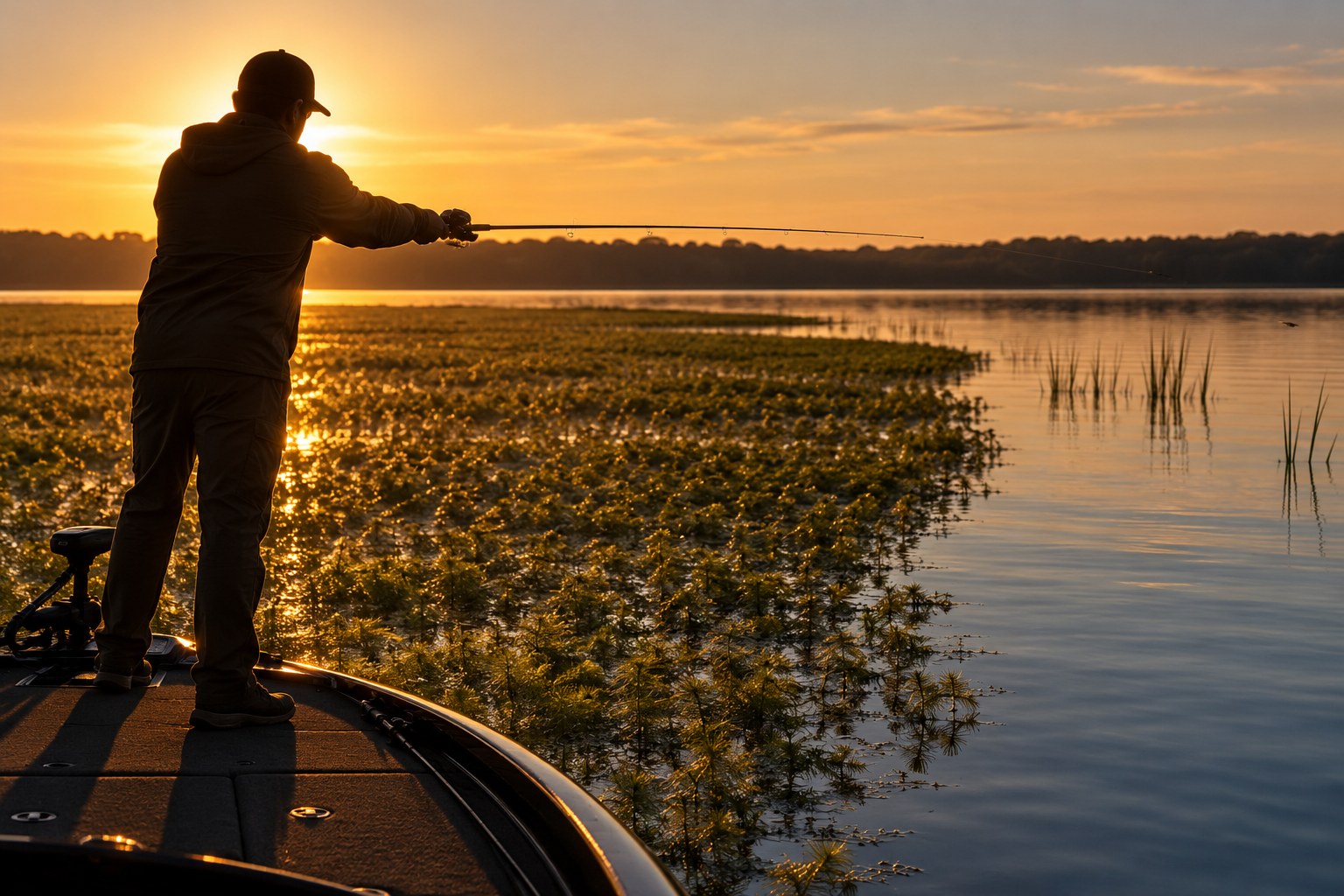
One habit that helps with both baits: cast parallel to the edge instead of out into open water. A bait running along the edge stays in the strike zone for the whole retrieve. A bait cast perpendicular to it crosses the zone in a second and a half.
Decision Rule #3: Fish Mood, Pressure, and Season
Some days the cover and the water say one thing and the fish say another. This is where you override the first two rules.
Aggressive fish, hunting, wind building, pressure falling ahead of a front: chatterbait. They’ll chase.
Pressured water — a tournament weekend, the third day of fishing the same stretch, or a bright bluebird sky after a front: swim jig. A quieter bait fish haven’t already looked at gets bit when a vibrating one gets followed.
Shad spawn at first light along grass edges: swim jig. The profile is the point. Palaniuk fished a swim jig for bass feeding on a morning shad spawn around shallow brush while a bladed jig had gone quiet.
Season: in the prespawn, either bait works in shallow grass — chatterbait when the wind is up, swim jig when it’s calm. Through summer, as mats form, the swim jig takes over the thick stuff and the chatterbait owns the outside edges. In fall, as grass dies back and thins out, the chatterbait becomes the better search bait again.
The One-Glance Decision Table
If you only remember one thing from this article, make it this:
| What you’re seeing | Bait | Why |
|---|---|---|
| Stained or muddy water | Chatterbait | Bass hunt by feel; the blade carries |
| Wind and chop on the surface | Chatterbait | Vibration is masked; fish move shallow |
| Sparse grass with lanes, 1-2 ft below the top | Chatterbait | Rip-free deflection bite |
| Outside weed edge, 4-6 ft, slight breeze | Chatterbait | Covers water, triggers reaction strikes |
| Clear water, 2.5-3 ft visibility | Swim Jig | Stealth beats hardware |
| Flat calm, bluebird sky | Swim Jig | Quiet bait gets eaten |
| Matted or topped-out grass | Swim Jig | Slides over and drops through holes |
| Reeds, pad stems, vertical stalks | Swim Jig | Blade fouls on every stem |
| Pressured water, third day of pressure | Swim Jig | Something the fish haven’t seen |
Setup: Same Rod, Different Line
The rod is nearly the same for both baits: a 7-foot to 7-foot-3-inch medium-heavy casting rod with a fast tip and a real backbone. You need the tip to cast and to let the bait swim, and you need the backbone to turn a bass out of grass. A mid-range reel in the 6.4:1 to 7.1:1 range is right for both — strong drag matters more than speed here.
The line is where the two setups split.
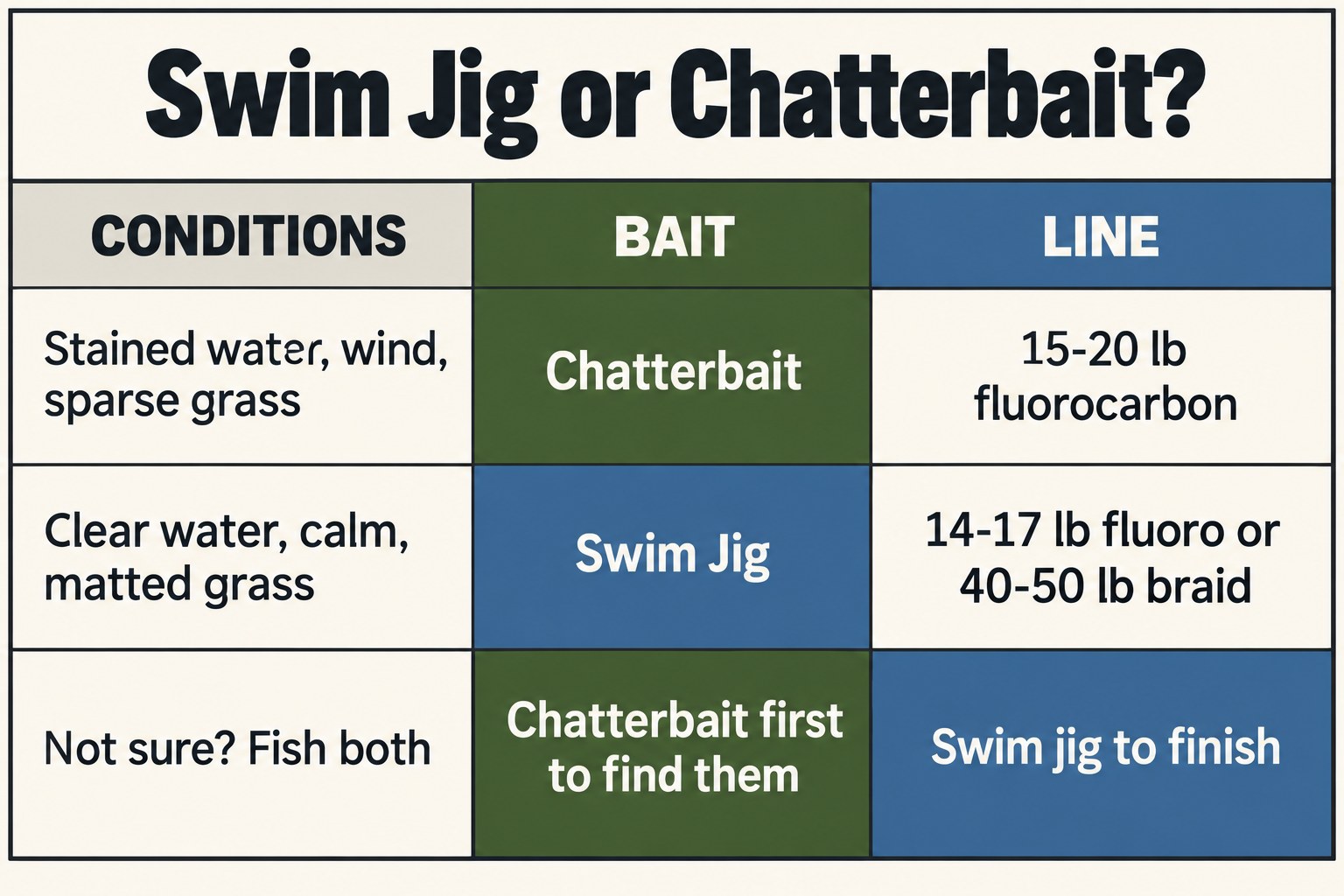
Chatterbait: 15 to 20 pound fluorocarbon. Fluorocarbon sinks slightly, which keeps the bait tracking down where you want it, and its stretch helps keep a fish pinned on a single big hook with a vibrating bait in its mouth.
Swim jig: 14 to 17 pound fluorocarbon in open water, 40 to 50 pound braid in heavy grass. Braid has no stretch, which lets you drive a heavy-gauge hook home and then cut the jig back out through the stems. Palaniuk runs 17 to 20 pound fluoro or 50 pound braid on his swim jig setup to keep the bait riding high in the column.
Trailers follow water clarity, not color preference. Craw-style trailers create lift and displacement, so they’re the call in stained or shallow water where bass are feeling more than seeing. Paddle-tail and boot-tail swimbaits give a tighter baitfish kick, so they’re the call in clear water. Go small — 3 inch — when bass are on shad and small bluegill, and step up to 4 inch when they’re eating bigger forage.
One rigging detail that costs people fish: the trailer has to be threaded dead straight and seated against the keeper. Even slightly off-center and the jig spins instead of tracking, and nothing about that retrieve looks like food. A drop of super glue on the keeper fixes slippage.
How to Fish Each One
The swim jig is easiest to start with a straight, steady wind — fast enough to keep the jig just above the grass tops. From there:
- Slow roll: drop the speed and let the jig sink between sweeps. This is the pressured-fish version.
- Alabama shake: short, rhythmic rod-tip pulses so the trailer flares and darts while the bait stays in the strike zone.
- Hop and drop: fish it almost like a flipping jig around isolated cover, letting it fall on a semi-slack line.
- Skipping: a low sidearm cast under docks, then a straight wind on the way out.
Pause when you cross a hole in the grass. The fall is where a lot of swim jig bites happen.
The chatterbait is not a steady reel. It’s reel, snap, reel, pause, snap — you’re hunting for grass contact every cast. If the bait never touches grass, it’s running too high and you’re leaving the best part of the retrieve unused. In deeper water, pump it off the bottom and reel it steady.
For more on working the blade bait family, the chatterbait vs spinnerbait comparison covers when to switch between those two.
Where Each One Falls Short
The swim jig is a poor search bait. It doesn’t pull fish from a distance, so on a big flat you can swim it for twenty minutes without a bite and never know whether the fish aren’t there or just weren’t close enough. If you’re looking for fish, the chatterbait finds them faster.
The chatterbait fouls in matted grass and pushes fish in clear water. It also has one exposed hook point and no weed guard, which makes it the wrong tool in stalky vertical cover.
Neither bait replaces flipping or pitching into heavy slop. Both are moving baits — if the fish are buried in a mat and not chasing, you need a different presentation entirely. If you’re newer to grass fishing in general, our guide to fishing in weeds and grass covers the presentations that go with these two, and braid size for frogging and heavy cover explains how line diameter changes what you can pull a fish through.
The Two-Rod Rule
Don’t pick one bait and commit to it for the day. Rig both and use them as a pair.
Throw the chatterbait first. It covers water, it finds fish, and it tells you where the active ones are. When you get bit — or when you find a stretch of edge that just looks right — pick up the swim jig and fish that same water slowly and quietly.
The chatterbait finds them. The swim jig finishes them. That one-two punch is worth more than getting the “right” bait right on the first cast.