

You already know how to fish a jig. Pitch it into a laydown, shake it once, feel the thump. That’s a flipping jig doing its job.
A football jig is a different tool entirely. It’s built for open, hard-bottom structure — the kind of water you cast across instead of pitch into — and it fails badly when you fish it like the jig you’re used to. Most anglers who “can’t catch anything on a football jig” are fishing it in grass, hopping it off the bottom, and setting the hook like they’re still in ten feet of water.
The fix isn’t a new technique so much as a new mindset: this bait is a bottom-survey tool. You drag it, you feel it, and the structure tells you where to slow down.
Why the Football Head Is a Different Tool
The name describes the shape. Instead of the bullet or round head on a flipping jig, a football jig has a wide, rounded, horizontally stretched head.
That width is the whole point. When a standard jig meets a rock pile, the narrow nose can slide into a crack and wedge. The football head is too broad to drop into small crevices, so it rides up and over the rock instead. When it meets something it can’t climb, it usually snags on the surface of the obstruction rather than deep inside it — which means a shake of the rod tip often pops it free.
The shape also keeps the hook riding point-up. A round head tends to flop onto its side when it lands, laying the hook flat on the bottom where it drags into every piece of stray cover. The football head resists that roll, so the hook and trailer stay in a position to convert a bite.
Then there’s the pause. When you stop pulling, the nose of the head dives and the hook and trailer stand up behind it, claws or tail in the air. Pull again and the line tie lifts the head, letting the bait glide tight along the bottom. That drag-pause-drag rhythm mimics a crawfish moving across rock, and the moment of the stand-up is when a lot of fish commit.
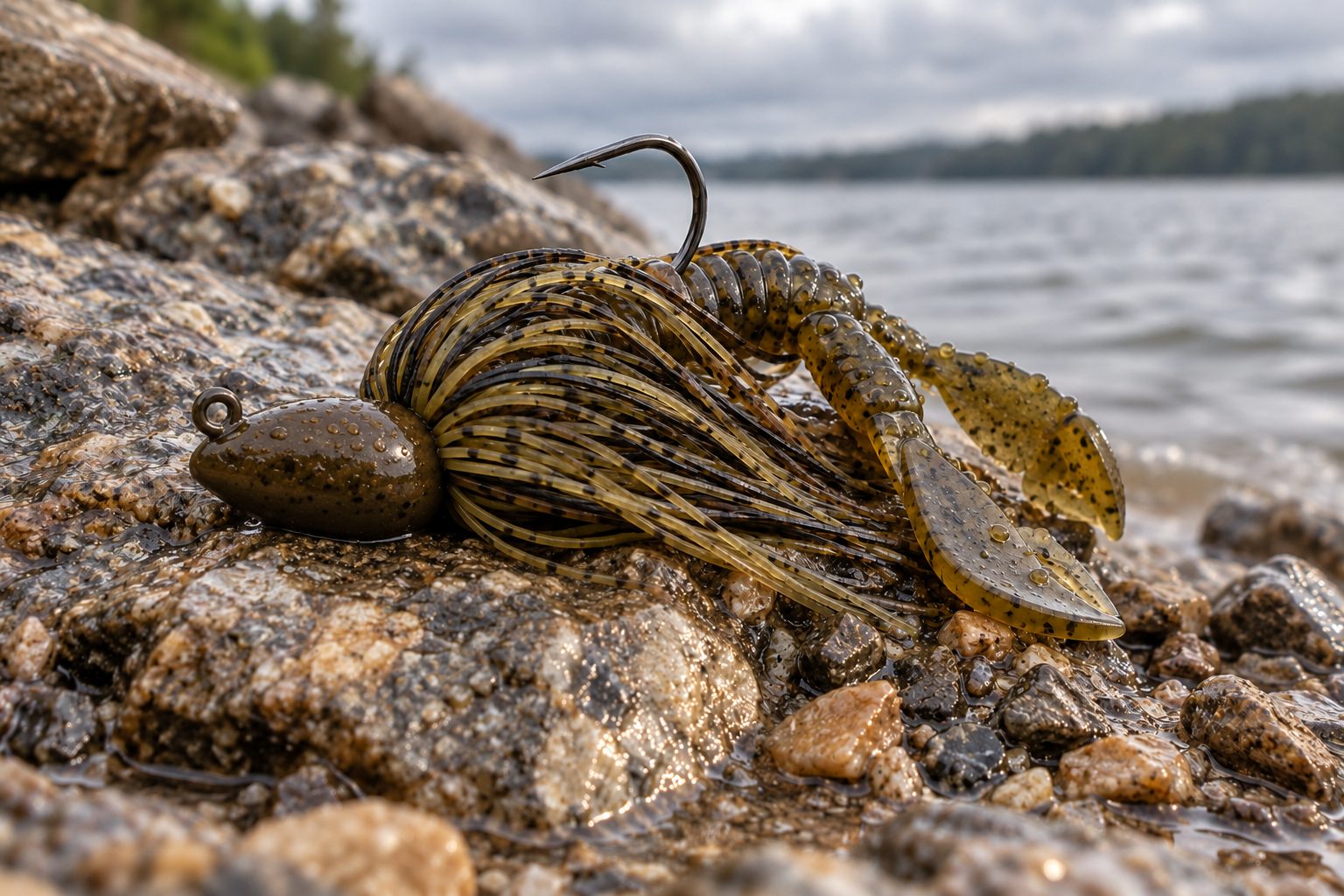
One honest note: “snag-resistant” is not “snag-proof.” You will still get hung up. The head shape just gives you a much better chance of getting it back, and it keeps working in places a round head can’t.
Where a Football Jig Wins: Points, Ledges, Shell Beds, Rock
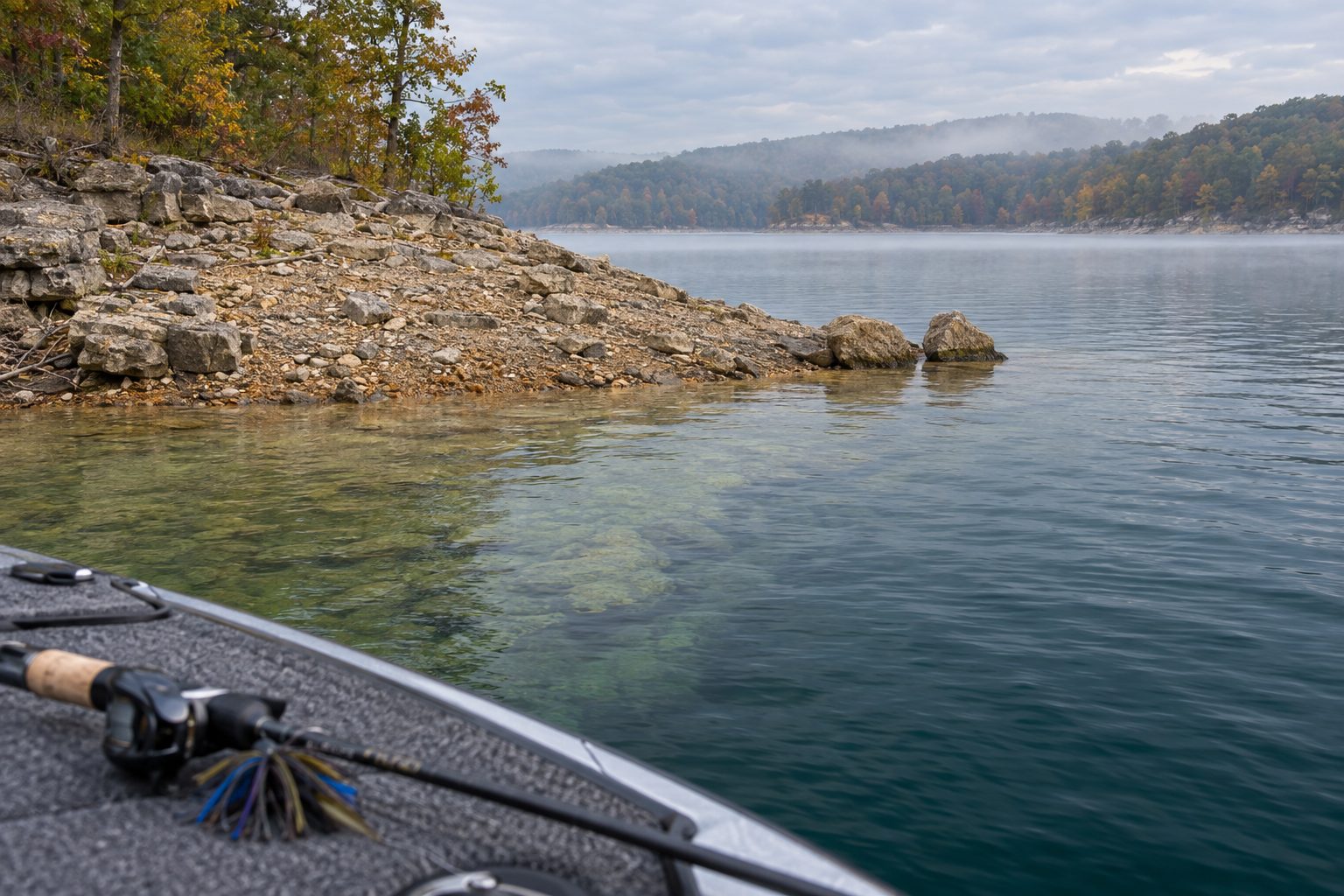
The common thread in every good football jig spot is hard bottom with crawfish on it. Find the rock, and you’ve usually found the fish.
- Main-lake and secondary points. The classic. Rock or gravel on a point that drops into deeper water gives bass a feeding lane with depth nearby.
- Offshore humps and ledges. Structure that tops out in roughly 8 to 15 feet and falls off into deeper water concentrates fish, especially on the edge where the hard bottom breaks.
- Channel swings. Where a creek channel swings against a bank or bends along a hard edge, current positions crawfish and bait.
- Rock-to-gravel transitions. Mixed bottom is better than uniform bottom. The seam between chunk rock and pea gravel is a natural ambush line.
- Shell beds, bluff walls, and riprap. Shell is hard, holds crawfish, and gives the head something to roll across.
Depth-wise, think 8 to 25 feet as the working range, with the shallower end valid when wind pushes water across a rocky point. If you’re on a smallmouth lake, rock and current go together — our guide to smallmouth tactics in current and rocks covers how fish set up on the same structure you’re dragging a jig across.
The quickest way to narrow this list is to understand what crawfish do. In fall especially, they get bigger and more active around rock before winter, and bass follow them. If you see crawfish in reds, browns, and blacks, that’s your color palette.
Where It Loses: Grass, Thick Wood, and Dense Cover
This is where most football jigs spend the day snagged.
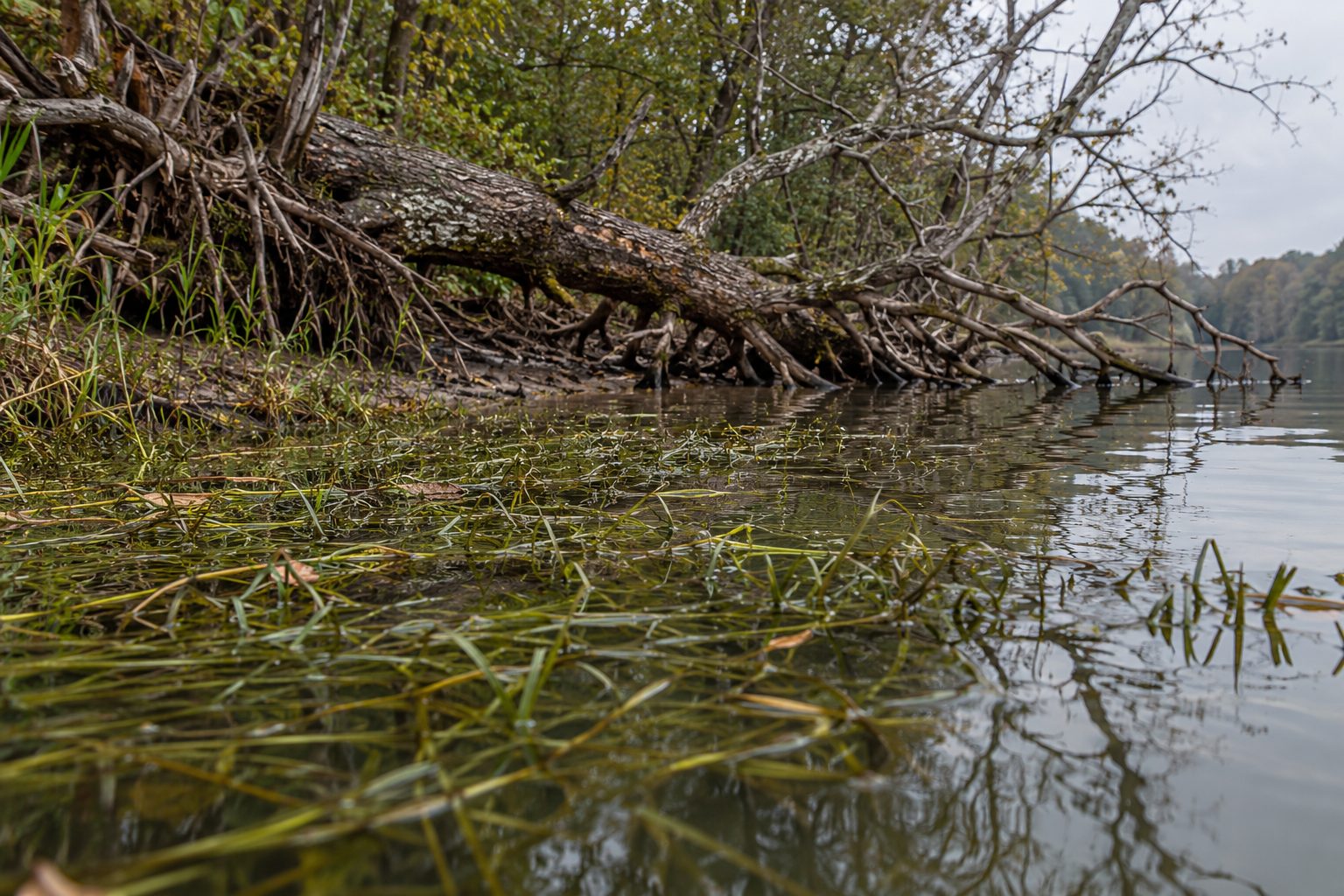
A wide head fouls in vegetation. The broad shoulders that save you on rock act like a shovel in grass — the bait loads up, stops rolling, and comes back wearing salad. Laydowns, stumps, and standing timber are only slightly better. The head can climb over a limb, but it can’t thread through a brush pile the way a slim, streamlined flipping jig can. Every cast in heavy wood is a coin flip, and the wide head is why.
If you’re fishing flooded brush, punching matted grass, or working a stump field, put the football jig down and pick up an Arkie-style flipping jig or a Texas rig. Those are built to penetrate. Also worth knowing: some pros have moved away from football heads altogether for open-bottom work, preferring structure jigs with a wire loop between head and hook, which keep the bottom disturbance of a football head but come through cover better. That’s not a knock on the football jig — it’s a reminder that “hard bottom, open water” is the assignment it’s best at.
You’ll know within a few casts if you’re in the wrong cover. If every drag ends with the bait stuck and every pop-off brings back grass, move.
Reading the Bottom Through the Line
Here’s the skill that separates anglers who catch fish on a football jig from anglers who just cast one.
Because you’re dragging a heavy head on low-stretch line, the bottom talks to you. With fluorocarbon and a half-ounce jig, you can usually tell what you’re crawling over within the first ten feet.
Four feels to learn:
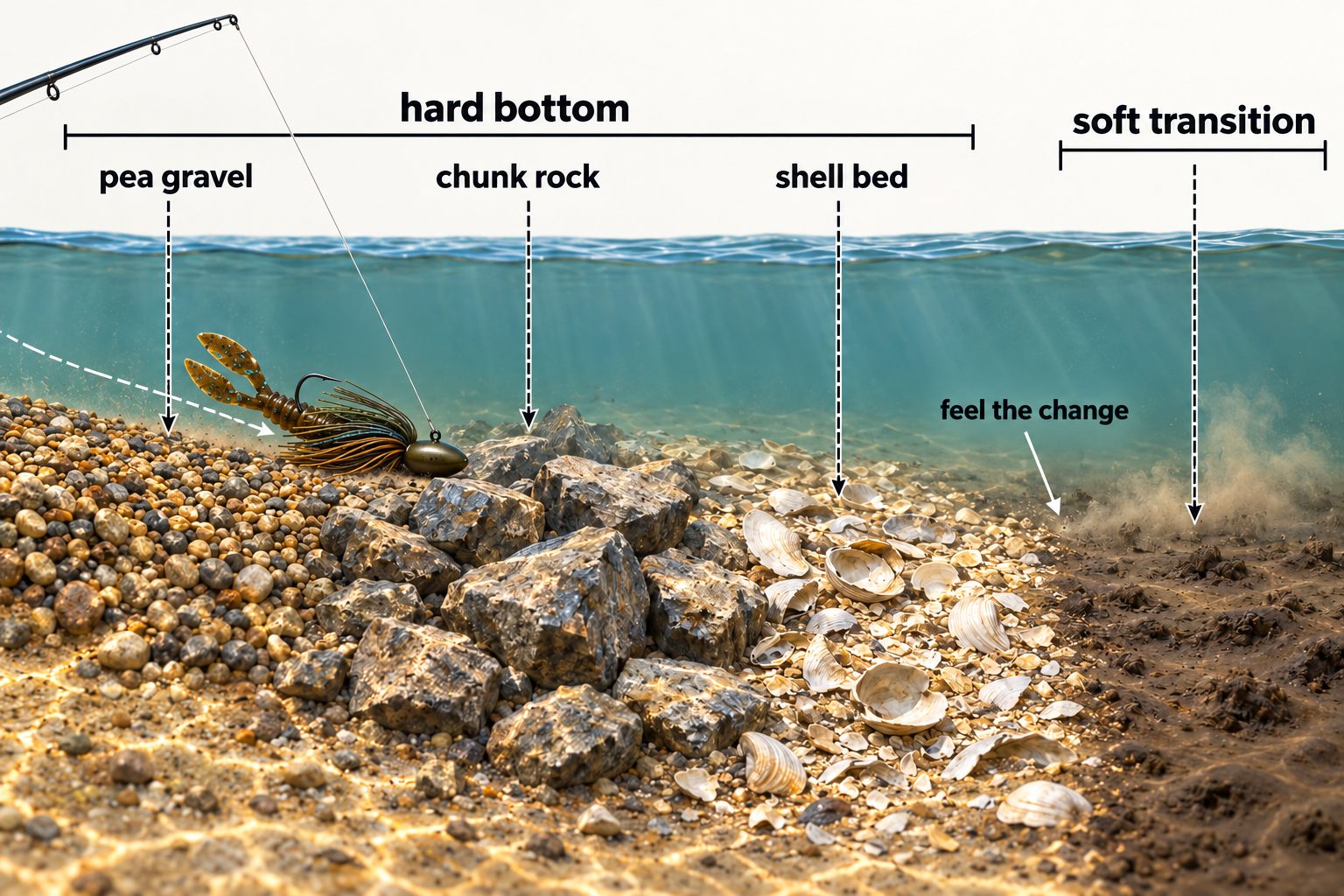
- Pea gravel — a light, continuous tick, almost like fine static coming up the line. The jig rolls easily and your hand stays quiet.
- Chunk rock — a hard knock, then the head climbs and drops over the edge. You feel the roll, not a stop. Expect the jig to bump and deflect rather than hang.
- Shell — a dry, gritty rasp, sharper and lighter than gravel, with small crunches. Shell beds often sit on top of deeper structure.
- Soft bottom — mud and silt swallow the signal. The jig sinks in and stops rolling, and you lose most of the feedback. That’s your cue that this stretch isn’t holding crawfish.
The most important reading isn’t any single bottom type — it’s the change between two of them, which is where fish often sit. When the rasp of shell gives way to the dead feel of mud, or chunk rock transitions to gravel, slow down and work that seam like it’s the only water in the lake. A bass that just ate is often holding right on that line. The old tournament rule of thumb puts it well: when you feel something different, that’s usually a fish.
The Drag: Cadence, Jig Weight, and When to Stroke
The single most common football jig mistake is reeling instead of dragging. Reeling lifts the bait off the bottom, and once it’s off the bottom it’s out of the strike zone and fishing a completely different presentation than the one this head was designed for.
Here’s a cadence that works:
- Cast, and let the jig hit bottom. Engage the reel and take up slack until you feel the weight of the head load against the rod.
- Hold the rod low — around the 7 to 11 o’clock range depending on your preference — and keep the line out to the side rather than straight in front of you.
- Move the jig 6 to 12 inches with the rod tip, not the reel handle.
- Stop. Let it sit for one to three seconds. This is where the trailer stands up.
- Repeat all the way back to the boat.
When the jig hangs on a rock, don’t rush to rip it free. That hang is a high-percentage moment — a bass sitting nearby sees a bait struggling against structure. Give the rod two or three light shakes to knock the jig against the rock before you continue. The pop-off itself often triggers the strike, so keep your hand ready.
Weight selection follows the conditions:
- 3/8 to 1/2 ounce for shallow rock, calm water, cold or heavily pressured fish, and anytime you want the slowest possible fall.
- 5/8 to 3/4 ounce as the everyday middle ground for the 10-to-20-foot range and mild wind.
- 3/4 to 1 ounce for deep water, current, and wind, where you need the bait to reach bottom fast and stay in contact. Heavier also gives a sharper fall that draws reaction bites from aggressive fish.
The other retrieve to have in your pocket is the stroke. When bass are active, lift the rod sharply now and then so the jig jumps off bottom and falls back on a slack line. It’s a reaction presentation layered on top of the drag, and it works best in warm water when fish are willing to chase.
Bite Detection and the Sweep Hookset
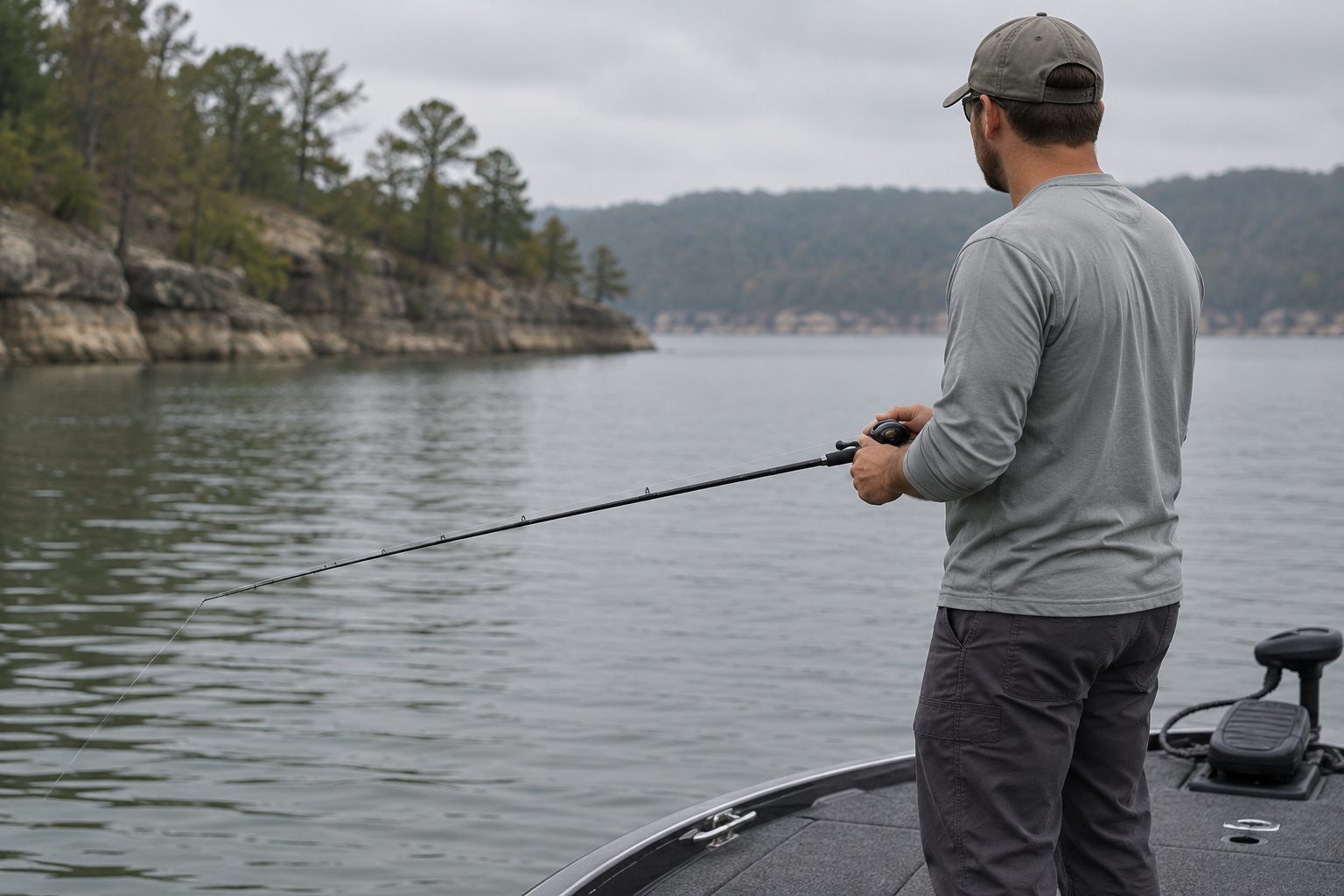
Long-cast bottom fishing produces some of the easiest bites to miss in bass fishing. A bass eating a football jig on a 50-foot cast often feels like almost nothing.
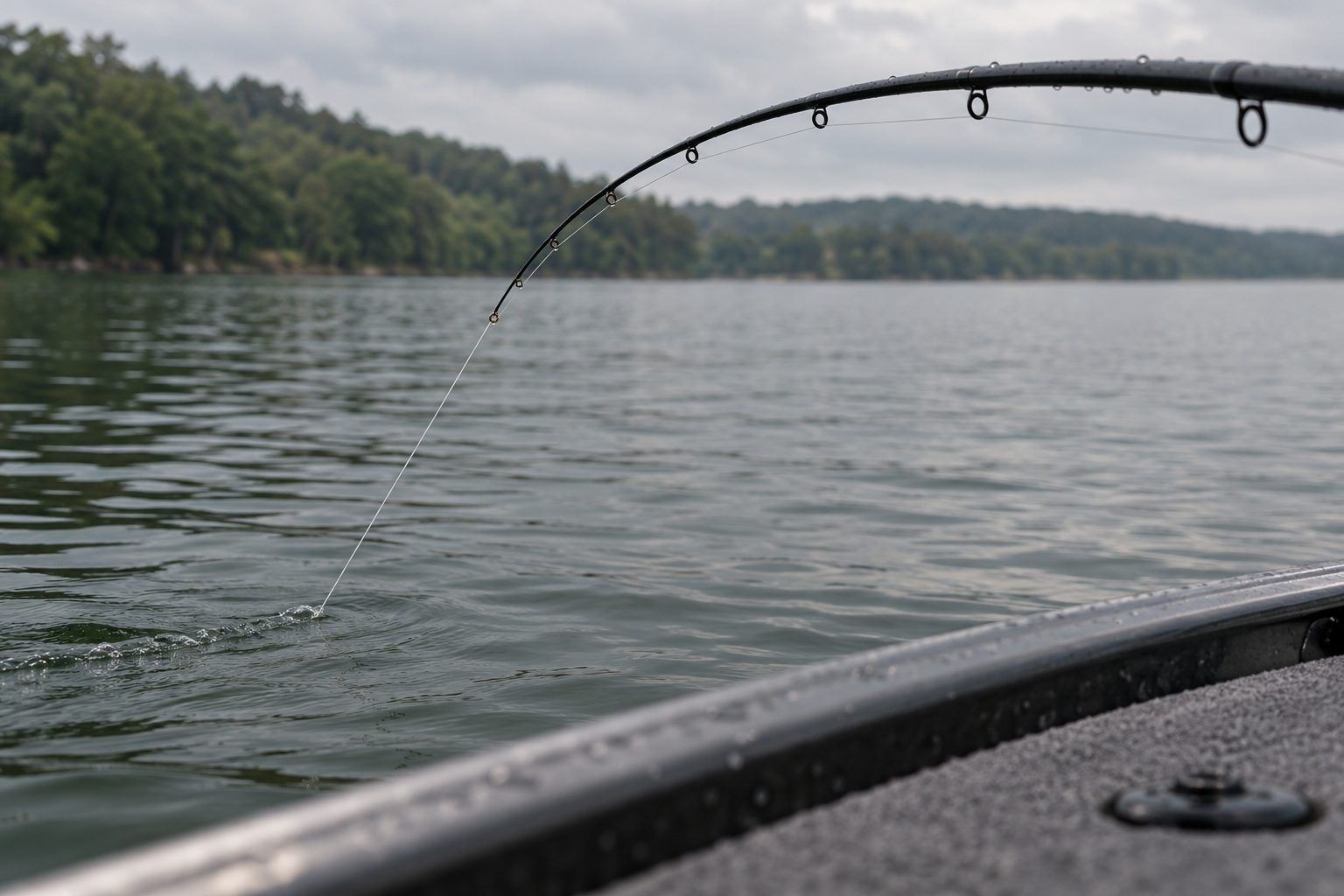
Watch for three things: a mushy heaviness where you’d expect the jig to move freely, a sudden jump in the line, or the jig simply stopping in a way that doesn’t match the bottom under it. Bass frequently inhale the bait and sit still, which is why the tick-tick-thump you’d feel on a flipping jig never shows up.
When you feel it, reel down until you’re sure the fish is there and the line is tight, then sweep the rod hard and long to the side. This is not a snapping, wrist-flick hookset. On a short line, a snap works. On a long cast, it just pulls the bait out of the fish’s mouth. The sweep drives the hook and loads the rod at the same time, and it’s the reason a long rod matters. Once it’s pinned, keep the rod loaded all the way to the boat — our hookset and fighting guide covers the follow-through in detail.
Two pieces of gear make long-cast hooksets realistic. First, a high-speed casting reel — roughly 7:1 or faster, though some experienced anglers fish 6.3:1 — because you have a lot of slack to take up before you can move the hook. Second, drag set so line can slip on a hard run but nothing gives on the hookset.
One more trade-off worth understanding: the farther you cast, the less leverage you have on the hookset. Some anglers prefer long pitches over maximum-distance casts for exactly that reason. Cast far when you need coverage, but on a pure target where you know the fish is sitting, getting closer is often the better play.
Tackle That Makes Long-Cast Dragging Work
You don’t need expensive gear. You need gear that matches the job, which is making long casts and keeping contact with the bottom.
Rod. A 7-foot to 7-foot-6-inch casting rod in medium-heavy to heavy power with a fast taper. Power matters because jig hooks are heavy-gauge and need real pressure to penetrate; length matters because it adds casting distance and hook-setting leverage at the end of a long cast.
Reel. A casting reel with plenty of line capacity — a 100 to 200 size — and a fast gear ratio. Football jigs are fished in open water where long casts are the norm, so capacity matters when you’re running heavier line.
Line. Fluorocarbon, 12 to 20 pounds, with 15 as the sensible default. Fluorocarbon sinks, which helps the jig track the bottom instead of bowing, and its low stretch is what lets you feel gravel and shell. Heavier line resists abrasion on rock; thinner line reaches bottom faster. If you’re still deciding what line type suits your fishing overall, our line comparison guide breaks down the trade-offs.
Trailer. Match trailer action to water temperature. Warm water calls for more movement — twin-tail grubs, craws with big flapping appendages. Cold water calls for subtle: chunks and beaver-style baits that barely move. Trim the skirt so it doesn’t hide the trailer’s action, and if you’re missing hookups in sparse cover, thin the weedguard fibers rather than cutting them off entirely.
Colors. Green pumpkin, brown, and black cover most crawfish situations. Go black and blue or another high-contrast pattern in stained water, and stay natural in clear. In fall, crawfish-imitating reds and browns earn their spot.
Finesse options. Football jigs aren’t only big. Smaller, lighter versions with compact trailers work pressure bites and clear, calm water when fish won’t commit to a full-size bait.
The Fall Play: Putting It Together
Fall is football jig season for a simple reason: crawfish are active and growing, and bass feed along hard structure before winter. If you’ve been meaning to learn this bait, now is the time to commit a few hours to it.
Here’s a first-trip plan:
- Pick structure, not shoreline. Find a rocky point, gravel flat, or shell bed that falls from shallow rock into deeper water. A map or a few minutes with your electronics will get you there.
- Locate the hard-to-soft transition. Drag a heavier jig through the area first. You’re listening for where the rock and gravel give way to mud. That seam is your target.
- Position upwind and cast long. Set up so the wind helps you and your casts land across the transition, not straight at your boat.
- Drag slow, and pause longer than feels right. In cold water, a three-count pause is normal.
- Adjust before you move. If nothing happens, go lighter and slower before you go to a different spot. If fish are active, stroke the jig off the bottom or step up to a heavier head for a faster fall.
The honest limit of the technique is worth restating: a football jig is a hard-bottom tool. In grass, wood, and muck, something else will out-fish it. But when the bottom is rock and gravel and the bite is subtle, dragging a football head is one of the most reliable ways in bass fishing to find the fish that are still eating.