
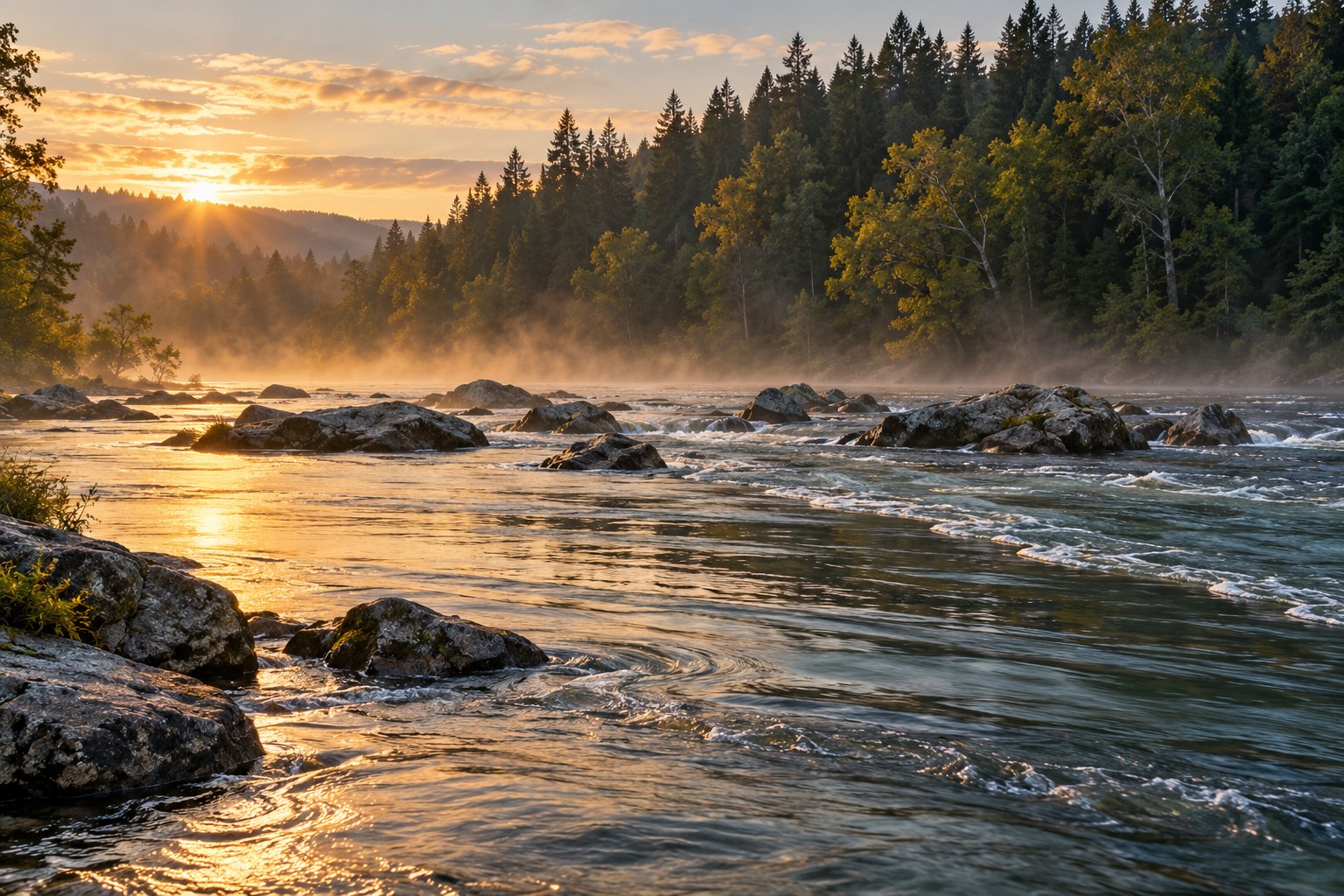
You can cast every rock you can see in a river and go home skunked. Then someone else walks the same water, makes six casts, and lands three smallmouth. The difference isn’t luck or a magic lure — it’s that the second angler isn’t looking for rocks. They’re looking for where the water slows down.
If you mostly fish calm water for largemouth, smallmouth can feel like a different species with different rules. They usually live in a different kind of water, too: rivers, clear rocky lakes, and reservoir points where current or depth does the organizing. This guide covers how to read that water — the seams, the eddies, the rock edges — and match your presentation to each lie.
Stop Looking for Rocks — Look for Where the Water Slows
Here’s the physics that drives every river smallmouth decision: holding in fast current costs a fish real energy. A smallmouth will rarely sit in the main flow all day, even though that’s where the food moves. Instead, it parks in the slowest water it can find right next to the fastest, faces upstream, and lets the river deliver dinner within a short dart’s reach.
That single fact flips how you read water. The question is no longer “where is the rock?” It’s “where does the water slow down because of the rock?” Current itself becomes structure. A stretch of river with no visible rocks can still hold fish along a seam where two speeds of water meet — and a perfect-looking boulder with the wrong hydraulics can be empty.
This is why river smallmouth behave so differently from their lake cousins. On still water, structure is the map: point, hump, rock pile. On moving water, hydraulics are the map, and structure only matters because of how it shapes the flow. If you’ve read our smallmouth bass fishing guide for beginners, think of this as the level-up chapter where the species finally makes sense on moving water.
How to Read a River: Seams, Eddies, and Tail-outs
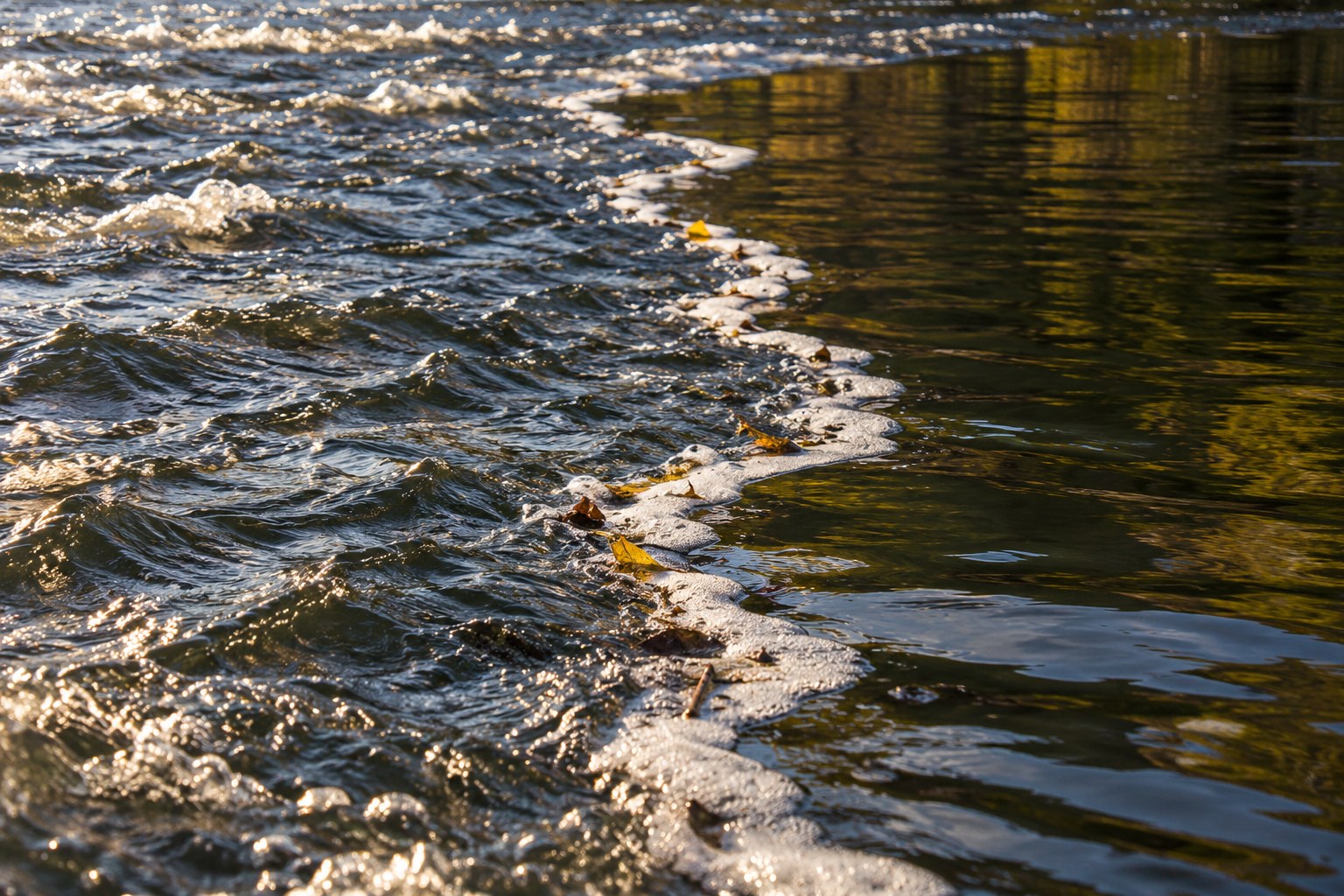
A current seam is the visible line where fast water meets slow water. On the surface it reads as a crease — often with a thin foam line collecting leaves and bubbles along it. Seams form behind rocks, along bank edges, below gravel bars, and wherever channels meet. Fish sit right on the edge, darting into the fast lane to grab drifting food and dropping back into the slack.
The Boulder Pattern
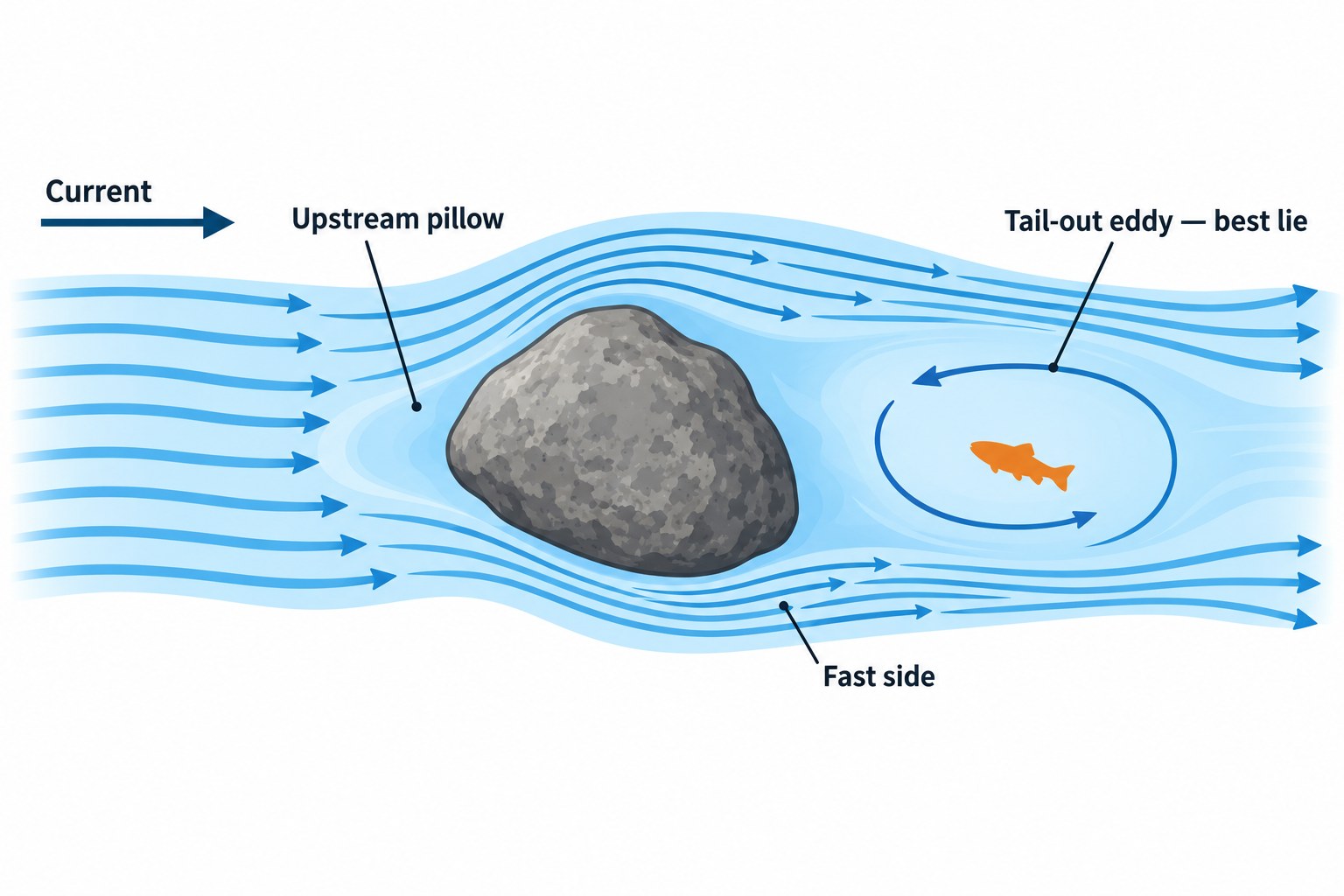
One mid-river boulder teaches the whole system. Watch how the surface behaves around it:
- A small pillow of calm, slightly piled-up water at the upstream nose.
- Faster ribbons of water wrapping around each side.
- A longer stretch of calm, swirling water trailing behind the rock — the tail-out eddy.
The tail-out eddy is usually the best of the three lies, because the current funnels drifting food straight into it. Fish both the pocket immediately behind the rock and the wider seam 3–8 feet back. Big boulders in fast water often stack fish at several distances behind them, so work the near seam before casting past it.
Riffles, Runs, and Pools
Every river is built from three repeating sections, and smallmouth use each differently:
- Riffles — shallow, fast, rocky water. Smallmouth tend to hold along the downstream edge where the water deepens and slows, and over gravel bars in low light.
- Runs — steady, moderate flow. Look for subtle depth changes: a trough even 18 inches deeper than the surrounding bottom is a current break at the bottom level, even when the surface shows nothing.
- Pools — deep, slow water below riffles. The head of the pool, where fast water enters, is the active feeding zone; the middle of a big pool is often just where fish rest.
One field trick for learning new water: fish it on a windy day. The breeze roughs up the surface unevenly, and the smooth patches show you where the current is slower — a live map of holding water.
The 90% Rule: Which Side of Structure Holds Biters
Once you find structure in current, which side do you fish? Pro river guide Brandon Levert frames it as a 90-percent rule: most active smallmouth hold on the current-facing side of reefs, bars, points, and rock piles, while resting or inactive fish sit on the backside in the slack.
That gives you a fast decision tree:
- Fish the up-current face with reaction baits — spinnerbaits, jerkbaits, crankbaits — to target aggressive fish on feeding duty.
- Fish the backside and seams with finesse — drop shots, tubes drifted slowly — for neutral or inactive fish.
And like any wild-creature rule, it has wildcards. A school of baitfish can pull smallmouth off structure entirely and suspend them high in the water column. Wind can push feeding fish to the wind-facing side of a rock instead of the current-facing side. If your sonar shows marks on the downstream side of a hump, you’re likely looking at inactive fish — reach for the drop shot, not the jerkbait.
Five Holding Lies Worth Stopping For
Some spots repeat on every river you’ll ever fish. Learn these five and you can read new water fast:
- Current breaks behind boulders. The classic. Near seam first, then the wider seam behind it.
- Undercut banks and root systems. Eroded banks with roots in the water are cover and current break at once. Fish parallel and tight to the bank.
- Pool tail-outs. Where a pool shallows and accelerates into the next riffle, current compresses and pushes baitfish into a predictable lane. Prime low-light feeding water — and don’t wade through it before you fish it.
- Deep slots in runs. Not all holding water is visible. A subtle trough in a run holds fish even when the surface shows nothing. A few casts with a tube or drop shot will find them.
- Downstream tip of gravel bars. Where a bar drops off into deeper water and current accelerates around the point — often the single best lie in a long stretch of river. Fish the break by day; move onto the bar itself in low light.
One flip to remember: light and food change the rules. On bright, low, clear afternoons, smallmouth tuck into the deepest cushion of slack nearby. In low light, or when the water is oxygen-rich and carrying food, they push into the fast tongue itself to feed.
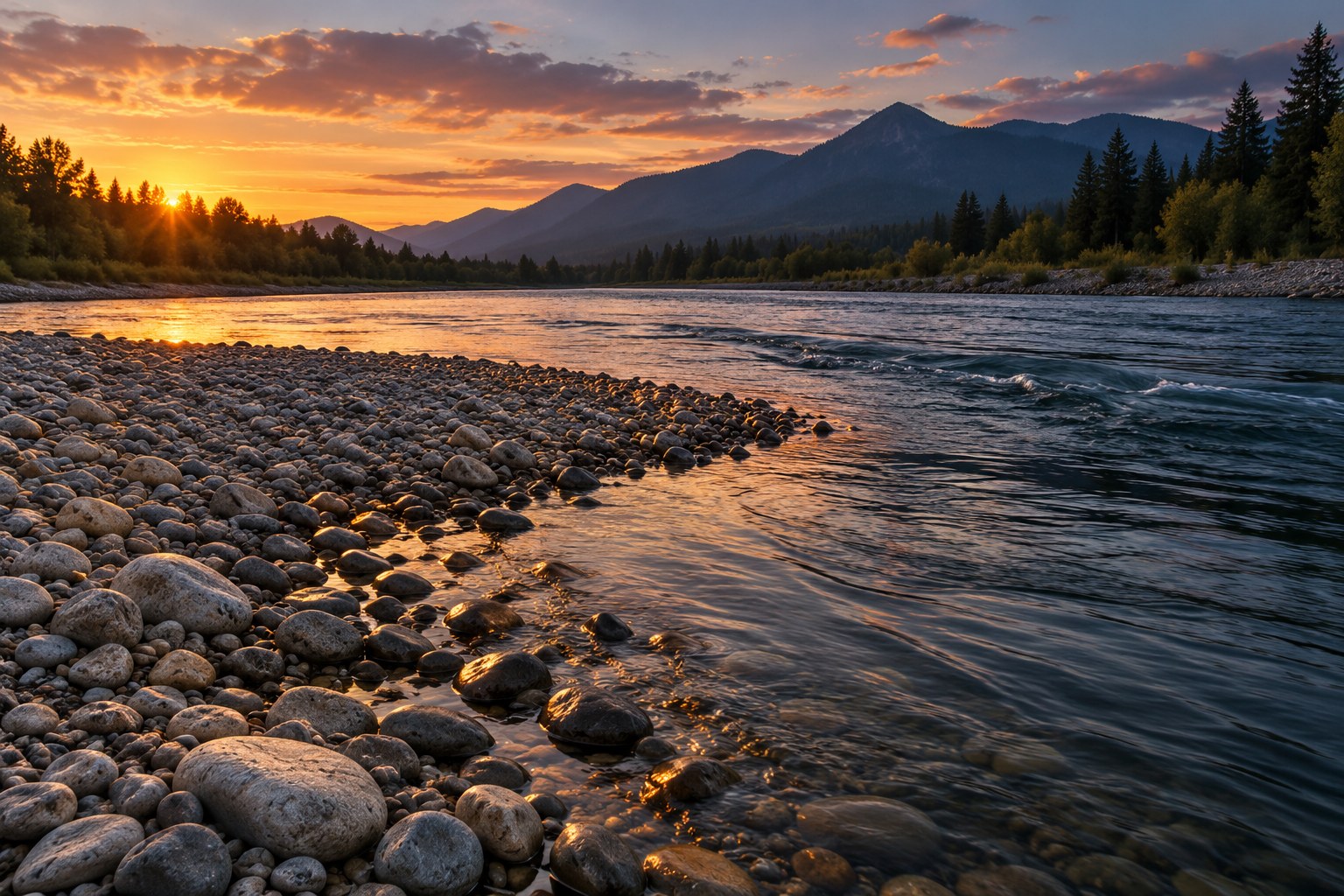
Rocks in Still Water: Points, Piles, and Transition Zones
Clear lakes and reservoirs don’t have current to read, but smallmouth follow the same energy logic — they hold where they can feed without working. Three features repeat:
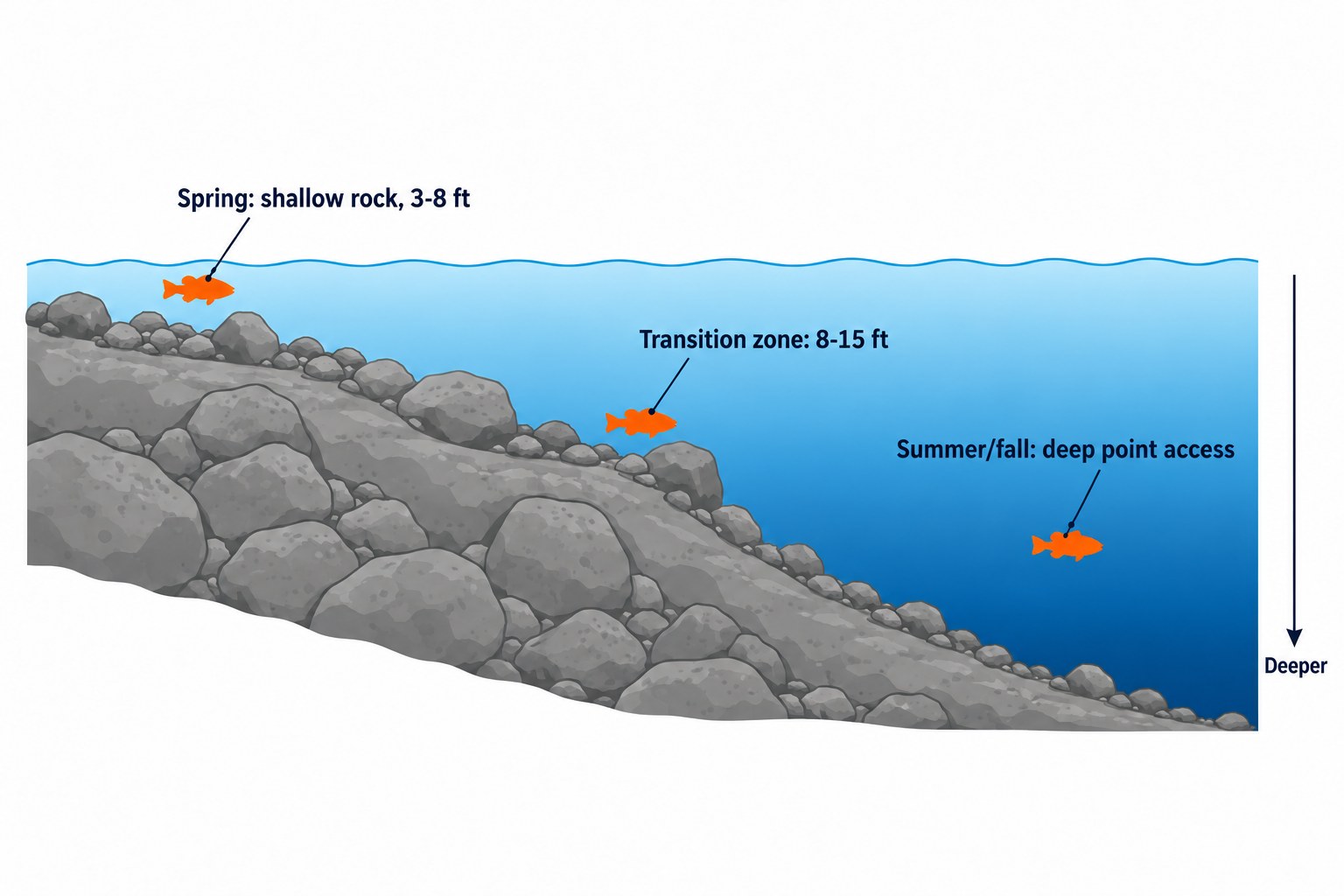
- Main-lake rocky points that drop from a few feet to deep water are smallmouth highways. The 8–15 foot transition zone is the recurring sweet spot, though the season moves fish up and down the same rock.
- Rock pile edges beat rock pile centers. Smallmouth stage along the breaks where rock meets gravel, sand, or mud — the transition zones — rather than dead center on the pile.
- Deep water is smallmouth cover. Where a largemouth hides in a weedbed, a smallmouth hides in depth access. A rock with no deep water nearby tends to hold fewer and smaller fish than one with a sharp drop-off.
Rocks also moderate temperature — they warm faster in spring and hold heat into fall, which is why south-facing rocky banks get smallmouth first each spring. For the full temperature-behavior picture, our bass water temperature guide breaks down what each band of water temperature tends to do to bass movement.
Presentations That Match the Lies
You don’t need ten lures for current — you need two or three, fished with the flow instead of against it.
The Tube Jig Drift
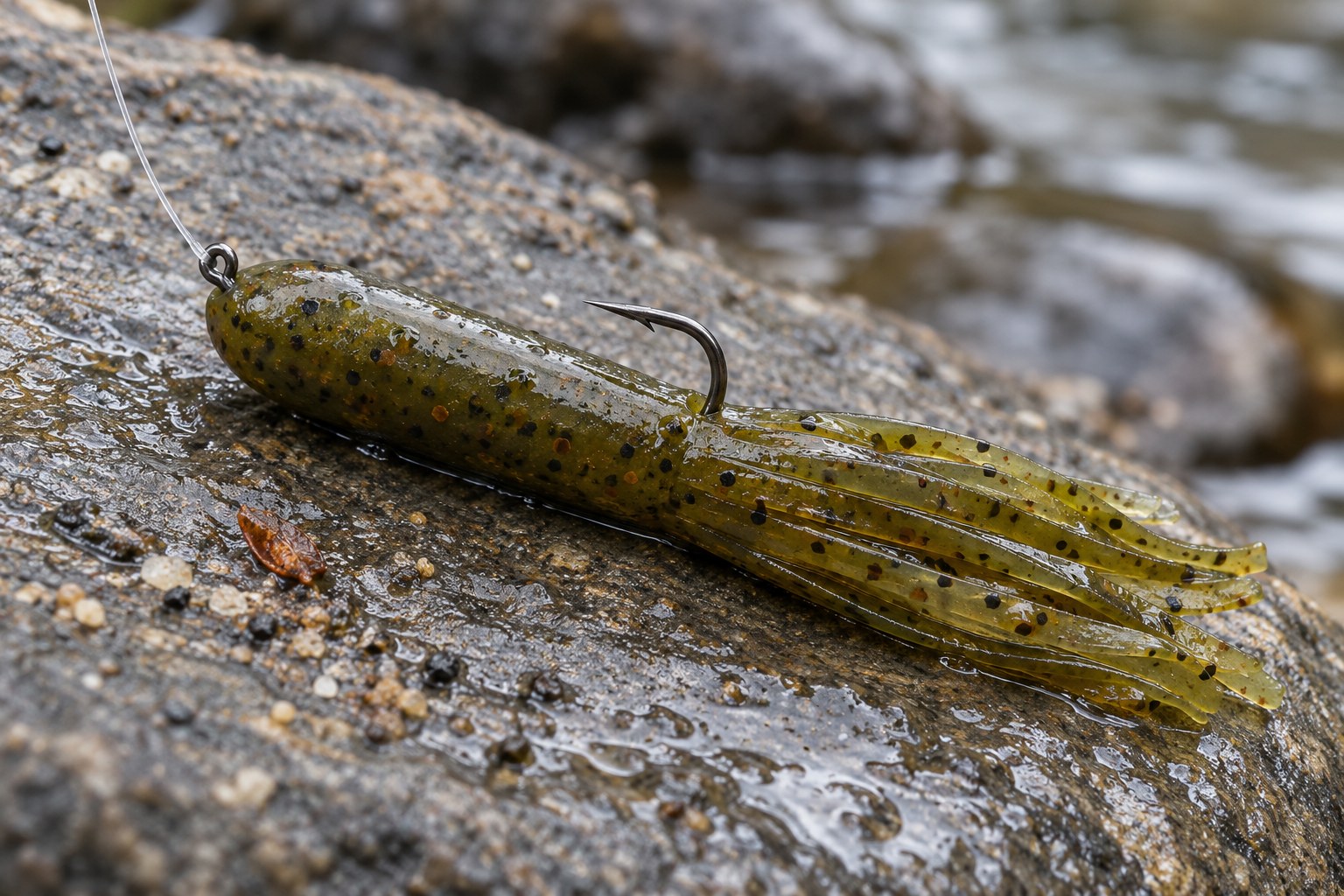
The tube on an internal-weight head is the signature smallmouth bait in rocky water. Weight it just heavy enough that it ticks bottom as it drifts rather than sinking straight to it — a 3.5- to 4-inch tube on 1/8 to 1/4 ounce covers most rivers. Cast upstream or across, let it fall into the seam, and retrieve slowly downstream with the current, hopping it occasionally. The tentacles pulse on the fall; that’s the action. Green pumpkin, brown, and crawfish orange are the workhorse colors.
Finesse for the Backside
When fish are inactive — bright day, cold water, fishing pressure, or sonar marks parked downstream of structure — downsize. A drop shot puts a small worm or minnow-profile bait in front of a fish that won’t chase. A ned rig does the same job even more subtly on pressured fish. The rule in both: slow beats right. Let the current do the moving.
Reaction Baits for the Front
On the current-facing side of structure, cover water quickly. A craw-colored crankbait is built for this — throw it at boulders and let the deflection trigger the strike. A suspending jerkbait cast across a seam, twitched, then paused for 3–7 seconds, holds in the seam right where fish can swing out. An inline spinner cast up-and-across and swung down through the seam covers fast water with flash and vibration.
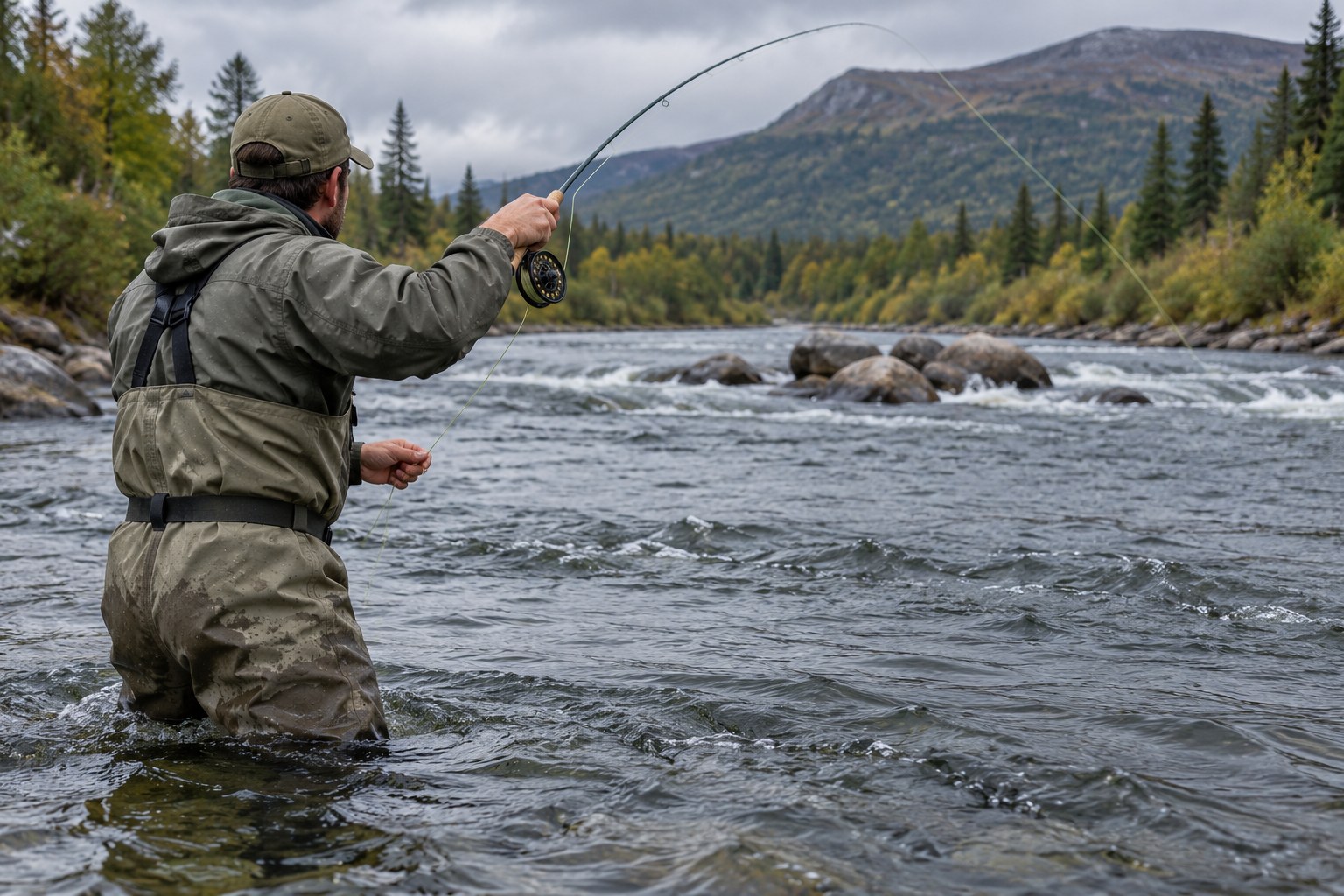
Whatever you throw, one law outranks lure choice: match the drift. Anything moving noticeably faster or slower than the current looks wrong to a river fish. Cast upstream, let your bait swing down with the flow, and keep line contact so you feel the difference between rock and bite.
Season and Temperature: When the Rules Shift
The holding-lie logic holds all year; the map changes with temperature. Typical patterns (they shift with your region, water clarity, and weather):
- Cold water (below ~50°F): Metabolism drops. Fish hold in the deepest slow pools and feed rarely. A slow hair jig or blade bait near bottom is the conversation.
- Spring staging (low-to-mid 60s°F): Smallmouth move onto gravel and rock adjacent to slack current, preparing to spawn. Pre-spawn fish on staging rock are often the most aggressive of the year.
- Peak activity (mid-60s to low 70s°F): Fish hold tight to current breaks and hit hard. This is when reading seams pays the biggest dividends.
- Summer heat (above ~80°F): The fastest, most oxygenated water becomes the comfortable water — fish stack into riffles and current seams, or go deep to thermocline edges in lakes.
- Fall: Cooling water triggers a pre-winter feed. Smallmouth tend to group tightly on rocky points with deep access, often by size class. Find one school and you’ve found the spot.
A quick word on wading: moving water is the most dangerous part of river fishing. Move slowly, cast upstream and to the sides before you wade through a lie, keep your shadow off your water, and tell someone your plan. No fish is worth a slip.
Reading current is a skill you build one stretch of river at a time. Next trip, spend ten minutes watching water before you cast a single one — find the seams, find the eddies, and the fish will start showing up exactly where the physics says they should.