
Your first combo caught fish. That was its job, and it did it. But lately the casts fall short, bites feel like nothing, and the drag chatters every time something decent pulls line. So what now — new rod, new reel, new everything?
Forums will give you ten answers and a sales link. A better process: diagnose before you buy. Every complaint your outfit produces has a likely culprit, and the right fix is usually the cheapest one. Below, each symptom gets mapped to the piece that causes it, with an upgrade order that respects your budget.

Start With the Symptom, Not the Sales Page
Starter combos are not bad gear. They are a compromise spec — a medium-ish rod, a basic reel, a cheap spool of monofilament — priced so the whole package costs less than a nice reel alone. That compromise works while you are learning. It starts to limit you once you know what you want to fish.
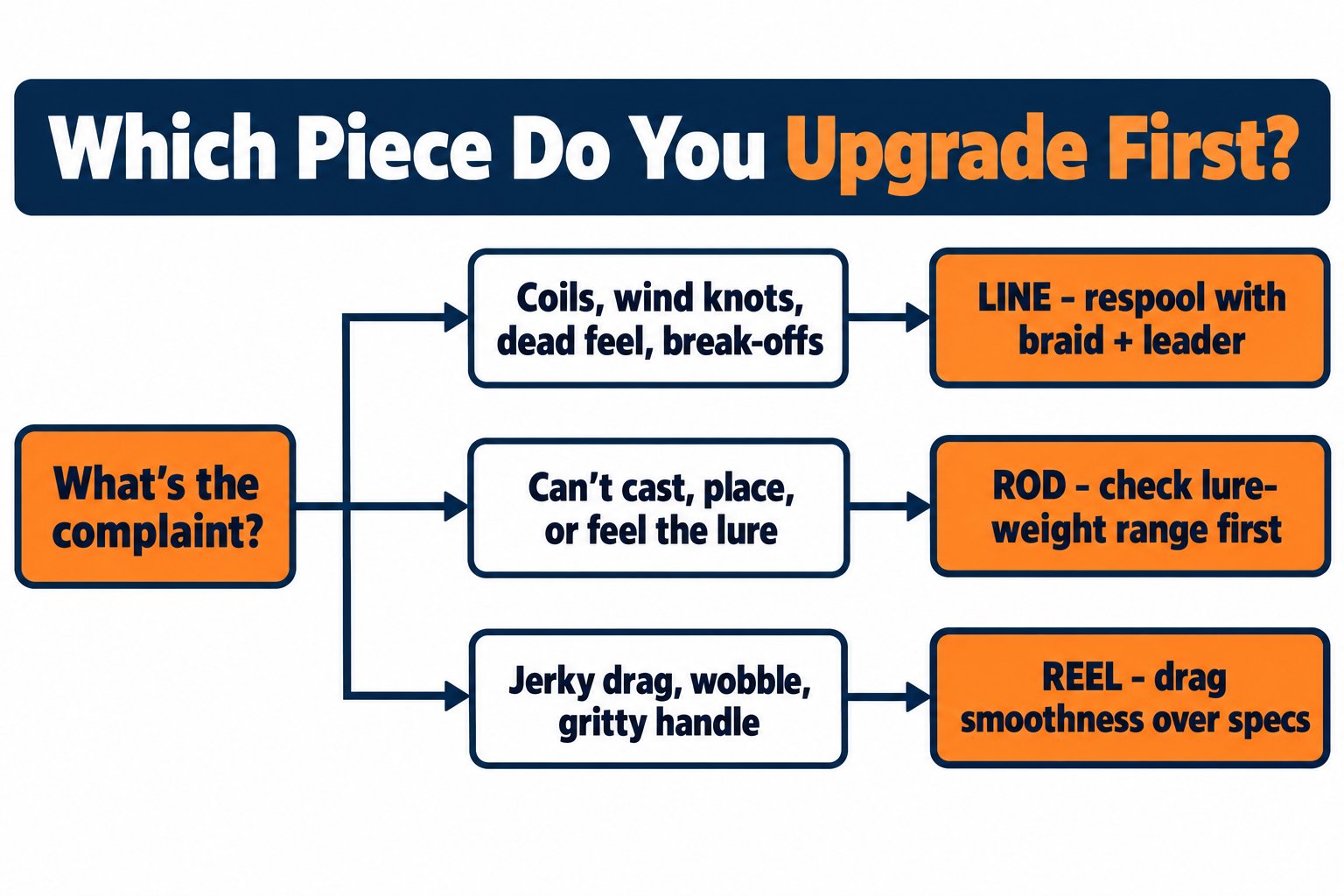
Before you open a shopping tab, write down what actually goes wrong. Most complaints fall into three families:
- Casting and tangle problems: springy coils, wind knots, bird nests, line that seems to fight the spool.
- Feel and presentation problems: you can’t tell bottom from bite, light lures won’t load the cast, accuracy is inconsistent.
- Mechanical problems: the drag stutters mid-fight, the handle feels gritty, the rotor wobbles, the bail is stiff.
Each family points at a different piece of the outfit. And here is the part almost nobody tells you: the first family usually isn’t the rod or the reel at all.
The Upgrade Nobody Talks About First: Line
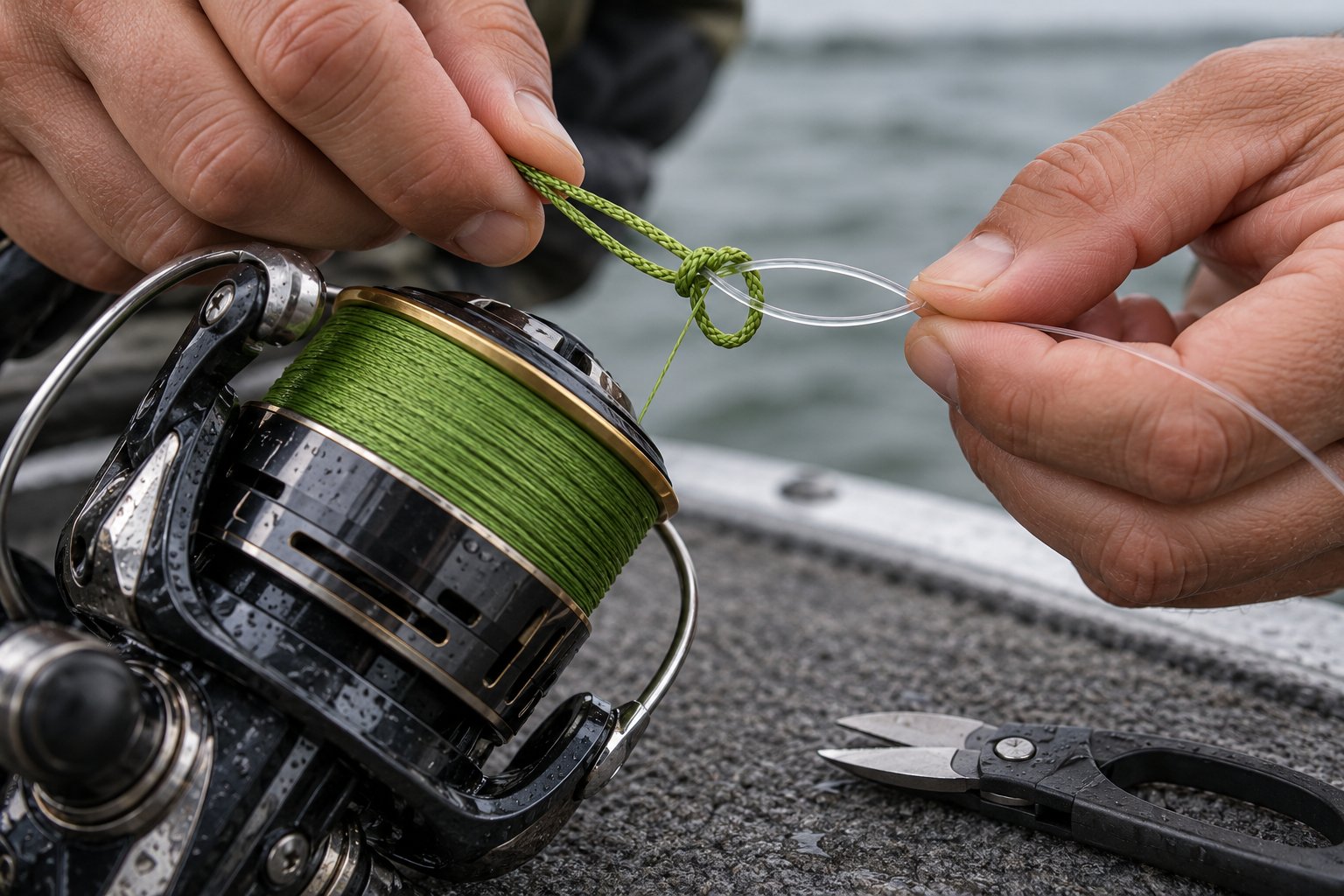
Starter combos are spooled with cheap monofilament, and mono has a shelf life on the water. It absorbs water, degrades under UV, and develops memory — tight coils that reduce casting distance and tangle into wind knots. Exposed to sun and heat, mono typically weakens noticeably within 6–12 months of regular use. That “new reel” you’re eyeing may be exactly the same reel your tangles are coming from — the problem is the $6 spool of dead nylon on it.
Mono’s stretch is a double-edged sword. It’s forgiving on treble-hook baits, but it also masks subtle bites and softens hooksets. If your main complaint is feeling like you can’t feel anything, line is the cheapest suspect.
The upgrade most level-up anglers should make first:
- Braid mainline, 10–15 lb on a 2500 or 3000 spinning reel. Braid has near-zero stretch, no memory, and a much thinner diameter — 30 lb braid is about the diameter of 8 lb mono. Thinner line means longer casts and less drag through the water.
- A fluorocarbon leader, 8–12 lb. Braid is visible in water, so tie on a nearly invisible fluoro leader. Fluoro sinks and is stiff, which makes it a poor mainline but an excellent leader.
- Knots that actually hold braid: Palomar, FG, or double uni. The improved clinch slips on braid — leave it for mono.
The whole respool runs roughly $20–35 plus mono backing. Compared to a $150 reel, that is the highest performance-per-dollar upgrade in the sport. If you want the full breakdown of line types, our line type comparison covers the tradeoffs in detail.
Upgrade the Rod First When the Problem Is Feel or Presentation
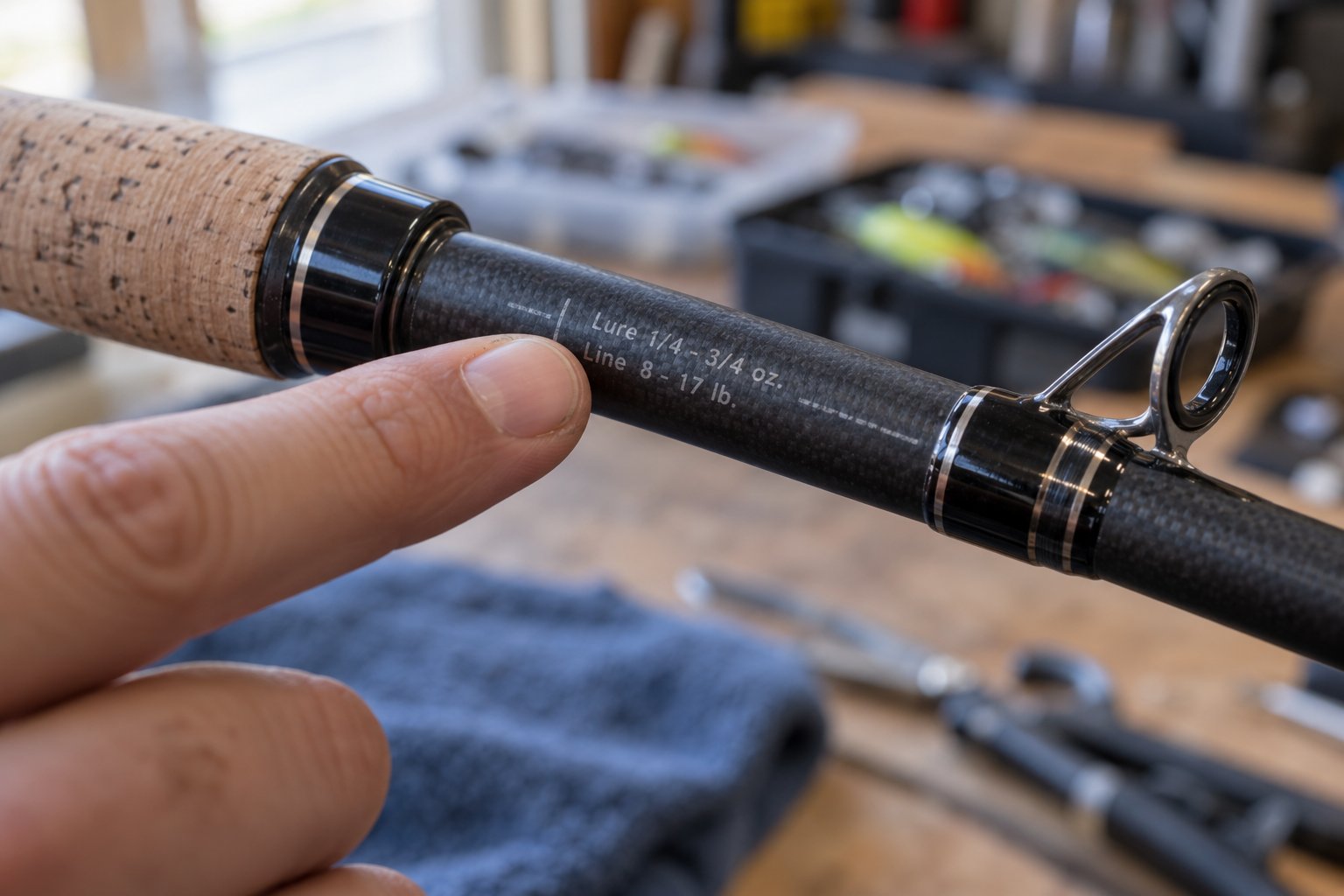
Grab your combo and look at the blank near the grip. Printed there are two ranges: a lure weight range and a line rating range. They matter more than any marketing claim on the box.
If your favorite 3/8 oz jig sits above your combo’s printed lure range, the blank can’t load properly on the cast — you aren’t casting badly, you’re asking a noodle to throw an anchor. If your lures are lighter than the range, the opposite problem: the blank doesn’t flex enough to turn a light lure over. No amount of practice fixes a mismatch. That’s a rod symptom.
Two rod specs decide how a rod feels and performs:
- Action is where the blank bends. Fast action (bends in the top third) gives you better sensitivity and a quicker hookset. Slower action casts a bit farther and cushions treble hooks on crankbaits — which is why crankbait anglers deliberately use slow rods.
- Power is lifting strength — how much force it takes to bend the blank. Medium is the freshwater workhorse; move up or down from there based on lure weight and cover.
Rod length is a tradeoff too: shorter rods (6’6″ and under) are more accurate and easier to handle in tight spots; longer rods (7′ and up) cast farther and pick up line better at distance.
Where does a $100 rod actually beat the $30 rod on your combo? Lighter, more responsive blanks that transmit feel to your hand, and better guides that create less friction and resist grooving from braid. If your reel’s drag still works smoothly, a single quality rod — a medium-power, fast-action 6’6″–7′ spinning rod is the safe all-rounder — transforms your outfit more than a mid-tier reel swap. Not sure what your first outfit got right? Our guide to choosing a freshwater combo explains what those specs mean from the other direction.
Upgrade the Reel First When the Reel Fights You
Reel symptoms are the mechanical ones: drag that grabs and releases instead of feeding line smoothly, a handle that feels gritty, rotor wobble, a bail that sticks. Budget reels use more plastic in load-bearing spots, and those parts wear loose with mileage. If your outfit feels fine to cast and feel but falls apart in the fight, the reel is your upgrade.
When you buy, ignore two spec-sheet traps:
- Max drag numbers are marketing. Your working drag is realistically 20–30% of your line rating — a few pounds, no matter what the box claims. What matters is *smoothness*: a drag that feeds line evenly under pressure keeps tension on the fish when a mono or braid stretch spike would otherwise snap the line.
- Bearing count means little. A few well-placed quality bearings outperform a dozen cheap ones. Forged gears, a consistent drag stack, and tight tolerances are what a $100–180 reel actually buys over a $40 combo reel.
Size and ratio are simpler. A 2500–3000 size spinning reel is the freshwater all-round class. For gear ratio, a standard 5.2:1 handles almost everything; it’s easier to speed up your retrieve than to slow it down, so save the 6.2:1 fast reels for techniques that need them. Our reel buying guide breaks down sizes, ratios, and drag systems if you want the deeper dive.
What Not to Buy Yet
Protecting your budget is part of upgrading well. Four purchases that are almost always premature:
- Specialty rods before the technique. Crankbait rods, flipping sticks, and ultralight trout rods each do one job beautifully. Buy them when the technique is in your regular rotation, not when a video makes them look fun. One medium-fast all-rounder covers drop shots, shaky heads, Texas rigs, and small cranks until it doesn’t.
- A $200+ reel before you can feel why. The differences that justify premium reels — gear precision, sealing, drag linearity — pay off over hundreds of days on the water. A mid-tier reel in good hands beats a flagship in a drawer.
- Heavy braid “for strength.” Braid’s entire advantage is thin diameter. Spooling 50 lb braid on a light rod erases the casting and sensitivity gains and can exceed your rod’s line rating — heavy line can literally snap a light blank during a hookset.
- New gear to fix a skill problem. If your casts are wild with lures inside the rod’s printed range, the upgrade is practice, not carbon fiber. Honest answer: most accuracy complaints are solved at the casting pile, not the checkout.
A Sensible Upgrade Order (and Budget Tiers)
Here is the framework in one place. Do one tier, fish it for a season, then reassess.
Tier 0 — $20–60: Respool and small fixes. Braid mainline, fluoro leader, proper knots, and a pair of quality line nippers. This tier fixes memory tangles, dead line, muted feel, and soft hooksets without touching the rod or reel. Many anglers discover they never needed new gear — just new line.
Tier 1 — $60–120: One quality rod. A durable, sensitive rod in the medium-power, fast-action class (think Ugly Stik GX2 and its step-ups) with a real warranty. Keep your stock reel if its drag is still smooth — spool it fresh and pair it with the new rod.
Tier 2 — $100–180: One quality reel. A reel with a smooth, consistent drag and forged gears, in the 2500–3000 class. Keep the stock rod if its action and power match how you fish.
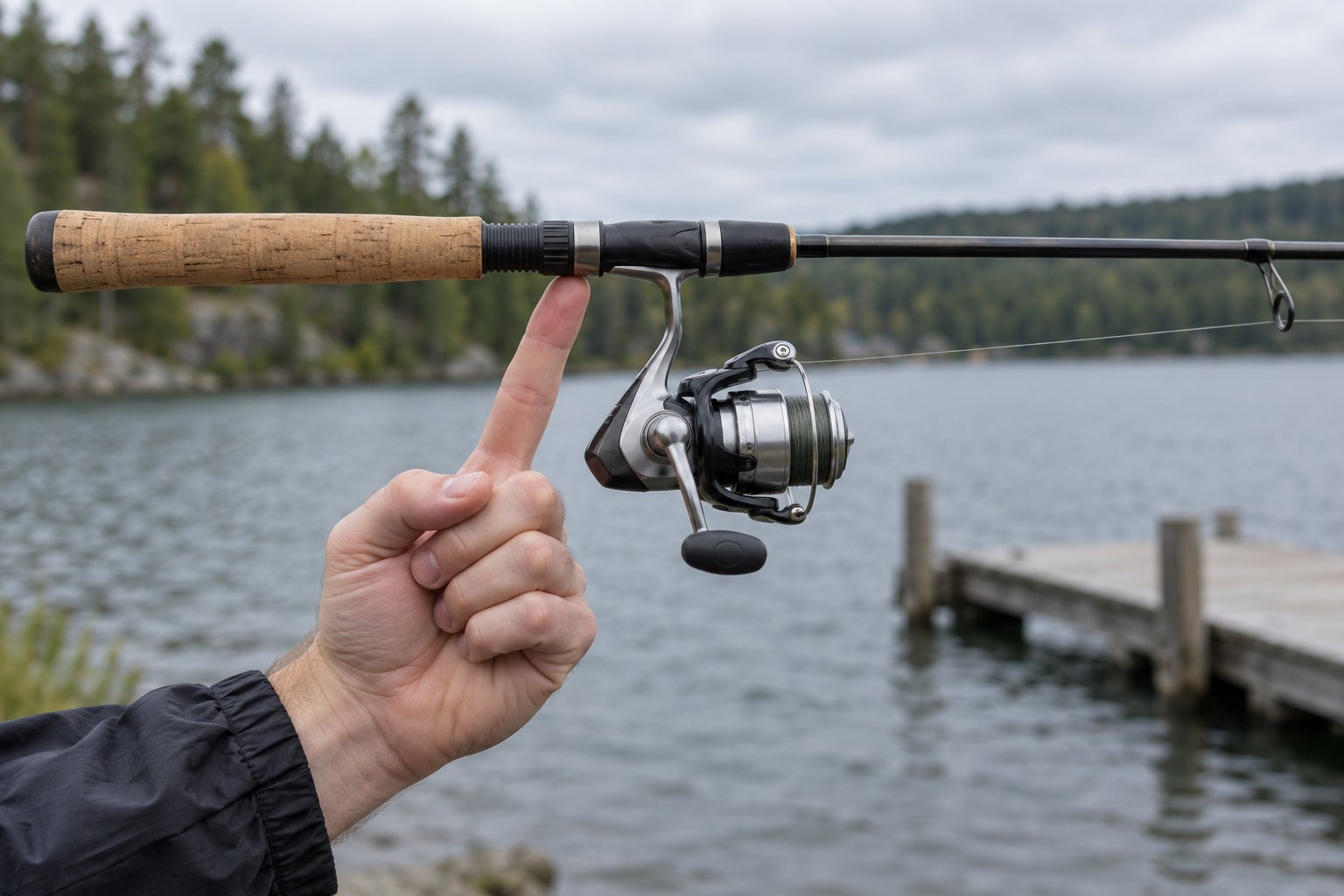
Two rules make any pairing work. First, balance the outfit: mount the reel, rest the whole thing on a finger just ahead of the reel seat, and it should sit roughly level — not butt-heavy or tip-heavy. Second, respect the line-rating triangle: your line must sit inside both the rod’s printed range and the reel’s capacity. The outfit is only as capable as its weakest link.
Don’t Trash Your Old Gear
Nothing here goes in the trash. The old combo becomes a kid’s first rod or a backup that lives in the truck — just respool it before handing it off, because dead mono on a hand-me-down teaches a new angler that fishing is frustrating. The old reel becomes a spare on a second rod body, so a drag failure mid-trip doesn’t end your day.
That’s the whole philosophy: upgrade to fish better, not to shop more. Diagnose the symptom, fix the cheapest culprit first, and let each piece earn its replacement. Your next season of fish will tell you whether the framework worked.