

There’s a version of a pressured lake that every angler runs into eventually. The water is clear. The sun is high. The bass are there — you can see them on sonar, or you know the spot holds fish — but nothing you throw gets eaten. Crankbaits get followed and refused. Spinnerbaits get ignored.
That’s when the Ned rig earns its place in your box.
The Ned rig is what you tie on when the loud baits have gone quiet. It’s small, it’s slow, and it looks like almost nothing — which is exactly the point. On a lake where bass have been caught and released on big reaction baits hundreds of times, a tiny soft plastic standing up off the bottom doesn’t read as a lure. It reads as food.
Most anglers who give up on it make the same three mistakes: they fish it too heavy, too fast, and they set the hook too hard. Fix those three and the Ned rig becomes one of the highest-percentage baits you own — especially in cold water, clear water, and on water that gets fished hard.
What Is a Ned Rig, and Why Do Pressured Bass Eat It?
A Ned rig is a short soft plastic — usually 2.5 to 3.5 inches — threaded onto a small mushroom-head jig with an exposed hook, fished slowly along the bottom on spinning tackle. That’s the whole rig. No skirt, no trailer, no flash.
It’s named after Ned Kehde, a Kansas outdoor writer who spent decades refining what he called “Midwest finesse” — small plastics, light line, very slow retrieves. The idea behind it is what matters: give a careful fish something it can inspect and eat without committing to a chase.
Here’s what happens underwater. The plastic floats. When the rig settles on the bottom, the tail stands up at roughly a 45-degree angle, quivering in the current or from the slightest movement of your rod. That posture looks like a crawfish in a defensive position, or a small baitfish feeding nose-down on the bottom. Both are easy meals, and both are shapes bass are wired to attack.
Three things make it work:
- The standing posture. A Texas-rigged worm lies flat on the bottom when you pause it. A Ned rig stands up and holds that pose — and that difference triggers a lot of the bites.
- The small profile. Bass eat a surprising amount of small forage: juvenile craws, small baitfish, insects. A 3-inch bait matches that perfectly.
- The slow fall. A Ned rig sinks on a semi-slack line and flutters down slowly, giving a neutral or pressured fish time to track it, approach it, and commit.
The exposed hook matters too. With the point riding out in the open instead of buried in the plastic, even the lightest pickup becomes a hookup.
Your Ned Rig Setup: Rod, Reel, and Line
You don’t need specialized gear, but the Ned rig punishes tackle that’s too heavy. This is a finesse presentation, so everything scales down.
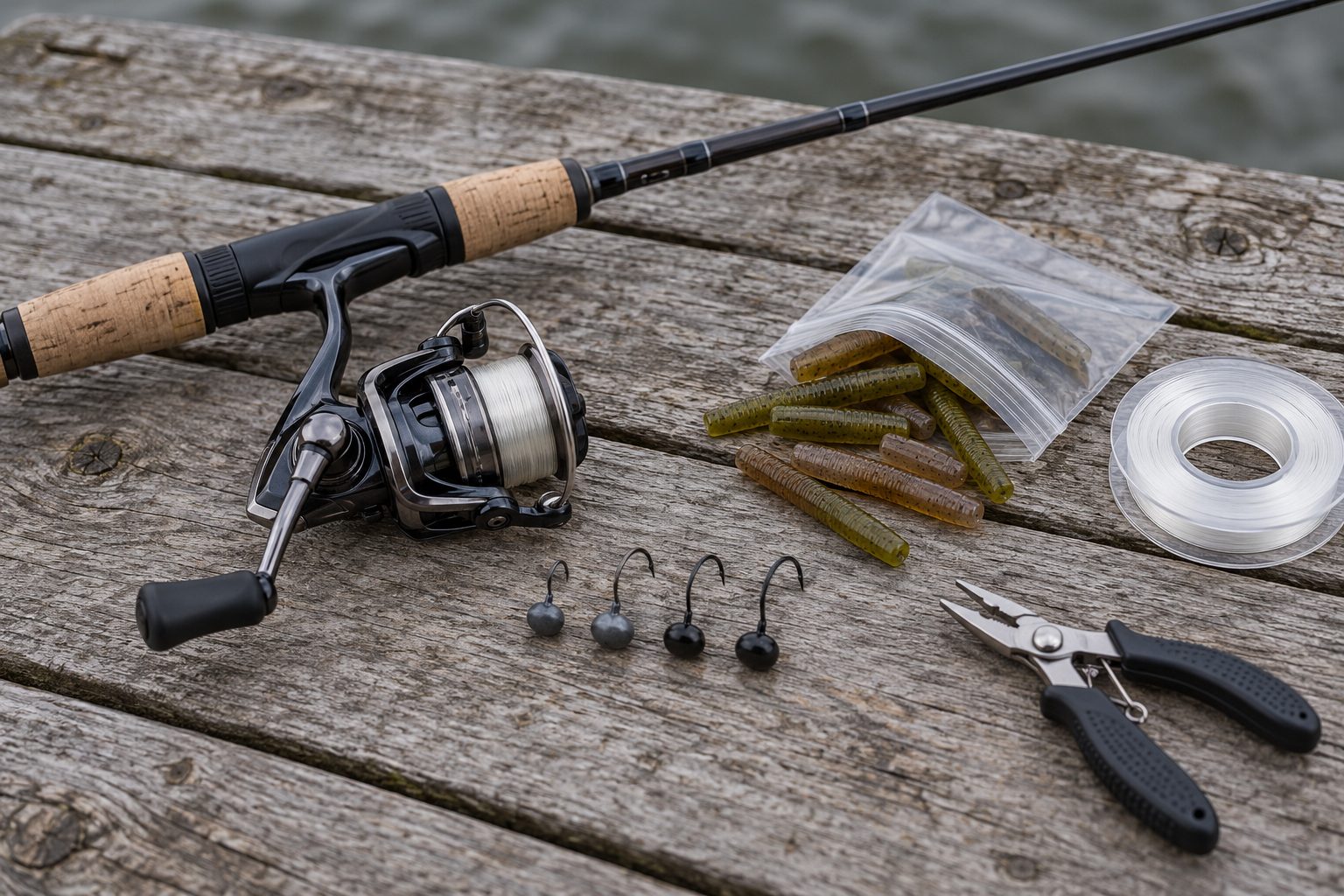
Rod: a 6’8″ to 7’2″ medium-light spinning rod with a fast or soft tip. The soft tip lets you feel the lightest tick on the line, and it absorbs the shock on the hookset so you don’t rip a light wire hook out of the fish’s mouth.
Reel: a 2500 to 3000 size spinning reel with a smooth, reliable drag. You’re fishing light line and a small hook, so a drag that sticks will cost you fish at the net.
Line: there are two good options, and both work.
- Braid main line with a fluorocarbon leader. Spool 10 to 15 lb braid, then tie a 4- to 6-foot leader of 6 to 8 lb fluorocarbon with an FG or Alberto knot. The braid gives you sensitivity and long casts; the fluoro leader stays nearly invisible in clear water.
- Straight fluorocarbon. Run 8 to 10 lb fluorocarbon the whole way. Fewer connection points and no knot to hinge, which some anglers feel sharpens the signal on soft bites.
On very clear, heavily pressured water, drop to 6 lb. On stained water where fish can’t see line as well, 10 to 12 lb is fine. Tie the jig on with a Palomar knot — doubling the line through the eye gives you a knot that shrugs off the abrasion of rock and gravel, which is where you’ll be dragging this thing most of the time.
The Two Components: Jig Head and Plastic
Everything that makes a Ned rig work comes down to two choices.
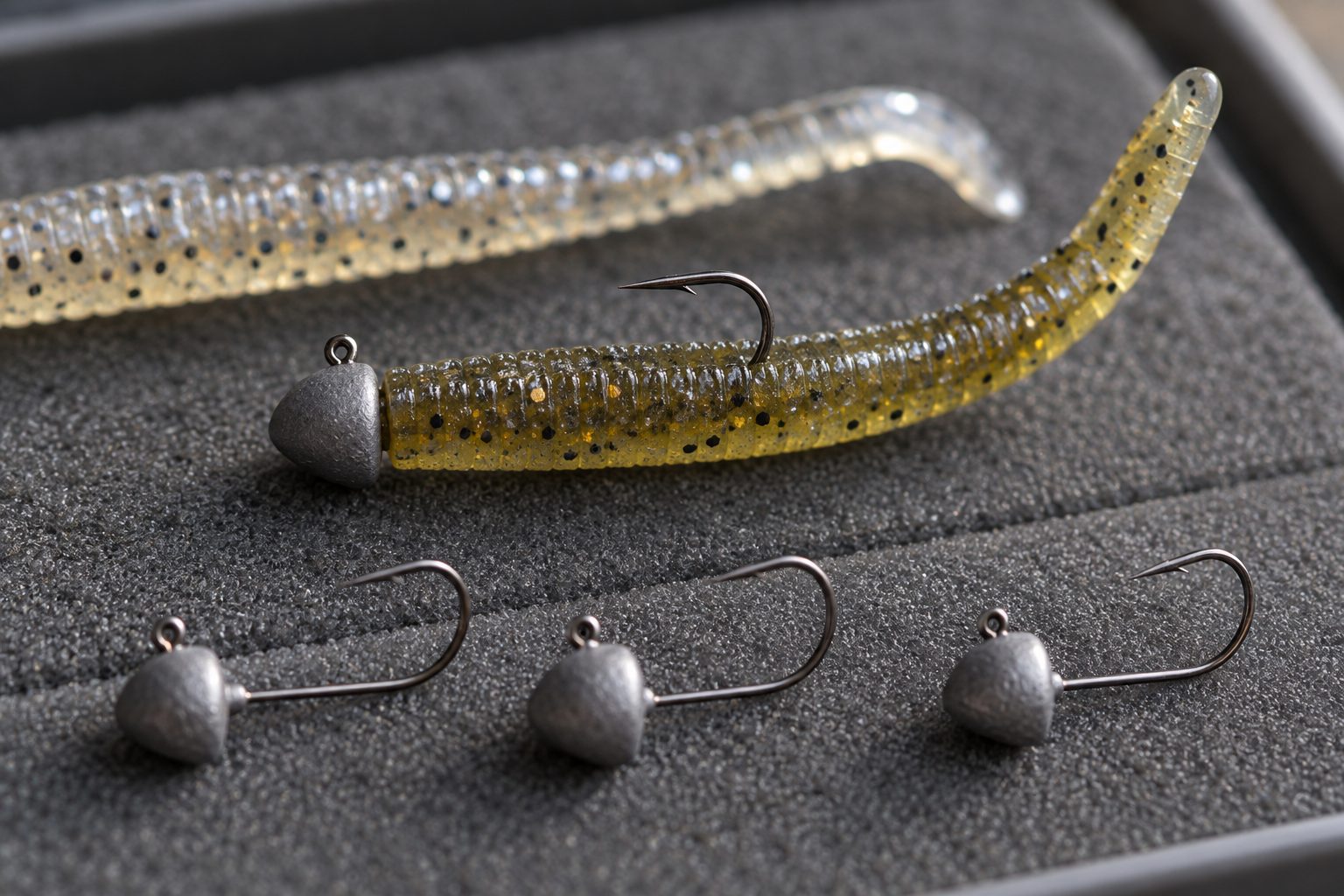
The jig head. You want a mushroom or flat-bottom head — the flat bottom is what tips the bait up so the tail can stand. A round-bottom head won’t do it. Look for a light wire hook, a wide gap, and a wire keeper to hold the plastic in place.
Weight is the number most anglers get wrong. The rule is simple: use the lightest head that still reaches the bottom and holds there.
- 1/20 oz — shallow water under about 5 feet, calm days, when you want the slowest possible fall
- 1/16 to 1/10 oz — the all-around range for most lake situations in 4 to 10 feet. If you carry only one size, make it 1/10 oz
- 1/6 oz — 10 feet and deeper, or when wind and current bow your line
- 3/16 to 1/4 oz — 15 feet-plus or strong current
Going heavier than you need is the classic mistake. A 1/4 oz head on a short plastic turns the Ned rig into a shaky head — it drops fast, drags instead of gliding, and loses the slow fall that triggers so many bites. Go lighter until you start losing contact with the bottom, then step back up one size.
The plastic. You want a buoyant plastic. The standard is Z-Man’s ElaZtech material — the Finesse TRD, TRD CrawZ, and Hula StickZ are all built for this rig. ElaZtech floats, which is what lets the tail stand up, and it’s stretchy enough that a single bait can survive dozens of fish.
Standard PVC soft plastics — the salted kind that fills most of your worm box — sink and lie flat. They’ll still catch fish on a Ned head, but they won’t stand up, and the standing action is the whole point. If you’re substituting, cut a stick worm in half and accept that it’ll sit flatter.
One warning about ElaZtech: keep those baits in their own bag. They react with other soft plastics and will melt into them, turning your tackle tray into a gooey mess.
Straight-tail baits also beat curl-tails here. Because the bait is barely moving, a subtle quiver reads more naturally than an aggressive kick.
How to Rig a Ned Rig, Step by Step
Rigging takes about thirty seconds once you’ve done it a few times. The one thing you can’t skip is step five.
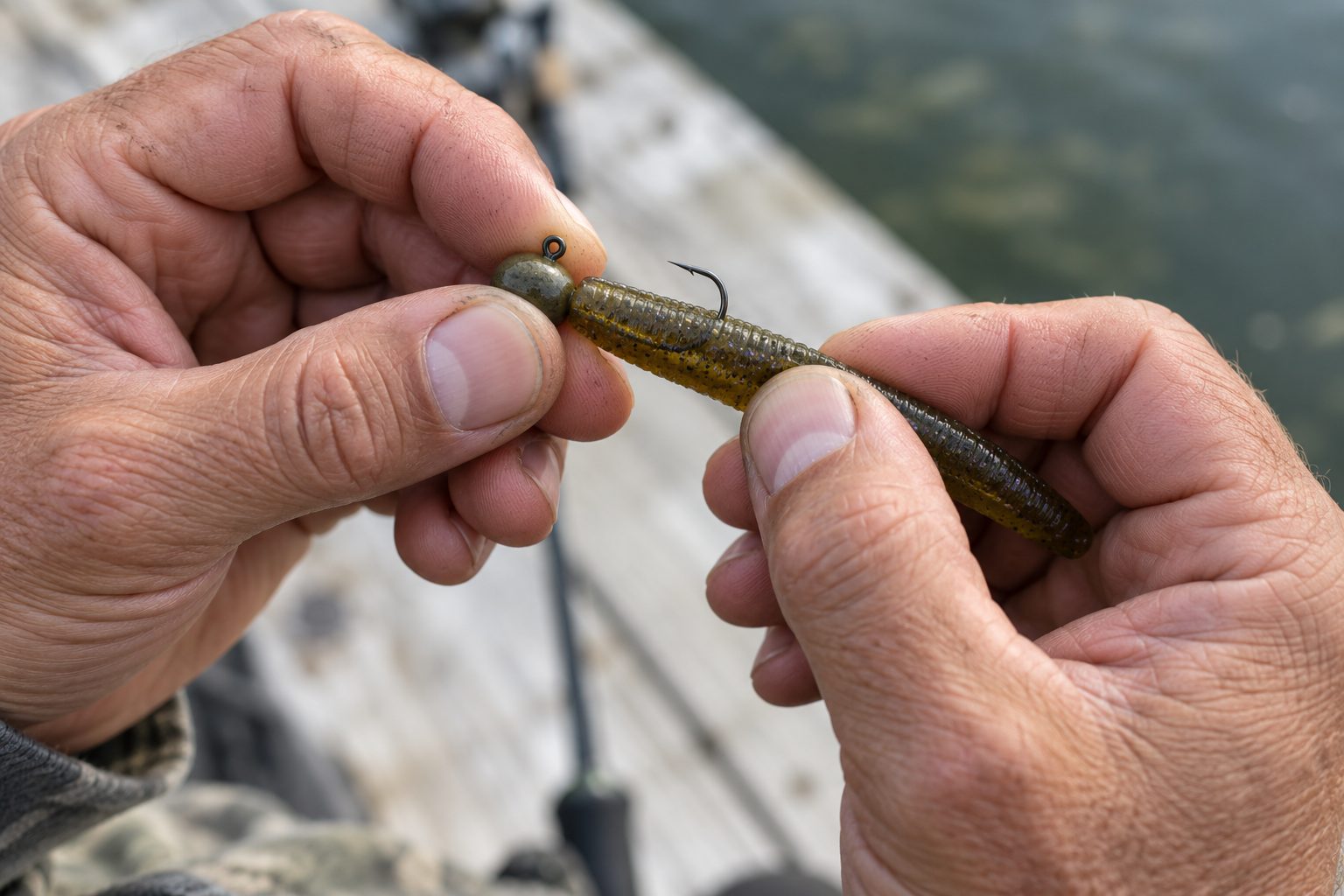
- Pick your head weight for the depth and conditions, and hold it with the hook point facing up.
- Insert the hook point into the center of the cut nose of the plastic, about a quarter inch deep.
- Push the hook through the body and bring the point out of the top of the bait.
- Slide the plastic up the shank until the nose sits flush against the head’s collar.
- Check that the bait hangs dead straight. No curve, no twist, no lean.
- Trim any plastic sticking out past the nose so the profile is clean.
- Optional but smart: a small drop of superglue where the bait meets the head keeps it seated through repeated casts and fish.
That fifth step is the one people rush, and it costs them bites. A crooked bait spins on the fall, which twists your line and kills the standing posture at the bottom. If the bait isn’t straight, pull it off and re-rig it.
For most open water, use the exposed hook version — it’s surprisingly snag-resistant on rock and gravel. If you’re fishing vegetation, wood, or heavy cover, switch to a weedless mushroom head with a weedguard.
How to Fish a Ned Rig: The Retrieves
Everything about fishing a Ned rig is slower than feels natural. If you think you’re going too slow, you probably aren’t.
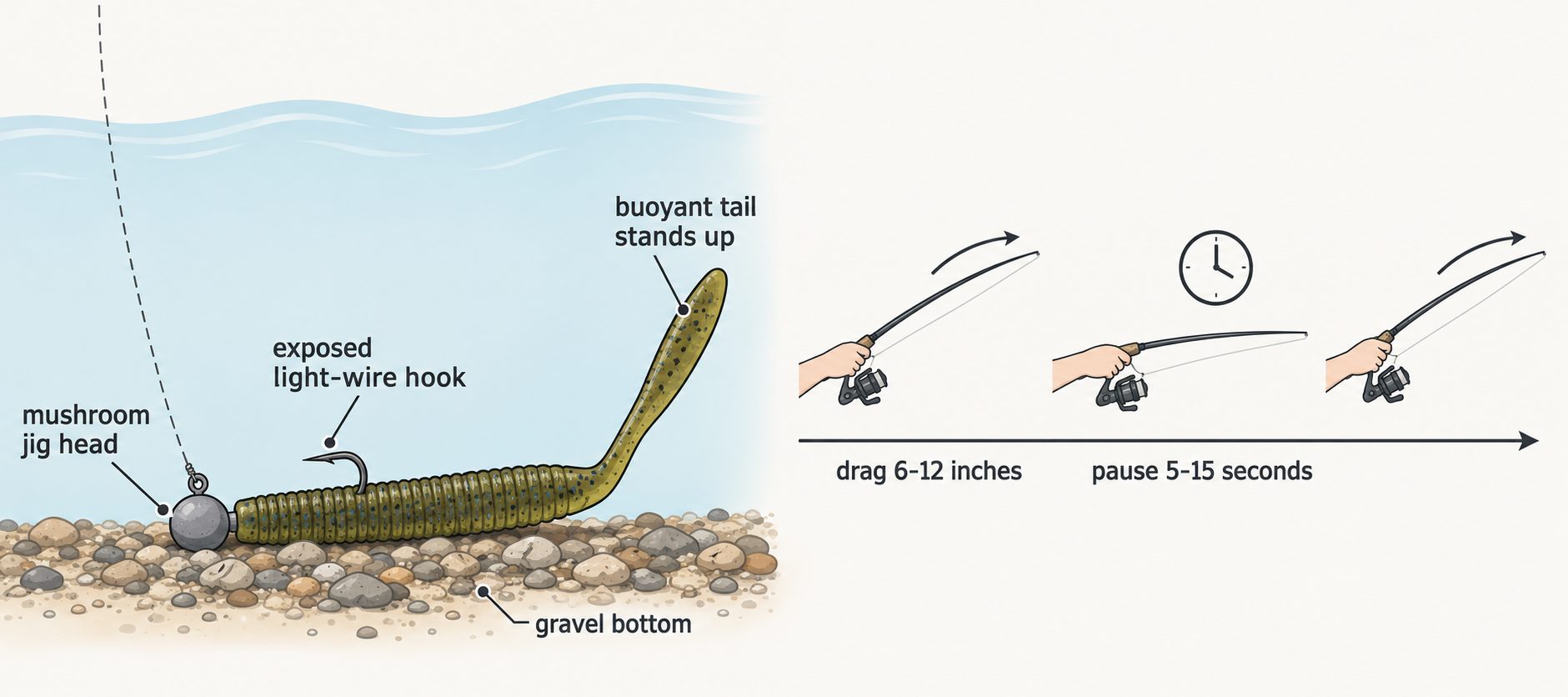
Cast past your target and let the bait fall on a semi-slack line, watching for any tick or sideways movement — fish often eat it on the way down. Once it lands, take up slack until you feel the weight of the head. Then pick one of these cadences:
Drag-and-pause (the foundation). With your rod tip low and pointed at the water, sweep the bait 6 to 12 inches along the bottom, then stop and let it sit for 5 to 15 seconds. The tail stands up during the pause, and that’s when most bites happen. Repeat back to the boat or bank.
Deadstick. Cast, let it sink, and do nothing for 15 to 60 seconds or longer. This is the retrieve for the coldest water and the most pressured fish — the ones that need time to make up their minds.
Hop. Short, gentle lifts of the rod tip that jump the bait a few inches off the bottom. It stands up again each time it lands. Good when fish are a little more active, like pre-spawn and early fall.
Shake. Keep the bait in place and pulse the rod tip rapidly. The tail quivers without the bait moving forward. This is the move for a bass that’s following the bait but won’t commit.
Swim and glide. Reel slowly so the bait travels 6 to 12 inches off the bottom, pausing now and then to let it pendulum back down. Use this for fish suspended over grass or roaming off the bottom.
Whichever cadence you start with, change the pause length before you change anything else. A five-second pause might get ignored while a fifteen-second pause triggers a bite from the same fish. Extend the pause, then change the plastic, then move spots — in that order.
Reading the Bite and Setting the Hook
Ned rig bites are subtle. Most of the time you will not feel a thump.
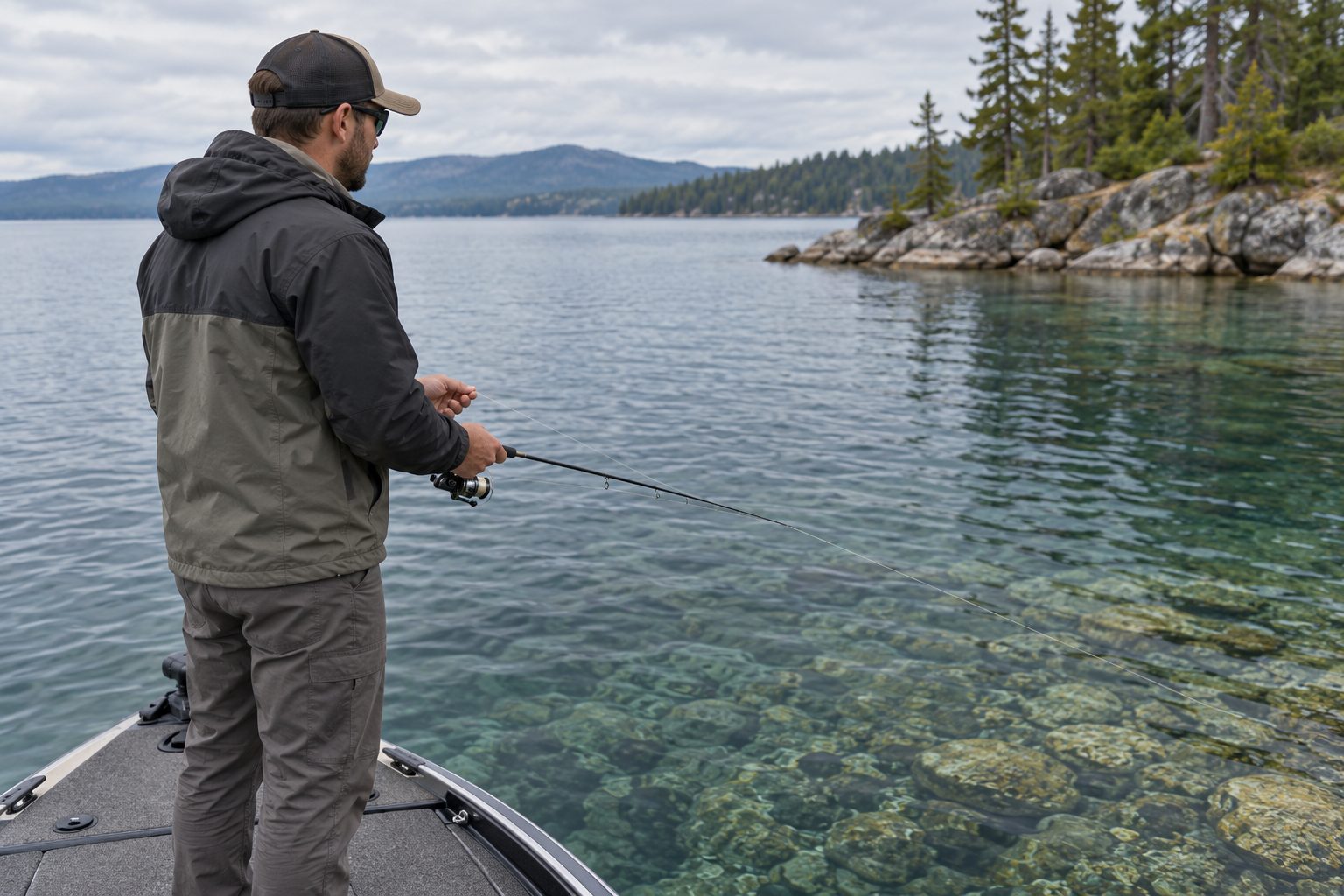
Watch the line as much as you feel it. A Ned rig bite shows up as:
- A small tick in the line as it sinks
- The line sliding sideways when it shouldn’t
- The line suddenly going slack
- The retrieve suddenly feeling bottomless, like the bottom disappeared
If any of those happen, something changed — and more often than not, that something is a bass holding your bait. Count the bait down on every cast, too. If it reaches bottom faster than it should, a fish ate it on the way down.
Here’s the part that catches people out: do not set the hook hard. The Ned rig uses a light wire hook, and a hard, jarring hookset tears the lip or straightens the hook. Instead, reel down until you feel the rod load, and then sweep the rod to the side. Reel-and-sweep hooks a Ned rig bass far more consistently than a big swing ever will.
When and Where a Ned Rig Wins
The Ned rig has conditions where it shines and a couple where it doesn’t. Knowing the difference keeps it from becoming a bait you tie on out of habit.
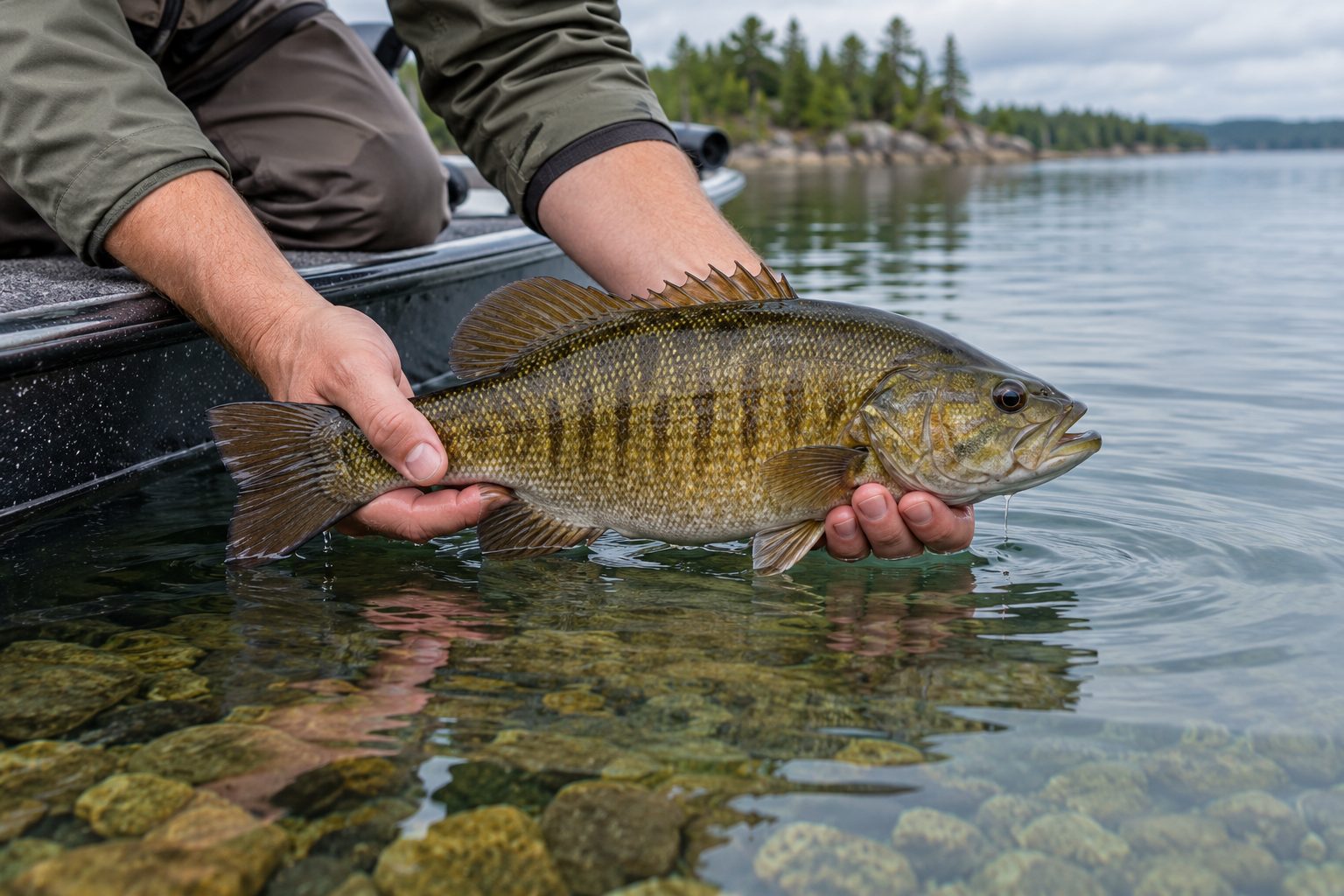
Prime conditions:
- Post-cold-front days, when the bite shuts off and bass refuse anything fast
- Heavily pressured water — tournament lakes, community holes, public ponds
- Clear to lightly stained water, where a small, natural-looking profile beats a loud one
- Cold water. The Ned rig dominates below about 55°F and stays excellent through the 50s and 60s. It’s still good into the 70s and worth fishing deep and cool in summer heat
- High-sun, calm days, and any time you’re targeting finicky spawn or post-spawn fish
Poor conditions: muddy or heavily stained water, where the visual advantage disappears and loud baits outproduce it. Soft mud bottoms are also a problem, because the head sinks in and the bait can’t stand.
Look for hard bottom — gravel, rock, clay, sand, shell — where the head can stand the plastic up cleanly. Fish it along points and ledges, on gravel bars and shell beds, around dock pilings on firm ground, and over rock humps for smallmouth. Depth-wise, 2 to 20 feet covers most of it.
Ned Rig vs. Drop Shot and Texas Rig
These three rigs aren’t competitors. They solve different problems, so pick by where the fish are:
- Ned rig: fish on hard bottom in 4 to 18 feet, where a slow horizontal drag covers water through the strike zone
- Drop shot: fish suspended or holding at a specific depth over deeper structure, where you need the bait at exactly that height
- Texas rig: fish in heavy cover — grass, laydowns, brush — that needs a weedless presentation
If the bite stops and you know fish are still there, that’s your cue to switch from a Ned rig to a drop shot. If you need to push through cover, go Texas rig. If you’re covering hard bottom and want bites from neutral fish, stay with the Ned.
Common Ned Rig Mistakes and How to Fix Them
Almost every “the Ned rig doesn’t work for me” story comes back to one of these.
- Too much weight. Heavy heads kill the glide and the slow fall. Fix: go lighter until you lose bottom contact, then step back up one size.
- Fishing it too fast. Short pauses are the biggest single reason it underperforms. Fix: count to fifteen before you move the bait.
- A crooked bait. A twisted plastic spins on the fall and twists your line. Fix: re-rig until it hangs straight, and glue the nose.
- A hard hookset. Light wire hooks bend or tear lips. Fix: reel down and sweep sideways.
- A stiff rod or heavy line. Both kill the action and hide the bite. Fix: medium-light rod, 6 to 8 lb leader.
- A sinking plastic on a stand-up head. PVC plastisol lies flat, so the bait never stands. Fix: use a buoyant ElaZtech-style plastic.
- A round-bottom head. It won’t stand the bait up. Fix: use a flat-bottom mushroom head.
The Mindset That Makes It Work
The Ned rig asks you to do less, not more. Cast it out, let it fall, and then fight the urge to make something happen. The bait that looks like nothing is often the one a pressured bass has been waiting for — because it’s the one thing on the water that isn’t demanding a reaction.
Keep it light, keep it slow, and trust the pause. If you’re coming from bigger soft plastics, our guide to finesse tactics with light line and small baits walks through the rest of the finesse approach, and the soft plastic baits guide covers how the different plastic styles behave. To see how the Ned compares to the other rigs in your box, start with our rundown of the Texas rig and drop shot.