
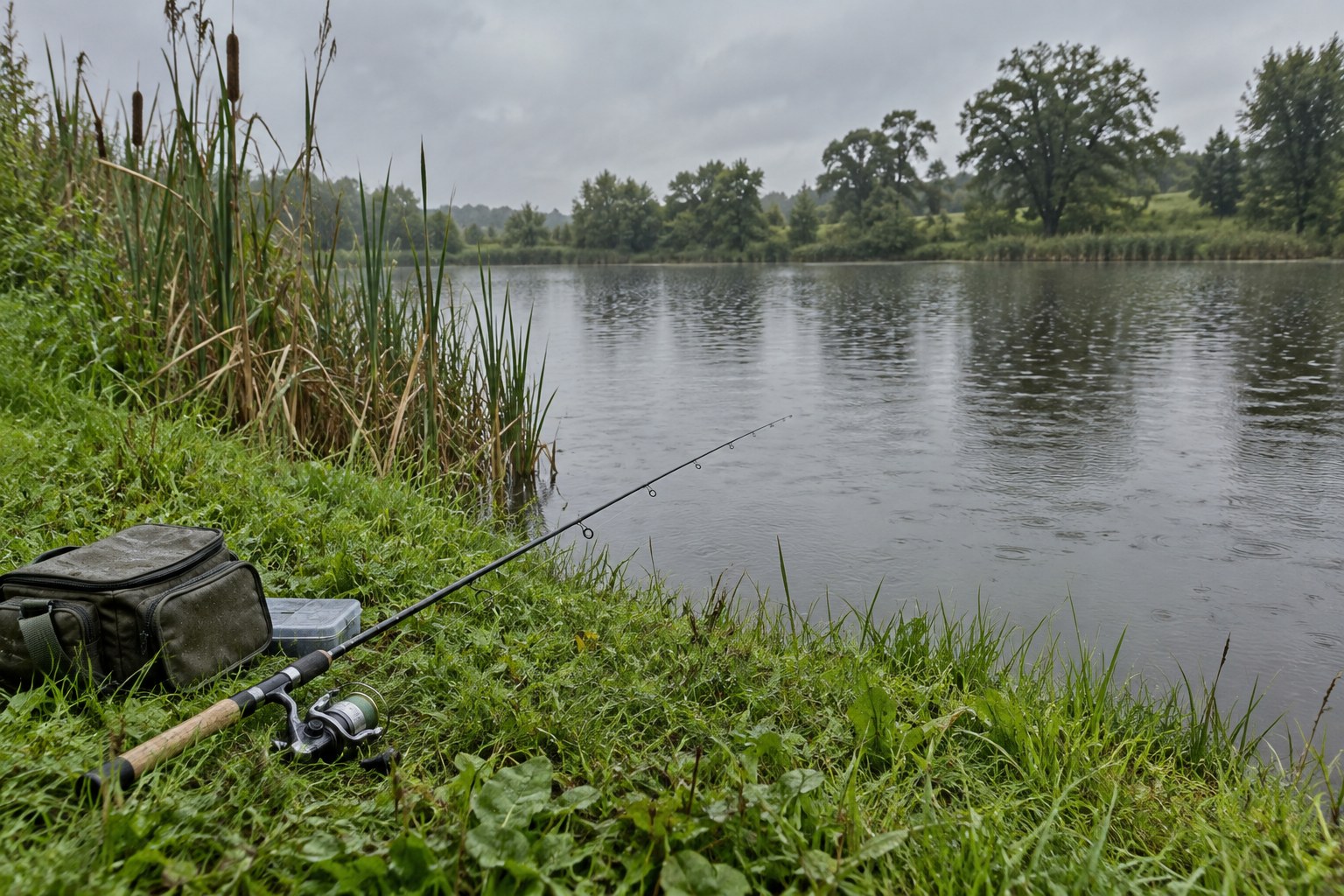
Rain Can Help Fishing, But Storms Change the Rules
Rain can make fishing better, but a storm can make fishing dangerous fast. That is the difference every beginner needs to understand before trusting the old advice that “fish bite in the rain.”
A light shower and a thunderstorm are not the same thing. Light rain can cool shallow water, hide your line with surface ripples, and wash insects or worms into the water. Thunder, lightning, strong wind, rising water, and slippery banks are stop signs.
So the simple rule is this: fish the rain only when the weather is safe. If the sky starts talking, your fishing trip is over for now.
This guide shows you when rainy conditions are usually fishable, when to head in, and where to cast once it is safe to get back on the water.
The Safety Rule: Thunder Means Stop Fishing
If you remember one thing from this article, make it this: when you hear thunder, stop fishing and move to real shelter.
Thunder means lightning is close enough to be a threat. You do not need to see the lightning bolt. You do not need to wait for rain to get heavy. If you can hear thunder, you should leave the bank, dock, pier, boat, or open shoreline.
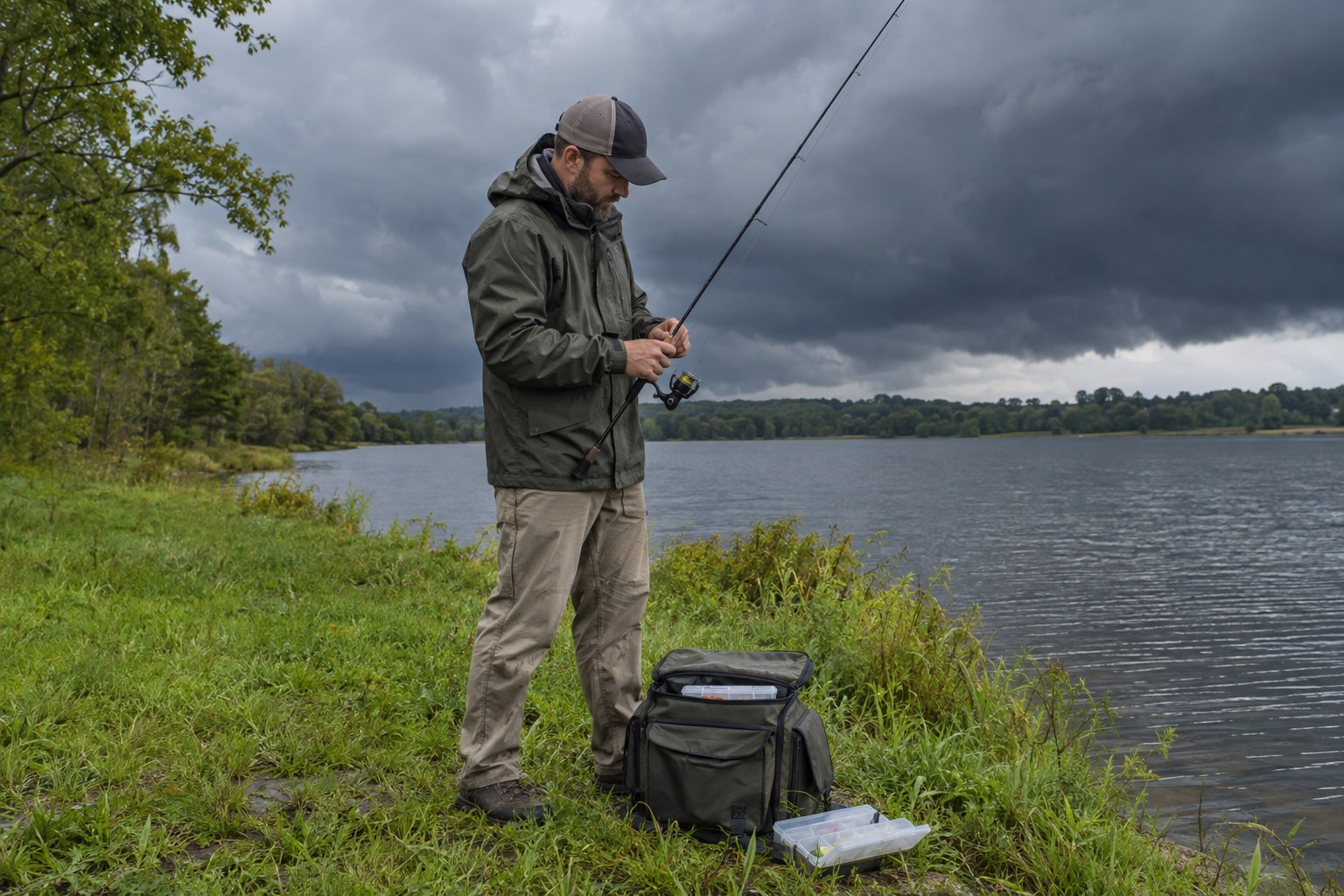
Safe shelter means a substantial building or a hard-topped vehicle. A tree, picnic shelter, dock roof, boat canopy, or bridge overhang is not good enough. Fishing rods, open water, wet ground, and exposed banks are a bad mix during storms.
Use the 30-minute rule. Wait at least 30 minutes after the last thunder before going back outside. That can feel frustrating when the bite seems good, but no fish is worth a lightning strike.
Before you make your first cast, know your exit route. If you are bank fishing, know where the car is. If you are on a boat or kayak, know how long it takes to get back to the ramp. If that answer is “too long,” do not push your luck with building storms nearby.
For a broader safety checklist, pair this with our guide to fishing safety for beginners.
When Rain Is Usually Fishable
Rain is usually fishable when it is light to moderate, there is no thunder, footing is stable, and the wind is not making casting or boat control unsafe.
A steady drizzle on a warm day can be comfortable with the right gear. A cold rain with wind can become a hypothermia risk faster than beginners expect. Even in mild weather, wet banks, boat ramps, rocks, and wooden docks can get slick.
Good rain-fishing conditions often look like this:
- Light rain or drizzle
- No thunder or visible lightning
- Manageable wind
- Stable water level
- Safe footing on the bank or dock
- A clear path back to shelter
Bad conditions look different:
- Thunder, lightning, or dark storm cells nearby
- Fast-rising creeks or spillways
- Muddy banks that slide under your feet
- Strong wind pushing waves onto the bank or ramp
- Water flowing over roads, paths, or low bridges
If you are new, choose the safer option. Fish a pond, small lake, protected cove, or easy bank spot instead of fast rivers or steep shorelines after heavy rain.
Why Fish Often Bite Better in Rain
Rain can help fishing because it changes the water in ways that often make fish more comfortable feeding.
First, rain breaks up the surface. Those ripples can make fish less wary because they cannot see you, your line, or your lure as clearly. That is especially helpful in clear ponds and shallow water.
Second, rain can cool warm surface water. In summer, even a small temperature drop can make shallow banks more comfortable for bluegill, bass, catfish, and other common freshwater fish.
Third, rain can add oxygen and movement. Runoff, inflows, and wind-blown water stir things up. Fish often use that movement because it brings food to them.
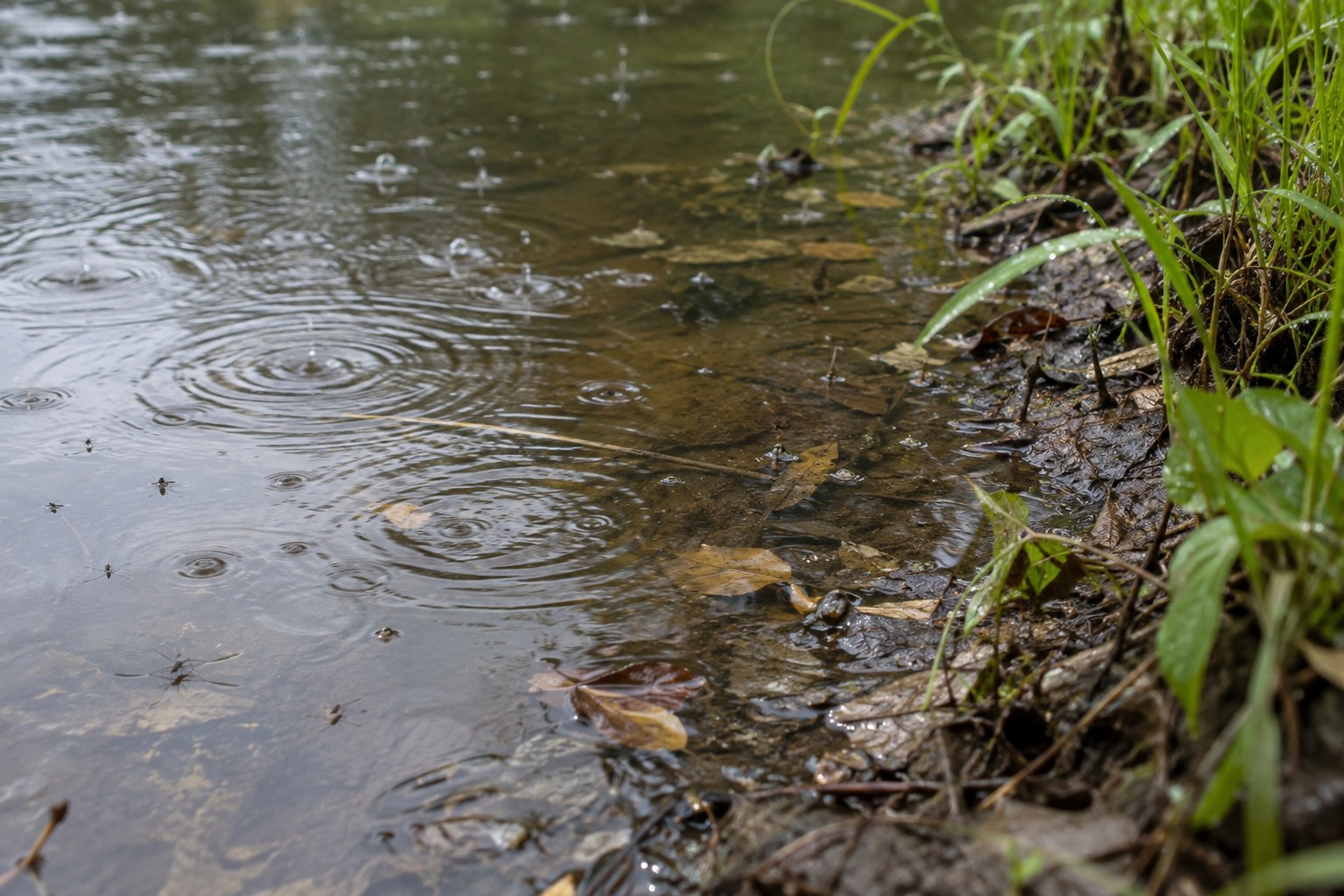
Rain also washes food into the water. Worms, insects, seeds, and tiny bits of organic material can enter along the bank. Baitfish and panfish may move in to feed, and larger fish may follow.
None of this is guaranteed. Fish behavior depends on season, water temperature, water clarity, oxygen, pressure changes, and available food. Rain is a clue, not a promise.
If you want to understand the weather side better, read our guide to barometric pressure and fishing. It explains why fronts and pressure changes matter, without pretending they control every bite.
Where to Cast During and After Rain
In rainy conditions, do not cast randomly across open water. Look for places where rain changes the water.
The best beginner targets are edges. Fish often use edges because food, cover, and current come together there.
Good rainy-day targets include:
- Small inflows where water enters a pond or lake
- Drainage ditches from a safe distance
- Creek mouths after the water settles
- Mud lines where stained water meets clearer water
- Wind-blown banks with baitfish activity
- Calm pockets next to moving water
- Points or corners that collect drifting food
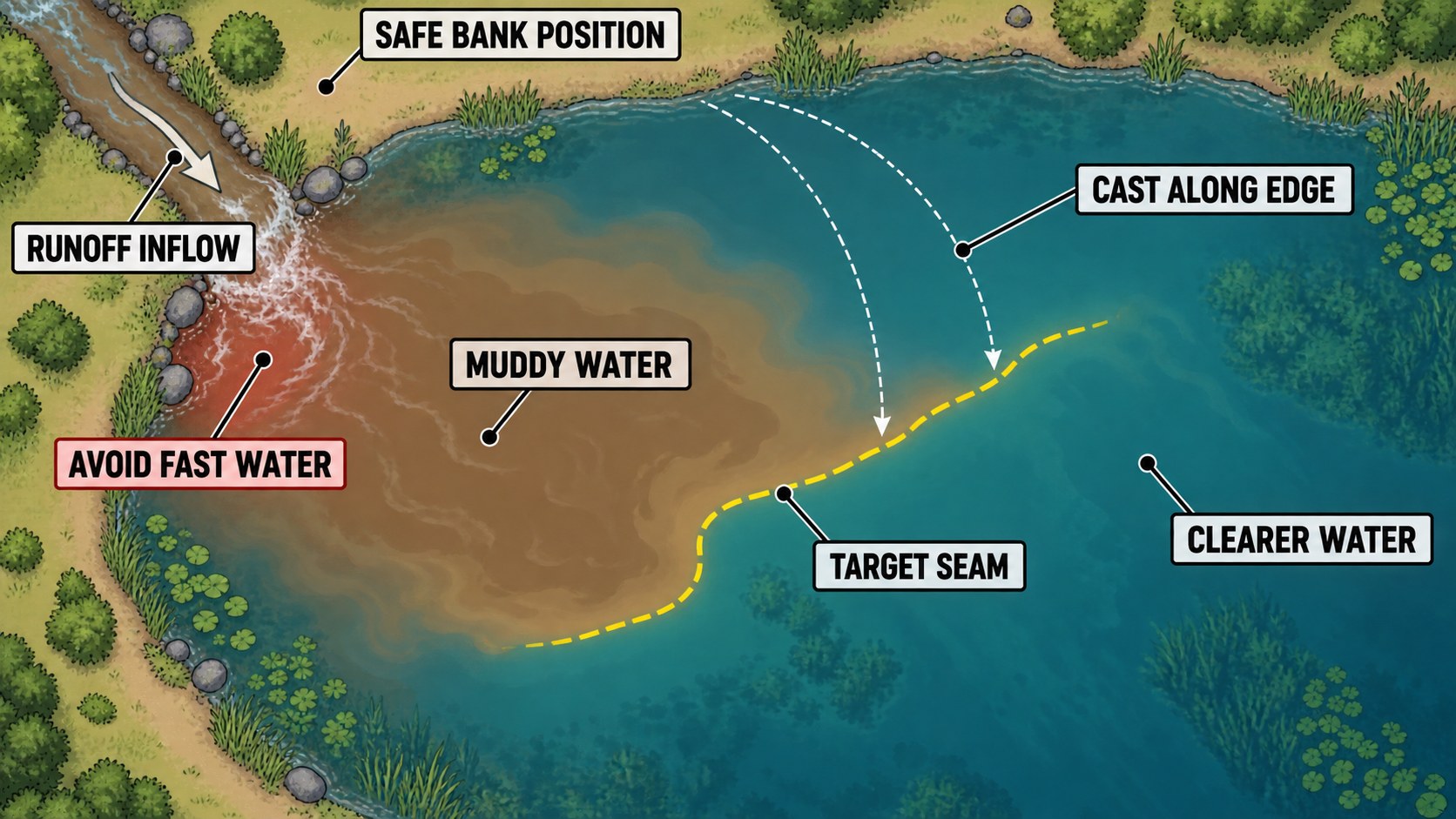
The key is to fish the seam, not the danger zone. A seam is the edge where two water conditions meet, like muddy runoff touching clearer pond water. Fish can sit in the calmer or clearer side and grab food drifting by.
Avoid fast water if you are not experienced. Do not stand near culverts, flooded banks, spillways, or swift creeks after heavy rain. Those places can look fishy, but they can also be unstable and dangerous.
After a heavy rain, water may be too muddy for sight-feeding fish to hunt well. In that case, look for slightly clearer water nearby. The best spot may be the first pocket of water that is stained but not chocolate-milk muddy.
Best Beginner Baits and Lures for Rainy Conditions
Rainy water often calls for simple choices. You do not need a huge tackle box. Pick one bait that moves, one bait you can fish slowly, and one natural bait if you use live bait.
For stained water, try lures fish can feel or notice:
- Spinnerbait
- Bladed jig
- Small crankbait
- Dark soft plastic worm
- Live worm under a bobber or on a simple bottom rig
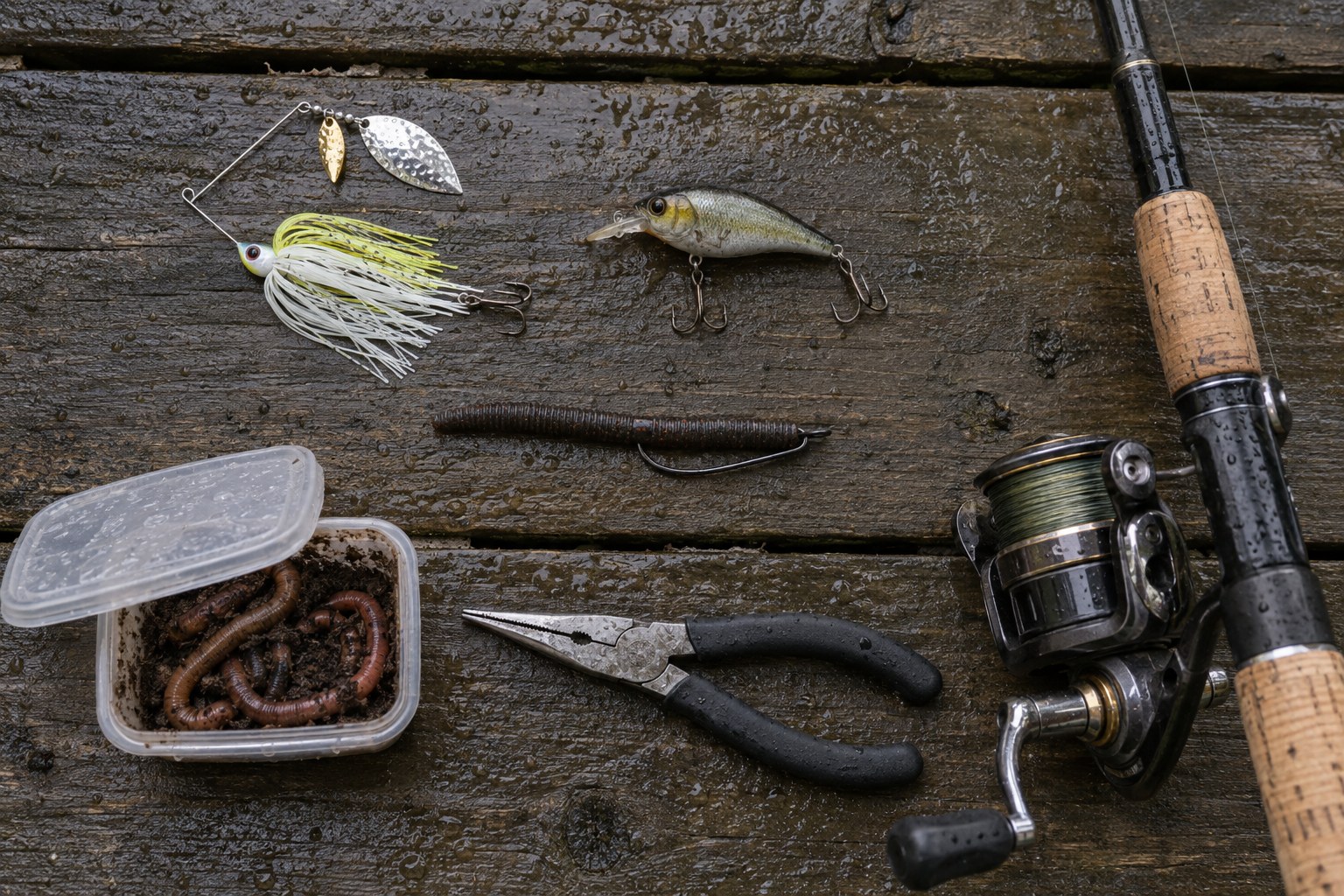
A spinnerbait or bladed jig is useful because it gives off vibration. A crankbait can work when fish are chasing near the bank. A dark worm is easier for fish to silhouette in low light or stained water.
If the rain is light and the water is still clear, you can stay subtle. A small worm, small jig, or natural bait near cover may work better than a loud lure.
Match your retrieve to visibility. In clearer water, you can fish a little faster. In muddy water, slow down and keep the bait near cover, edges, or the bottom so fish have time to find it.
If you are not sure what to tie on, start with a simple rig from our guide on setting up a beginner fishing rig. Rain does not require complicated tackle.
After the Storm: The First Safe Hour Back
The first safe hour after a storm can be productive, but only after the storm has truly passed.
Wait 30 minutes after the last thunder. Then reassess the spot like you are arriving for the first time. Do not assume the bank, ramp, or trail is still safe just because it was safe earlier.
Look at water level, water color, current, and footing. If the water rose fast, if the bank is collapsing, or if the current looks stronger than expected, leave and choose another day.
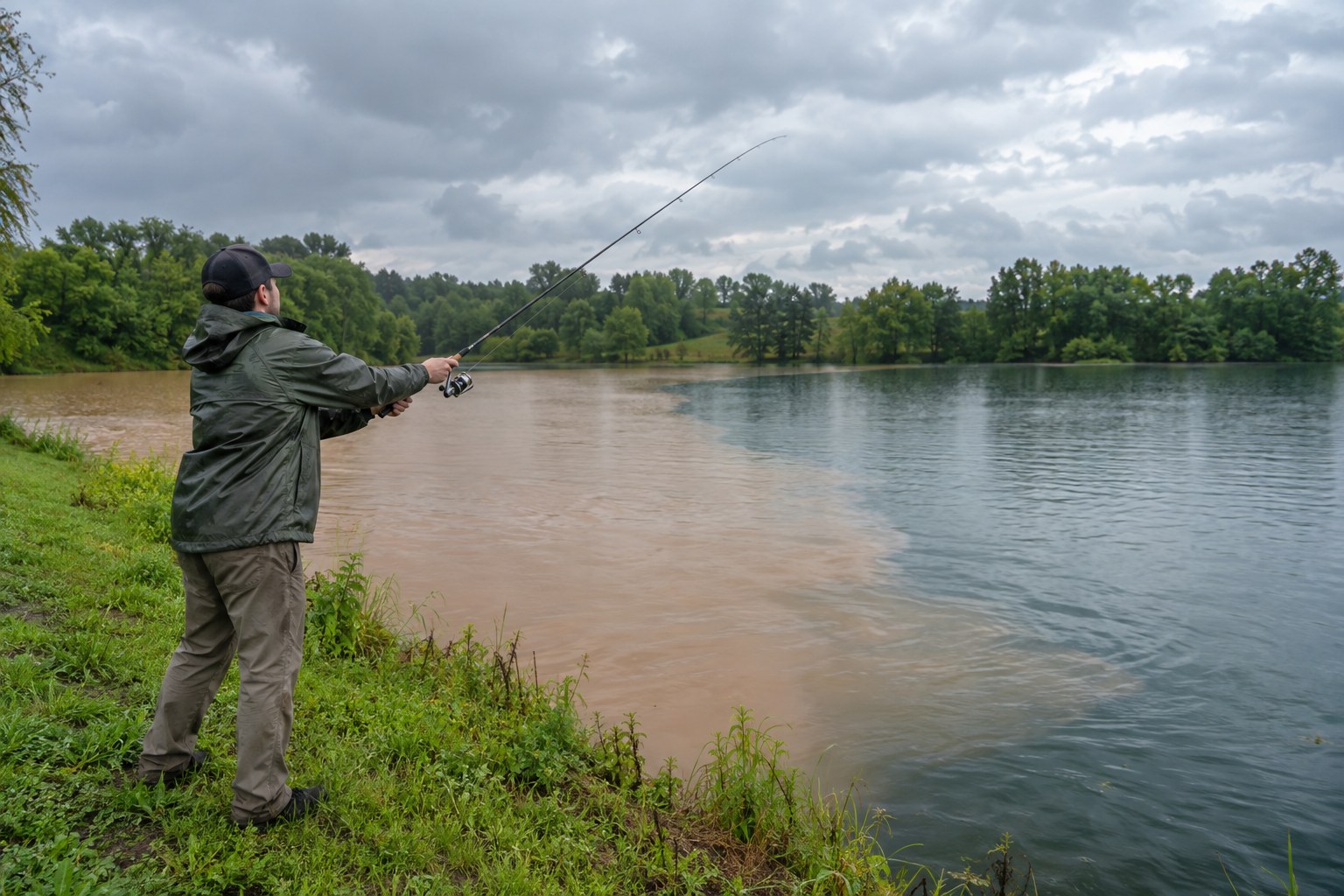
If conditions are safe, start close to shore. Cast along the first clear edge, protected pocket, or inflow seam. Make several casts from different angles before moving.
Post-rain fish often do not spread evenly. They may group around the best food conveyor belt. When you find one bite near an edge, slow down and cover that area carefully.
Beginner Rain Fishing Checklist
Use this checklist before you fish in rain:
- Check radar before leaving home
- Know where real shelter is
- Leave immediately if you hear thunder
- Wait 30 minutes after the last thunder
- Wear a rain jacket, not cotton layers
- Keep your phone in a dry bag
- Bring a towel and dry backup clothes
- Wear shoes with traction
- Avoid flooded banks, culverts, and fast water
- Pack only a few simple baits
- Fish seams, inflows, and protected banks
Rain can be one of the best learning conditions for a beginner because it shows how fish respond to change. Just keep the order right: safety first, location second, lure choice third.
If the weather is only wet, you can often fish it. If the weather is electric, windy, flooded, or unstable, head in and come back later. The fish will still be there.