
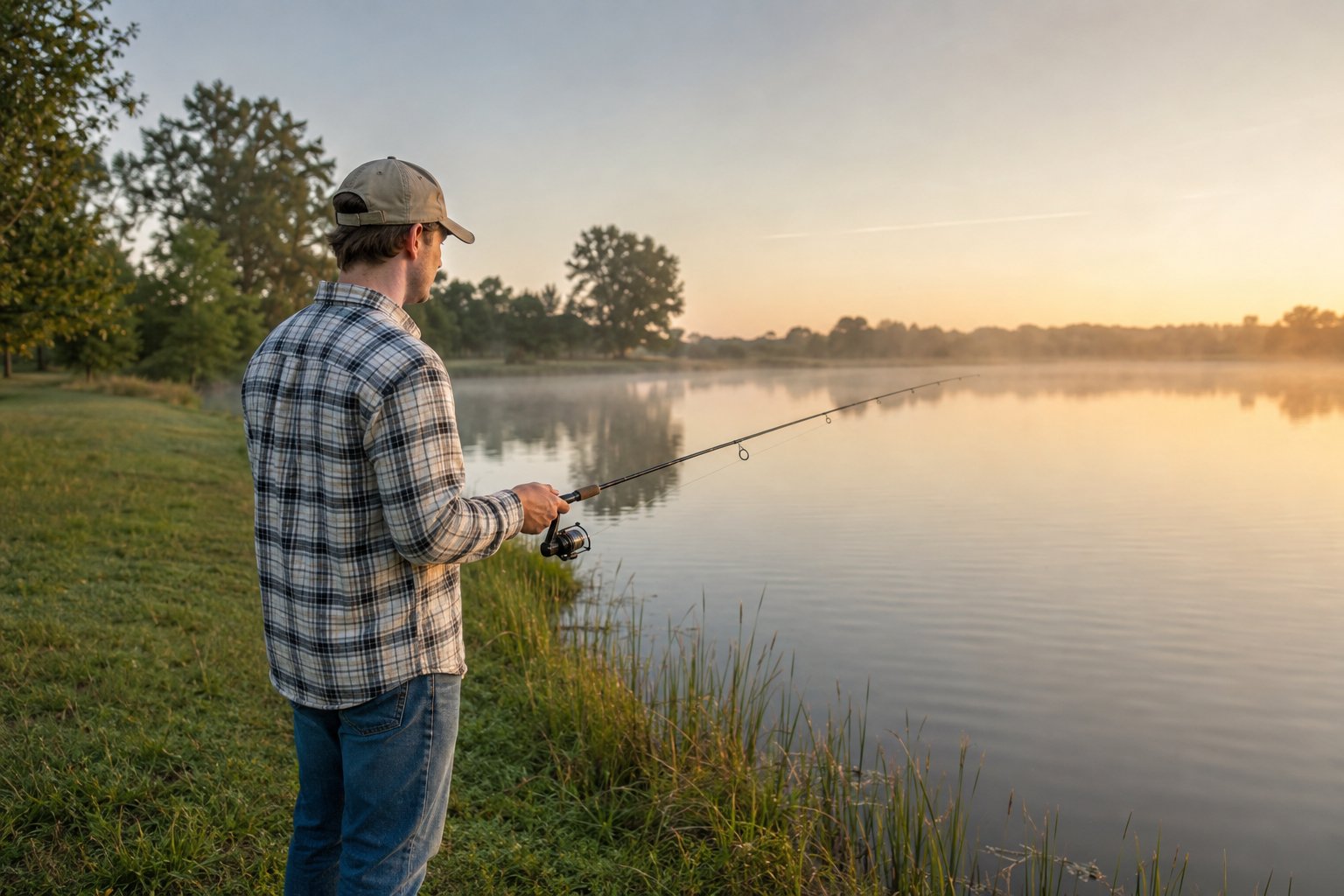
So you’ve got your rod, your line, and a good spot by the water. And then you pick the rod up and realize you don’t actually know how to hold it. Should your hand be near the reel or at the butt end? Do you grip it like a baseball bat or a pen? Where does your other hand go?
It’s a fair question, and it matters more than it looks. Casting, feeling a bite, setting the hook, and fighting a fish all start with how the rod sits in your hand and where your body is standing. The good news: there’s no single perfect grip to memorize. There’s a solid starting position — and a few small adjustments — that make everything feel natural within a day or two.
The Basic Grip: Reel Seat, Stem, and Thumb
Most beginners start with a spinning rod — the setup where the reel hangs under the rod — so that’s where we’ll look. If you’re not sure which rod and reel you have, our beginner rod and reel combo guide covers the basics.
First, a few words:
- Reel seat — the part of the rod where the reel clamps on.
- Reel stem (or reel foot) — the narrow neck that connects the reel to the seat. It’s the landmark your hand works around.
- Rod blank — the actual rod shaft, not the handle.
Here’s the core position:
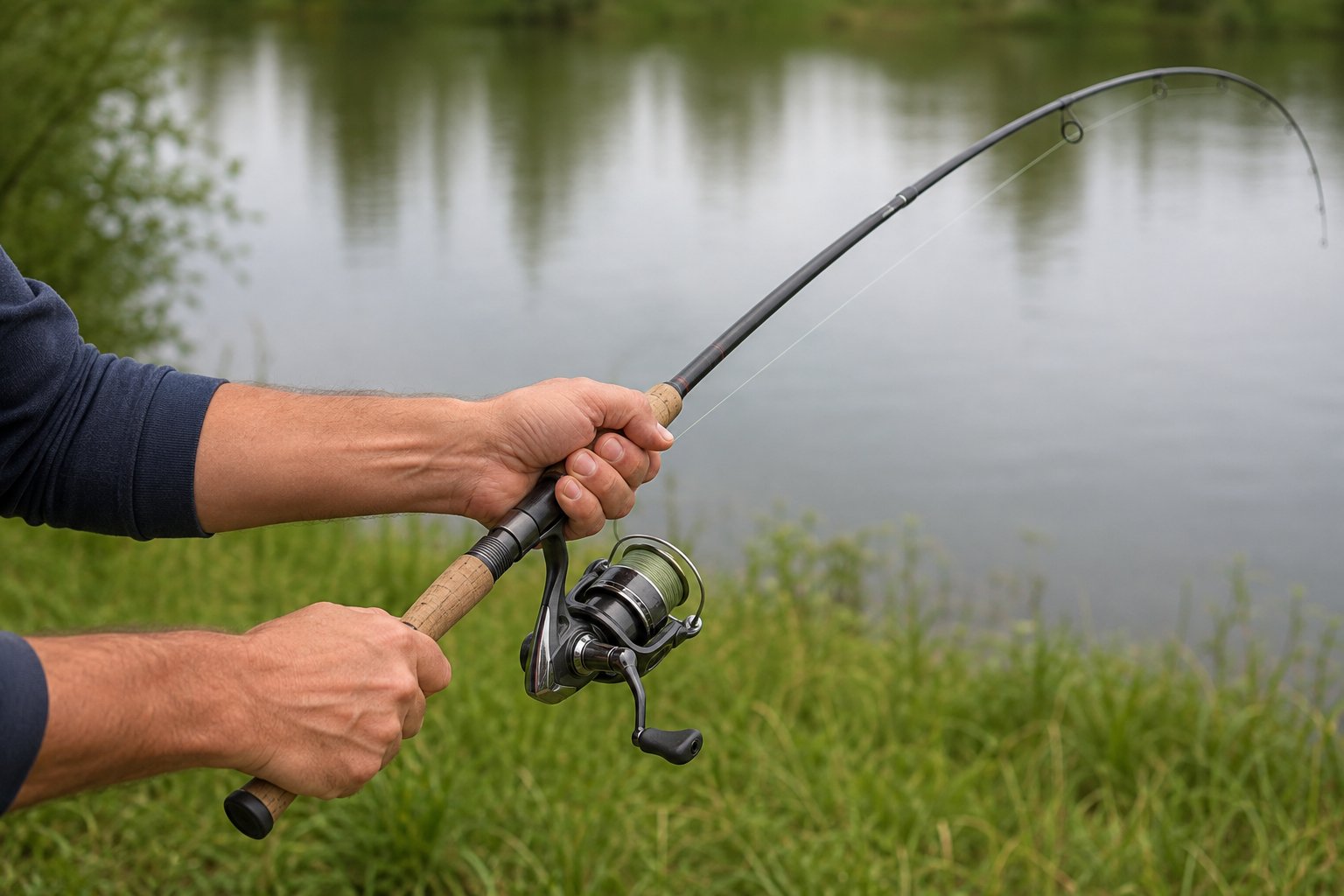
- Hold the rod in your dominant hand, just above the reel seat.
- Let the narrow reel stem rest between your middle fingers. Most anglers find a “two and two” split comfortable — index and middle finger in front of the stem, ring and pinky behind it. Some people prefer one finger in front and three behind; both work.
- Put your thumb on top of the cork or foam handle, pointing toward the rod tip.
- Keep your index finger free. It doesn’t wrap under the handle with the rest — it’s the most active finger in your hand.
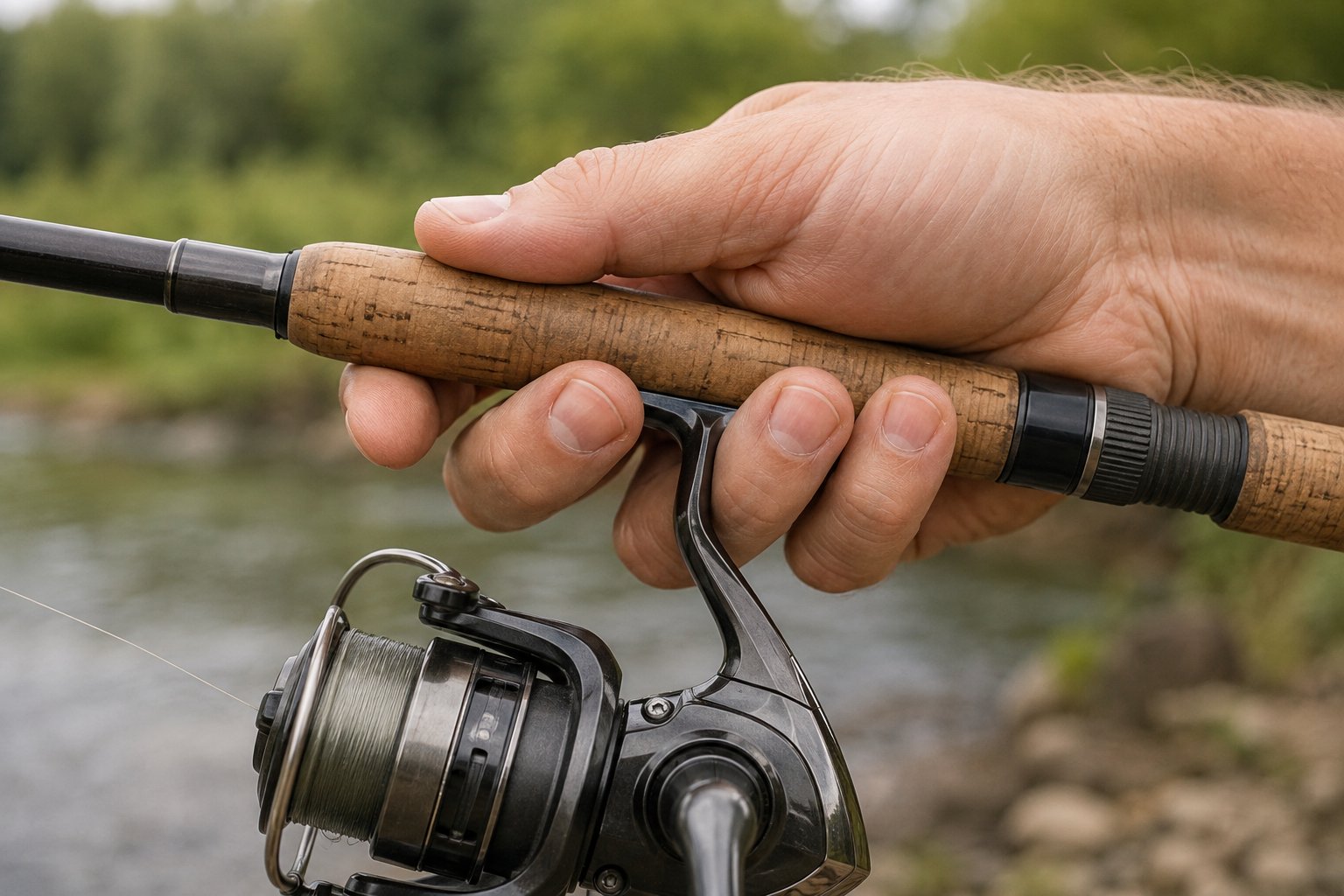
Why the thumb on top? It’s the backbone of the grip. When a fish bites, your hook set is a quick snap of the forearm and wrist, and the thumb gives that motion its leverage. It’s also what you use to steer the rod when you want to move a fish away from cover.
Why the index finger free? Two jobs. Before you cast, it pinches the line against the handle so it doesn’t fly loose when the bail is open. And while you wait, resting it lightly along the rod blank lets you feel subtle “ticks” — a lure dragging on a rock, a fish inhaling bait. Vibrations travel through the solid blank better than through the foam, so that finger is your bite detector.
Firm, Not Fisted: How Tight Should You Grip?
The most common beginner mistake isn’t where the hand goes. It’s how hard the hand squeezes.
If your knuckles are white, you’re gripping too hard. A death grip sounds like it should give you more control, but it does the opposite. It numbs the vibrations that travel up the rod, so you stop feeling light bites. It also fatigues your hand and wrist fast, which is why your arm feels sore after an hour that shouldn’t have been hard work.
The target feel: firm enough that the rod can’t slip out of your hand if a fish hits, relaxed enough that you can feel a light tap through your fingers. Think “holding a small bird” — secure, but gentle.
A quick test: if your hand aches after twenty or thirty minutes of casual fishing, your grip is probably too tight, or your hand is in the wrong spot. Both are easy to fix. If your hand tires, you can also shift the finger split — from two-and-two to one-and-three — which moves the work to different muscles and gives your hand a break.
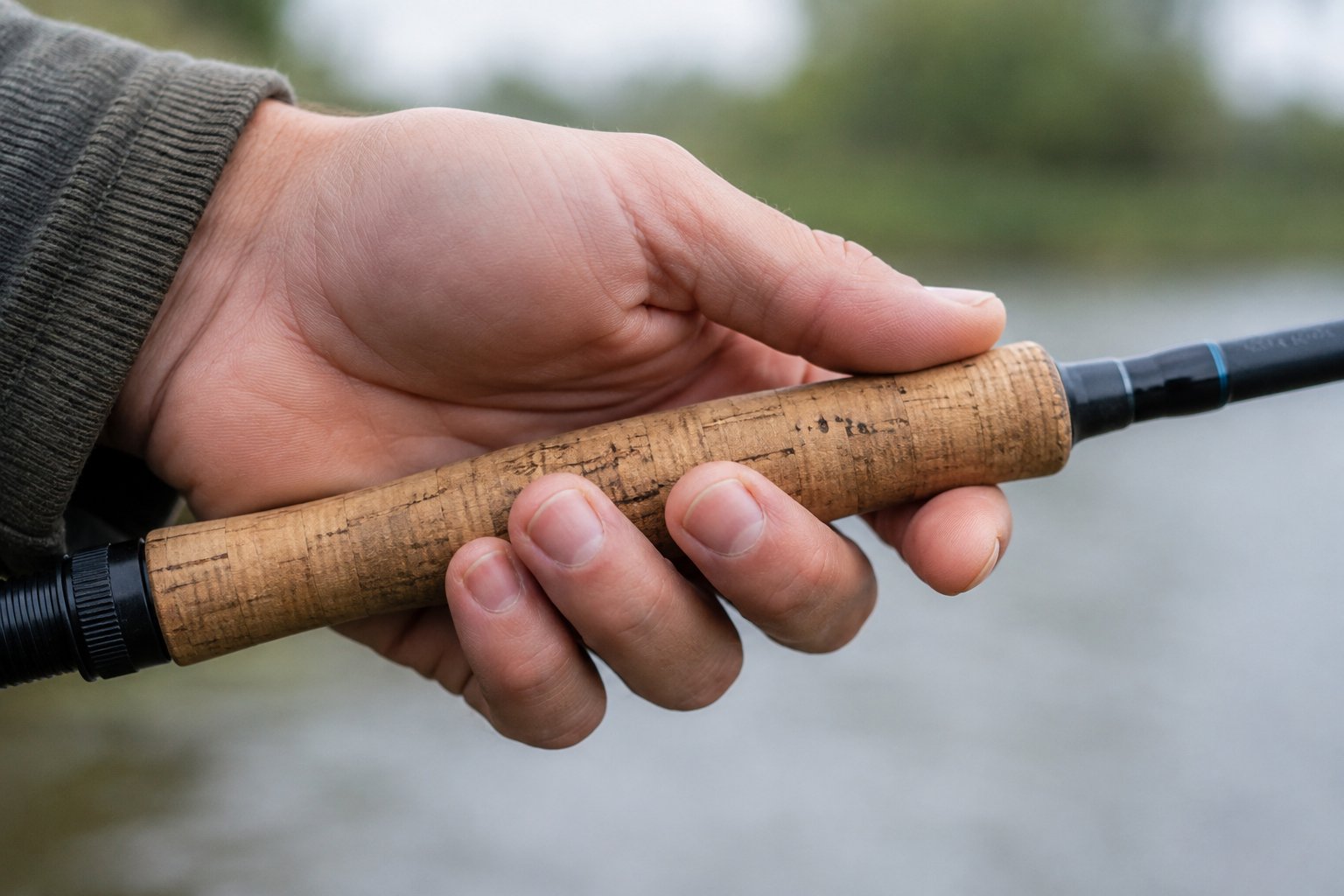
Stance: How to Stand So the Rod Works With You
Beginners usually think about the hand and never think about the feet. But where you stand changes how the rod moves.
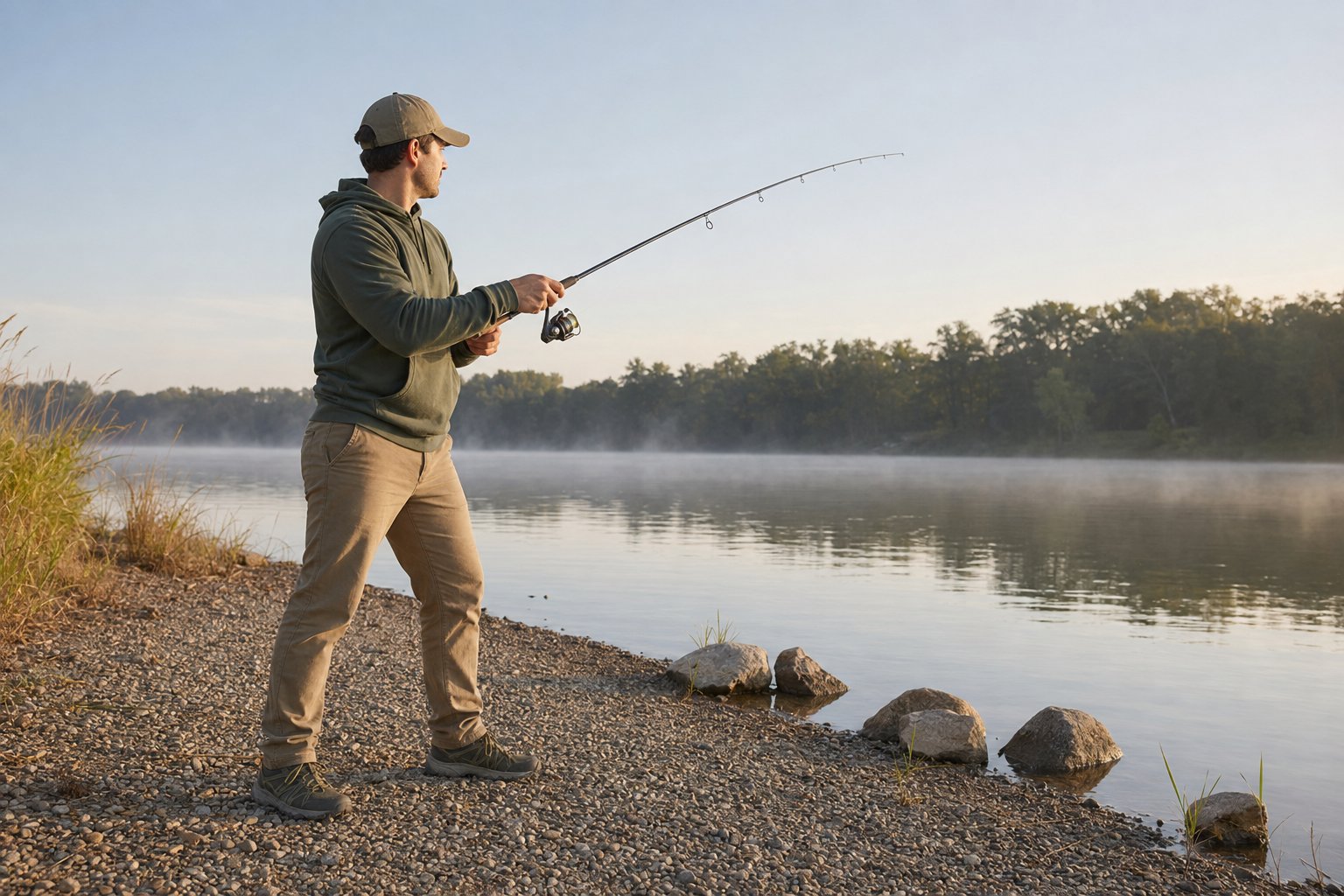
Here’s a stance that works for most people:
- Feet shoulder-width apart, planted. You want stability, not a fashion pose.
- Body angled slightly toward your target — roughly a quarter turn, so the water is more or less in front of you rather than dead ahead.
- Rod arm closest to the target. If you’re holding the rod in your right hand, your right side faces the water.
- Rod tip aimed at about eye level when you’re ready to cast.
- Casting elbow bent around ninety degrees, and keep your wrist straight — neutral, not bent up or down. A bent wrist strains the joint and dulls your feel.
There’s one more thing worth knowing: every rod has a natural balance point, the spot where the rod sits level on one finger. The closer your hand is to that point, the more the rod feels even — the tip isn’t heavy, the butt isn’t heavy. Hold it too far back or too far forward and your casts will feel “off” in a way that’s hard to explain.
If you want the full casting motion spelled out — the backswing, the release, the follow-through — our how to cast a fishing rod guide picks up exactly where this stance leaves off.
The Other Hand: Casting, Reeling, and Fighting
Your non-dominant hand isn’t an afterthought. It has three separate jobs, and knowing which job it’s doing stops a lot of awkwardness.
Before the cast, it holds your lure steady and (on a spinning reel) flips the bail open, while the index finger of your rod hand pinches the line. This little handoff is what keeps the line from unspooling early.
During the cast, it can support the rod butt — the very end of the handle — adding power and stability, especially on longer casts. Let the forearm drive the motion rather than flicking with just the wrist; the rod does the work, your hand just guides it.
While reeling, it turns the reel handle. Here’s a convention that confuses beginners: most right-handed anglers hold a spinning rod in their right hand and reel with their left. Modern spinning reels let you move the handle to either side, so you can set it up so your rod hand stays put and your other hand does the reeling. No hand-switching after every cast.
When a fish hits, the second hand moves onto the rod for leverage — on the foregrip (the part of the handle above the reel) or down near the butt. Keep the rod angled at about forty-five degrees to the water, not straight up. Holding the rod vertically to lift a fish — anglers call it high-sticking — loads the thin tip with all the fish’s weight, and that’s how tips snap.
For the full sequence from first nibble to a fish in your hands, see our guide on how to reel in a fish.
Small Mistakes That Make Holding a Rod Feel Hard
If holding a rod still feels awkward after a couple of trips, one of these is usually the cause:
- Hand too far behind the reel. When your whole hand is behind the reel seat, the reel’s weight pulls against your wrist the entire time. It’s the “baseball bat” position, and it’s a top cause of wrist fatigue. Move up until the stem is between your fingers.
- Wrist bent up or down. Keep it straight, in line with your forearm. A cocked wrist cuts your sensitivity and tires out.
- Casting with only the wrist. Short, choppy casts and a tired arm come from here. Let the forearm drive the swing and keep the wrist stable.
- Ignoring hand size. If you have small hands, a thick handle can feel like a fire hose — look for slimmer grips. If you have larger hands, sitting a little farther back on the handle can help. There’s no shame in adjusting for your hand.
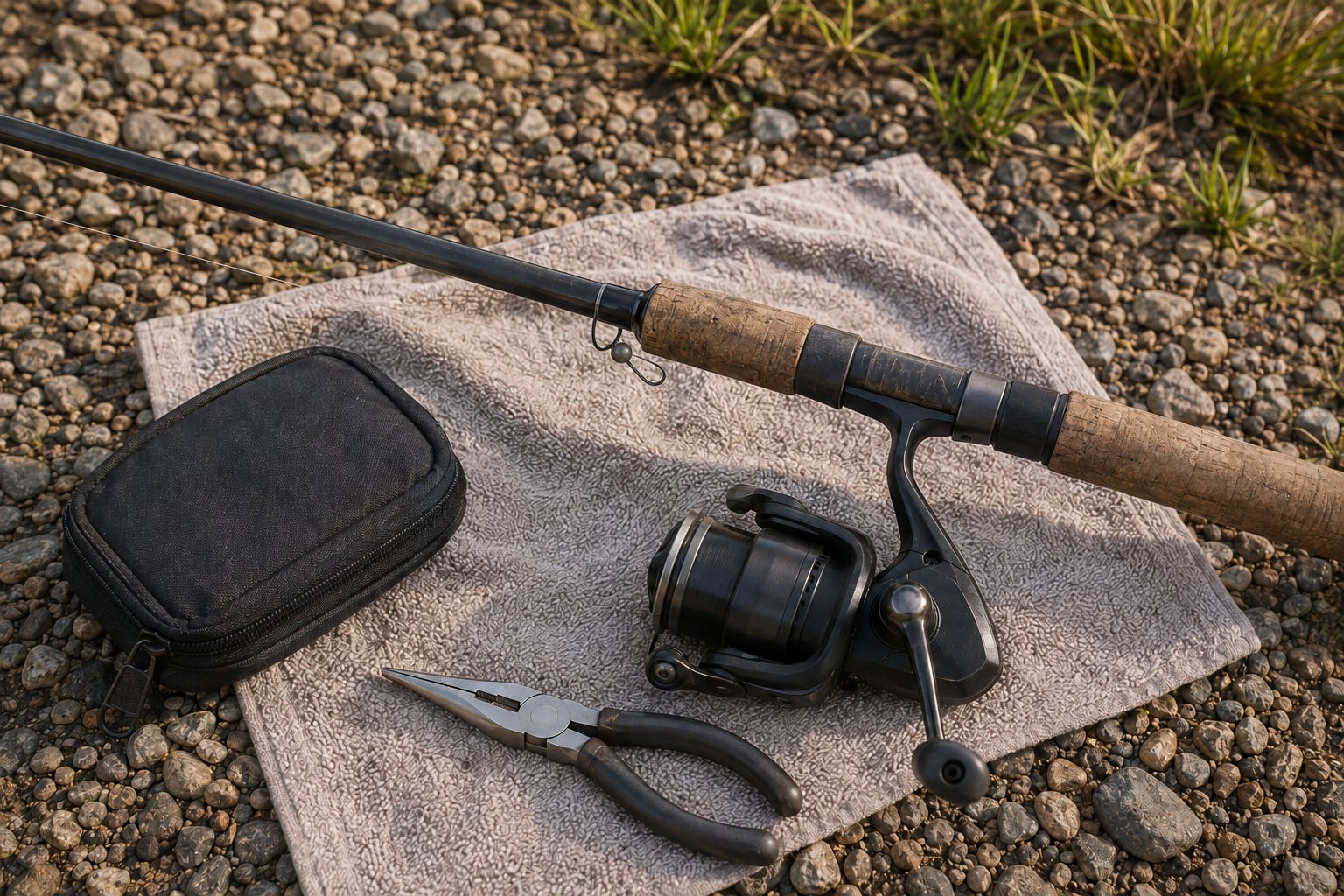
- Walking with a swinging hook. When you move between spots, park the lure in the hook keeper (the small loop or clip near the handle) and keep the line tidy. A free-swinging hook is how people end up with hooked fingers and tangles.
The Short Version
There’s no single correct way to hold a rod — there’s a good starting position, and then your hands learn the rest. Grip just above the reel seat with the stem between your middle fingers, thumb on top, index finger free. Stand with your feet planted and your body angled toward the water. Let your other hand do its jobs: open the bail, support the butt, turn the handle, and add leverage when a fish pulls.
Practice it away from the water first — a few easy casts in the yard with a practice weight (or even a handful of keys tied on) builds the muscle memory so that when you’re at the lake, you’re thinking about where to cast, not how to hold the rod. The rest takes care of itself.