
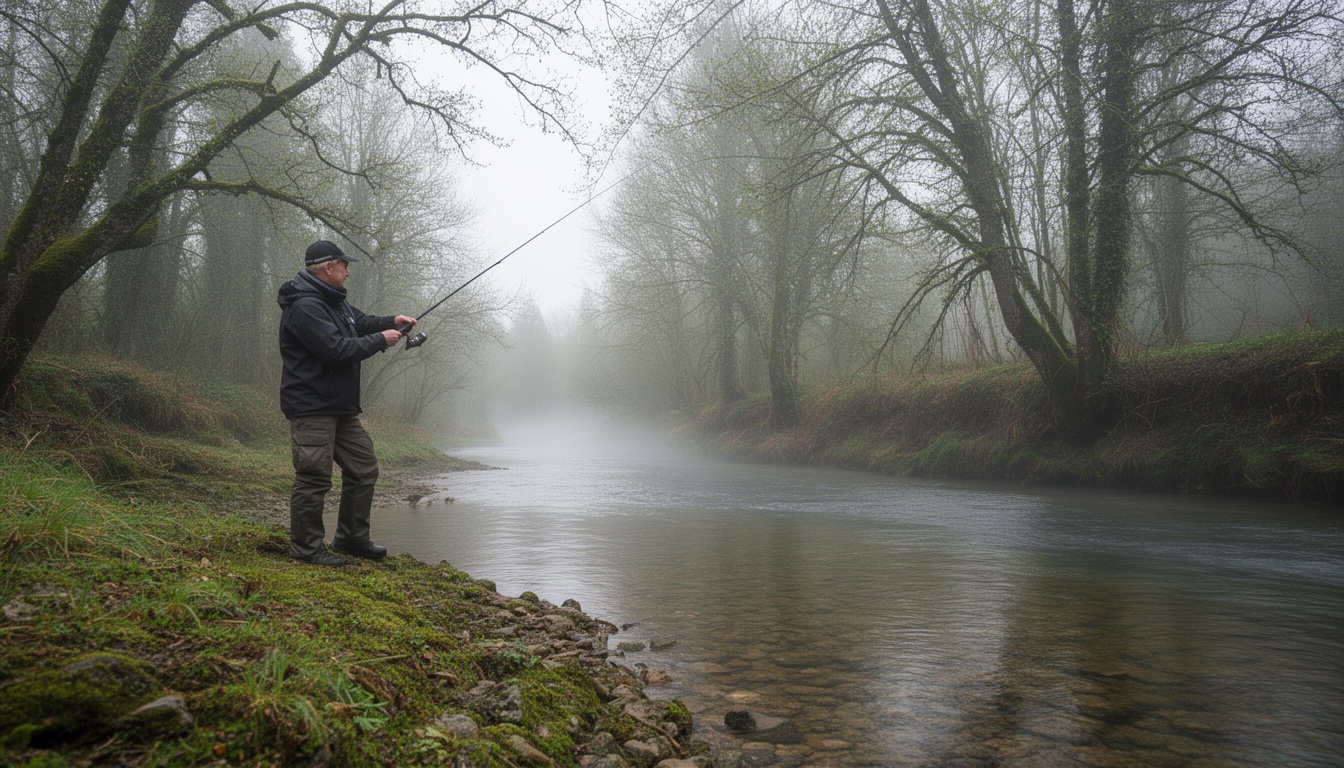
You don’t need a car full of gear, a boat, or even a lake in your backyard to start fishing. Some of the best early fishing experiences happen in the small creeks and streams that flow right outside your home. Creek fishing is accessible, usually legal on public land, and requires less equipment than lake or pond fishing. And despite their size, creeks typically hold fish — from small sunfish to quality smallmouth bass to year-round trout in spring-fed waters.
This guide covers everything you need to start fishing creeks and springs, from choosing the right gear to reading water like an experienced angler.
Spring Creeks vs. Run-off Creeks — Know Your Water
Not all creeks are the same. The two main types you’ll encounter are spring creeks and run-off creeks, and knowing the difference helps you understand what fish to expect.
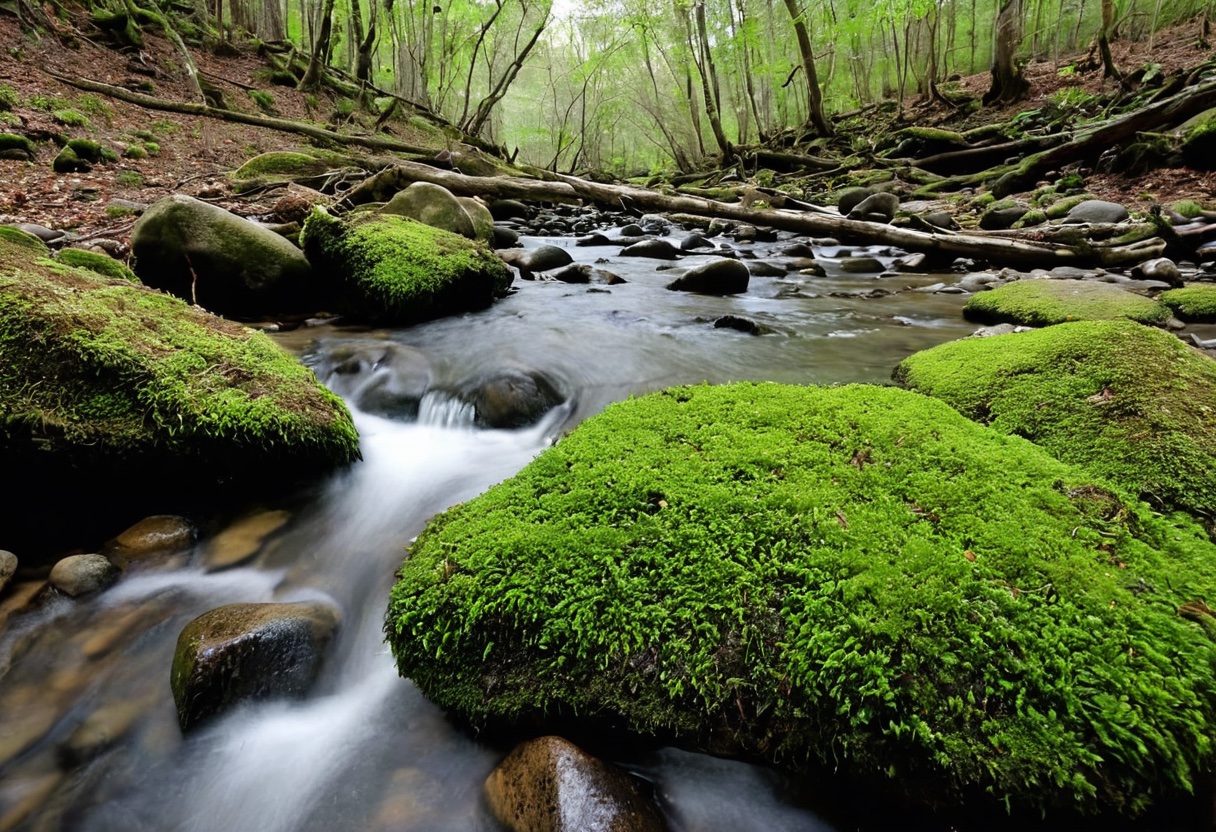
Spring creeks are fed by underground water — groundwater that seeps through rock and soil. This gives them stable temperatures year-round, typically between 45-55°F (7-13°C). Because the water stays cold even in summer, spring creeks often support trout populations all year, even in warm states like Pennsylvania or Georgia. The water is usually crystal clear, and the banks are lined with vegetation.
Run-off creeks are fed by rainfall, snowmelt, and surface water. Their temperature and flow change significantly with the seasons — warm and slow in summer, cold and fast in winter. These creeks typically hold smallmouth bass, sunfish, and occasionally stocked trout in the colder months.
To tell them apart: spring creeks maintain steady flow regardless of recent rainfall, while run-off creeks swell after rain and dry up in drought. Water temperature is the easiest clue — if the creek is cold and clear in July, you’re probably on a spring creek.
What Fish Live in Creeks
The fish you’ll find in a creek depend on water temperature, geography, and whether the creek connects to larger bodies of water. Here are the species you’re most likely to encounter:
Trout — Brook trout are native to cold spring creeks across the eastern United States. Rainbow and brown trout are often stocked in both spring and run-off creeks. Creek trout tend to be smaller than their lake counterparts but can grow surprisingly large in productive spring runs.
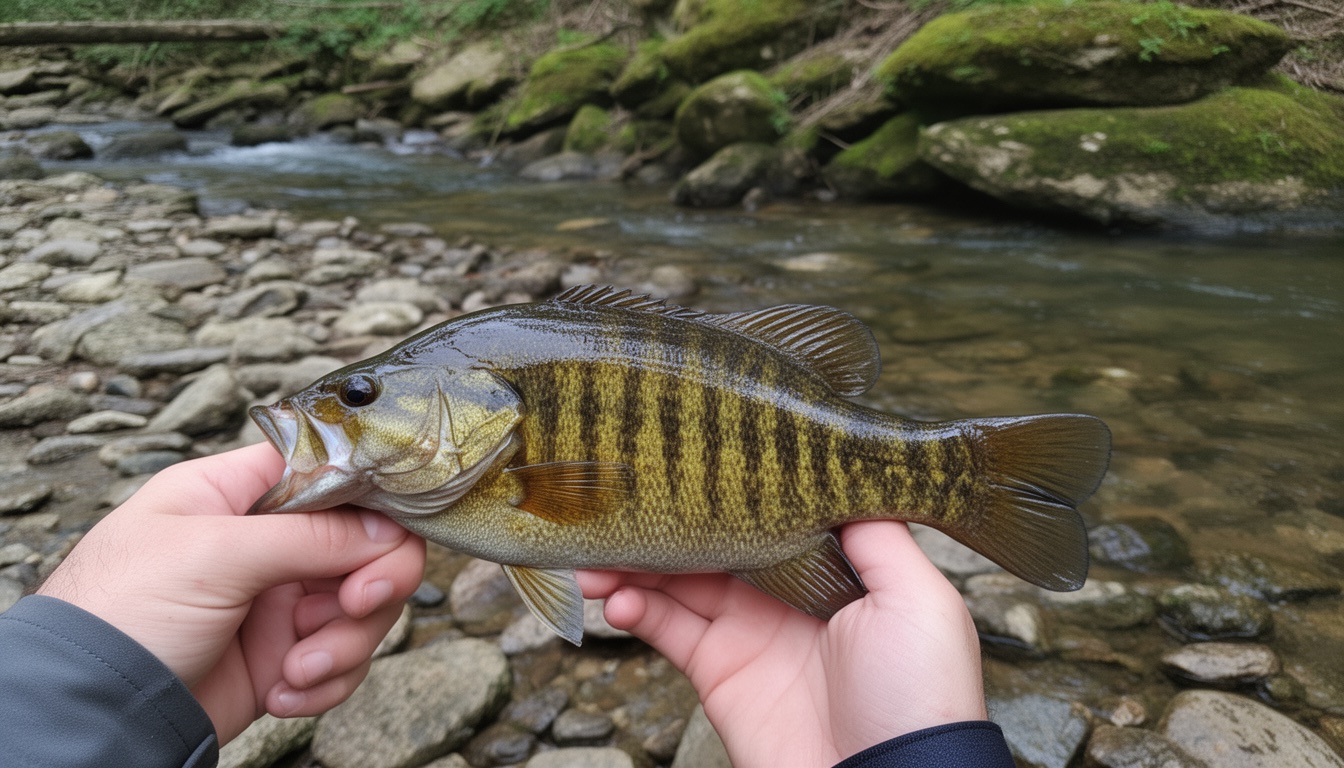
Smallmouth bass — These are the prize fish of rocky creek systems. Smallmouth love the gravel-bottomed riffles and deep pools that characterize many creeks. They’re fierce fighters and typically grow to 1-3 pounds in creek environments.
Sunfish (bluegill, green sunfish, redear) — The most approachable creek fish for beginners. Sunfish hold in shallow riffles, along pool edges, and near cover. They’ll eat almost anything you offer and are great for first-time anglers and kids.
Shoal bass — Found mainly in southern creek systems from Georgia through the Carolinas, shoal bass look like small bass with a distinctive dark spot on the dorsal fin. They rarely exceed 4 pounds but put up a spirited fight.
Darters — Tiny bottom-dwelling fish (1-3 inches) found in clear, rocky creeks. They’re not typically targeted but are fun to spot for new anglers curious about creek ecosystems.
Reading Creek Structure — Where the Fish Are
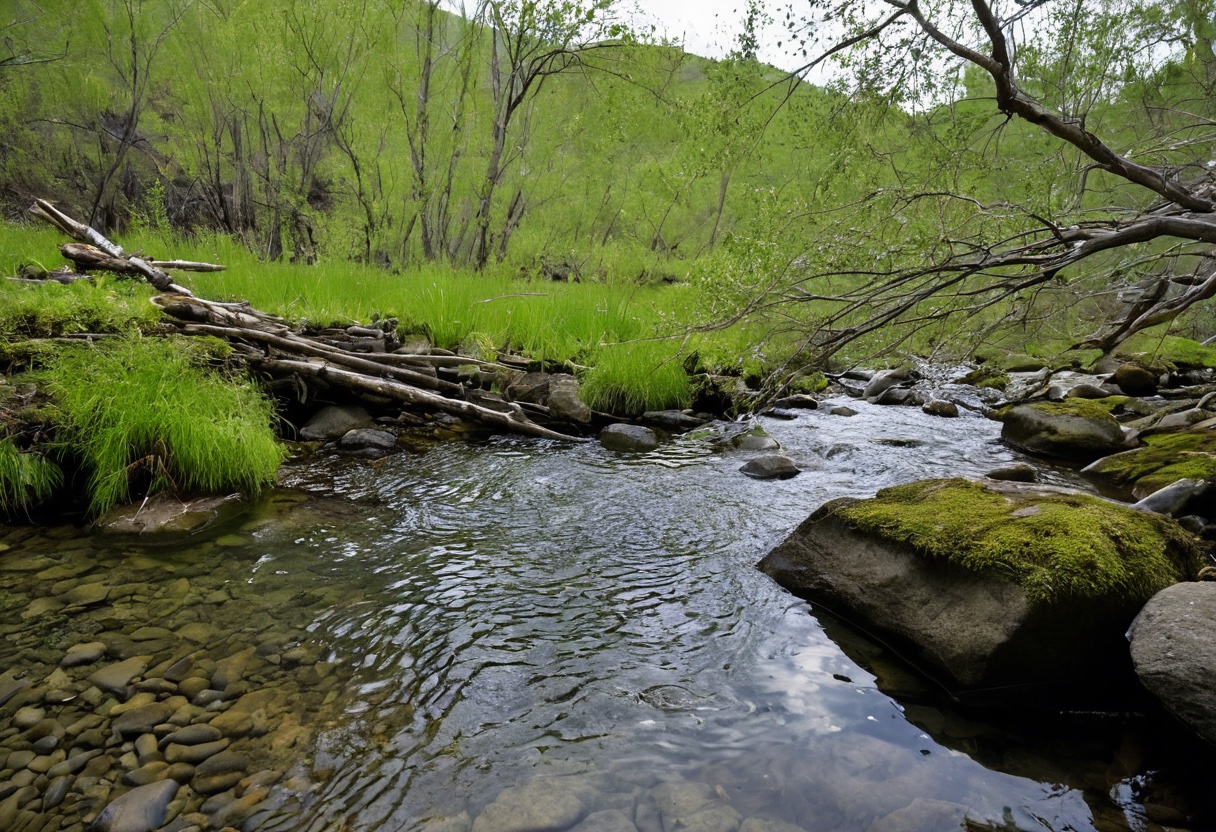
Creek fishing isn’t about casting randomly into the water — it’s about knowing where fish hold. Creeks have a predictable structure that fish use for resting, feeding, and escaping current. Learning to read this structure is arguably the most useful skill a creek angler can develop.
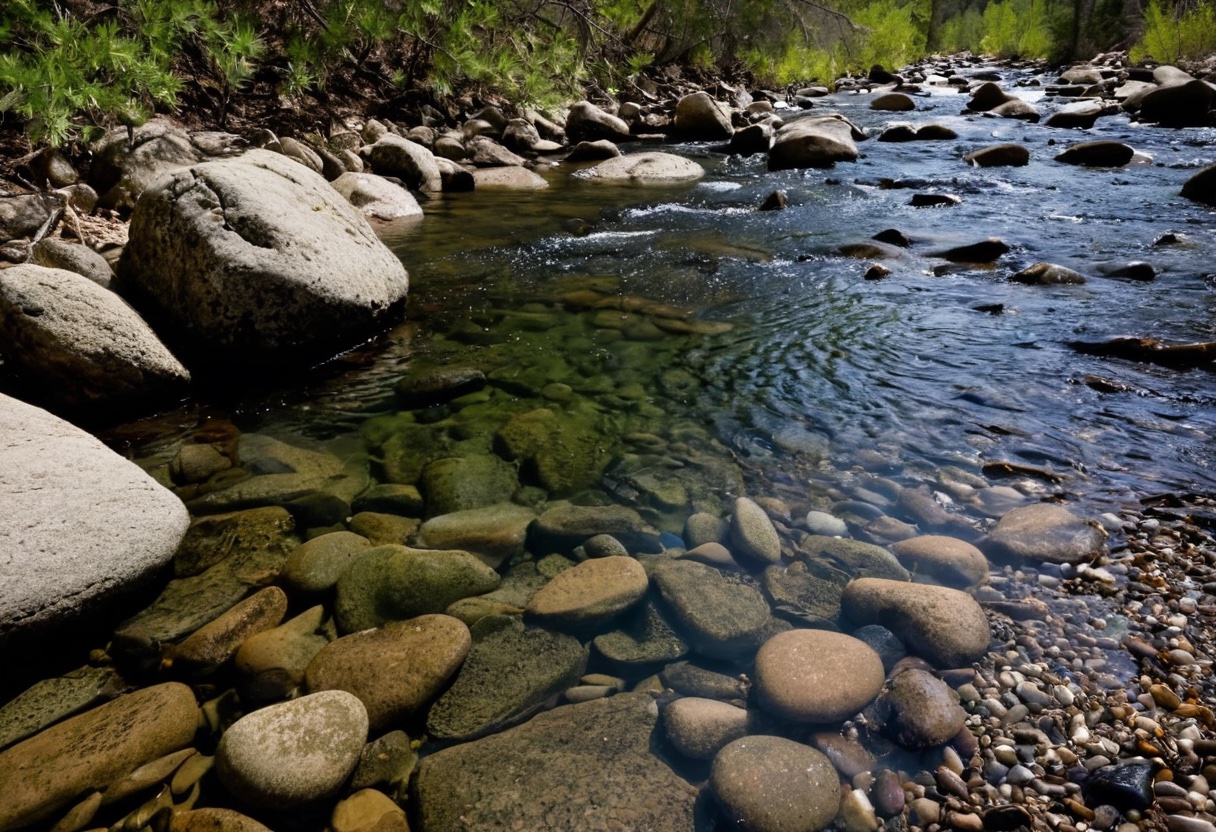
Pools are the deepest, slowest sections of a creek. Fish rest here to conserve energy. The head of a pool — where fast water from a riffle feeds into deeper water — is typically the most productive spot. The tail of a pool, where it transitions back to faster water, is also worth fishing, especially in the evening.
Riffles are shallow, fast sections where water flows over rocks and gravel. Fish rarely hold in the middle of a riffle — it takes too much energy to stay there. Instead, they position at the edges, where food washes downstream but the current is manageable.
Runs sit between riffles and pools with moderate depth and steady flow. Fish hold along the edges of runs, near the bank or where a current seam separates faster from slower water.
Seams and edges — the boundaries between fast and slow water — are where ambush predators like smallmouth and trout sit, waiting for food to drift by. If you can spot a seam, cast to it.
Outside bends — when a creek curves, the current scours the outside of the bend, creating deeper water. Fish typically hold in these deeper outside bends. The inside of a bend usually has shallower, slower water with less activity.
Cover matters in creeks just like it does in lakes. Overhanging trees, log jams, large rocks, and undercut banks all provide shelter where fish wait. Cast near any visible cover.
Gear and Tackle for Creek Fishing
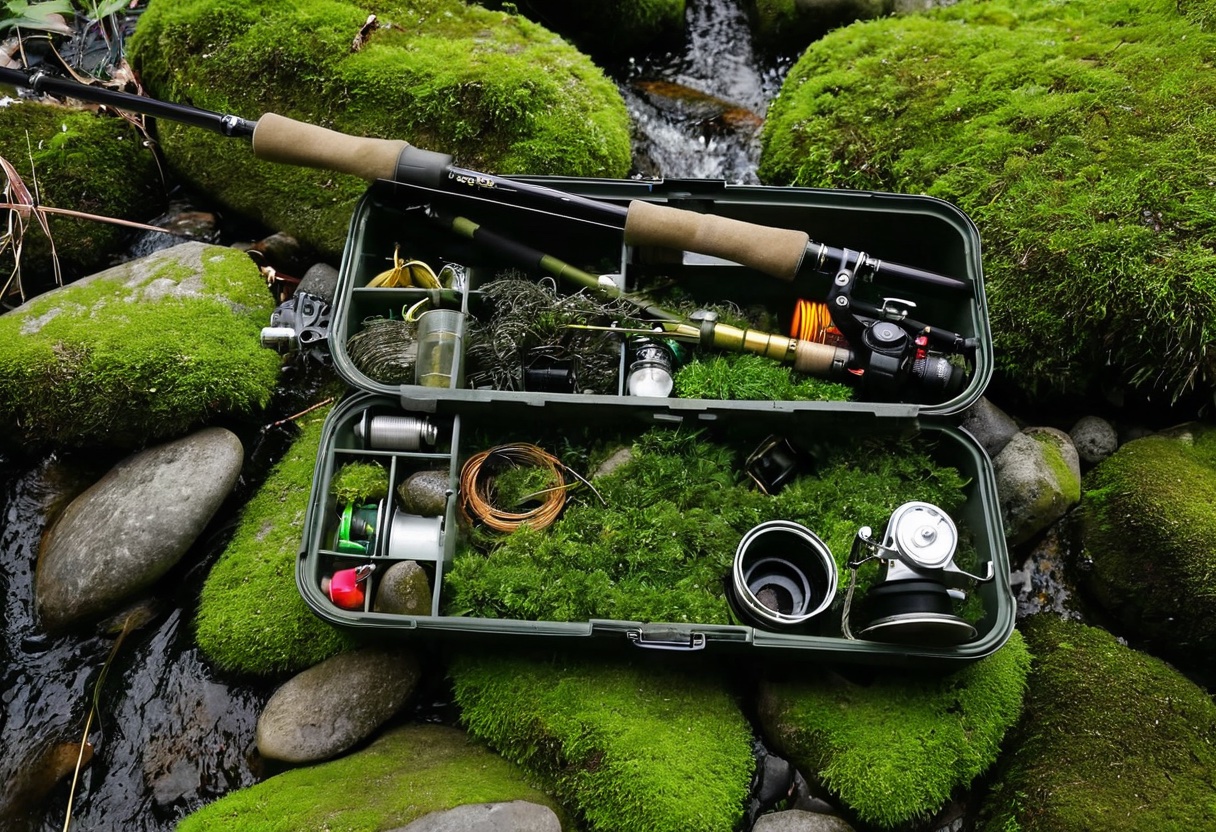
Creek fishing doesn’t require a full rack of rods. In fact, less is usually more in tight creek environments where accuracy matters more than distance.
Rod: A 6 to 7-foot ultralight or light-power spinning rod is ideal. The shorter length helps you cast accurately around trees, branches, and low-hanging limbs that line most creek banks. Anything longer than 7 feet is typically more of a hindrance than a help.
Reel: A small spinning reel (size 1000-2500) spooled with 4 to 8-pound test monofilament or fluorocarbon line. Fluorocarbon is slightly better in clear spring creeks because it’s less visible underwater, but monofilament works fine and is more forgiving when you’re still learning knots.
Jigs and hooks: Small jigheads in the 1/32 to 1/16 ounce range. Hook sizes #10 to #8 are the sweet spot — small enough for creek fish mouths but strong enough to hold a quality smallmouth.
Leaders: Not essential for beginners, but if you’re fishing for wary spring creek trout, a fluorocarbon leader (4-6 lb) tied to your main line can make the difference.
Best Baits and Lures for Creek Fishing
Small presentations win in creeks. The fish are smaller, the mouths are smaller, and the current demands lightweight tackle that drifts naturally.
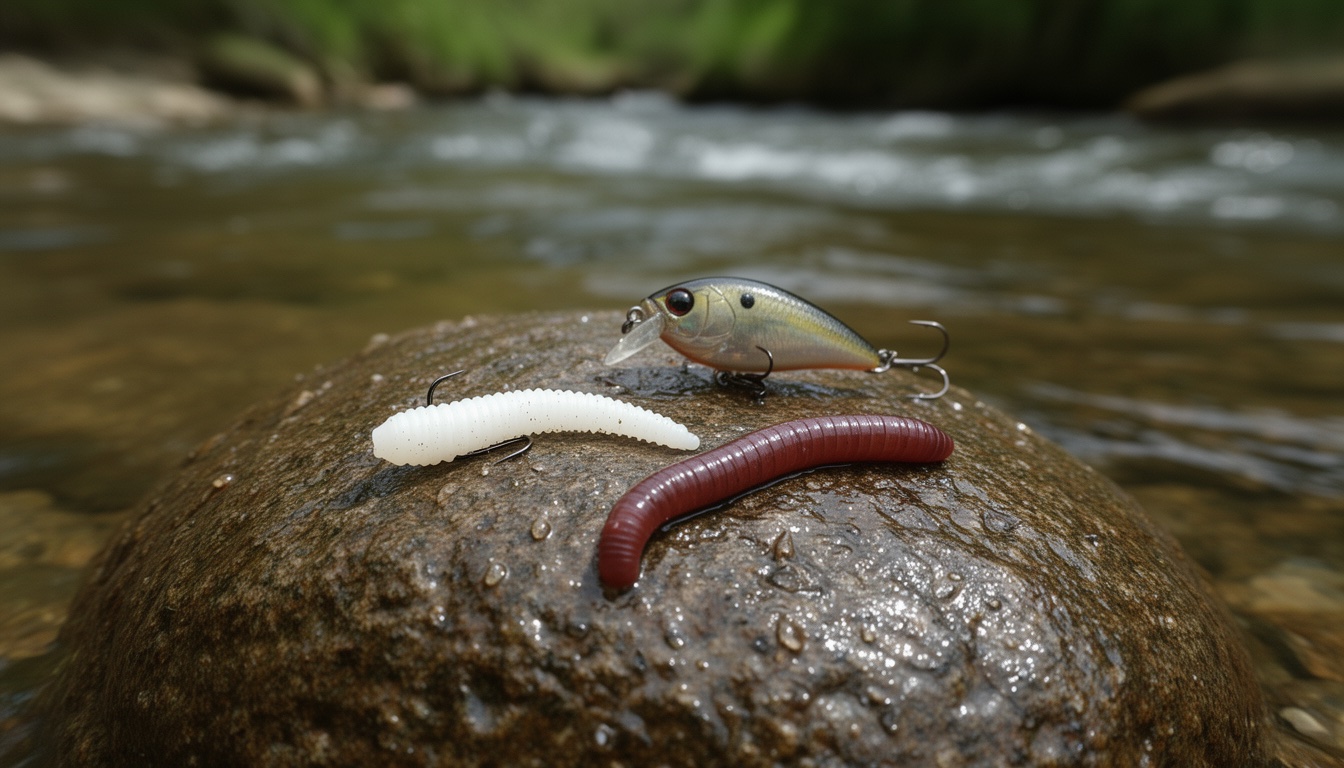
Natural bait is your best starting point. Nightcrawler segments (1-2 inches), live crickets, and small minnows produce fish on virtually any creek. Hook a worm segment on your #8 hook, cast upstream of a pool or seam, and let it drift naturally. This is the simplest and most effective creek fishing technique, and it works on all species.
Small soft plastics (1-2 inches) are incredibly versatile. White and chartreuse grubs on tiny jigheads mimic insects and small baitfish. A ned rig — a small worm on a weighted, wide-gap hook — works great on smallmouth in pools and runs. Small swimbaits in 1-2 inch sizes can trigger strikes from hungry bass and trout.
Small crankbaits that run 1-3 feet deep cover water quickly and are effective on smallmouth and sunfish. Look for micro-crankbaits in natural colors (blue/silver, firetiger) or bright colors (chartreuse, orange) if the water is stained.
Inline spinners like the Panther Martin or Rooster Tail are classic creek fishing lures. They create vibration and flash that fish detect in current, and they work in both clear and slightly murky water.
Topwater lures — small poppers and foam frogs — can be thrilling in the early morning or late evening when fish are actively feeding near the surface. They’re not everyday lures but produce spectacular surface strikes when conditions are right.
One key difference between creek and lake fishing: retrieve speed. In current, your lure moves faster downstream than it appears. If your retrieve feels too fast in a creek, it’s probably just right. In lakes, a slow steady retrieve is standard. In creeks, you need to keep the lure moving with the flow.
Creek Fishing Safety — Don’t Take Unnecessary Risks
Creeks look deceptively gentle. A narrow stream with waist-high banks and clear water can hide real hazards. Creek fishing safety comes down to respecting the water and not overestimating your footing.
Slippery rocks are the most common creek fishing hazard. The rocks that fish hold near are the same rocks you’d stand on — and they’re covered in algae and moss. Take short, deliberate steps. Test each foot placement before committing your weight. If you fall, don’t try to catch yourself with your rod — it can snap or drag you deeper.
Wading depth limit: mid-thigh, maximum. Water moving fast enough to push you past mid-thigh can knock you off your feet and pin you against rocks. Never wade in a creek that feels deeper than you’re comfortable with. For beginners, staying on the bank is perfectly fine — most creek fish can be reached with a 6-7 foot rod from shore.
Always face upstream when wading. This gives you better balance and lets you see where you’re stepping. Keep one foot firmly planted before moving the other.
Flash flood awareness. Creeks rise rapidly during heavy rain, especially in mountainous areas. Check the weather forecast before heading out. If you see rising water, muddy water, or debris floating downstream, leave immediately. Never fish during or right after a storm.
Tell someone where you’re going. Many creeks are in remote areas with limited cell service. Let someone know your location and when you expect to be back.
Cold water in spring creeks. Even in summer, spring creek water can be near-freezing. Cold water immersion can lead to cramping and shock if you fall in. Dress appropriately and consider a personal flotation device in deeper sections.
Getting Started — Your First Creek Fishing Trip
You have everything you need to start creek fishing right now. Grab an ultralight rod, spool it with 6-pound line, tie on a #8 hook with a small jighead and worm segment, and find the nearest creek. Start by fishing pools — they’re the easiest to spot and typically hold the most fish. Cast upstream, let your bait drift naturally, and be ready when you feel a tap.
Creek fishing teaches the fundamentals that apply everywhere: reading water, matching your presentation to the conditions, and patience. Once you’ve caught a fish in a creek, you’ve earned your stripes as an angler — no matter what body of water you choose to tackle next.
For more on reading water patterns, see our guide to reading water for fishing. And if you want to identify the fish you catch, our freshwater fish identification guide covers the most common species.