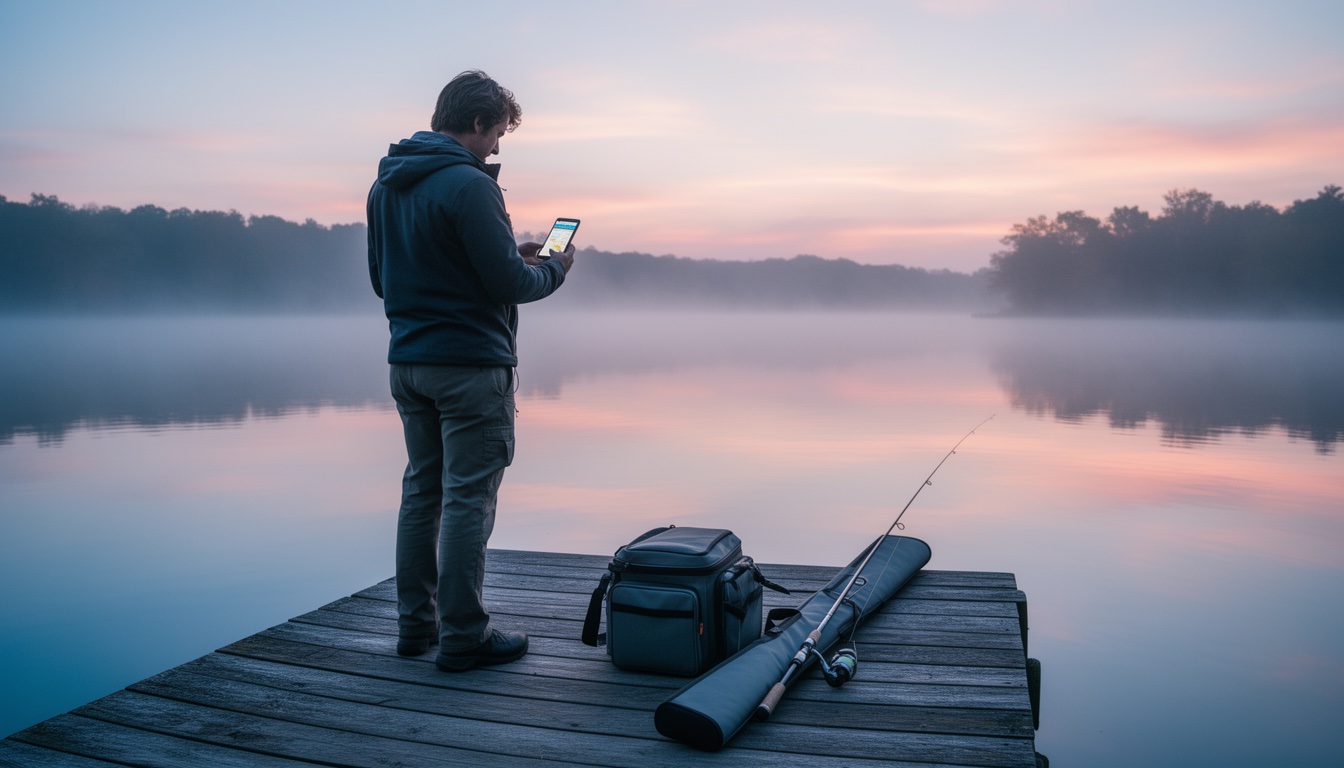
You’ve bought the rod, tied on a lure, driven 40 minutes to a lake you’ve never fished before — and sat on the bank for three hours without a single bite. It’s the most common frustration for new anglers, and the worst part is that the conditions were probably telling you not to go all along.
Fish behavior follows weather patterns. Not in a mystical way — cold-blooded animals respond to measurable changes in pressure, temperature, and light in ways that have nothing to do with luck. Most beginners never learn to read a fishing forecast, so they show up at random and hope for the best.
This guide walks through the six weather metrics that actually matter for fish activity and how to check them in two minutes before you leave the house.
The #1 Metric: Barometric Pressure Trend
If you only check one thing, make it barometric pressure — specifically the trend, not the number. The actual reading (29.92 inches of mercury, for example) doesn’t tell you much on its own. What matters is whether pressure is rising, falling, or staying steady.
Falling pressure is your best friend. As a weather front approaches, barometric pressure drops and fish typically feed more aggressively. They sense the change and tend to increase their activity before conditions worsen. This is the feeding window you want to target — usually the 12 to 24 hours before a front passes through.
Rising pressure means a front has moved through and things are stabilizing. Fish typically slow down as pressure rises because they acclimate to the new conditions and retreat to deeper water. You can still catch fish during rising pressure, but you typically need to fish slower and deeper.
Stable pressure — whether high or low — means conditions are predictable. Fishing is usually consistent during stable periods. Nothing exciting, nothing terrible.
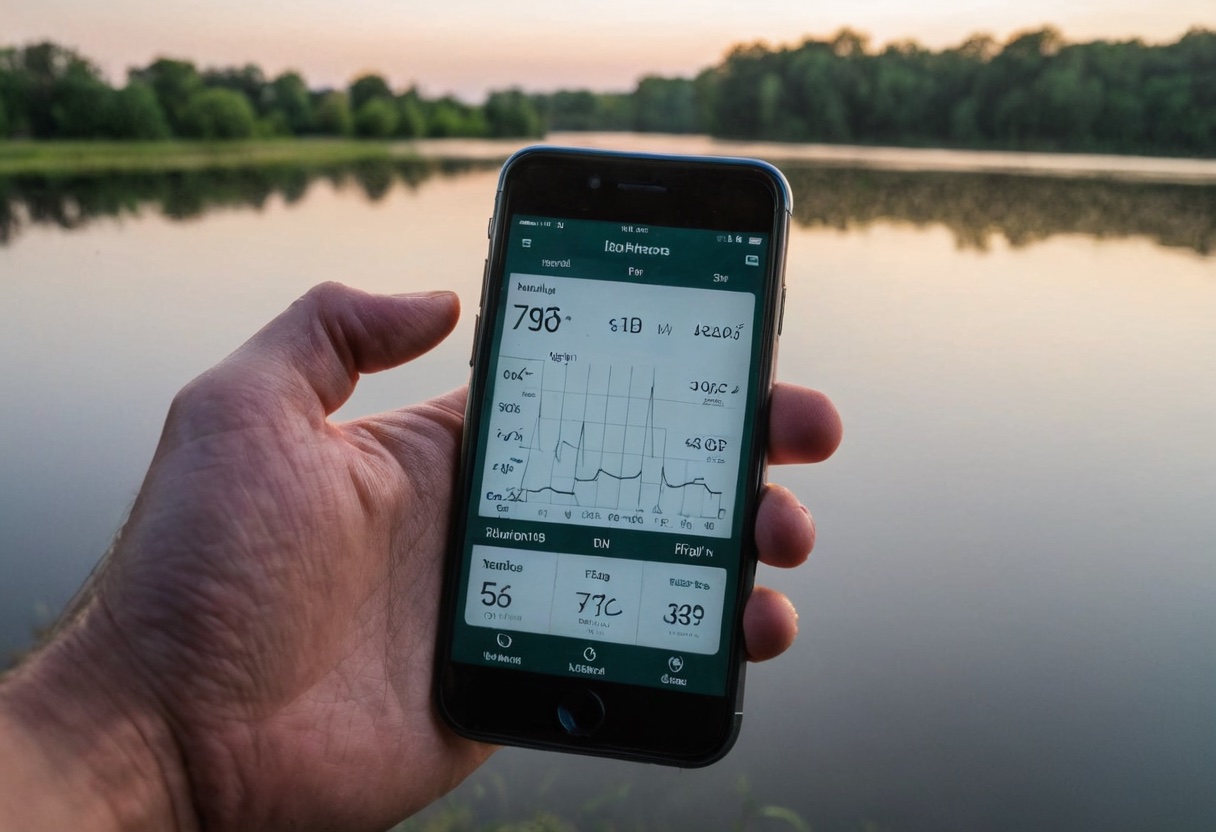
The trick most beginners miss is looking at the forecast trend instead of the current value. A weather app that shows pressure dropping over the next six hours is more useful than one that just shows today’s reading. Check the hourly or 24-hour graph, not a single data point.
For a deeper explanation of how barometric pressure works, see our barometric pressure and fishing guide.
Wind Speed and Direction
Wind is the second thing to check, and it affects both fish behavior and your ability to actually cast.
Gentle to moderate wind — somewhere between 5 and 15 mph — is typically ideal. The surface disturbance makes fish feel safer feeding near shore because the ripples break up their silhouette. Panfish and bass both tend to feed more actively in a light breeze.
Wind direction tells you where baitfish will concentrate. Wind pushes surface water and the food that floats in it to the leeward shore — the side the wind is blowing toward. Predators follow baitfish, so the windward shore is usually quiet while the leeward side is active. If the wind is out of the west, fish your east bank.
Strong wind above 20 mph makes casting difficult, but fish often concentrate in sheltered coves and behind structure. Find a protected spot on the lake and fish it — you might be the only one on the water, and the fish will still be there.
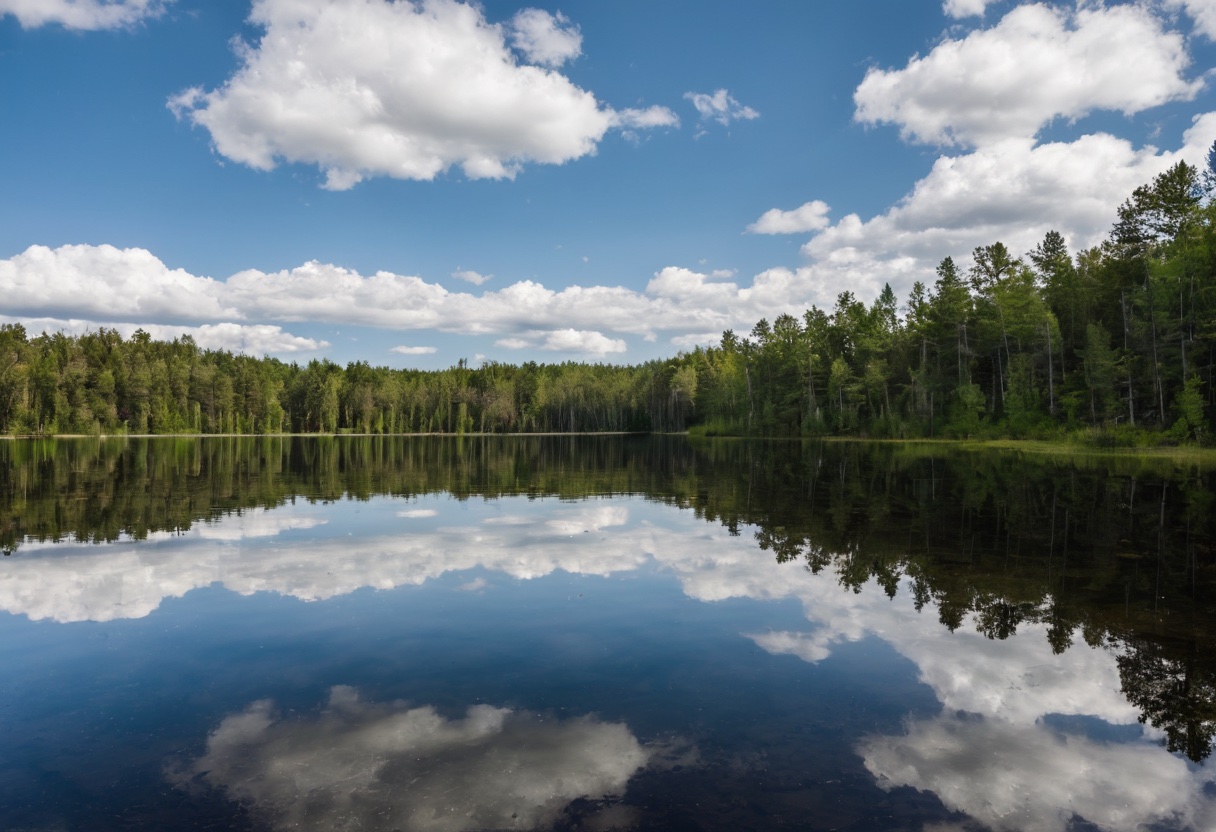
Calm conditions are the flip side. No wind means glassy water, and fish feel exposed in shallow water under a mirror-like surface. They typically hold deeper during flat-calm days, and you need to present your bait slower and closer to the bottom.
Water Temperature and Stability
Fish are cold-blooded, which means every aspect of their behavior — metabolism, digestion, movement speed, appetite — is driven by water temperature. And here’s the key point that matters for trip planning: temperature stability matters more than the exact reading.
If the water temperature has been steady within a comfortable range for your target species, fishing is typically good. If a cold front drops water temperature by more than 5 to 10 degrees in 24 hours, expect the bite to slow down. Fish don’t like sudden changes any more than we do.
This is why spring and fall fishing is often better than midsummer. During seasonal transitions, water temperatures gradually shift and fish feed actively to build energy reserves. In the middle of summer or winter, water temperatures plateau and feeding slows because fish are already comfortable.
If you’re fishing a lake you’ve never been to before, the free USGS water temperature database shows readings from monitoring stations at thousands of lakes across the country. It’s at waterdata.usgs.gov, and you can search by lake name. See also our seasonal fishing guide for what temperatures each species prefers.
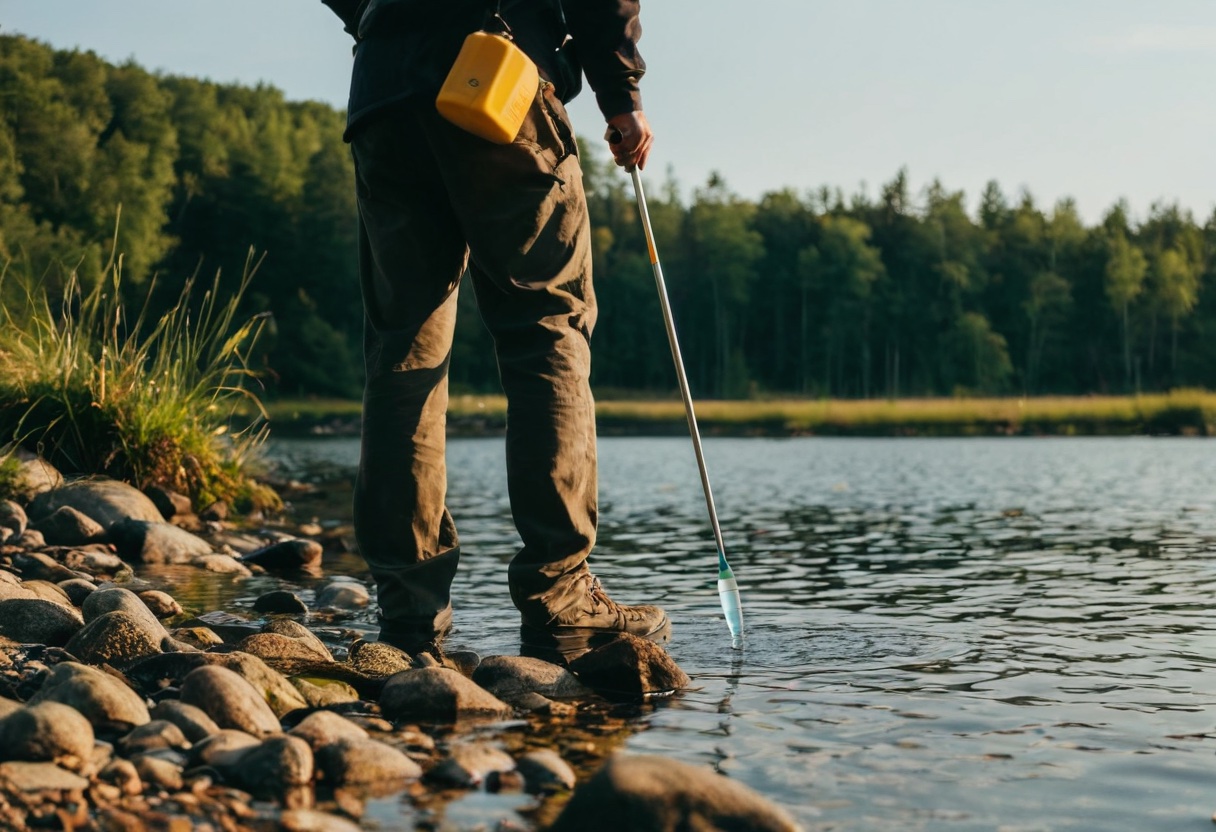
How to Check Water Temperature Without a Meter
You don’t need a $30 waterproof thermometer to get useful data. Here’s what works:
- Local bait shops typically track water temperature and will tell you if you stop in
- Fishing apps like FishnBuddy or OnX Fish pull water temperature data for many popular lakes
- USGS real-time data gives current readings for thousands of stations at waterdata.usgs.gov
- Local fishing groups on Facebook often post current conditions for nearby waters
Cloud Cover and Light Levels
Cloud cover is one of the simplest forecasts to read and one of the most reliable predictors of all-day fishing.
An overcast day is typically a great day to fish. Less light penetration means fish feel safe in shallow water throughout the day — not just at dawn and dusk. Bass, panfish, and catfish all tend to hold shallower on cloudy days, which means you don’t need a long-casting rod or heavy tackle.
Bright sunny days are the opposite. Fish hold deeper and are more cautious, and the best bites typically come during low-light periods — the first hour after sunrise and the last hour before sunset. If you can only fish on a sunny weekend, plan around those windows.
Partially cloudy days give you the best of both worlds. Fish remain active during brighter periods and there’s enough contrast to make casting comfortable. These are usually the most consistent days on the water.
Moon Phase and Solunar Timing
You’ll see references to solunar theory in fishing apps and forecasts, and it’s worth understanding what it actually predicts.
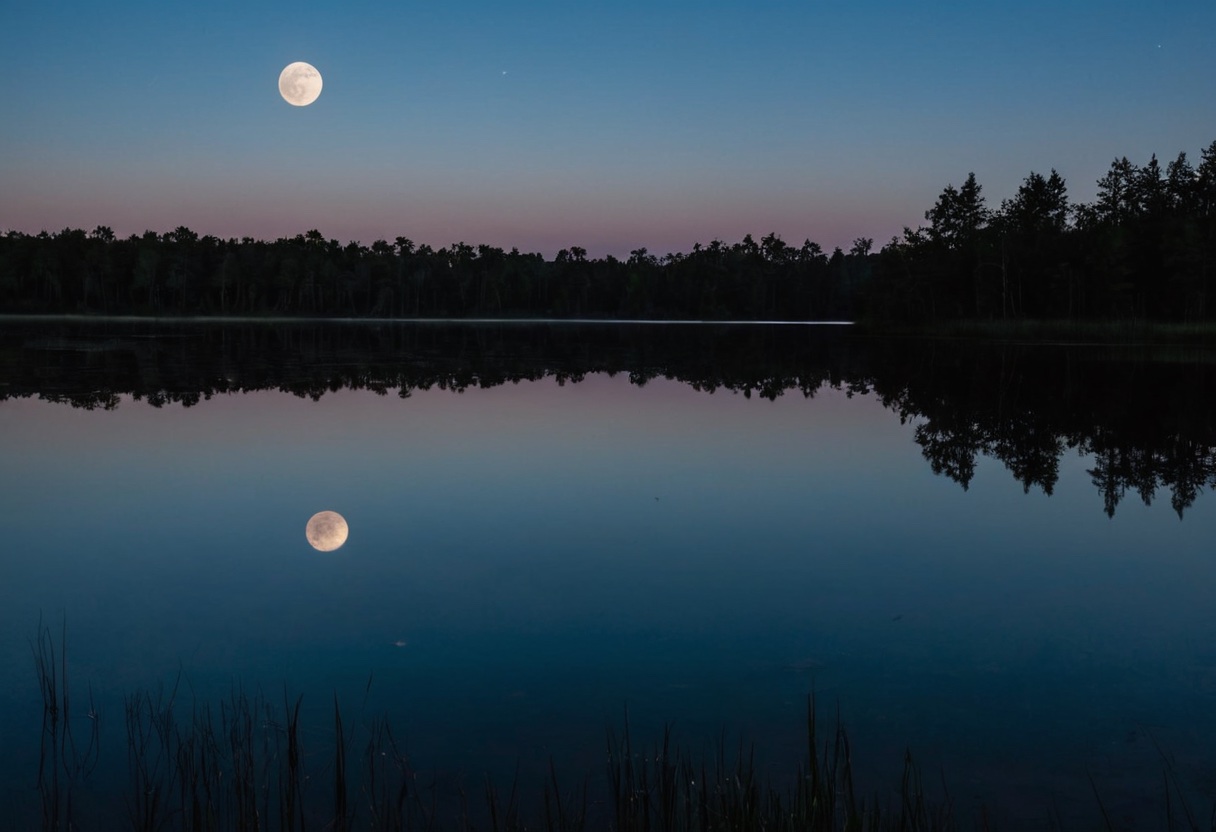
Solunar theory was developed by John Alden Knight in 1926. The basic idea is that fish feeding peaks around moonrise and moonset, with the strongest activity during full and new moons. The theory suggests “major” periods — roughly two hours around moonrise and moonset — and “minor” periods around sunrise and sunset.
Here’s what’s honest about it: the science is mixed. The dawn and dusk feeding peaks are well documented — fish tend to be more active during low-light periods. The tide effects in coastal areas are real — full and new moons do create stronger currents that stir up bait. But the direct influence of moon phase on freshwater fish behavior hasn’t been consistently proven in controlled studies.
Practical takeaway: treat solunar timing as a rough guide, not a crystal ball. If a major solunar period lines up with falling pressure and overcast skies, that’s a strong day to head out. If a major period falls on rising pressure with 30 mph wind and bright sun, the moon is probably the least of your concerns.
FishingReminder (fishingreminder.com) is a free tool that shows solunar predictions combined with weather data for any location. It’s one of the more reliable fishing forecast resources available.
Your Pre-Trip Checklist: Six Things to Check in Two Minutes
Before you plan any fishing trip, run through this quick checklist. Each item takes about 20 seconds to check on a weather app.
1. Barometric pressure trend: Falling over the next 12 hours? Green light. Rising? Yellow — you can still fish. Stable? Set consistent expectations.
2. Wind speed and direction: 5-15 mph? Ideal. Calm? Fish deeper. Above 20 mph? Find sheltered water. Note which shore is leeward.
3. Water temperature: Stable within the last few days? Good. Dropped more than 5 degrees? The bite may be off.
4. Cloud cover: Overcast? All-day fishing. Sunny? Target dawn and dusk. Partially cloudy? Best case scenario.
5. Precipitation timing: Light rain can actually improve fishing by stirring up baitfish and increasing turbidity. Heavy rain or thunderstorms are a safety issue — see our fishing safety guide for when to stay home.
6. Solunar timing: Check if a major period overlaps your planned fishing window. Use it as a bonus factor, not a dealbreaker.
The Decision Tree
- Green light (go): Falling pressure + gentle-moderate wind + overcast or partly cloudy + stable water temp. These conditions produce the best fishing.
- Yellow (try anyway): Three or four of the above factors are favorable. You’ll likely catch something, even if it’s not peak conditions.
- Red (consider staying home): Rising pressure + bright sun + large temperature swing + strong wind. Not worth the gas.
Free resources for checking all of these: NOAA weather service (weather.gov) for pressure, wind, and precipitation; USGS (waterdata.usgs.gov) for water temperature; FishingReminder for solunar data. Most phone weather apps cover the basics if you know what to look for.
Reading a fishing forecast doesn’t guarantee bites — nothing does. But it dramatically reduces the number of wasted trips and helps you understand why some days on the water are productive and others aren’t. The fish aren’t being difficult. They’re just responding to the weather, and now you know how to read it too.