You reel in your first fish, land it on the bank, and stare at it. It’s silver. It has fins. That’s about as far as your knowledge goes. This happens to nearly every beginner, and it’s completely normal.
But identification actually matters beyond curiosity. Different species have different size limits and creel (daily catch) limits in your state. Some waters require catch-and-release for certain species, while others allow you to keep everything within limits. Knowing what you caught tells you whether to release it, measure it, or take it home.
It also helps you plan your next trip. Caught a largemouth bass near weeds? Now you know what habitat to target. Panfish near a dock? You can go back with the right bait and technique.
You don’t need a biology degree for this. Most common freshwater fish have one or two features that make them easy to identify once you know what to look for. This guide covers the fish you’re most likely to encounter and the fastest ways to tell them apart.
The Black Bass Family — Largemouth vs. Smallmouth
The black bass family produces two of the most popular sport fish in North America: largemouth and smallmouth bass. They share a general body shape and aggressive feeding style, but they’re different species with different preferences and, most importantly, different looks.
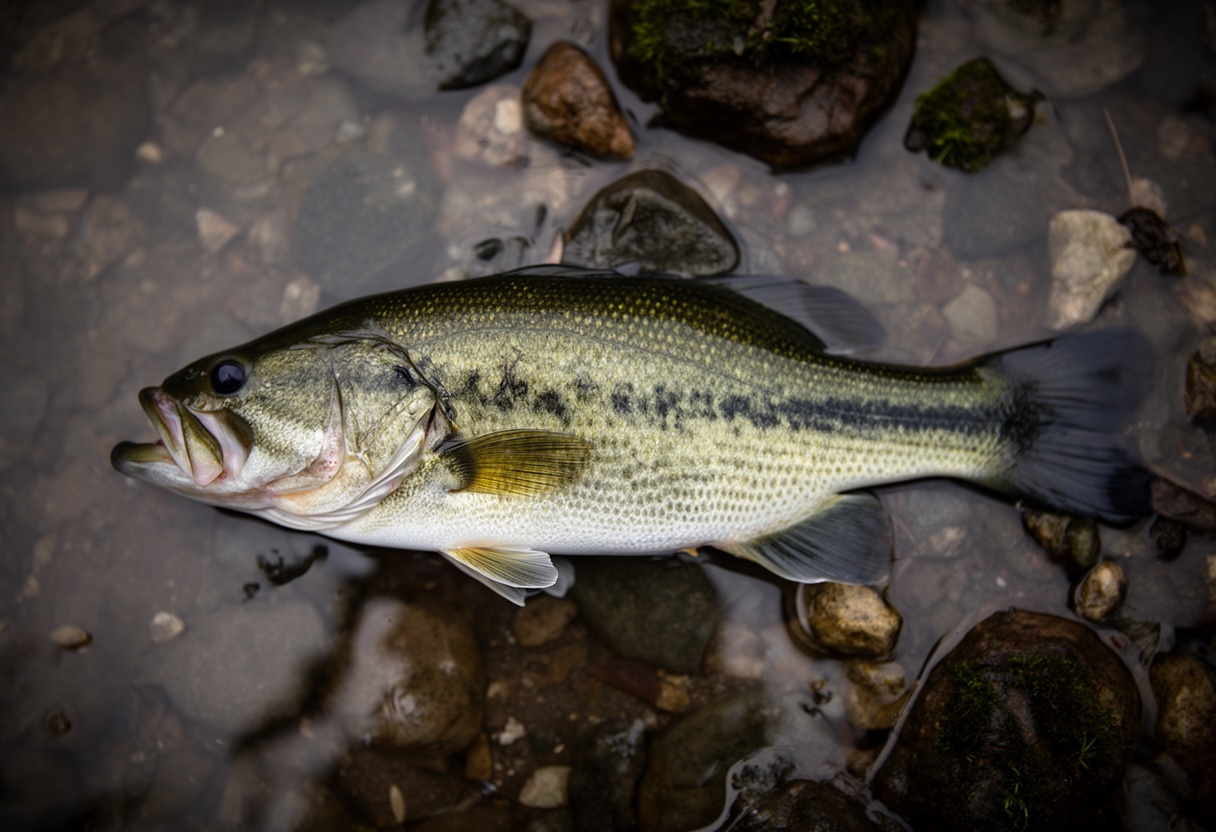
The simplest way to tell them apart comes down to one measurement. Close the fish’s mouth and look at where the upper jaw ends relative to the back of the eye. On a largemouth bass, the jaw extends well past the rear edge of the eye. That’s literally what “largemouth” means. On a smallmouth, the jaw ends at or below the eye — never past it.
Color confirms what the jaw test tells you. Largemouth bass are typically olive green to greenish-gray with a dark, jagged horizontal stripe running along each side. This lateral line extends through the eye and onto the lower jaw. They tend to hold in warm, calm water like ponds, lakes, and slow rivers where vegetation is thick. Average catches run 1 to 5 pounds, with 1 to 2 pounds being the most common size.
Smallmouth bass are golden-olive to bronze-brown, often with faint darker vertical bars on their upper sides. Their body is more slender and torpedo-shaped — built for holding position in current rather than ambushing from weeds. They typically prefer clear, cooler water with rocky bottoms in rivers, streams, and the rocky edges of lakes. Expect 1 to 3 pounds for most catches.
If you’re planning to target largemouth specifically, our largemouth bass fishing guide for beginners covers where to find them and what baits work best.
Panfish — Bluegill, Crappie, and Their Lookalikes
Panfish are the flat, disc-shaped fish that beginners catch more often than any other group. They’re abundant, forgiving to catch, and they hold a special place in fishing culture because they’re typically the first fish kids — and new anglers — learn to target.
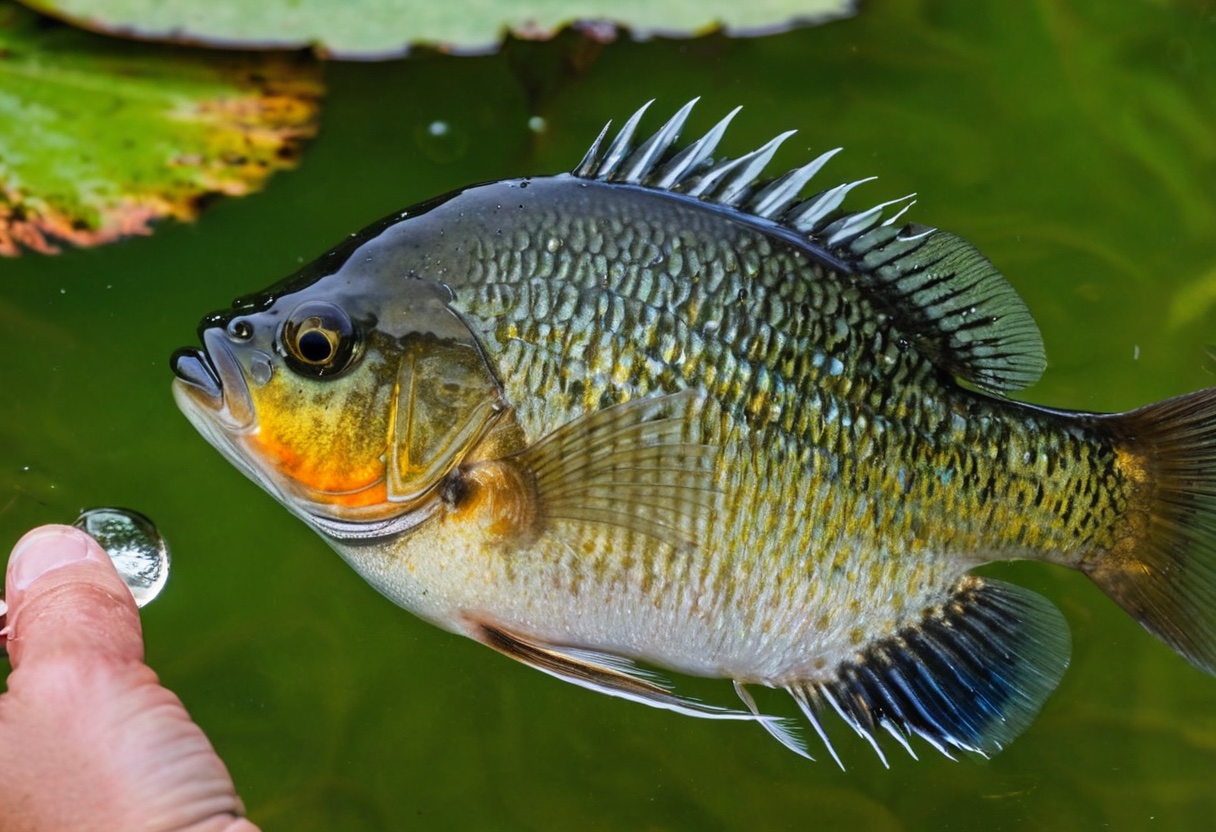
The bluegill is the classic panfish. It has a deep, laterally compressed body in deep blue to purple. The most reliable identification feature is the black ear flap — a triangular flap at the rear edge of the gill cover that’s black with a bright blue or orange border. Male bluegill turn especially vibrant during spawning season. They average 6 to 12 inches and 4 to 8 ounces. You’ll typically find them in ponds, lakes, and slow streams around weeds and docks.
Crappie look different but are equally common. They have a noticeably deep and flat body — more so than bluegill — with a silvery-white to golden color and irregular dark spots covering the sides. Those spots are a key difference: panfish like bluegill may have bars or blotches, but crappie have spots. They also have very large gill covers that extend well down the body.
There are two crappie species: black and white. Black crappie have darker spots that sometimes form faint vertical bars, and their tail fin has rounded edges. White crappie have lighter, grayish spots, a slight olive tint, and their tail fin is notched or indented at the top edge. Both average 6 to 12 inches and 0.5 to 1.5 pounds. They typically school near structure like brush piles, submerged timber, and dock pilings.
Trout — Rainbow, Brown, and the Spots That Tell Them Apart
Trout look similar enough that beginners often confuse them. They’re all streamlined, silvery, cold-water fish with spots. The differences come down to specific spot patterns and color bands.
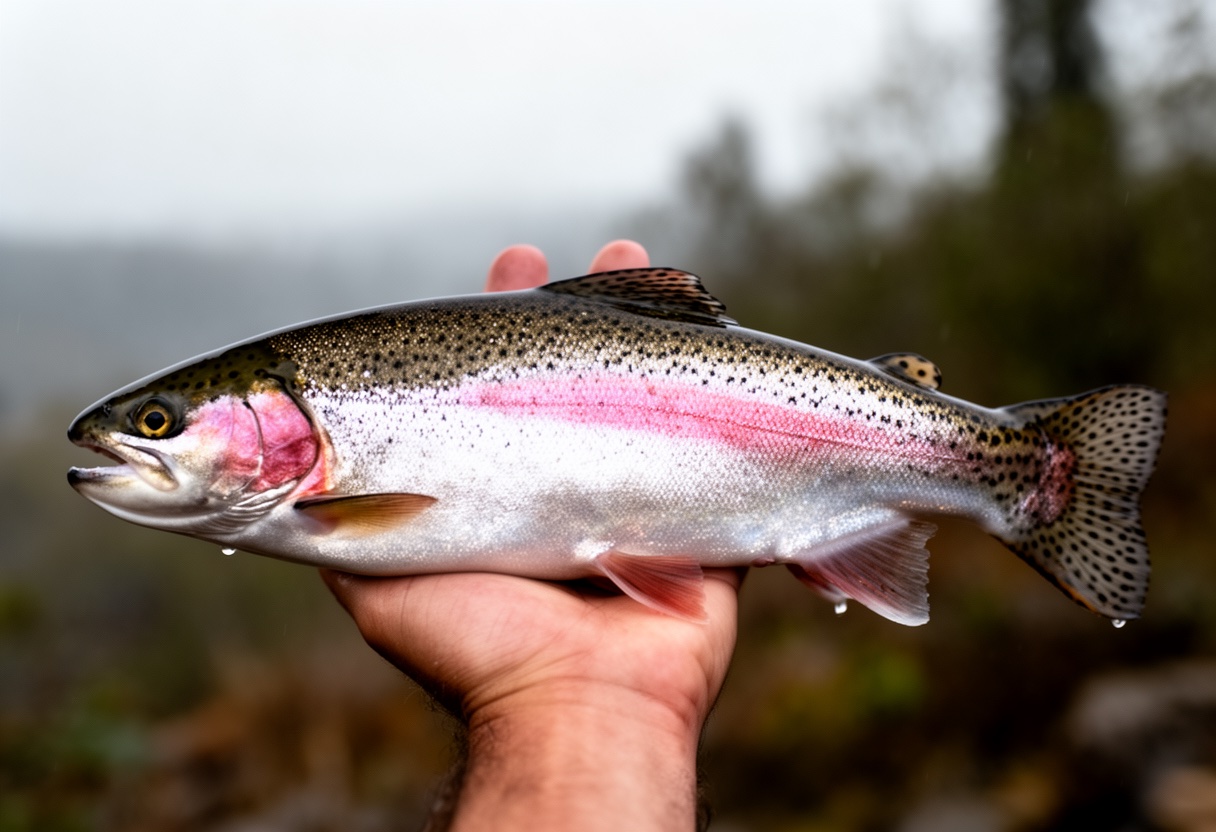
Rainbow trout have a pink or red band running horizontally along each side, from the gill to the tail. This band is more prominent on spawning males but is usually visible to some degree on all adults. They have small black spots on the body and, importantly, on the tail fin too. Their sides are silvery and their back is dark greenish-blue. In stocked lakes and rivers, you’ll typically encounter rainbow trout between 1 and 5 pounds.
Brown trout have a completely different spot pattern. Their spots are red or orange and are surrounded by faint blue halos. The tail fin has no spots at all — that’s the fastest way to separate brown trout from rainbow. Their body color is brownish-olive with a yellowish-white belly that also carries some of those red spots. Brown trout tend to be more slender than rainbow trout and typically run 2 to 6 pounds, though they can grow much larger in good waters.
Both species prefer cold, clear, well-oxygenated water. If you’re fishing in warm, murky water, you’re unlikely to find trout at all.
Other Common Catches — Catfish, Perch, and Walleye
Beyond bass, panfish, and trout, there are three more species that show up regularly on beginner lines.
Channel catfish are unmistakable once you know what to look for. They have four pairs of barbels — whisker-like sensory organs around the mouth. Two long barbels hang from the upper jaw and trail downward and backward. Two shorter pairs sit on the lower jaw. Their skin is smooth with no scales, their color ranges from silvery-gray to brownish with a pale belly, and their tail fin is slightly forked. Average catches run 2 to 8 pounds, with 3 to 5 pounds being the most common size.
Yellow perch are bright and easy to spot. Their body is golden-yellow to olive-green with 6 to 8 dark vertical bars running from the back down the sides. Their lower fins — pelvic, anal, and second dorsal — are orange-yellow, which gives them a warm, colorful look. They average 6 to 8 inches and a quarter to three-quarters of a pound. Perch tend to school, so catching one often means more are nearby.
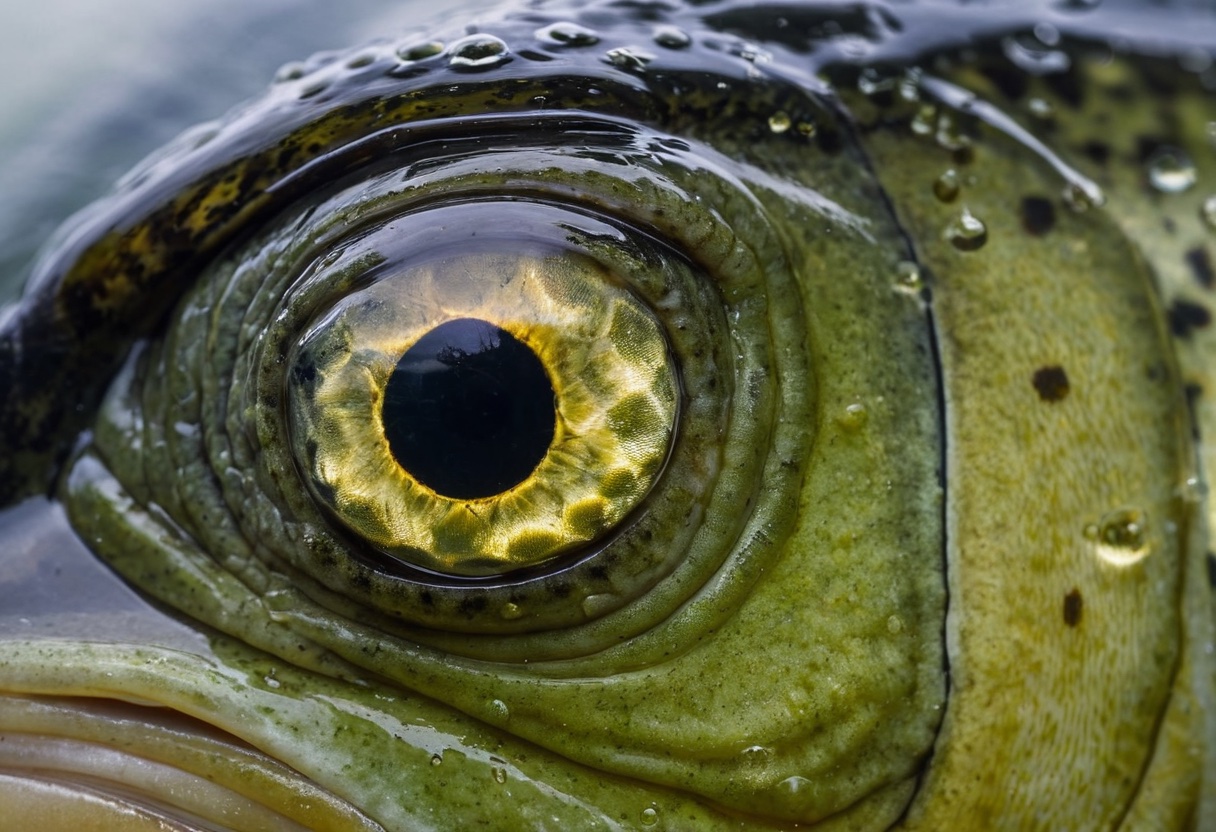
Walleye have the most distinctive eyes of any common freshwater fish. Their eyes appear milky white or glassy, caused by a reflective layer called a tapetum lucidum behind the retina. This adaptation lets them see in low light, which is why they’re most active at dawn, dusk, and night. Their body is yellowish-green on top fading to silvery-white on the sides and belly. A dark spot sits at the base of the upper tail fin, and their second dorsal fin has a yellowish tint. Average catches run 1 to 3 pounds.
Quick-ID Field Guide
Here’s a fast reference for the key identification feature on each species:
- Largemouth bass — upper jaw extends past the rear of the eye
- Smallmouth bass — upper jaw ends at or below the eye; golden-bronze color
- Bluegill — black ear flap with blue or orange border
- Crappie — deep flat body with dark spots (not bars); check tail fin shape for black vs. white
- Rainbow trout — pink/red lateral band; black spots on body and tail fin
- Brown trout — red/orange spots with blue halos; no spots on tail fin
- Channel catfish — four pairs of barbels; no scales; forked tail
- Yellow perch — 6 to 8 dark vertical bars; orange lower fins
- Walleye — opaque, glassy eyes; dark spot on upper tail fin
Keep this section bookmarked or take a screenshot before you head out. Having a quick reference on your phone makes identification much easier when you’re standing on the bank with a fish in your hands.
What to Do After You Identify Your Catch
Now you know what you caught. Here’s what to do next.
First, check your local fishing regulations. Size limits, creel limits, and seasonal restrictions vary by species and even by water body. A fish that’s legal to keep in one lake might be catch-and-release only in a neighboring one. Your state’s fish and wildlife website or fishing regulation booklet has the current rules.
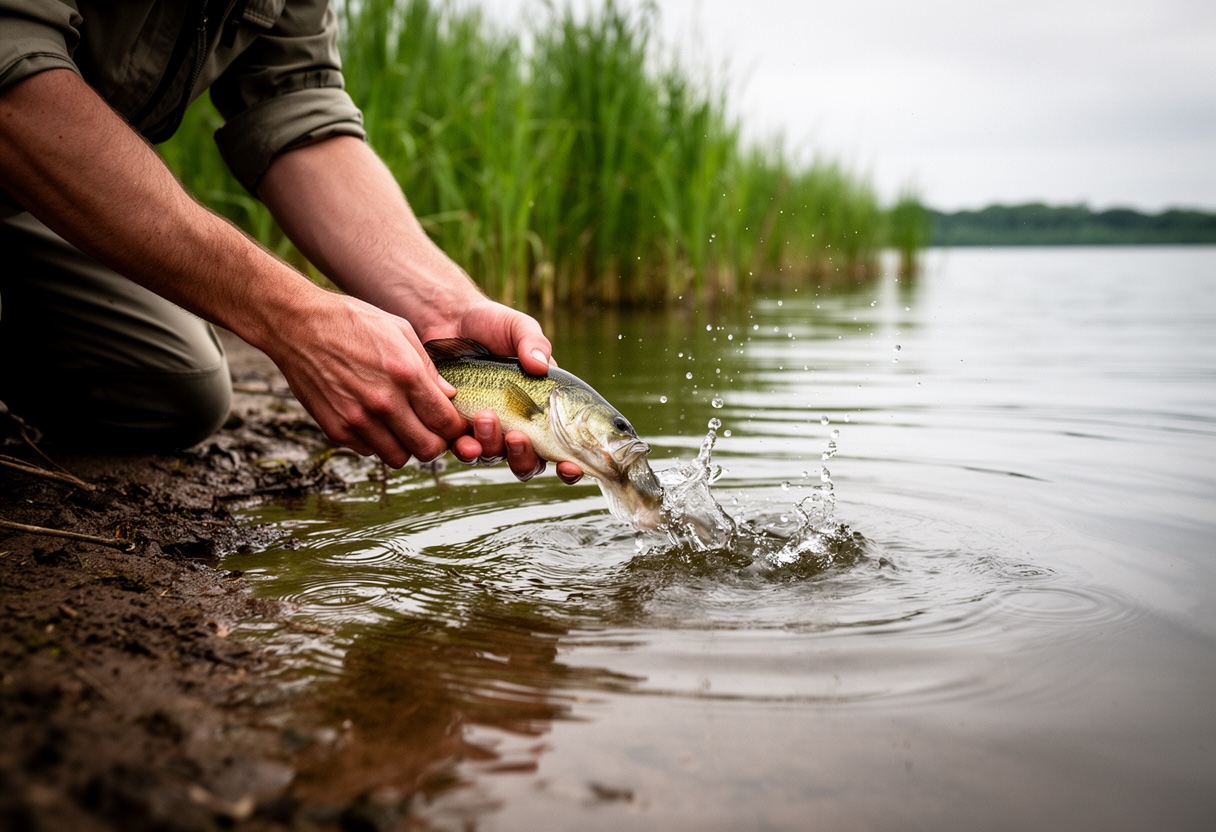
If you’re releasing the fish, proper handling matters. Wet your hands before touching it to protect the slime coating on its skin. Keep the fish in the water as much as possible during unhooking. Avoid prolonged air exposure, especially on hot days. For a more detailed breakdown of release techniques, our catch and release guide for beginners walks through best practices.
Identification also feeds back into how you fish. If you caught a largemouth near weeds, you now know to target cover next time. If perch showed up near a fallen tree, structure is worth investigating. If trout only bit early in the morning, timing matters. Each catch teaches you something about where the fish are and what conditions they prefer.
If you’re still building your casting and presentation skills, our how to cast a fishing rod guide covers the basics of getting your bait to the right spot consistently.
Knowing your fish doesn’t make you an expert overnight. But it turns random catches into useful information, and that’s what separates someone who fishes from someone who keeps getting better at it.