
You just got your first fishing rod. Maybe you’ve already landed a few fish with it. Maybe it’s still sitting in the corner of your garage, waiting for its first trip. Either way, we’ve got good news.
Fishing rods aren’t fragile. But they’re not indestructible either. The difference between a rod that lasts two seasons and one that lasts ten years? A few simple habits. Clean after every trip. Do quick inspections. Store your gear right. That’s really it.
In this guide, we’ll walk you through everything you need to know — how to clean your rod, what to check for damage, basic reel care, proper storage, and what to do when the season ends.
Why Maintenance Matters (More Than You Think)
Let’s be honest — when you’re new to fishing, maintenance doesn’t feel urgent. You just want to get back on the water. We get it. But here’s the truth: most beginner rod problems are 100% preventable.
A well-maintained rod blank — that’s the main body of the rod — casts farther and feels better in your hand. Clean guides (the eyelets the line runs through) let your line flow smooth instead of fraying against built-up grime. And a properly cared-for reel seat keeps everything locked down tight when you’re fighting a fish.
Saltwater is especially tough on gear. Those tiny salt crystals get everywhere and accelerate corrosion fast. But even freshwater anglers deal with dirt, sand, and general wear. The fix? A few minutes of care after each trip. That’s all it takes.
How to Clean Your Fishing Rod (The Right Way)
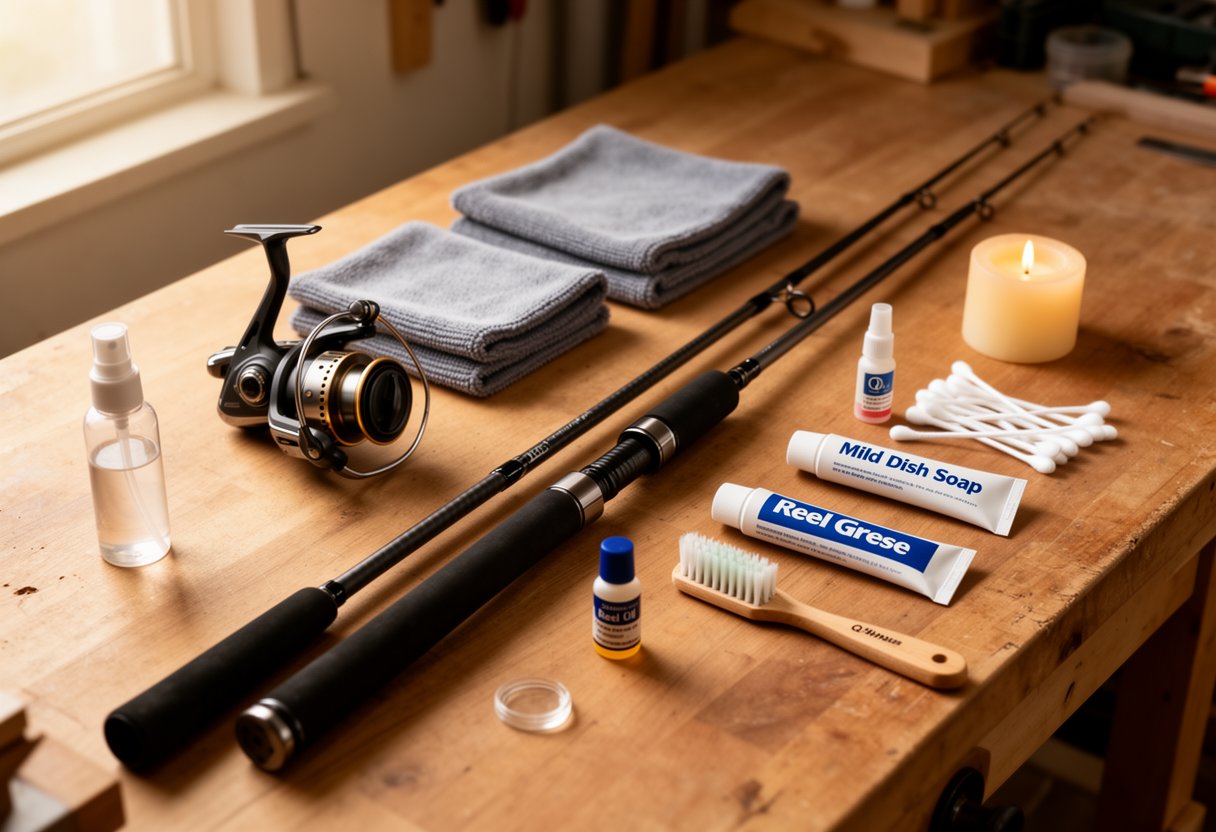
Cleaning your rod is simple. Here’s the process, step by step:
Step 1: Rinse first. After every trip — especially saltwater — give your rod a 30-second rinse with fresh water. This washes off surface salt, sand, and dirt before they can cause damage. Non-negotiable after saltwater.
Step 2: Wash the blank. Mix a little mild dish soap with warm water. Use a soft cloth or sponge to wipe down the entire rod blank. No harsh chemicals, no abrasive scrubbers. Bonus tip: Windex or furniture polish on a lint-free cloth restores the rod’s shine and color beautifully.
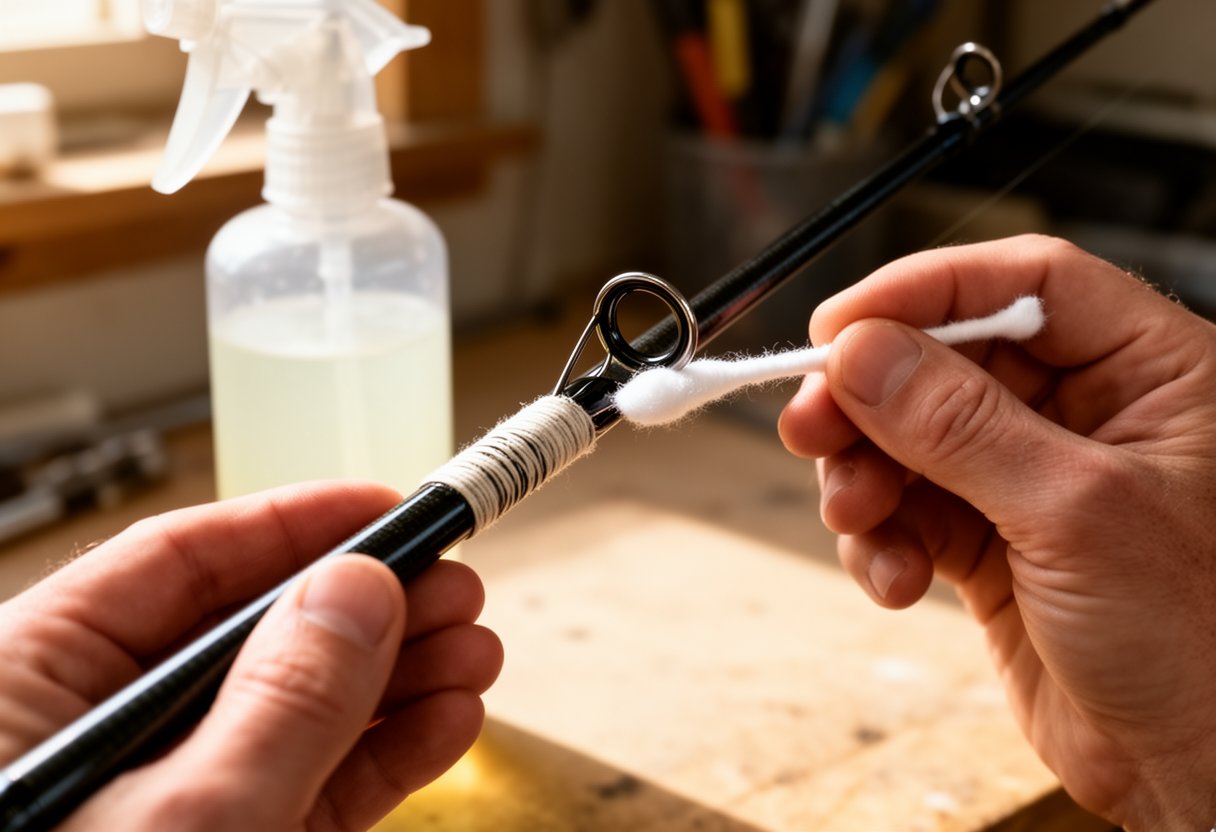
Step 3: Clean the guides. Take a dry cotton swab (yep, a Q-tip works perfectly) and run it through each guide. Built-up residue inside the guides will fray your line over time. Follow up with a damp Q-tip for a final pass.
Step 4: Scrub the reel seat. Pull the reel off and scrub the threaded area with an old toothbrush and warm soapy water. Dirt trapped here can loosen the connection over time — you don’t want your reel wobbling mid-cast.
Step 5: Clean the cork handle. Cork absorbs dirt, oils, and fish scents. Scrub it with warm soapy water and a nylon brush. Still stained? Gently sand it with 800-1200 grit sandpaper to remove the top layer. If you have an EVA foam handle, just wipe it down.
Step 6: Dry thoroughly. Use a clean towel and dry the entire rod. Don’t skip this — moisture leads to rust and material damage.
What NOT to use: Skip the bleach, acetone, and other harsh chemicals. Don’t use wire brushes on the guides (they’ll scratch the ceramic). And never hit your reel with a pressurized hose — it forces salt and debris deeper into the moving parts.
What to Inspect Every Time
You don’t need to be a gear expert to spot problems. A quick two-minute check before and after each trip catches most issues early.
Run a cotton swab through every guide. If it snags or catches on anything, you’ve got a burr — a tiny rough spot that’ll cut your line. Smooth it with fine-grit sandpaper or replace the guide if it’s badly damaged.
Check the rod blank. Look for cracks, dents, or deep scratches. These weaken the rod’s strength. Small surface scratches can be cleaned with alcohol and sealed with super glue. Cracks or dents? Time for a new rod.
Inspect the guide wrappings. Those threads holding the guides onto the blank can loosen over time. If you see fraying or loose wraps, use a drop of super glue to secure them until you can get a proper repair.
Wax the ferrules. If you have a multi-piece rod, ferrules are the joints where the sections connect. Rub a candle or paraffin wax on them — this prevents sticking and makes breakdown easy. It’s a simple trick most beginners don’t know, and it saves a ton of frustration.
Check the reel seat. Look for corrosion, debris, or any looseness in the threads. A clean, tight reel seat keeps your reel where it belongs.
Reel Maintenance for Beginners (Keep It Simple)
Let’s keep this practical. You don’t need to be a reel mechanic. But you do need to give it basic care.
How often? Every 4-5 freshwater trips. After every saltwater trip, immediately.
The basic clean: Wipe down the exterior with a damp cloth. Rinse with fresh water — low pressure, never a pressurized hose. Dry thoroughly.
Lubrication is easy. Add one drop of reel oil to the moving parts you can see — the bail roller, handle knobs, and line roller. If you’re comfortable opening the reel, apply a small amount of reel grease to the main gear inside. Leave the drag system alone unless it’s acting up.
Two rules for lubrication:
- Less is more. One drop per point. Over-oiling slows bearings and attracts dirt.
- Do NOT oil the one-way clutch. This keeps the handle from spinning backward. Oil will make it slip.
If your reel feels rough — gritty, grinding, or notchy — don’t force it. Take it to a repair shop or find a model-specific video on YouTube. Forcing a rough reel can damage the gears beyond repair.
Want to match your reel with the right line? Check out our guide to monofilament vs fluorocarbon vs braid.
How to Store Your Fishing Rod (So It Lasts)
This matters more than almost anything else. Most beginner rod damage comes from bad storage, not bad fishing.
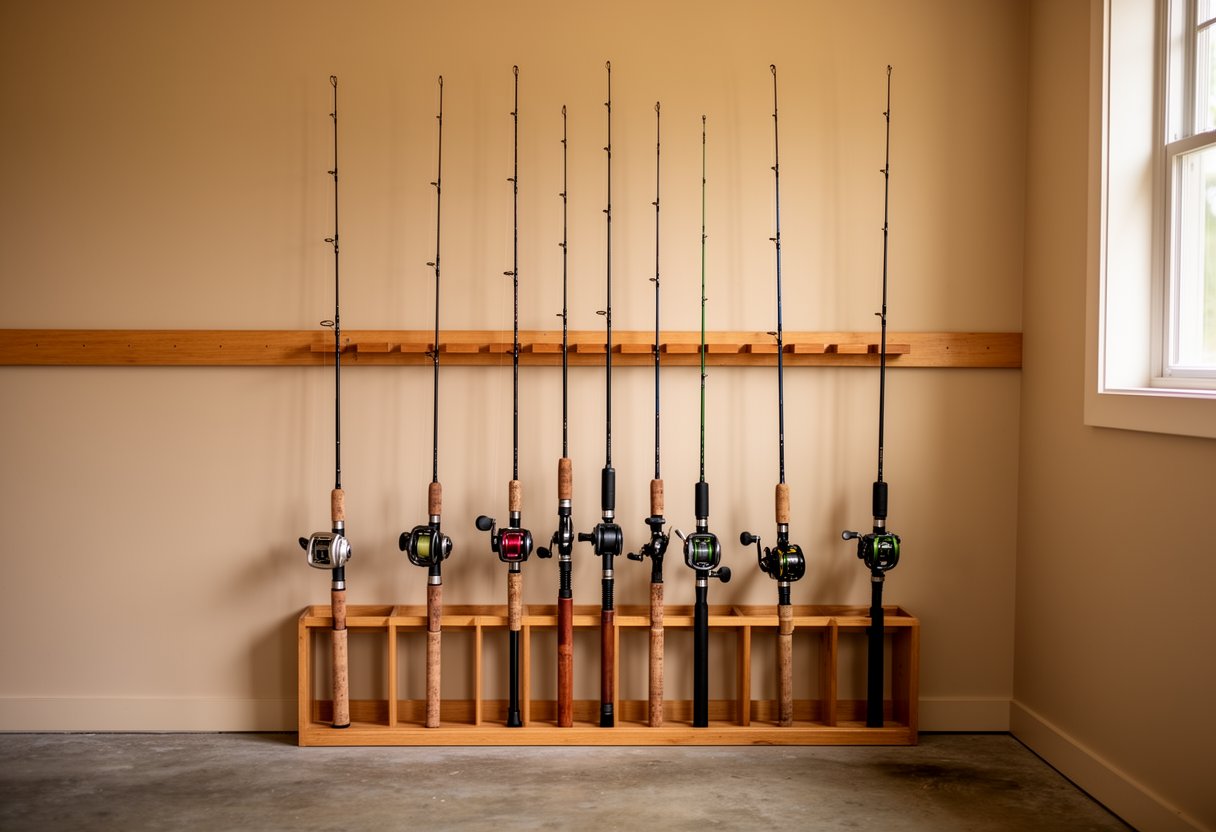
Vertical storage is best. A wall rack or rod holder keeps the rod straight and prevents permanent bends. If you need to store horizontally, support the rod at both ends — never let the tip droop.
Environment matters:
- Keep rods away from direct sunlight — UV rays damage the blank over time
- Store in a dry place, ideally 30-50% humidity
- Keep rods off the ground, at least 1 foot up to avoid moisture
- Avoid hot cars or trunks — temps over 110°F weaken the glue holding your guides on
- Garage storage works if it stays above 40°F and you use a dehumidifier
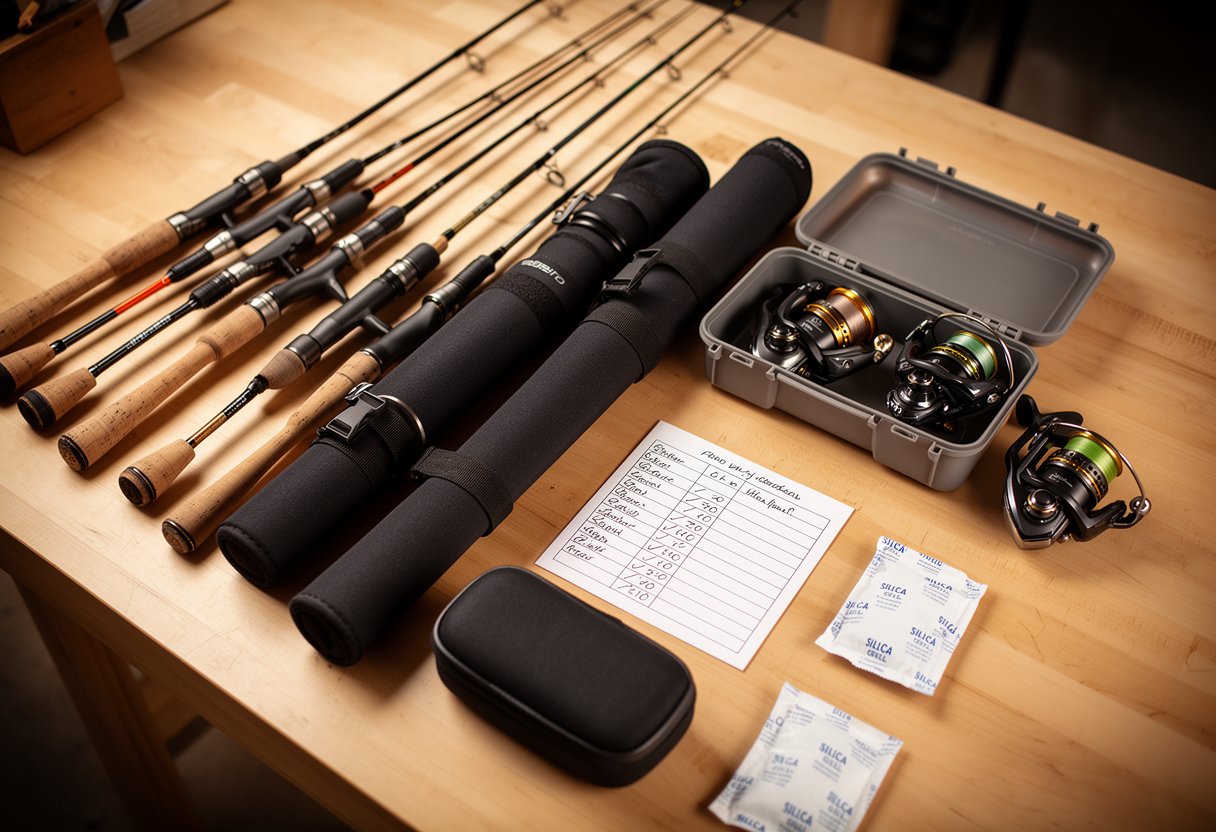
Rod sleeves are cheap insurance. A simple nylon sleeve protects your rod during transport and storage. Make sure it’s the right size — too tight creates pressure points, too loose leaves the rod unprotected.
For your reel:
- Loosen the drag completely during storage — spring fatigue is a real thing
- Remove fishing line if storing for more than three months. Mono and fluoro weaken over time, and braid holds moisture
- Drop a silica gel packet into your reel case or rod sleeve for extra moisture protection
Not sure what rod and reel to start with? Read our freshwater rod and reel combo guide.
End-of-Season and Winterizing Checklist
When the season winds down, give your gear one last round of care before it goes into storage.
Your winterizing checklist:
- [ ] Full clean — even if it looks clean, wash it thoroughly
- [ ] Full reel service — clean, dry, oil, grease, and loosen the drag
- [ ] Remove fishing line from all reels
- [ ] Inspect everything — take photos of any damage so you know what to fix next season
- [ ] Store in a climate-controlled space — not a damp basement or unheated garage (unless it stays above 40°F with a dehumidifier)
- [ ] Check your gear monthly during the off-season — look for moisture, warping, guide issues, or pests
Start Today, Fish Tomorrow
Don’t overthink it. Spend 15 minutes on your rod after your next trip, and it’ll reward you for years. The habits are simple: rinse, clean, inspect, store right. That’s all there is to it.
Good habits start now. Your future self — the one landing fish with gear that still feels brand new — will thank you.
Building out your tackle box? Check our guide on what to put in your first tackle box.