
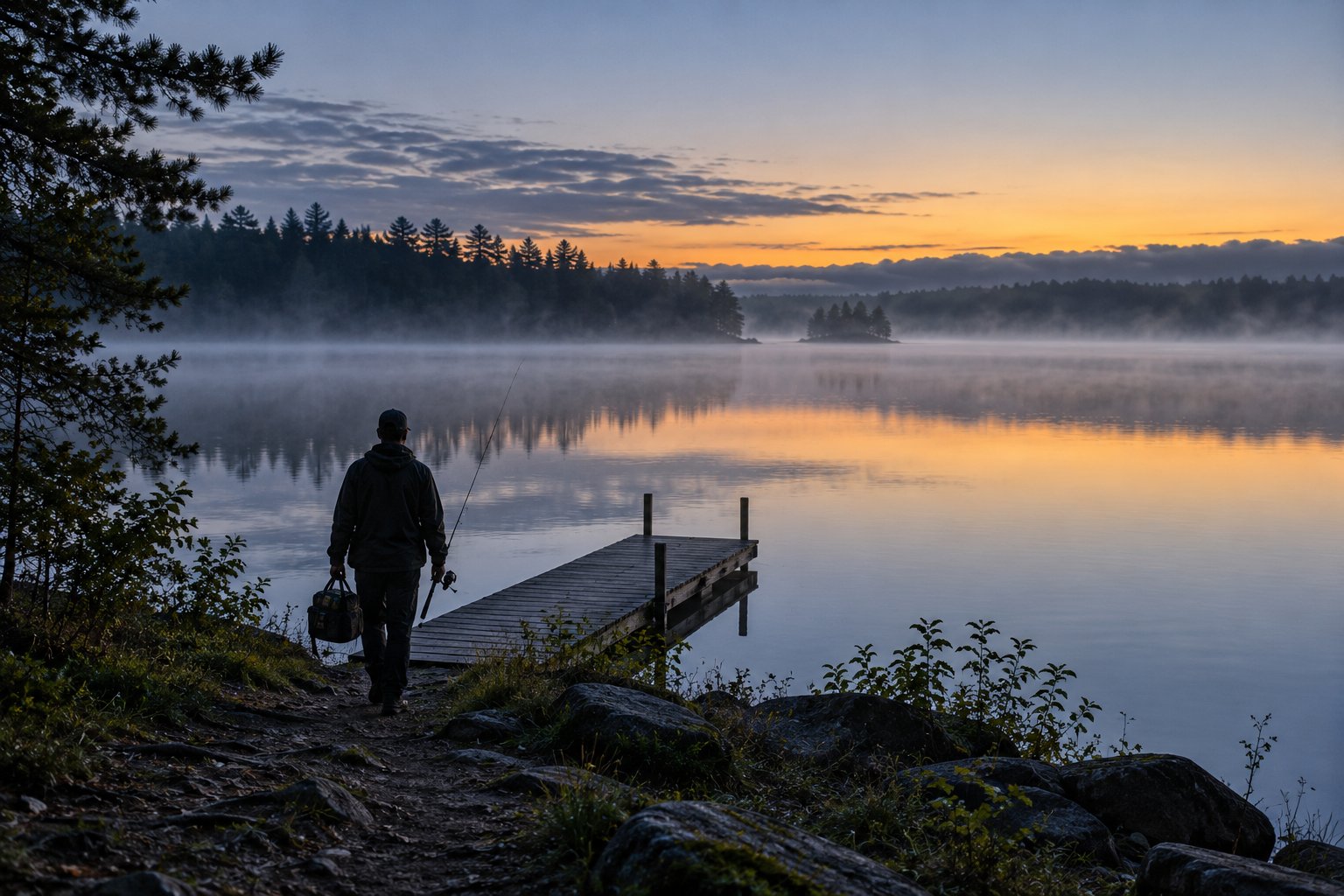
You set your alarm for 5:30, hit the water at sunrise, and by 8:00 the bite is dead. Sound familiar? Most anglers treat dawn and dusk as a time on the clock. Fish don’t read clocks — they respond to light level, and that one distinction changes how you should plan a trip.
If you already know that early and late are productive (our beginner’s guide to the best time of day to fish covers the when), this article is about the how: what actually triggers the low-light bite, how long the window really lasts, and how to sequence your lure choices so the first ninety minutes of your trip produce more fish than the rest of the day combined.
Why Low Light Turns Fish On
The dawn and dusk bite isn’t folklore — it’s a feeding opportunity that physics creates twice a day.
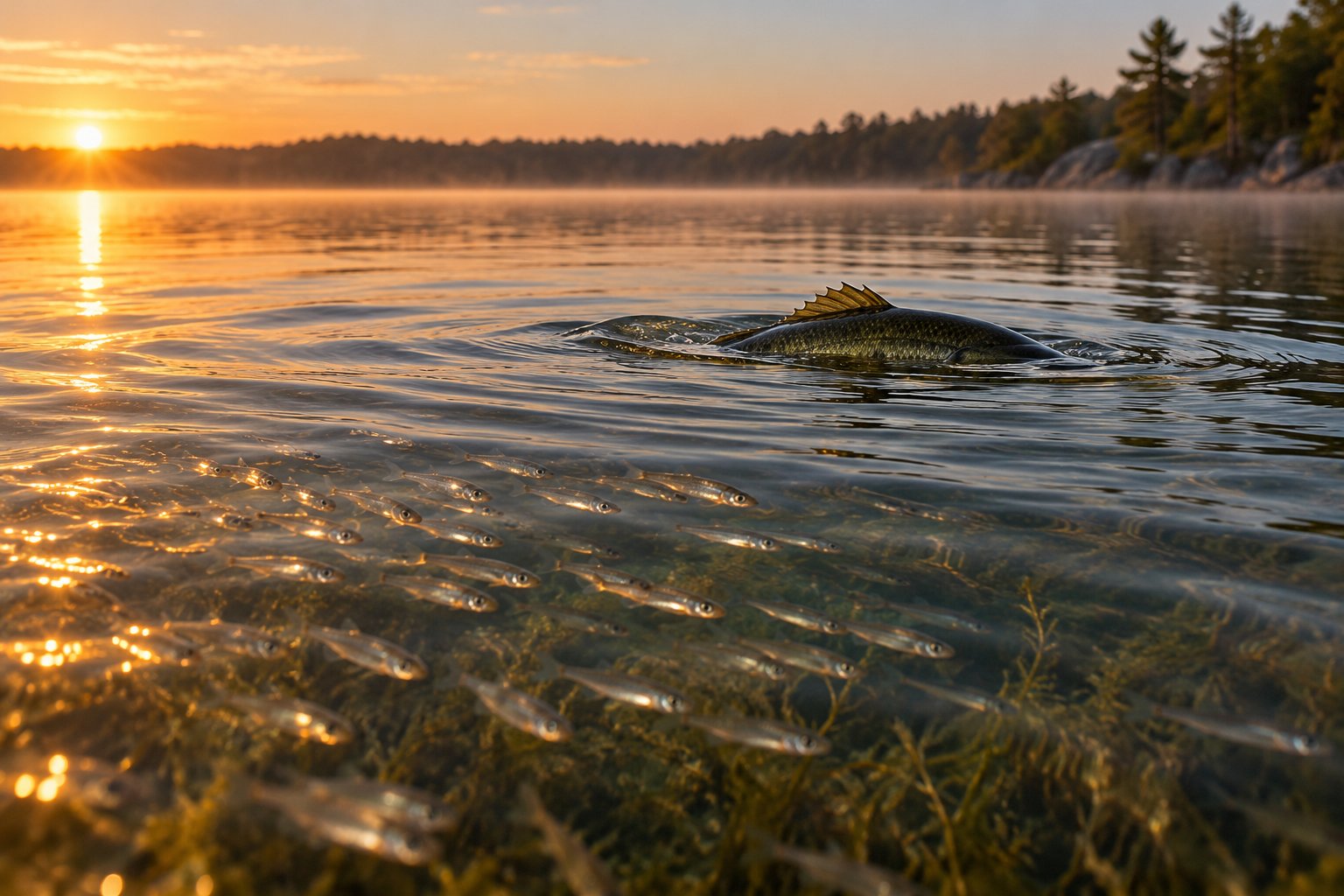
When the sun is low, light enters the water at an angle. That angled light breaks down the camouflage most baitfish rely on. A shad that’s nearly invisible at noon, when its dark back blends with the depths from above and its silver belly blends with the sky from below, suddenly shows a bright flank against dark water — or a dark back against a bright sky — as the light angle shifts. Predators exploit this mismatch, and research on underwater light at crepuscular periods describes exactly how predators key on prey that are far more conspicuous at dawn and dusk than at midday.
There’s a second mechanism working at the same time. As light fades, small prey fish tend to leave their cover to feed, because dim light gives them somewhere to hide that bright water doesn’t. Predators follow their food. That’s why you’ll often find bass, walleyes, and even pike shallower at dawn and dusk than at noon — they’re standing in the feeding lane.
Fish eyes also change the equation. In dim light, a fish trades sharpness for sensitivity: it detects motion and contrast well but resolves fine detail poorly. That single fact drives most of your lure decisions in low light, and we’ll come back to it.
Some species are built for it. Walleyes carry a reflective layer behind the retina called the tapetum lucidum — the same kind of structure that makes deer eyes shine at night — which lets them see prey in conditions their forage can’t. That’s why walleye fishing tends to peak at dusk, dawn, and on cloudy days.
How Long the Window Actually Lasts
Here’s where most anglers lose the window before it opens.
The productive period isn’t “sunrise.” It’s the band of low light around civil twilight — the roughly 60 to 90 minutes centered on sunrise, and a similar band around sunset. The exact length shifts with your latitude and the season, but the pattern holds: the light is changing fast, and fish feed hard while it is.
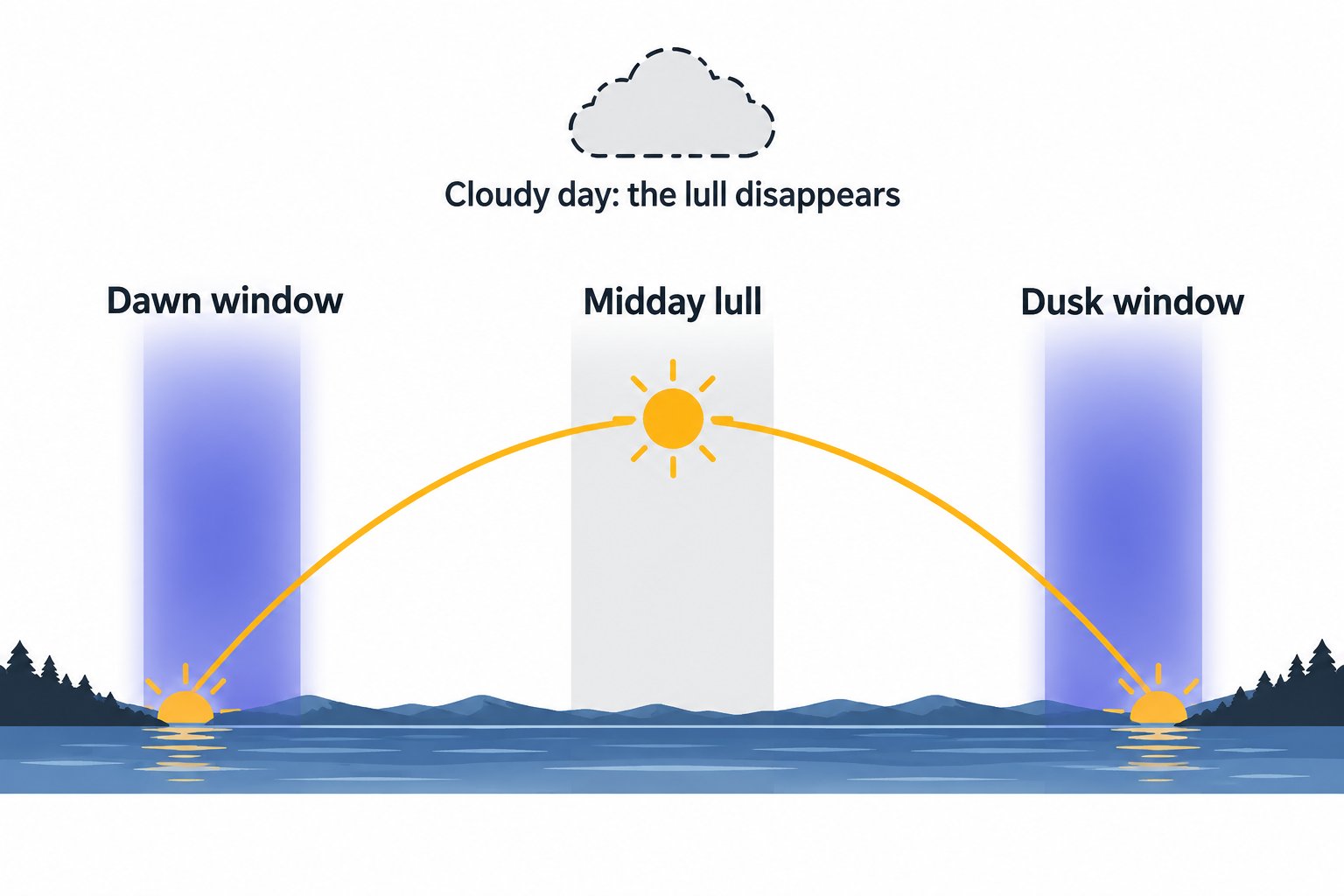
A practical schedule:
- Arrive before the light. Get set up while it’s still dark. The first cast you make into a shallow flat at gray light is often the best cast of the day, because fish are still holding where they fed overnight.
- Fish the twilight band hardest. The hour before and after sunrise (or sunset) is when you want your most productive lure in the water, not still tying on.
- Stay past dark at dusk. The dusk window typically extends 30 to 60 minutes after the sun is gone, and low-light specialists like walleyes often bite hardest in that extension. Many anglers pack up at sunset and hand the best hour to the fish.
One more timing fact worth knowing: the windows move. Sunrise and sunset times shift every week, so a trip planned around “6:30” in June is wrong by October. Check the actual sunrise and sunset times for your water and build your trip around them.
Read the Sky, Not the Clock
The intermediate move that separates consistent anglers from alarm-clock anglers: understand that the trigger is light level, not time of day.
Heavy cloud cover does to midday what dusk does naturally — it drops the light reaching the water. On a dark, overcast day, the dawn window can effectively stay open until noon, and topwater and shallow presentations that die at midday in sun can keep producing all morning. Wind helps the same way: a stiff chop breaks up the surface, reduces how well fish can inspect a lure, and lets predators push shallower with more confidence. Rain and the stained water that follows do it a third time.
The flip side is just as useful. A bright, glass-calm, high-pressure afternoon is the anti-window. Expect fish to be deeper, slower, and tighter to cover, and adjust your expectations and presentation accordingly.
One caution about reading the bite: a heavy feeding burst often empties the tank. After a blitz, many fish turn off to digest, and the water can stay slow for hours. A dead stretch after a hot ten minutes doesn’t mean you found the wrong spot — it may mean you found the right one at the end of its cycle.
Sequence Your First 90 Minutes
A window this short rewards a plan. Here’s a sequence that works on most lakes for bass, and adapts easily to other species.
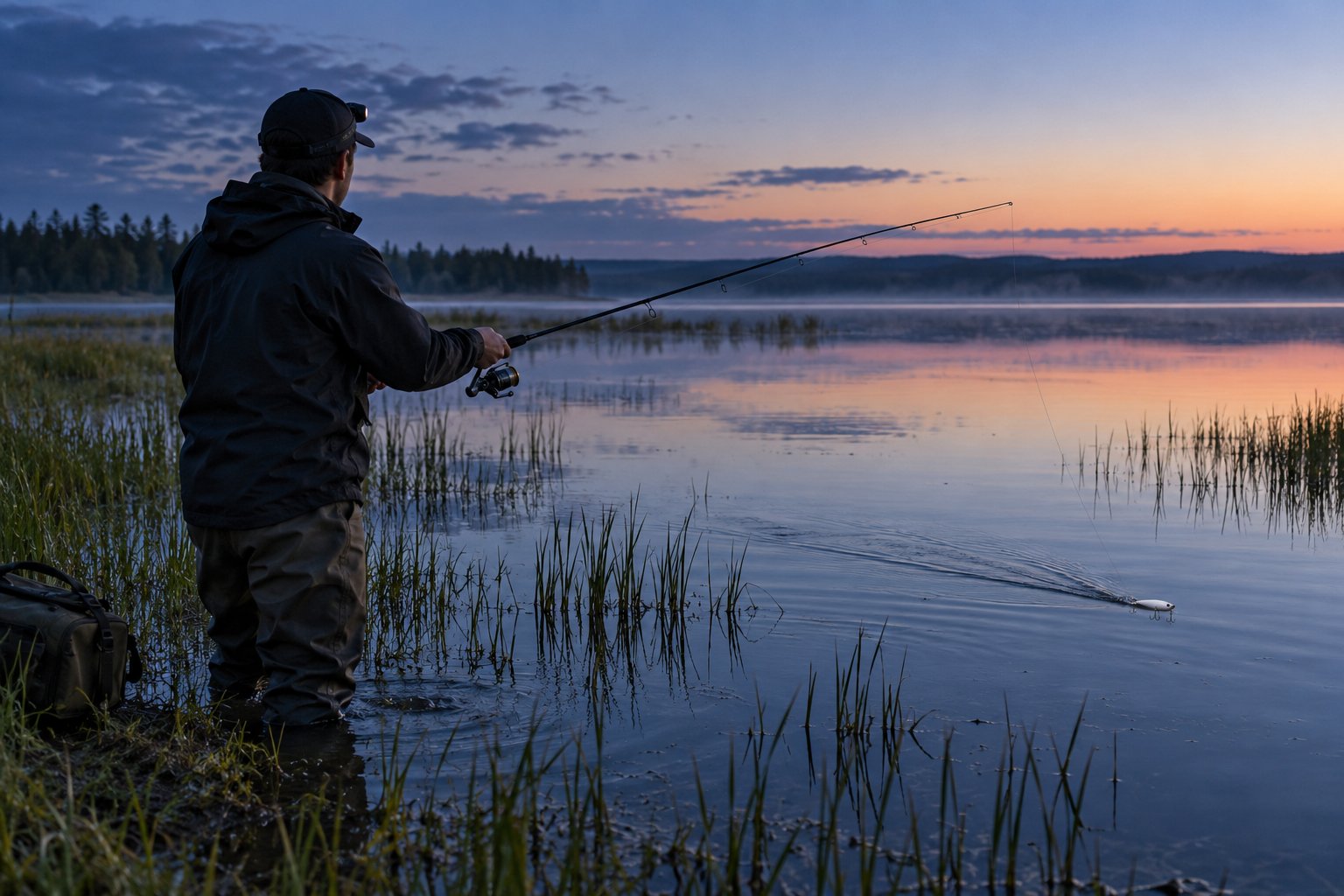
Minutes 0 to 30 — cover water shallow. Start on the flats, grass edges, points, and dock lines where fish moved to feed in the dark. Cast a moving bait — a walking bait, a buzzbait, a bladder-type topwater — and make long casts to cover water fast. You’re looking for the first boil, roll, or follow that tells you where the fish are standing today.
Minutes 30 to 60 — slow down where they are. Once you get strikes or follows in one area, park on it. Switch to something you can work more precisely: a wake bait with a longer pause, a spinnerbait along the grass line, or a lipless crankbait over the top of the flats.
Minutes 60 to 90 — follow the light down. As the sun climbs and the window narrows, fish start moving off shallow feeding areas toward deeper structure. Move your casts down the transition — the outside edge of the flats, the first breakline, the outside of the grass — and let your lure hang a little deeper.
If you miss the dawn window entirely, the same sequence runs in reverse at dusk: start on the transition, finish on the flats as the light goes out.
Lure Choice: Silhouette, Vibration, Surface
Remember the vision tradeoff: in dim light, fish see contrast and motion well but detail poorly. That means three things about your tackle box.
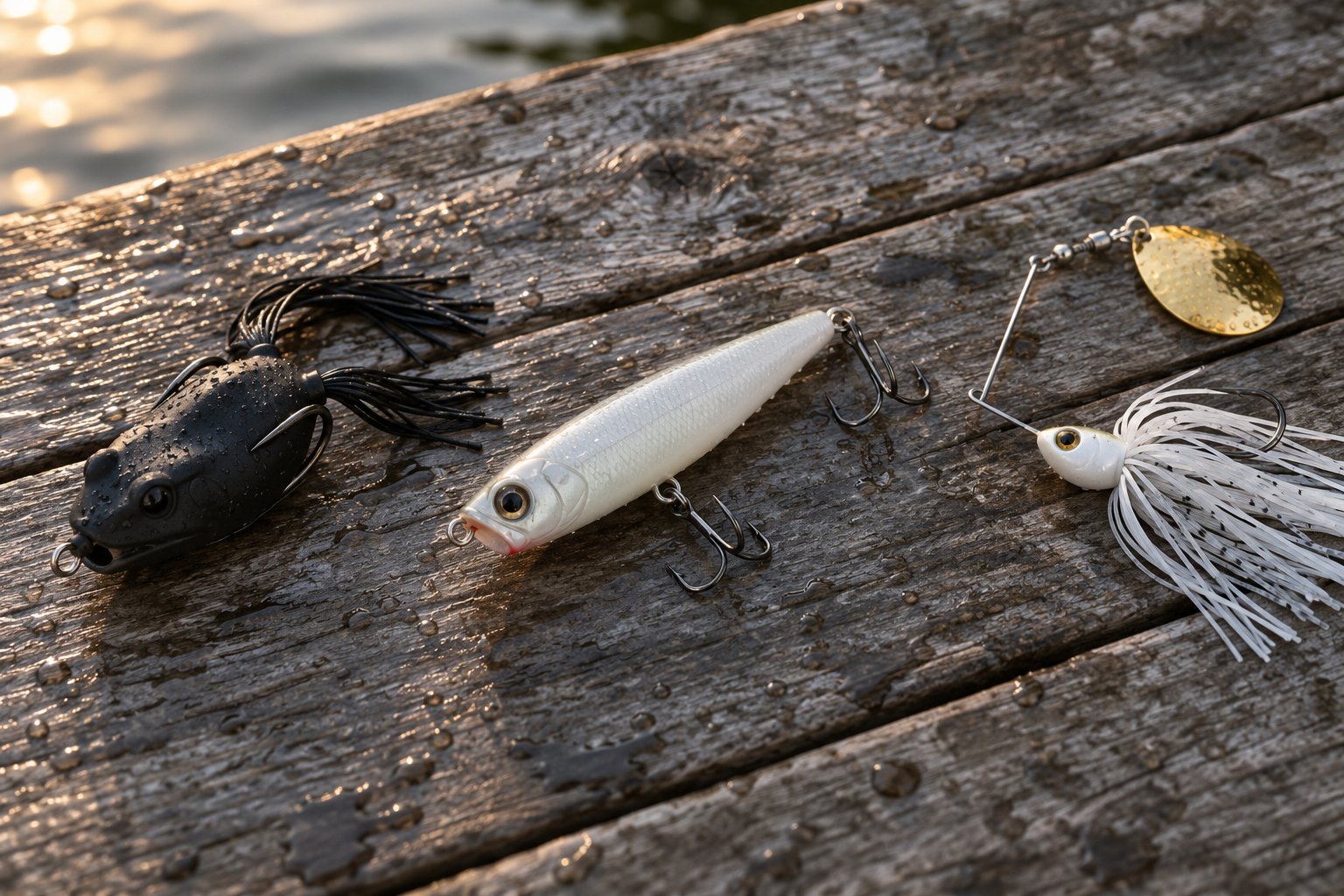
1. Surface baits work when nothing else will. A topwater creates disturbance on the surface film, where the last light of day is strongest and where a fish can find it from a long way off. Walking baits, poppers, and frogs are classic first-cast choices in the dawn and dusk windows — if you want a refresher on the techniques, see our topwater fishing guide for beginners.
2. Contrast beats color. In low light, fish key on silhouette more than hue. Two reliable plays: dark, solid baits (black, junebug, black-and-blue) that throw a sharp silhouette against the dim sky, and bright high-contrast baits (white, chartreuse) that read as a light target against dark water. Reflective chrome and gold add flash when baitfish are holding near the surface. Fine natural detail — the thing that wins at noon in clear water — matters least right now.
3. Add a noise you can feel. A fish’s lateral line detects vibration and water displacement, and that sense doesn’t need light to work. Colorado-blade spinnerbaits, chatterbaits, rattling crankbaits, and soft plastics with a strong tail action all give a bass something to track when its eyes can’t deliver the details.
A simple three-lure low-light kit: one dark topwater, one white or chartreuse moving bait, one thumping spinnerbait or chatterbait. That covers most windows on most lakes.
Does the Moon Matter? An Honest Answer
Anglers talk about the “witching hour” — a supposed magic window when fish feed hardest, often tied to moon position and solunar tables. You deserve an honest answer.
Solunar theory, published in the 1930s, claims that moon position predicts peak feeding times. Modern tests are mixed at best. One study of recreational trout fisheries compared catch rates against seven popular solunar apps and found no meaningful relationship — air temperature predicted success better than any of them. A large analysis of muskellunge catch records did find a lunar-cycle effect, but the size was small: roughly a 5% edge at the peak of the cycle. Some long-term bass data suggests modest solunar influence in warm months, mostly around the shorter “minor” periods.
The takeaway: light and weather outgun the moon. A dark night around the new moon can extend the dusk bite, and a bright full moon can push nocturnal feeding later into the night — but a cloudy, windy dawn will outfish a “perfect” solunar day every time. Use moon phase as a tiebreaker when you’re choosing between two otherwise equal days, not as the reason you skip a trip.
Species Cheat Sheet for Low-Light Windows
The light-driven bite is universal, but each species leans on the windows differently.
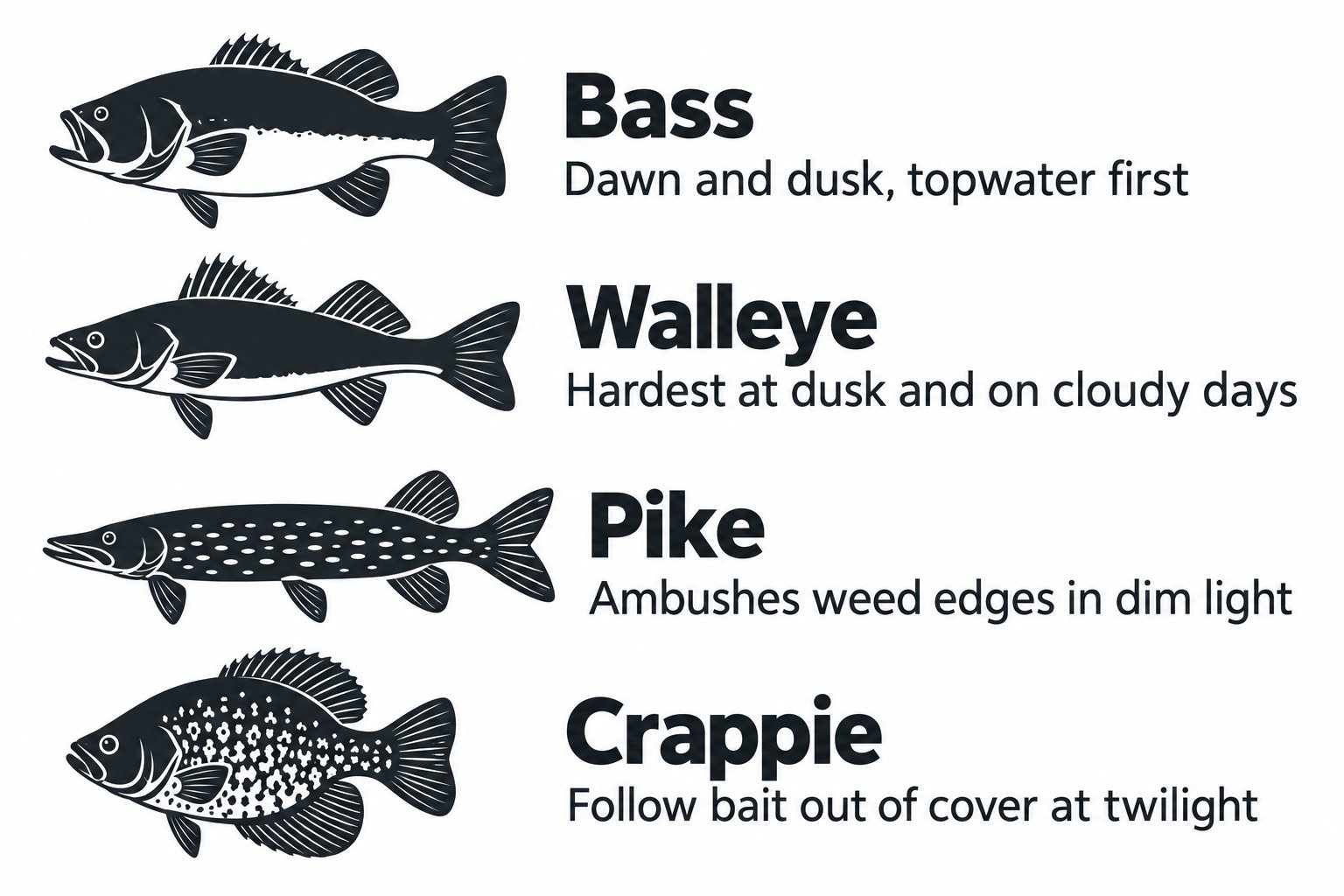
- Bass typically feed hardest at dawn and dusk in warm months, and respond first to surface disturbance. Work shallow structure and grass lines.
- Walleyes are the low-light specialists. Their light-gathering eyes mean the bite often builds after the sun is down and stays strong on dark, cloudy days.
- Pike ambush along weed edges in dim light, when their countershading works and prey is exposed. Big slow-moving baits and topwaters both get bit.
- Crappie and other panfish follow their plankton and minnow forage out of cover at twilight, often suspending over deeper water near the top.
- Inshore saltwater species follow the same light logic, but tide movement usually matters more than the clock — fish the low-light window on the moving water.
Putting It Together: Two Window Plans
The dawn plan. Arrive 30 to 45 minutes before sunrise. Rig two rods in the dark if you can — a topwater and a spinnerbait — so you’re casting at first light, not tying on. Work the shallow flats for the first half hour, slow down where fish show themselves, and slide down the transition as the sun climbs. By mid-morning you’ll know where the fish were, where they left, and where to start tomorrow.
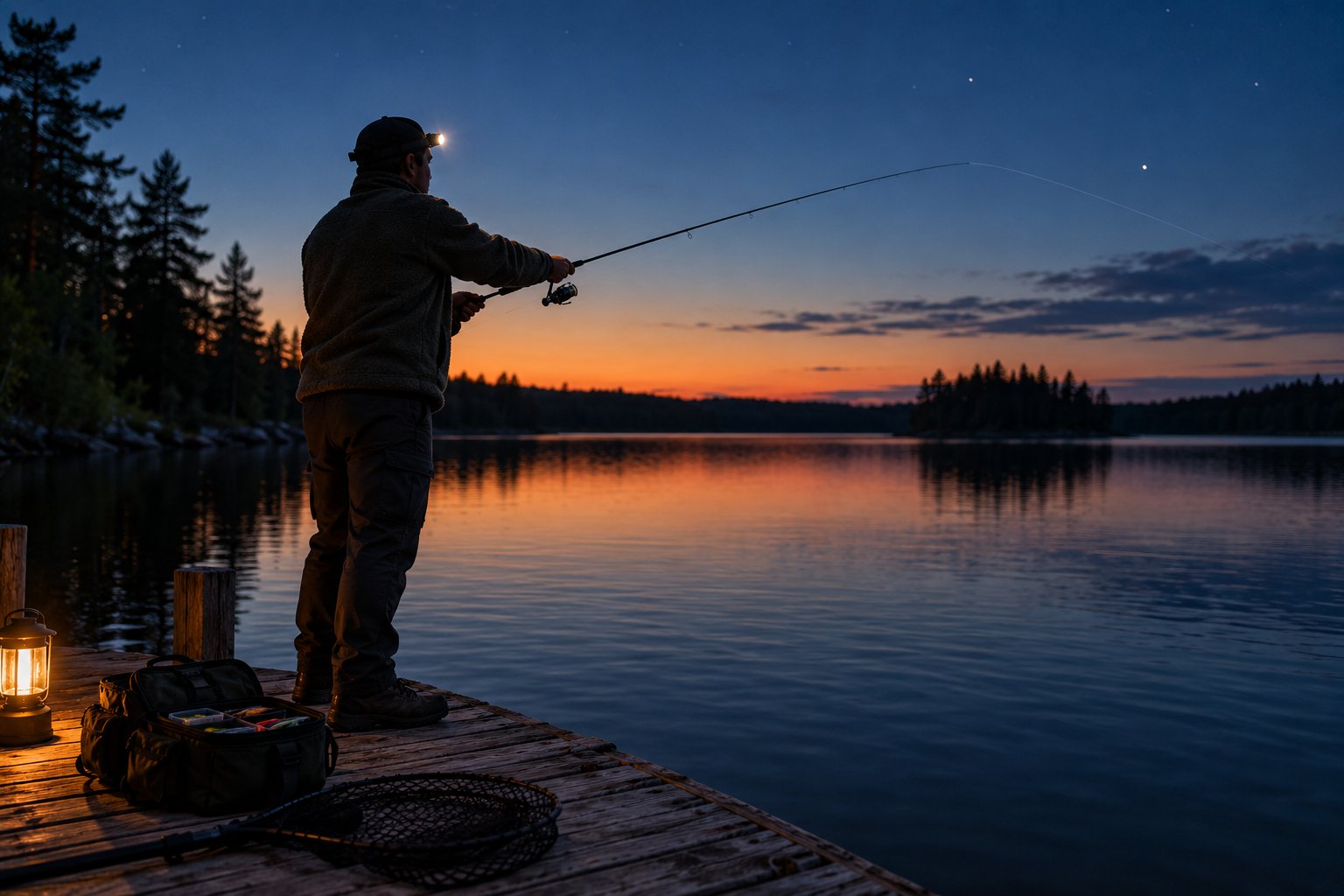
The dusk plan. Arrive 30 minutes before sunset. Hit the same shallow feeding zones, then stay on the water for at least 30 to 60 minutes after dark — that extension is where walleyes and pressured bass often feed most boldly. Bring a headlamp with a red-light mode so you don’t kill your night vision or spook shallow fish, and if the after-dark bite is good, our night fishing guide for beginners covers how to make the most of it safely.
The clock gets you to the water. The light tells you what to cast, where to cast it, and when to stay ten minutes longer than the guy who left at sunset. Fish the windows, not the hours.