
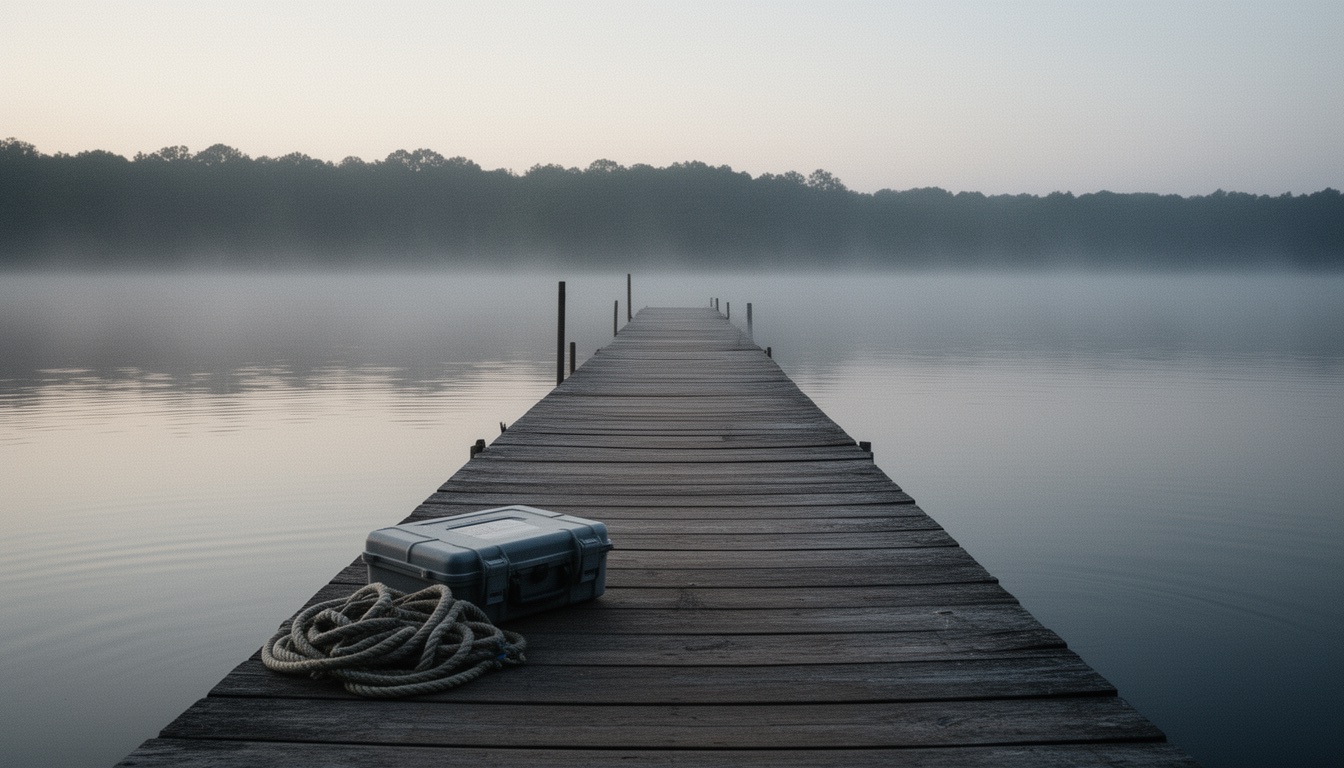
You’ve done the research, bought the gear, and driven to a public bank or dock for your first time. The rod is ready. Then you see other people already there — and nobody ever told you the rules. How close can you sit? Do you give up the good end of the dock? What happens when the guy next to you hooks up while you’re mid-cast?
There’s no rulebook. Fishing etiquette is a set of unwritten customs that experienced anglers follow because it keeps the water peaceful for everyone. Here are the ones that actually matter, in plain terms.
1. First Come, First Served — How Spots Really Work
The most common beginner question is “who gets to fish where?” The honest answer: no law decides it. In most places, nobody writes down how far you must stay from another angler. What exists instead is custom — and the custom is that whoever arrives first has priority.
If you get there and someone’s already set up, that spot is theirs for the day, at least until they leave. It doesn’t matter if you fished there last weekend. They beat you here, so they get first say. You can absolutely ask if you can join — next section covers exactly how. But understand that a “no” is a normal answer, not a personal rejection.
One more thing: popular water gets crowded. On a busy Saturday you’ll be closer to other anglers than you’d like, even if you were there first. If shoulder-to-shoulder fishing bothers you, that’s your signal to walk a bit upstream or downstream. There’s almost always a quieter stretch within a short walk.
2. How to Ask to Join — and How to Say No
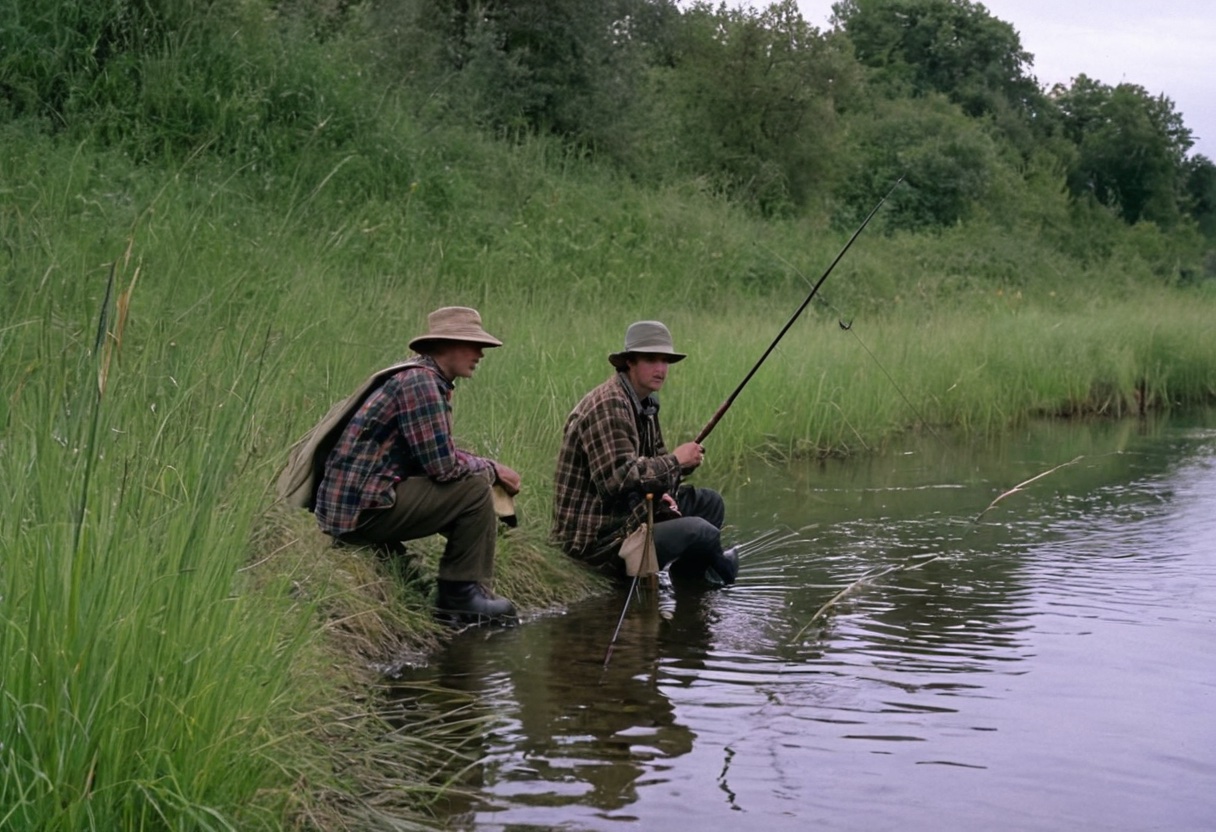
You don’t need a fancy script. Walk over calmly, keep it short, and ask something like: “Mind if I set up a little further down the bank?” At a dock: “Is the end taken, or can I slip in at the next post?” That’s the whole thing. Give them a second to answer.
If they say no, smile and move on. The spot is theirs, and that’s the system working as intended. If they say yes, a quick “thanks, appreciate it” and you’re settled.
You’ll be on the other side of this conversation before long. When a newcomer asks to join you, a simple yes or no is all that’s needed. You don’t owe them your spot history, your exact setup, or a tour of the area. A friendly “go ahead, the far end is clear” or an honest “I’ve got the whole bank today, sorry” is perfectly fine. Most experienced anglers will tell you the same thing: keep the greeting short. A lot of people on the water are there for the quiet, and a five-second exchange respects that.
3. When Someone Hooks a Fish Next to You
This is the moment that trips up the most beginners, so it gets its own rule: when an angler nearby hooks a fish, reel in your line and wait. Keep your lure out of the water until the fish is landed or out of the way, then recast. It’s the clearest courtesy on crowded water, and it prevents the two most common small disasters — tangled lines, and your lure landing in someone’s fighting fish.
While they fight, keep your rod and lure out of their airspace. Don’t cast over their line, and don’t swing your rod through the space where they’re wrestling the fish in. If lines cross, or both of you hook at the same moment, the angler who hooked first generally gets first claim on the fish. A quick “you’re first” or “sorry, your fish” defuses it in two seconds. And if your line gets tangled near someone who’s fighting, don’t yank it free — wait until they’re done, then sort it out together.
4. Boats, Banks, and Docks — Who Yields to Whom
On shared water, boats yield to bank anglers. If you’re boating and you see someone fishing from shore, give them a wide berth — stay far enough off that they can cast without worry, and slow down or idle through when you pass, especially in crowded areas. Your wake can spook fish and, at close range, put a person at the water’s edge in real danger.
As a shore angler, the flip side applies: don’t cast into a boat’s swing, and don’t cast over a boater’s line. Keep your casts to open water that clearly belongs to no one.
Docks have their own mini-etiquette. The person at the end has the most casting room, and they typically keep it. If the end is taken, the polite move is a nod and settling at the next post — not claiming the end because you arrived a minute earlier. And a word on private docks: in many states the water under a dock is public, so fishing from it is usually legal. But if a resident tells you to leave their dock, it’s not worth the argument. Pack up and move on. The next dock is two minutes away.
5. Leave It Cleaner Than You Found It
This is the rule nobody argues about. Pack out everything you bring — line spools, bait cups, wrappers, the crushed box your lures came in. A small bag in the car or on the belt makes it painless. If you see a little trash already there while you’re packing up, a few seconds to pick it up costs you nothing and makes the next angler’s morning better.
One related habit: rest the water. If fish stopped biting after a while of repeated surface slap — or after a boat has been churning around — pause for a few minutes and let the surface settle before you keep fishing. Experienced anglers do this constantly, and it’s the difference between a flat afternoon and a feeding one. Finally, control your casts. A lure hung up behind you is a small nuisance for the next person; a cast that lands in someone’s space is worse.
6. The Two Rules That Cover Everything Else
If everything above feels like a lot, compress it into two defaults and you’ll handle almost any situation:
Give space. Physically — a comfortable casting arc on each side, so nobody’s line has to cross yours. And socially — keep greetings short, and don’t pester anyone for their secret spot. The question is fine; the follow-up pressure is what turns friendly into annoying.
Apologize first, fight last. Everyone makes mistakes on the water — a bad cast, a line in the wrong place, a wake that was a little too big. The angler who says “sorry, my bad” in the first second ends the tension before it starts. You’ll be forgiven for almost anything when you own it quickly, and the people around you will remember how easy you were to be around.
The patience you’re building for fish works the same way for people. If you want to keep building on this, our guides on bank fishing for beginners and catch and release for beginners lean on the same “read the situation, act calmly” muscle you’re learning here.

You don’t need to memorize a rulebook for every situation. Ask politely, give space, clean up after yourself, and assume good intent. The experienced angler a few meters down the bank is, in almost every case, the person you were two seasons ago — and they’re glad you asked.