
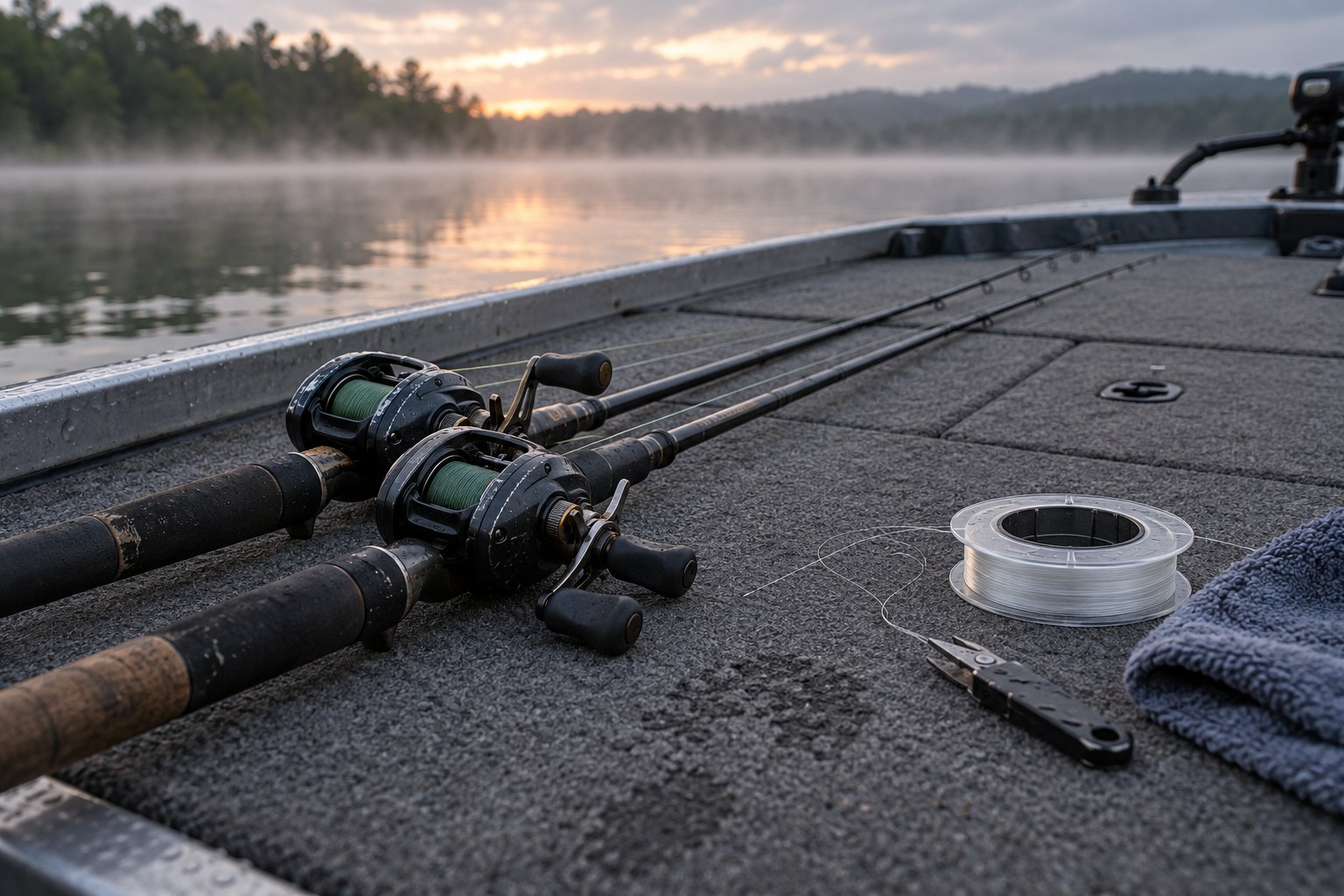
You’ve made the switch to braid. The sensitivity is real, the hooksets are crisp, and the spool lasts most of a season. Then you tie on your first length of fluorocarbon and hit the question nobody answers with a number: how long should it be?
A foot? Three feet? A full rod length? Every answer online seems to contradict the last one, and they’re usually offered with total confidence.
Leader length clicks once you see that it isn’t one number. It’s a range that shifts with water clarity, what you’re throwing, and — most importantly — how small a knot you can tie. Once you understand what the leader is doing down there, the right length for your setup stops being a mystery.
Why leader length matters more than which fluoro you buy
Most anglers spend their research time on brand and pound test. Length is the variable that changes how the leader behaves.
A fluorocarbon leader does three jobs at once:
Abrasion protection. Braid is tough in a straight pull but frays fast against rock, wood, dock pilings, and shell. Fluorocarbon shrugs off that contact. This job happens at the very end of your line, right where it touches structure.
A small amount of give. Braid has essentially zero stretch. That’s why you feel everything — and also why a violent head shake at the boat can pull a hook. A fluoro section restores a few feet of shock absorption near the hook, where it matters.
Lower visibility. Fluorocarbon’s light-bending properties sit much closer to water than braid’s do, which is why it reads as nearly invisible underwater. Fish that have seen a few hundred lures notice braid.
Each technique weights those three jobs differently. A flipping bite in matted grass only cares about abrasion. A drop shot in eight feet of visibility only cares about invisibility. That difference produces the wildly different numbers you keep seeing.
There’s a fourth factor that gets ignored: the connection knot. Every time that joint travels through a guide, it takes wear. Long leaders mean more passes, which means either a very slim knot or a shorter leader.
The simple rule behind every recommendation
If you only remember one idea, remember this: your leader needs to be at least as long as the distance at which a fish can see your braid.
That’s it. Everything else is an adjustment.
- In muddy water where visibility is measured in inches, eighteen inches of leader is more than enough. Fish are locating your bait by vibration and sound, not by sight.
- In stained green water, three feet of fluoro covers you in most situations.
- In water where you can see bottom eight or ten feet down, you need six feet minimum, and ten feet starts to make sense.
Then layer on two more questions.
How much cover is the line touching? Rock, laydowns, dock pilings, and shell all reward more abrasion resistance. That pushes the leader longer and heavier, unless you’re in the thickest stuff, where a different logic takes over.
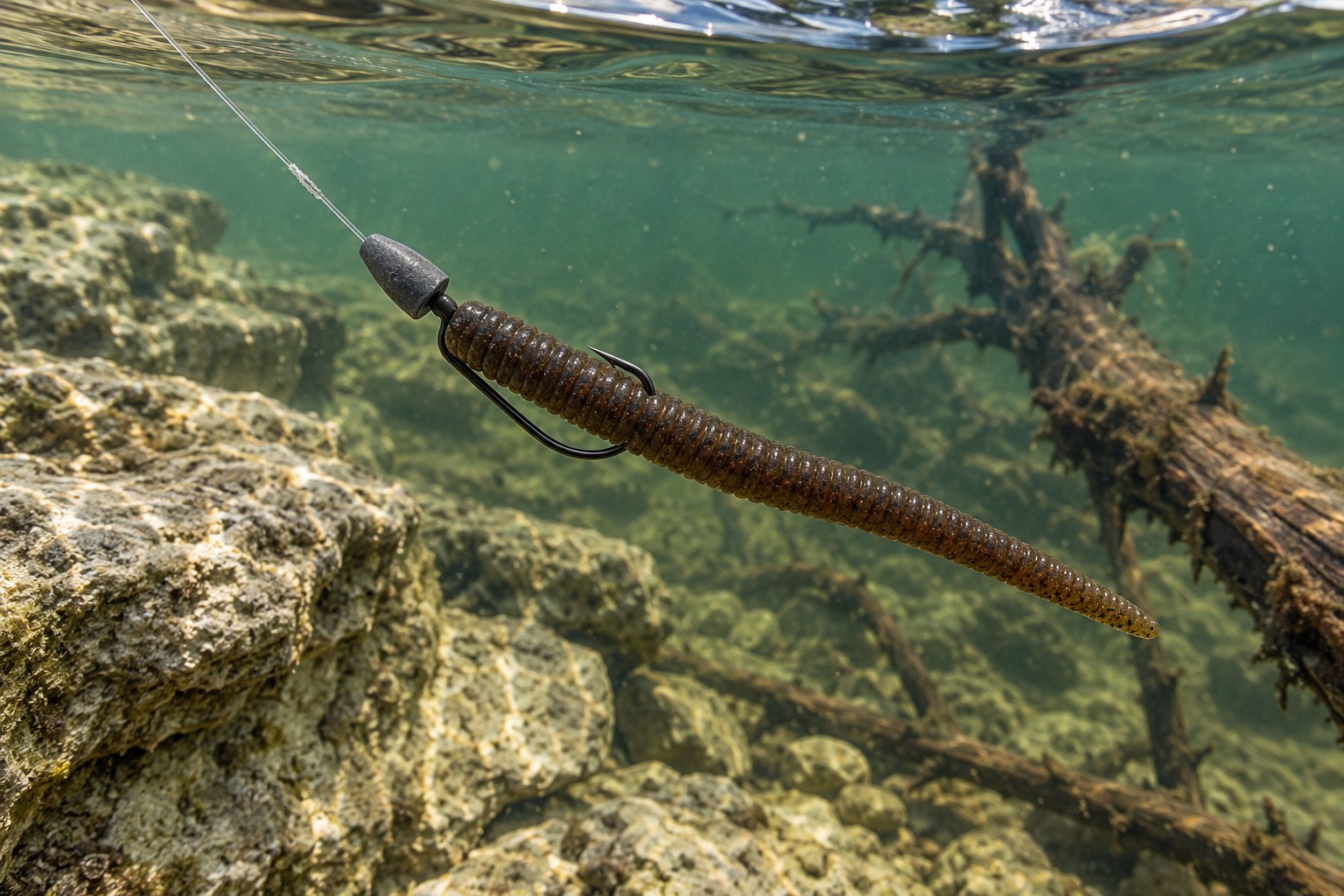
Is the braid interfering with the bait? Braid floats and rides high. On a slow-falling finesse bait, that floating mainline acts like a parachute, dragging on the bait and flattening its action. A long fluoro section fixes that — and for a weightless wacky-rigged stickbait, anglers sometimes run leaders as long as twelve feet for exactly this reason.
Those three inputs pull in different directions. That’s why the honest answer to “how long” is a range tied to a technique, not a single figure.
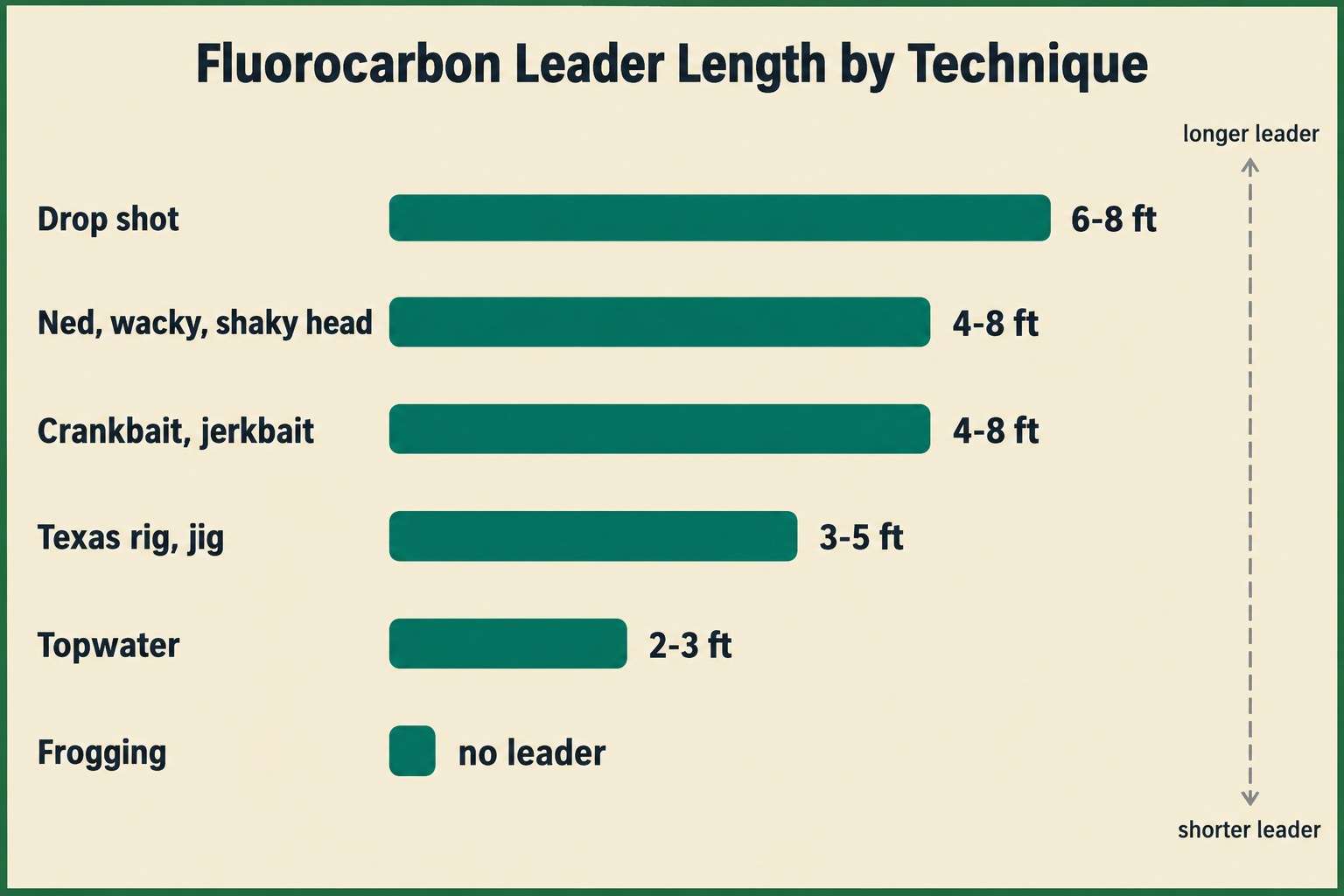
Fluorocarbon leader length by technique
Here’s the practical reference. These ranges reflect what experienced anglers and tackle manufacturers consistently recommend for braid mainline with a fluoro leader.
Texas rig and jigs: 3 to 5 feet, 12 to 17 lb fluoro. Long enough to keep braid away from the bait in neutral water, short enough that the knot stays out of the guides on most casts. Around heavier wood, work toward the top of the range.
Flipping and pitching heavy cover: 12 to 24 inches, 17 to 25 lb. This looks short because it is. In milfoil, pads, reeds, and standing timber, the leader’s job is surviving the fight, not hiding. A short leader also means the knot never enters the guides. Plenty of anglers skip the leader entirely in matted vegetation and tie braid straight to the hook, which is a defensible choice — the fish can’t see line in a grass mat anyway. If you want to understand the cover side of that trade-off, our guide to braid size for frogging and heavy cover covers it in detail.
Crankbaits, jerkbaits, and bladed jigs: 4 to 8 feet, 10 to 17 lb. These baits spend their lives bouncing off rock and wood, so abrasion matters, and their treble hooks punish a stiff, unforgiving mainline. Longer leader here, but mind the knot size.
Spinnerbaits: 3 to 5 feet, 12 to 17 lb. Similar logic to crankbaits with slightly more snag exposure on the frame.
Drop shot: 6 to 10 feet on the main-line leader, 6 to 8 lb. This is the longest common leader in freshwater. The bait hangs in clear water below a light weight, the fish inspect it closely, and the braid-above-fluoro joint is exactly what you want far from the bait. If you’re still sorting out the rig itself, our walkthrough on how to rig a Texas rig and drop shot covers components and knots.
Careful here: drop shot has two lengths, and they get confused constantly. The leader length is the fluoro section between your braid and the hook. The drop length is the separate distance from the hook down to the weight — typically 12 to 18 inches, shorter (6 to 10 inches) when fish are glued to the bottom, longer (18 to 36 inches) when they’re suspended. Set them independently.
Ned rig, wacky rig, shaky head: 4 to 8 feet, 8 to 12 lb. Finesse baits that need to fall naturally and get looked at from close range. Same reasoning as the drop shot, slightly shorter because these get cast more than dropped.
Topwater: 2 to 3 feet. Fluorocarbon sinks. A long fluoro section can drag a popper or walking bait under and kill the action. Keep it short — or run straight braid, which floats, and accept the visibility trade.
Frogging: no leader. Braid only. You need the strength, you need the float, and a leader knot in a grass mat is just a failure point waiting for a big fish.
Big swimbaits: short and heavy. Two to four feet of 20 lb and up, mostly for abrasion and shock around structure rather than stealth.
One universal rule: the leader should be lighter than your mainline. That way a snag breaks at the leader and you keep your braid. Fluorocarbon at the same stated test as braid is usually much stronger in actual breaking strength, so matching numbers on the labels does not give you a safe weak point.
Your connection knot sets the ceiling
Every table above assumes the knot can pass a guide without drama. That’s the constraint that overrides everything else.
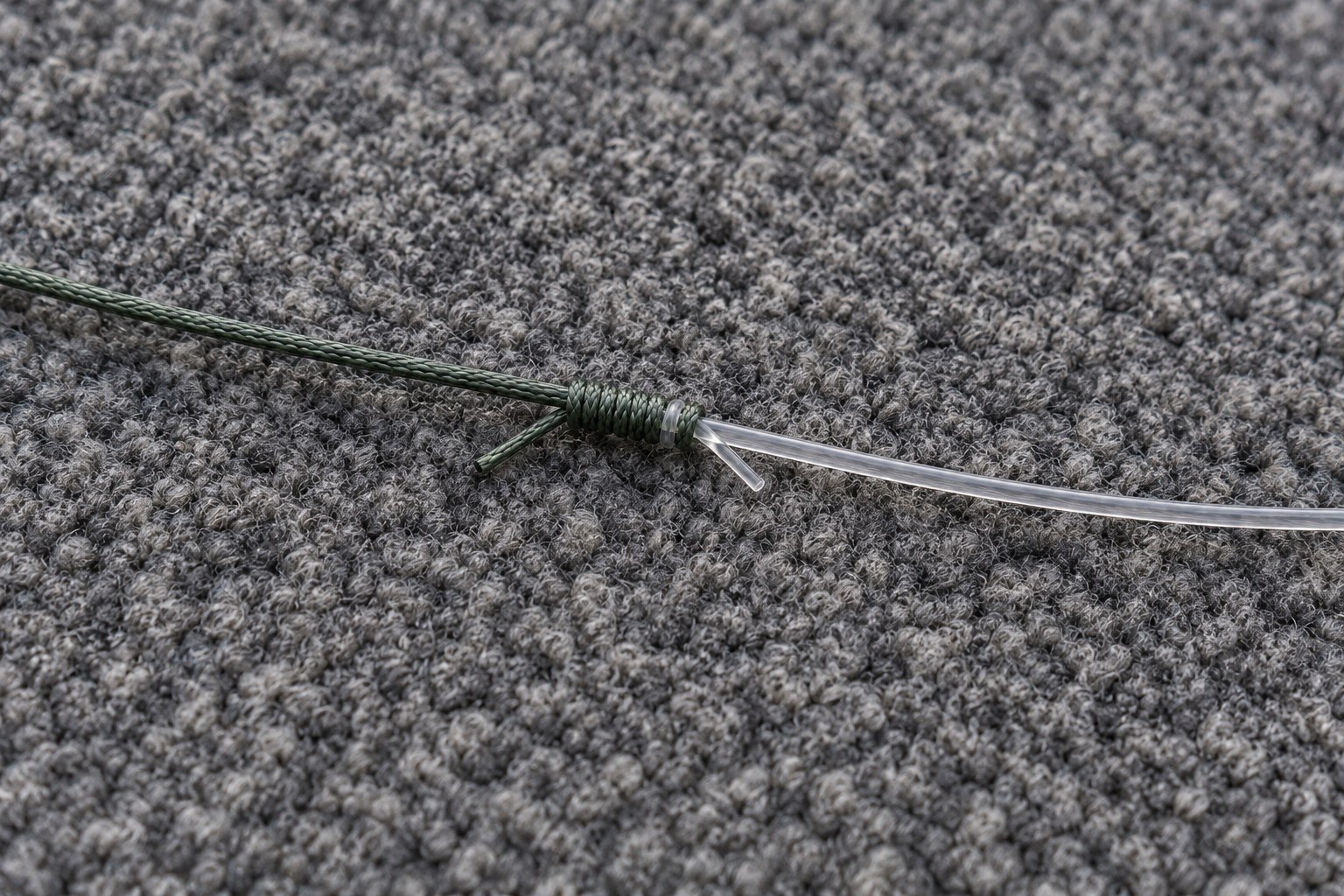
Fluorocarbon is thicker than braid at the same pound test, so a braid-to-fluoro joint is a diameter mismatch. A bulky knot handles that mismatch well, but it also ticks through guides, costs casting distance, and wears a little more with every pass.
The practical consequences:
- Bulky knot (double uni, Alberto, Albright): keep your leader shorter than the rod. On a seven-foot rod that means roughly six feet max, so the joint stays off the guides during a cast.
- Slim knot (FG knot): the joint passes cleanly enough that ten- and twelve-foot leaders become practical. This is why the anglers running twenty-foot drop shot leaders are almost always FG users.
If you want a field-expedient measuring method, borrow the pro trick: run the leader up through the guides, over the tip, and back down to the reel, then take two more turns of the reel handle and cut. You end up with a leader that puts the knot on the spool, out of the guides, without measuring anything.
And note the flip side: any leader under about four feet means the knot never touches a guide at all. That’s not an accident — it’s a big part of why heavy-cover anglers stay short even when they could run longer.
How clarity and cover move the number
The technique table gives you a starting point. Water and structure move it up or down.
Muddy water (under a foot of visibility): drop to 8 to 12 inches and go heavier. Fish aren’t line-shy when they can’t see three inches, and thick, stained water often holds bigger fish that will test your leader on structure. Fifteen-pound braid to a fifteen-pound leader is a reasonable stained-water setup.
Stained or green water: around three feet covers most of it. Keep the leader for abrasion, not for stealth.
Clear water, four to eight feet of visibility: six to eight feet of leader, and consider dropping a step in pound test.
Gin clear, heavily pressured water: ten feet and up with the lightest leader you can get away with. Anglers who fish clear reservoirs regularly report that a long leader dramatically outperforms a standard-length one when the fish are looking at your line before your bait.
Cover adjustments: riprap, laydowns, docks, and barnacles all argue for heavier leader, and often shorter. If you’re skipping under docks, a shorter leader keeps the joint from catching on pilings and prevents the break-offs that come with it.
When to shorten your leader, and when to go longer
Fish tell you what they want if you’re paying attention.
Shorten when:
- You’re skipping docks or fishing matted grass
- The water is muddy and visibility is irrelevant
- You’re throwing topwater and the bait won’t stay up
- You’re tangling in the guides on every cast — that’s a knot-and-length problem, not a reel problem
- You’re breaking off at the connection knot
Go longer when:
- Fish follow in clear water but won’t commit — add about twelve inches and try again
- You’re getting short strikes or nipped tails, which often means the bait isn’t moving naturally enough
- You’re dropping vertically in deep, clear water to suspended fish
- You’re drifting in current and the braid keeps stalling the presentation
Clear-water finesse is where length matters most, and it’s also where the rest of the finesse system has to line up. Our piece on finesse fishing tactics with light line and small baits covers the rod, bait, and presentation side of that equation.
Change one thing at a time. If you lengthen the leader and also drop two pounds of test, you’ll never know which one the fish cared about.
Maintaining a leader through a fishing day
A leader isn’t a set-and-forget component. It shrinks, it nicks, and it degrades exactly where you can’t see it easily.
Run the joint knot and the last couple of feet of leader through your fingers after every snag and every few fish. A nick feels like a small bump, and it will break under load. If the knot feels rough or flattened, cut it off and retie rather than hoping.
Each time you retie a lure you lose a few inches. Once the leader is roughly a foot shorter than it started, replace the whole thing. Fighting a good fish on a chewed-up leader is the most avoidable loss in fishing.
Keep a spool of leader material and a pair of clippers on deck so replacing it is a thirty-second job instead of a reason to keep fishing a bad leader. Also watch your spool capacity — braid plus ten feet of leader takes up more room than braid alone, and an overfilled spool casts worse than one with a little margin.
Common length mistakes
Running a leader heavier than your mainline. You lose your designed break point and can snap off mid-spool, losing far more line than a leader.
Using a long leader with a bulky knot. You pay in casting distance and knot strength, and you may not even get the stealth benefit you were after.
Confusing drop shot drop length with leader length. They’re separate decisions, and treating them as one is the most common drop shot setup error.
Never retying. A leader that “still looks fine” after a dozen fish around rock usually isn’t.
Assuming one length covers the whole boat. A flipping rod and a drop shot rod want completely different leaders. Rig each one for the job it does.
Get the length right and the leader stops being a compromise. It becomes the part of your setup that quietly does the work: taking the abrasion, absorbing the head shake, and staying invisible right where the fish is looking.